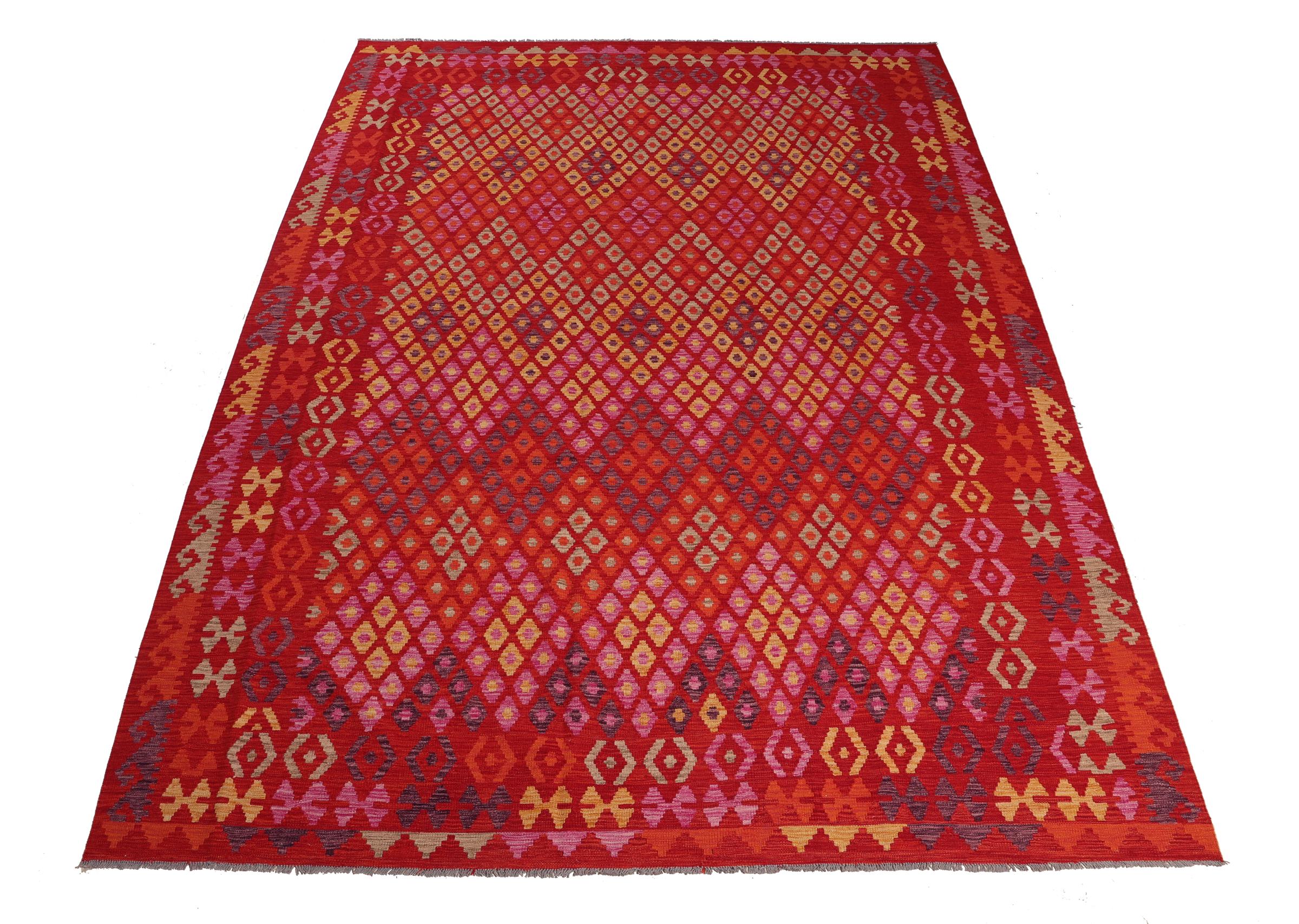
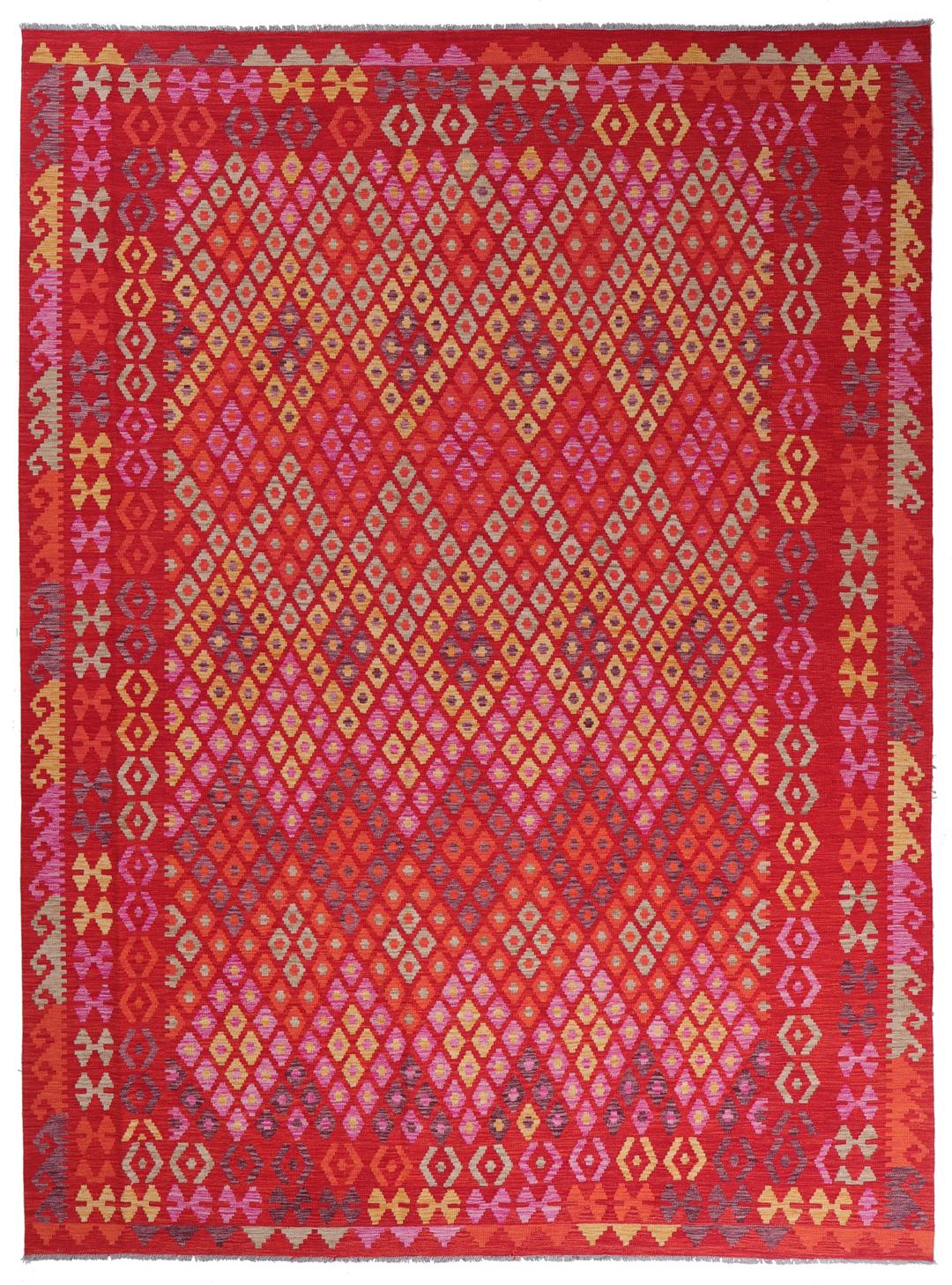
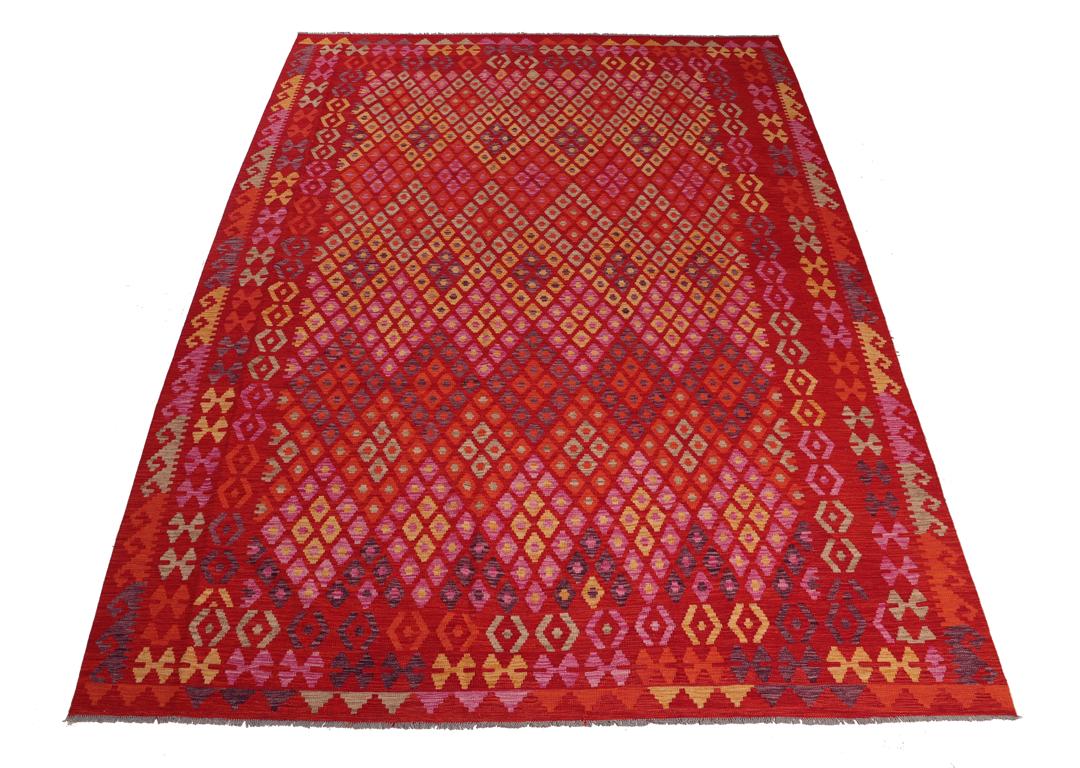
The tradition of kelim weaving in Afghanistan is deeply rooted in the nomadic lifestyle of the region. For centuries, these flat-woven textiles have served as essential functional items for families, used as floor coverings, wall hangings, and storage bags, reflecting a culture that values both utility and aesthetic expression.
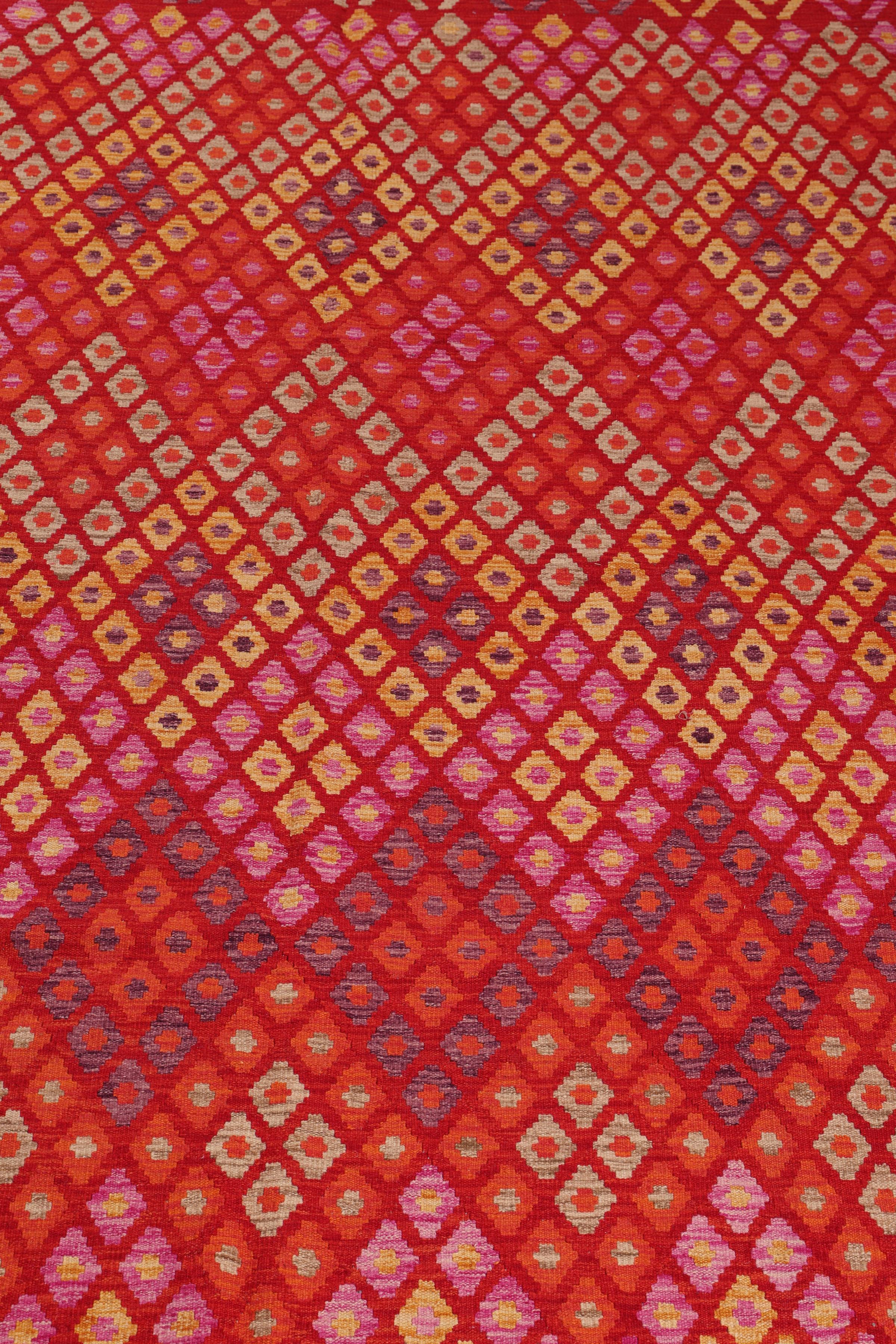
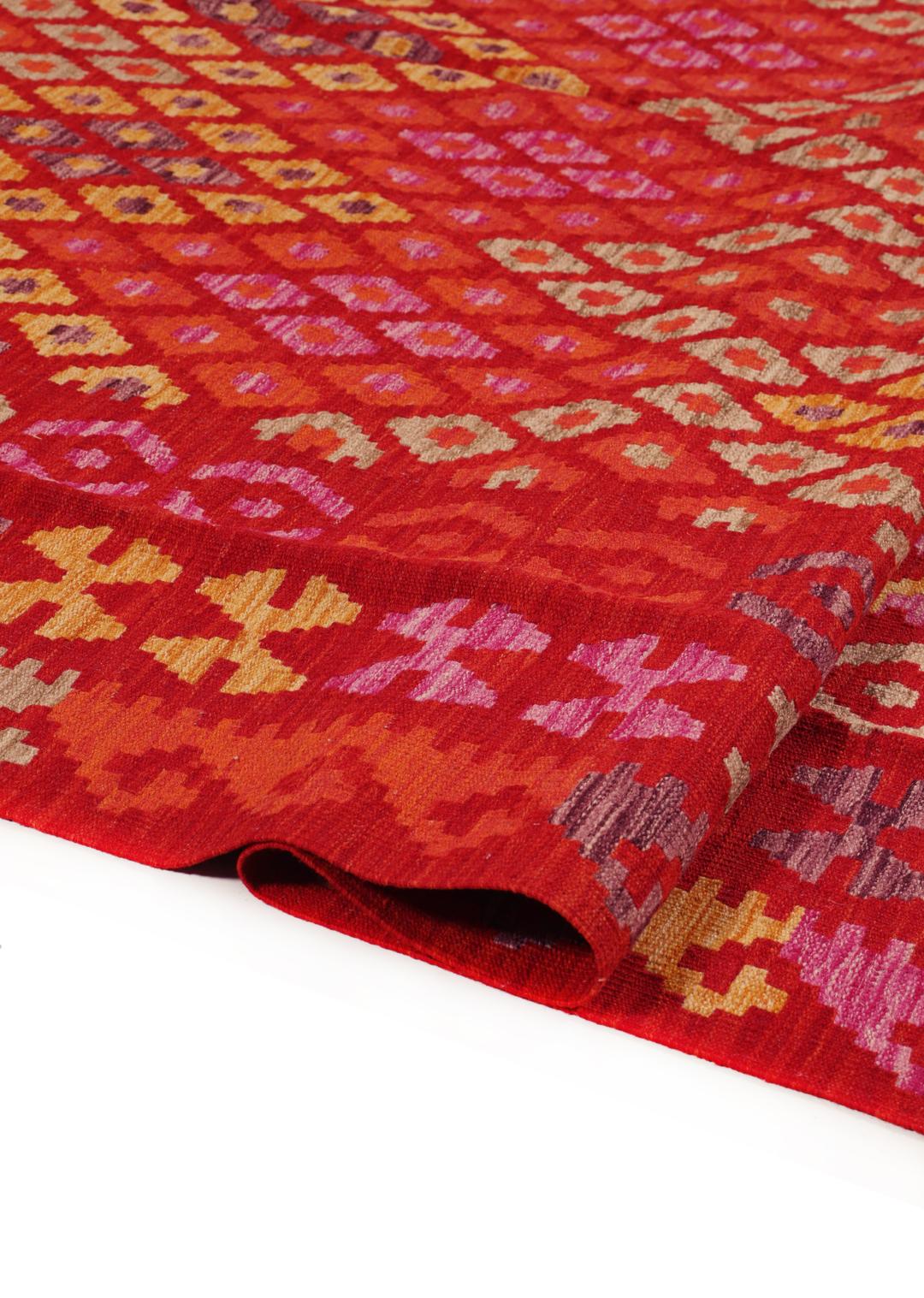
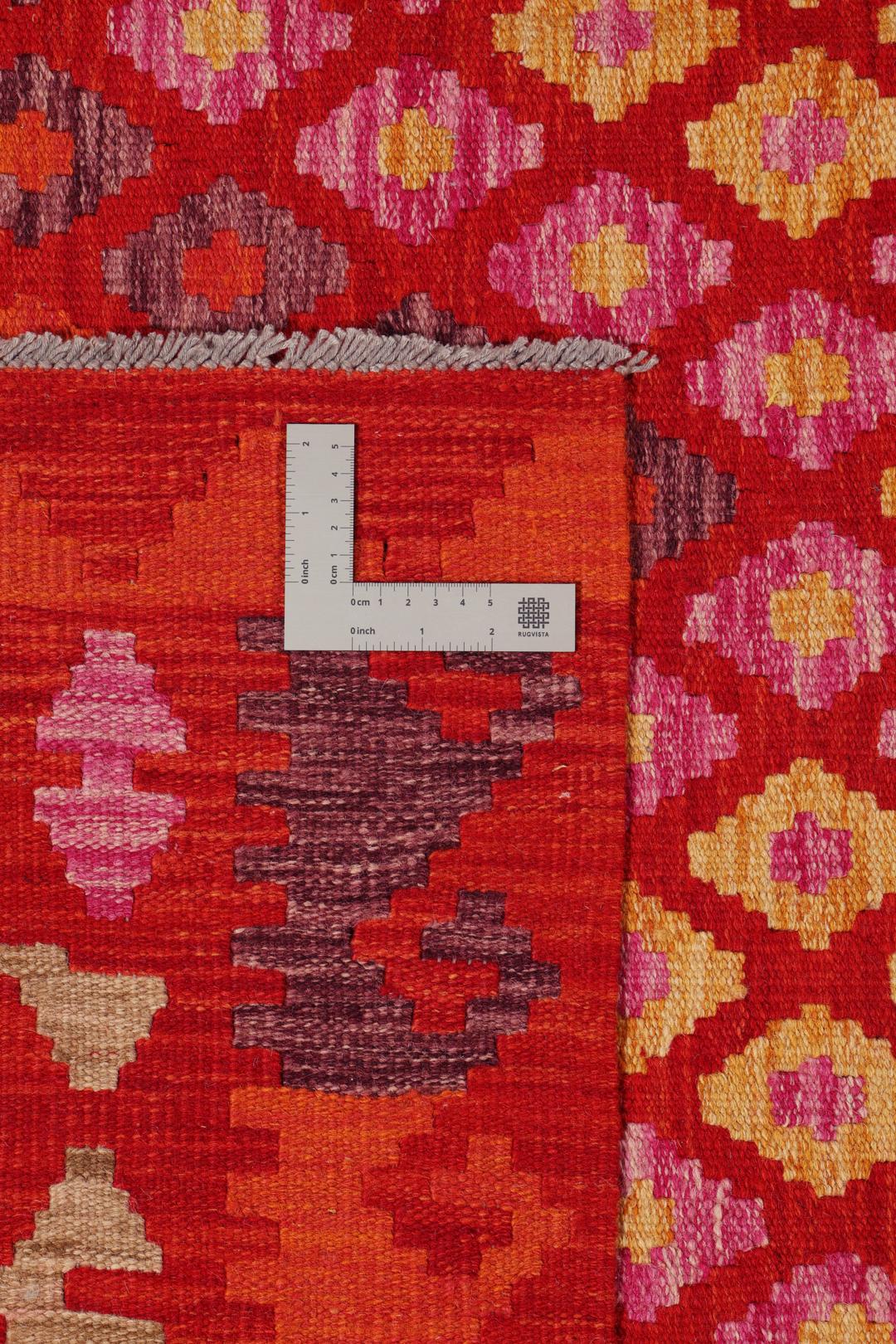
The term 'kelim' refers to the specific slit-weave technique used to create these rugs. By not using a pile, the weaver can create crisp, geometric designs by changing the colour of the weft threads at the edge of each motif. This technique requires a high degree of skill, as the weaver must carefully manage the tension to ensure the finished rug remains perfectly square and flat.
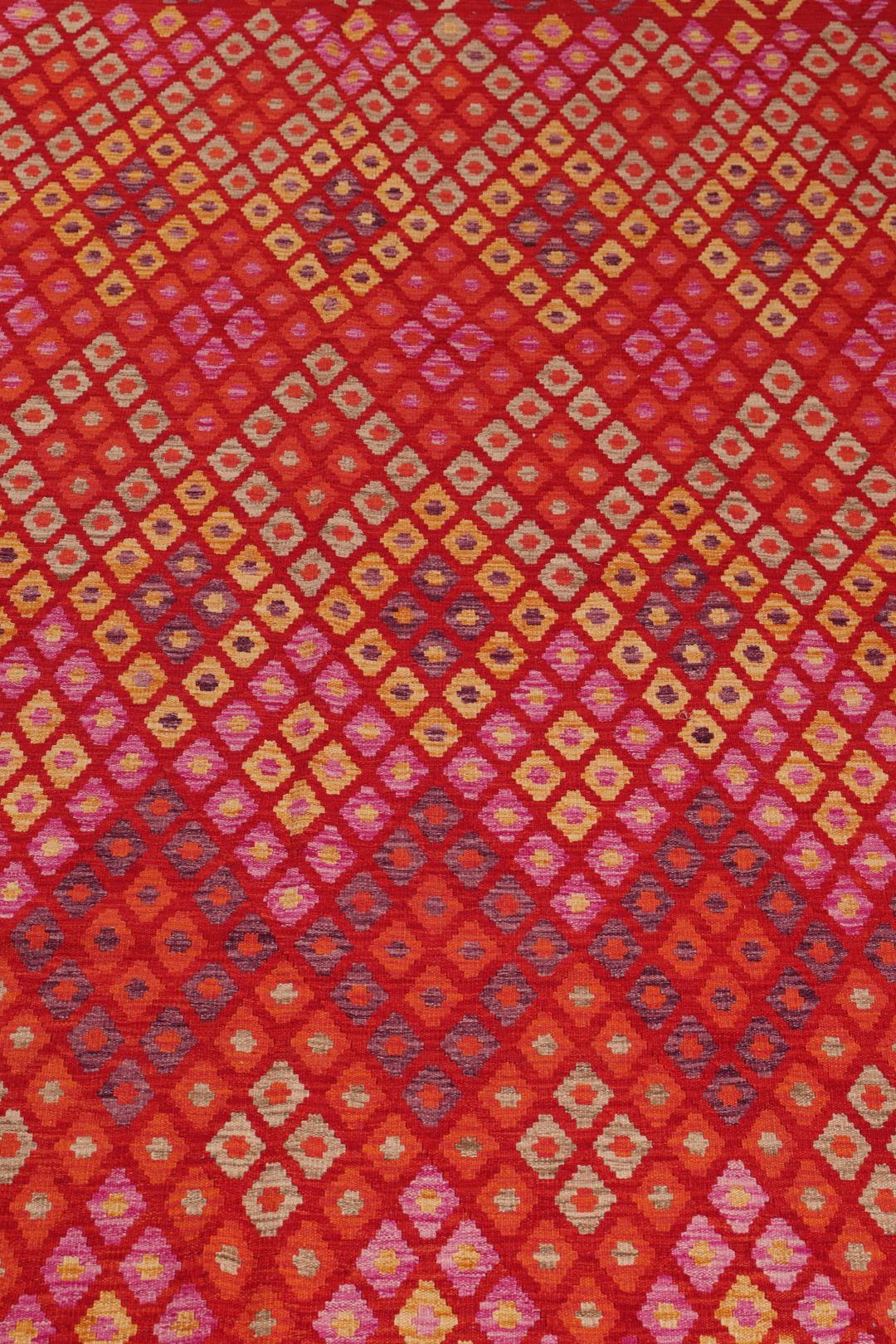
Signature elements of Afghan kelims include bold geometric motifs, such as diamonds, triangles, and stylized floral shapes, often arranged in repeating patterns across the field. The use of vibrant, natural-toned dyes gives these pieces their characteristic warmth, while the formal, decorative borders frame the composition, creating a balanced and harmonious visual language.
Collectors value these pieces for their authenticity and the human story woven into every thread. Owning an Afghan kelim is an opportunity to preserve a craft tradition that has been passed down through generations, offering a tangible connection to the cultural heritage of the Middle East and the enduring skill of its master weavers.