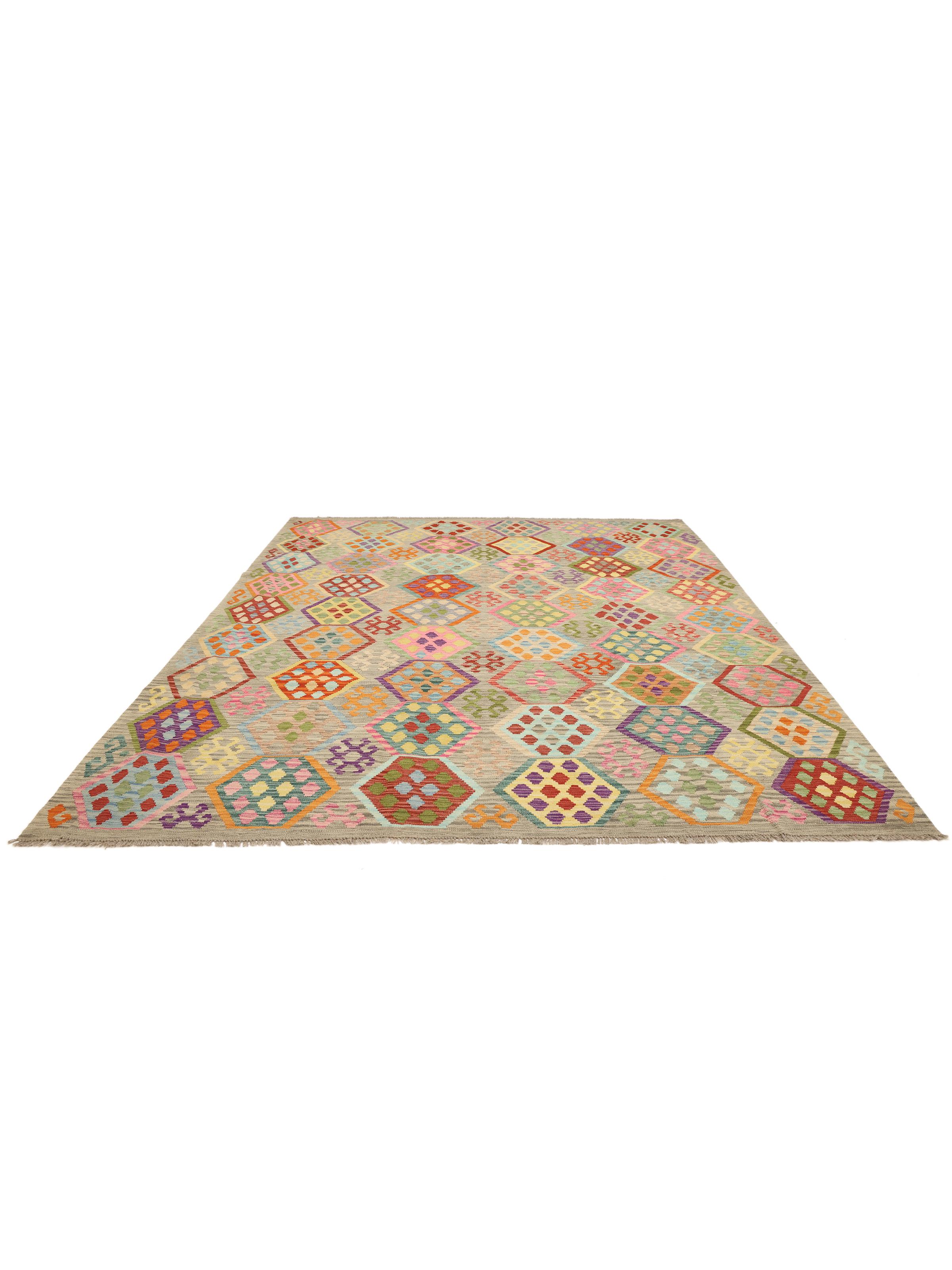
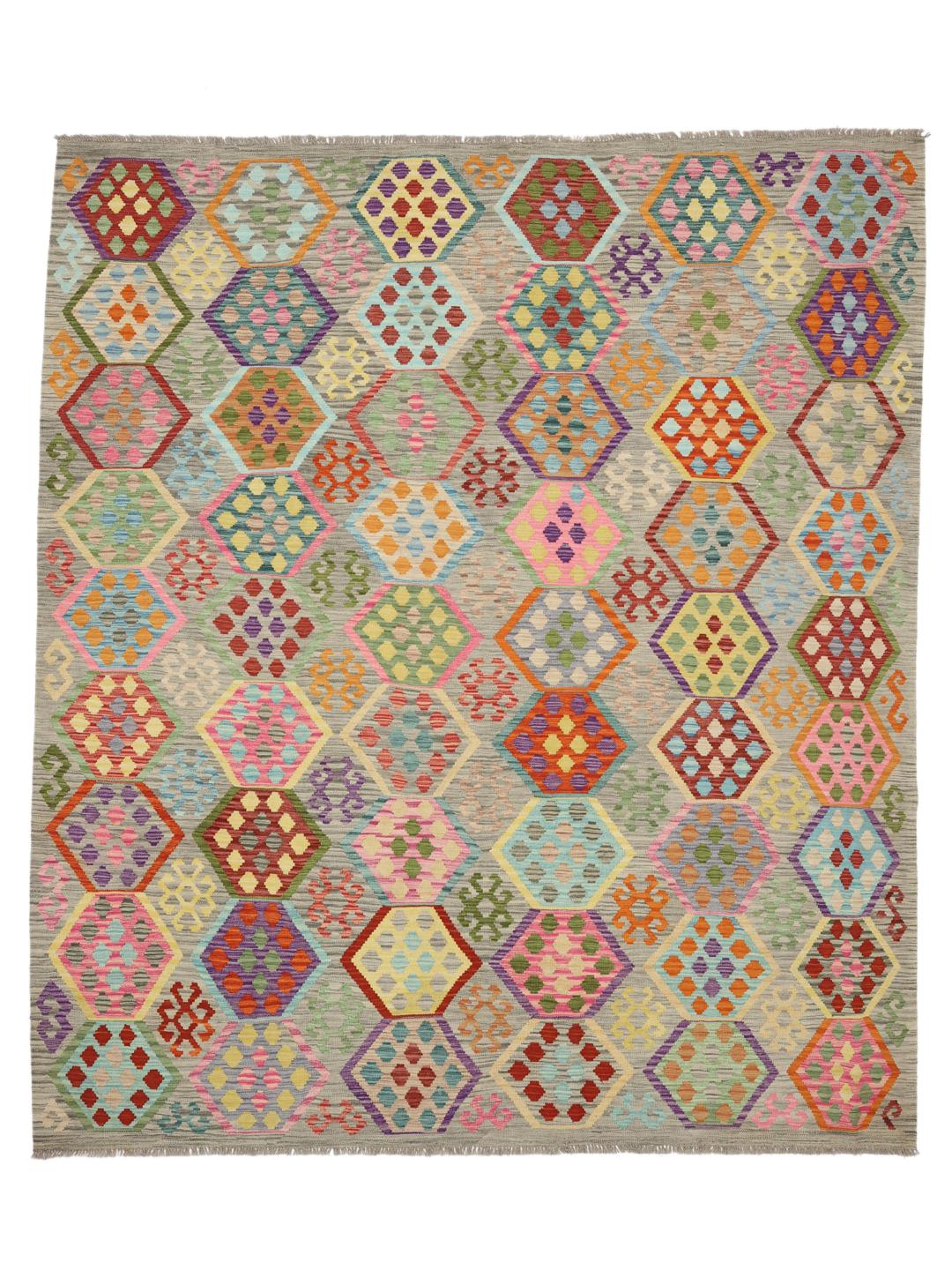
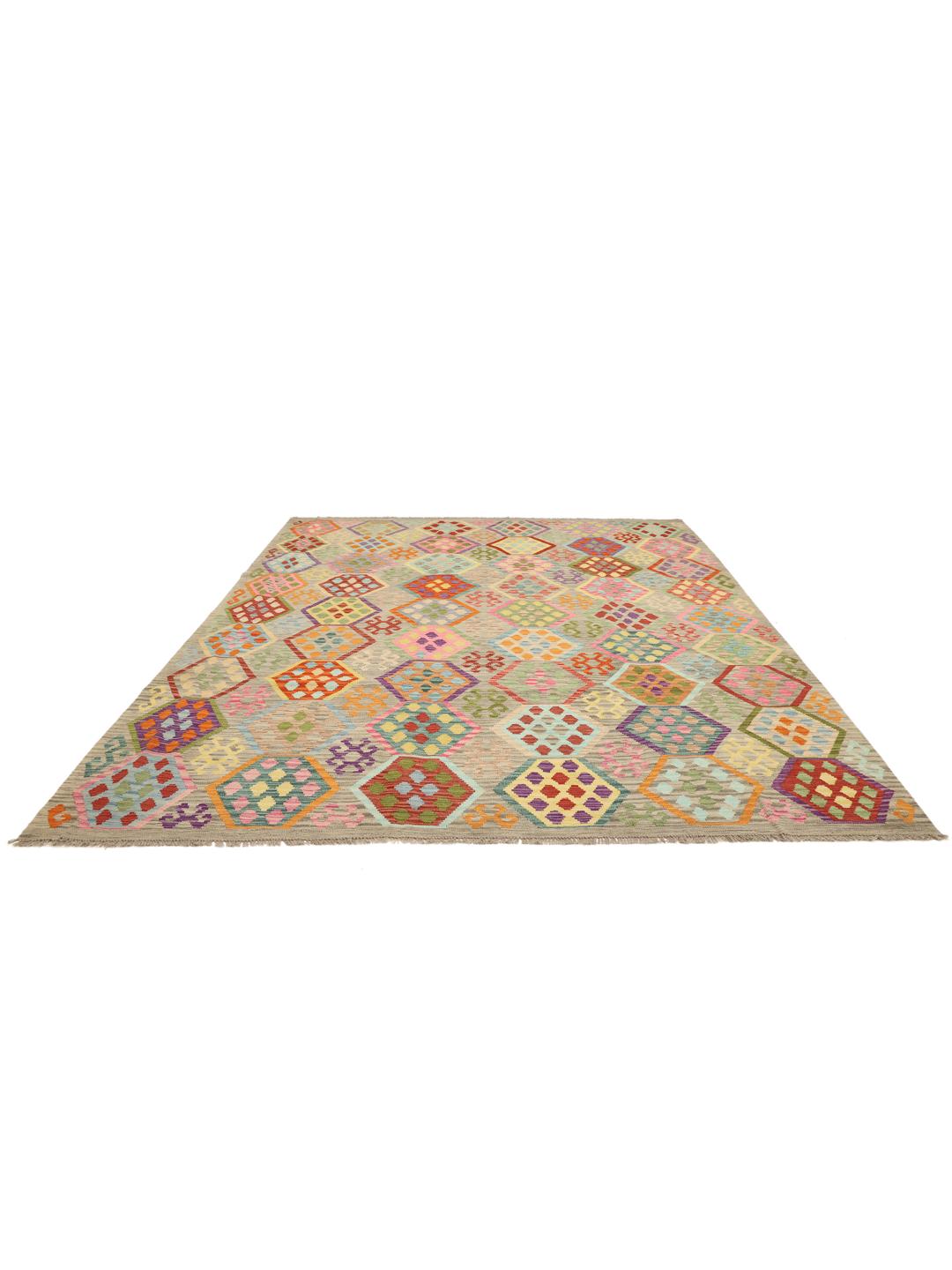
The Kelim Afghan Old Style traces its roots back to the deep-seated weaving traditions of Afghanistan, a region renowned for its resilient and expressive textile arts. These rugs are born from a nomadic and semi-nomadic heritage where the loom was portable, allowing families to create functional art wherever they settled. This tradition has evolved into the sophisticated craft seen today, blending ancient techniques with designs that have been passed down through generations.
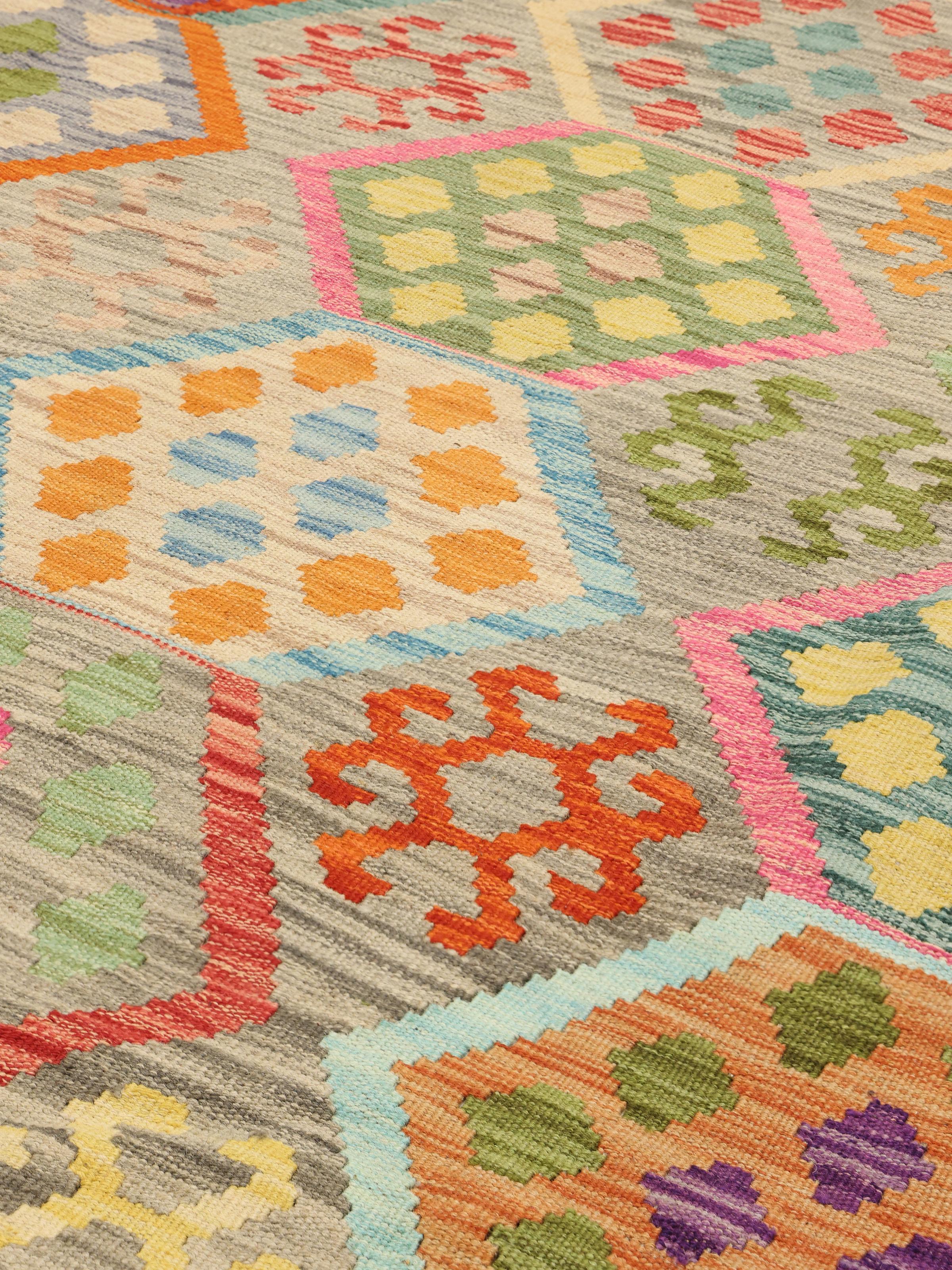
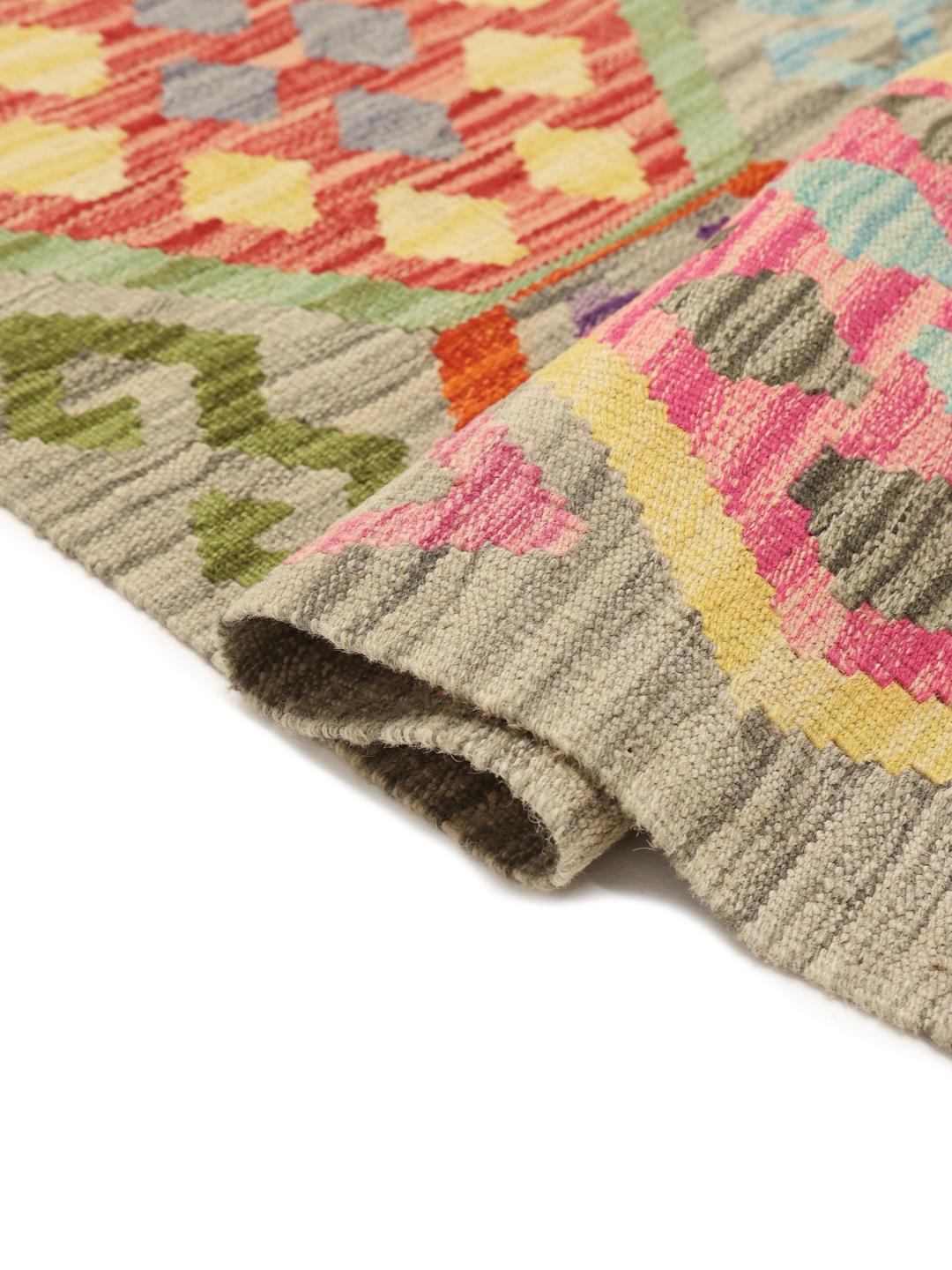
The term 'Kelim' refers to a flat-weave technique where the weft threads are pulled tightly over the warp threads to create a durable, pileless fabric. Unlike knotted rugs, the design in a Kelim is achieved through the manipulation of these coloured wefts. This method results in a reversible rug that is lightweight yet remarkably strong, showcasing a clean, graphic quality that emphasises the clarity of the pattern.
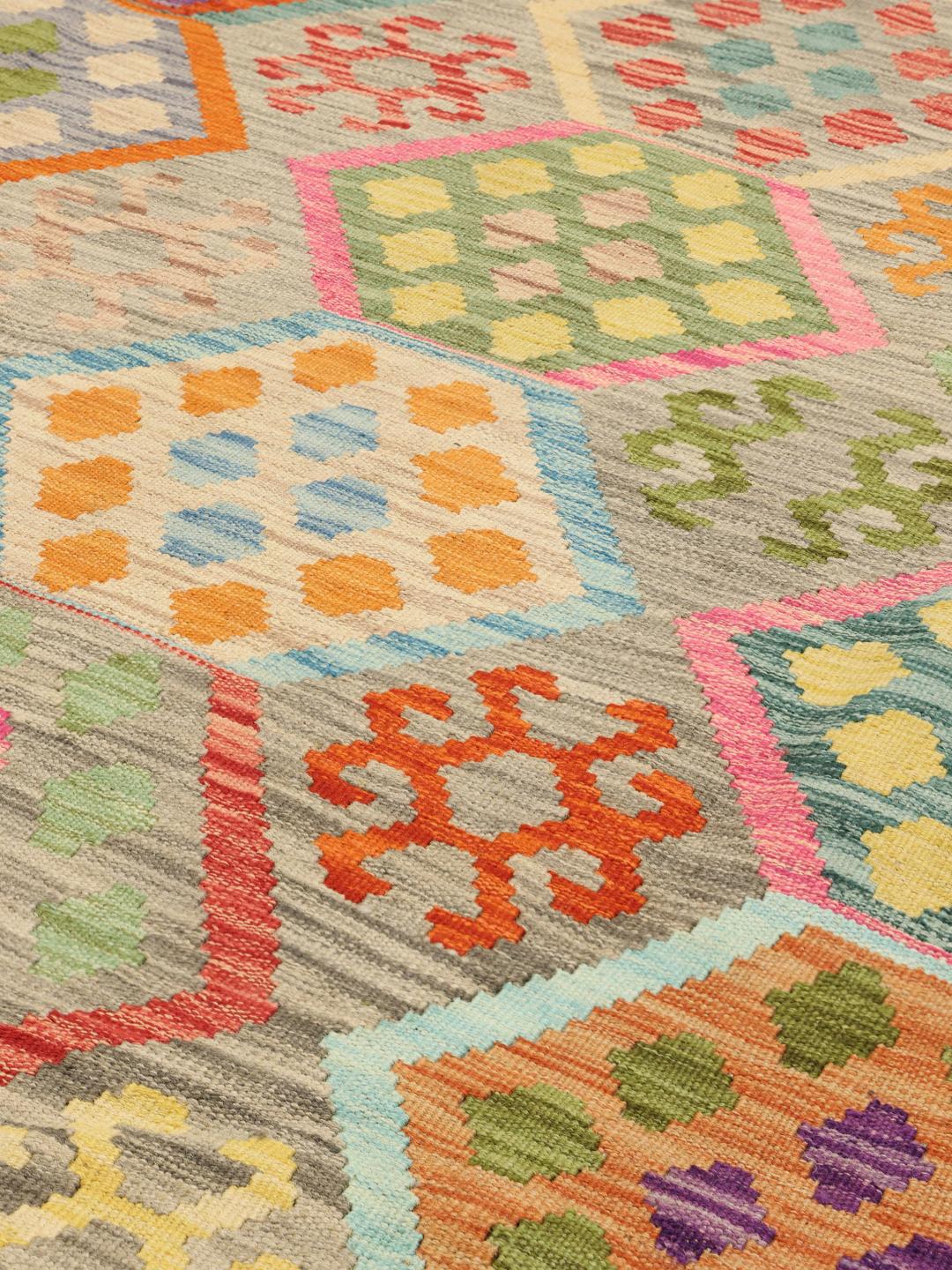
The signature design elements of these rugs often include geometric motifs, such as the repeating hexagons or 'honeycomb' patterns seen here. These symbols are not merely decorative but are deeply rooted in the cultural visual language of the region, often representing protection, prosperity, or the natural world. The use of vibrant, contrasting colours is a hallmark of this style, intended to bring brightness and energy into the home.
Collecting these rugs is an investment in cultural heritage and human skill. Because each piece is created by hand without a pre-printed blueprint, the weaver's personal interpretation often manifests in subtle variations in colour and motif placement. Owning one of these rugs is a way to preserve a centuries-old craft, ensuring that these stories continue to be told in modern homes around the world.