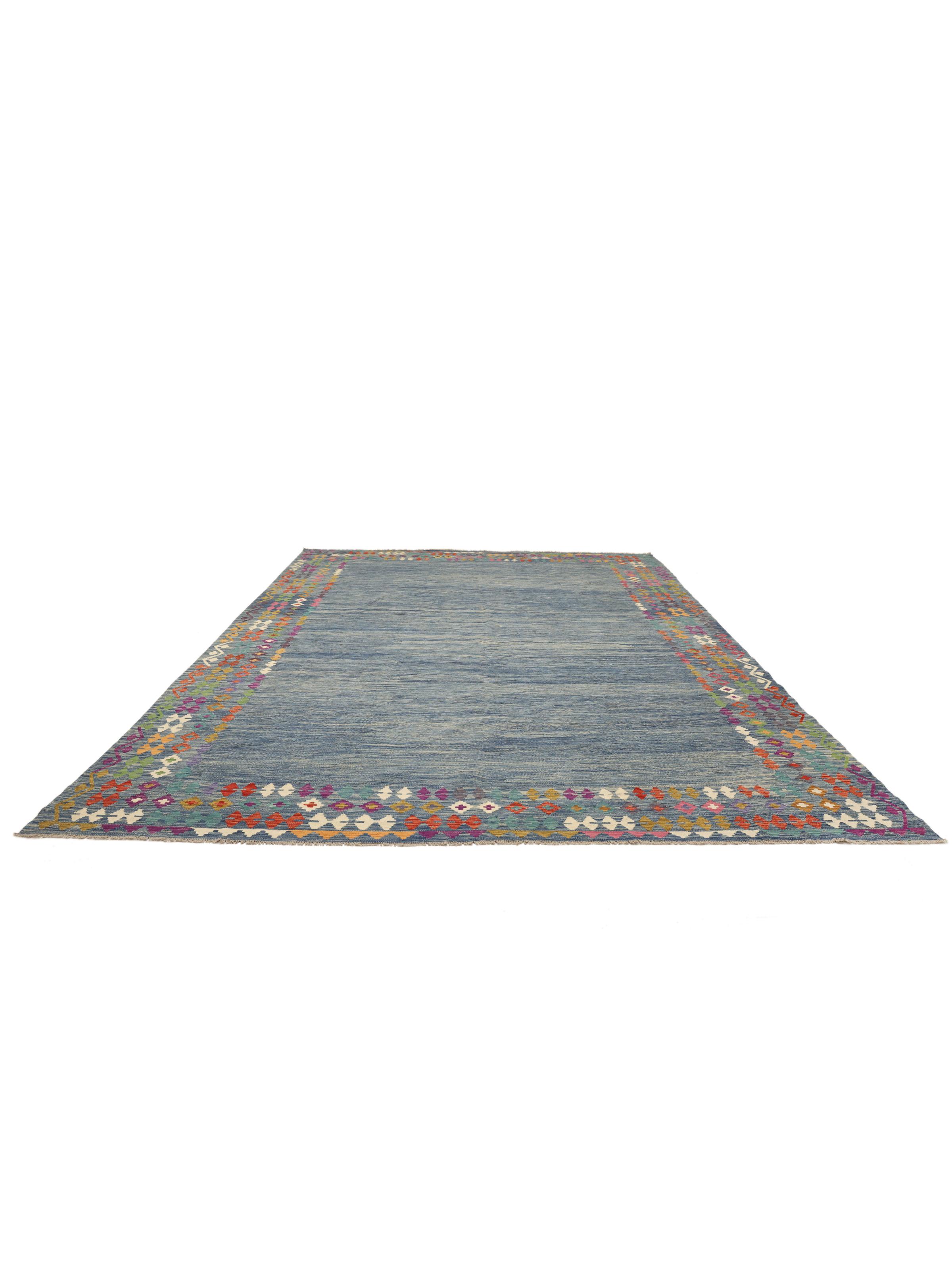
The Kelim tradition in Afghanistan is deeply rooted in the nomadic and village cultures of the Middle East, where flat-woven rugs have served as essential, portable, and functional textiles for generations. These rugs are traditionally created without a pile, making them highly versatile and prized for their durability.
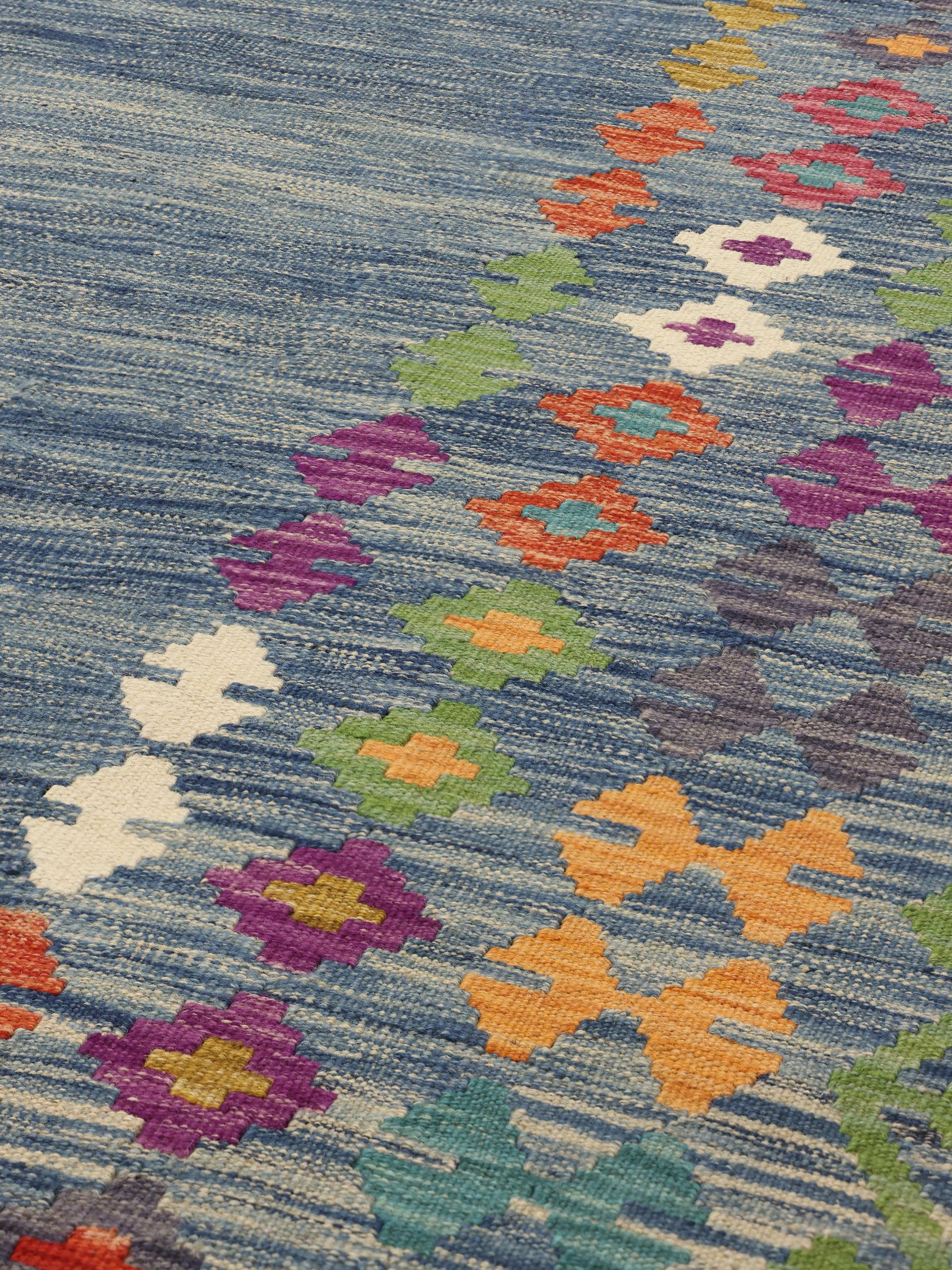
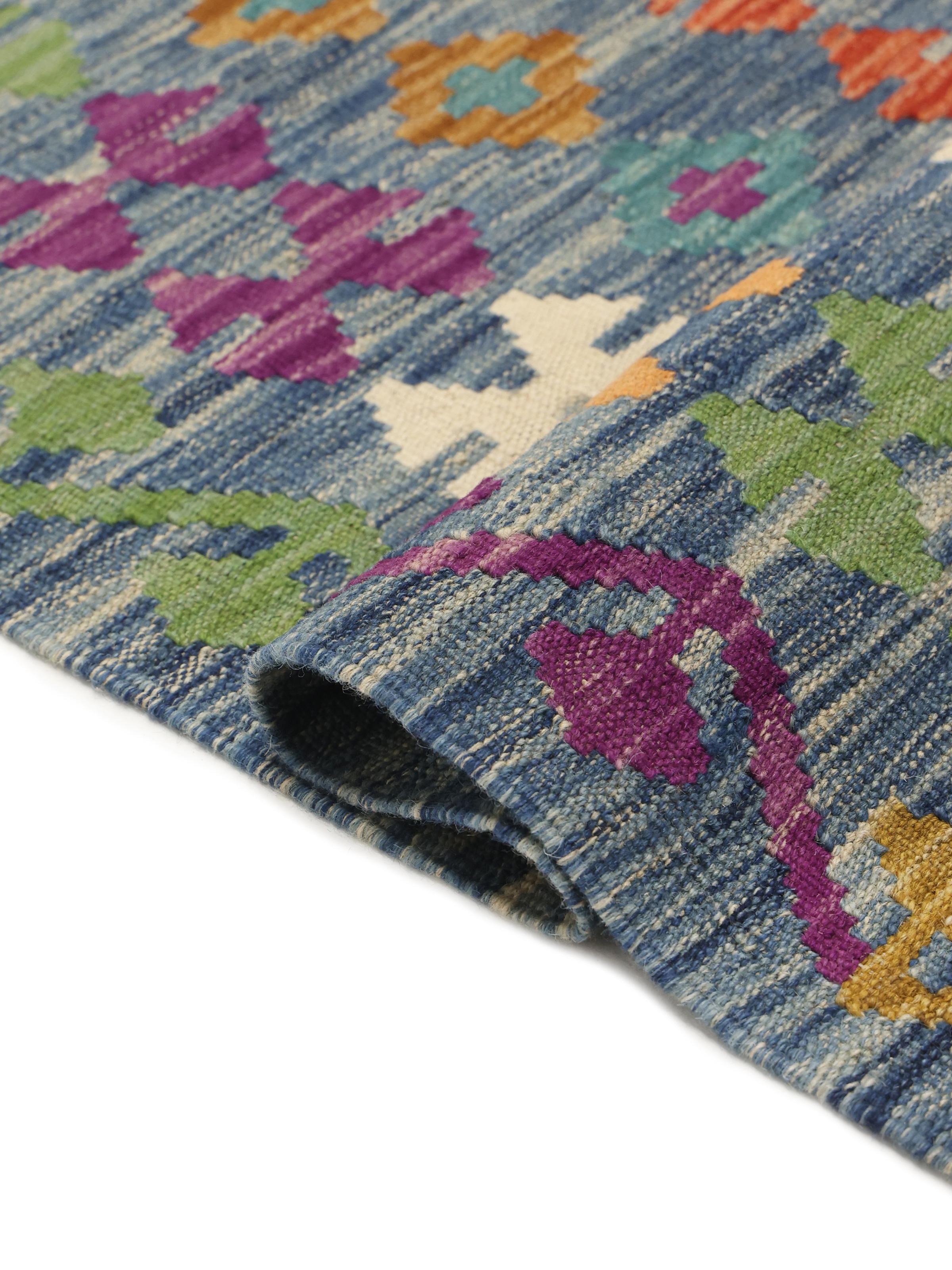
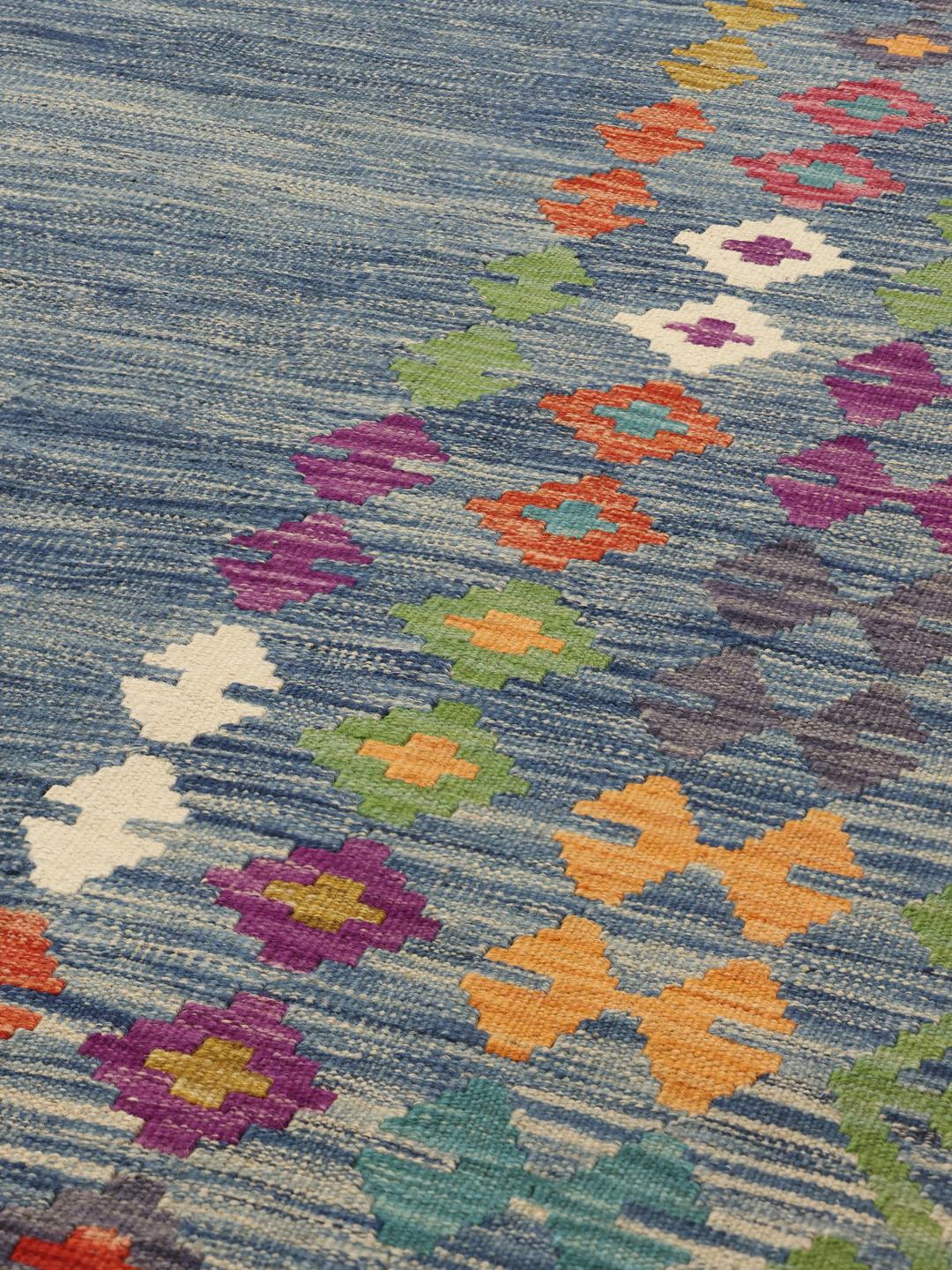
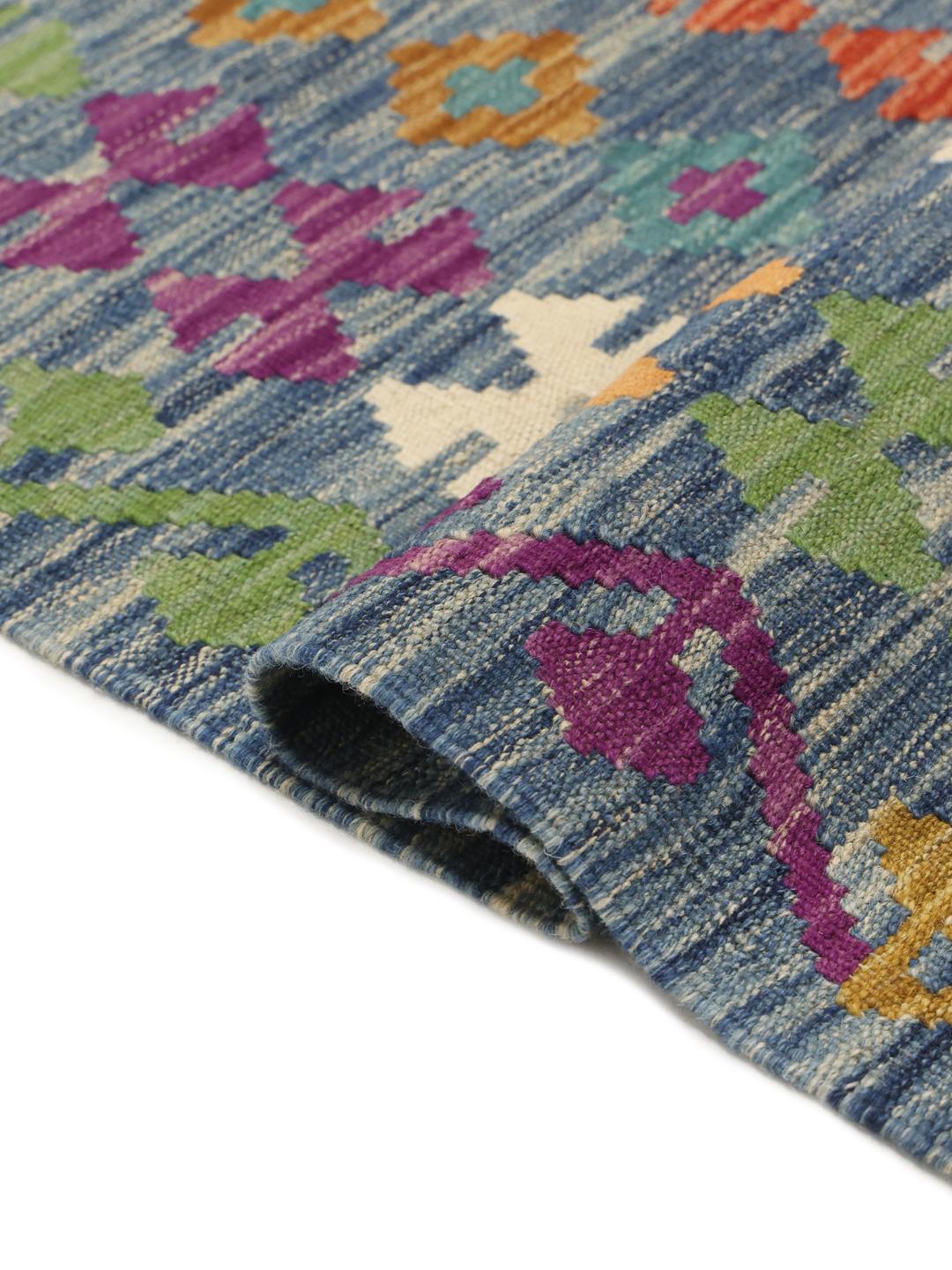
The term 'Kelim' refers to a specific weaving technique where the weft threads are pulled tightly over the warp threads, effectively hiding the vertical foundation and allowing the weaver to create intricate, sharp-edged geometric patterns. This method produces a reversible, robust textile that is renowned for its strength and longevity.
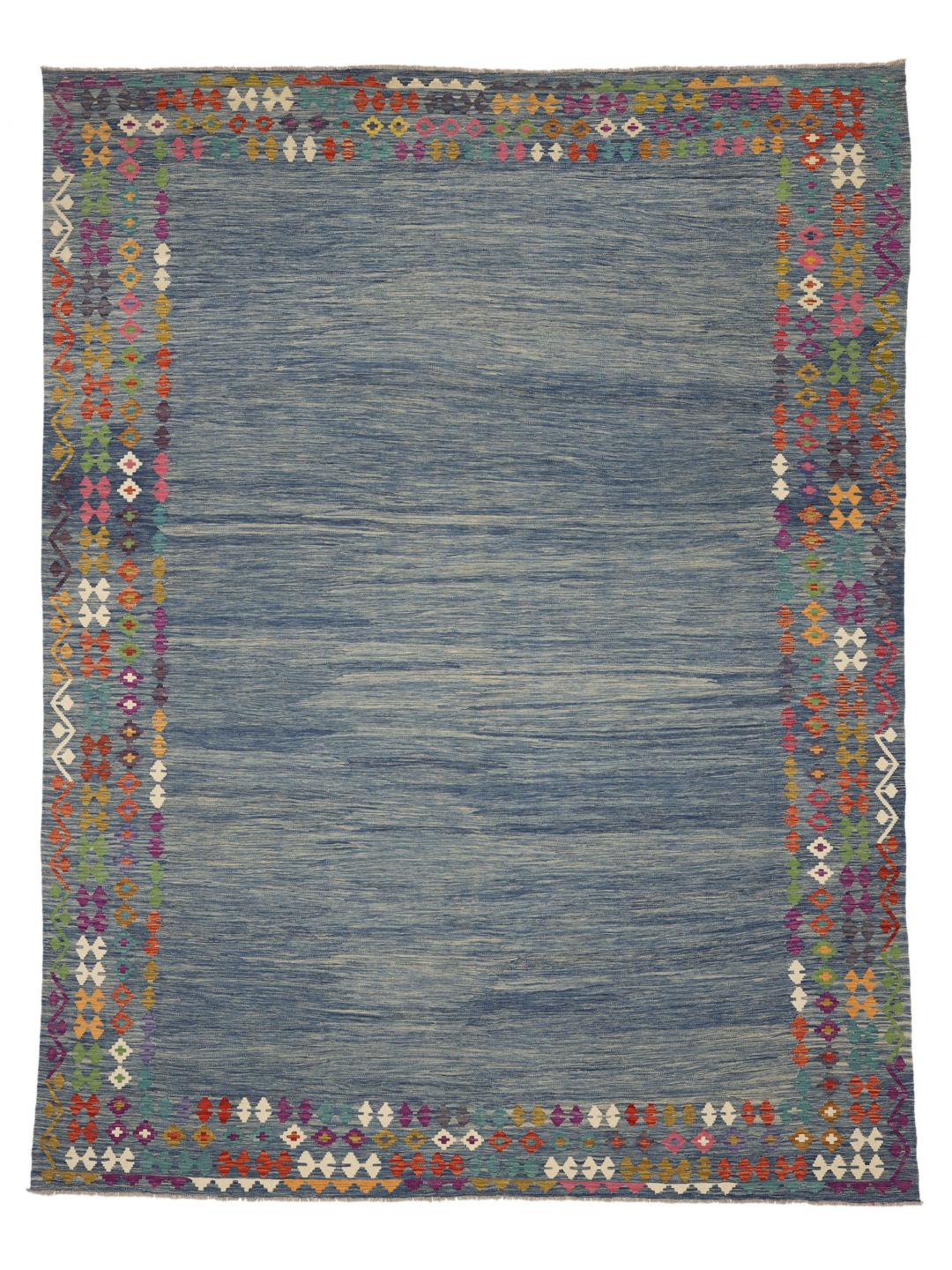
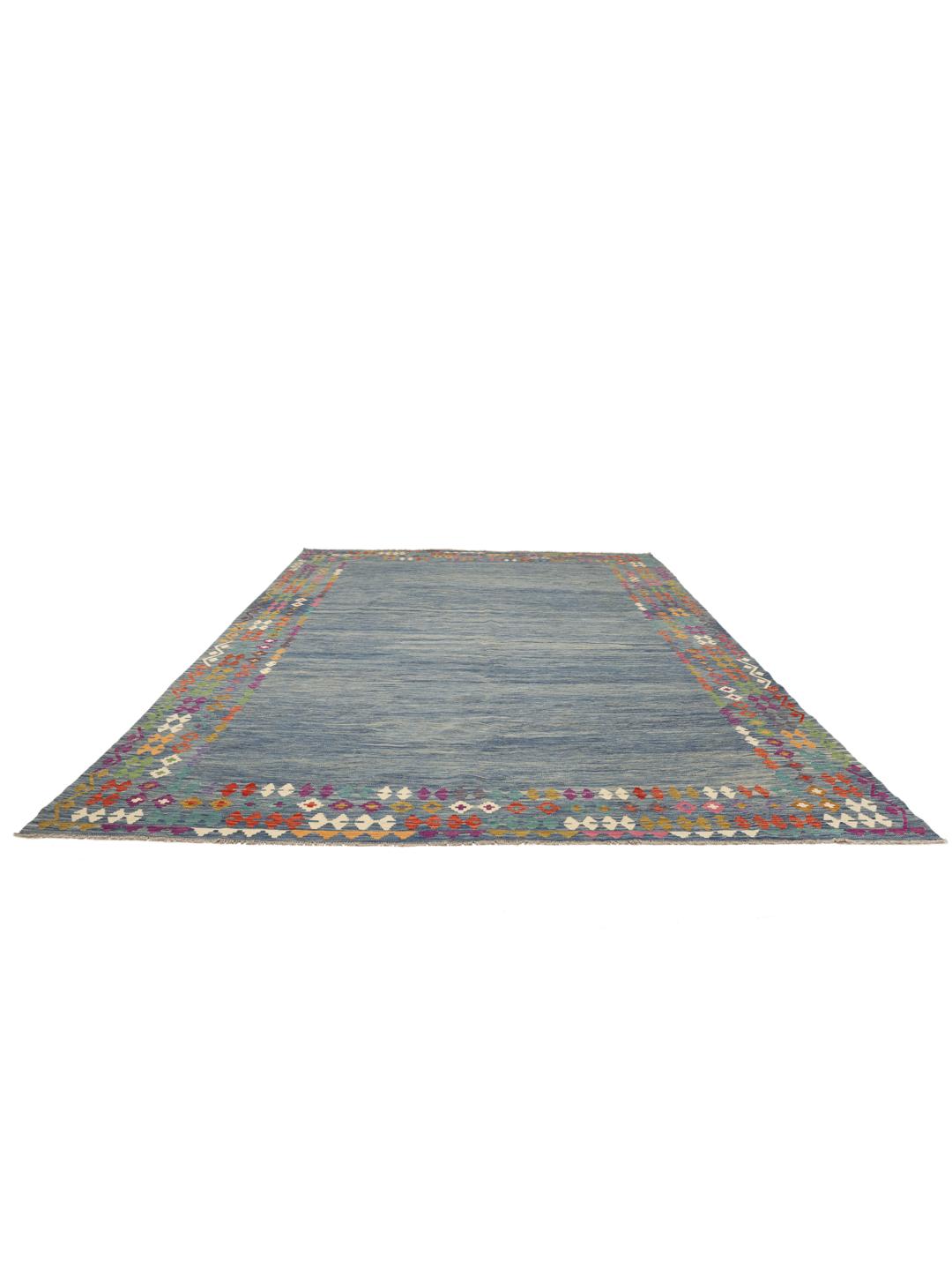
Design-wise, these rugs are often characterised by bold geometric motifs and a sophisticated use of colour. While the fields are frequently kept simple or subtly shaded, the borders are where weavers traditionally express their artistry through repeating tribal patterns and symbolic shapes. This particular piece showcases a striking contrast between the open, calm field and the lively, patterned border.
Collecting a hand-woven Afghan Kelim is an investment in cultural heritage. Because they are produced by hand using age-old techniques, they represent a connection to a slower, more deliberate way of creating beauty. Owning such a piece is a way to honour the skill of the artisans and preserve a craft that has been passed down through families for centuries.