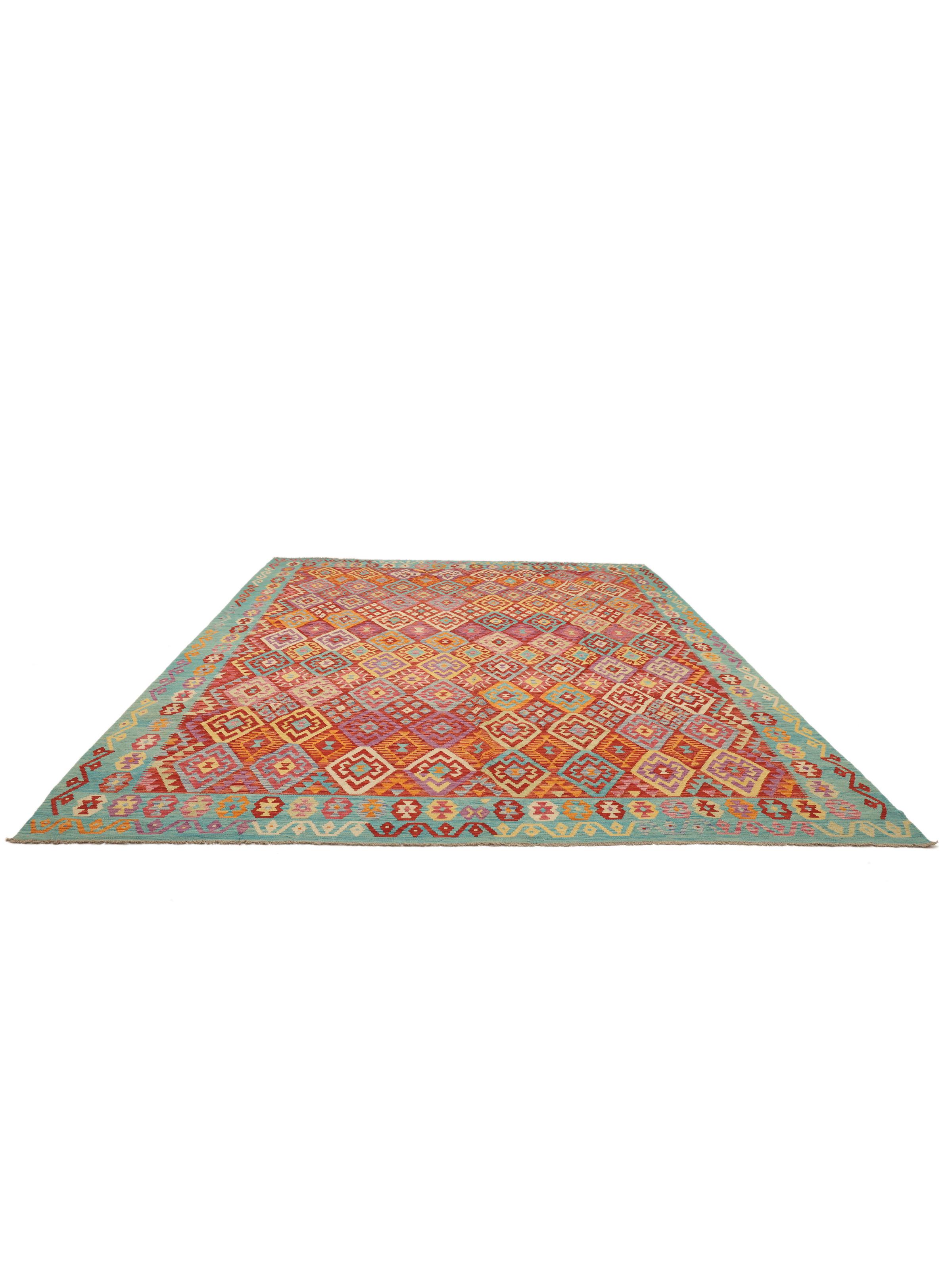
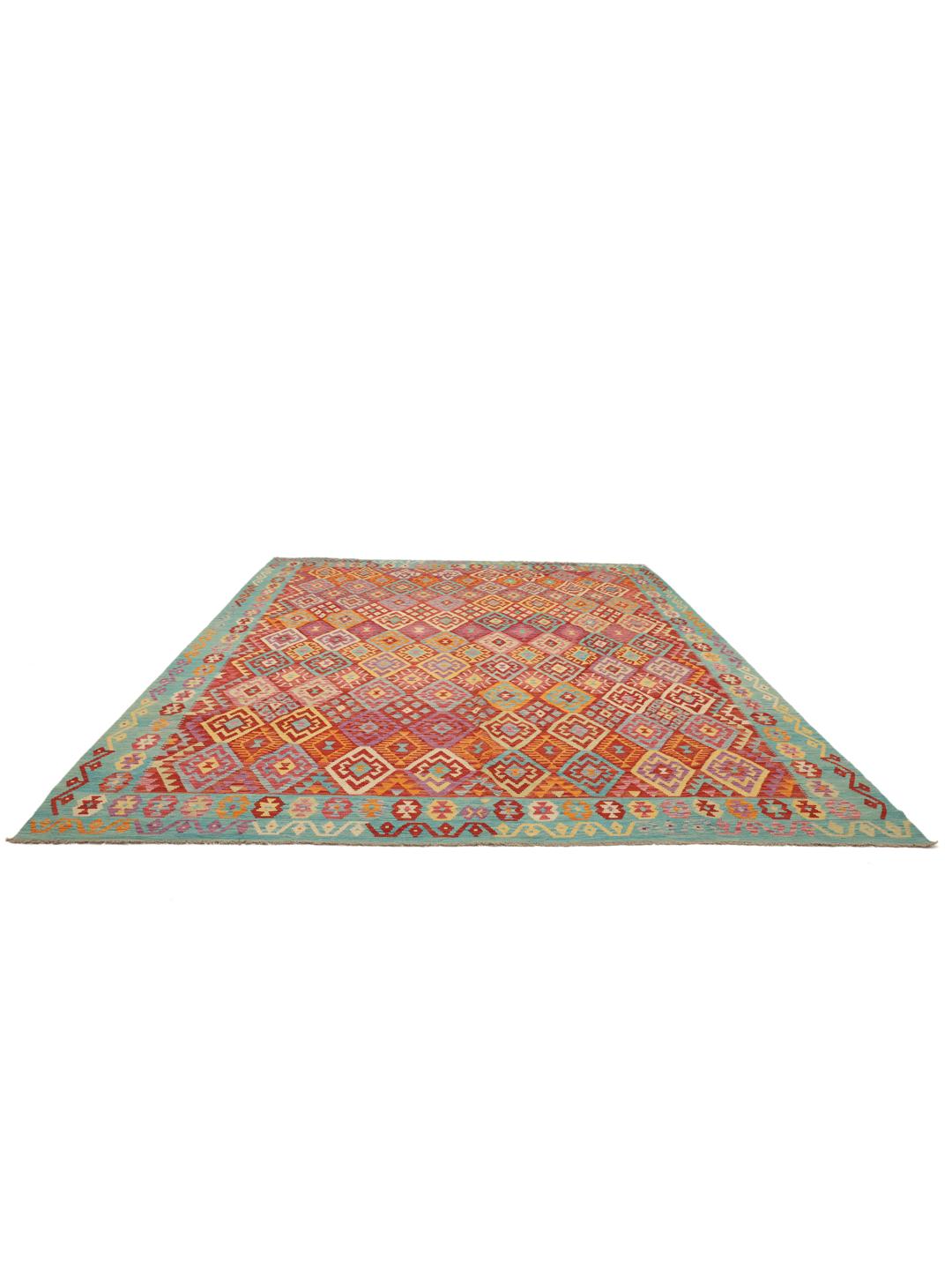
The Kelim tradition in Afghanistan is deeply rooted in the history of nomadic and semi-nomadic tribes who have traversed the rugged landscapes of the region for centuries. These flat-woven rugs were originally created for practical purposes, serving as floor coverings, wall hangings, and functional storage bags for families on the move. Over time, these textiles evolved into a sophisticated art form that encapsulates the regional spirit and the storytelling traditions of the weavers.
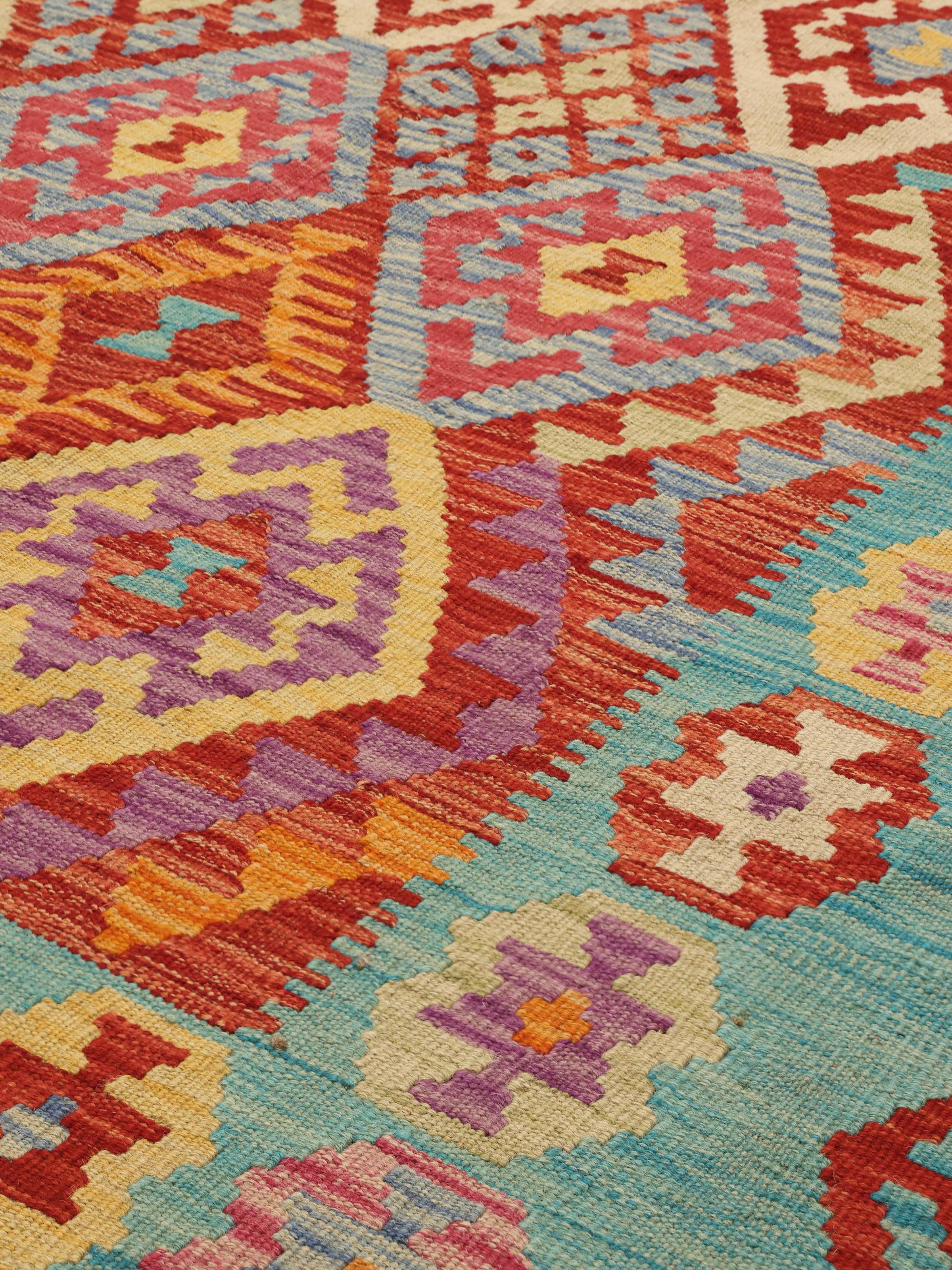
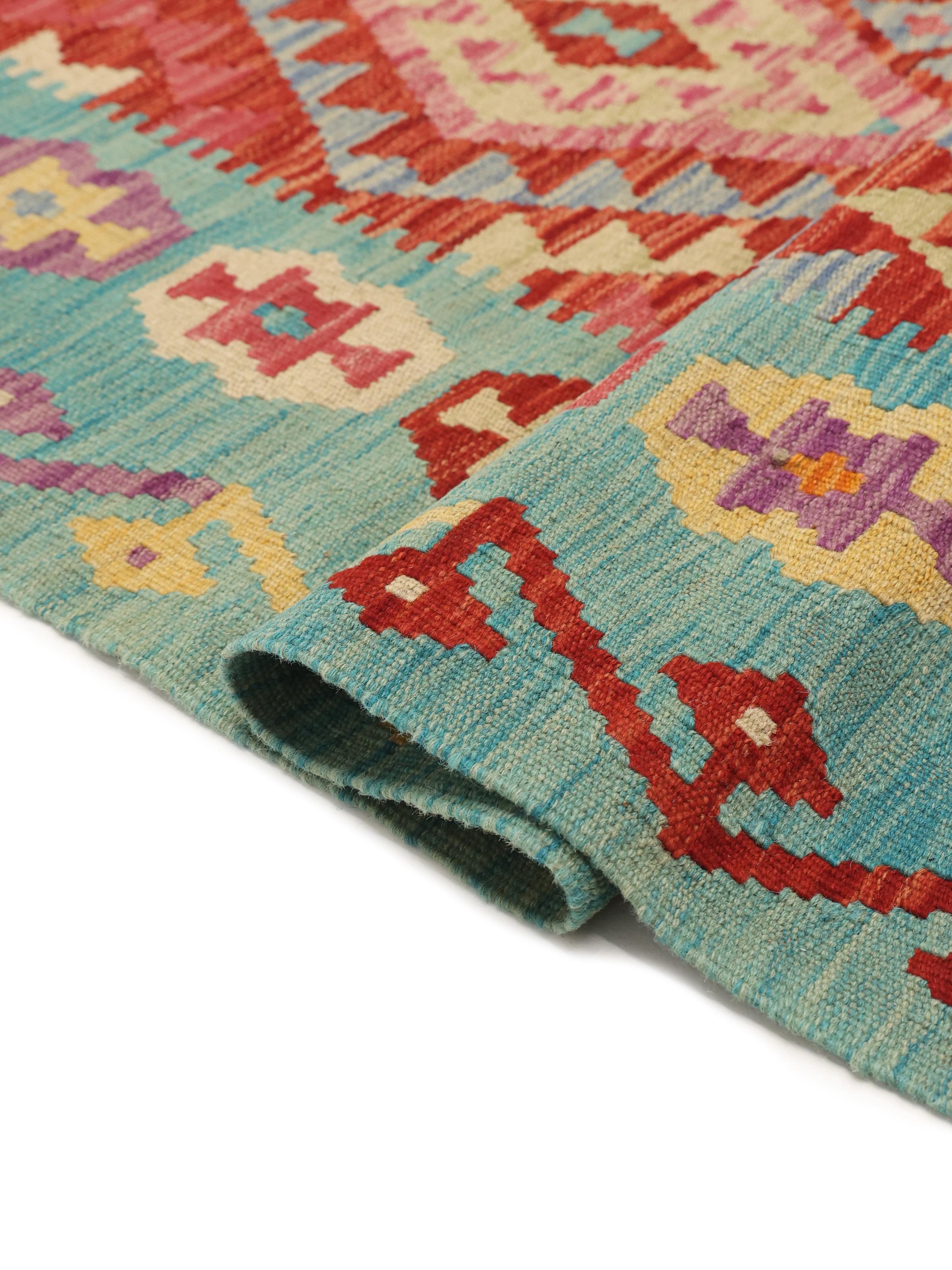
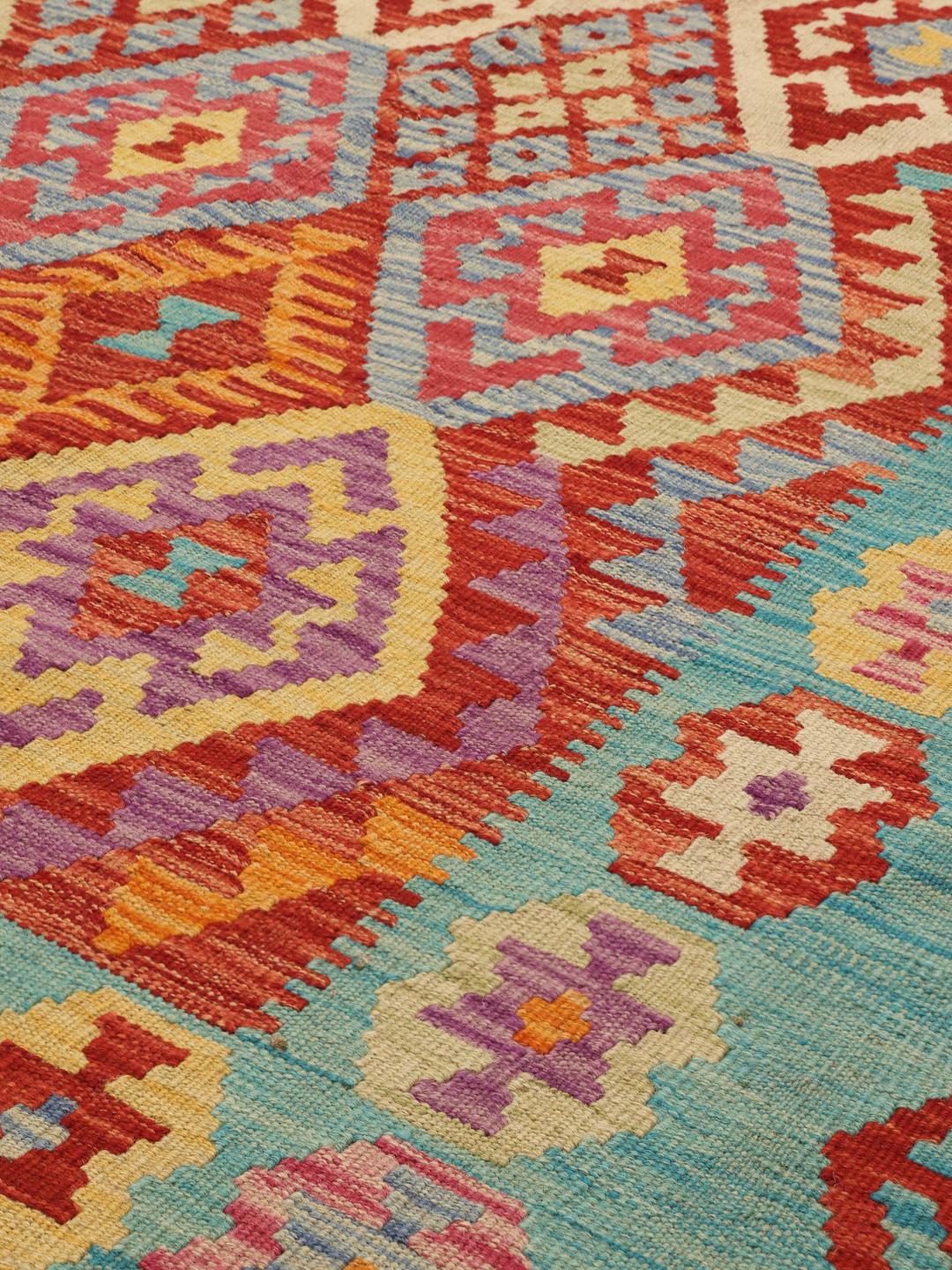
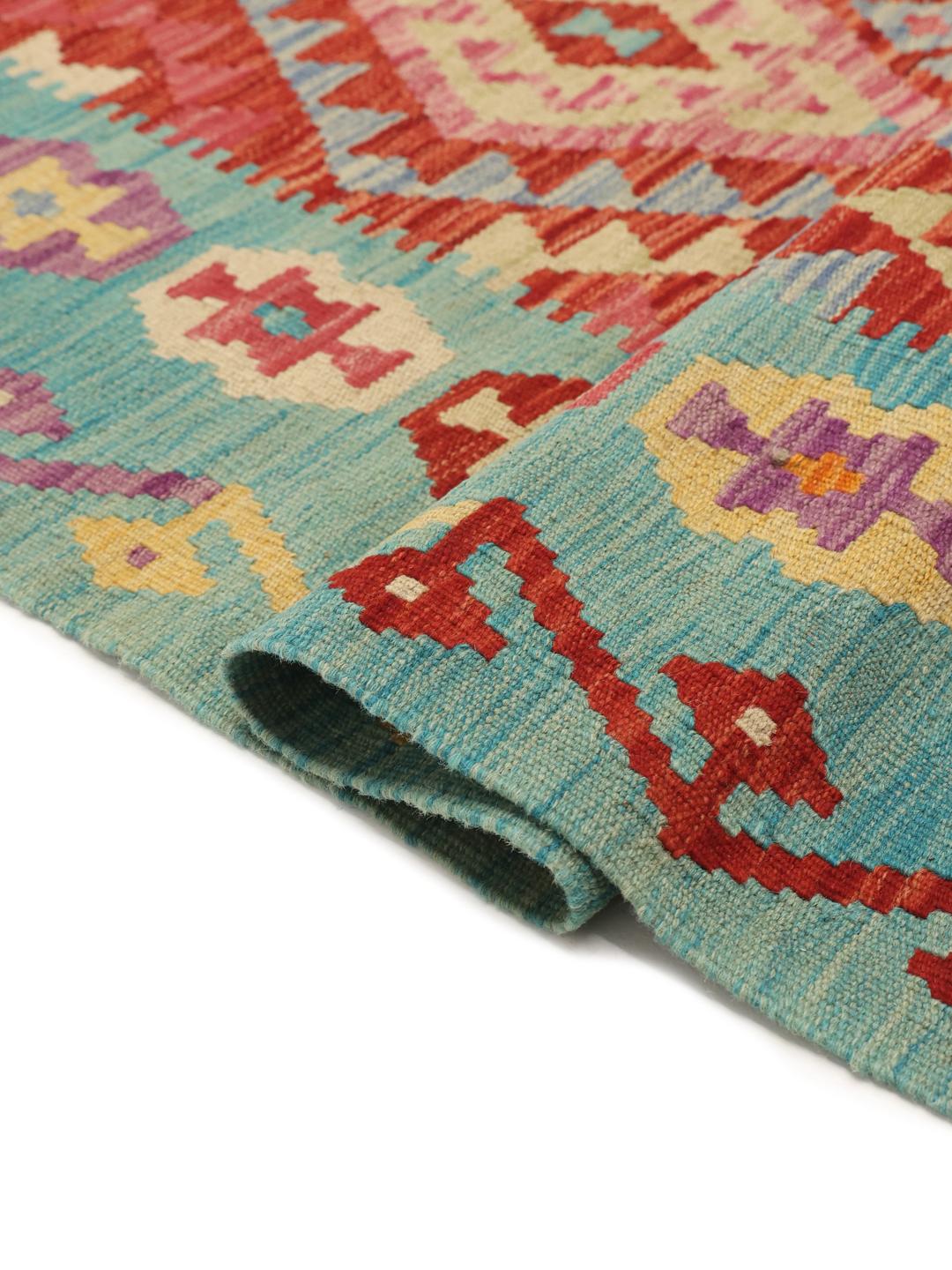
The term Kelim refers to the specific flat-weave technique where the warp and weft threads are tightly interlaced to form a smooth surface without a pile. This method requires exceptional skill, as the design is created simultaneously with the structure itself. The absence of a pile allows for sharp, clear lines and intricate geometric patterns, which are hallmark features of this style. This technique results in a lightweight yet extremely resilient fabric that has been prized for its longevity.
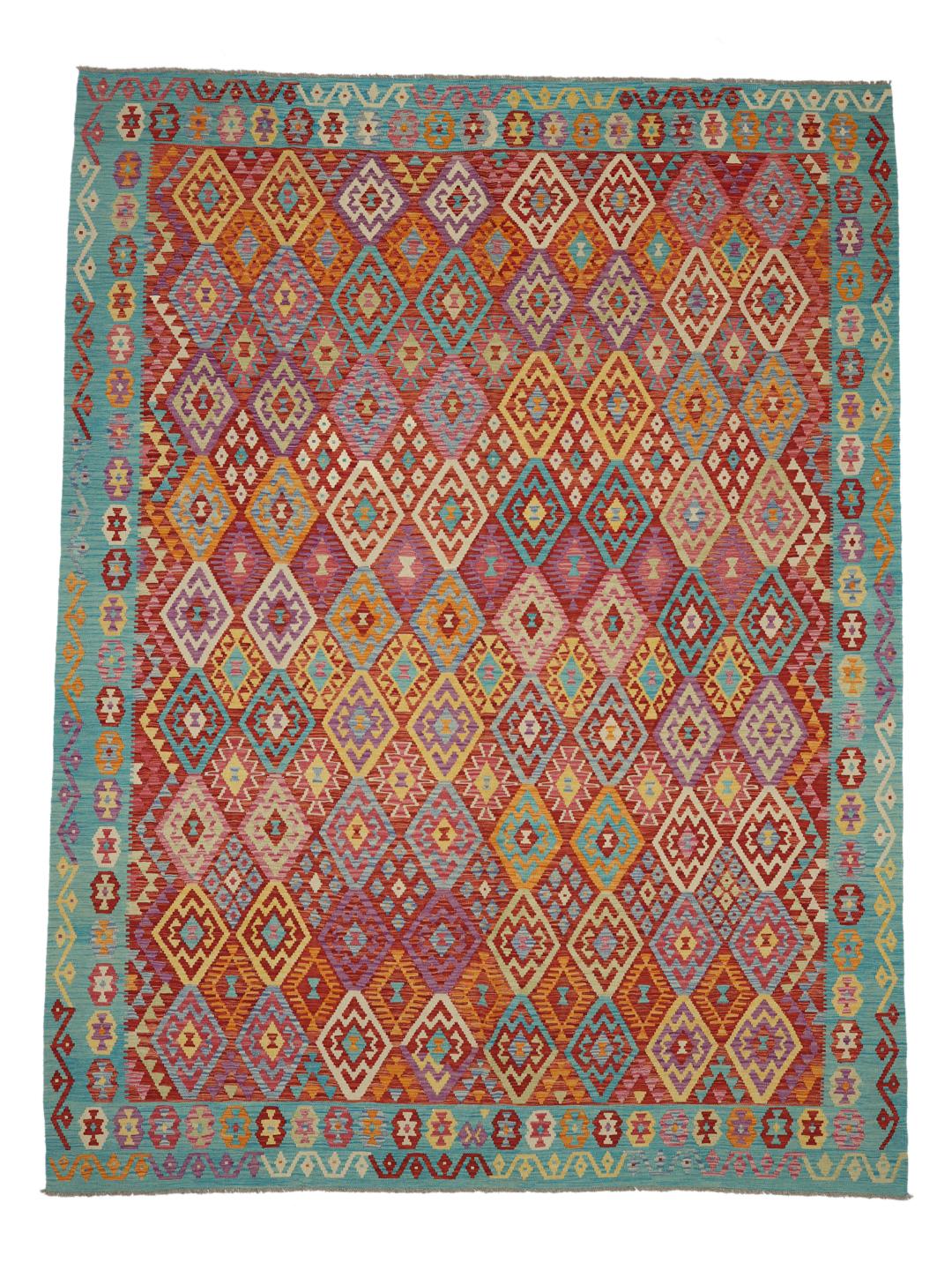
Visually, these rugs are characterised by their bold, geometric language. Common motifs often include diamonds, triangles, and stylized floral elements, all arranged in a rhythmic, balanced composition. The colour palettes are traditionally derived from natural dyes, reflecting the hues of the local environment. This particular piece stands out for its vivid, multi-coloured display, which showcases the weaver's ability to harmonise complex shades into a cohesive and captivating design.
Beyond their physical beauty, these rugs are valued by collectors for their cultural significance and the human effort embedded in every weave. Owning a Kelim is more than just acquiring a floor covering; it is a way to preserve a rich craft tradition and bring a sense of heritage into a modern home. Each rug represents a unique chapter in the history of Afghan textile art, making it a valuable acquisition for those who appreciate authenticity and lasting quality.