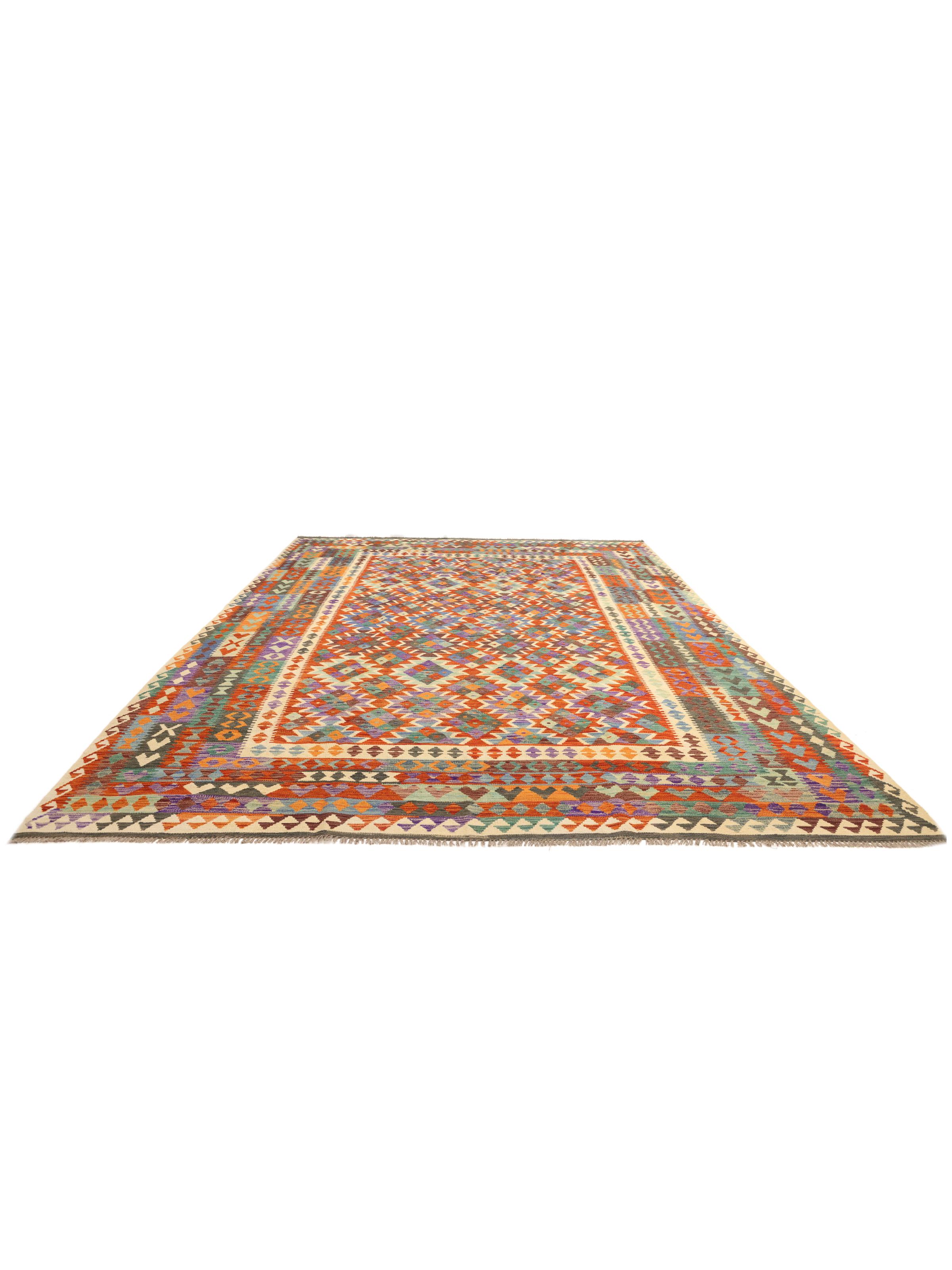
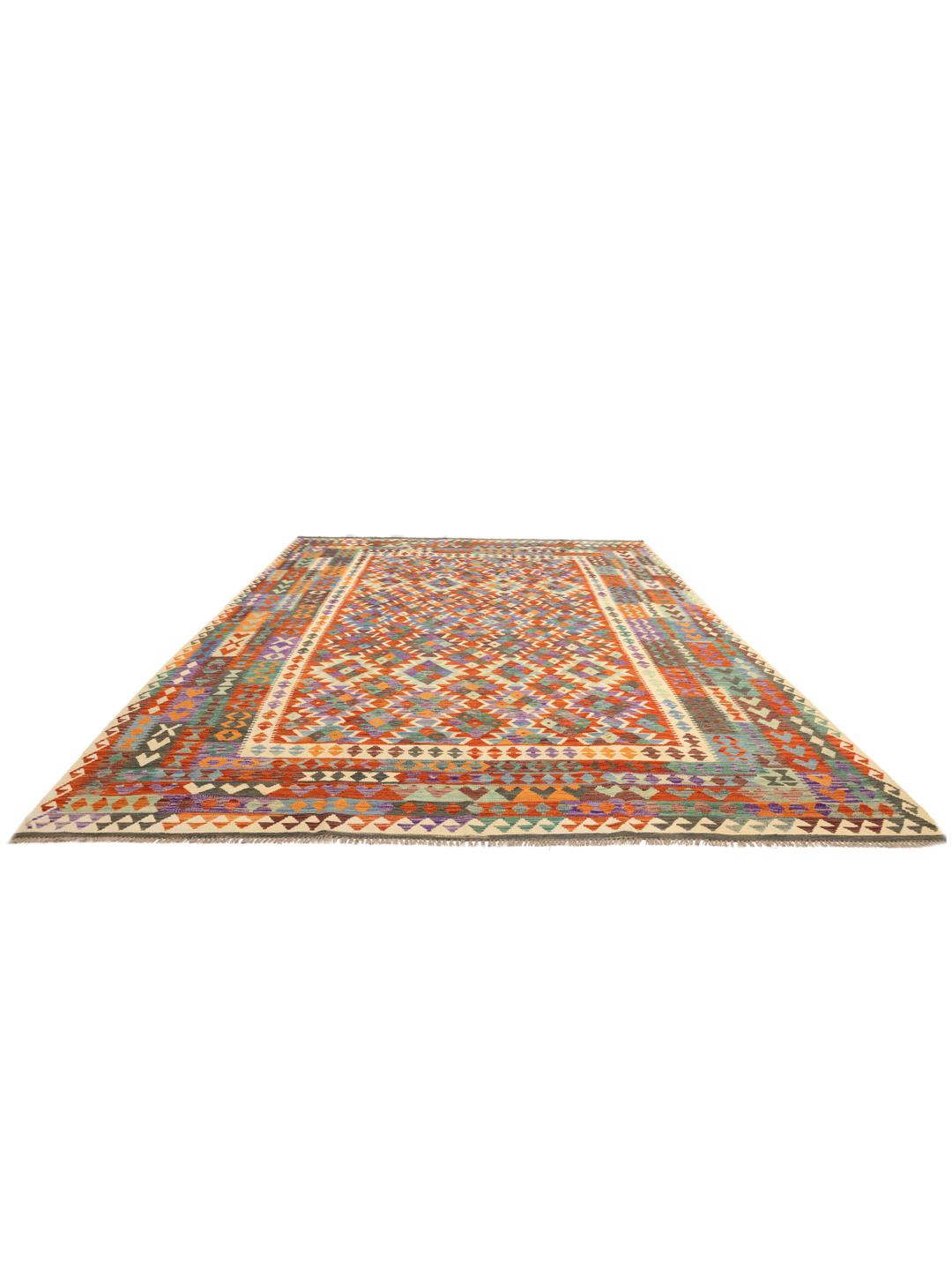
Kelim rugs originate from the nomadic and semi-nomadic tribes of the Middle East and Central Asia, including the rugged landscapes of Afghanistan. Historically, these textiles served essential practical functions, acting as floor coverings, blankets, and storage sacks during seasonal migrations. Their flat-woven nature made them portable and versatile, perfectly suited to the lifestyle of the weavers who created them.
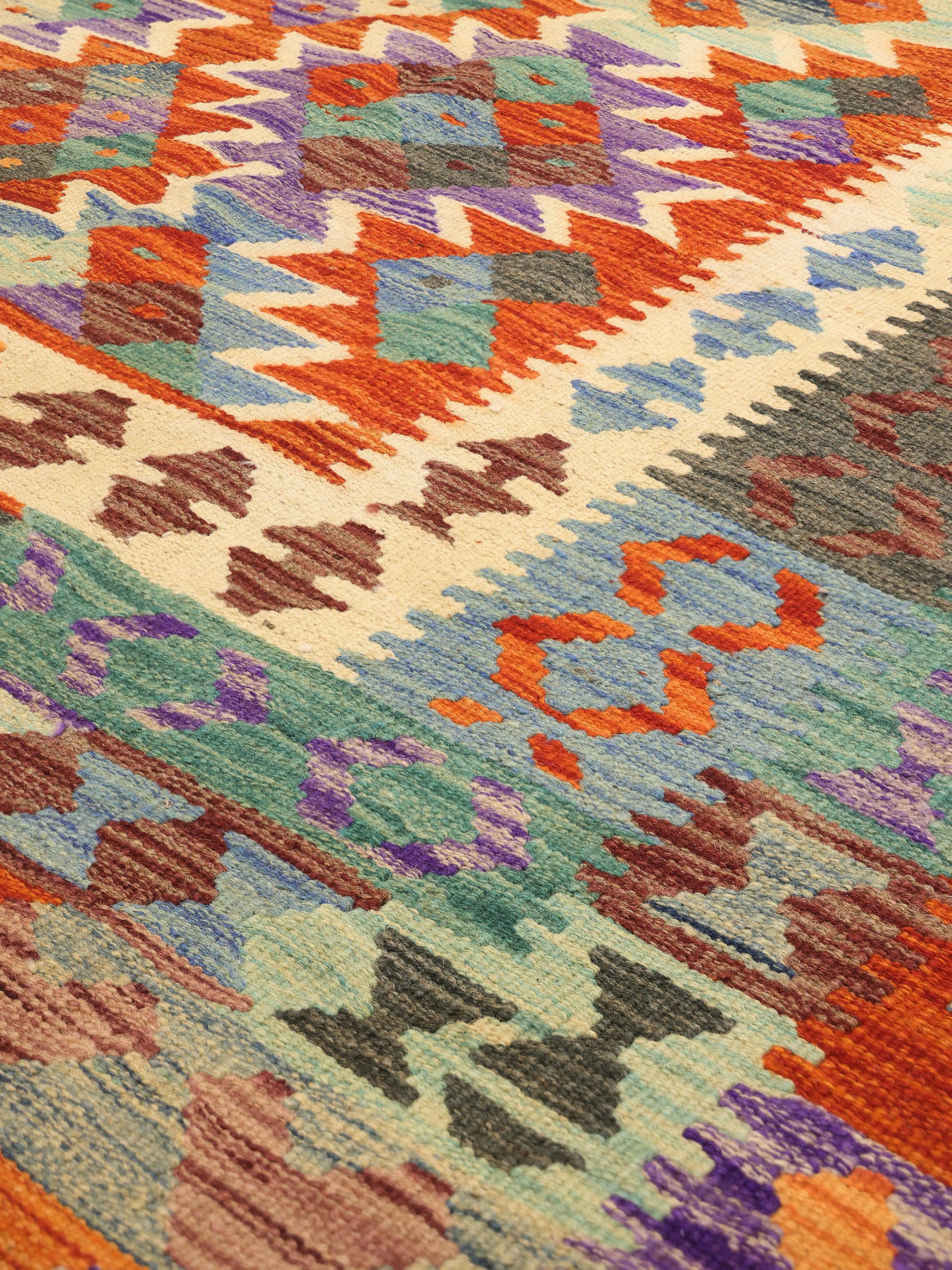
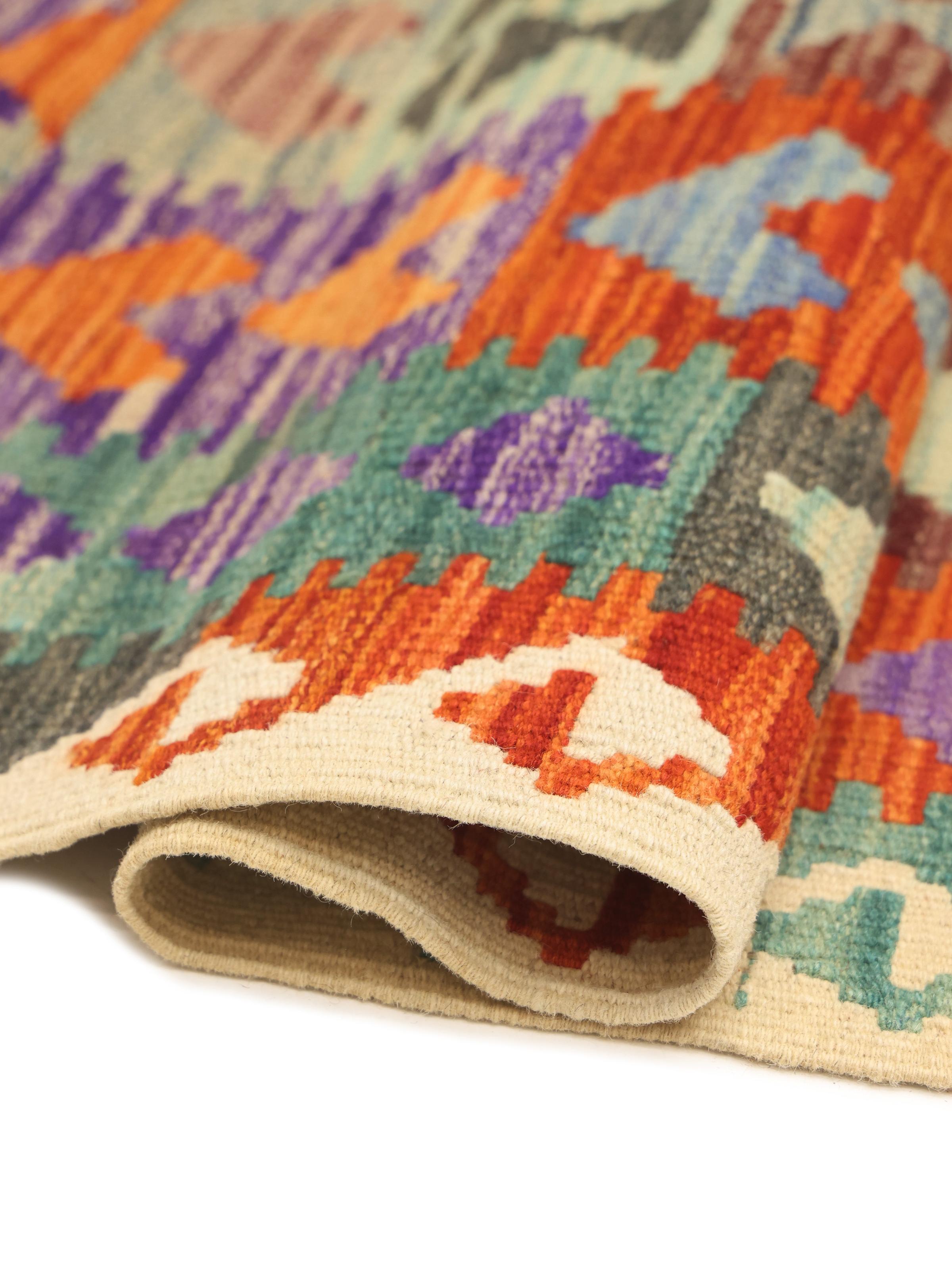
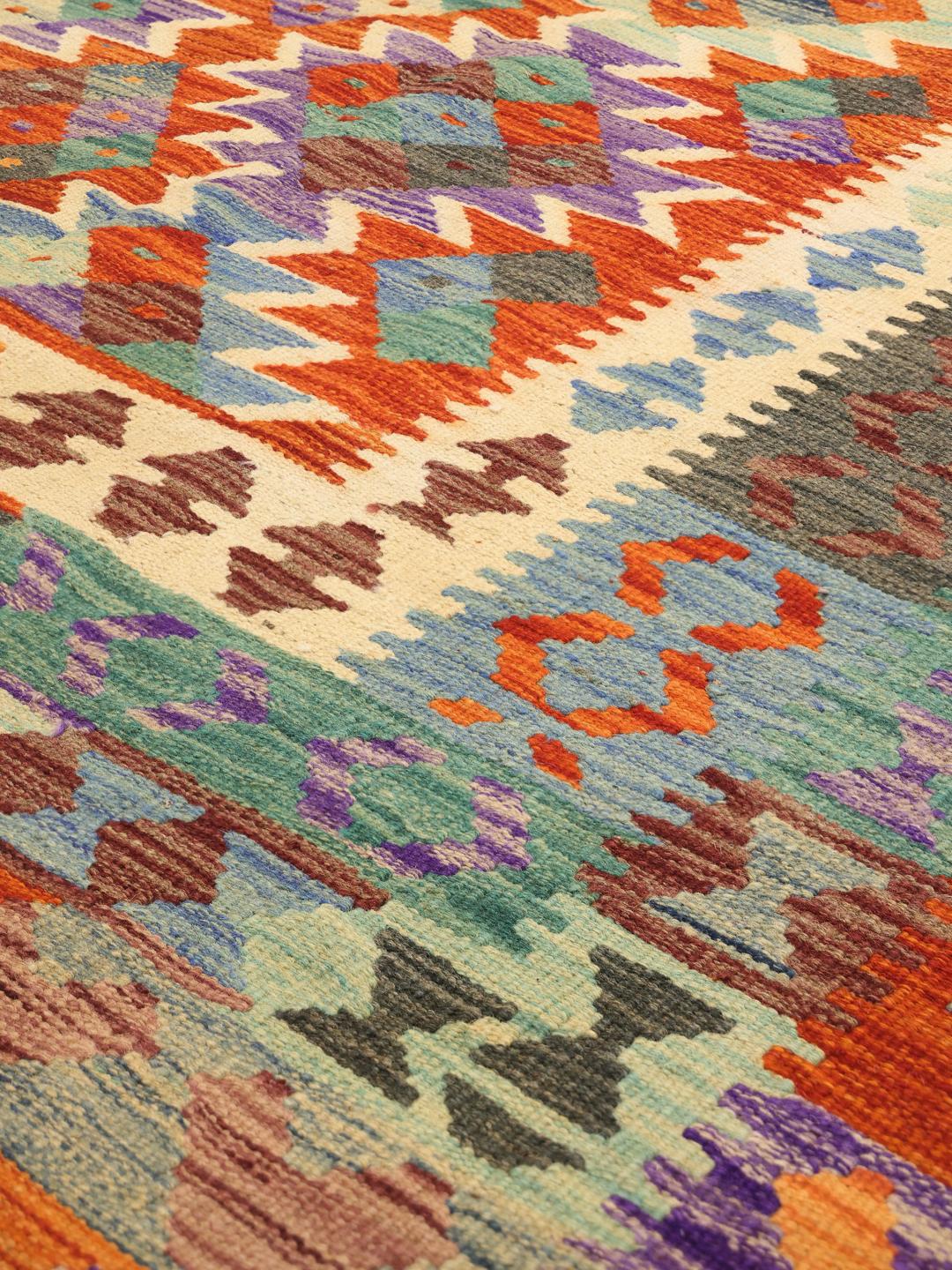
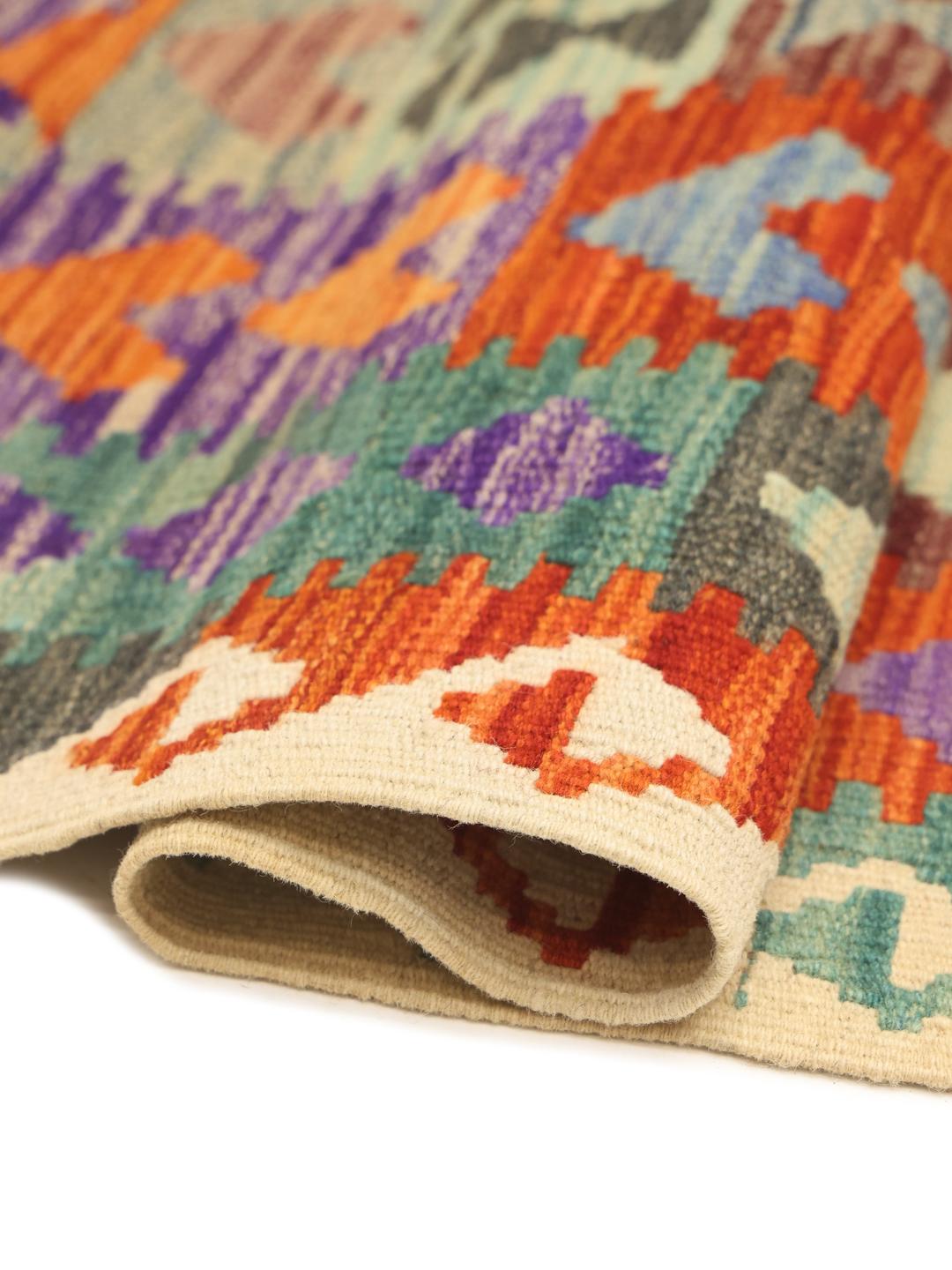
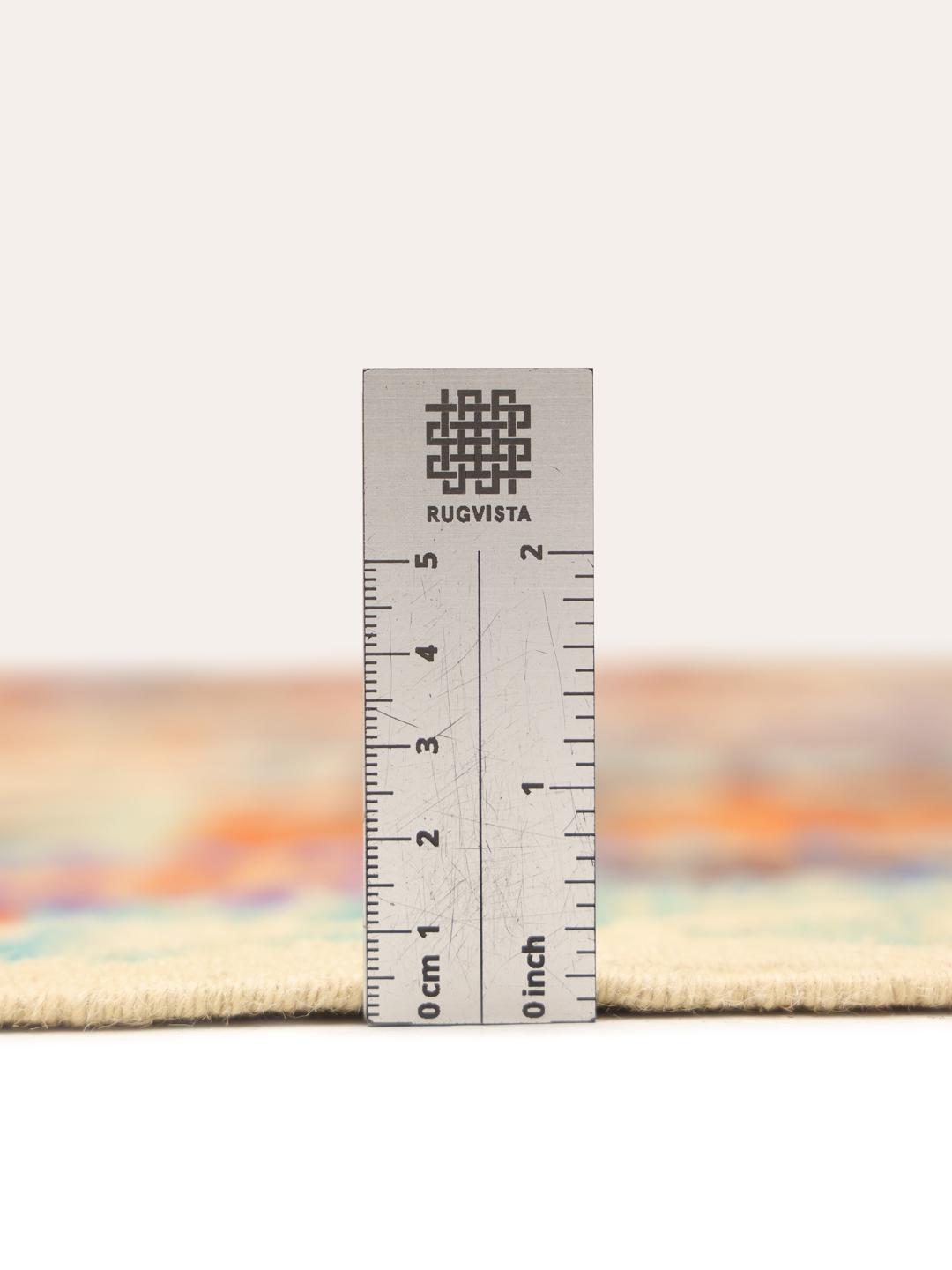
The term 'Kelim' refers specifically to the tapestry-weaving technique where there is no pile. Instead, the coloured weft threads are woven tightly over the warp threads to create the design. This technique results in a reversible rug with a clean, graphic aesthetic, where the pattern is visible on both sides. The lack of pile requires a high degree of precision, as the weaver must manage the colour transitions with exactitude to prevent gaps in the fabric.
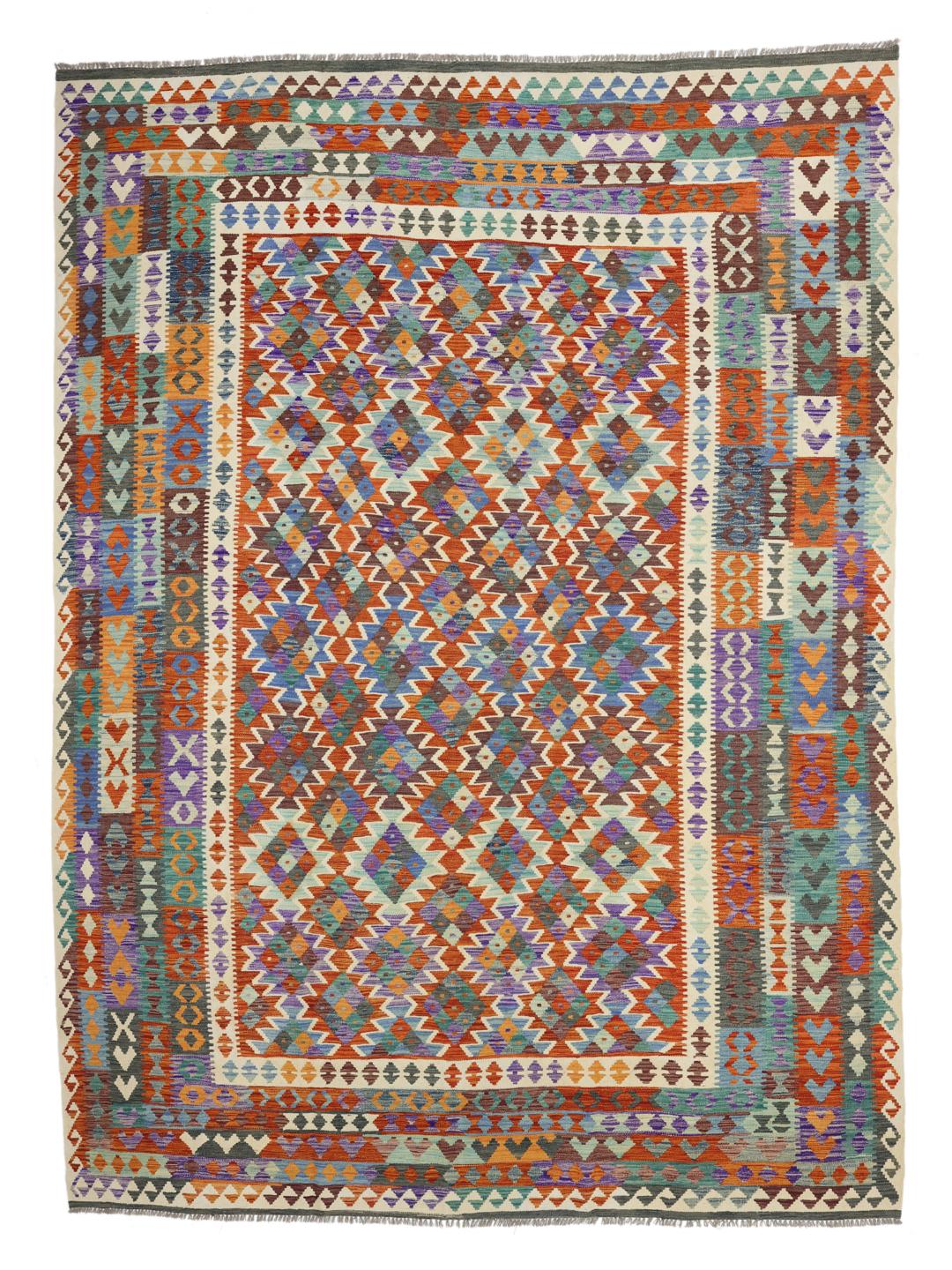
Design-wise, these rugs are defined by their geometric vocabulary. Diamonds, zig-zags, and stylized tribal motifs are standard, often arranged in repeating sequences that reflect the weaver's personal and cultural identity. The borders often feature secondary patterns that frame the central field, providing a sense of balance and completeness to the composition.
Owning a piece from this tradition is a connection to a long-standing craft culture. These rugs are highly valued by collectors for their authenticity and the human story embedded in every thread. They represent a bridge between ancient nomadic traditions and contemporary interior aesthetics, offering a sense of heritage and enduring skill that is becoming increasingly rare in modern home decor.