The Kelim tradition in Afghanistan is deeply rooted in the nomadic and semi-nomadic heritage of Central Asia. These flat-woven rugs have been produced for generations, serving as essential, versatile items in the daily lives of regional tribes. Historically used as floor coverings, wall hangings, and even storage bags, they were designed to be both portable and highly durable, reflecting a culture that valued utility alongside artistic expression.
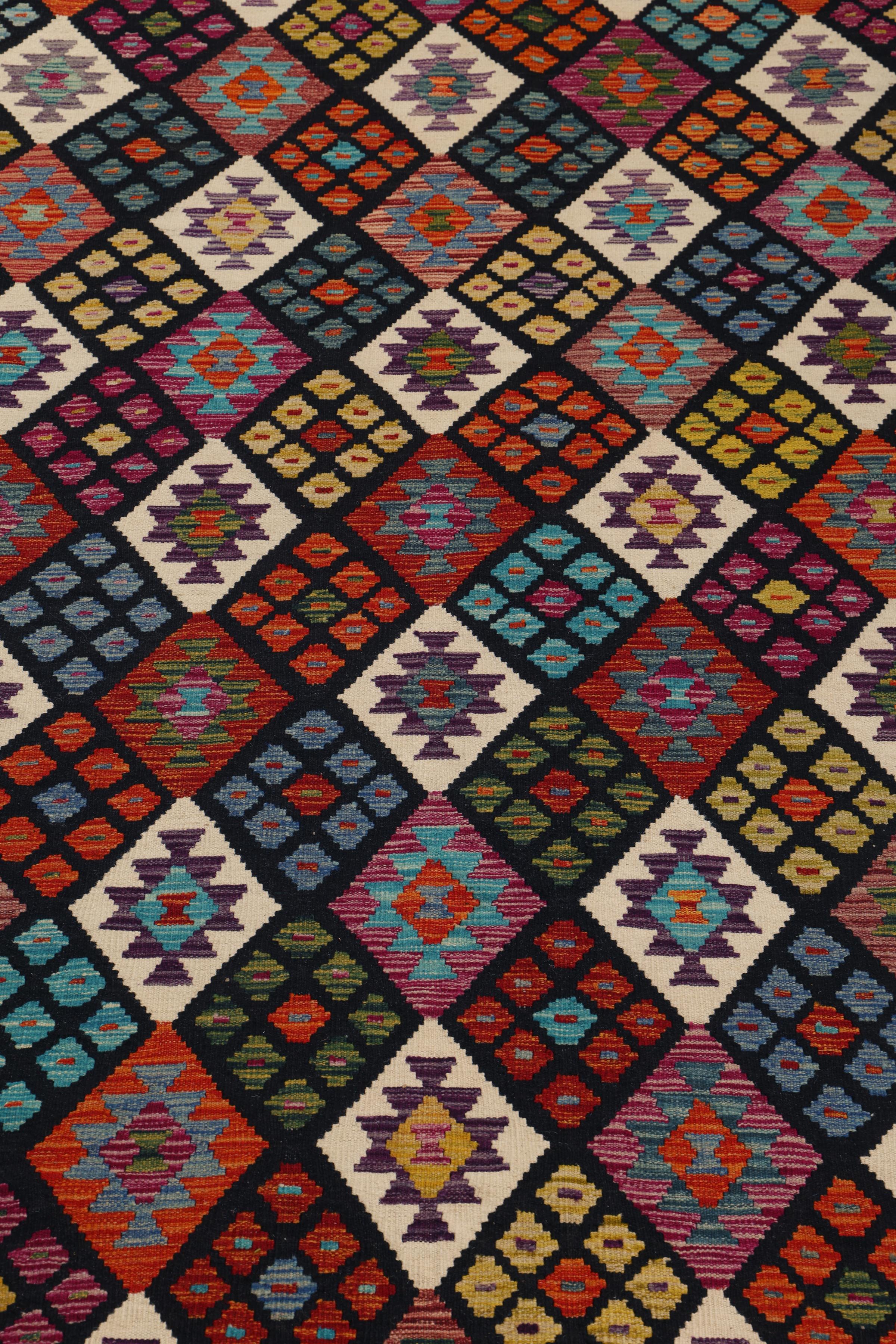
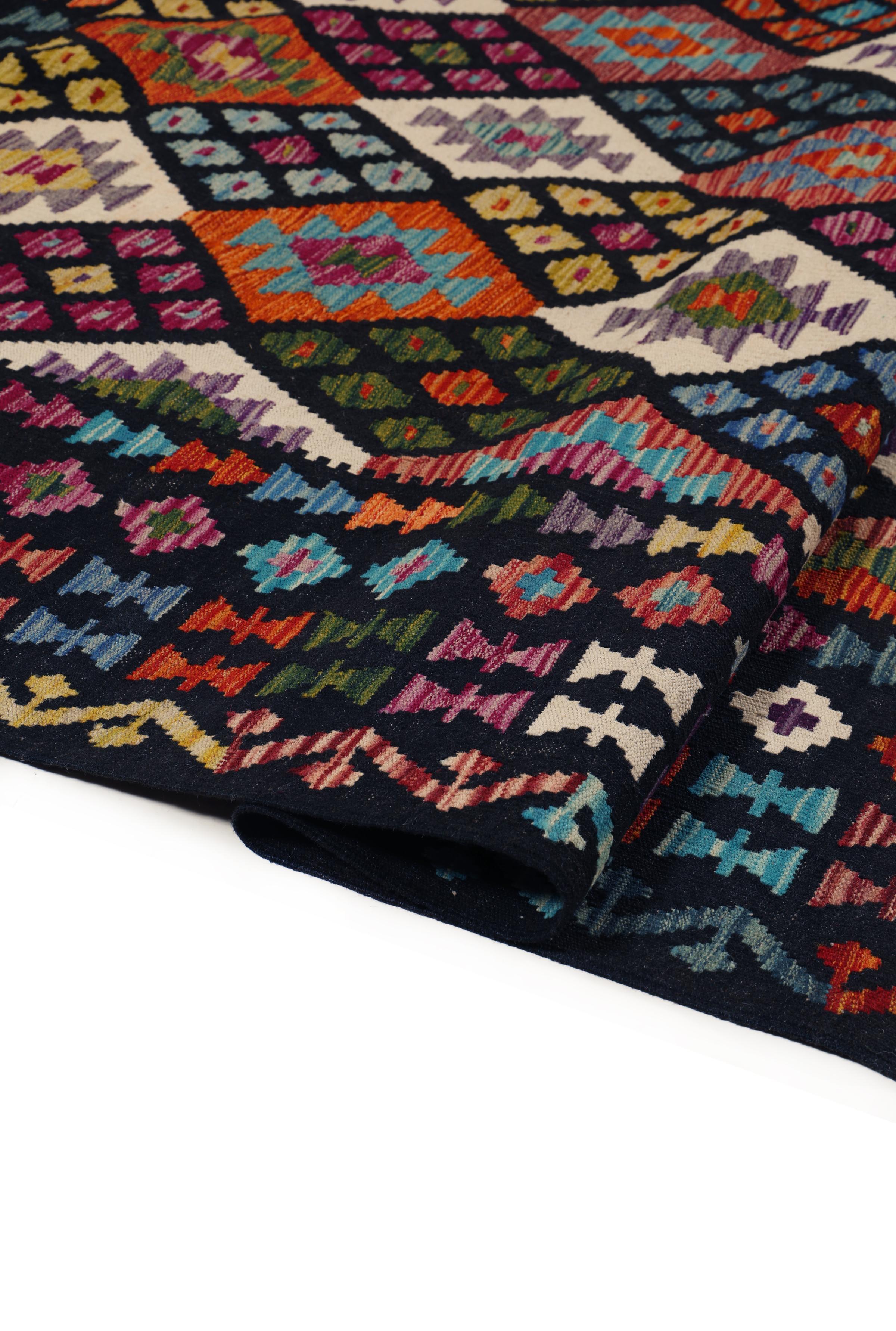
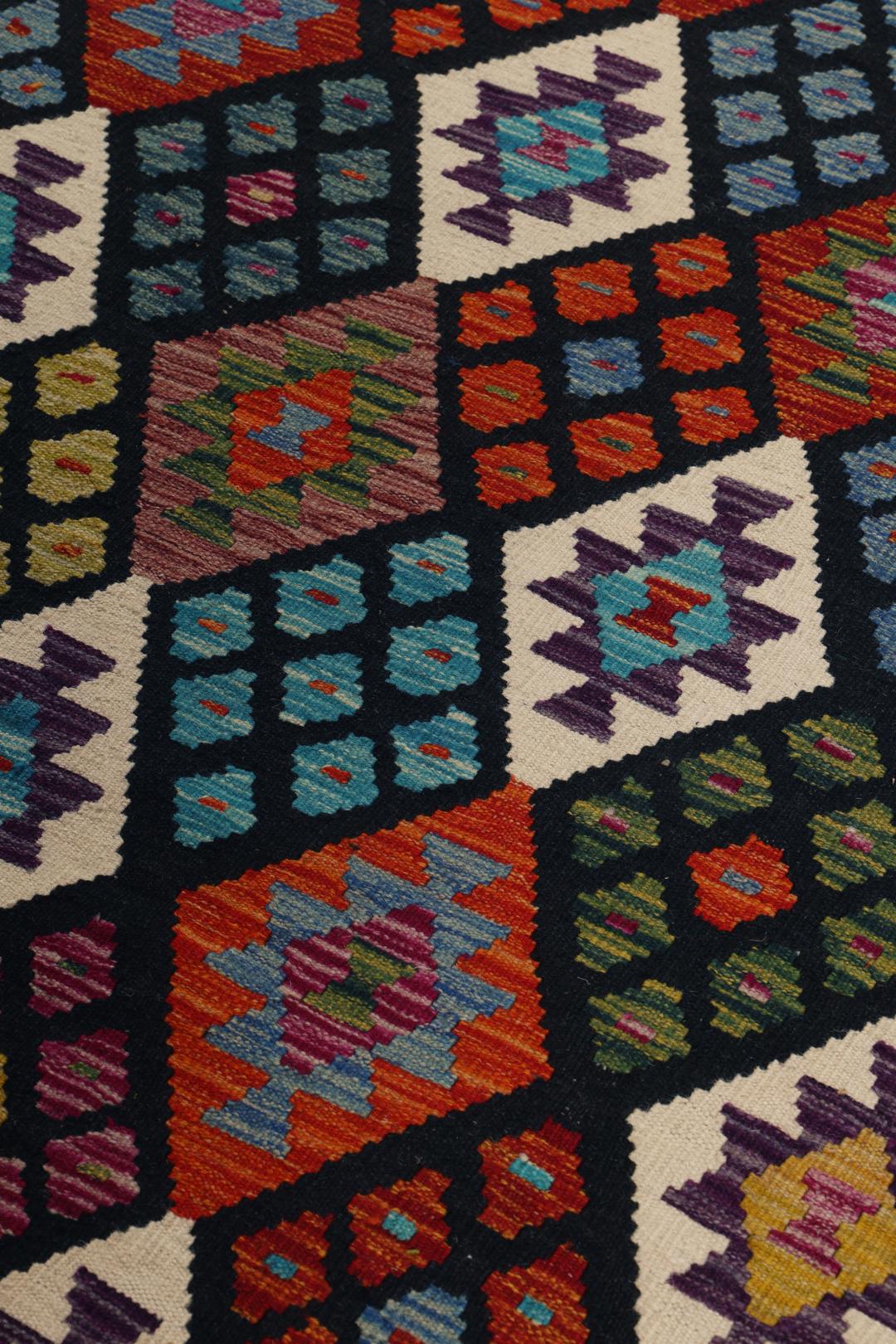
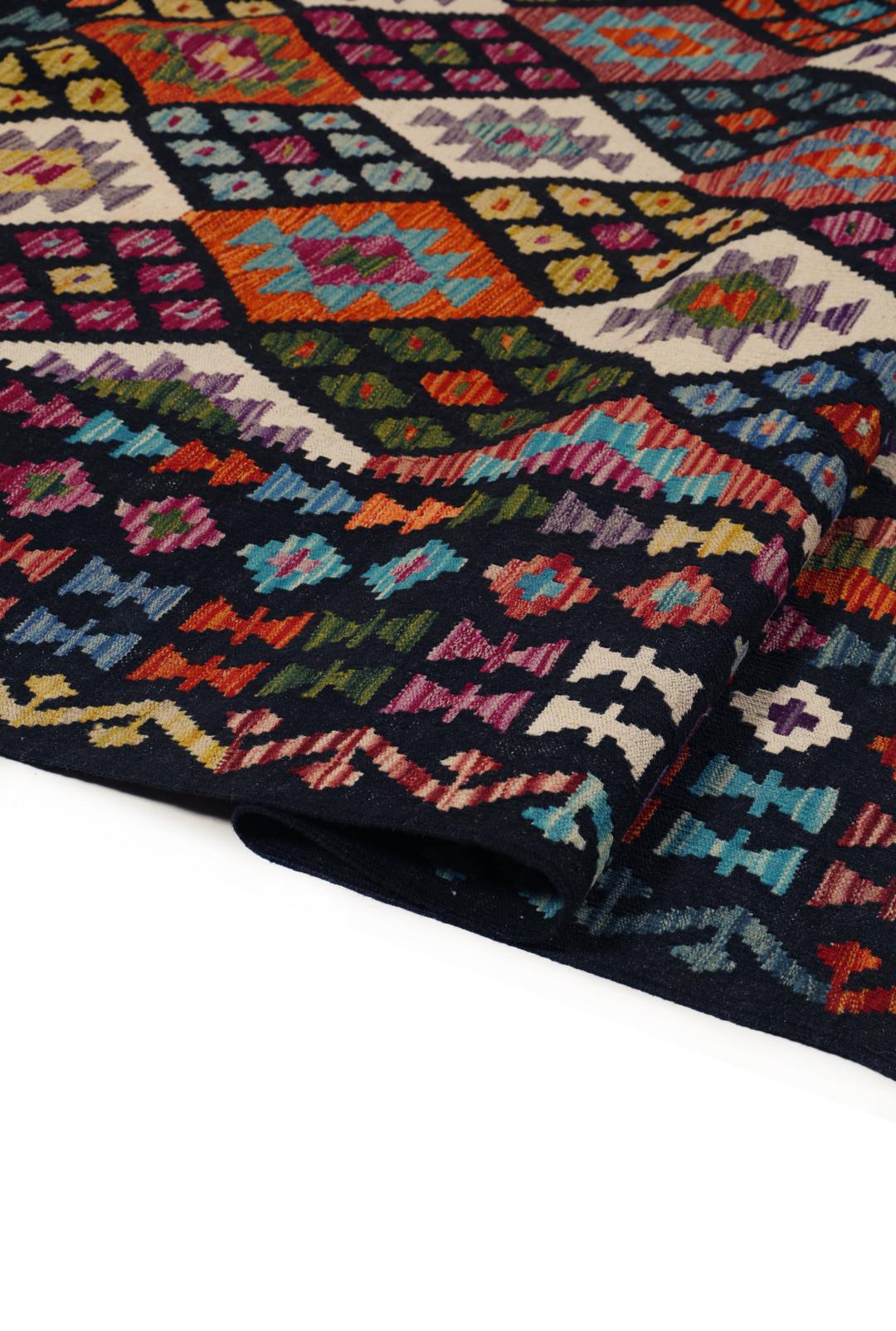
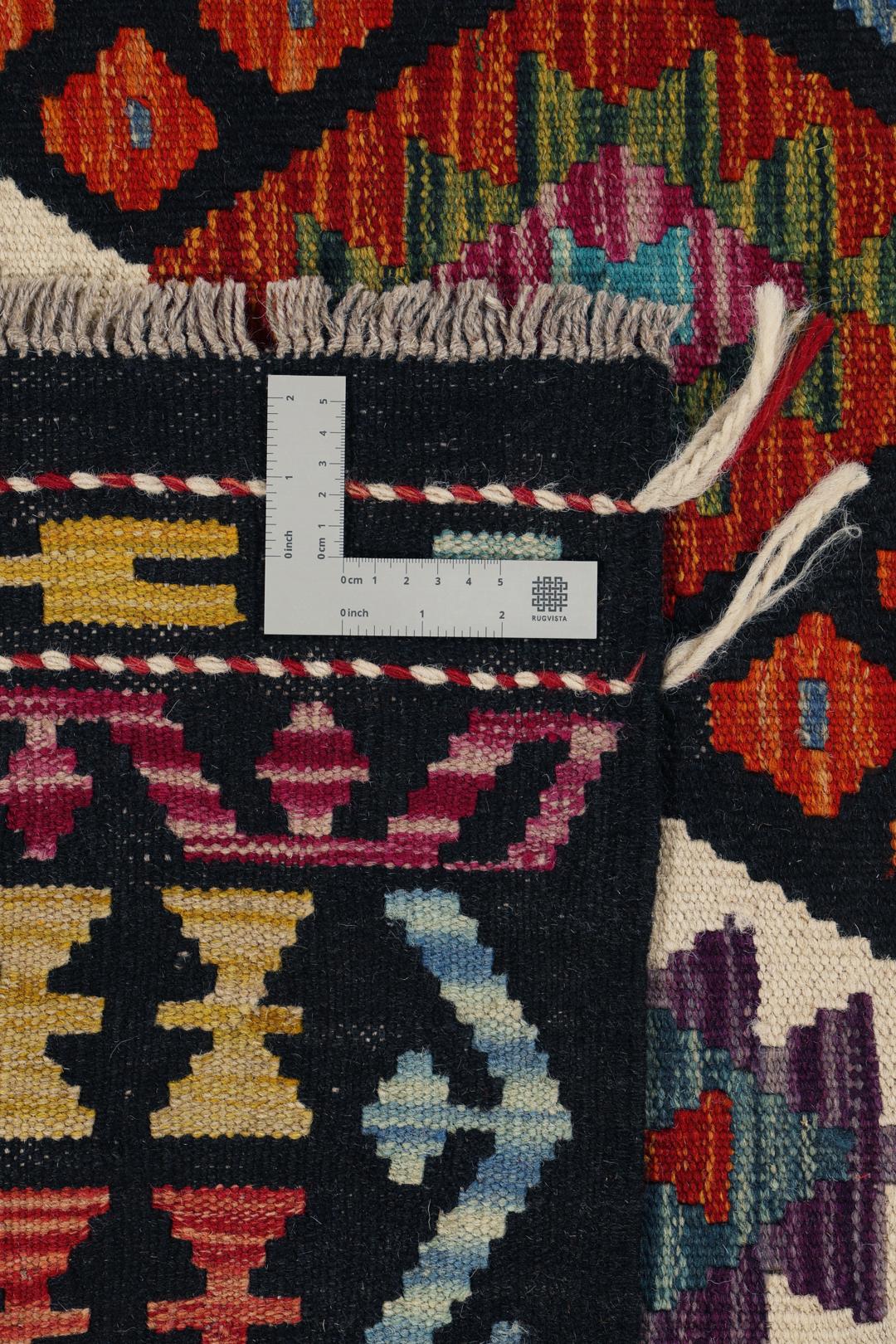
The technical term 'Kelim' refers to a tapestry-weave, a technique where the weft threads are woven over and under the warp threads to create a flat, pileless surface. This method allows for sharp, crisp geometric designs because the colours change at the vertical boundaries of the pattern. The resulting textile is lightweight yet incredibly strong, a testament to the sophisticated engineering of traditional weaving techniques passed down through centuries.
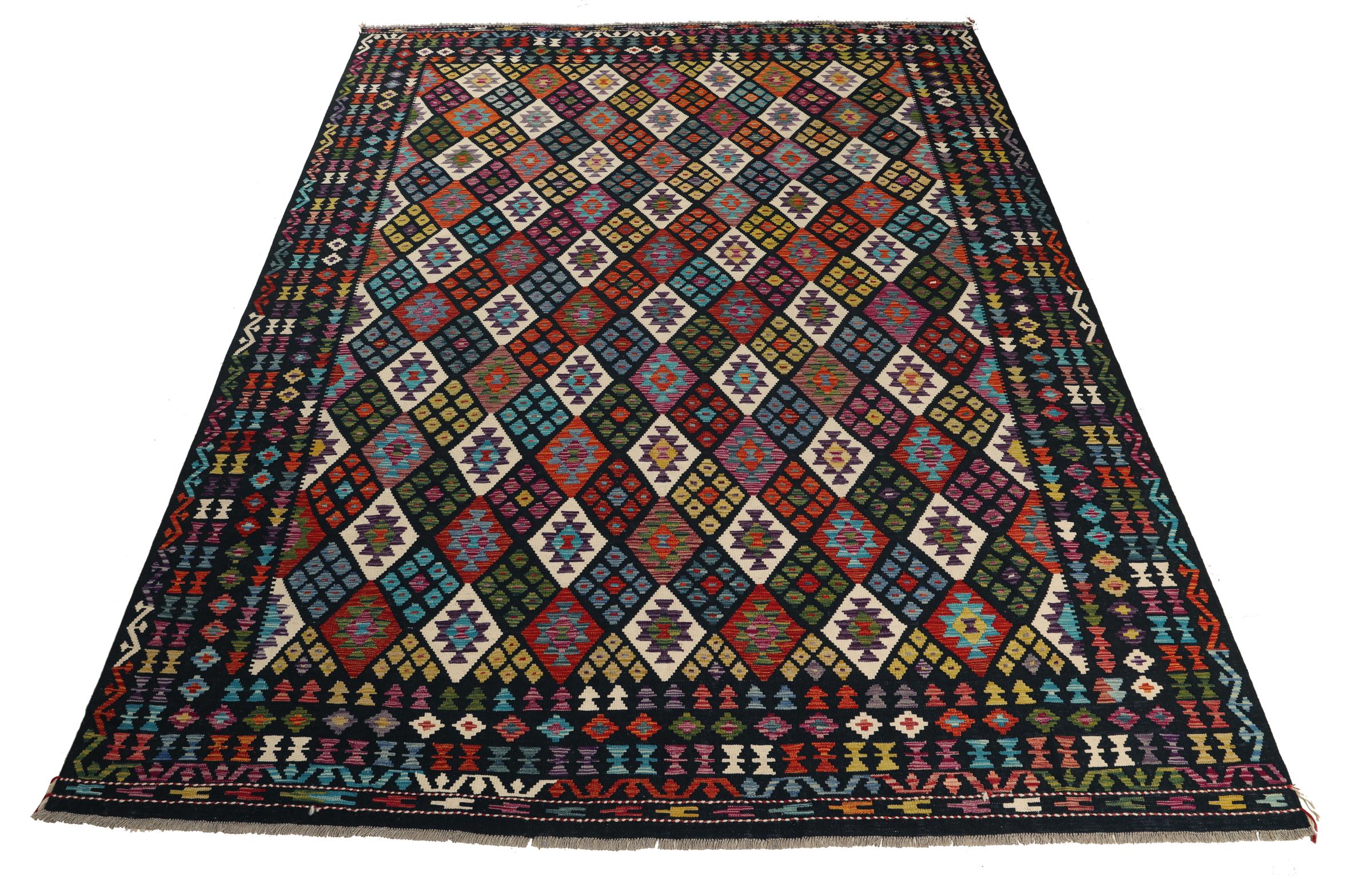
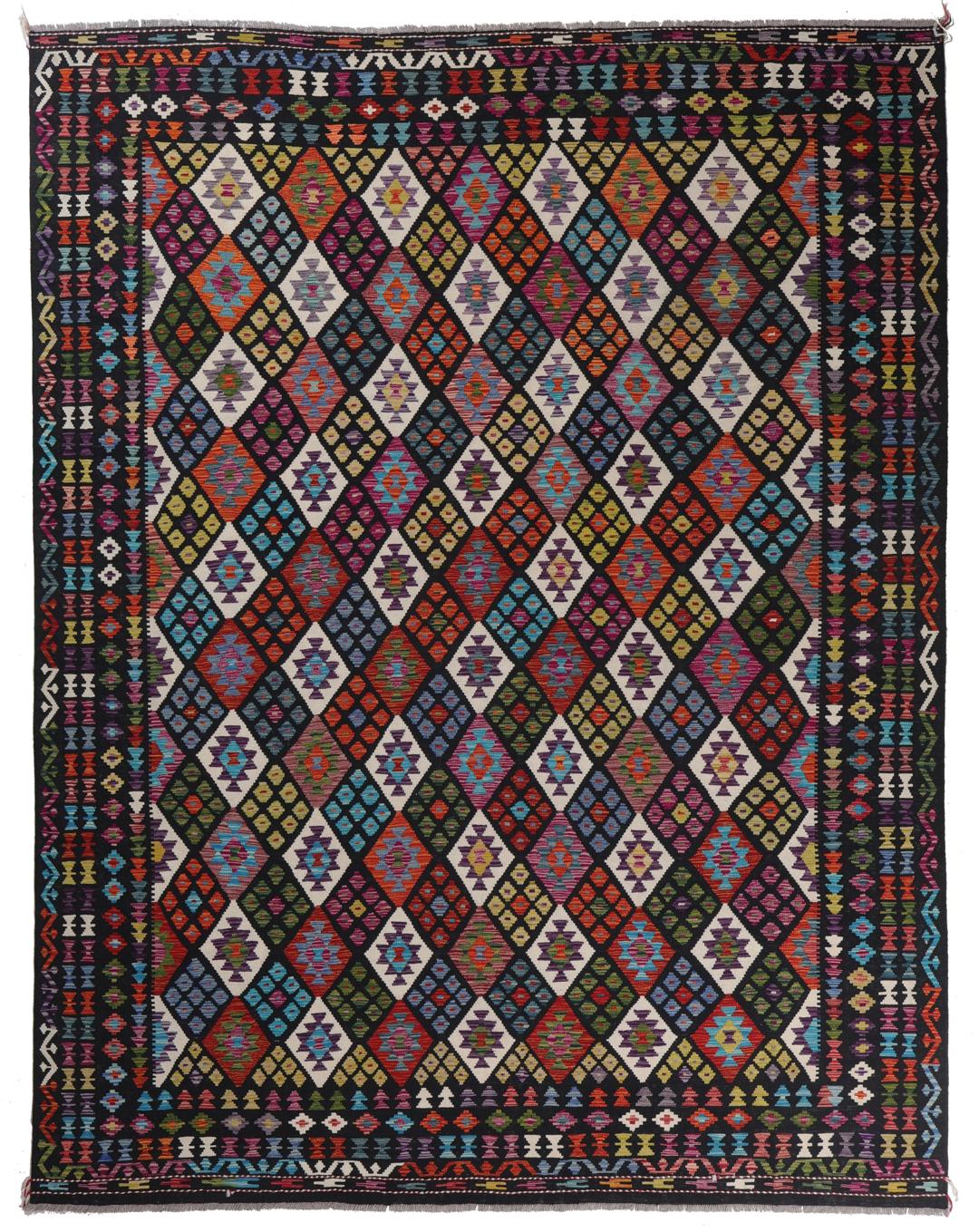
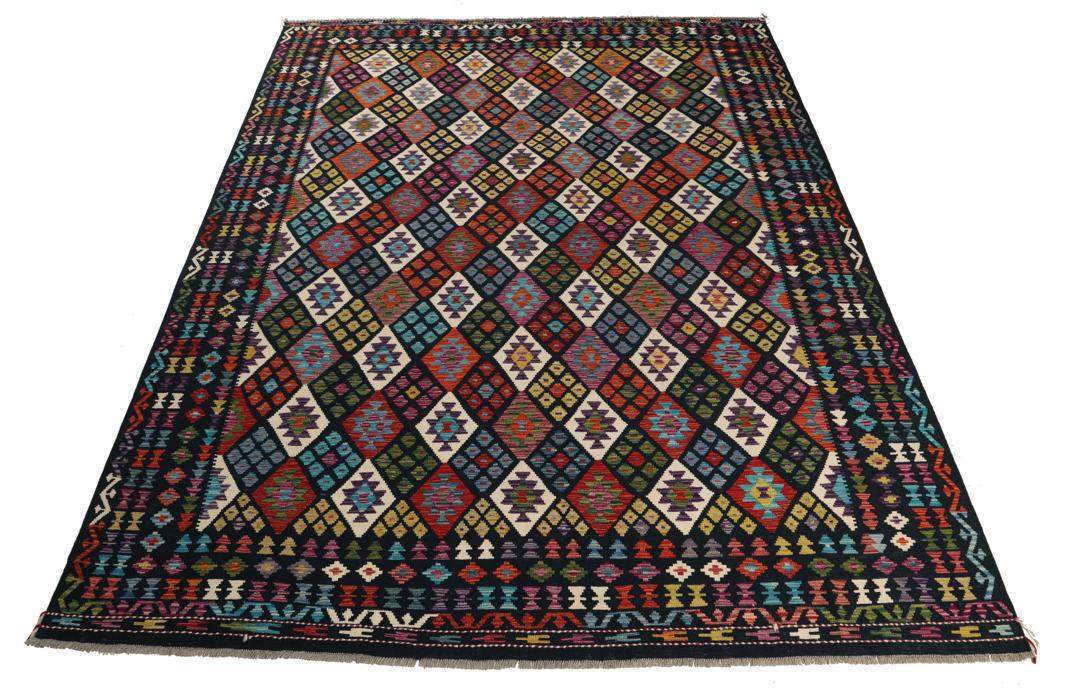
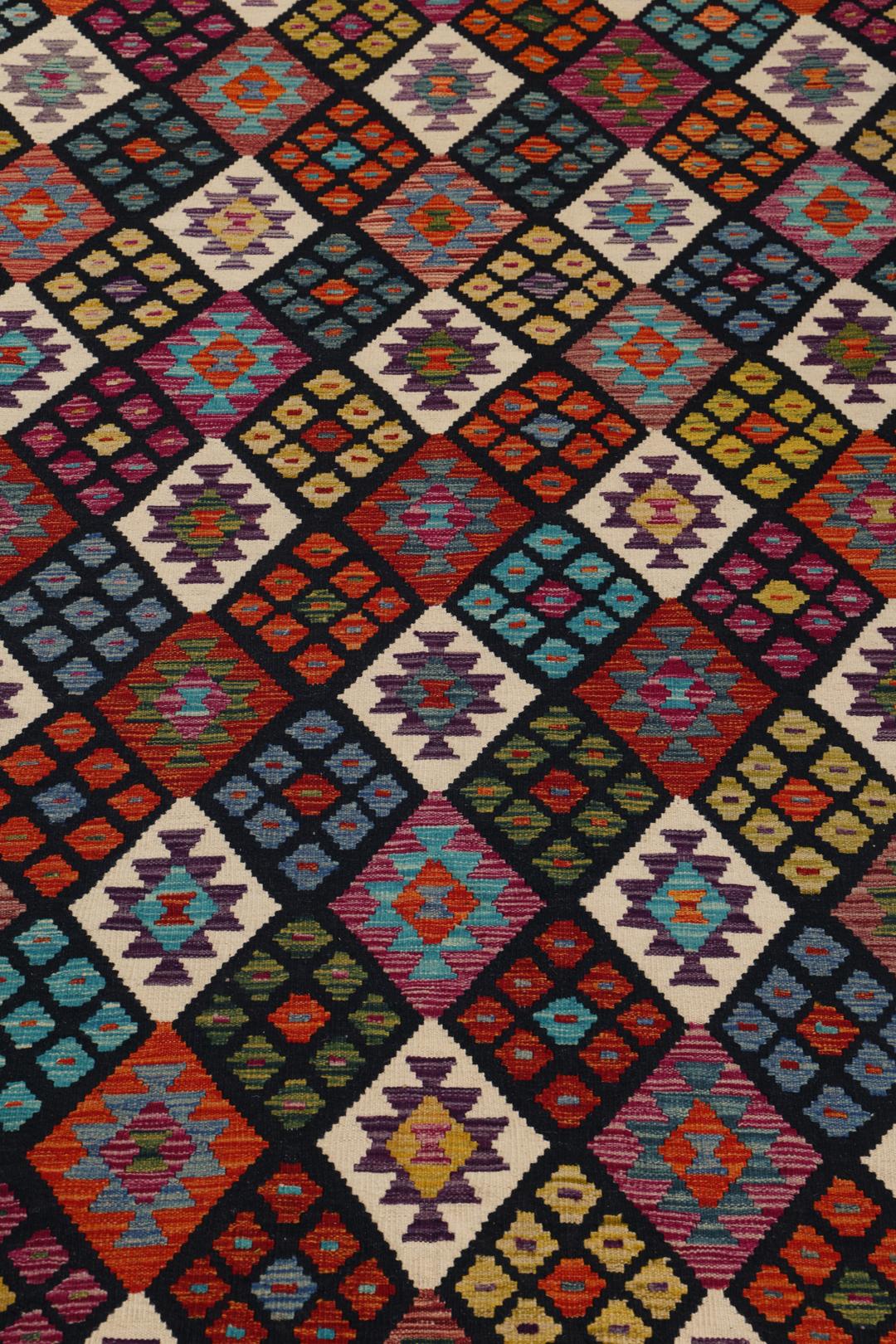
The signature design of this rug features a repeating diamond motif, a classic element in Afghan textile art. These diamonds are often filled with smaller, symbolic patterns that represent tribal identity, protective charms, or elements of the natural world. The use of a black ground to frame such a vibrant, multi-coloured geometric field is a bold artistic choice, creating a striking contrast that emphasises the precision and rhythm of the overall composition.
Collecting Afghan Kelims is an appreciation of a living art form that bridges the gap between the past and the present. These rugs are highly valued for their ability to bring a sense of heritage and human touch to a modern home. Owning a piece like this is more than just a decor choice; it is an investment in a craft tradition that celebrates the skill of the weaver and the endurance of timeless, handmade beauty.