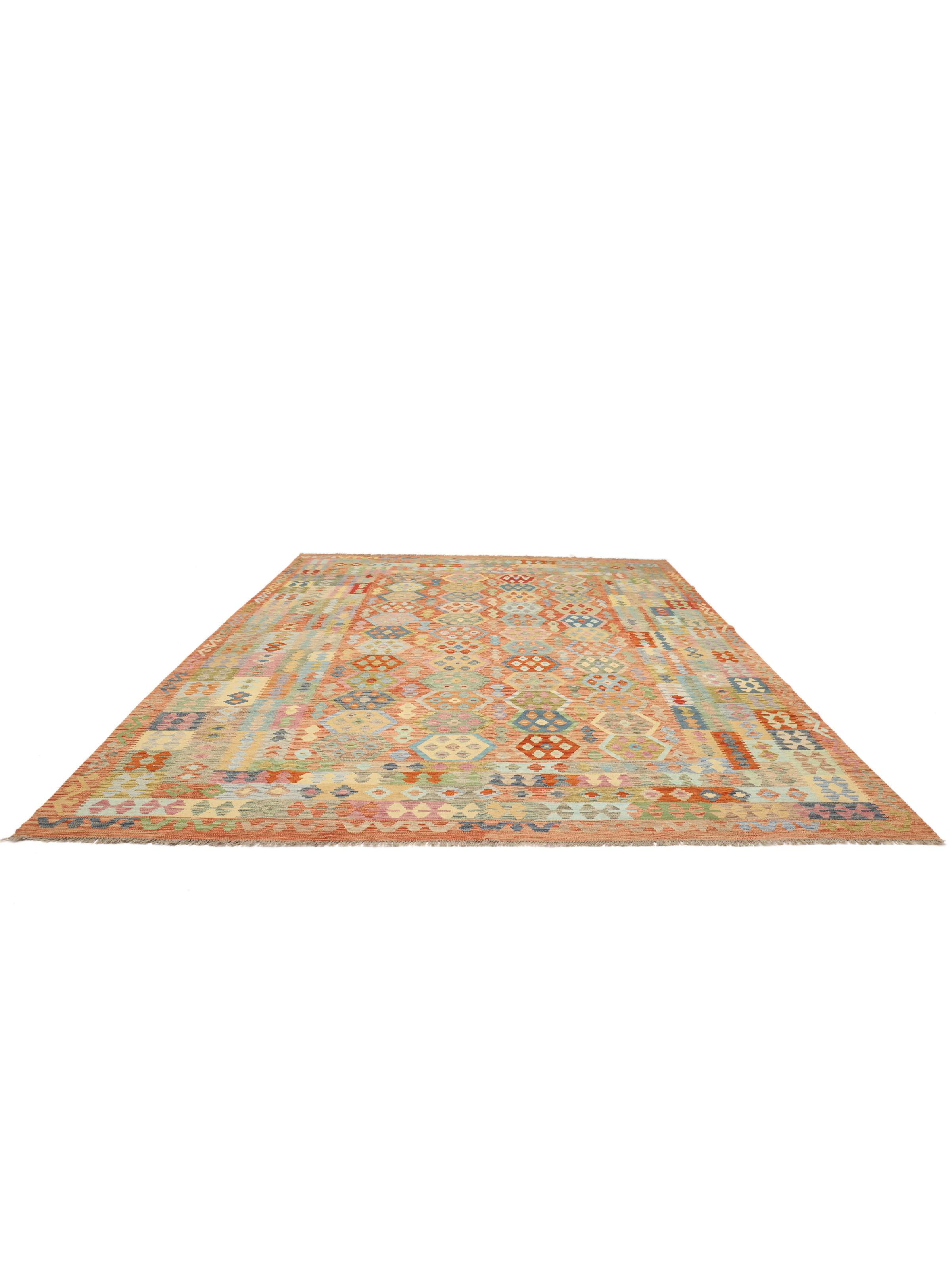
The tradition of weaving Kelims in Afghanistan is deeply rooted in the nomadic and semi-nomadic cultures of the region. These flat-weave rugs were historically created by tribal groups to serve as functional, portable items for daily life, such as floor coverings, blankets, or even saddlebags. Over centuries, these techniques have been passed down through generations, evolving from purely functional items into highly sought-after decorative pieces that embody the spirit of the Middle East.
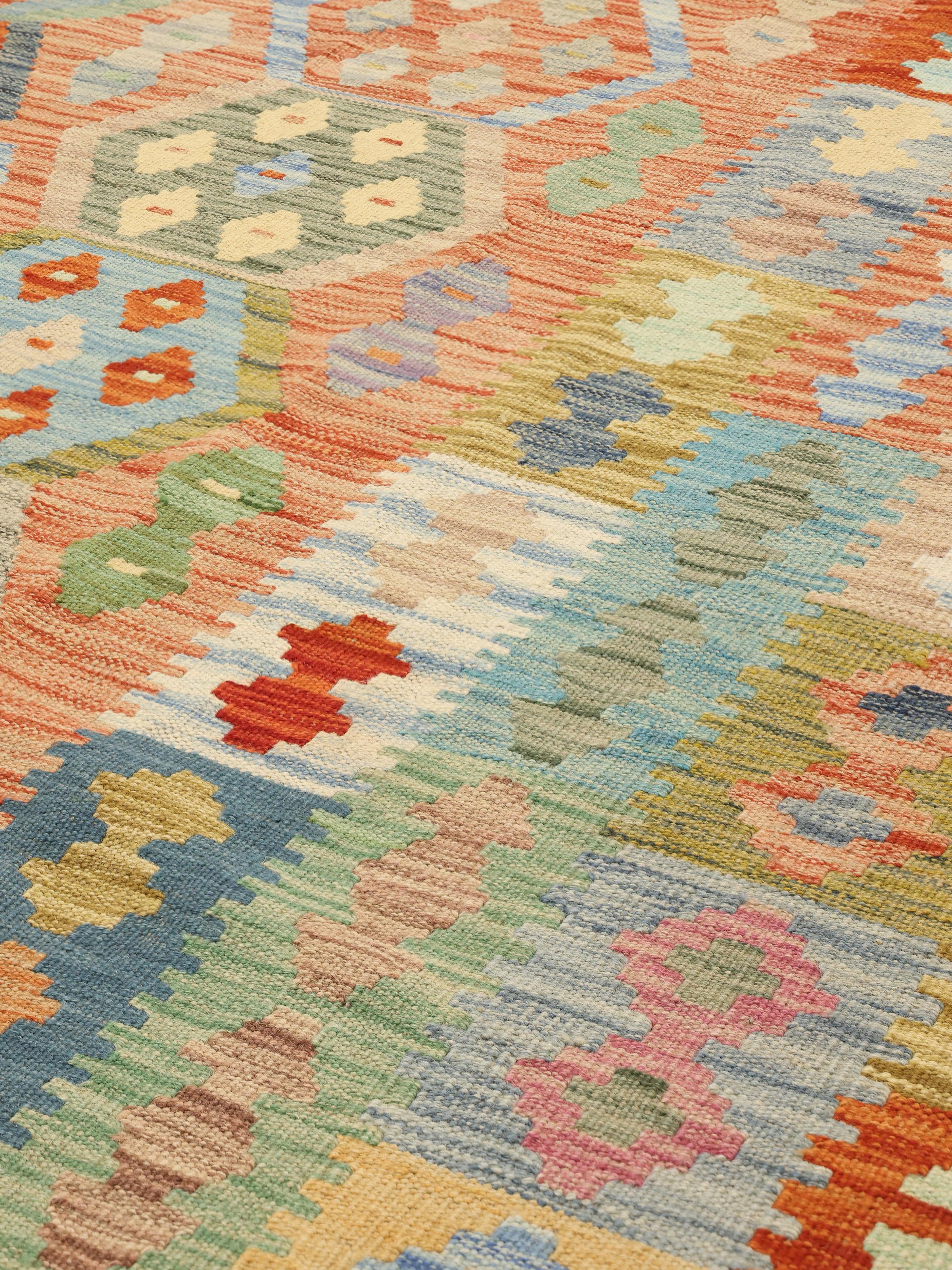
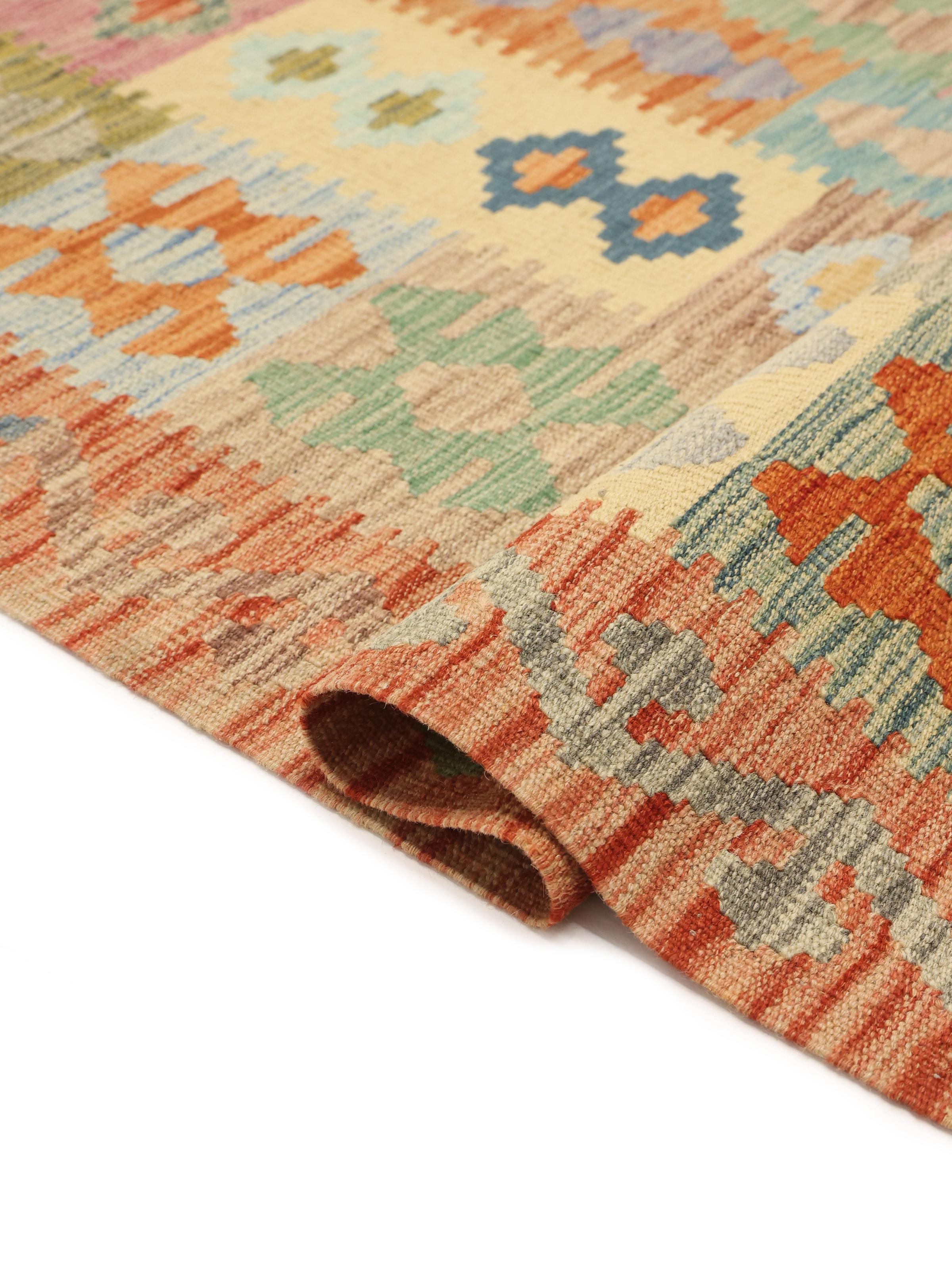
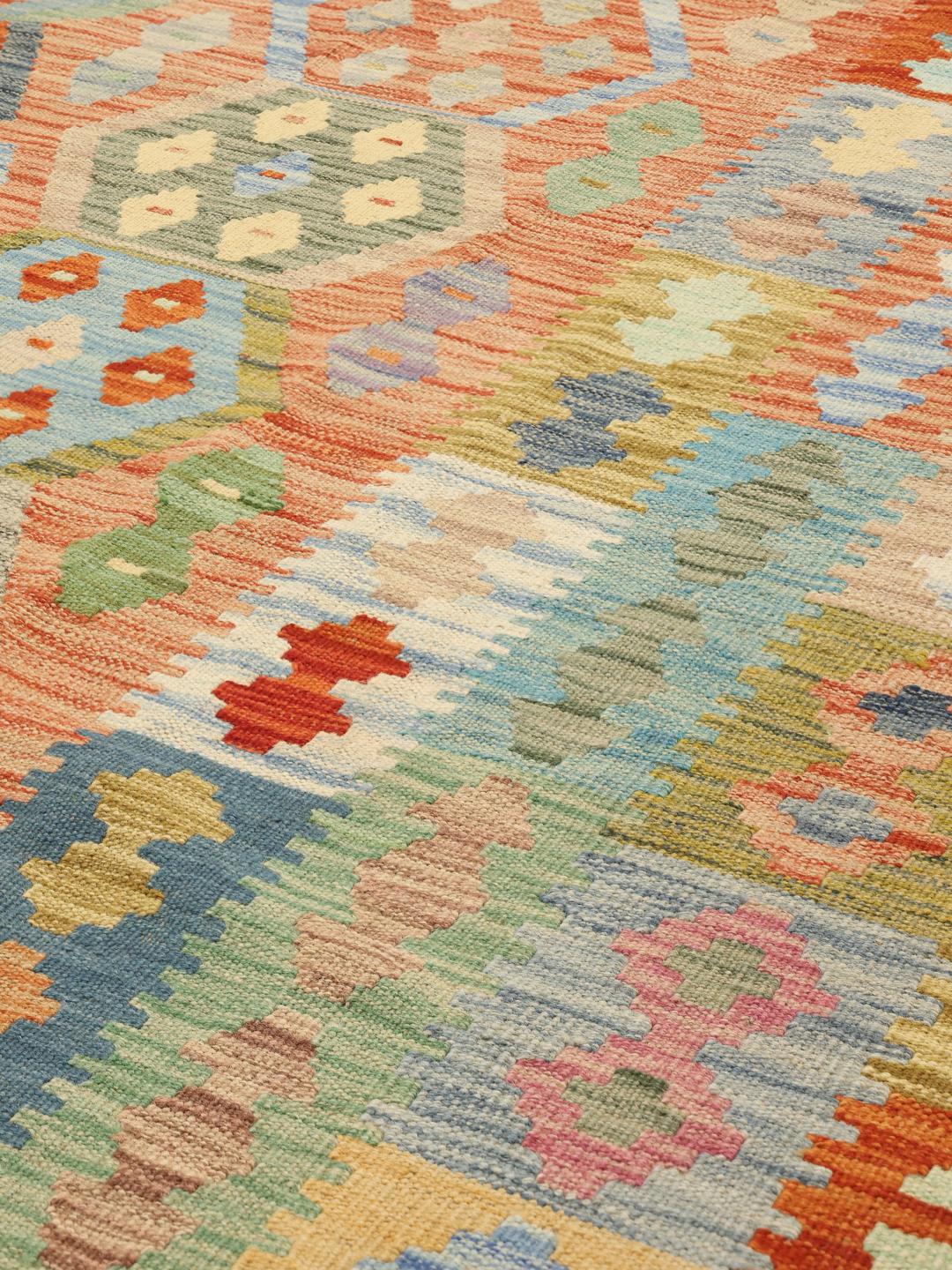
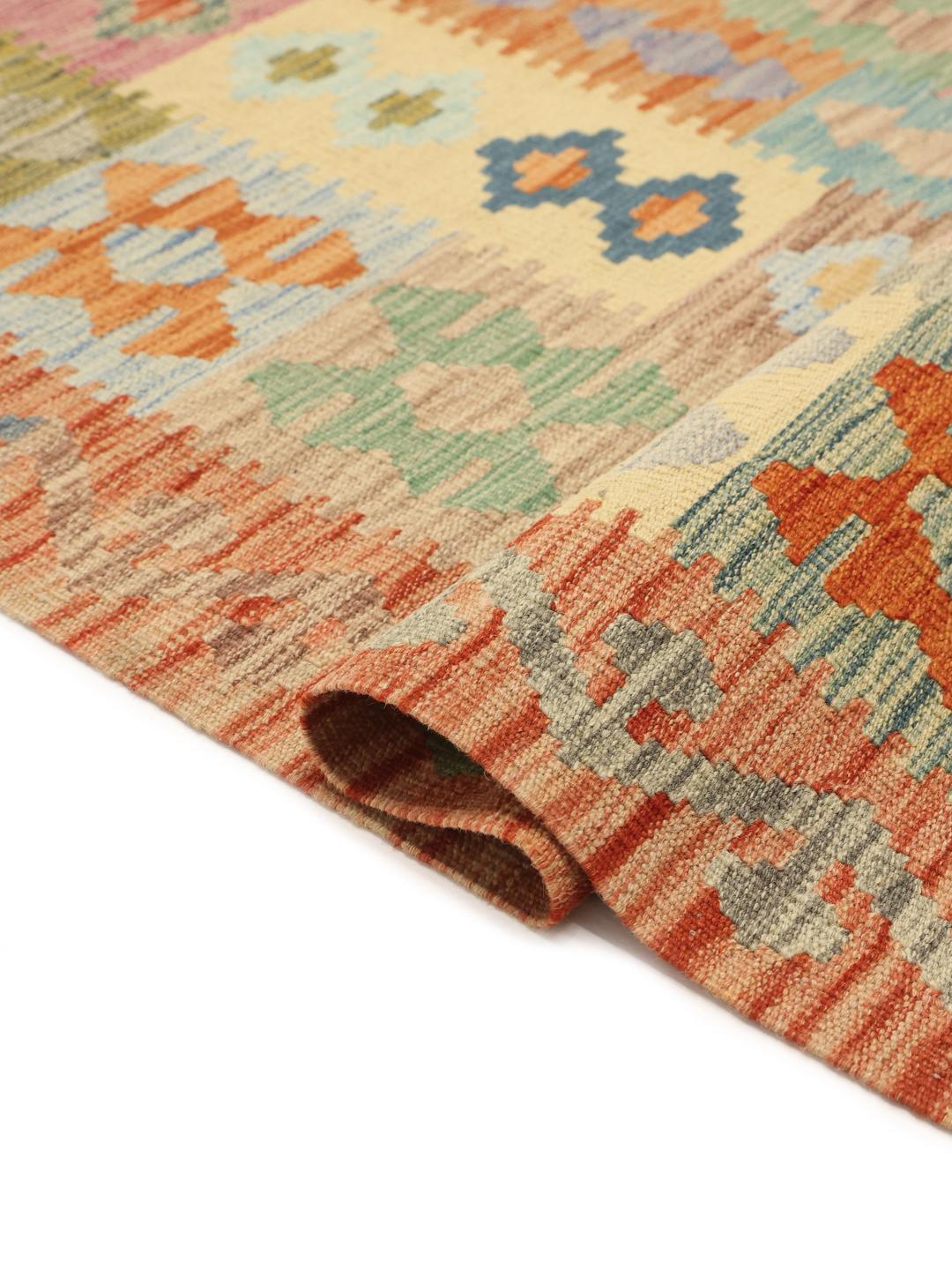
The term 'Kelim' refers to the specific flat-weaving technique used, where the weft strands are pulled tightly down to cover the warp strands completely. This absence of a pile creates a smooth, reversible surface that is both lightweight and incredibly durable. In the context of Afghan weaving, this technique is celebrated for its ability to showcase bold, crisp patterns that are defined by the sharp transitions between different coloured Wool threads.
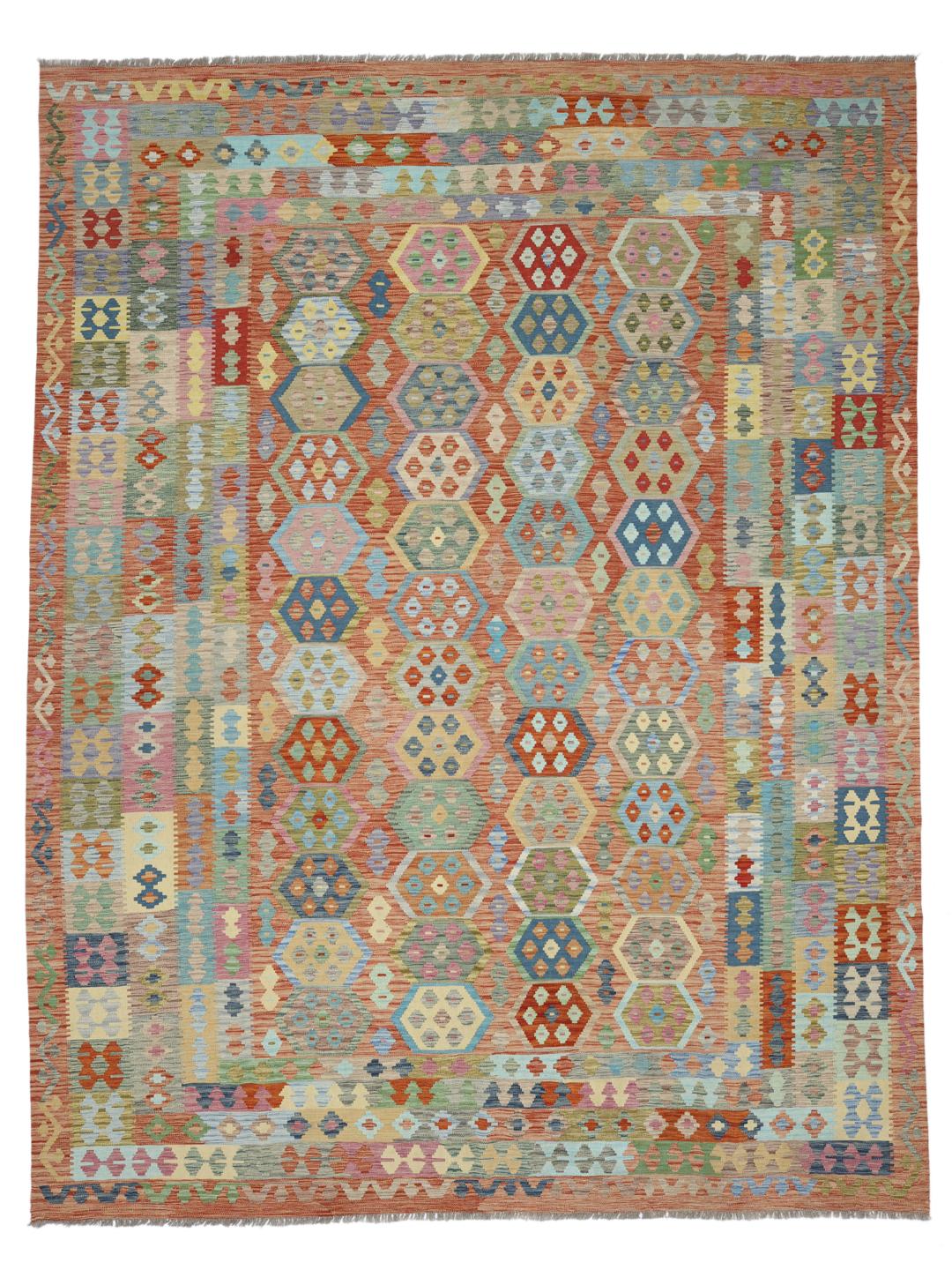
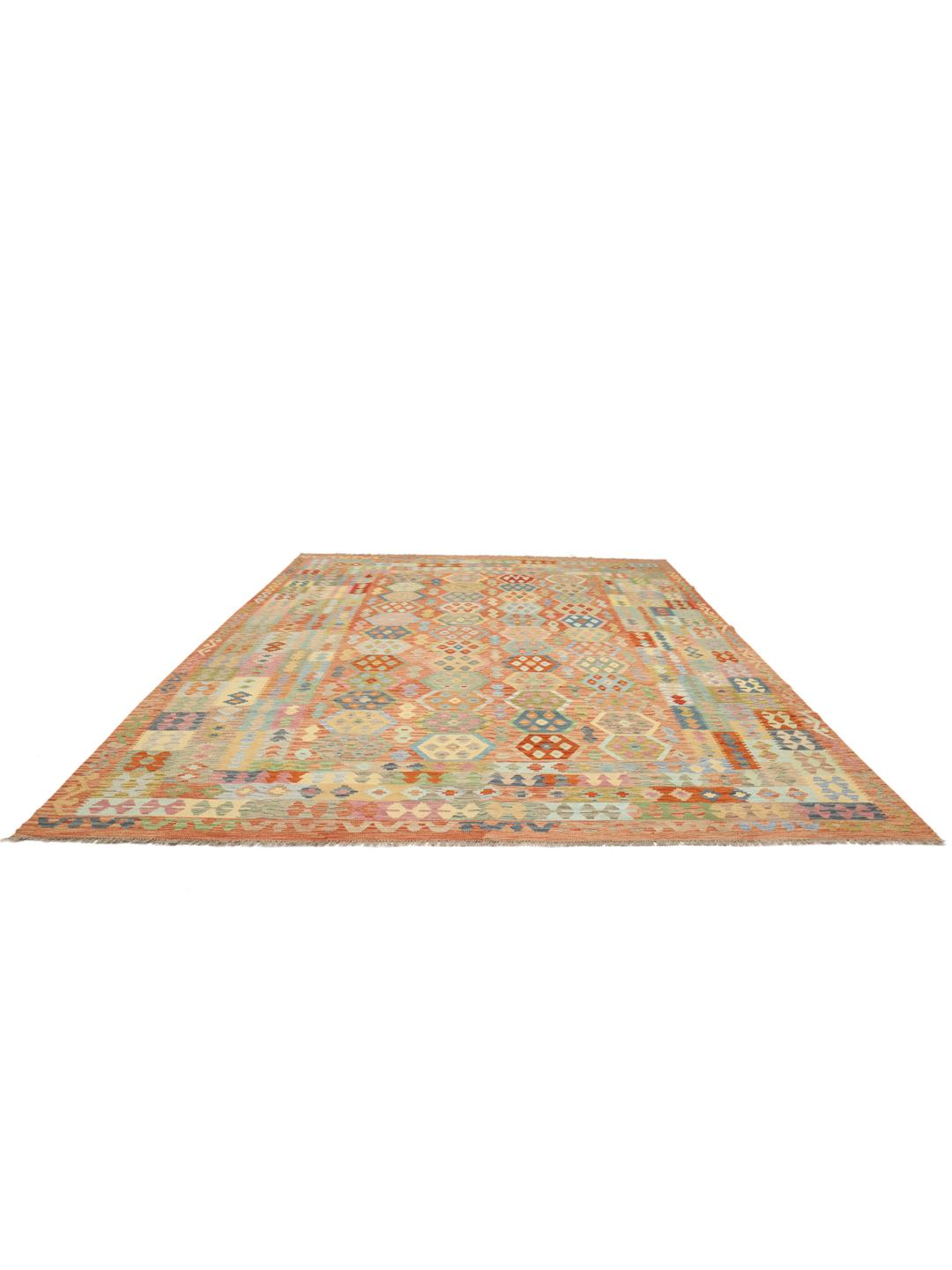
Visually, this rug is defined by a sophisticated geometric language. The field is typically filled with repeating motifs that often represent tribal symbols, protection, or local flora. The use of octagonal or hexagonal shapes is a hallmark of this tradition, providing a rhythmic, balanced aesthetic that draws the eye across the entire surface. The colour palettes are traditionally derived from natural dyes, giving them a rich, earthy saturation that feels both timeless and grounded.
Today, these rugs are valued not only for their beauty but for the cultural history they preserve. Collecting an Afghan Kelim is an act of supporting a long-standing craft tradition that emphasises human skill over industrial production. Each rug is a testament to the weaver's heritage, offering a piece of history that adds depth and authenticity to modern interiors. It is an enduring choice for those who value the intersection of artistic expression and functional, lasting quality.