Kelim rugs have a storied history rooted in the nomadic cultures of the Middle East and Central Asia. Originally created by tribal weavers for practical purposes—such as floor coverings, blankets, and storage bags—these rugs were essential to the mobile lifestyle of their creators. The Afghan Kelim, specifically, has evolved from these ancient roots into a celebrated art form known for its bold geometric simplicity and earthy, rich colour palettes.
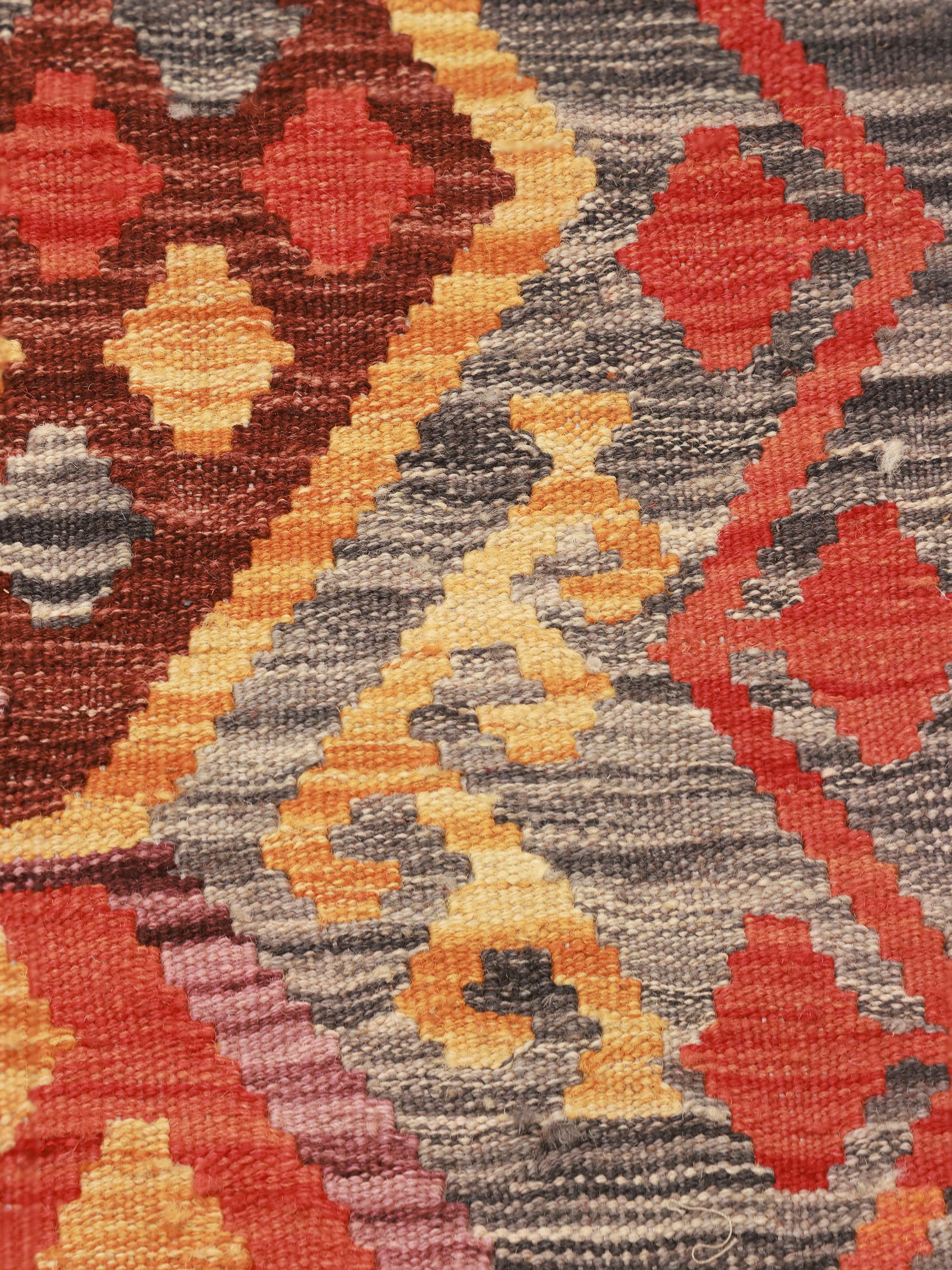
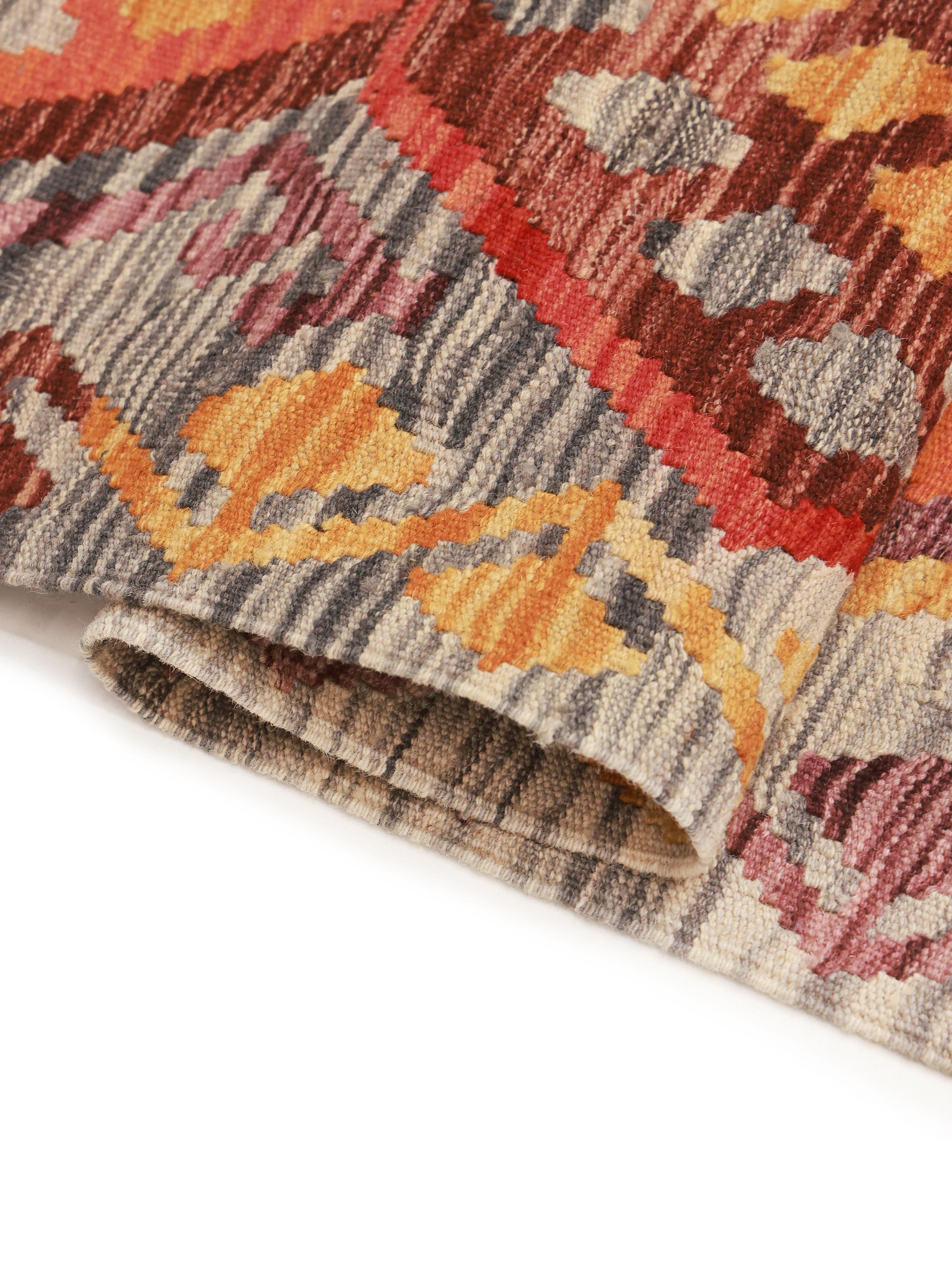
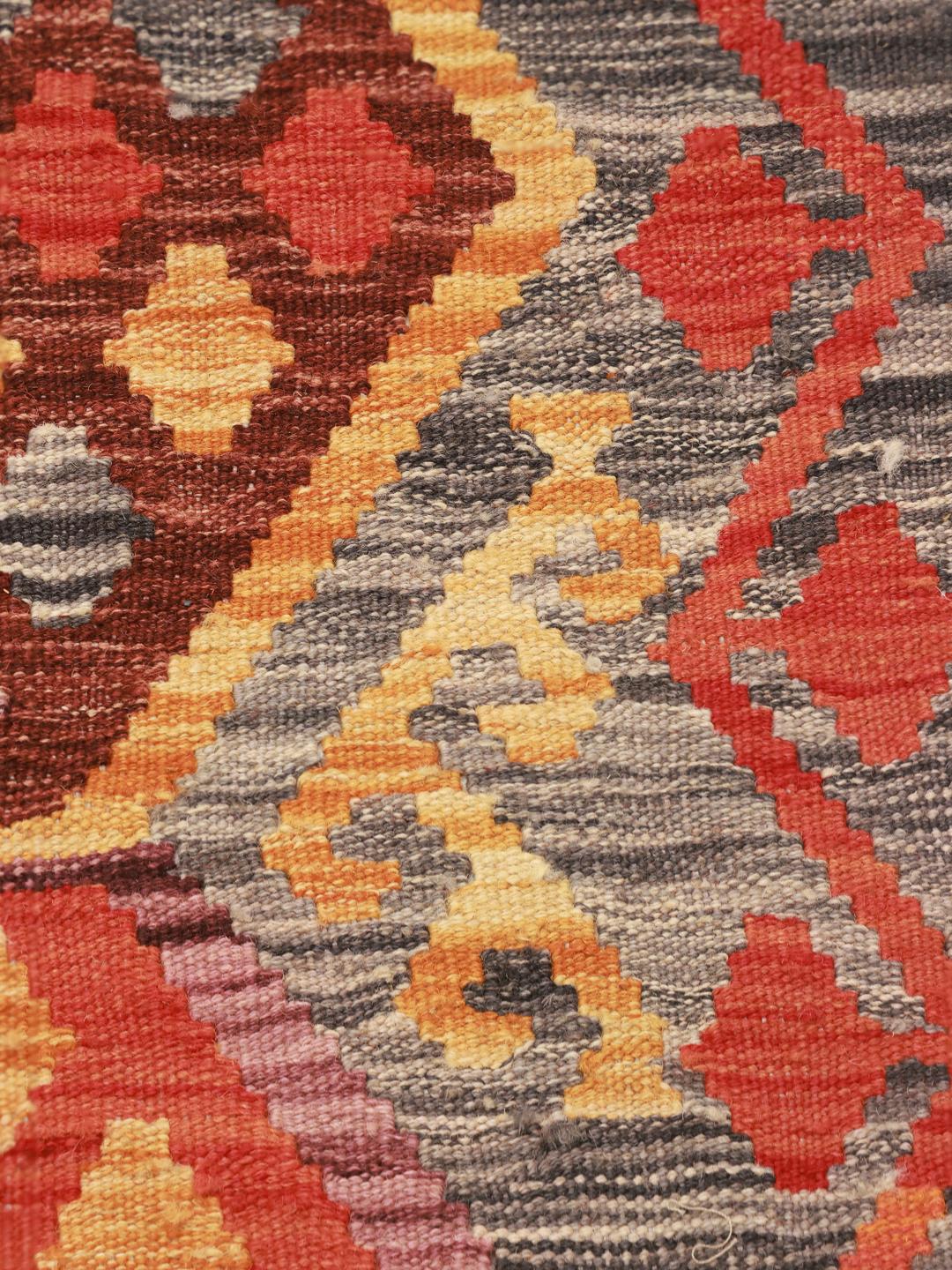
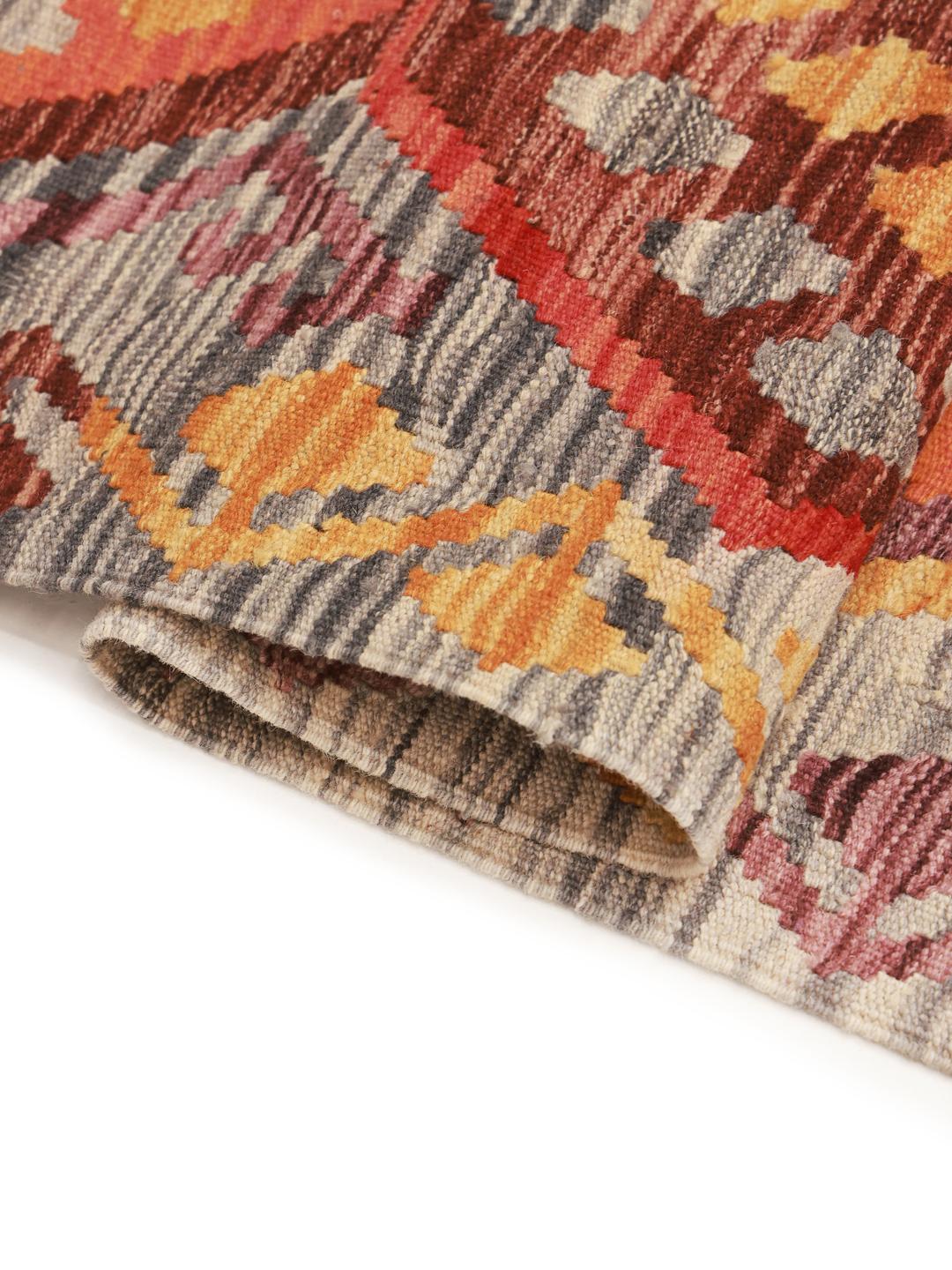
The term 'Kelim' refers to the flat-weaving technique where the warp and weft threads are tightly interlaced, creating a durable fabric that is identical on both sides. This method is distinct because it does not use a knotted pile, allowing the weaver to create sharp, crisp edges for geometric shapes like diamonds, triangles, and hexagons. This technical precision is what allows for the complex, repeating patterns that have become the signature of the Afghan tradition.
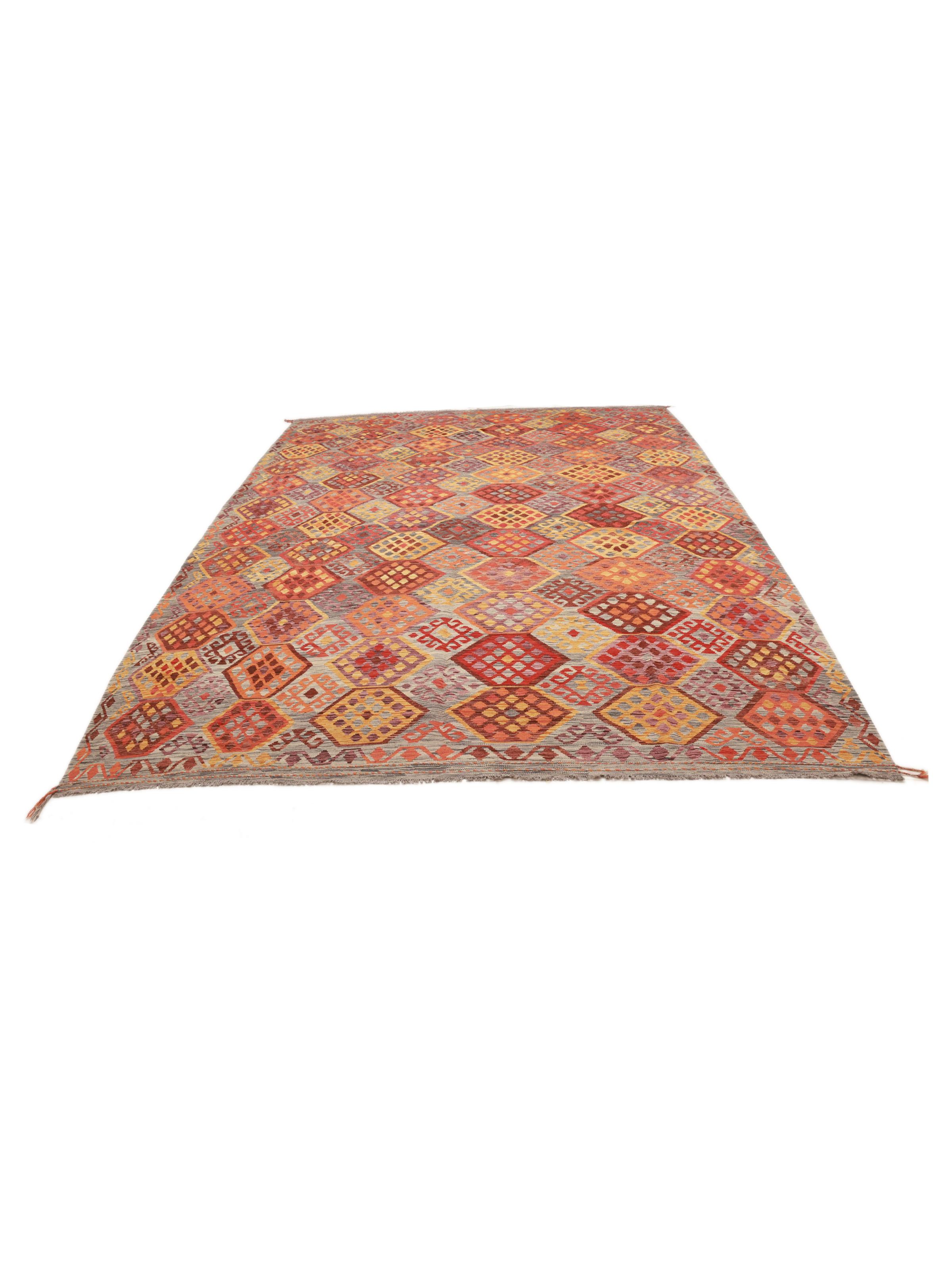
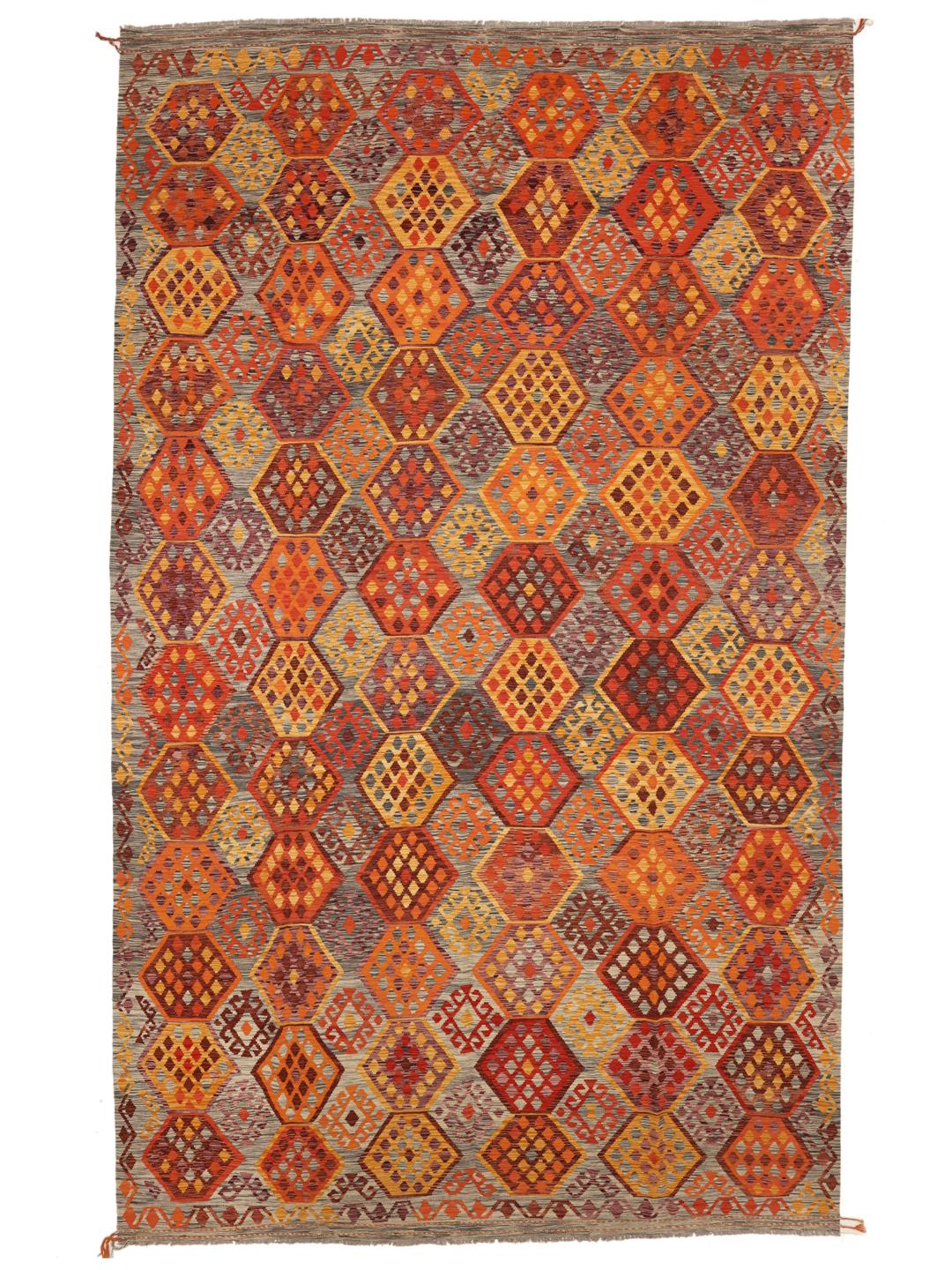
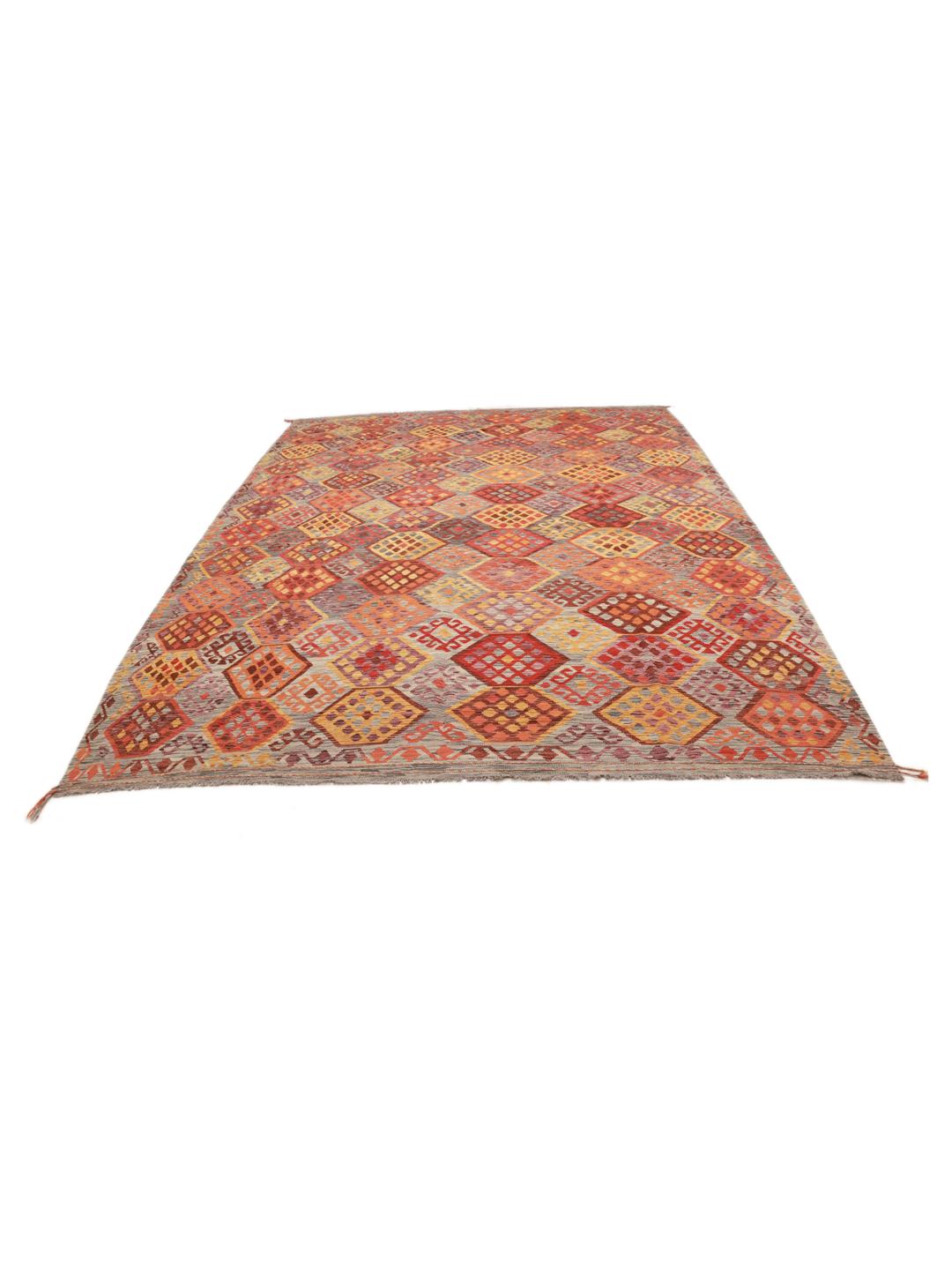
Visually, these rugs are defined by their vibrant use of natural dyes and geometric symbolism. While the motifs may appear purely decorative to the modern eye, they often carry traditional meanings related to protection, fertility, or family identity. The hexagonal motifs seen here are a classic element of the Afghan style, arranged in a way that suggests a continuous, infinite design that draws the eye across the entire surface of the rug.
Owning an Afghan Kelim is a way to connect with a legacy of craftsmanship that has survived for centuries. These rugs are highly valued by collectors not only for their aesthetic beauty but for the skill required to maintain consistency across such large, intricate designs. By bringing one into your home, you are preserving a piece of cultural history and supporting the enduring tradition of hand-woven artistry.