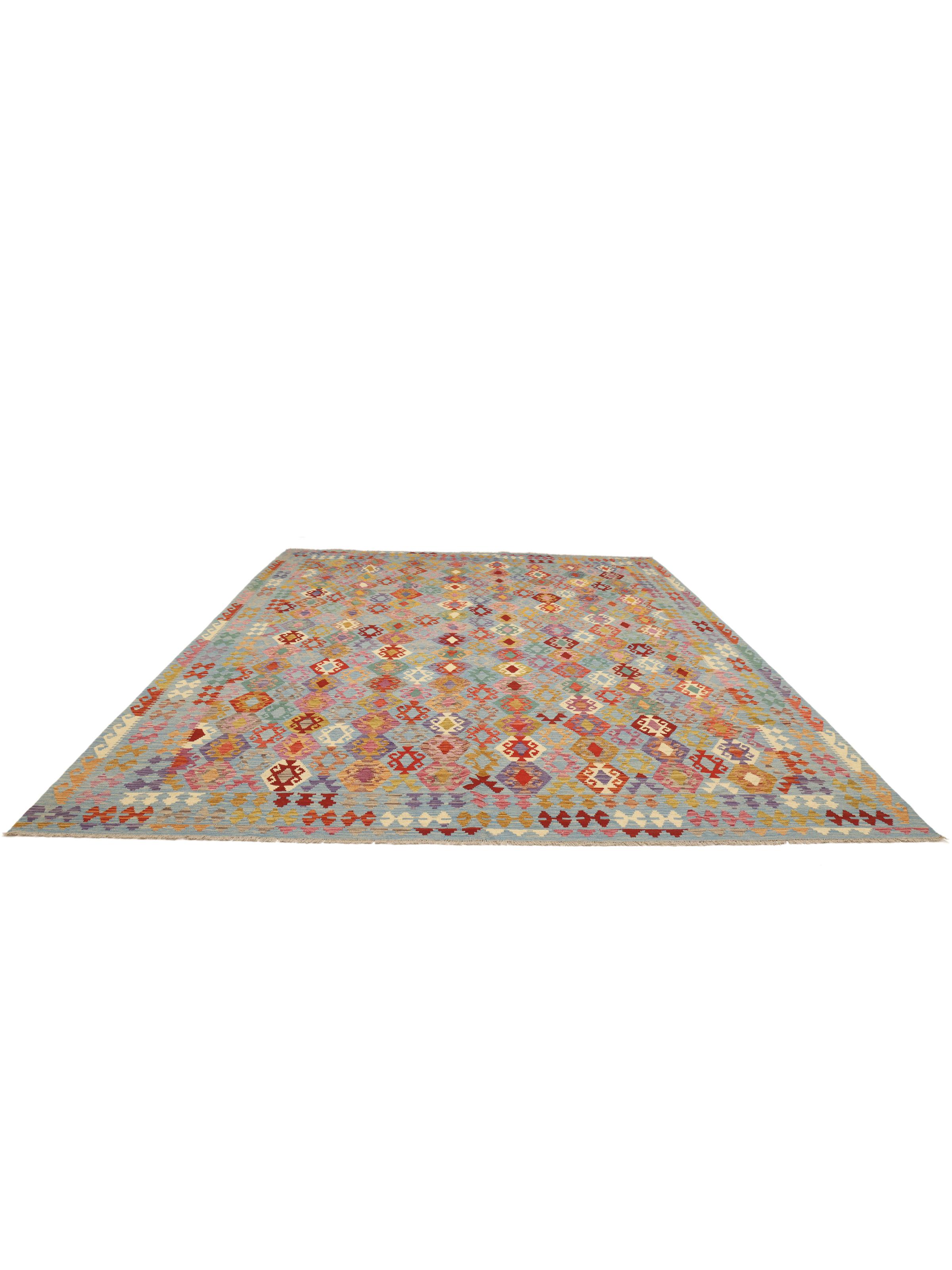
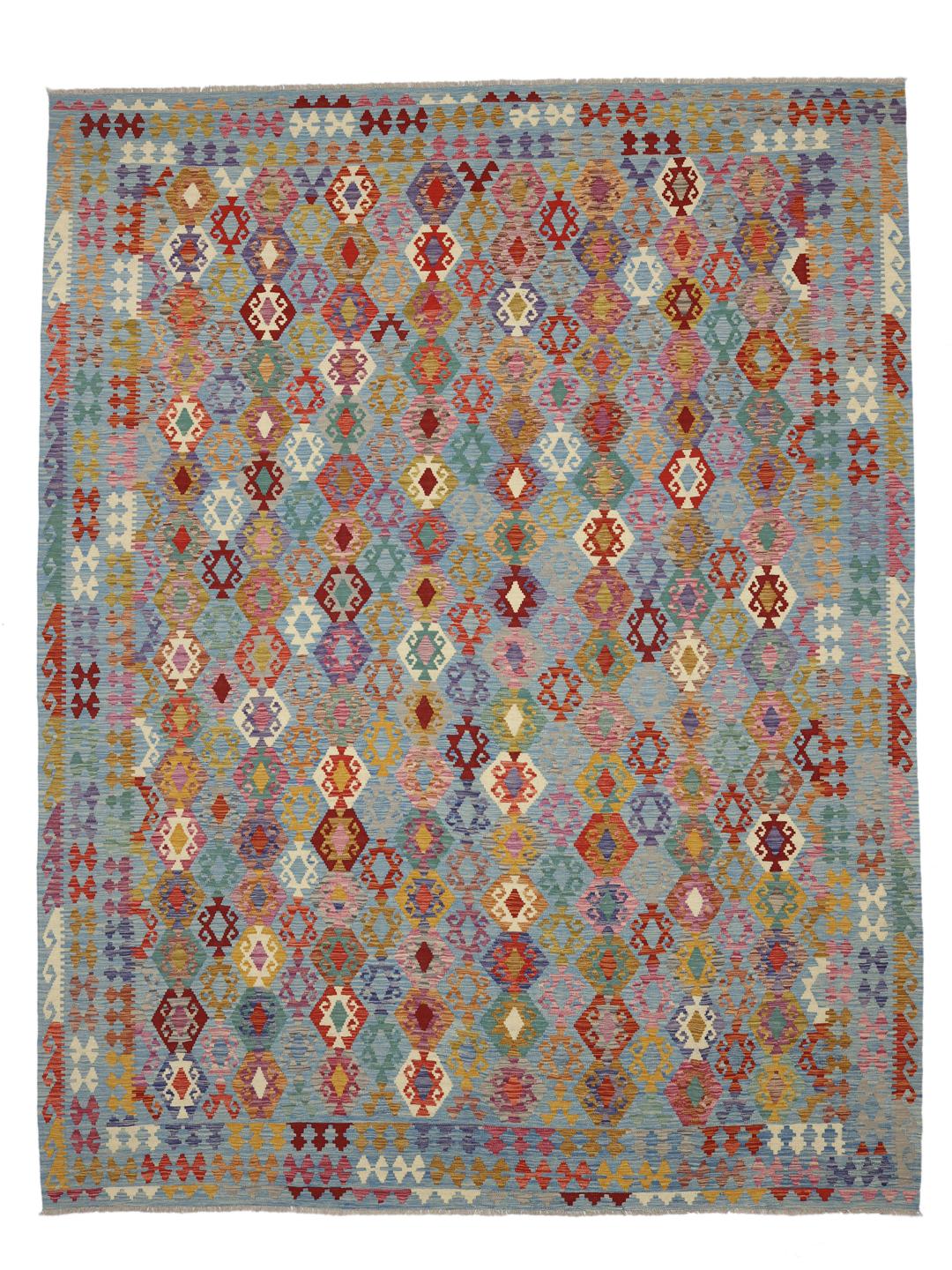
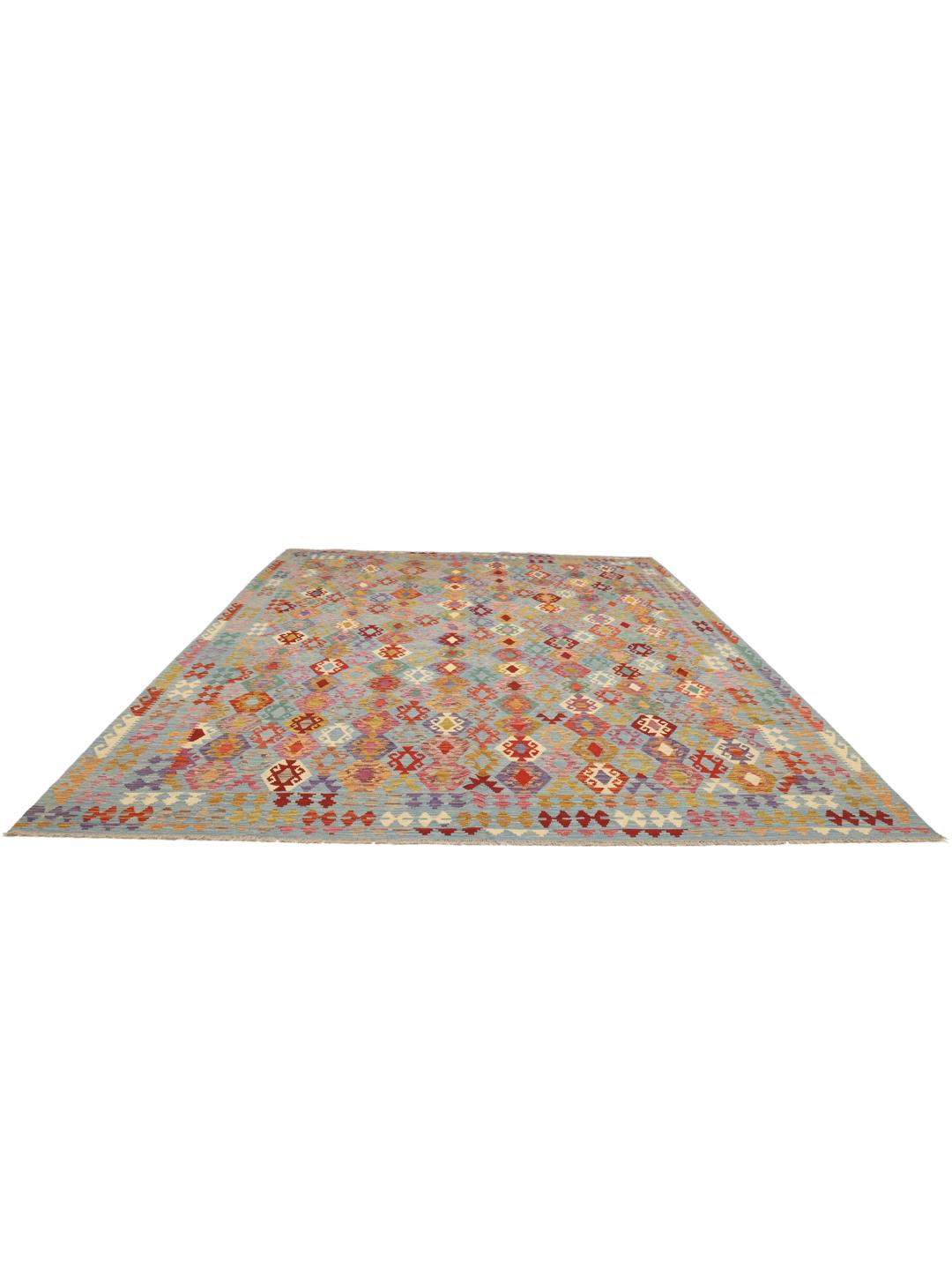
The tradition of the Kelim, or Kilim, traces its roots across the vast landscapes of the Middle East and Central Asia. These rugs are born from a culture of nomadic and semi-nomadic life, where the ability to create functional, portable, and beautiful textiles was an essential skill passed down through generations.
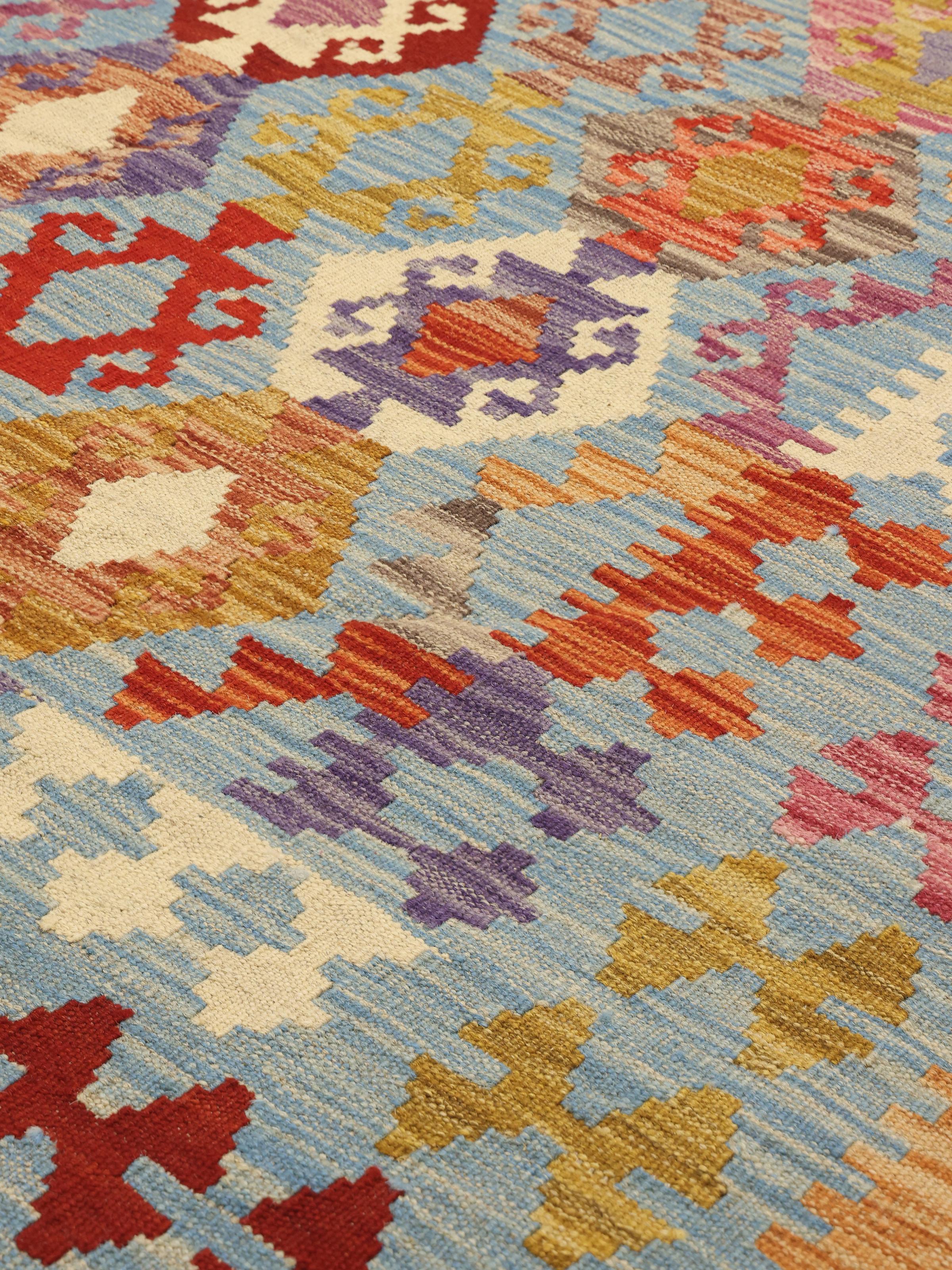
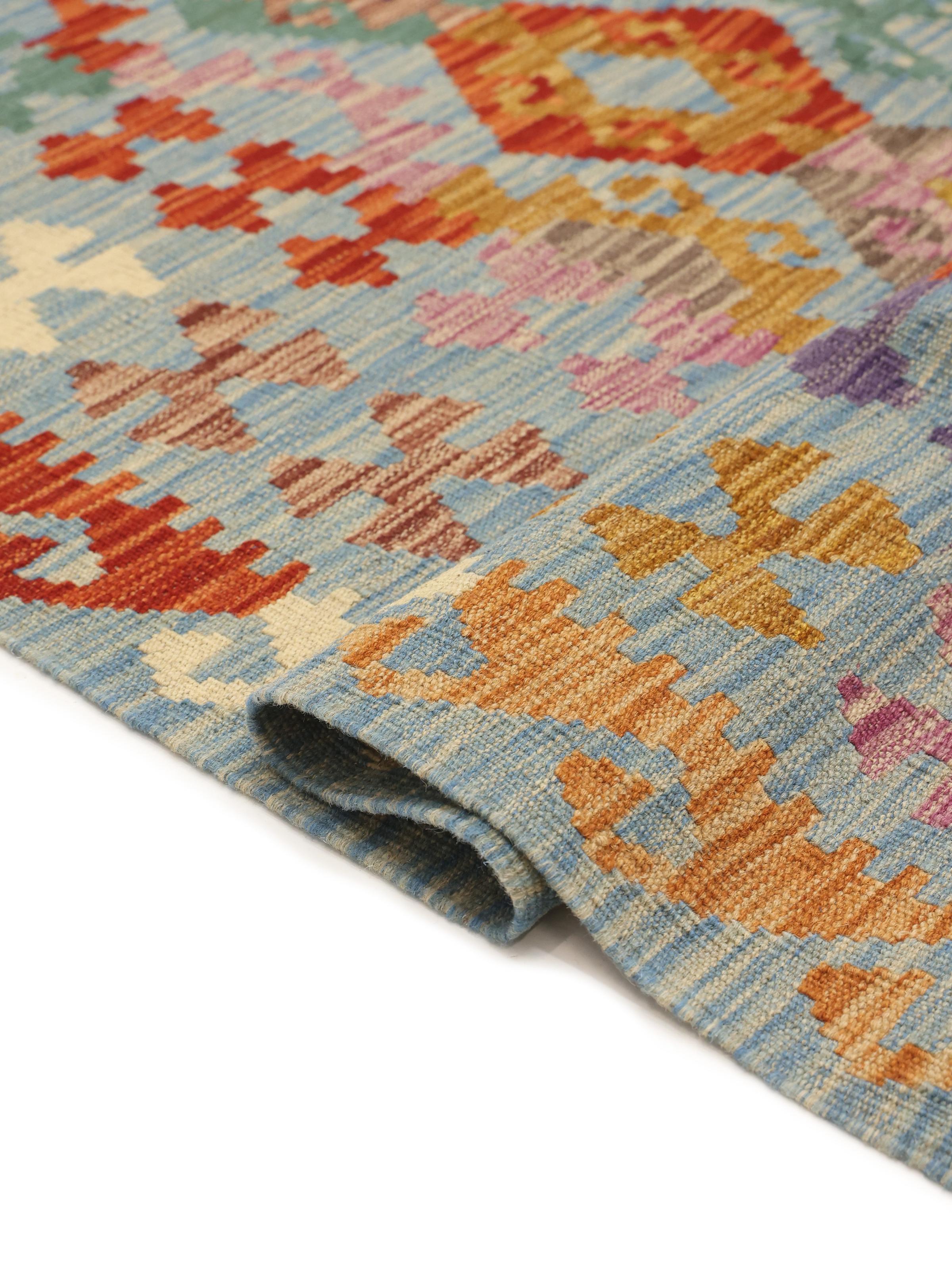
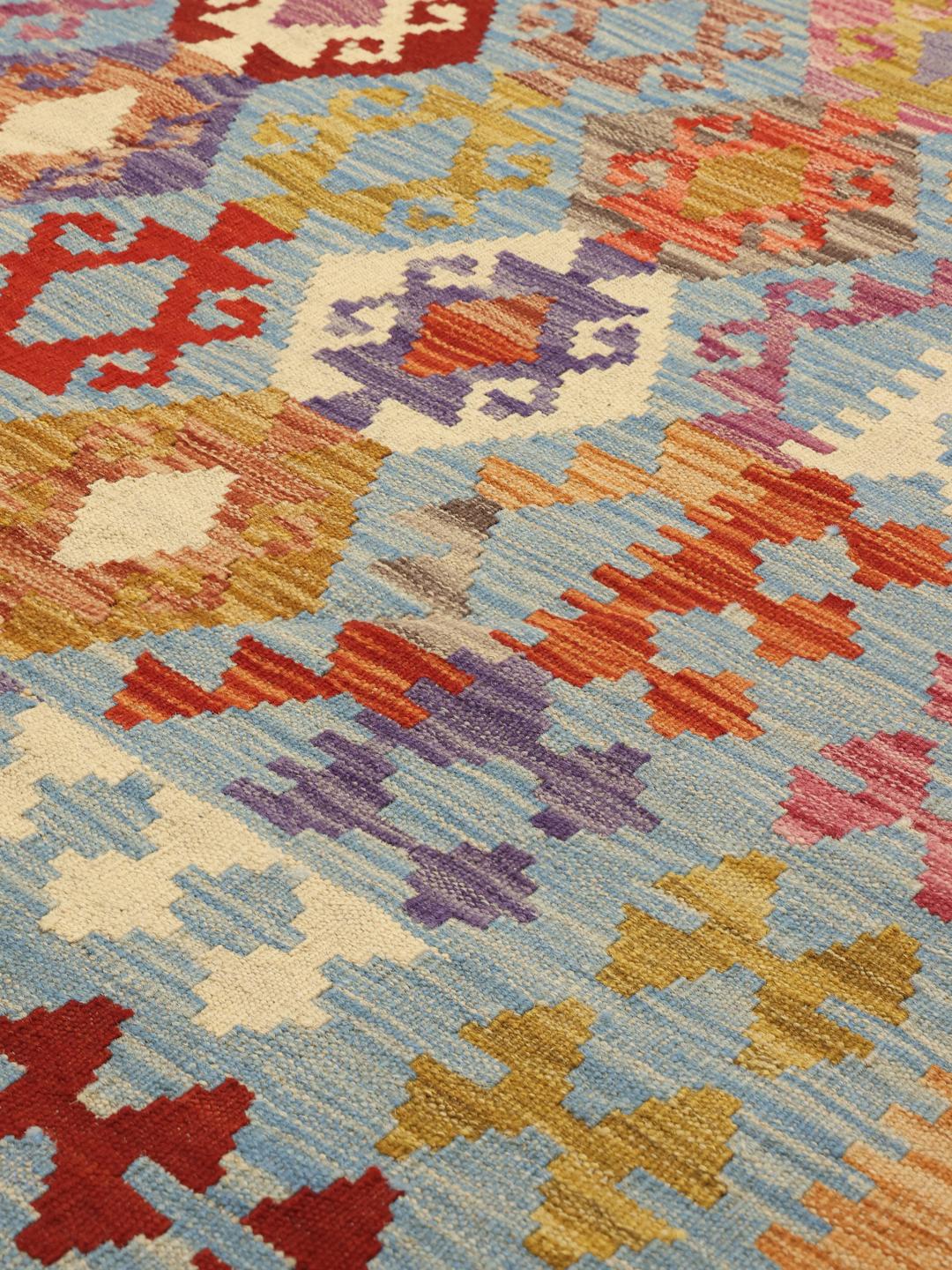
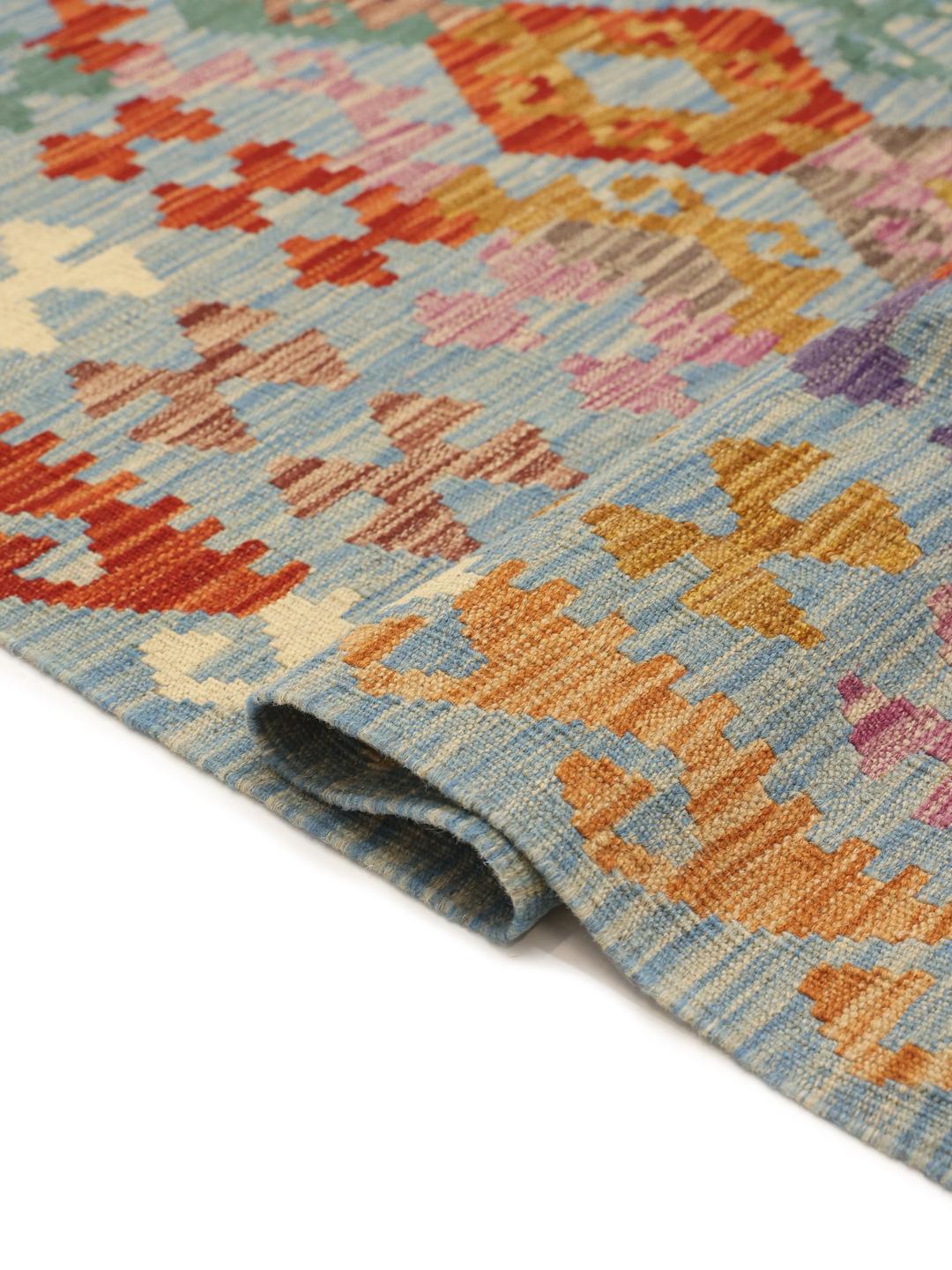
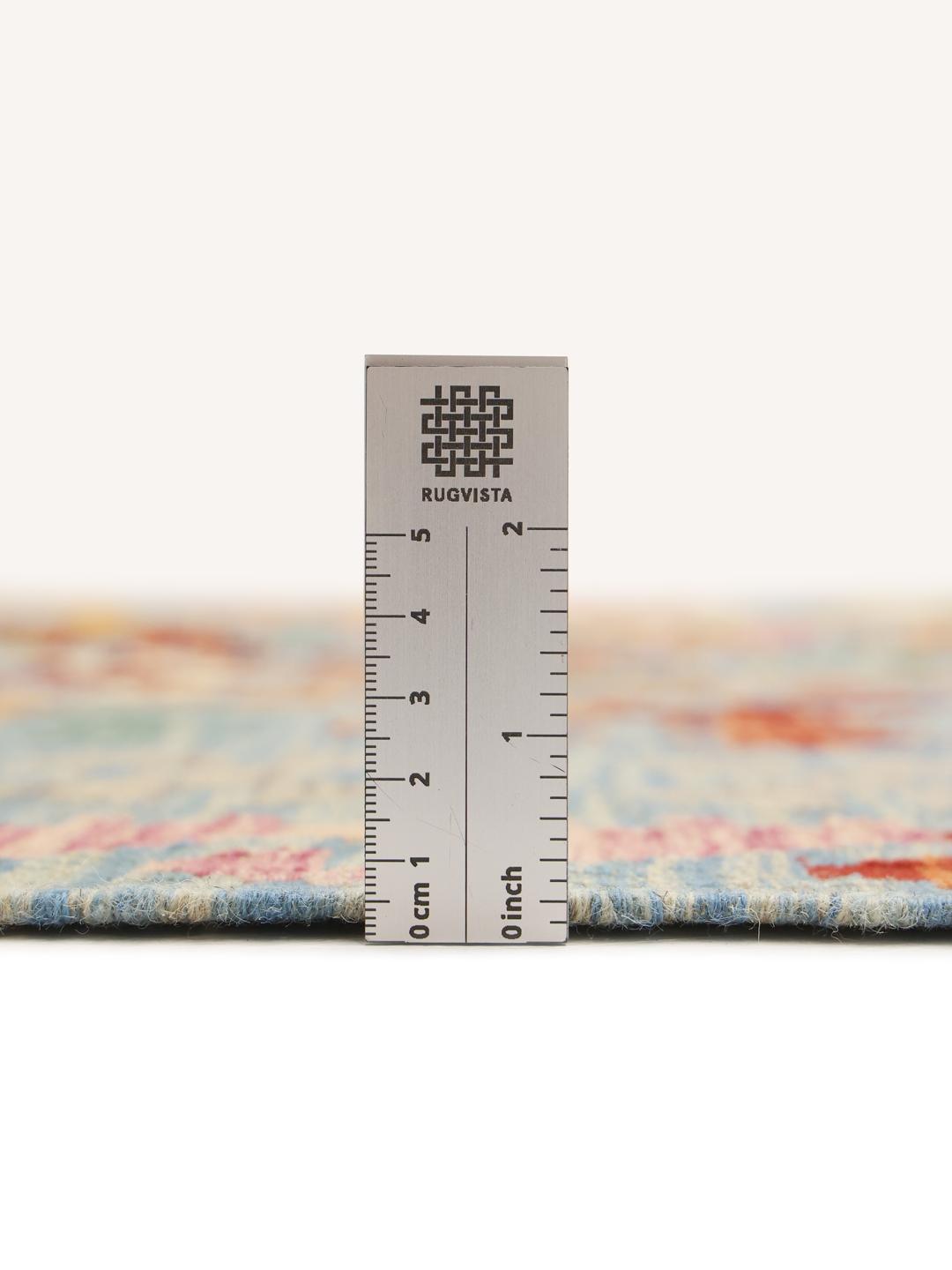
A Kelim is defined by its flat-weave technique, where the design is created by interweaving the coloured weft strands through the warp. Unlike pile rugs, this method results in a reversible, thin, and lightweight textile. This technique requires an expert eye, as the weaver must manage the tension and colour transitions perfectly to ensure the geometric clarity of the final design.
The visual language of Afghan Kelims is deeply rooted in ancient tribal symbolism. The field is often filled with repeating diamond and geometric motifs, which are not merely decorative but often carry meanings related to protection, fertility, or tribal identity. The use of vibrant, contrasting colours is a hallmark of this tradition, designed to bring warmth and life into the traditional settings where these rugs were originally used.
Collecting a Kelim is an appreciation of the enduring skill of the weaver and the cultural history embedded in every thread. These rugs are valued not only for their durability but for the way they bridge the gap between ancient craft and modern living, offering a timeless aesthetic that anchors any room with real cultural weight and artistic integrity.