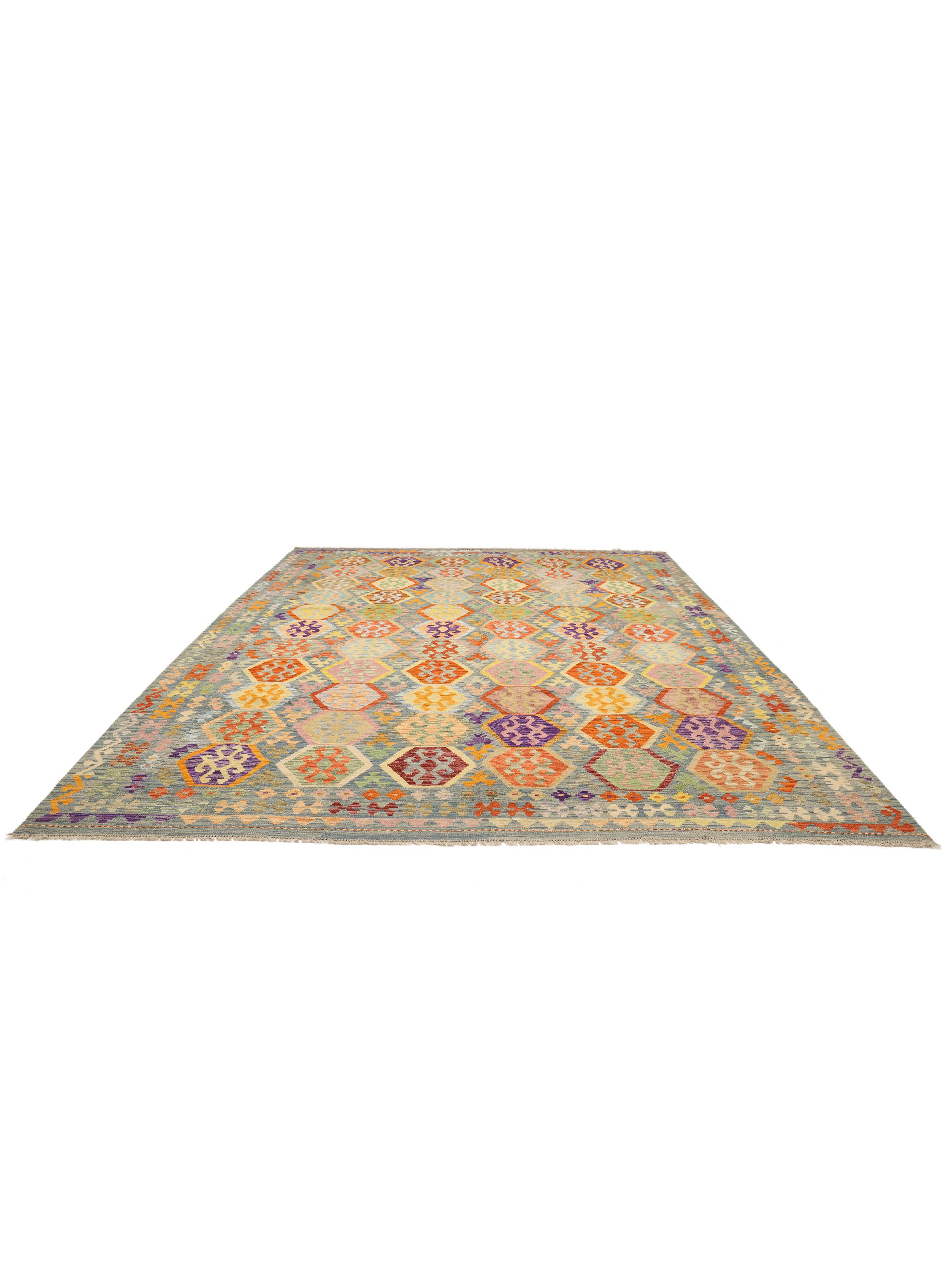
The tradition of weaving Kelims in Afghanistan is deeply rooted in the cultural fabric of the region, drawing on centuries of nomadic and village-based techniques. Historically, these rugs served as essential, portable furnishings for nomadic life, used as floor coverings, wall hangings, and storage bags. The knowledge of these complex weaving methods has been passed down through generations, preserving the unique identity of Afghan textile art.
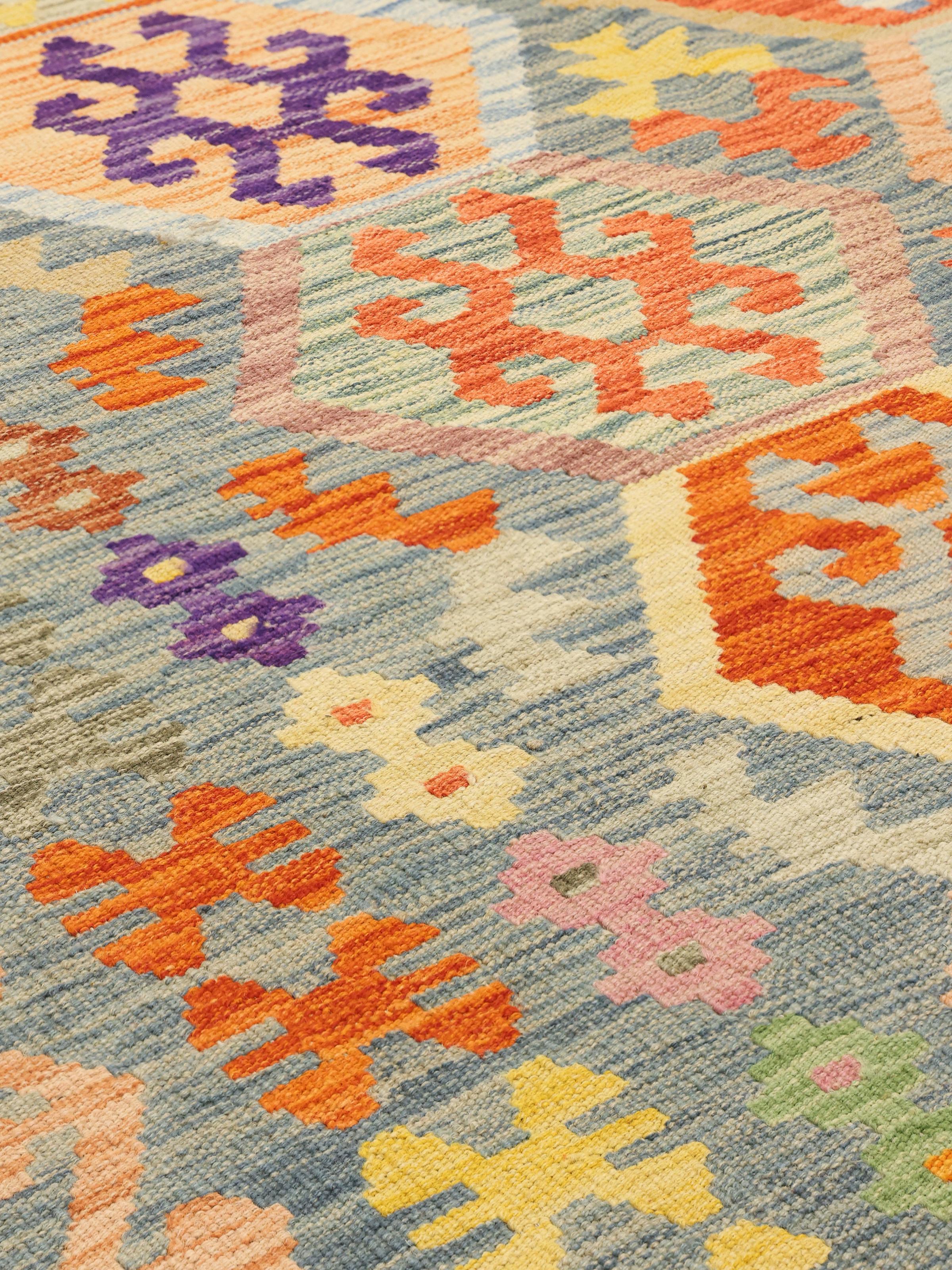
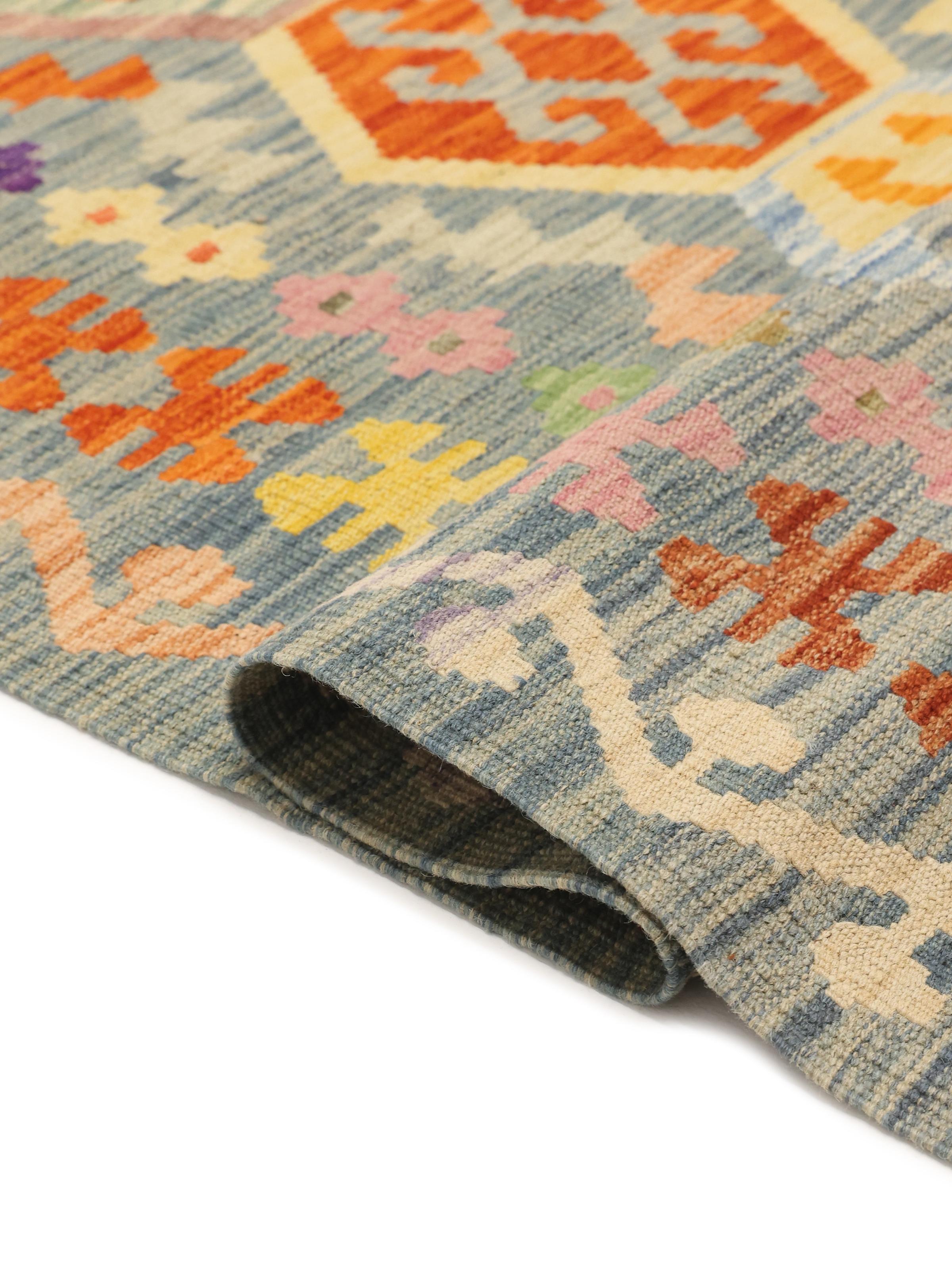
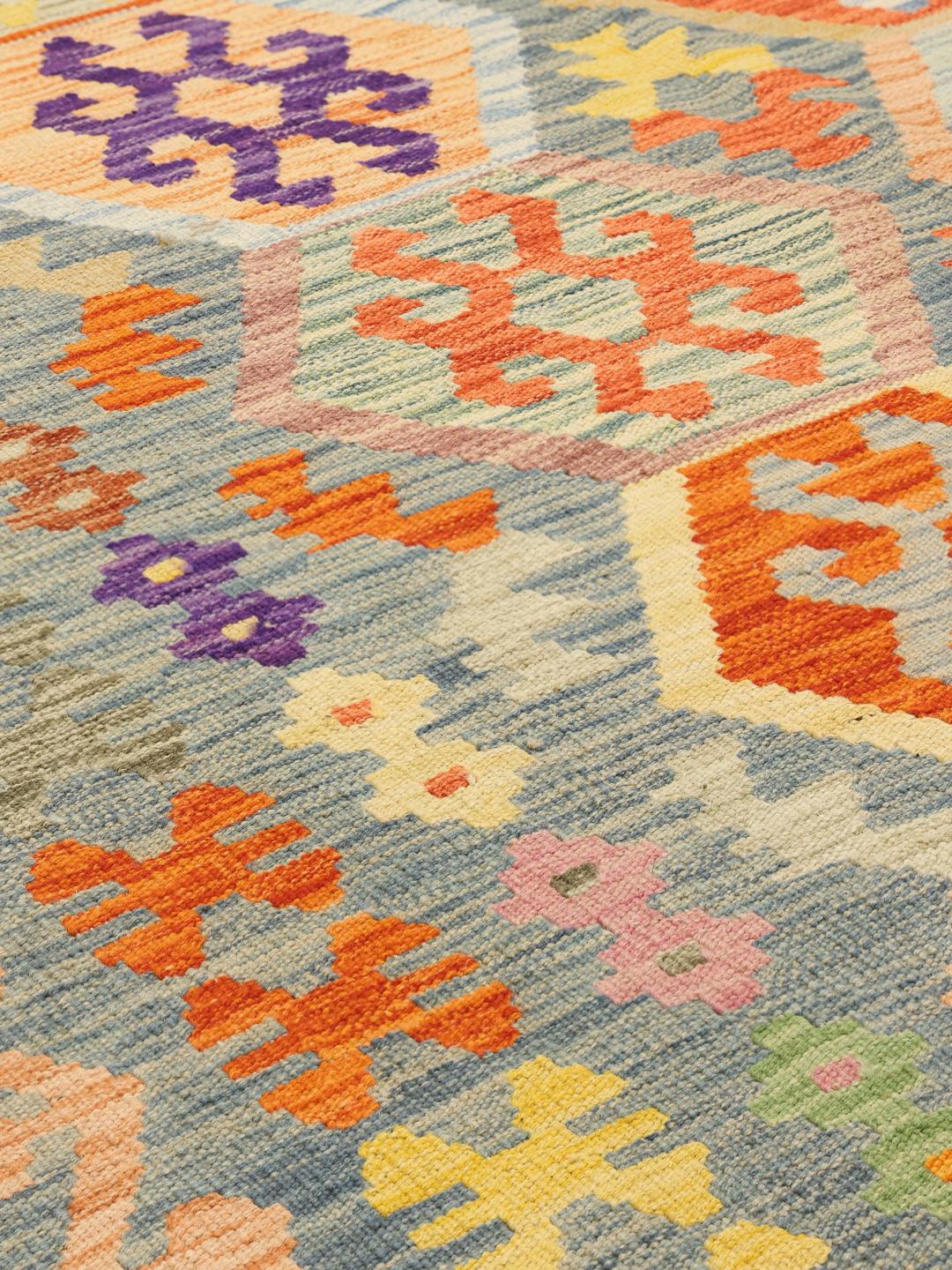
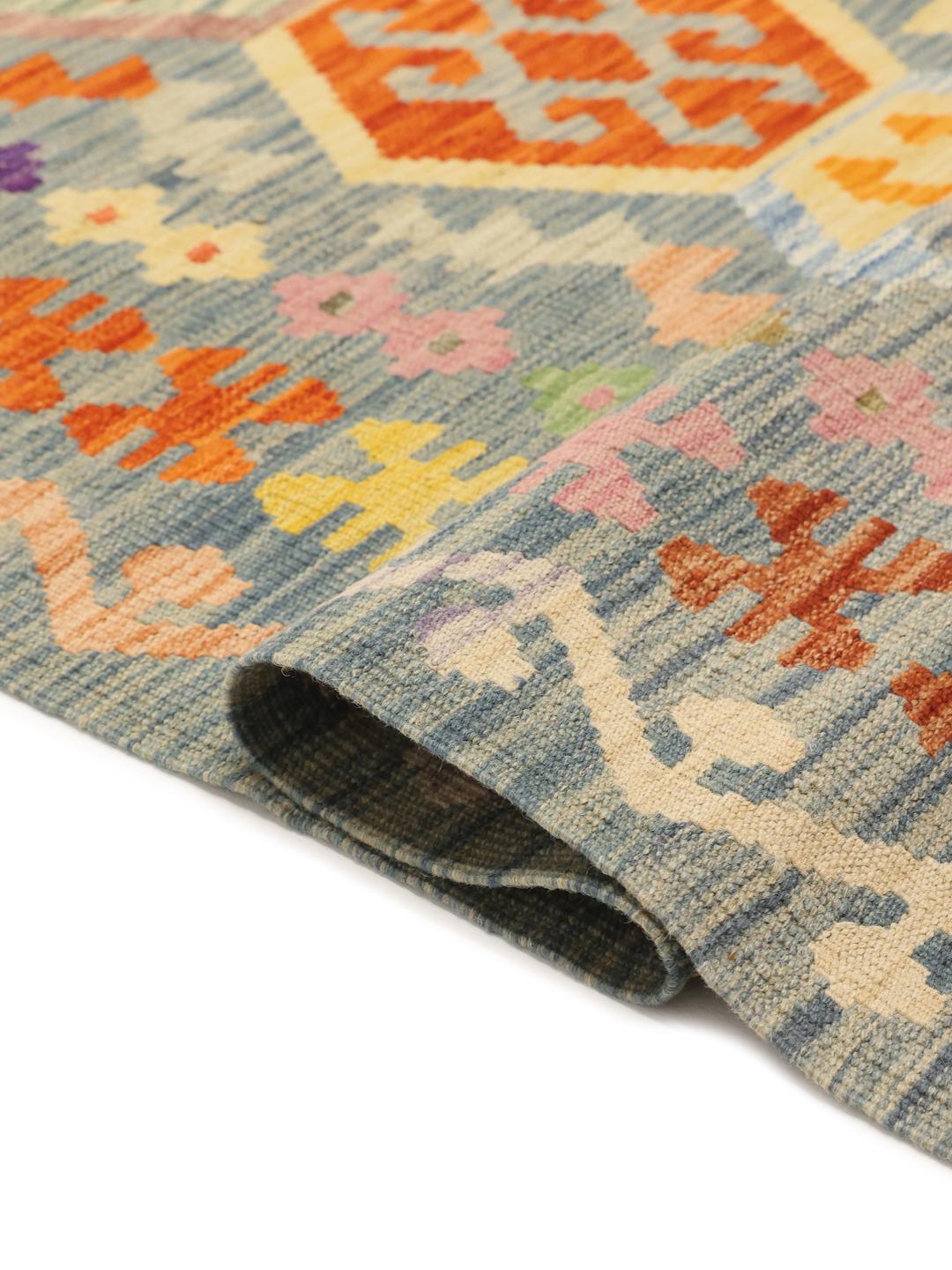
The term 'Kelim' refers to a specific flat-weaving technique where the pattern is created by the weft threads, which are woven tightly over the warp threads. This process results in a rug without a pile, making it incredibly resilient and lightweight. The quality of a Kelim is determined by the tightness of the weave and the precision of the colour changes, which define the sharpness of the geometric motifs and the overall longevity of the piece.
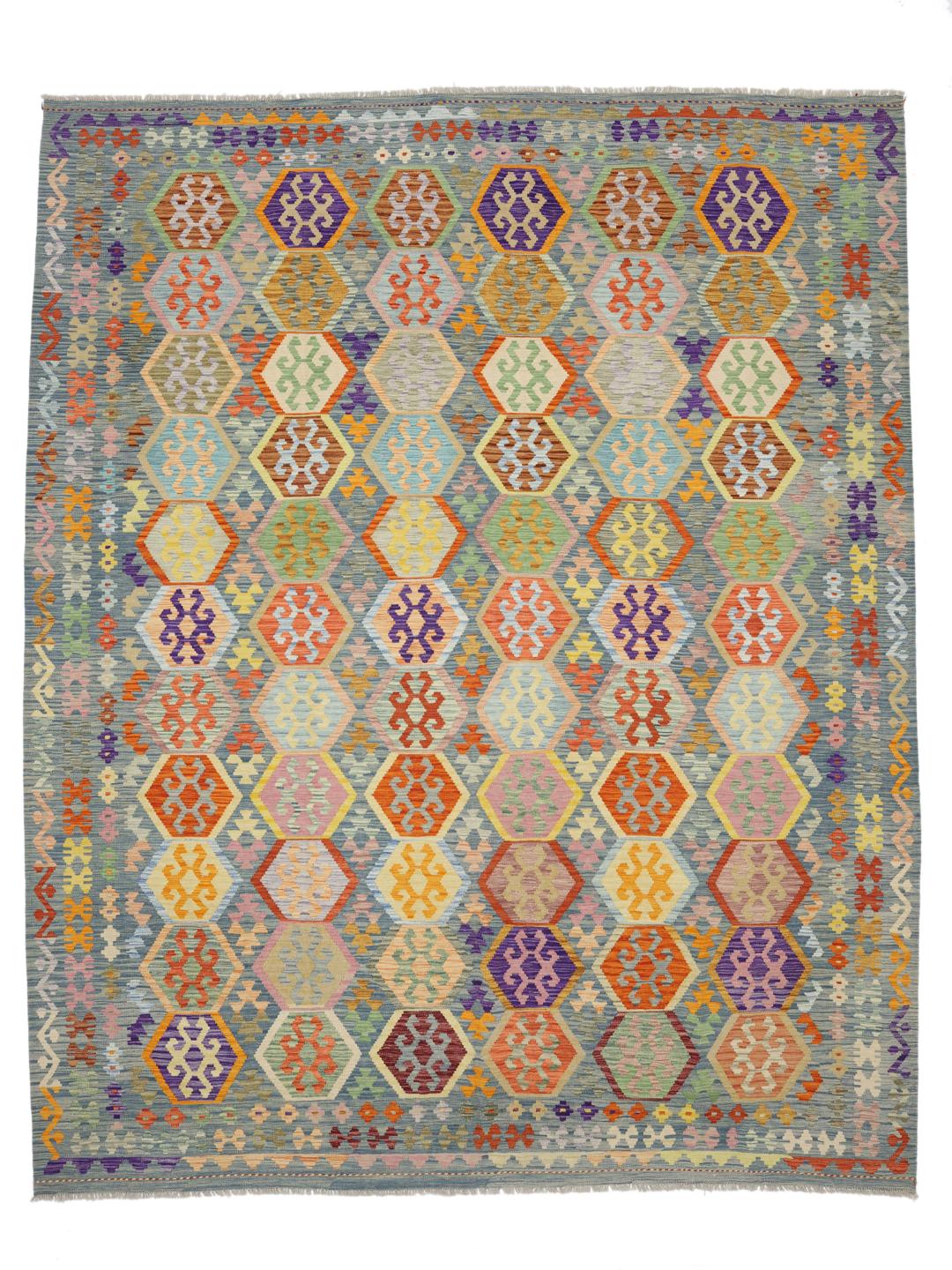
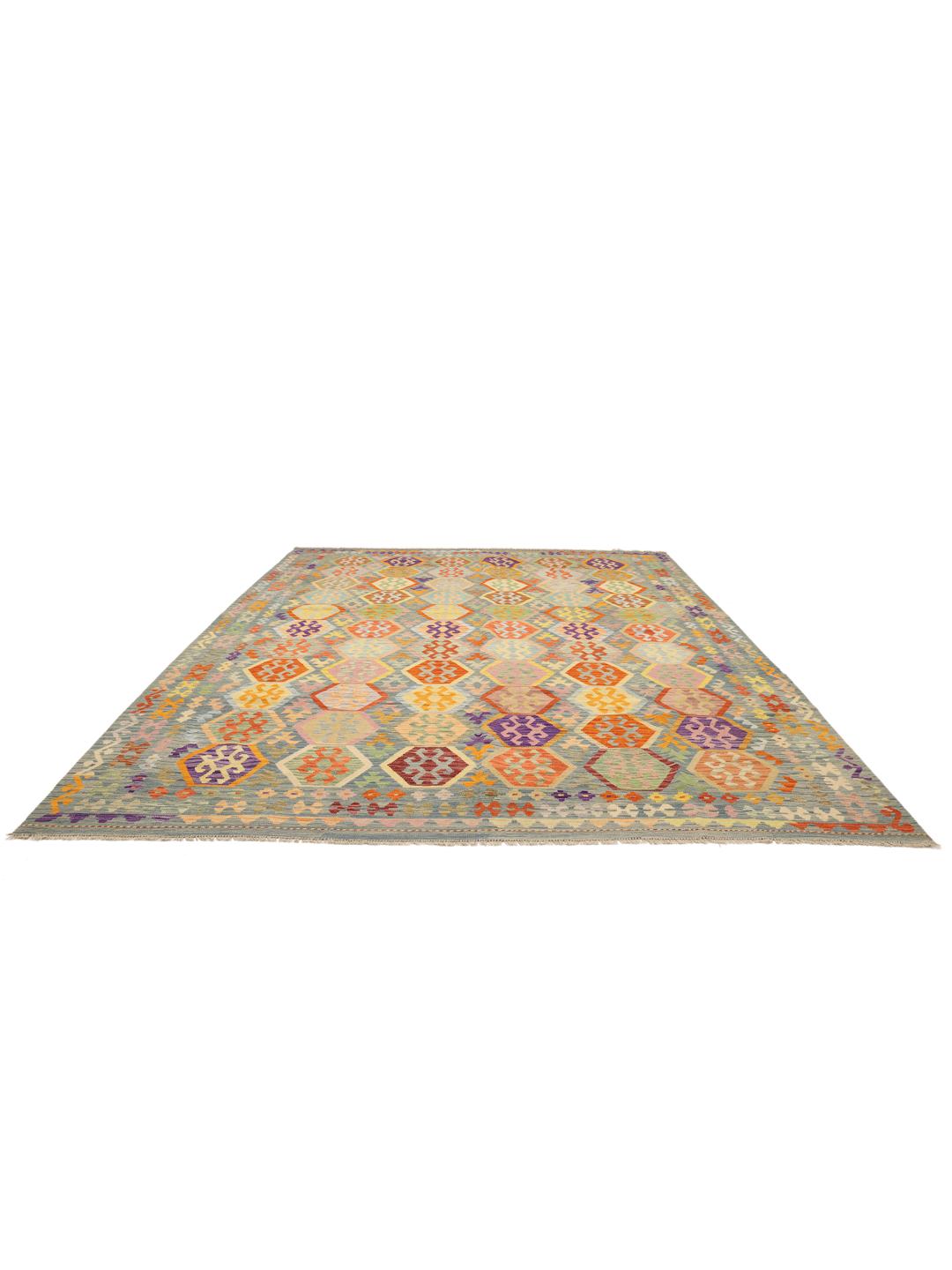
Design-wise, these rugs are celebrated for their bold use of geometric shapes and vibrant, earthy colour palettes. The medallion pattern seen here is a classic motif in the region, often representing symbols of protection, prosperity, or tribal identity. The repetition of these shapes across the field creates a harmonious visual rhythm, balanced by decorative borders that frame the composition and ground the design.
Today, these rugs are highly valued by collectors and enthusiasts for their authentic cultural heritage and the sheer human effort required to produce them. Owning an Afghan Kelim is an investment in a living tradition, offering a connection to the skilled artisans and the historical practices that define this craft. They are cherished not only for their aesthetic beauty but also for their enduring quality and the story they bring into a modern home.