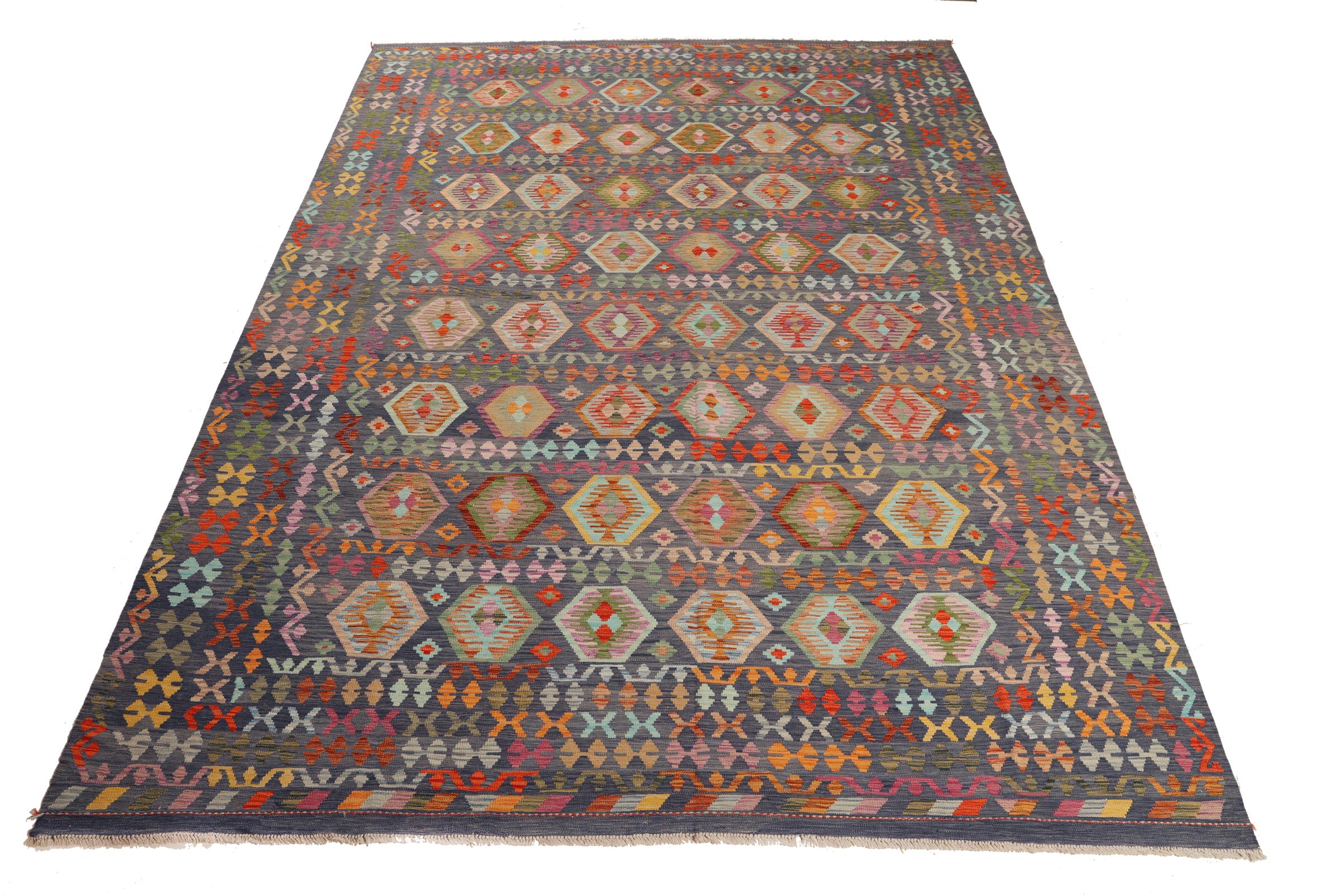
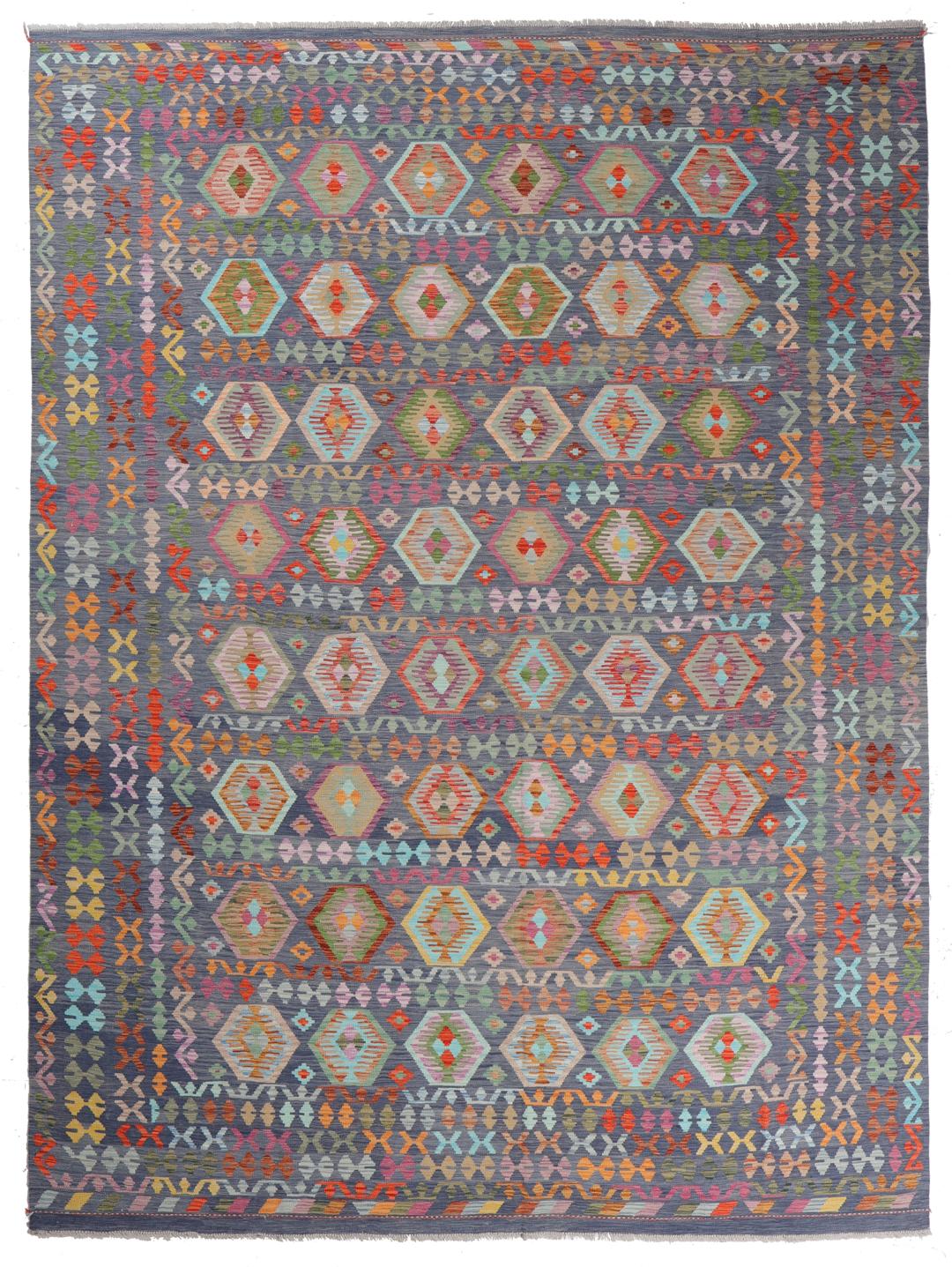
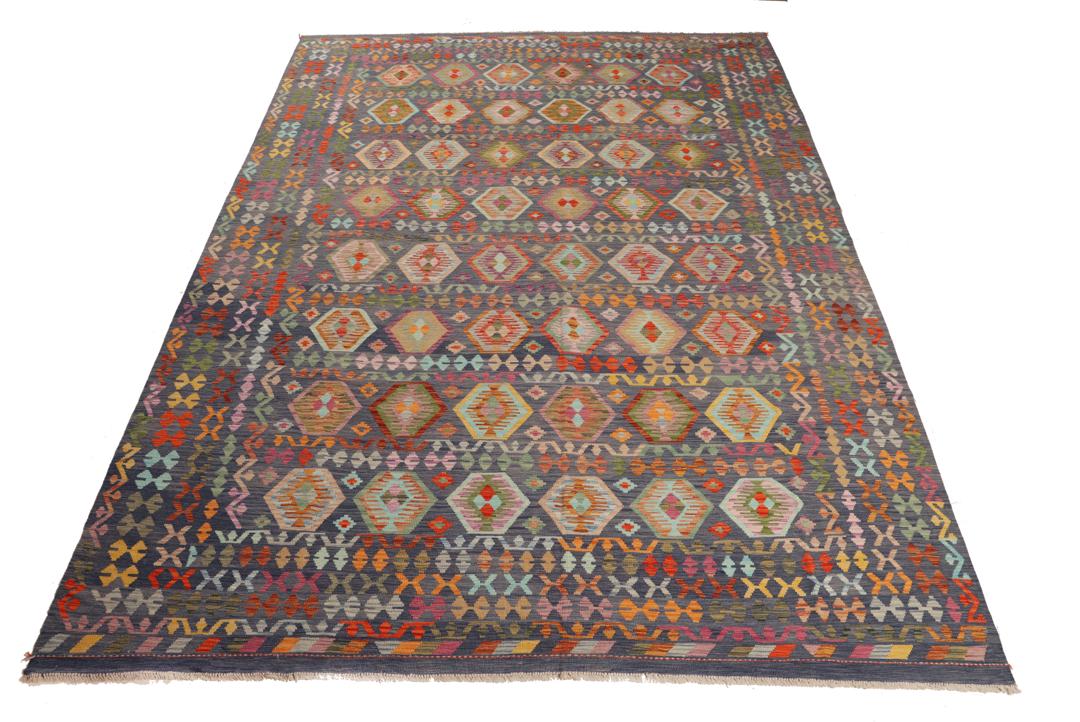
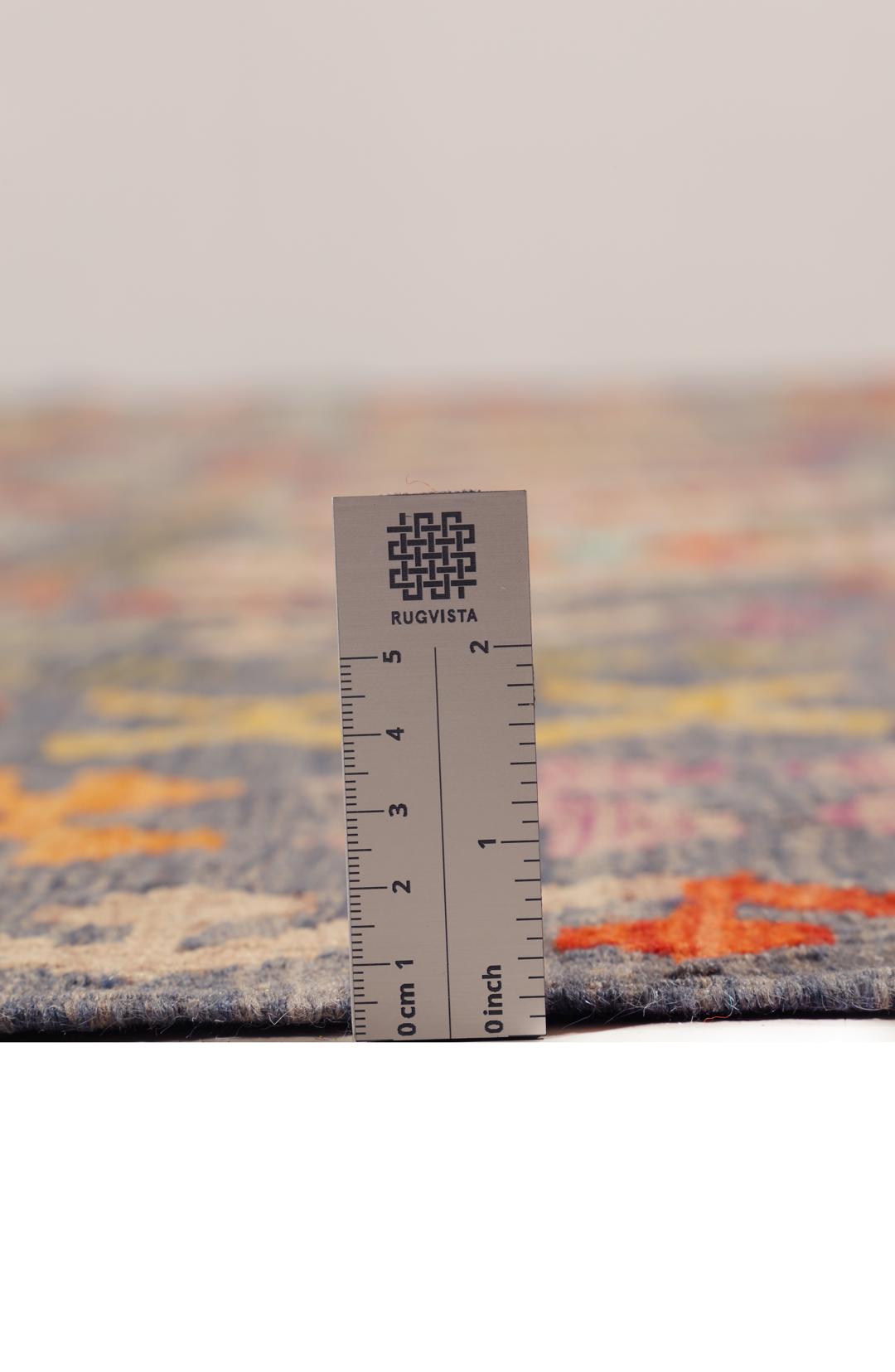
The tradition of Kelim weaving in Afghanistan is deeply rooted in the cultural history of the region, where nomadic tribes historically created these flat-woven textiles for both functional and decorative purposes. These rugs served as essential items for tent living, acting as floor coverings, blankets, and storage bags, which necessitated a construction that was both portable and incredibly durable.
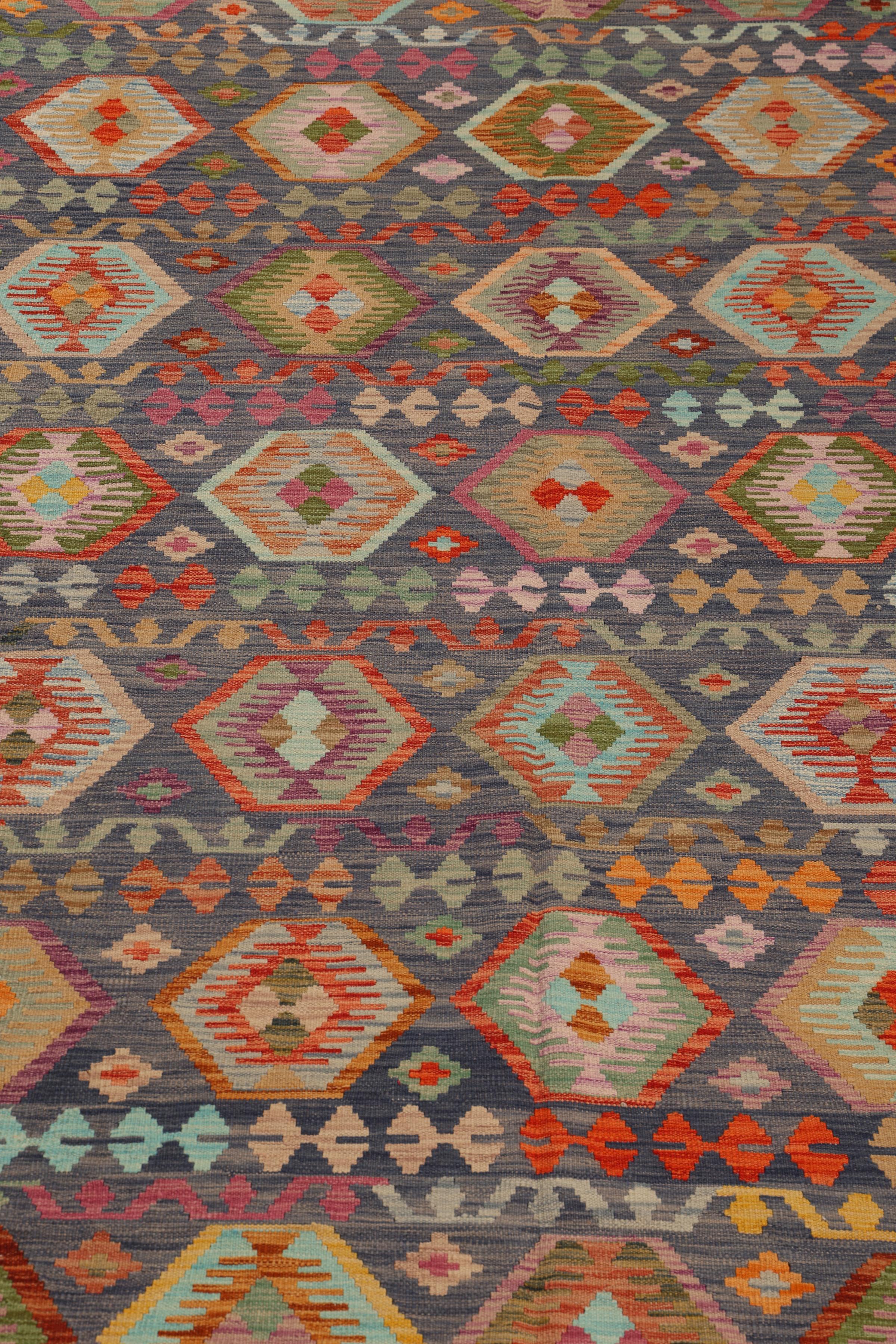
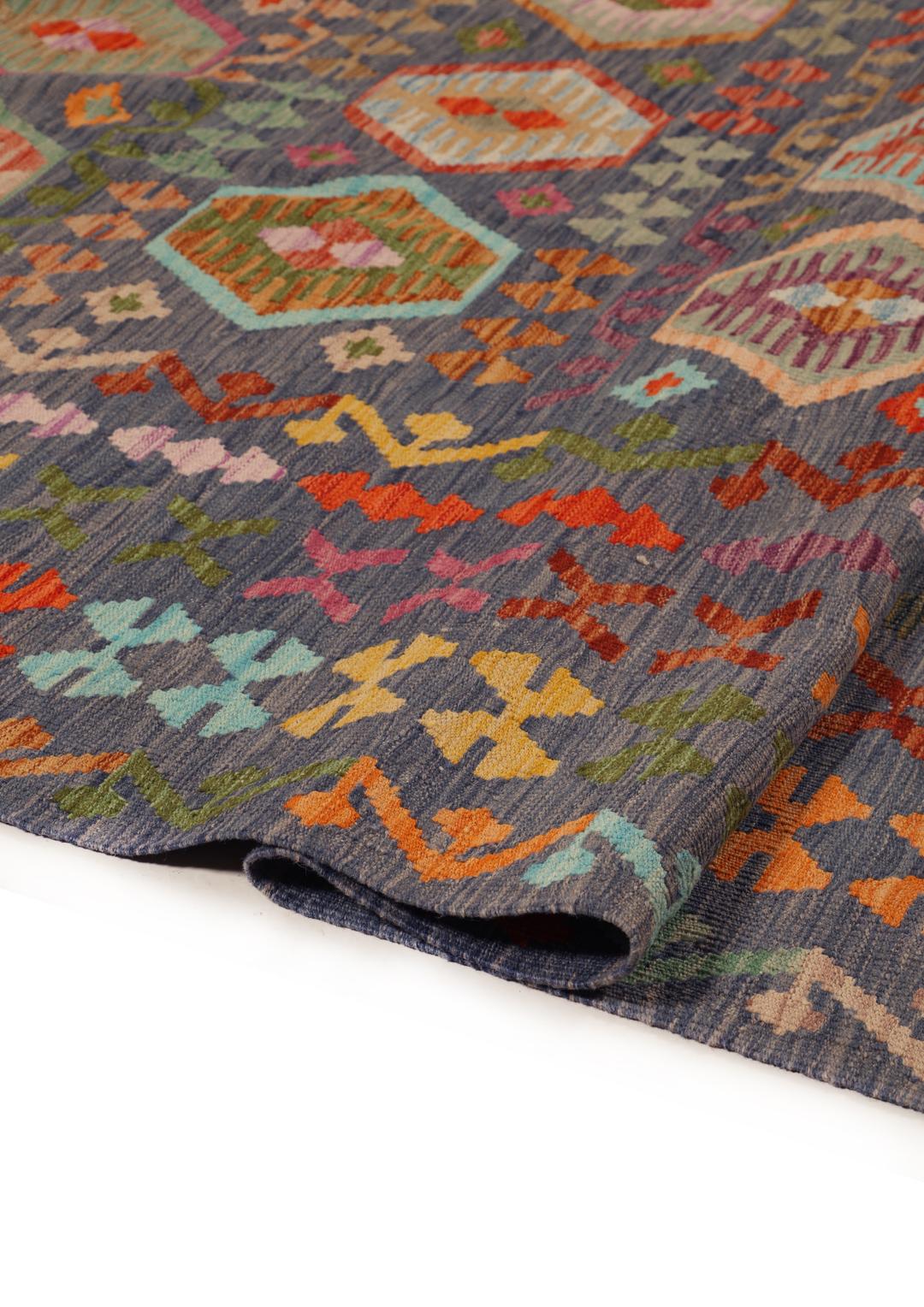
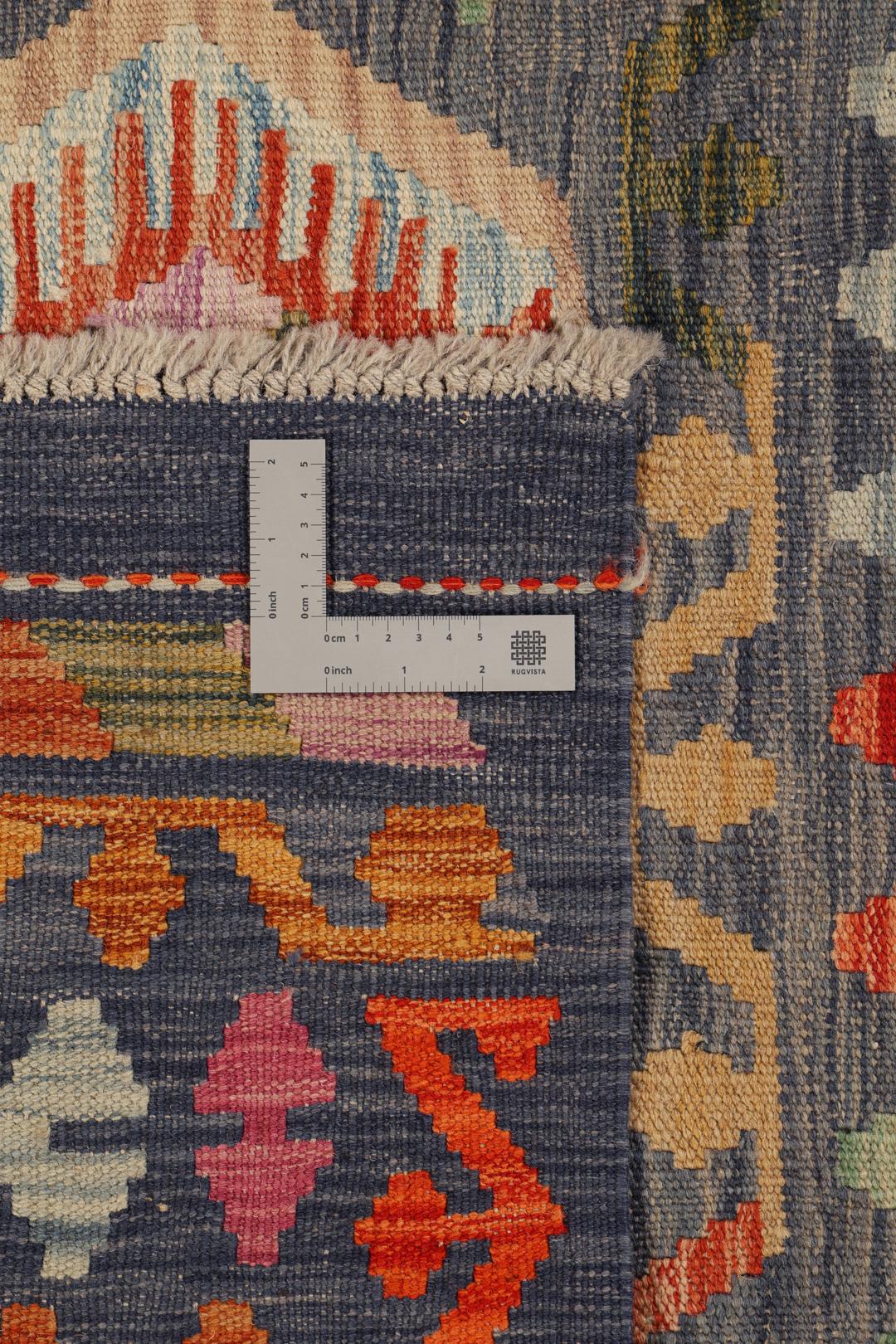
A Kelim is defined by its flat-weave construction, meaning it is created without a pile. The weaver interlaces the warp and weft strands to create the pattern, which results in a rug that is reversible and lightweight yet surprisingly resilient. This technique requires an expert eye to ensure the tension remains consistent across the entire surface, providing a smooth finish that is characteristic of fine hand-woven work.
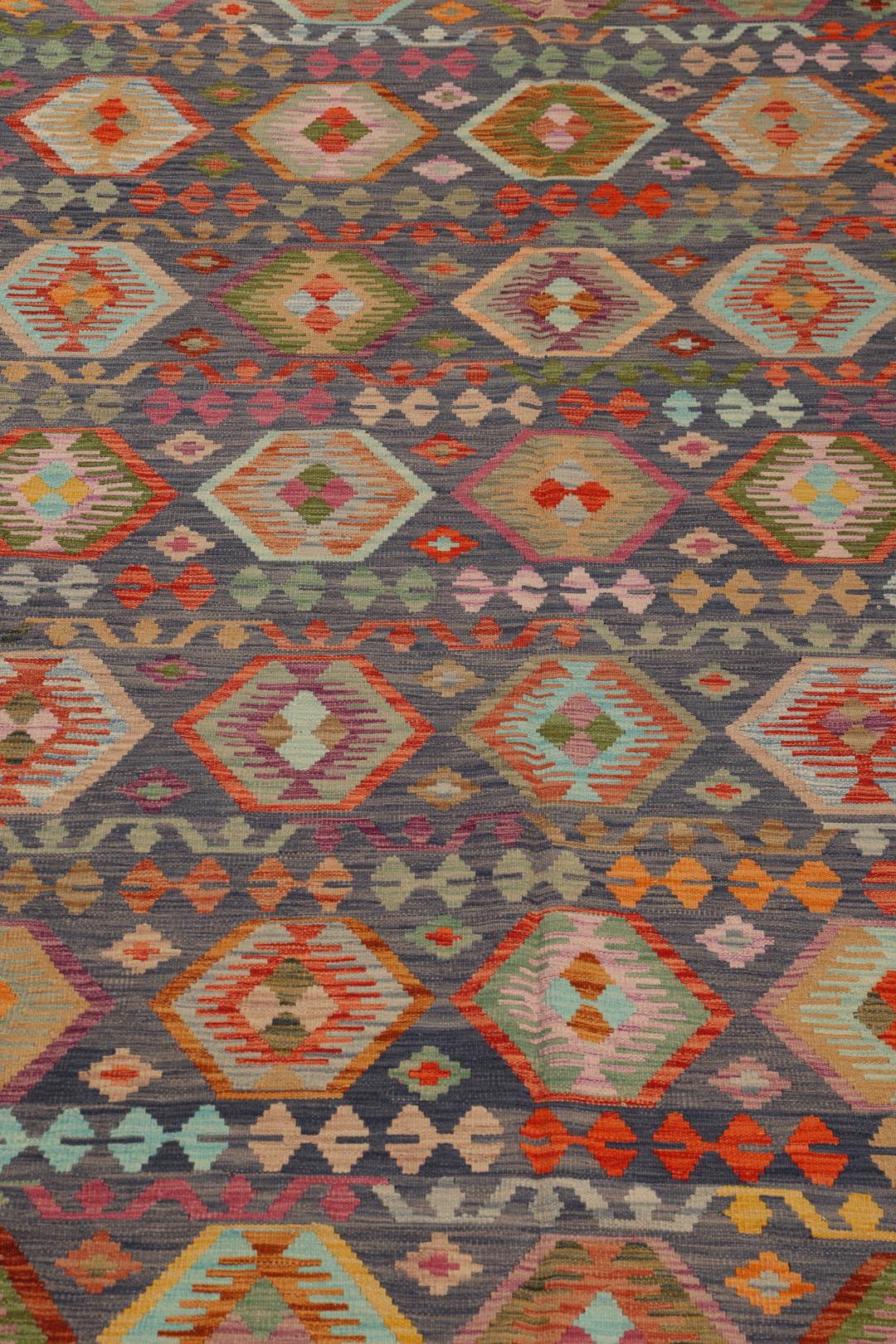
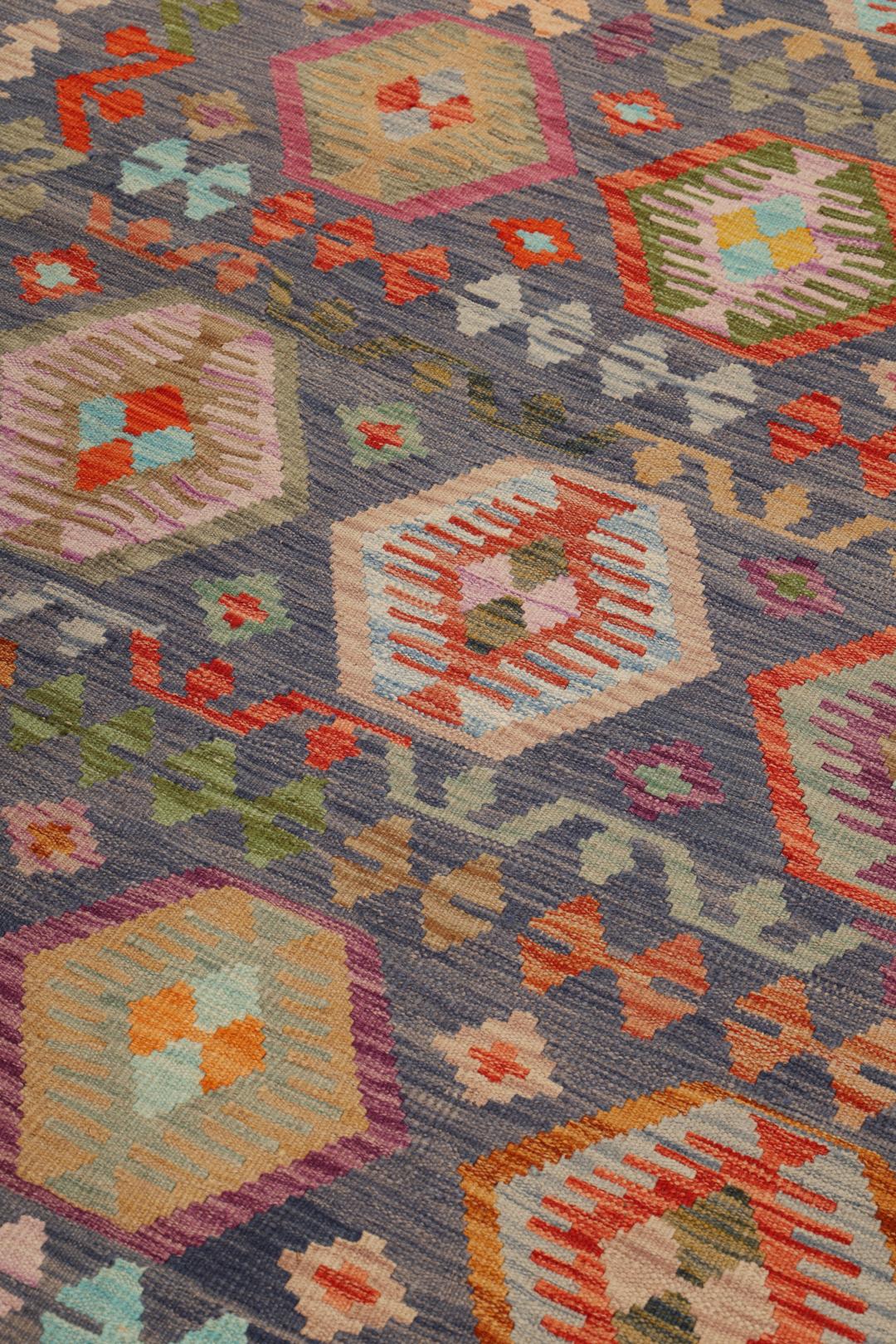
The signature design of this Afghan Kelim features a series of geometric medallions and intricate borders, often utilising a wide spectrum of colours derived from natural dyes. These repeating patterns are not merely aesthetic choices but are often symbolic, reflecting the heritage and storytelling traditions of the weaving communities that have passed these techniques down through generations.
Acquiring an Afghan Kelim is an investment in cultural heritage and long-lasting quality. These rugs are highly valued by collectors for their authenticity and the human story behind every thread. By choosing a hand-woven Kelim, you are preserving a centuries-old craft and bringing a piece of history into your home that is as functional as it is beautiful.