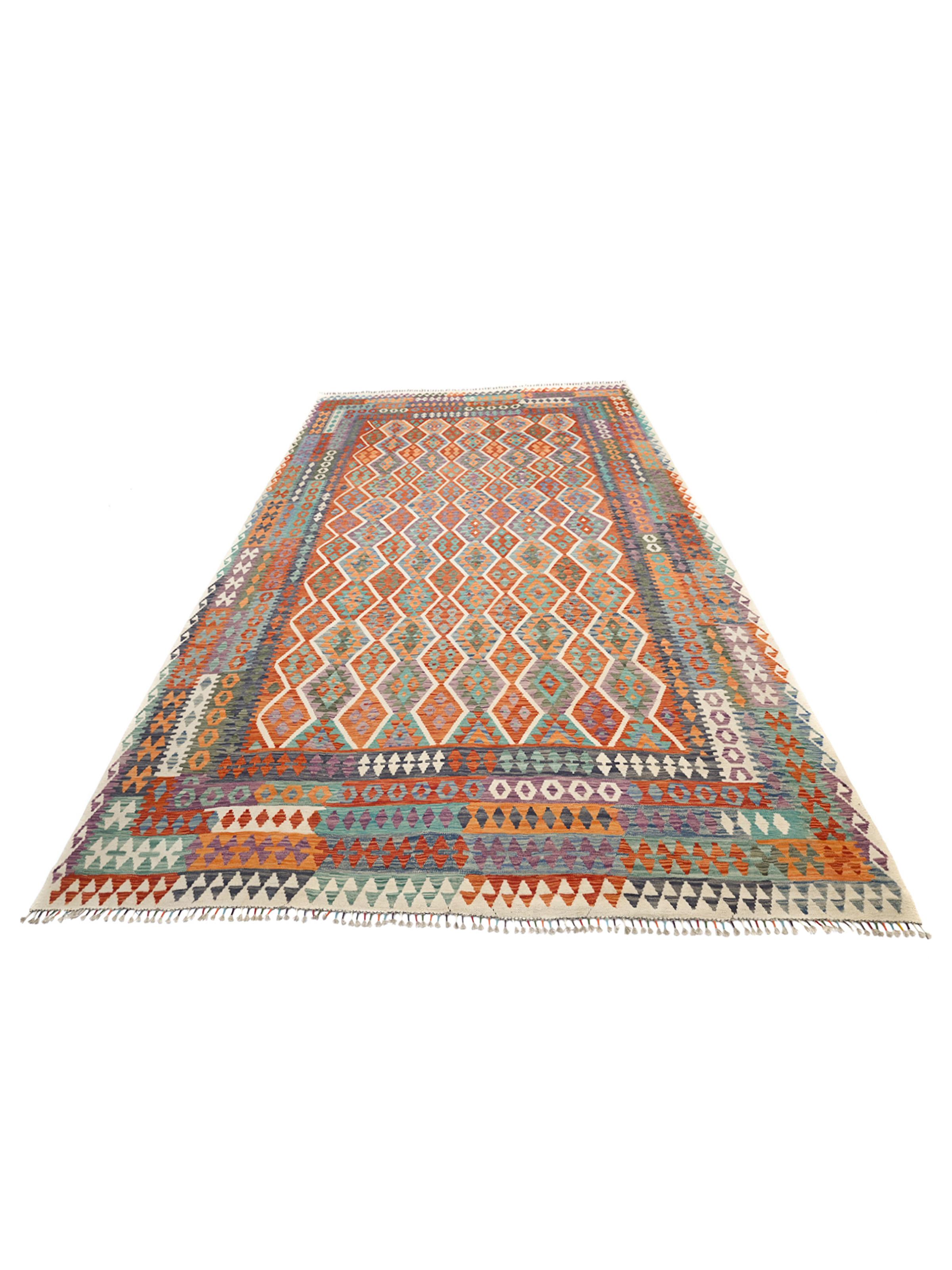
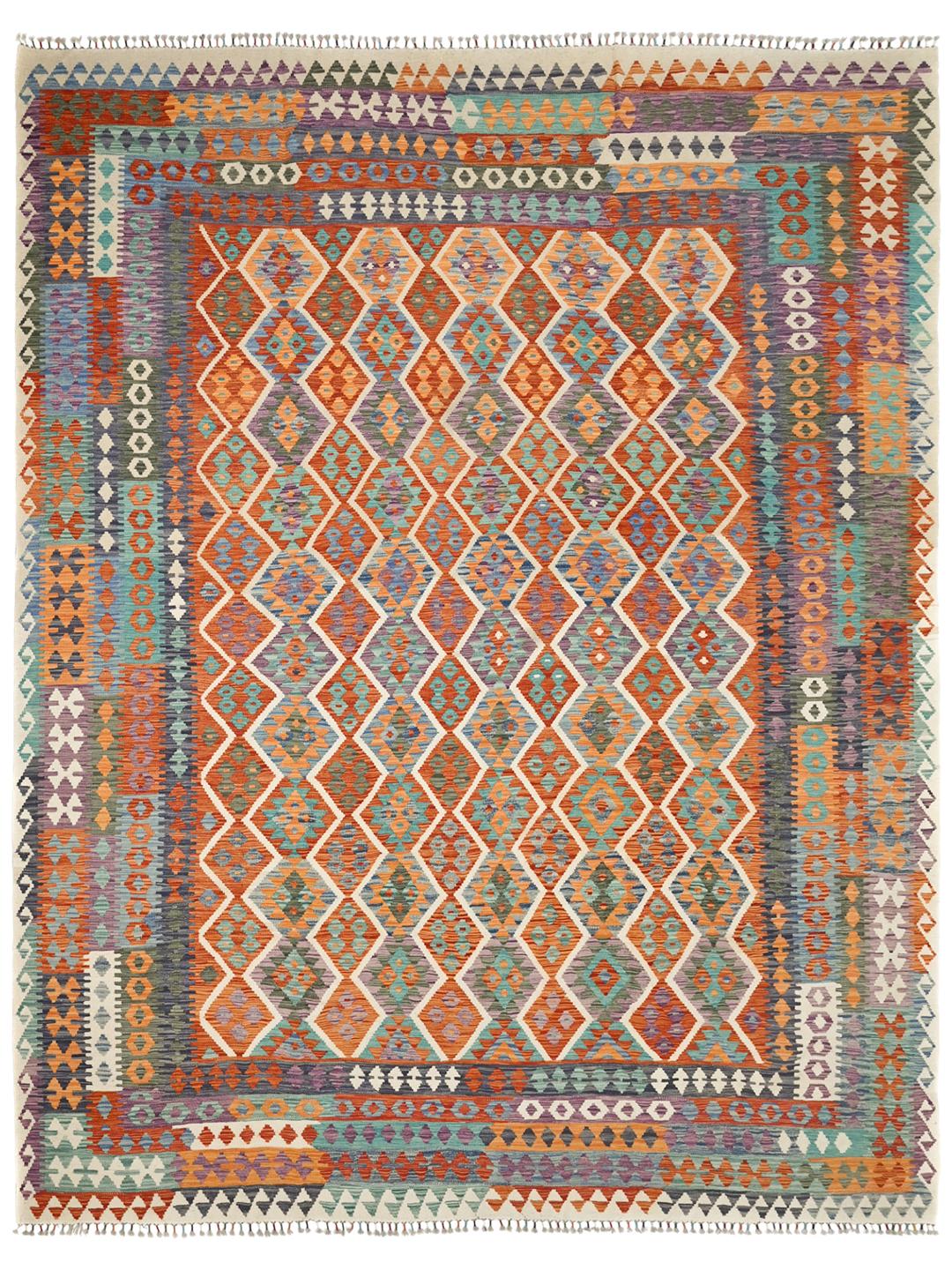
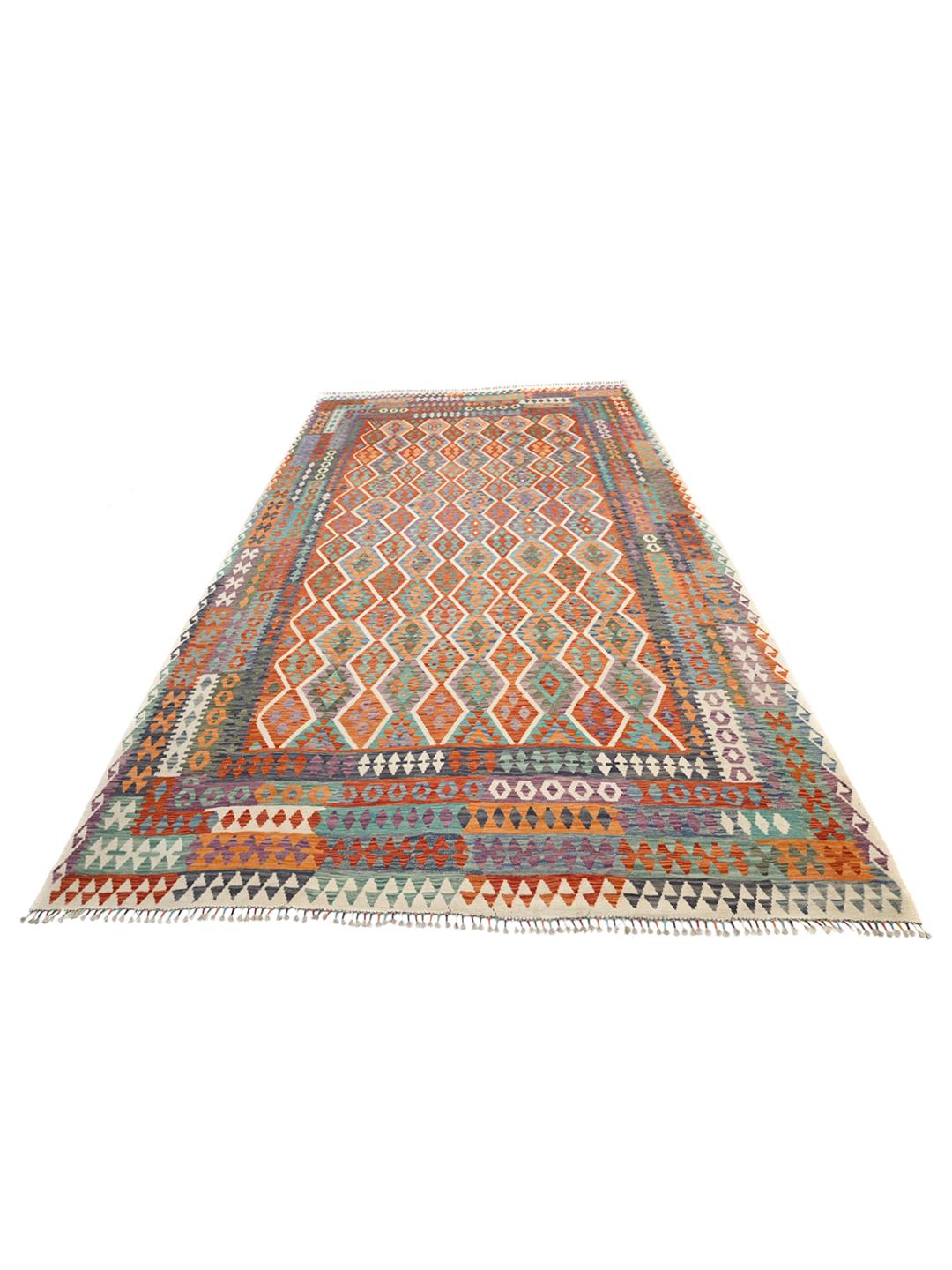
Flatwoven kilims have long held an important place in the textile heritage of Afghanistan and Central Asia. Woven by nomadic and village weavers, these pieces were originally created for practical household use, serving as floor coverings, wall hangings, and protective blankets adapted to everyday life.
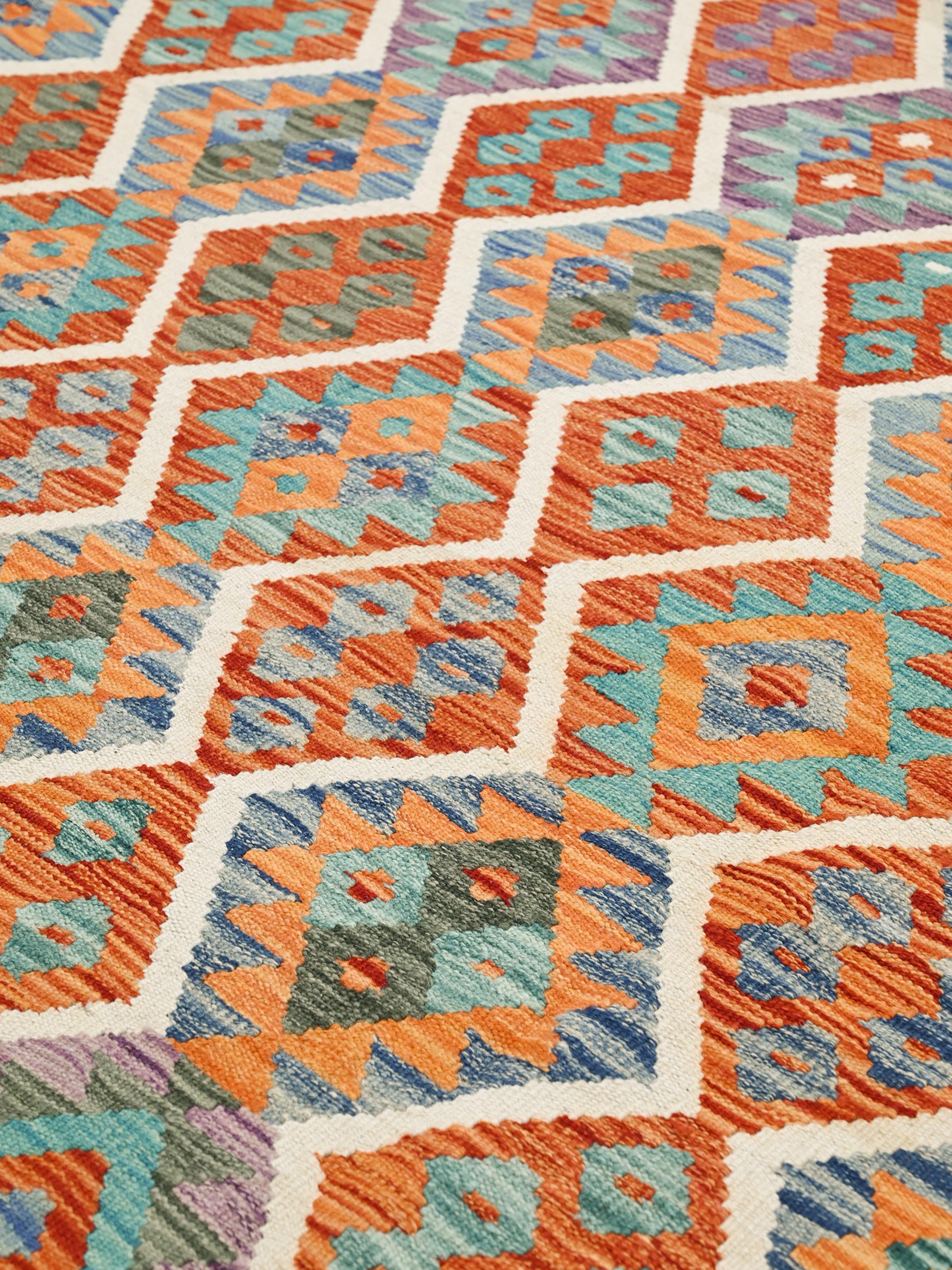
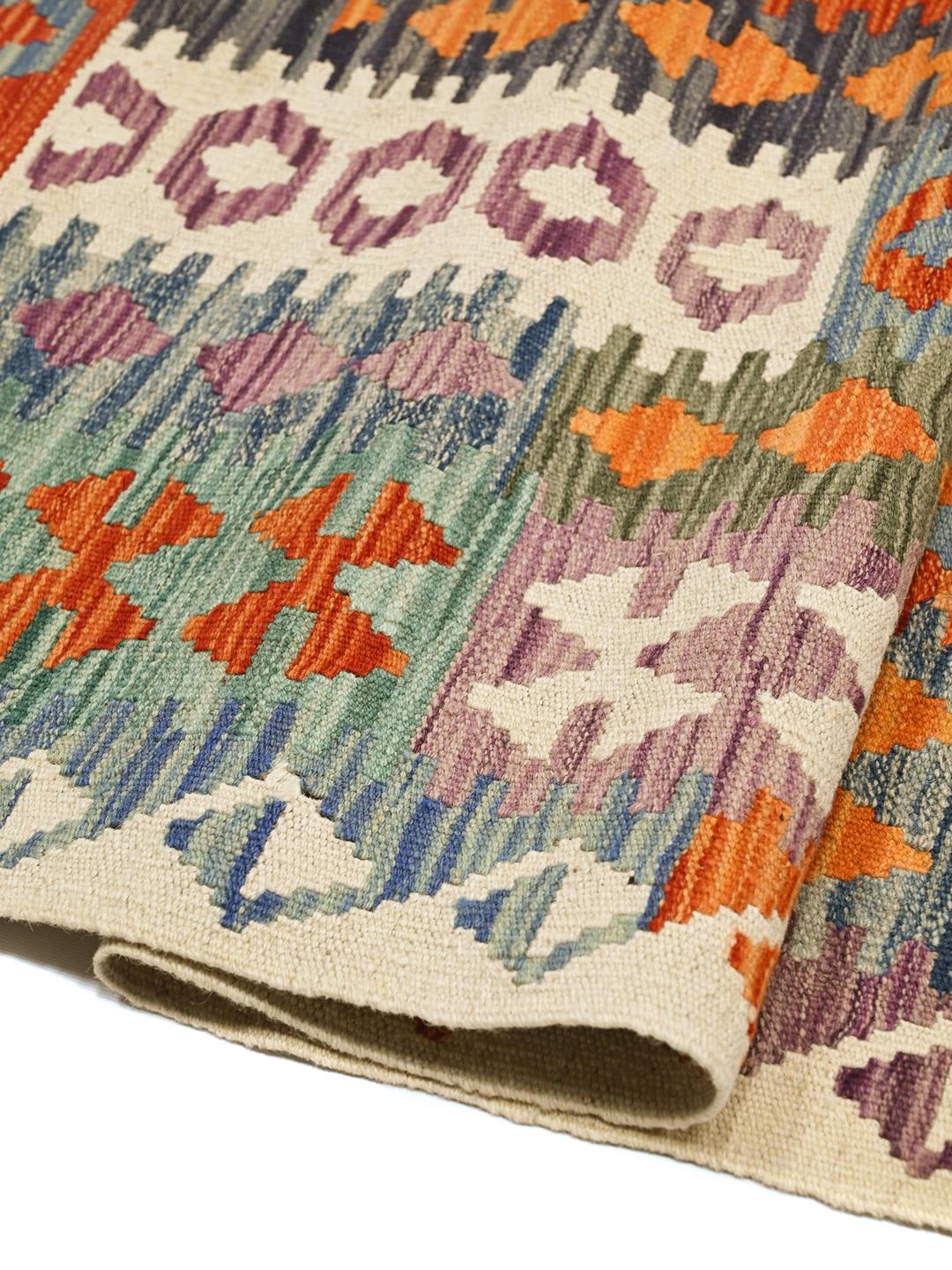
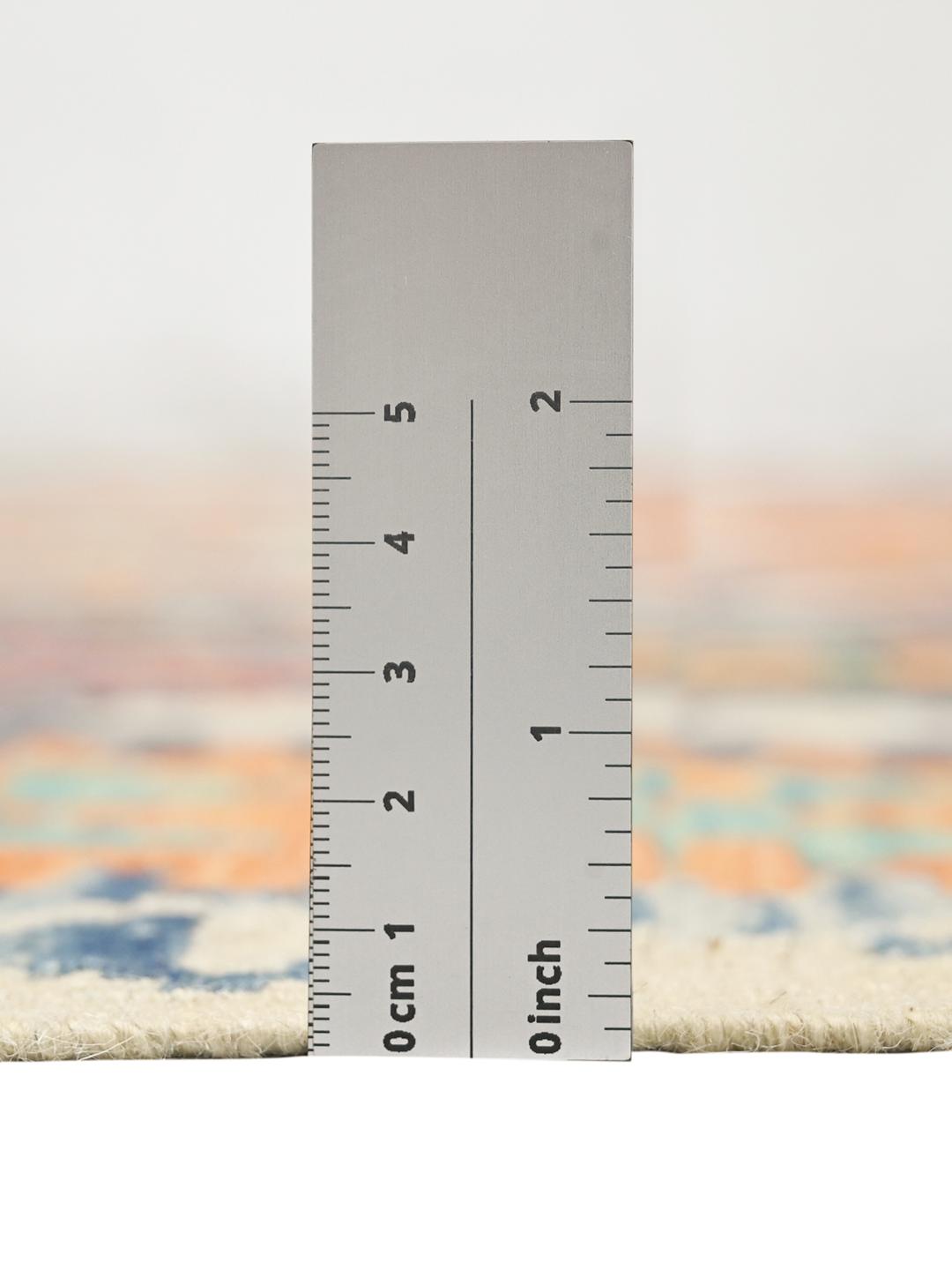
The term flatwoven describes a rug crafted without a raised pile, created by interlacing the warp and weft threads directly. This construction creates a light, flexible, and resilient textile that showcases the clean structure of the weave and provides exceptional durability.
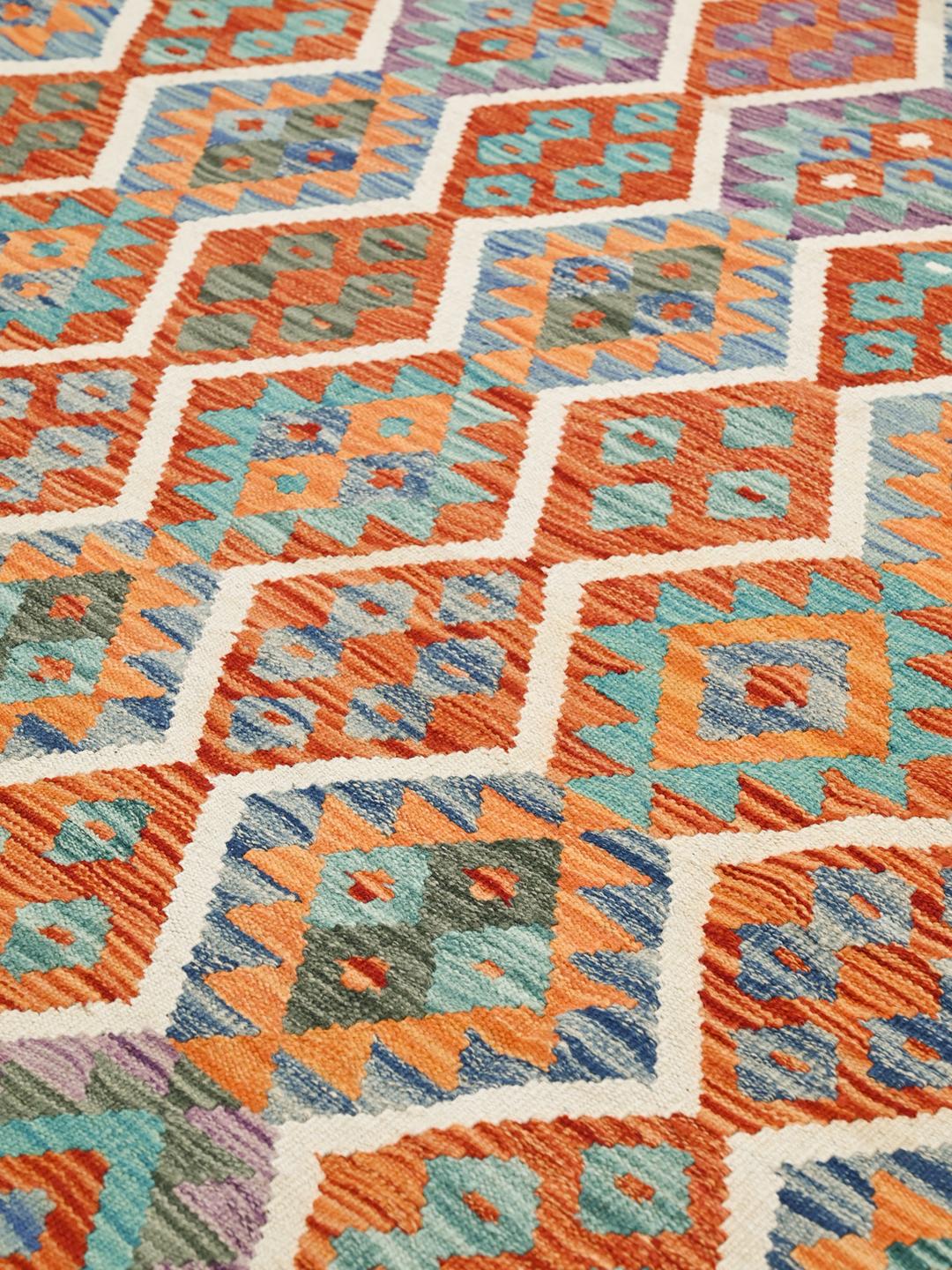
Design traditions in Afghan kilims center on striking geometric motifs, including repeating diamonds, stepped medallions, and detailed border bands. Colors are drawn from long-established regional palettes, where deep reds, earthy terracottas, and contrasting dark tones create clear visual structure.
Acquiring an authentic Afghan kilim means bringing home a piece of living textile history. Valued worldwide by collectors and interior enthusiasts, these hand-knotted and hand-woven works represent the enduring artistry of regional weavers and the lasting appeal of traditional design.