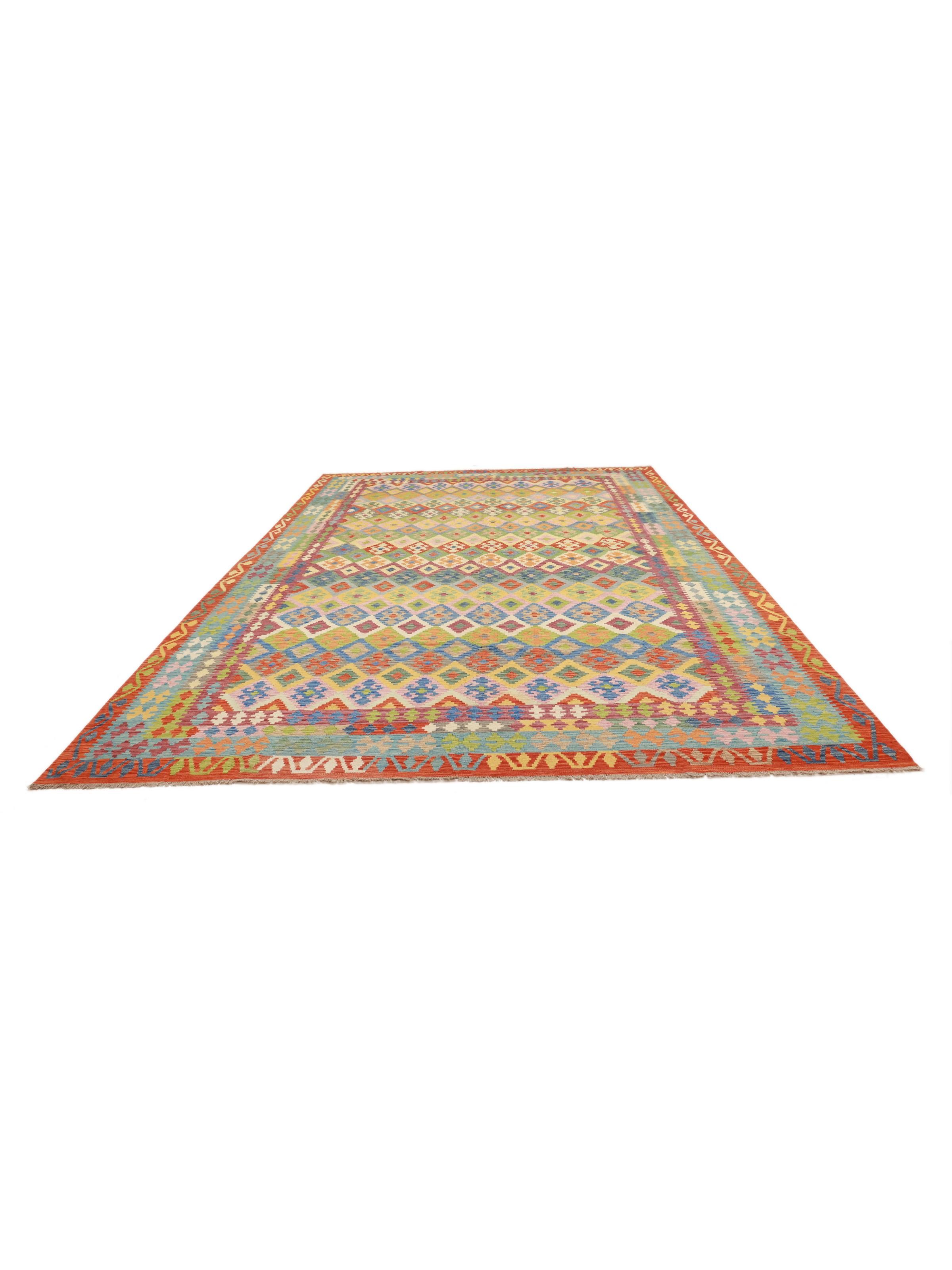
The Kelim Afghan Old Style rug finds its roots in the long-standing weaving traditions of Afghanistan, a region with a deep and storied history of textile production. These rugs are traditionally created by nomadic and semi-nomadic tribes who have passed down their weaving techniques through generations. The evolution of the Afghan Kelim is a reflection of the resilience and artistry of these communities, who have long used their craft to document their cultural identity and daily life.
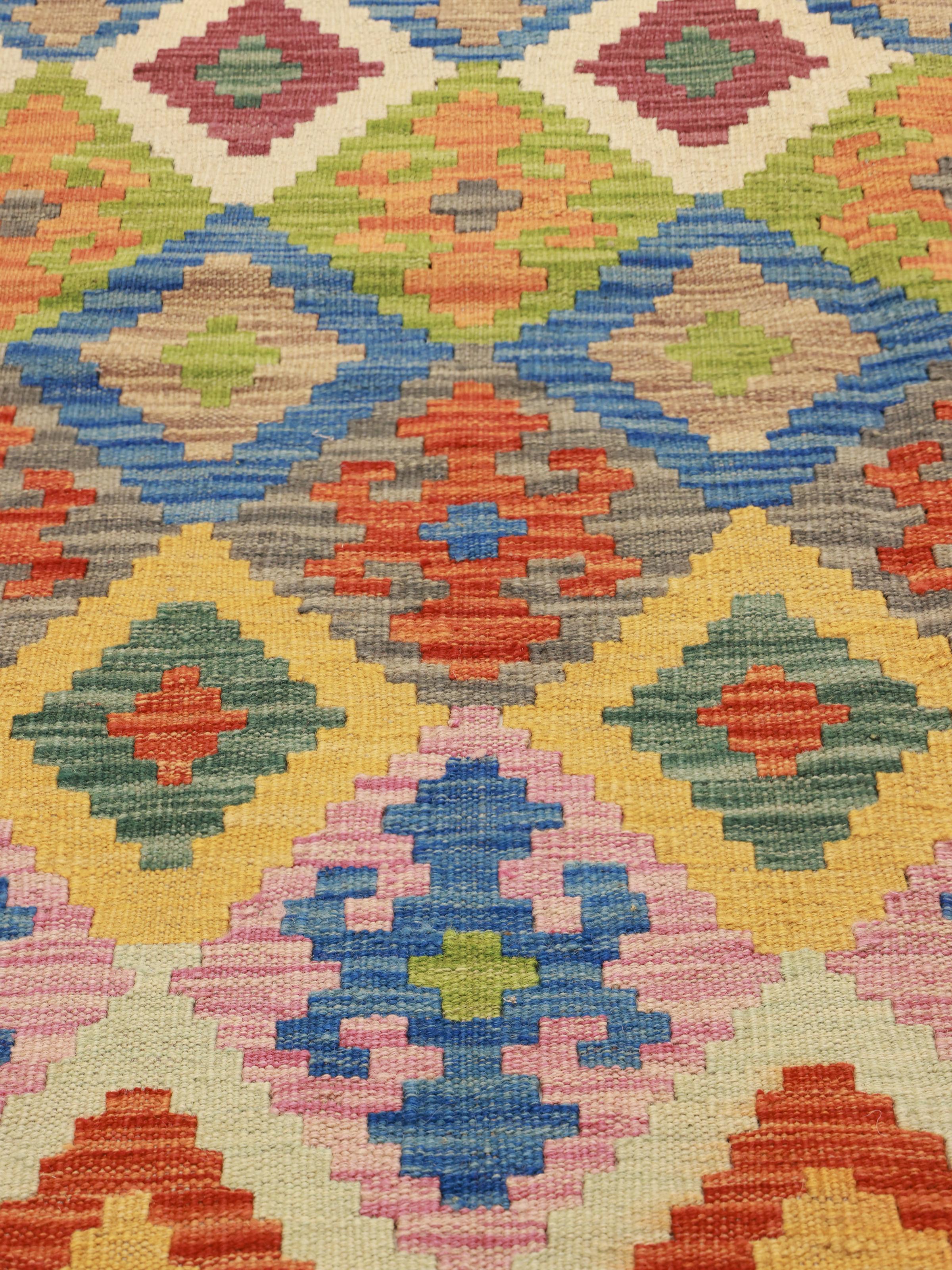
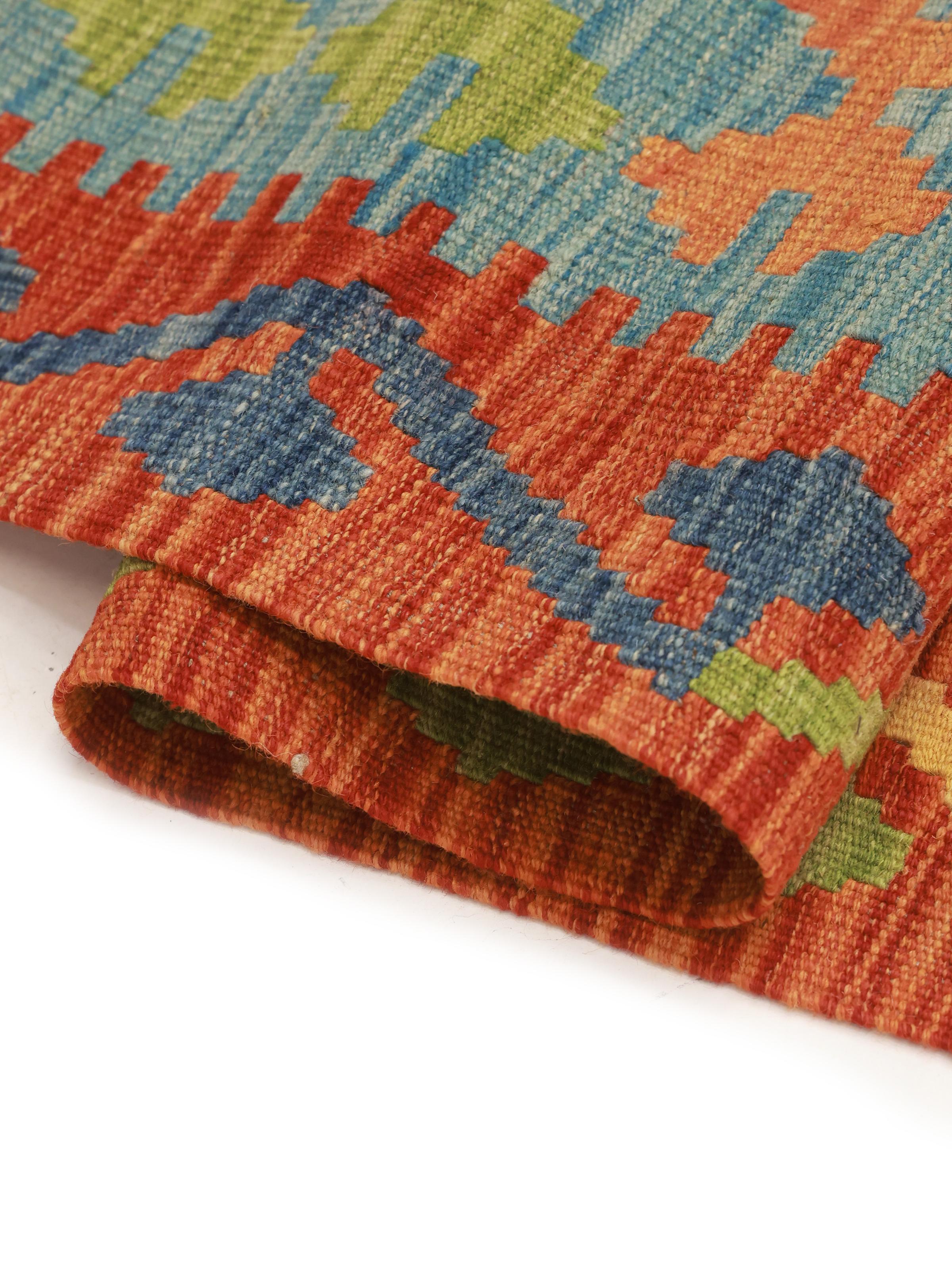
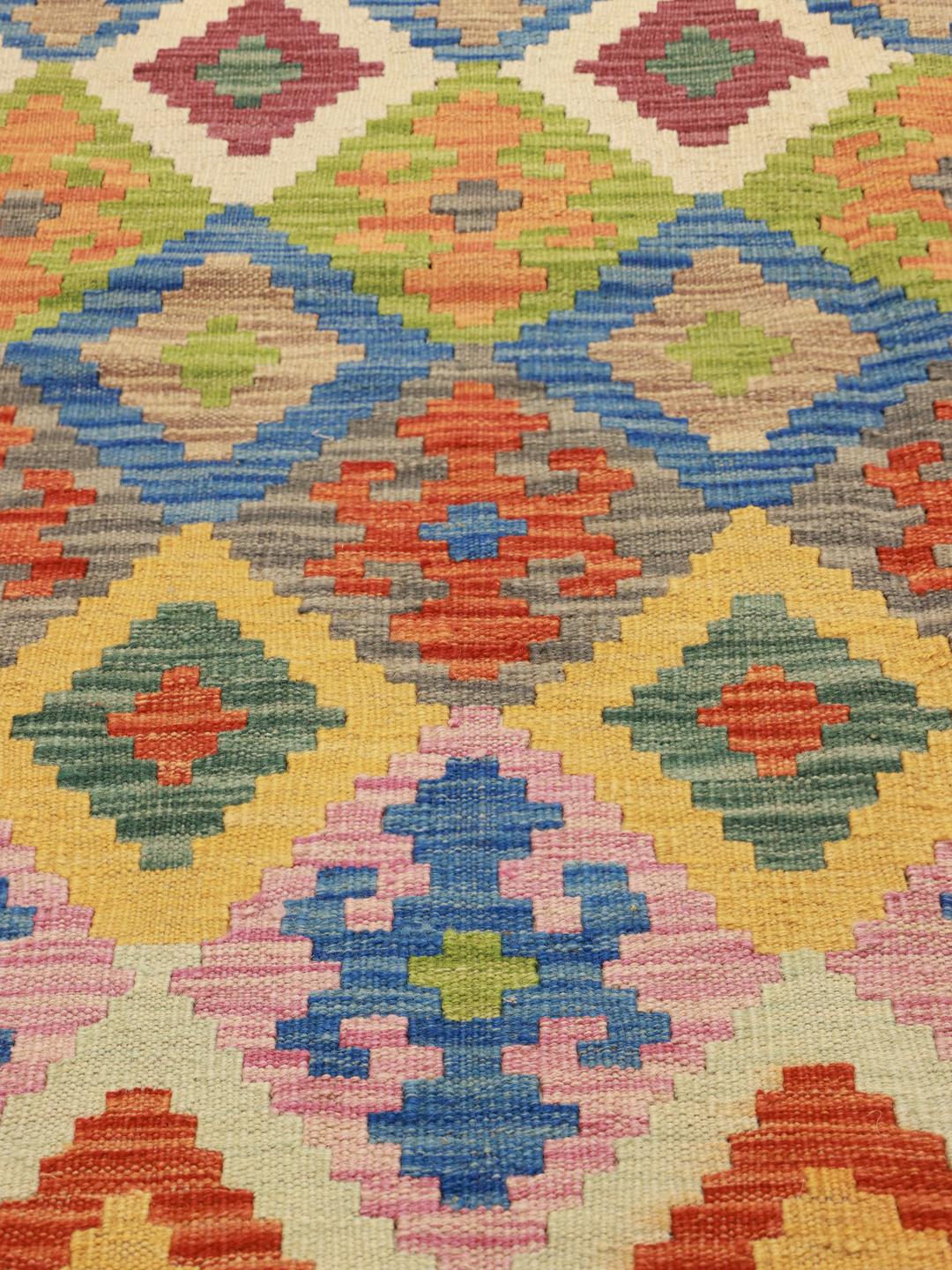
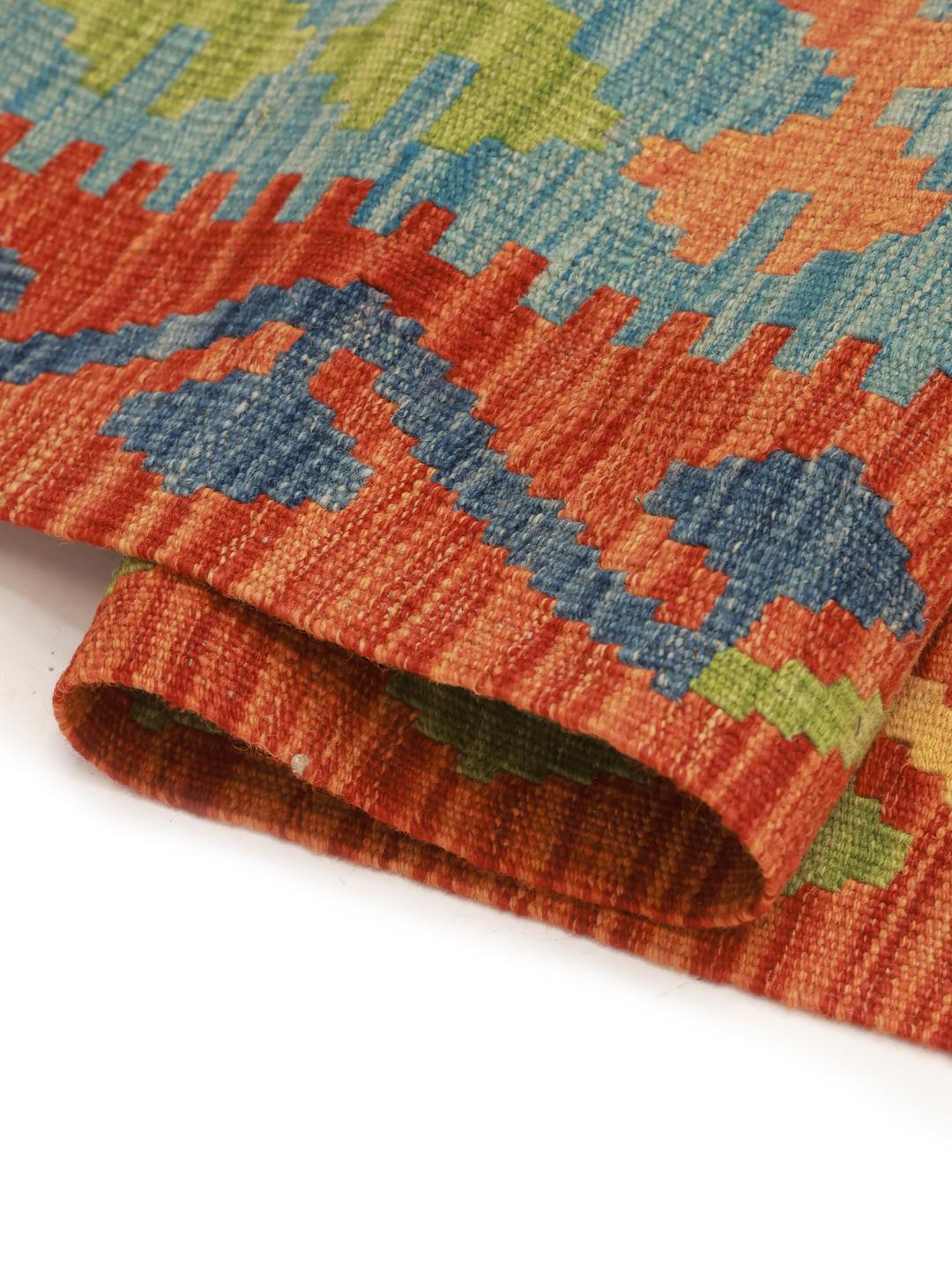
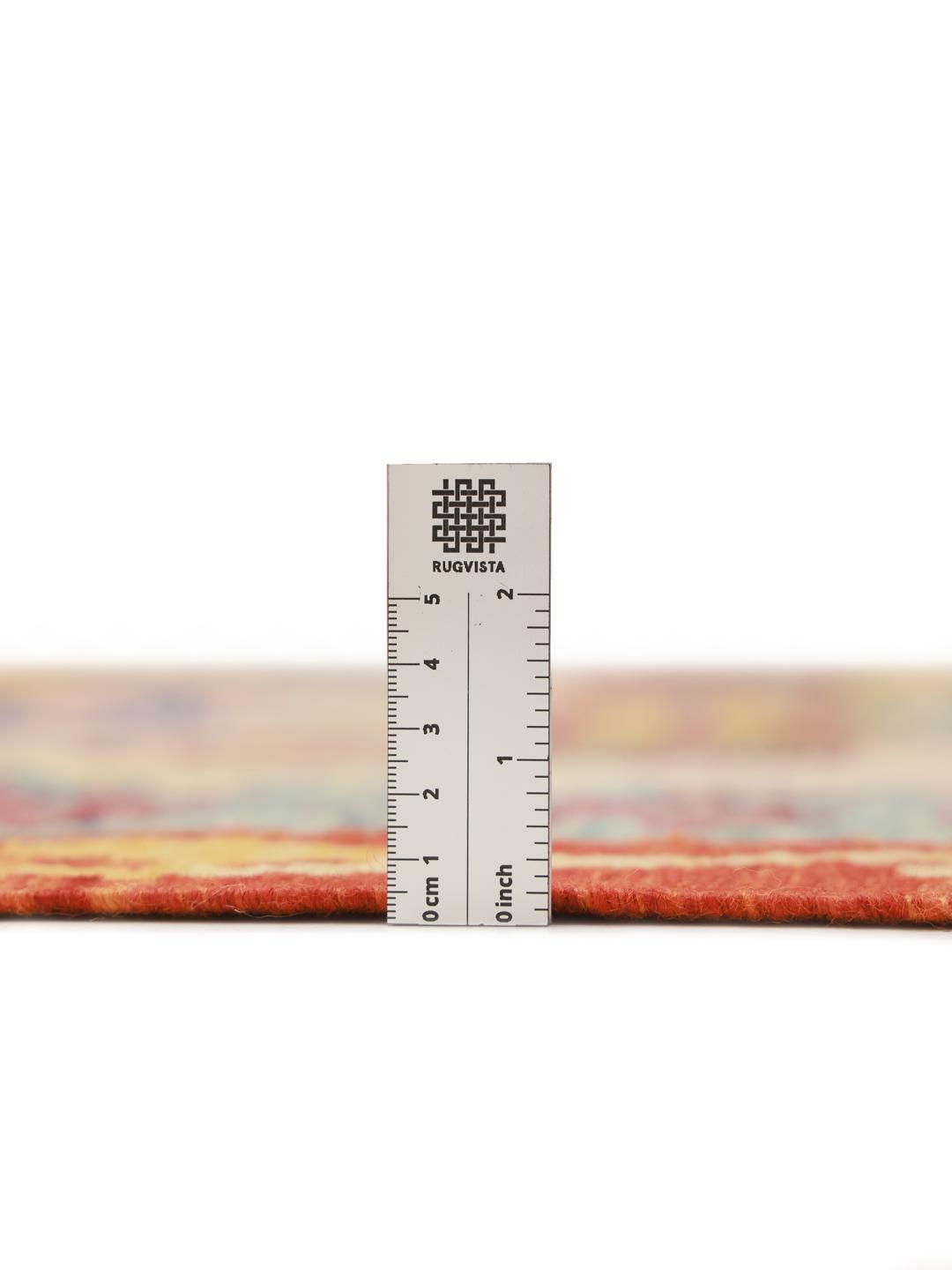
The term 'Kelim' refers specifically to the flat-weaving technique used to create these rugs, which differs from pile rugs because it lacks a knotted surface. Instead, the weft threads are pulled tightly over the warp, creating a smooth, reversible fabric that is both strong and lightweight. This technique allows for remarkably crisp geometric designs, as the weaver has the freedom to manipulate the colour changes precisely within the weave structure.
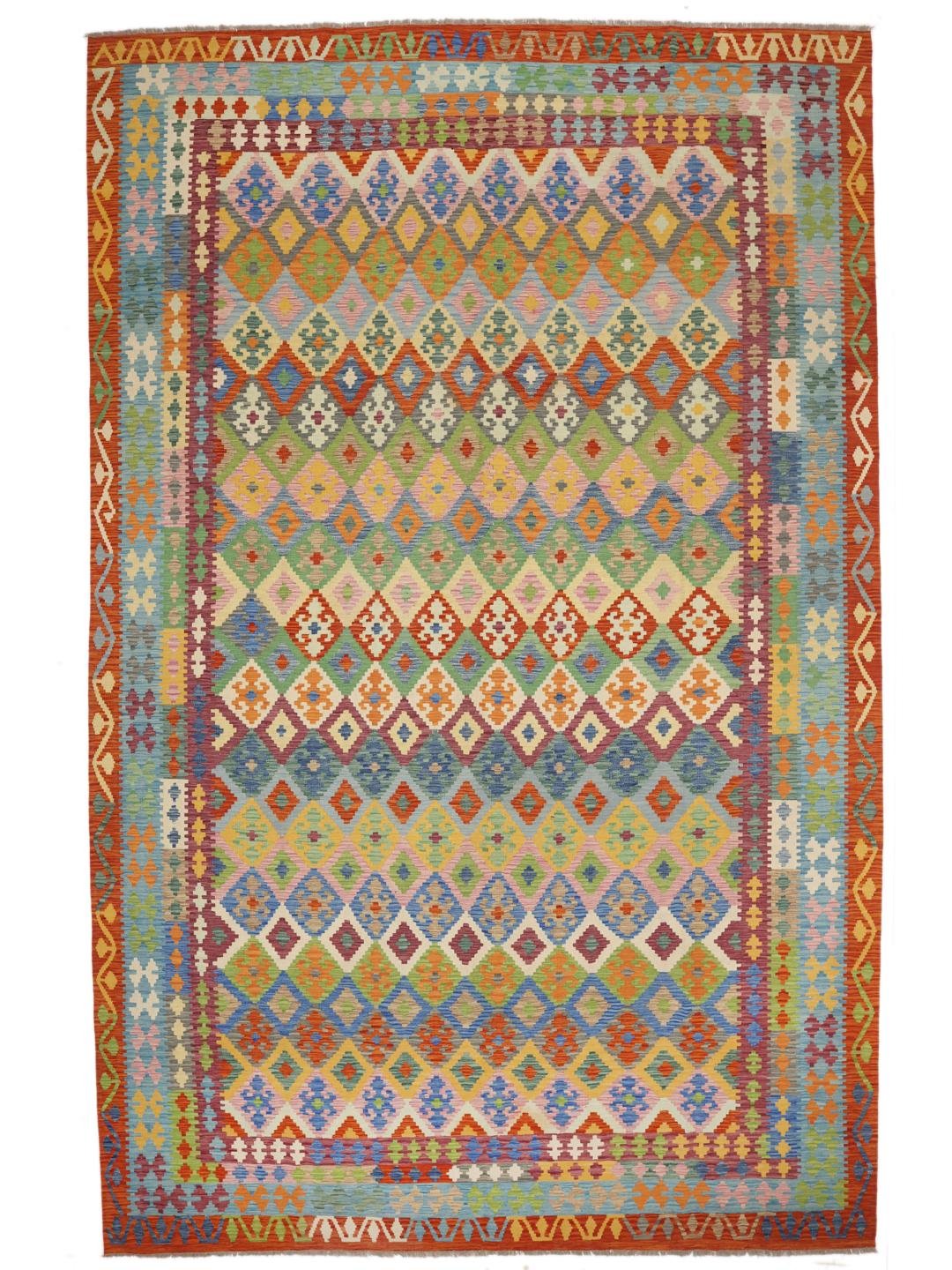
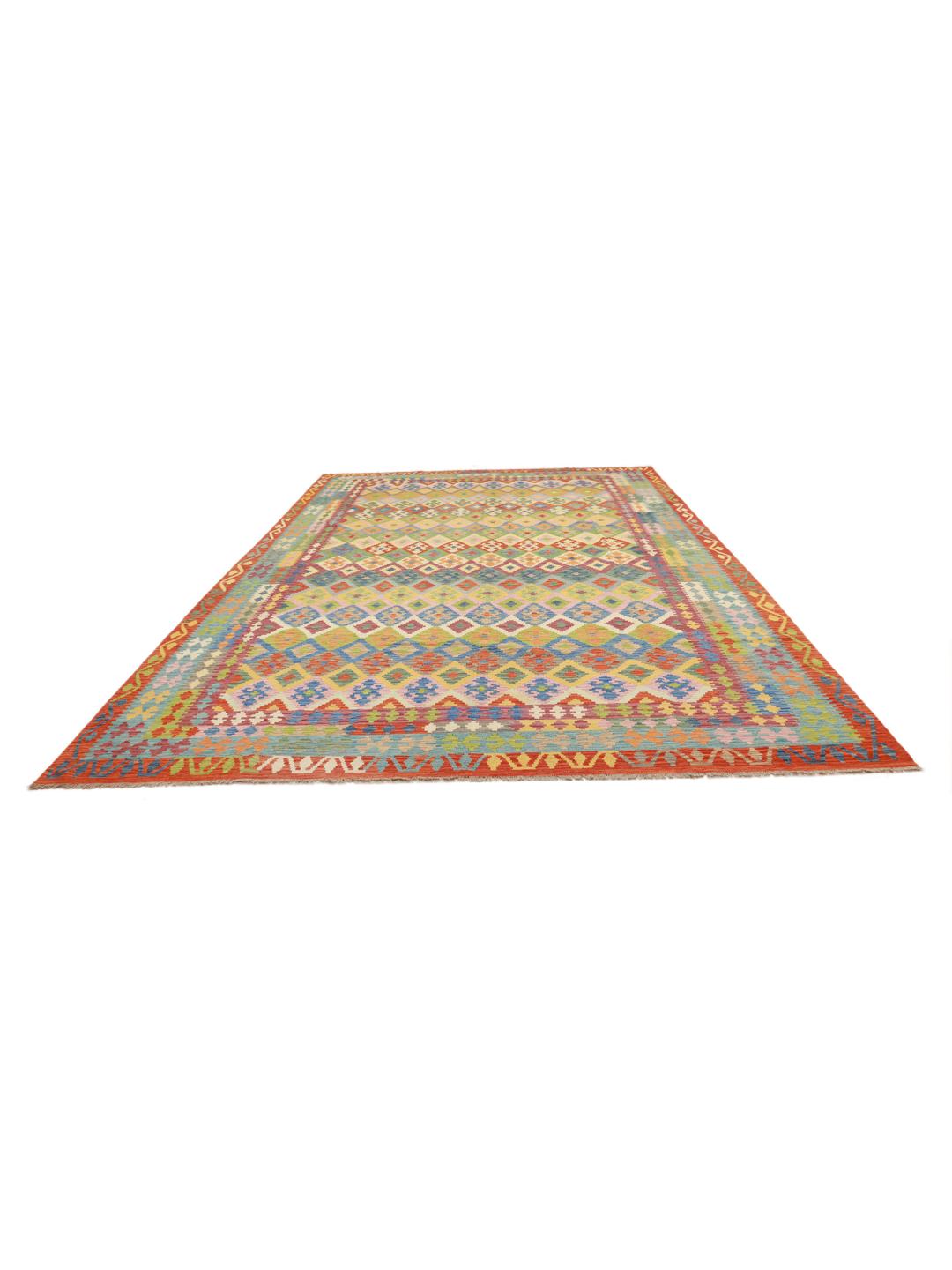
Signature design elements of these rugs often include bold, repeating diamond motifs and intricate borders that frame the central field. These patterns are not merely decorative but are deeply symbolic, often referencing the natural world, tribal history, or protection motifs. The vibrant colours are achieved through traditional dyeing processes, resulting in a rich, harmonious aesthetic that distinguishes Afghan Kelims from other regional styles.
Collecting these rugs is an appreciation of both skill and heritage. Because each piece is woven by hand without a pre-printed pattern, the weaver’s own creative choices are woven directly into the fabric, ensuring that no two rugs are ever identical. Owning a Kelim is more than a design choice; it is an acquisition of a piece of cultural history that represents the enduring mastery of Afghan weavers.