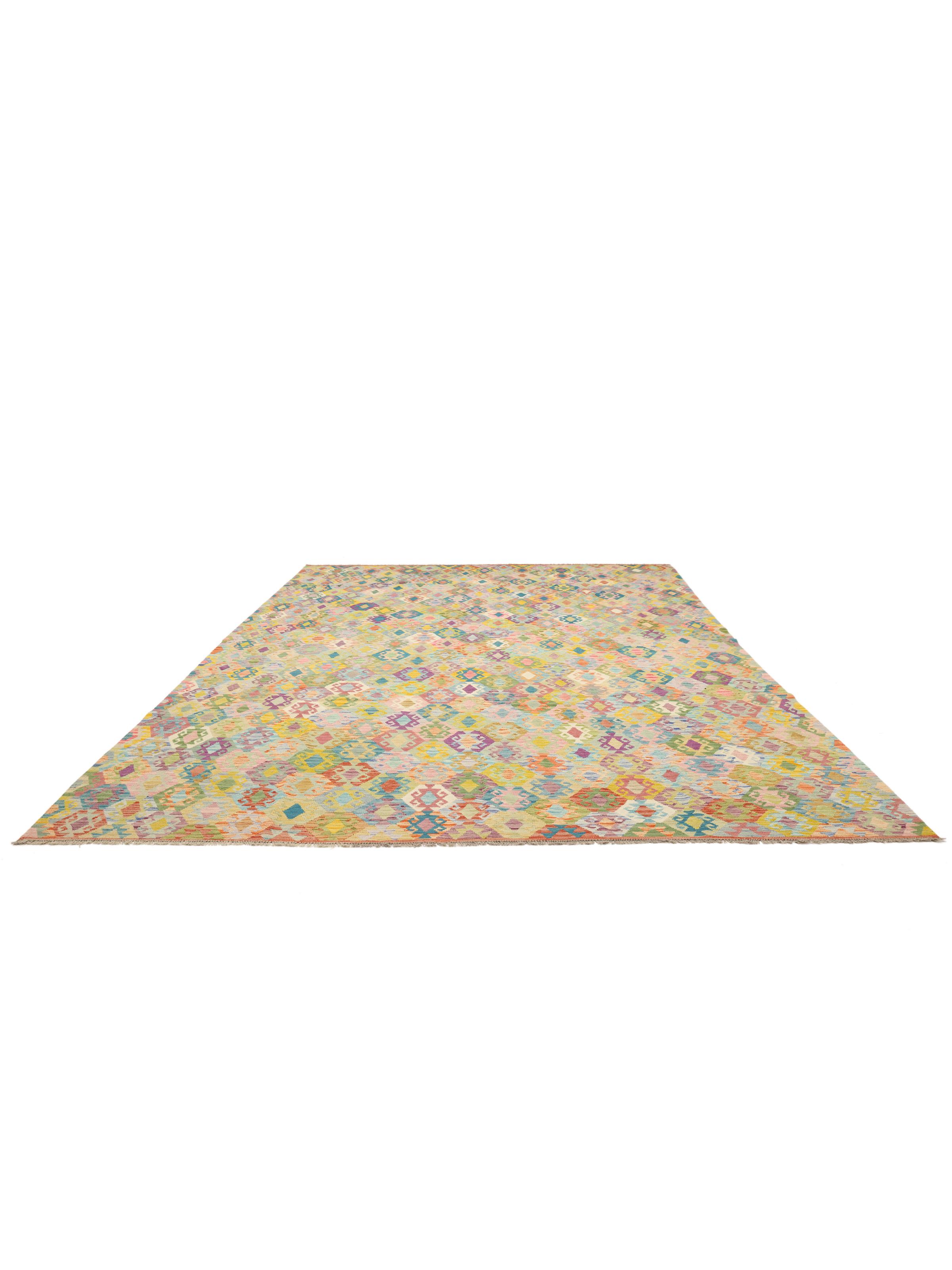
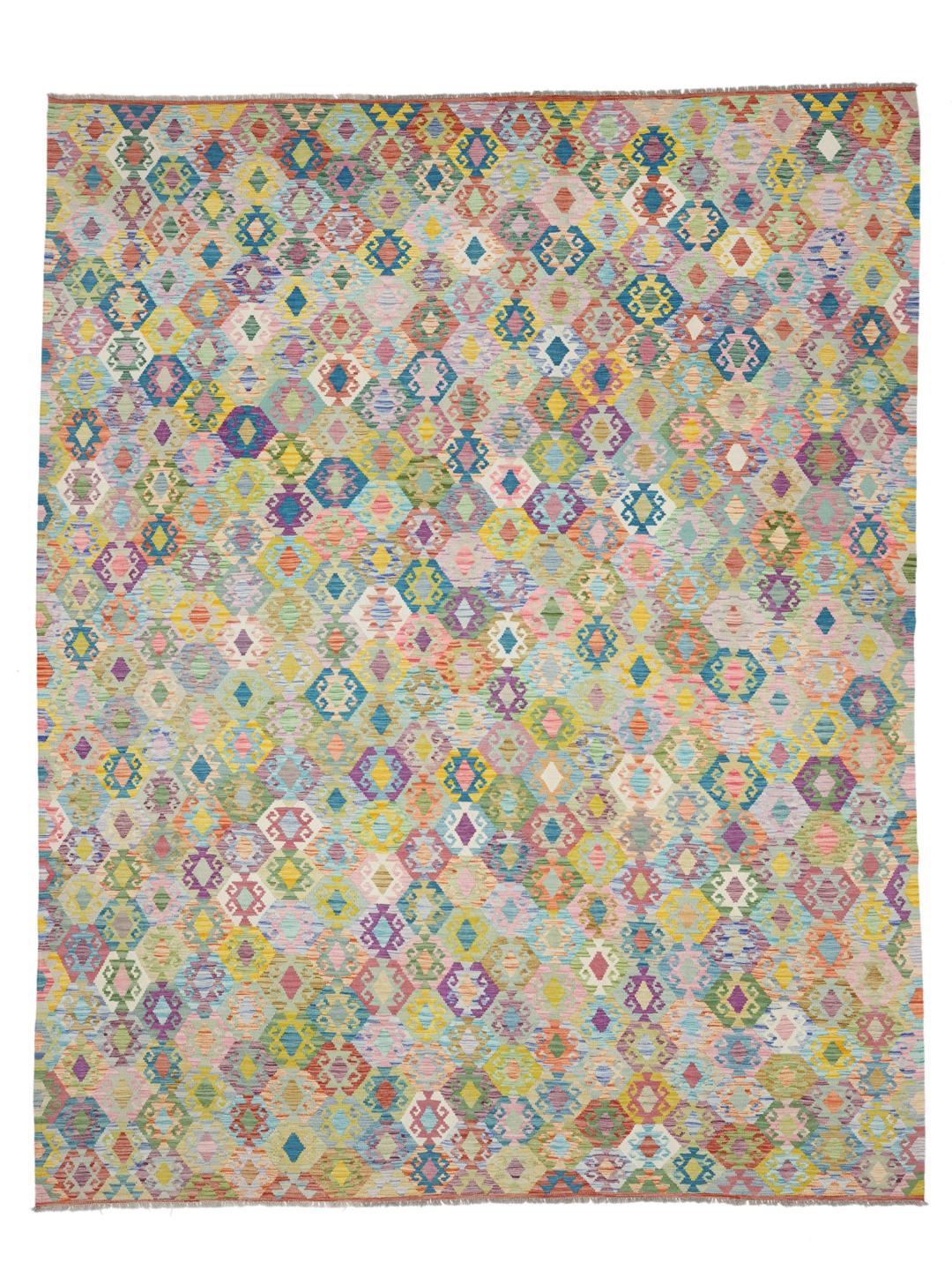
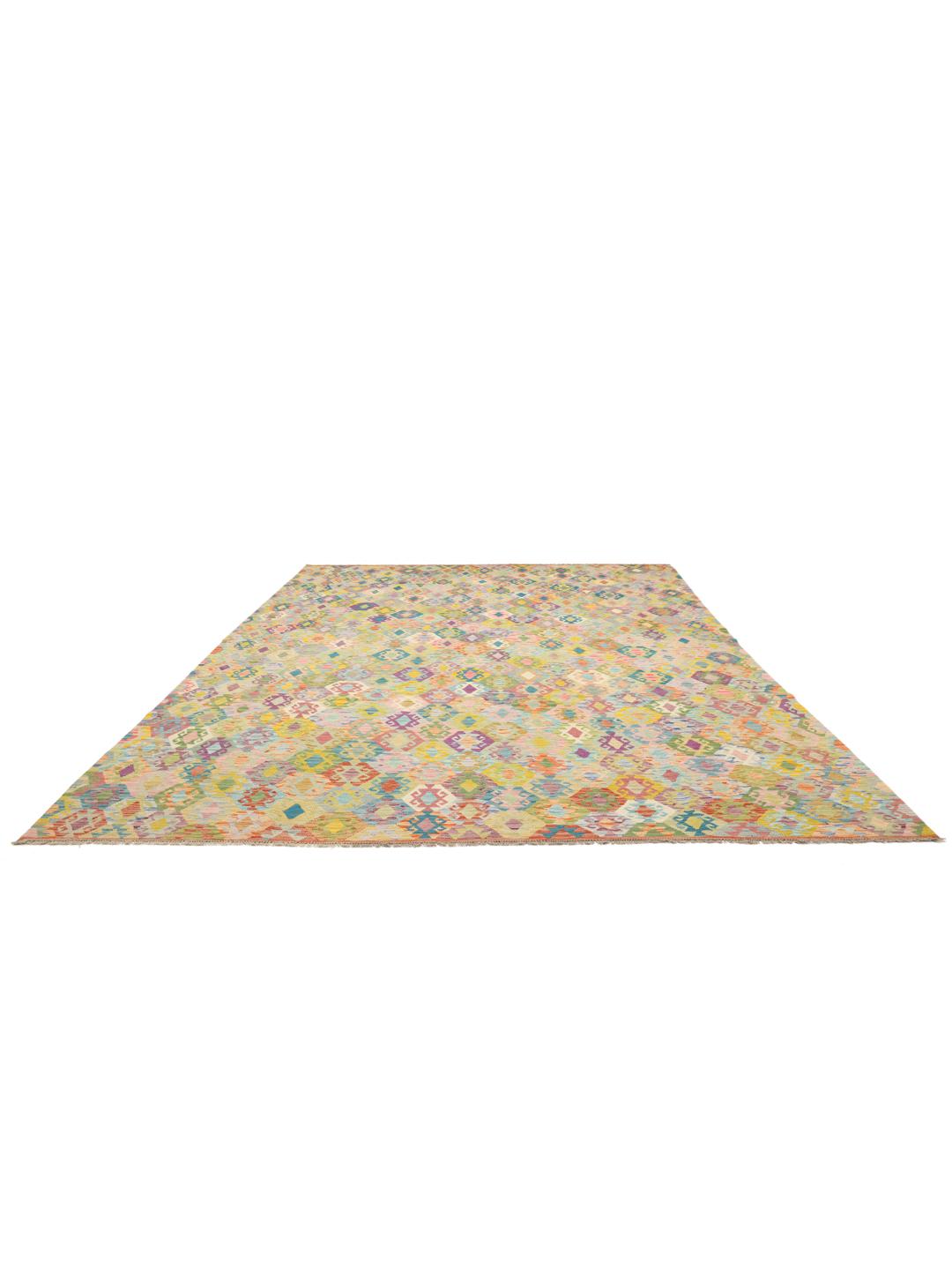
The Kelim tradition is one of the most storied in the Middle Eastern textile world, with roots stretching back centuries across the nomadic tribes of Central Asia. These flat-woven rugs were historically essential for nomadic life, serving as versatile floor coverings, storage sacks, and durable wall hangings that could be easily transported across vast landscapes.
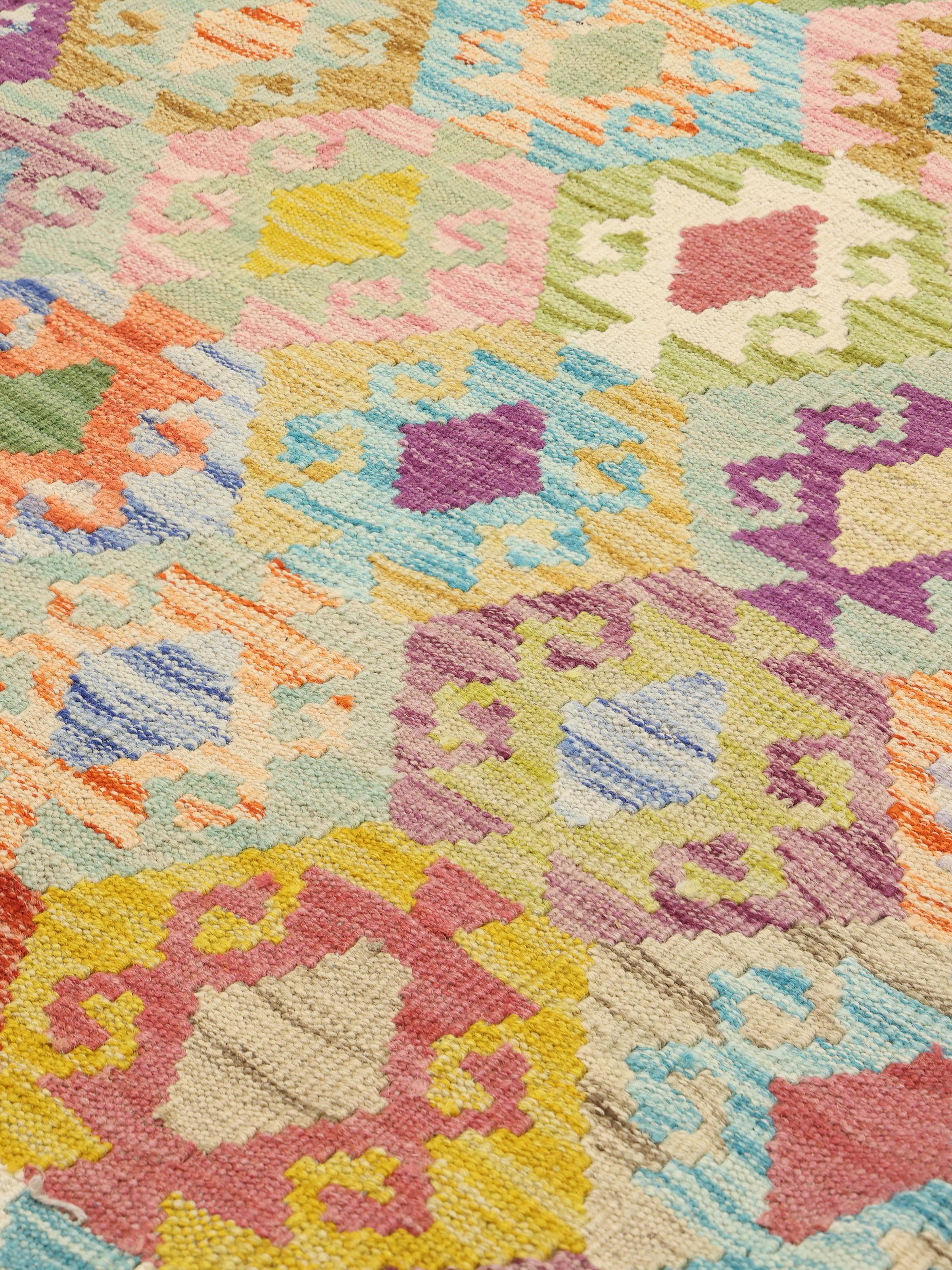
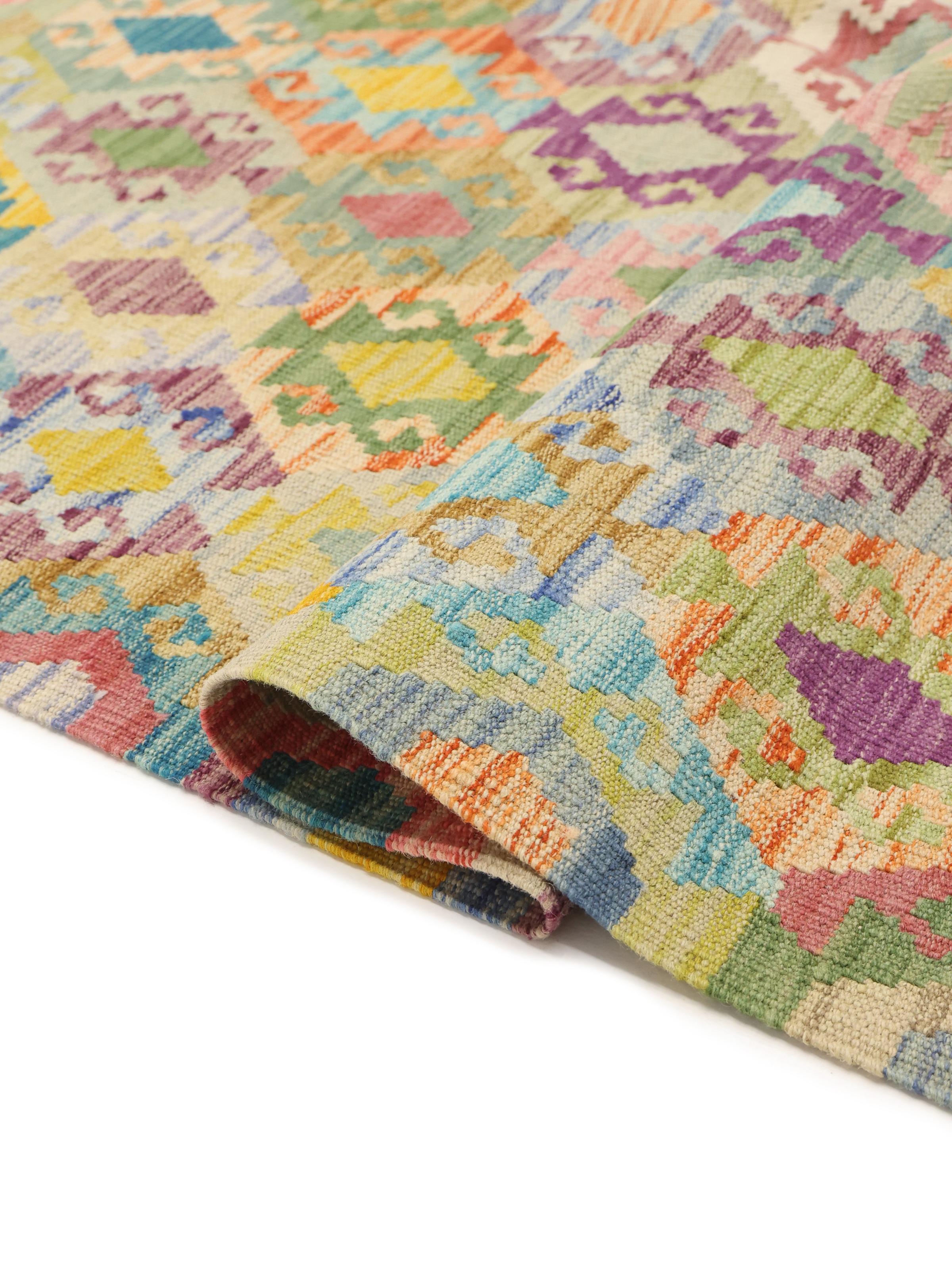
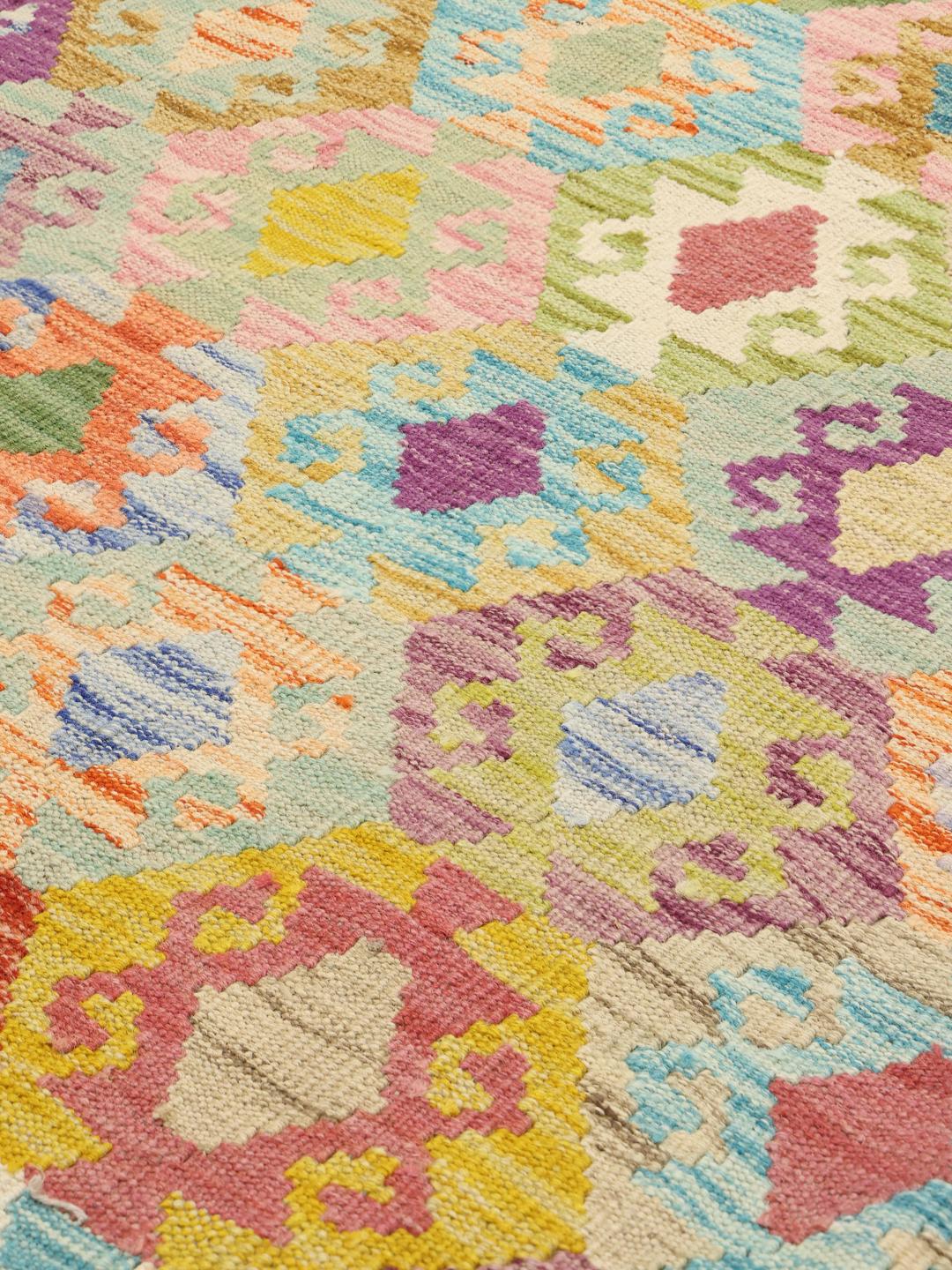
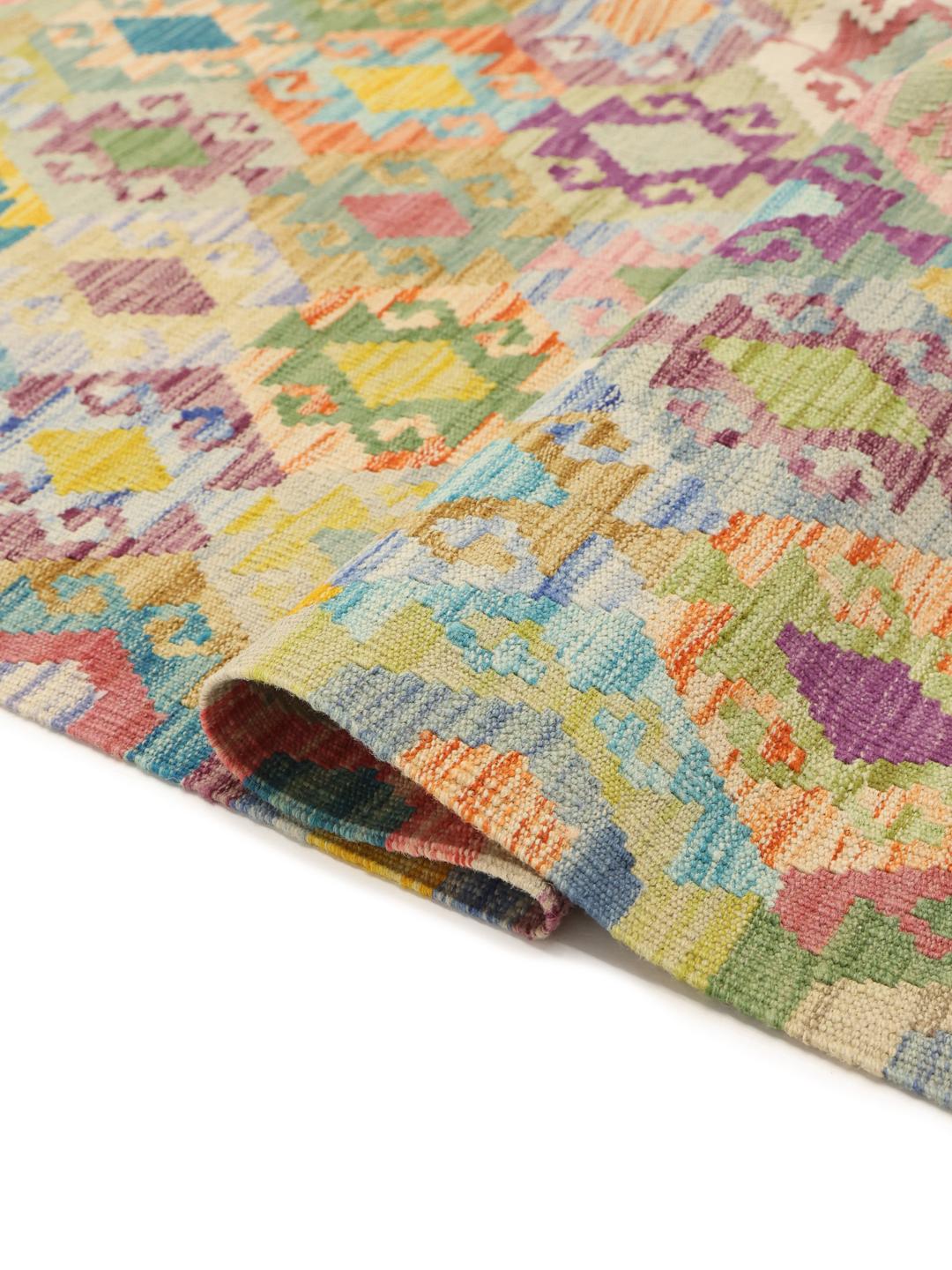
The term 'Kelim' refers to the unique tapestry-weave technique where the weft threads are passed through the warp to create a pattern, resulting in a rug that is identical on both sides. This method allows for crisp, clean geometric designs, as the weaver can change colours easily to create intricate motifs that have been passed down through generations of families.
Visually, these rugs are defined by their bold geometric language. You will often see diamond shapes, triangles, and stylized floral motifs that carry symbolic meaning, representing everything from protection to prosperity. The Afghan Old Style specifically honours these traditional design vocabularies, often utilising a rich, saturated colour palette that feels both earthy and energetic.
Collecting a piece from this tradition is an act of preserving a dying art form. These rugs are valued not only for their aesthetic beauty but for the immense skill and cultural history embedded in every thread. By choosing an Afghan Kelim, you are supporting a legacy of craft that values human intuition and long-term durability over the uniformity of modern production.