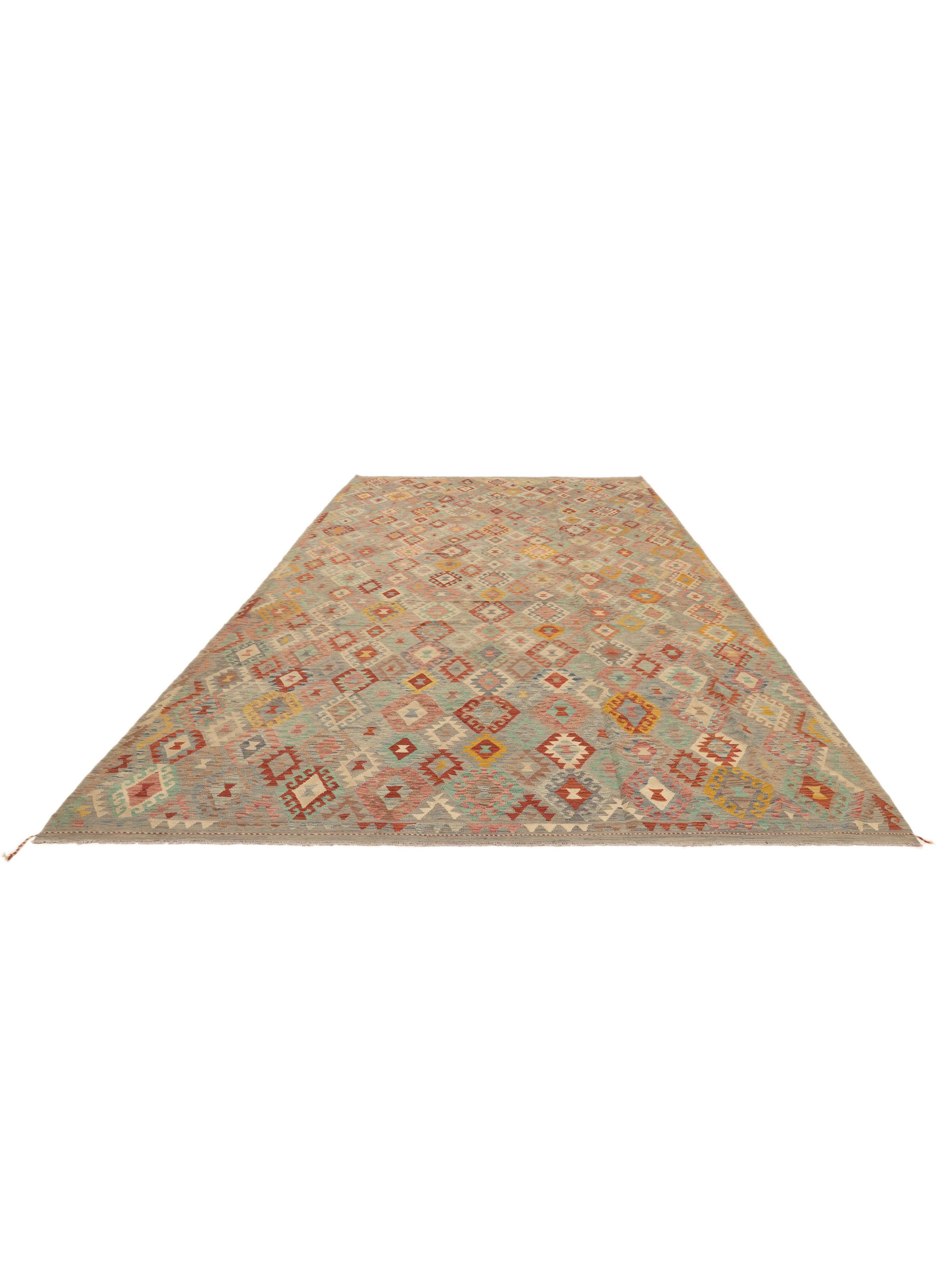
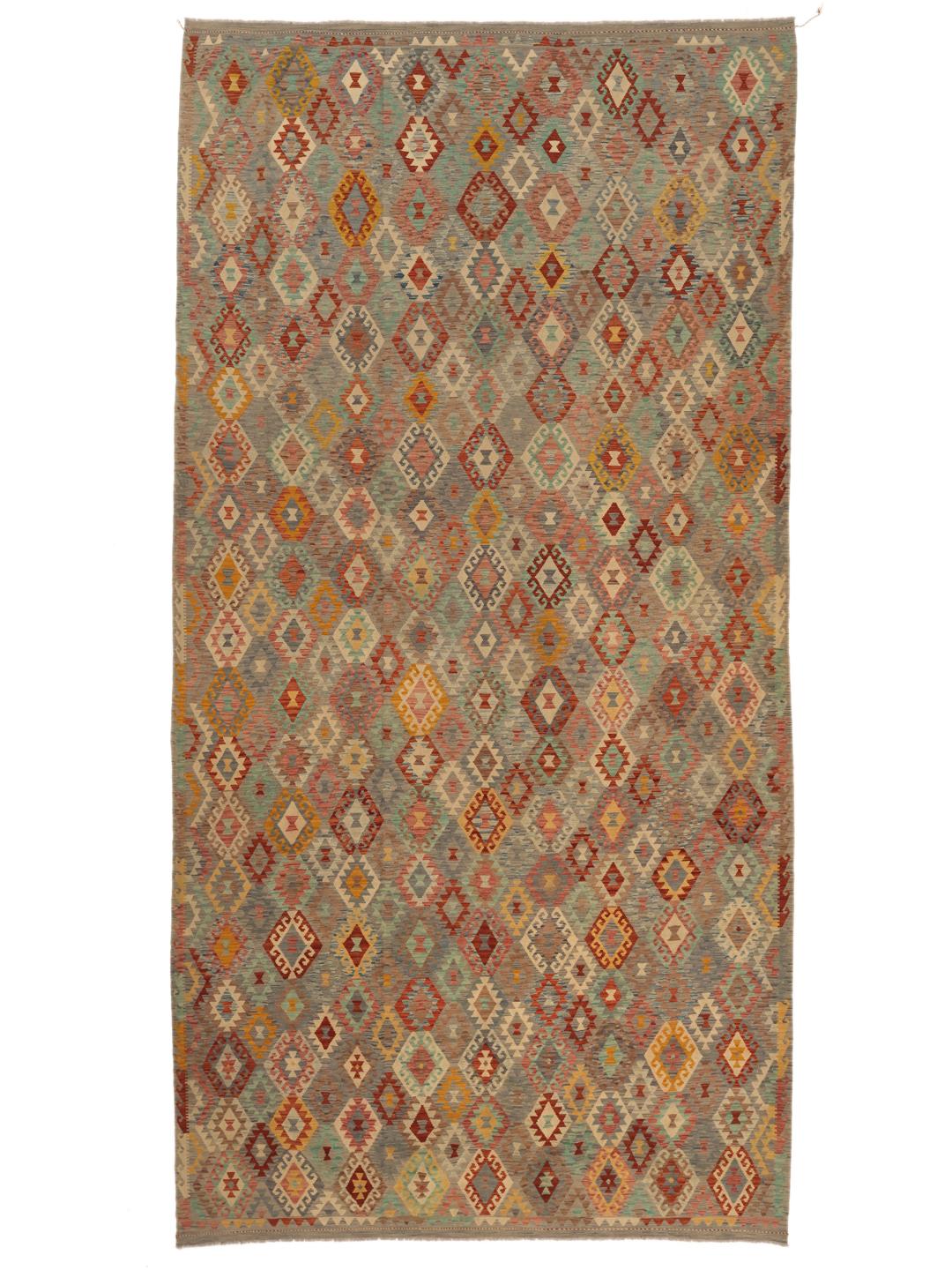
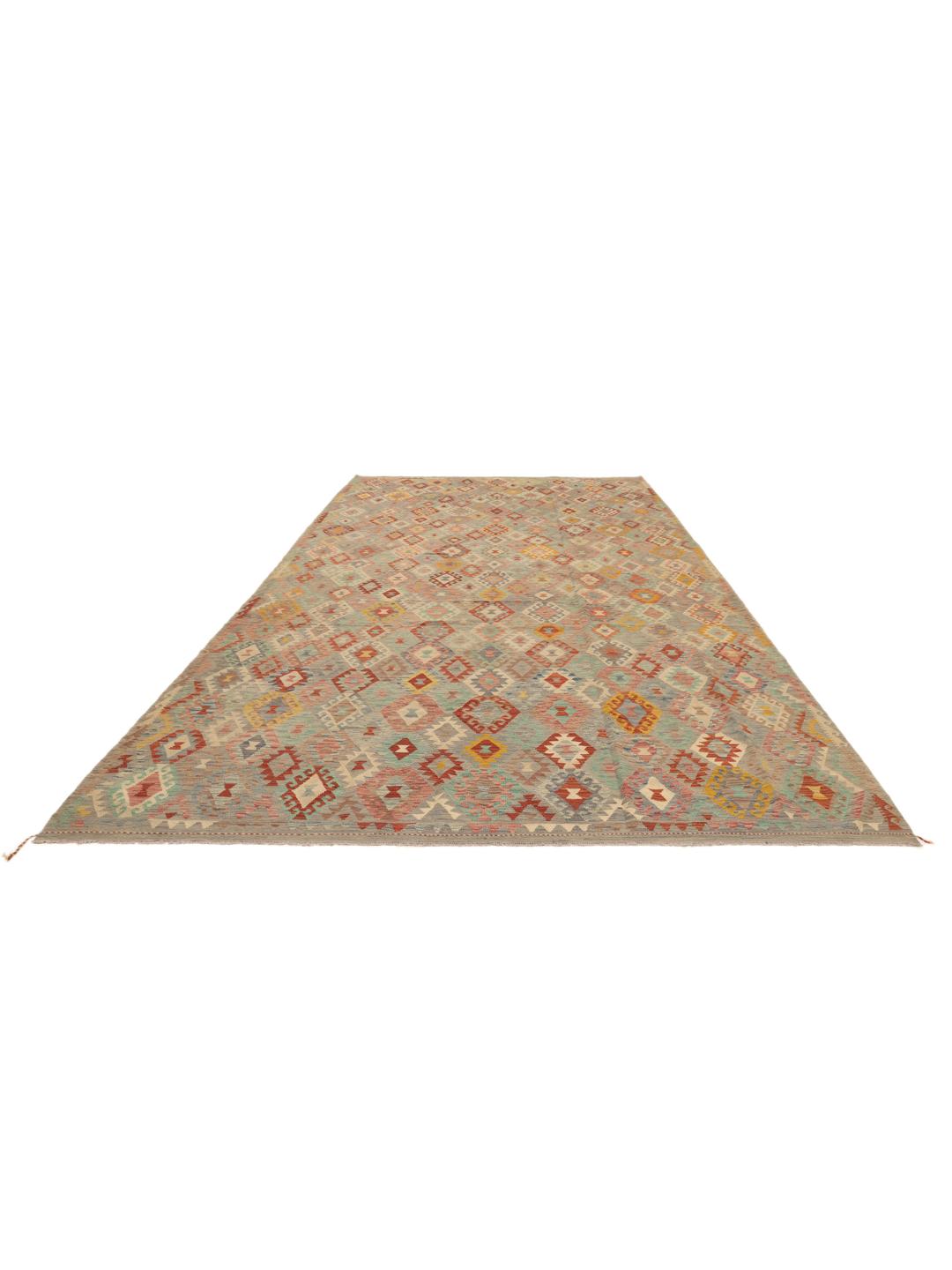
The Kelim tradition in Afghanistan is deeply rooted in the nomadic history of the region. Historically, these flat-woven textiles were essential to tribal life, serving as versatile floor coverings, blankets, and storage bags for families moving across the landscape. The techniques used to create them are ancient, reflecting a culture that values both utility and aesthetic expression.
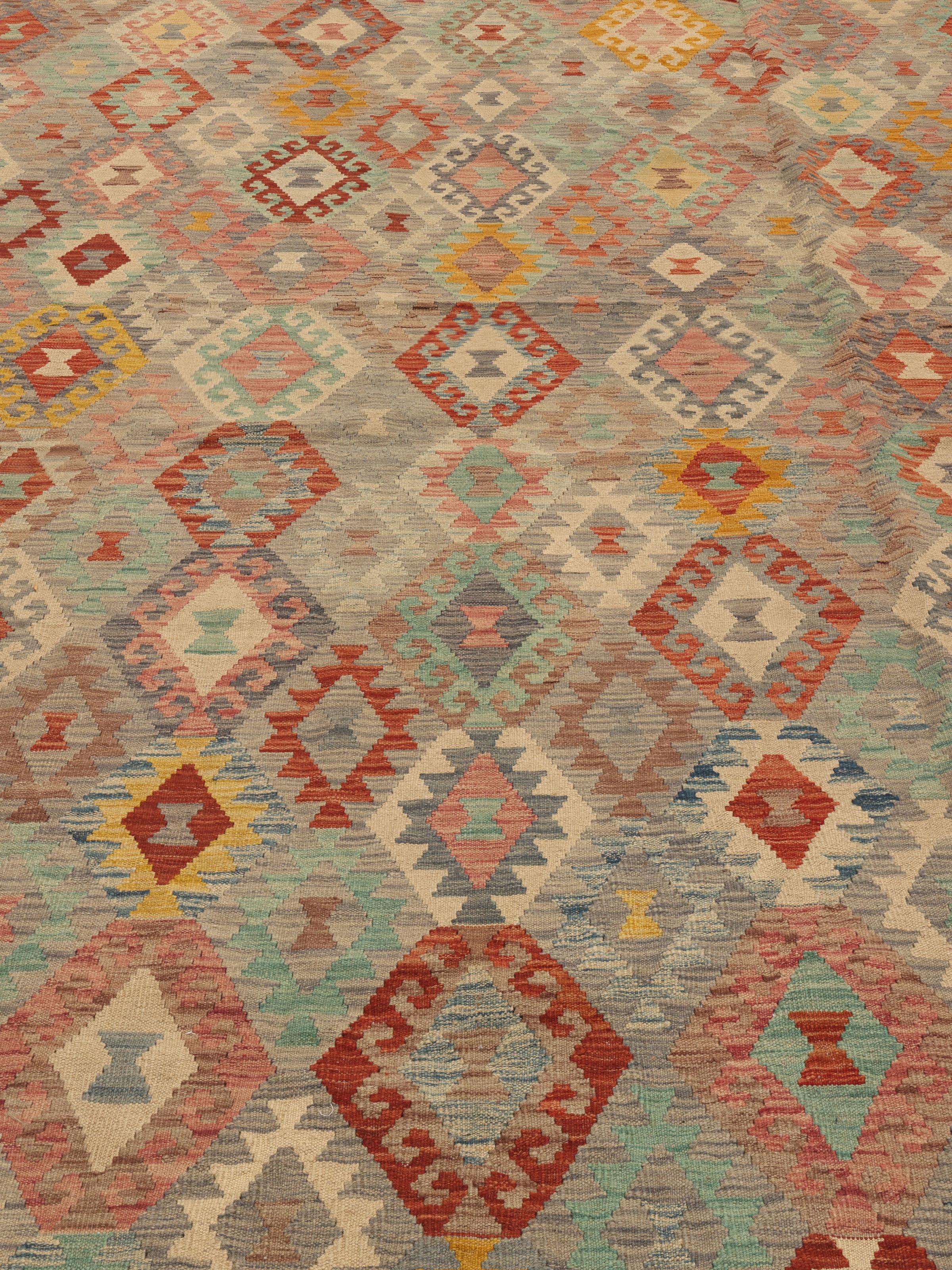
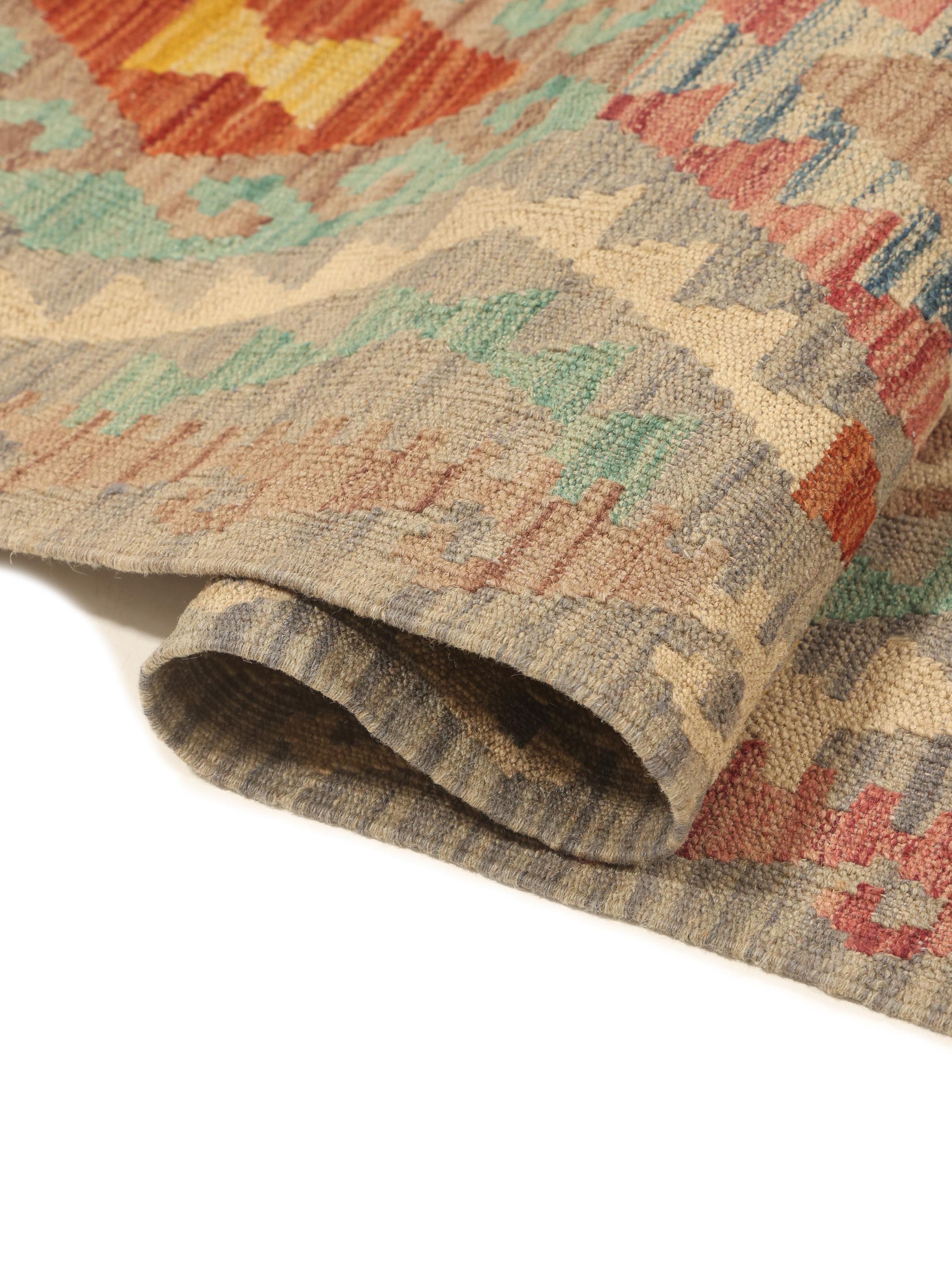
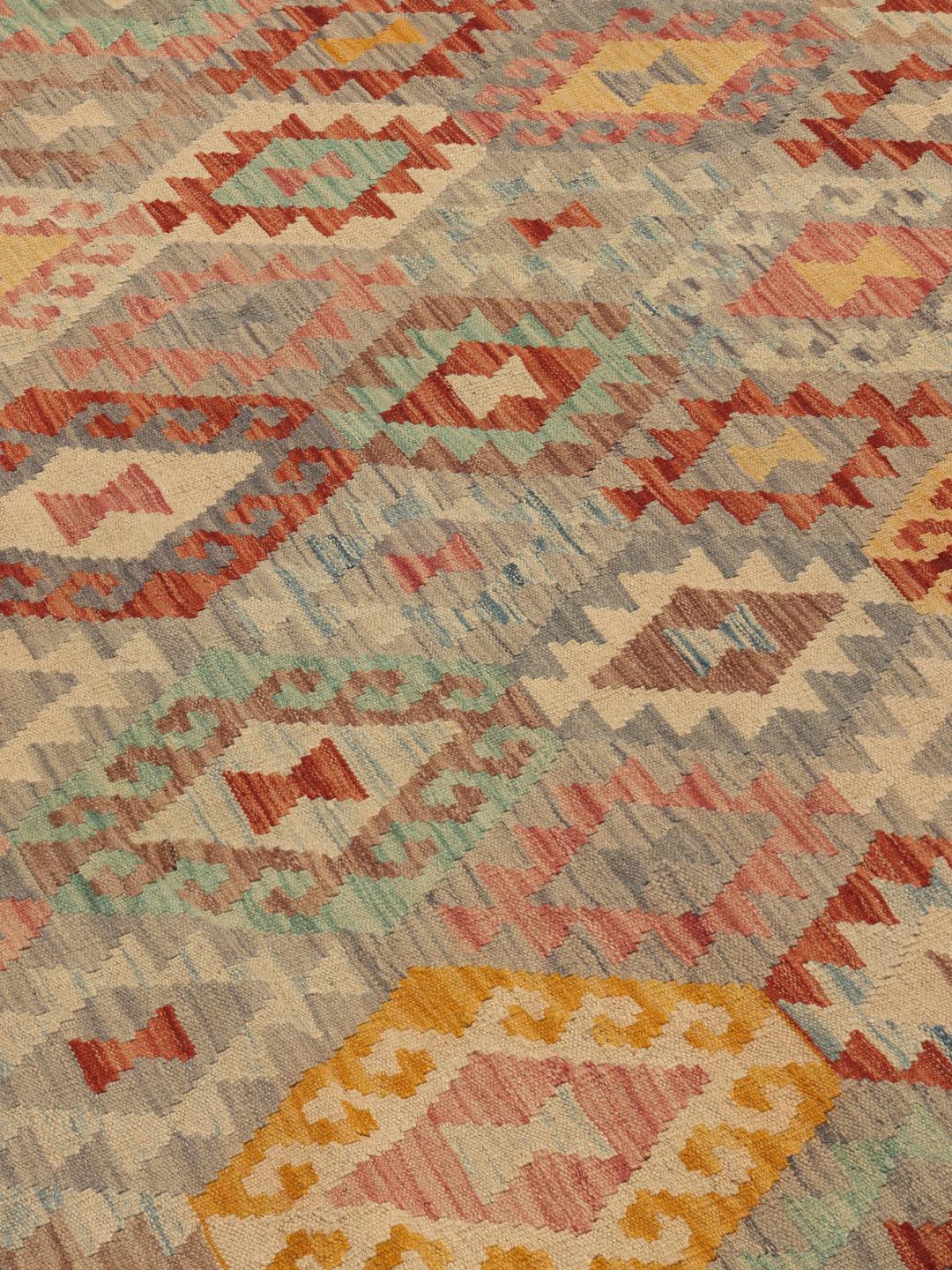
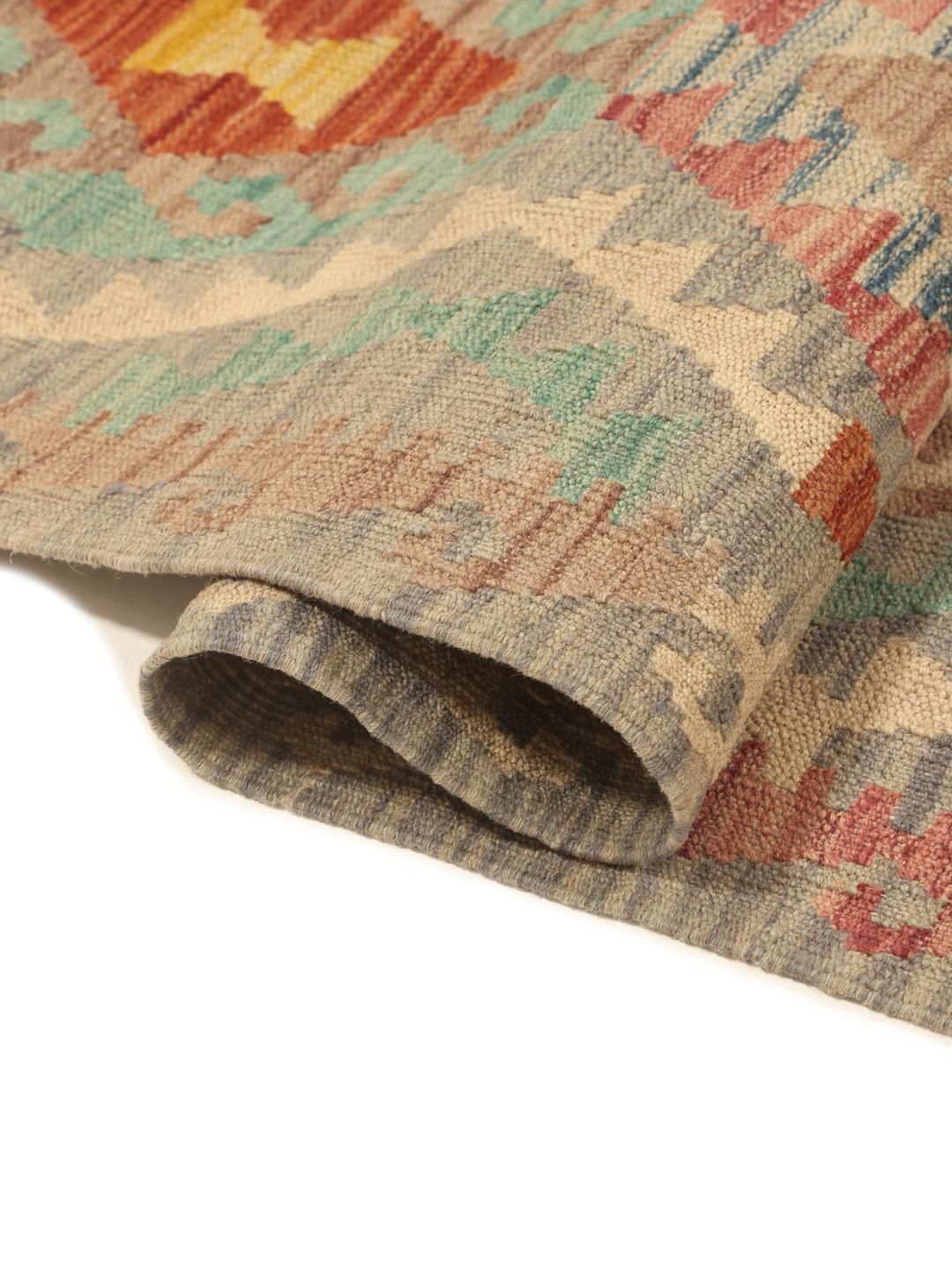
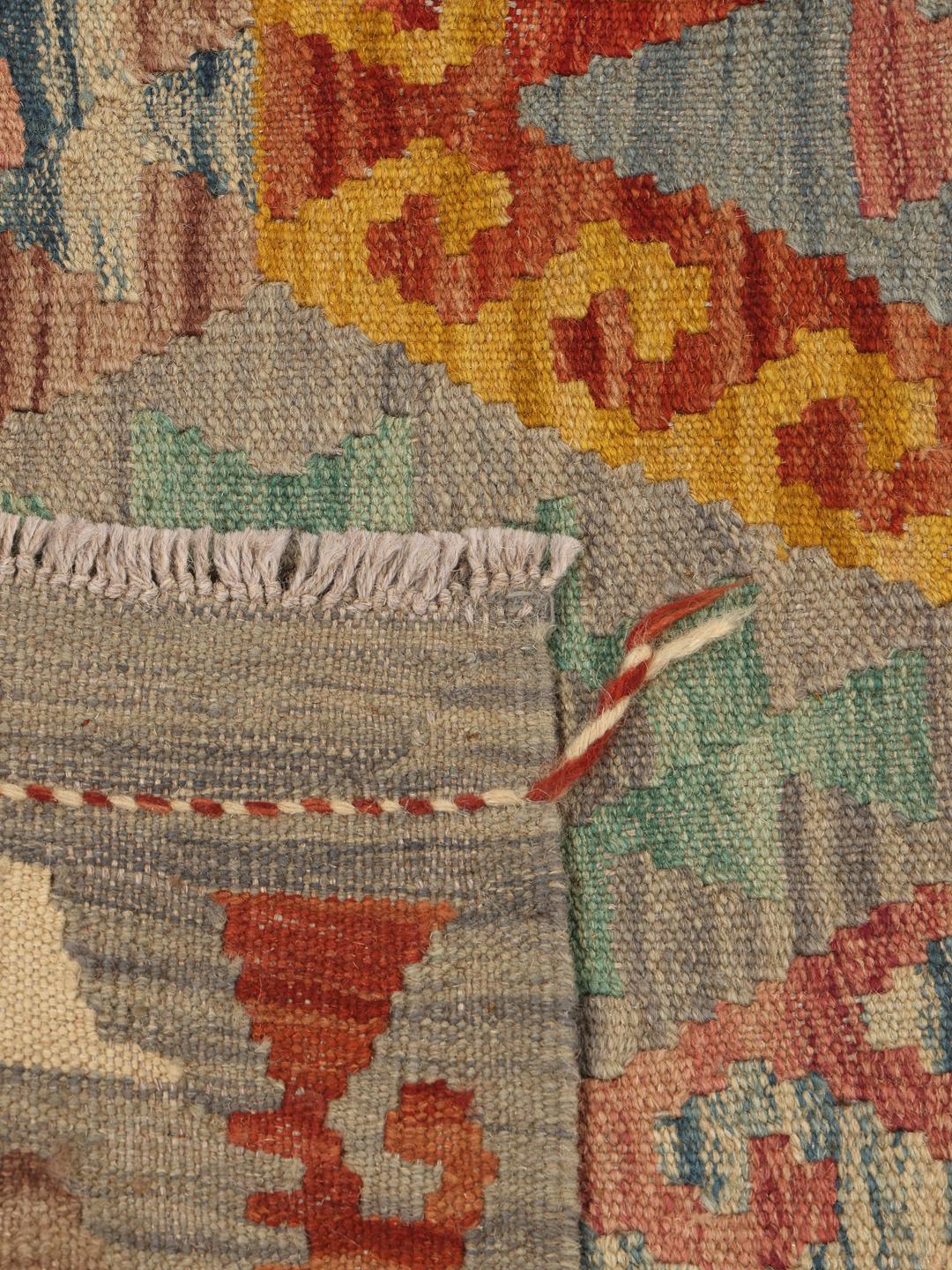
The term 'Kelim' refers to the specific weaving technique where the weft threads are pulled tightly over the warp threads, completely hiding them to create a smooth, reversible surface. This method is highly valued for its ability to produce crisp, clear patterns without the need for a raised pile, resulting in a lightweight yet exceptionally durable textile.
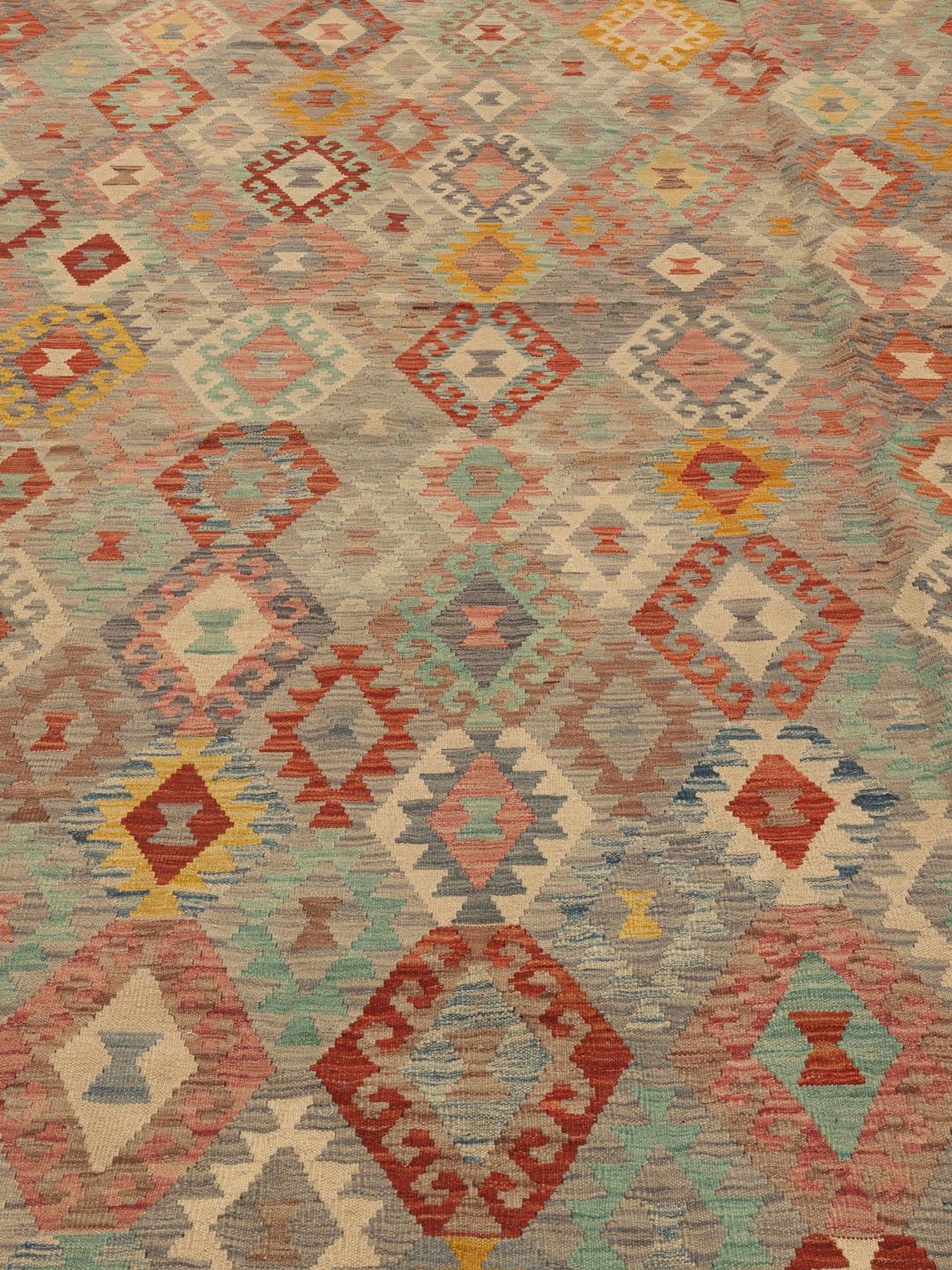
Visually, these rugs are celebrated for their geometric language. You will often see repeating motifs like diamonds, triangles, and serrated edges, which carry symbolic meanings related to protection and prosperity within their culture. The use of natural, earthy tones paired with vibrant accents is a hallmark of the Afghan style, grounding the complex patterns in a warm, accessible palette.
Owning an Afghan Kelim is an invitation to connect with a storied heritage. These pieces are not merely floor coverings but are records of a weaver's skill and local design traditions. Collectors value them for their authenticity and the way they bring a sense of history into a modern home, offering a level of character that mass-produced items simply cannot replicate.