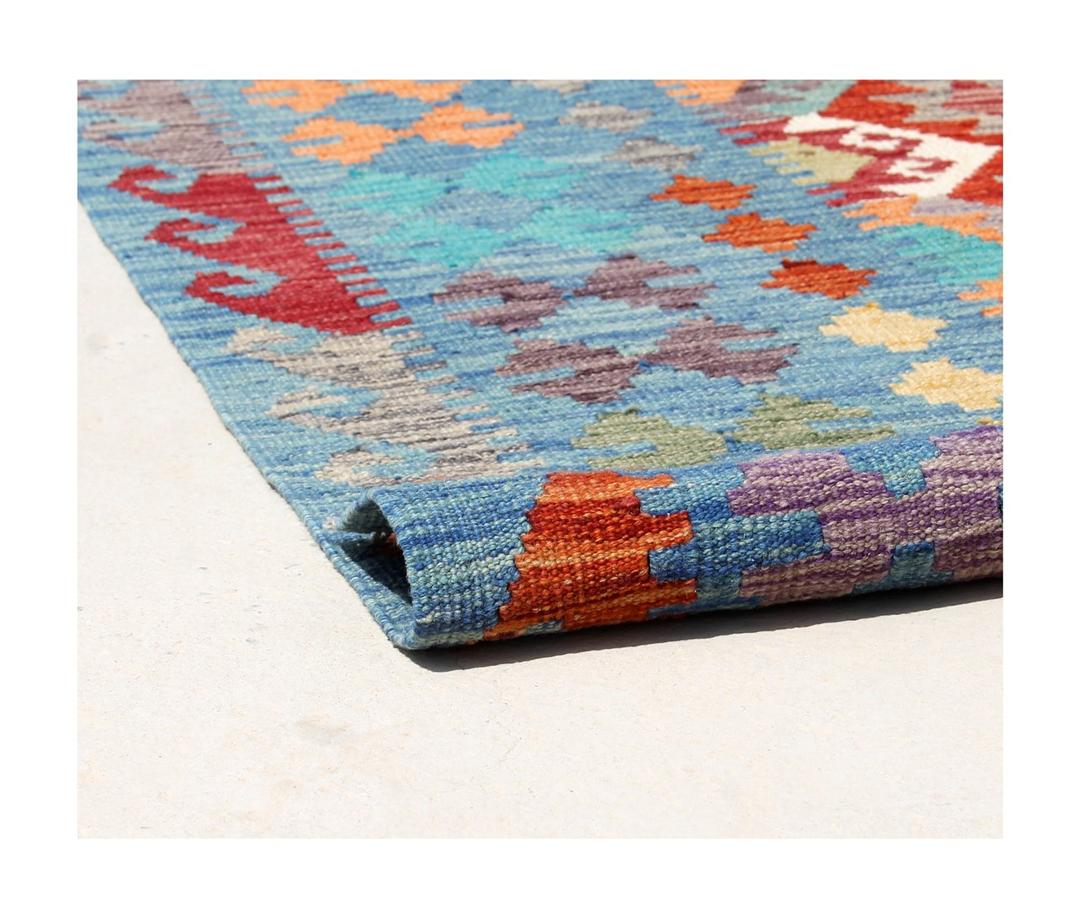
Kelim rugs have been a cornerstone of Middle Eastern textile tradition for centuries, serving as both functional floor coverings and essential nomadic tools. Historically, these flat-woven rugs were portable, lightweight, and versatile, allowing families to transport them easily as they moved across the rugged landscapes of Central Asia.
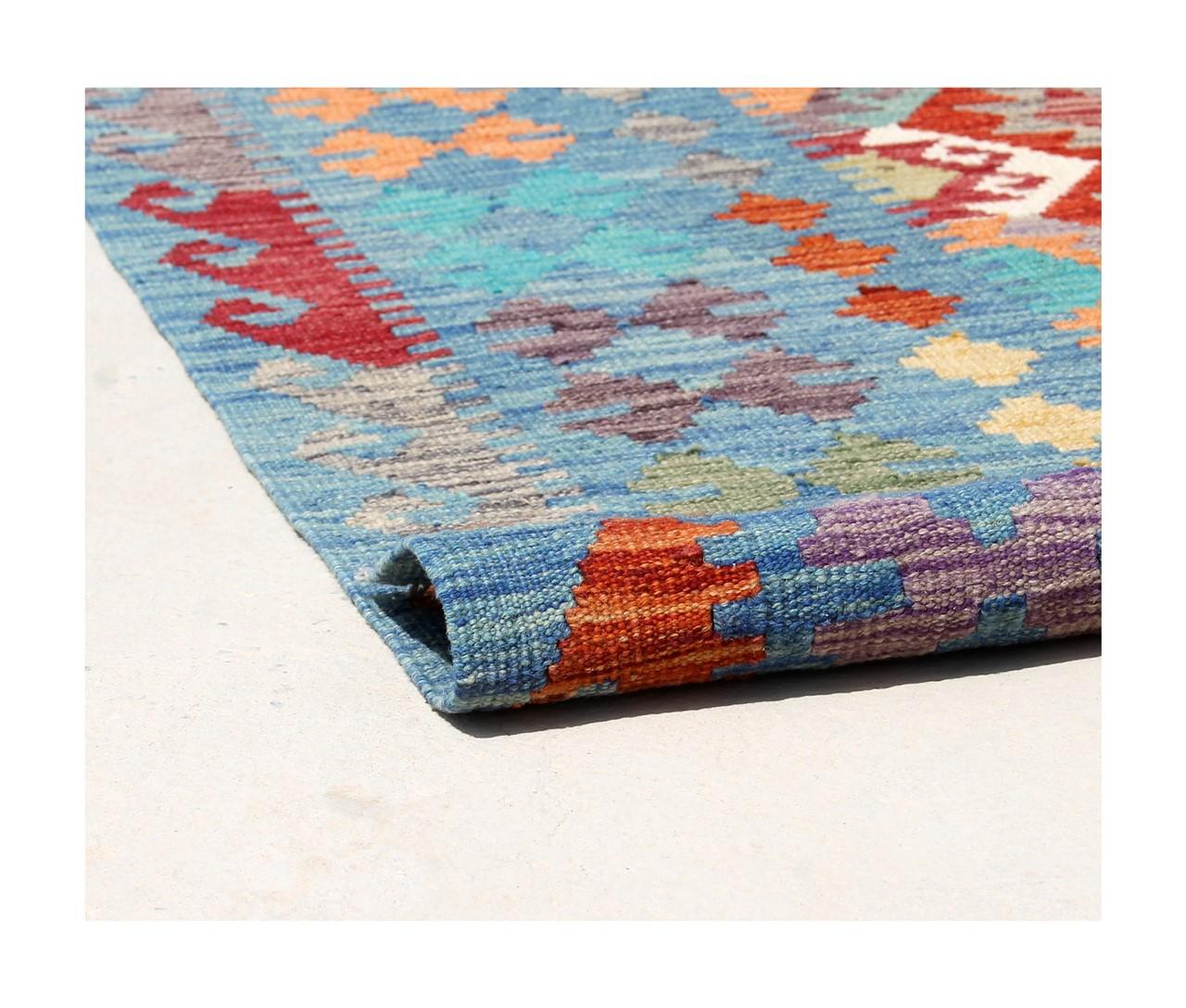
The term 'Kelim' refers specifically to the tapestry-weave technique where no pile is created, resulting in a smooth surface on both sides. This method is highly demanding, as the weaver must manage individual colour blocks by interweaving the weft threads, creating a sharp, clean finish that highlights the precision of the geometric designs.
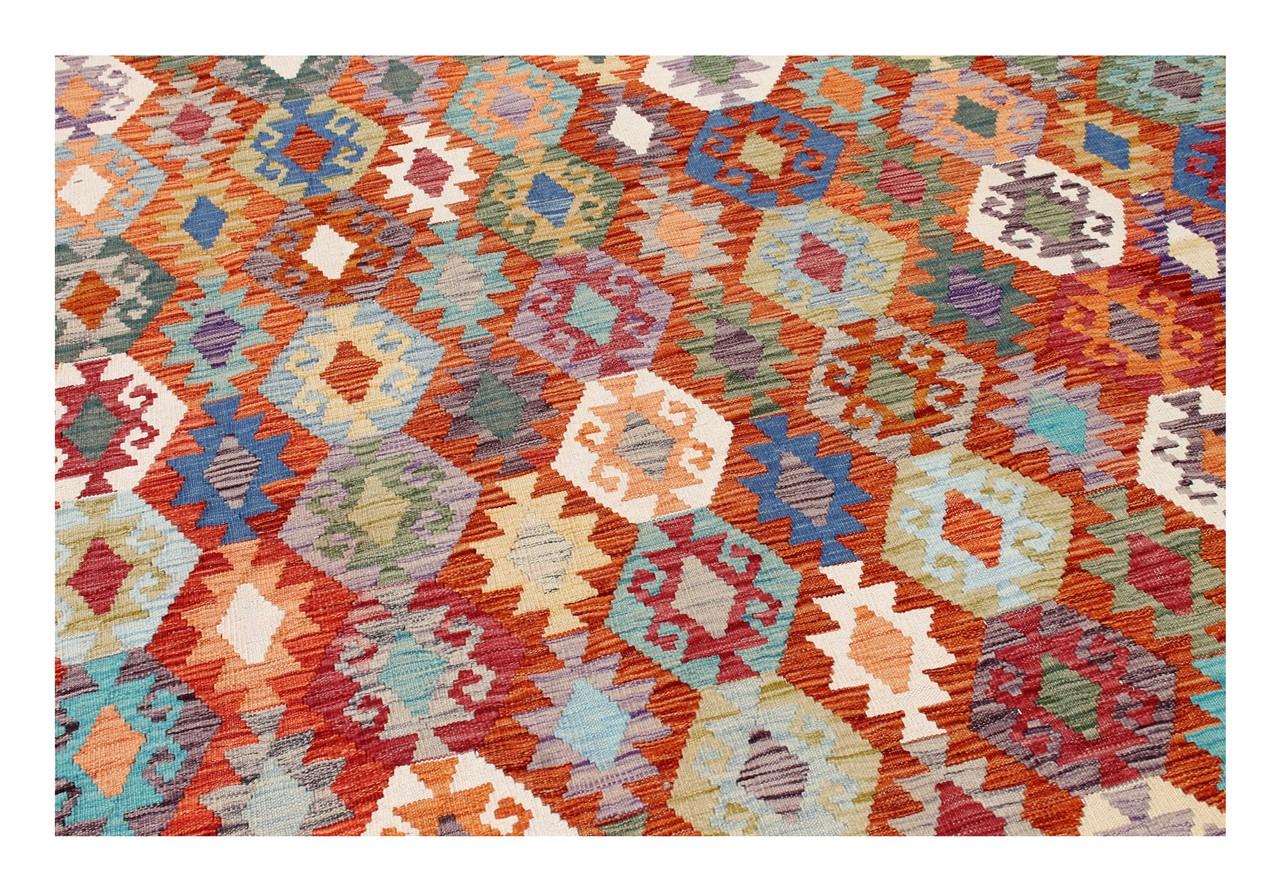
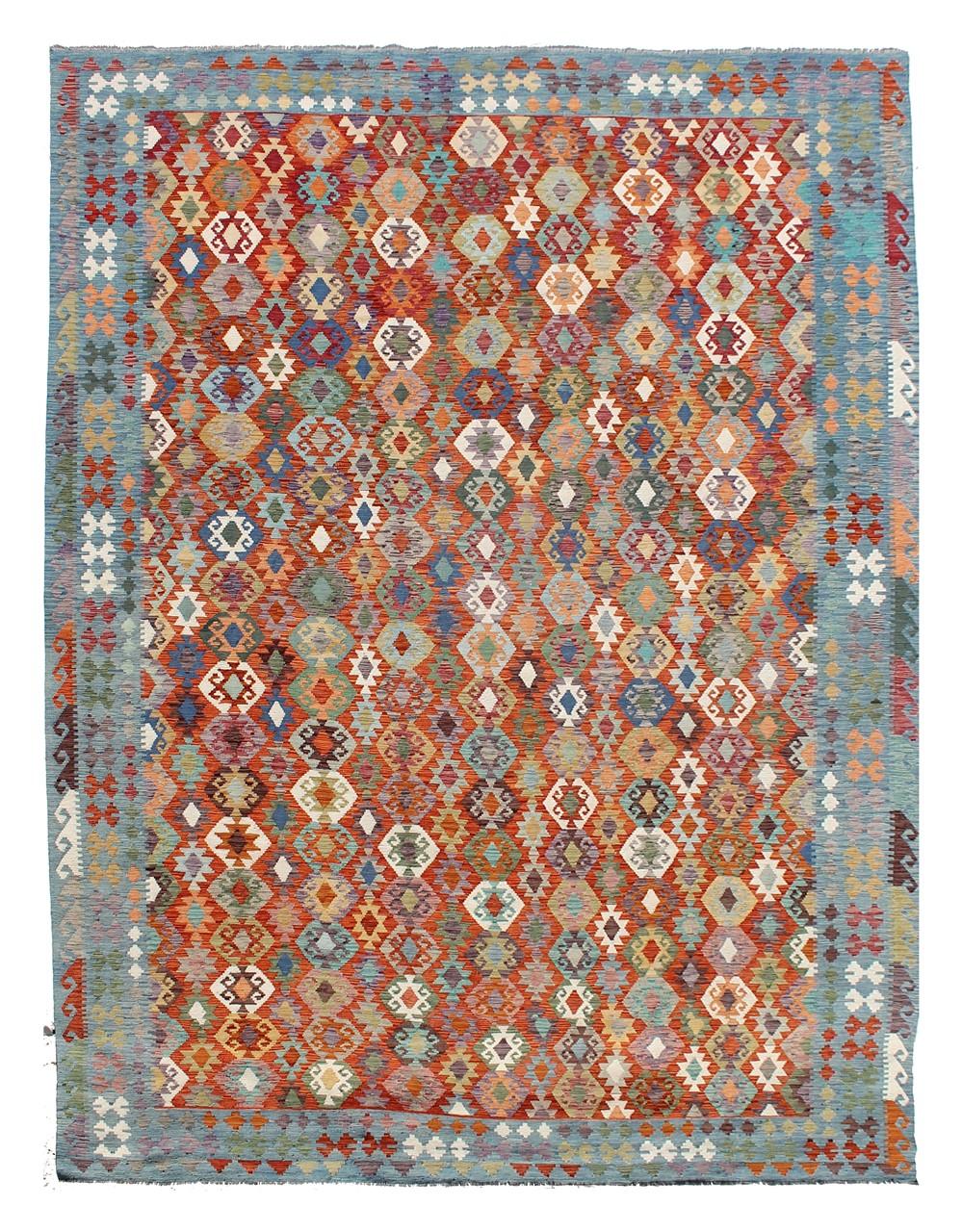
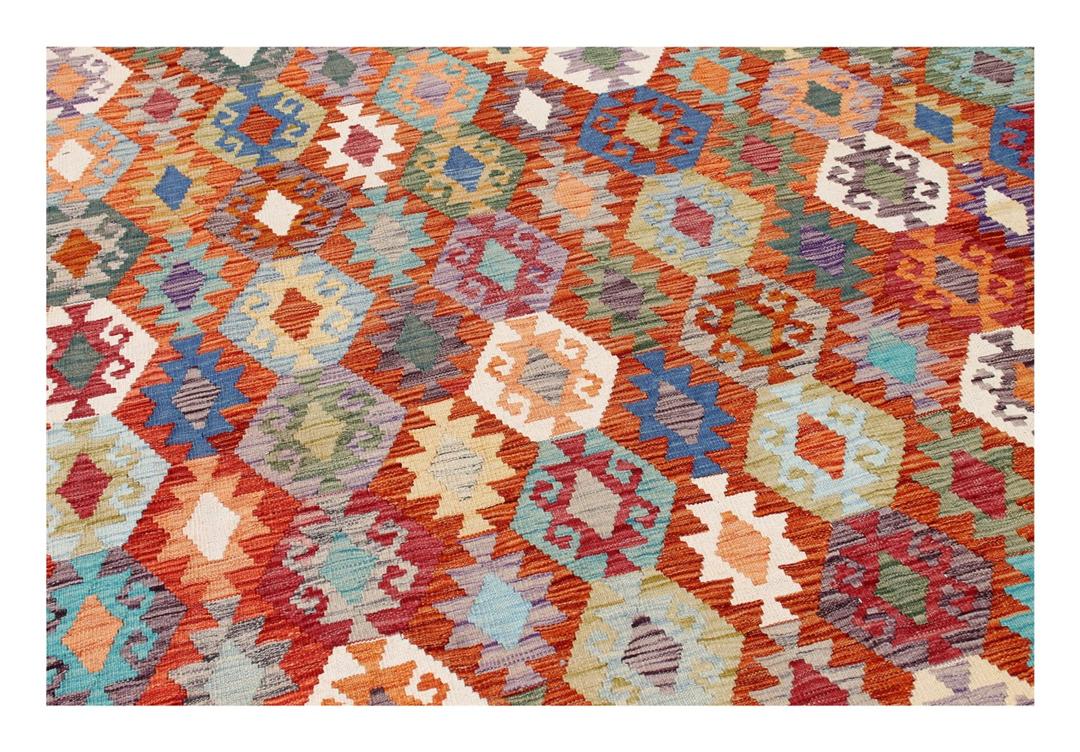
The design language of these rugs is defined by symbolic geometric motifs, often representing the weaver's environment, protection, or tribal identity. These patterns, such as the repeating diamonds and medallions seen here, are passed down through generations. While traditional palettes often leaned toward earthy reds and oranges, the inclusion of blue and teal highlights reflects the creative evolution within modern Afghan weaving communities.
Collecting a Kelim is an investment in human skill and cultural history. These pieces are highly valued for their authenticity and the way they bridge ancient weaving methods with contemporary interior aesthetics. By acquiring this rug, you are preserving a piece of heritage that honours the dedication of the artisans who keep these traditional skills alive today.