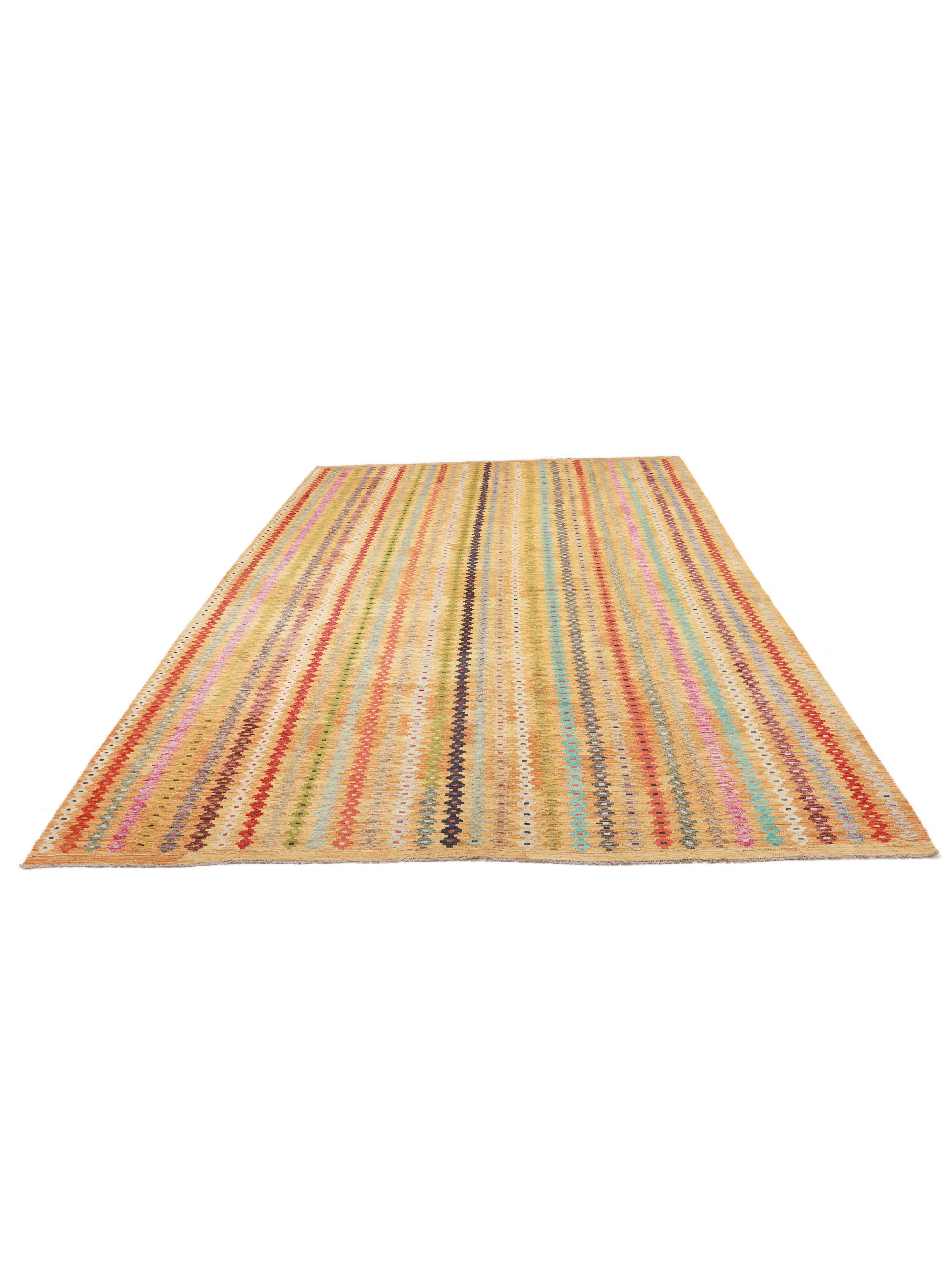
Afghan Kelims are deeply rooted in the nomadic and village traditions of Central Asia, where the art of flat-weaving has been passed down through generations. These rugs were historically created by tribal weavers for practical use, serving as floor coverings, tent partitions, or storage sacks, which necessitated a construction that was both portable and incredibly resilient.
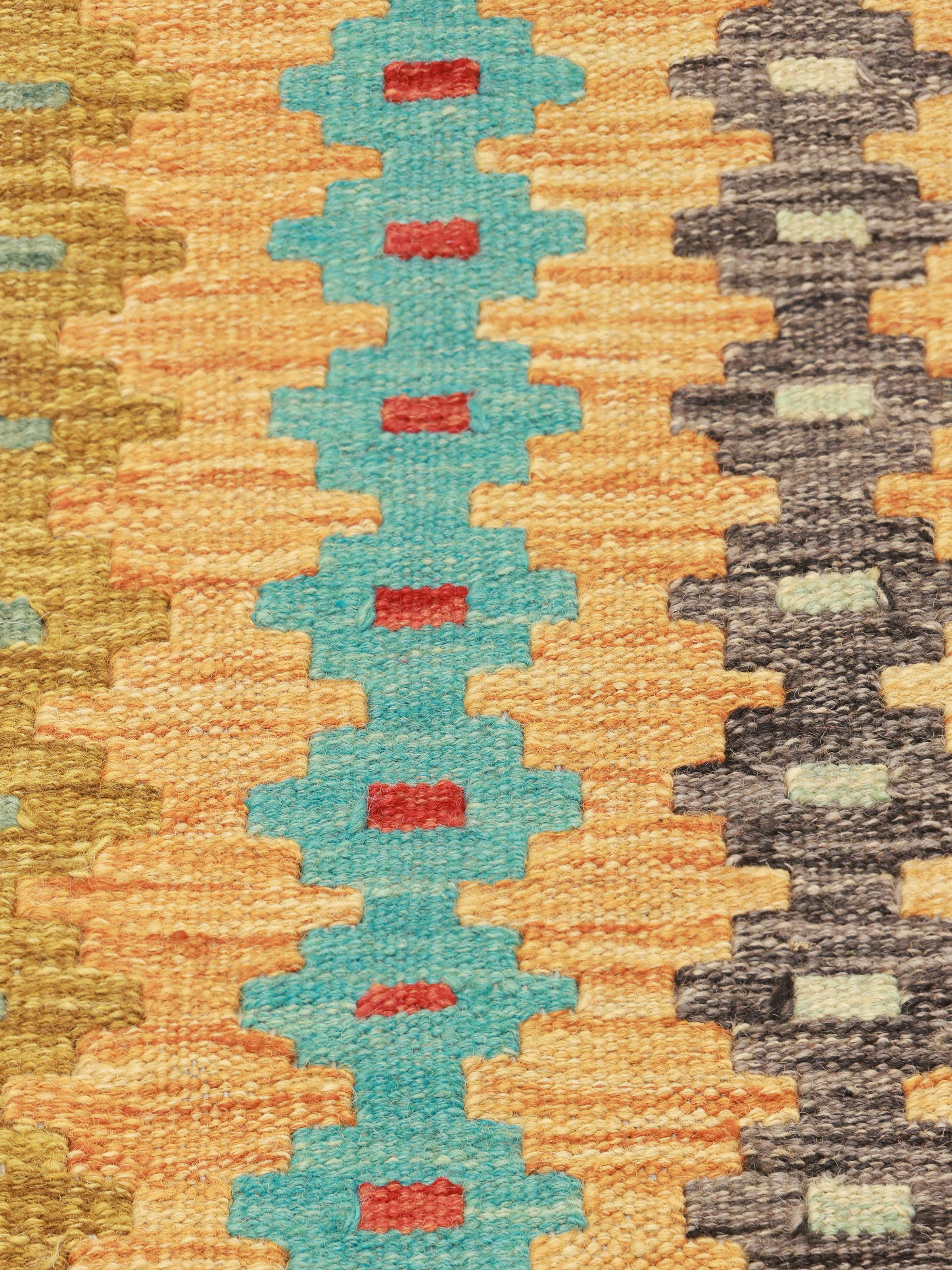
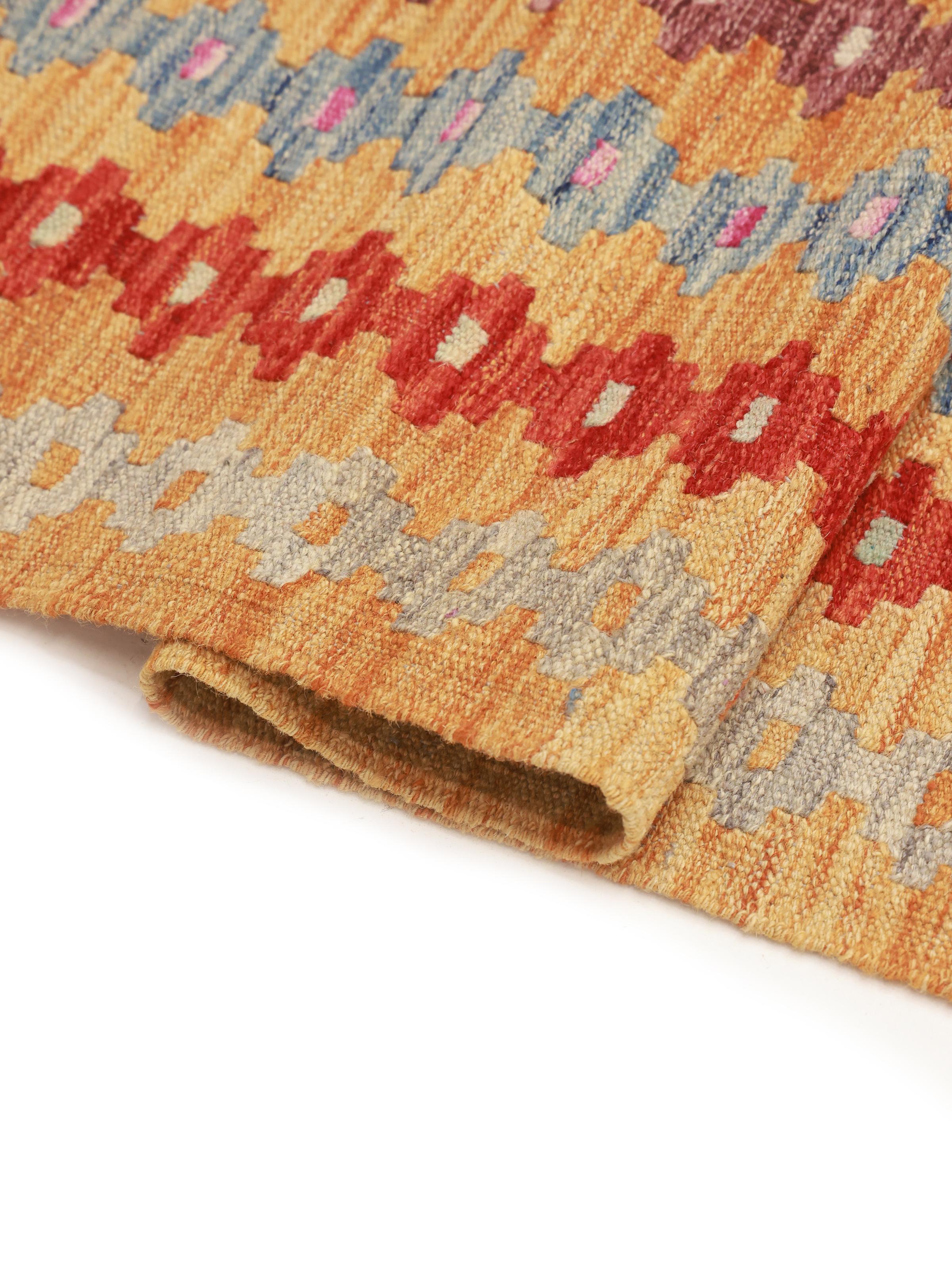
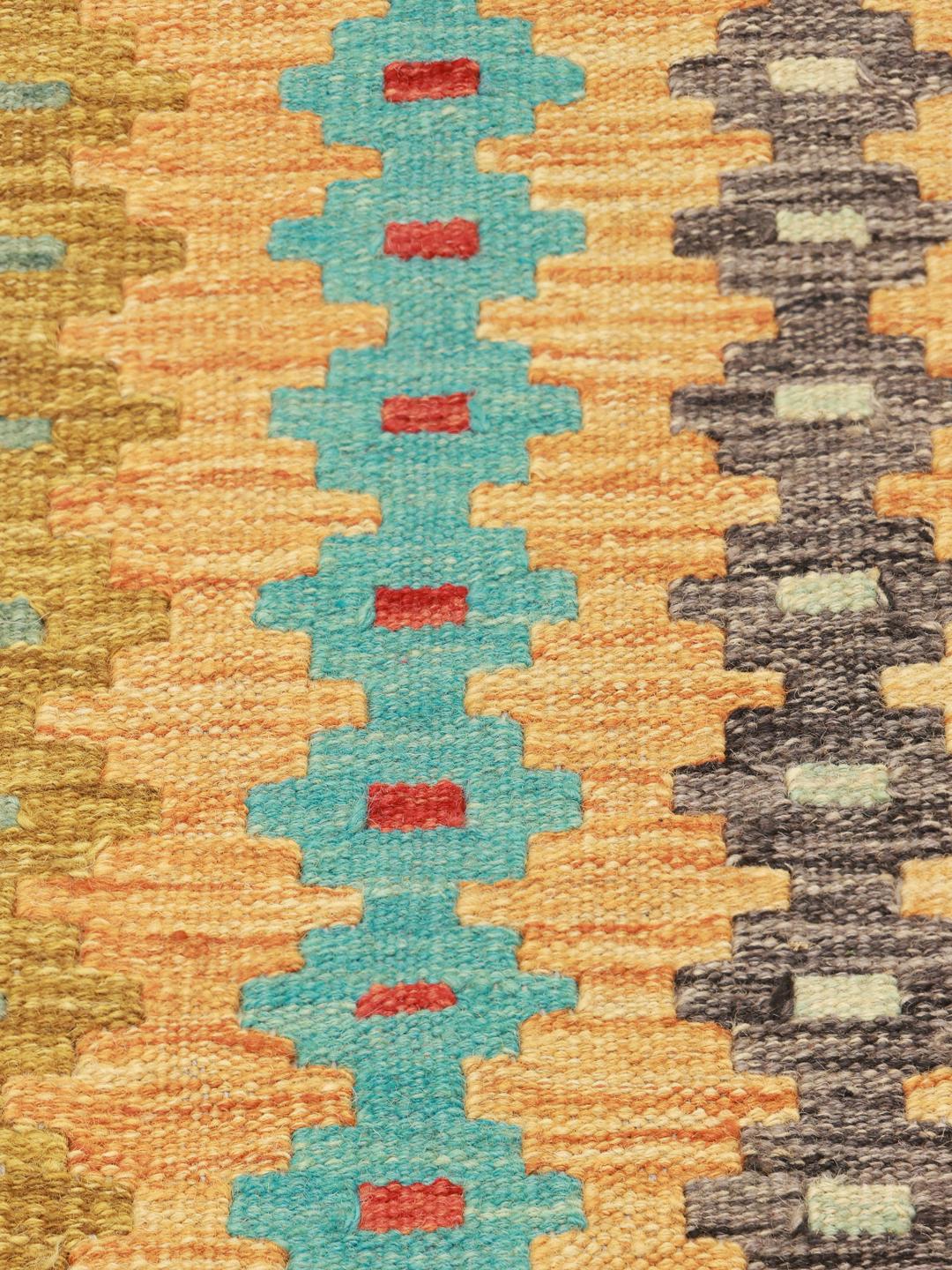
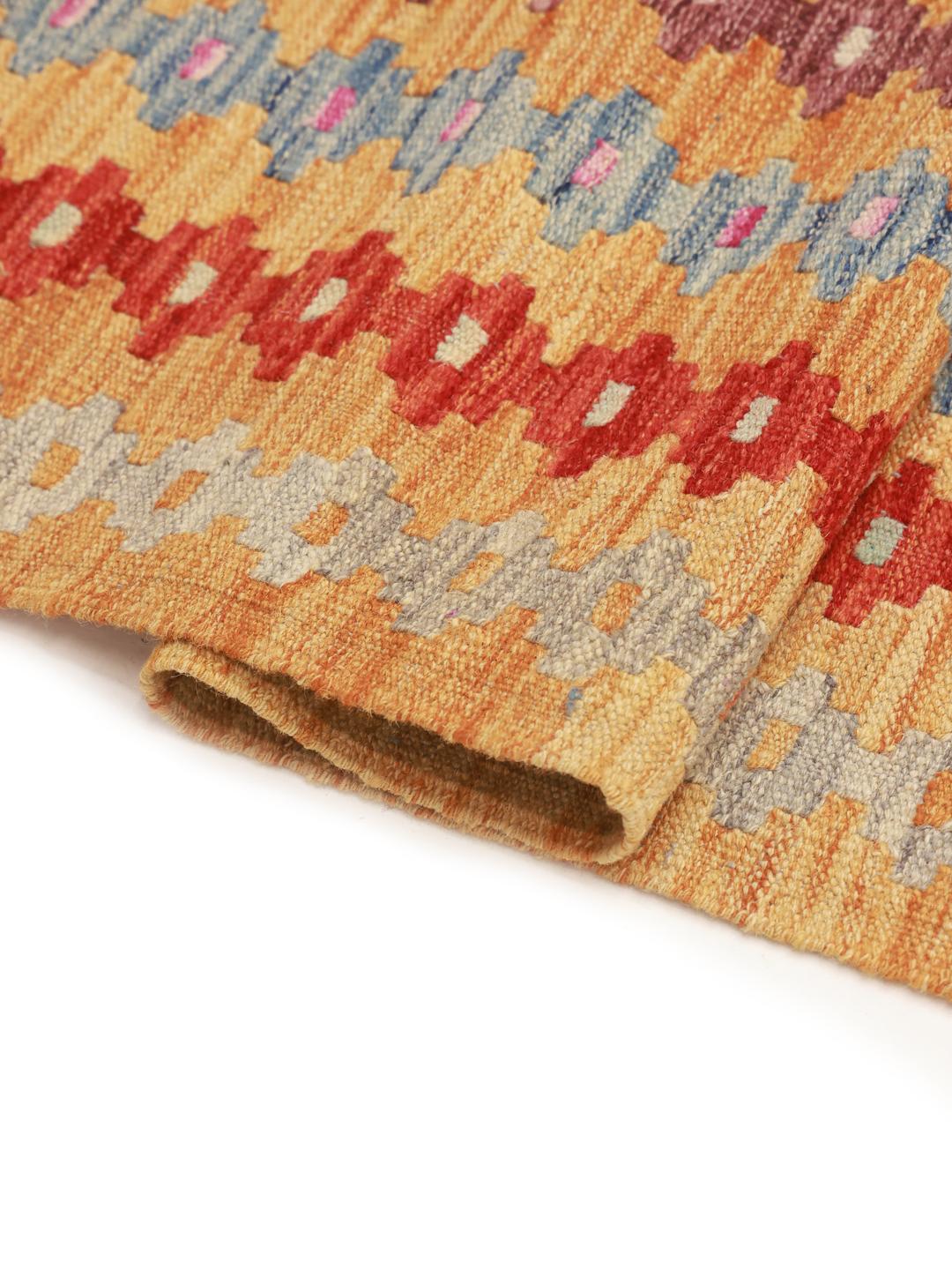
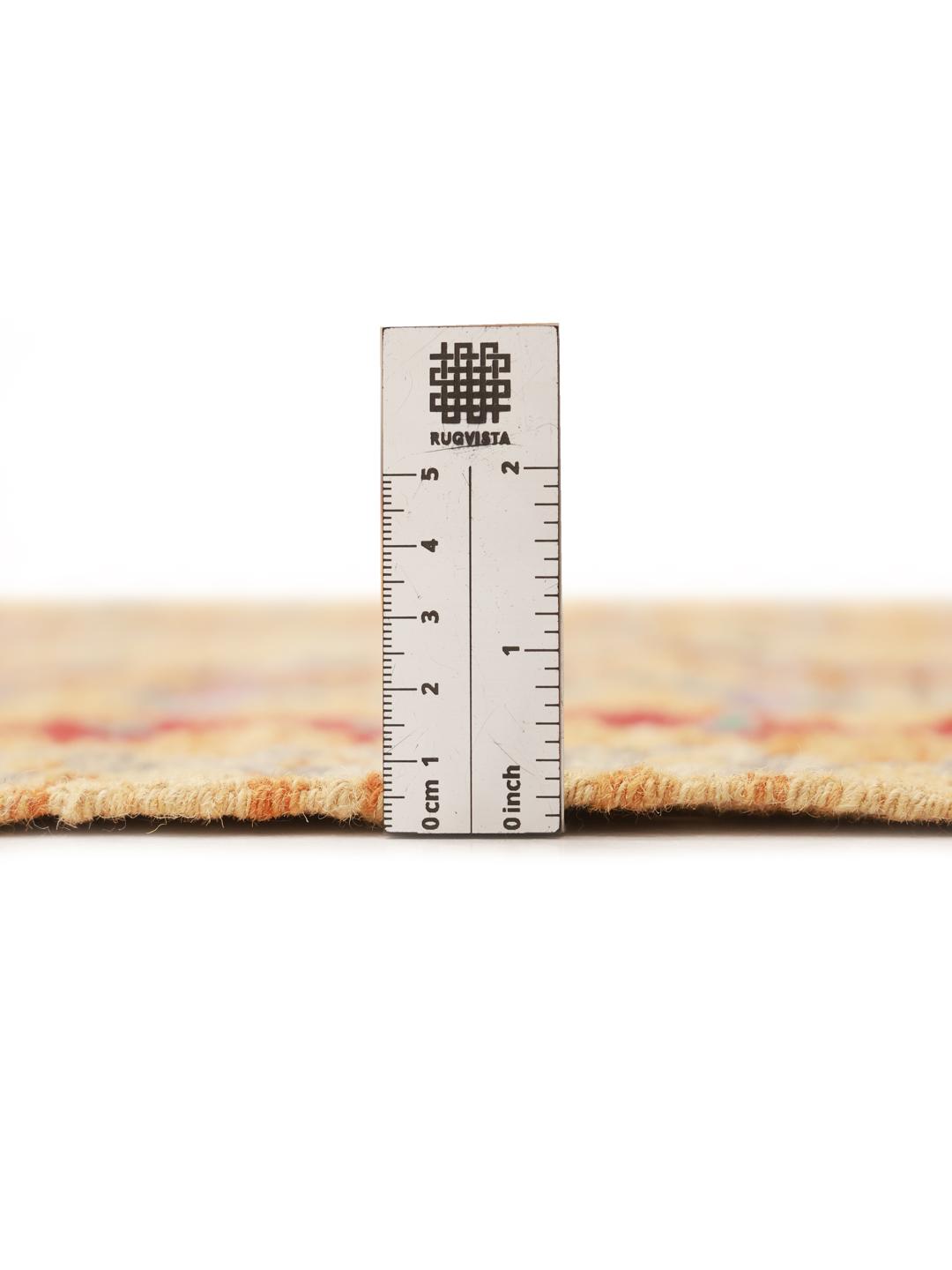
The term 'Kelim' refers to the specific flat-weave technique where no pile is created. Instead, the design is formed by interlocking the weft threads, which creates a rug that is identical on both sides. This technique results in a lighter, more versatile textile compared to traditional knotted rugs, making it a favourite for those who appreciate a cleaner, more streamlined aesthetic in their living spaces.
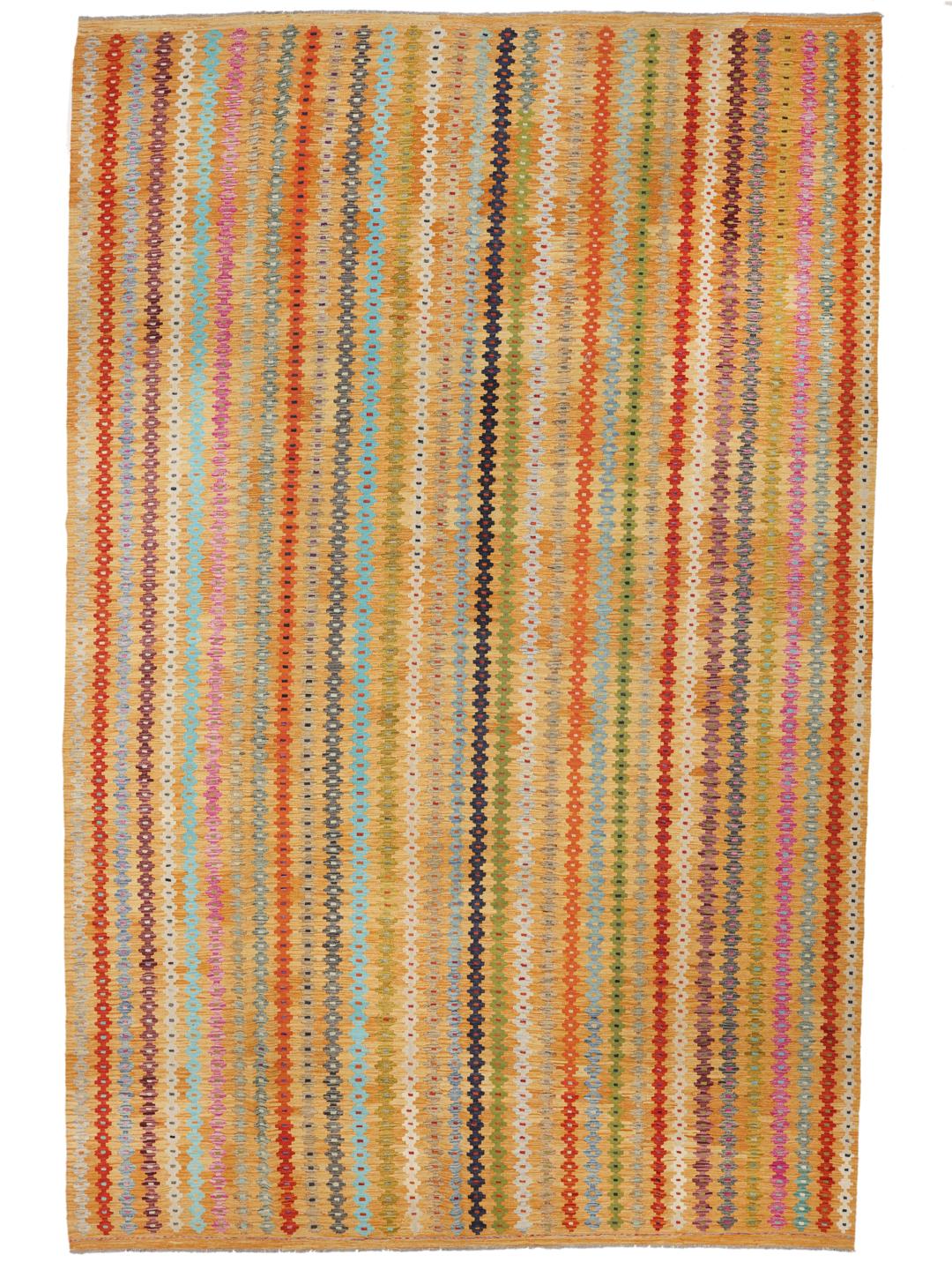
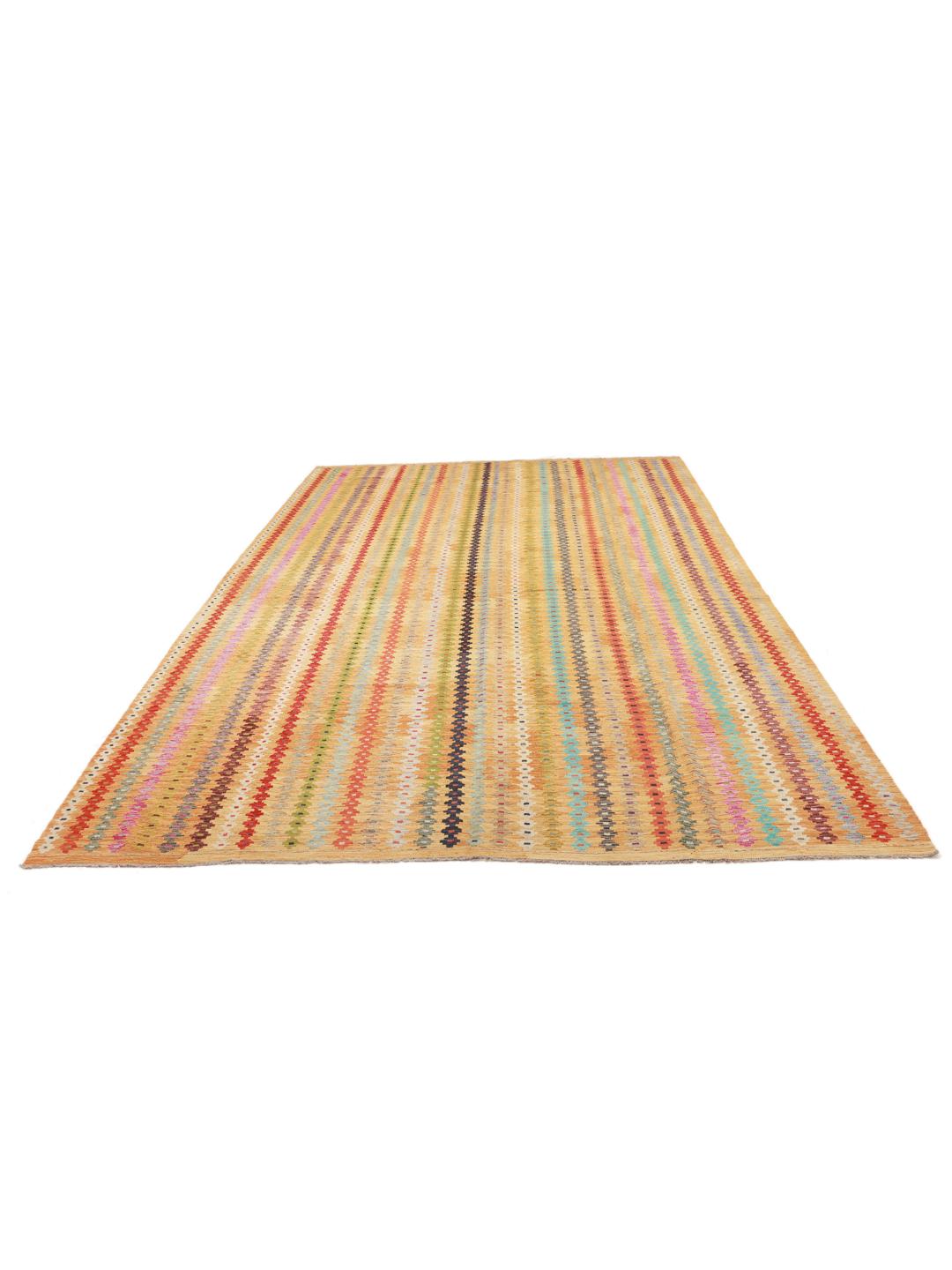
Signature design elements in Afghan Kelims often include bold geometric patterns and vibrant, earthy colour palettes derived from natural dyes. The striped patterns seen in this piece are a traditional motif, often representing the weaver's connection to their surroundings and their creative expression through rhythmic repetition. This rug’s multicolor palette is particularly expressive, showcasing a wide range of hues that bring energy to the traditional geometric framework.
Owning a Kelim is more than just purchasing a floor covering; it is an investment in cultural heritage. Collectors value these pieces for their authenticity, the skill required to maintain consistent tension across such large dimensions, and the unique stories embedded in every thread. It is a piece that carries the weight of tradition while seamlessly fitting into the modern home.