Kelim rugs have long been a cornerstone of nomadic and village life across the Middle East and Central Asia. Originally designed as functional, portable floor coverings, blankets, and storage bags, these flat-woven textiles were crafted by skilled artisans who translated their cultural identity into complex geometric patterns. The Afghan tradition, in particular, is celebrated for its robust wool and its sophisticated use of vibrant, natural dyes that have stood the test of time.
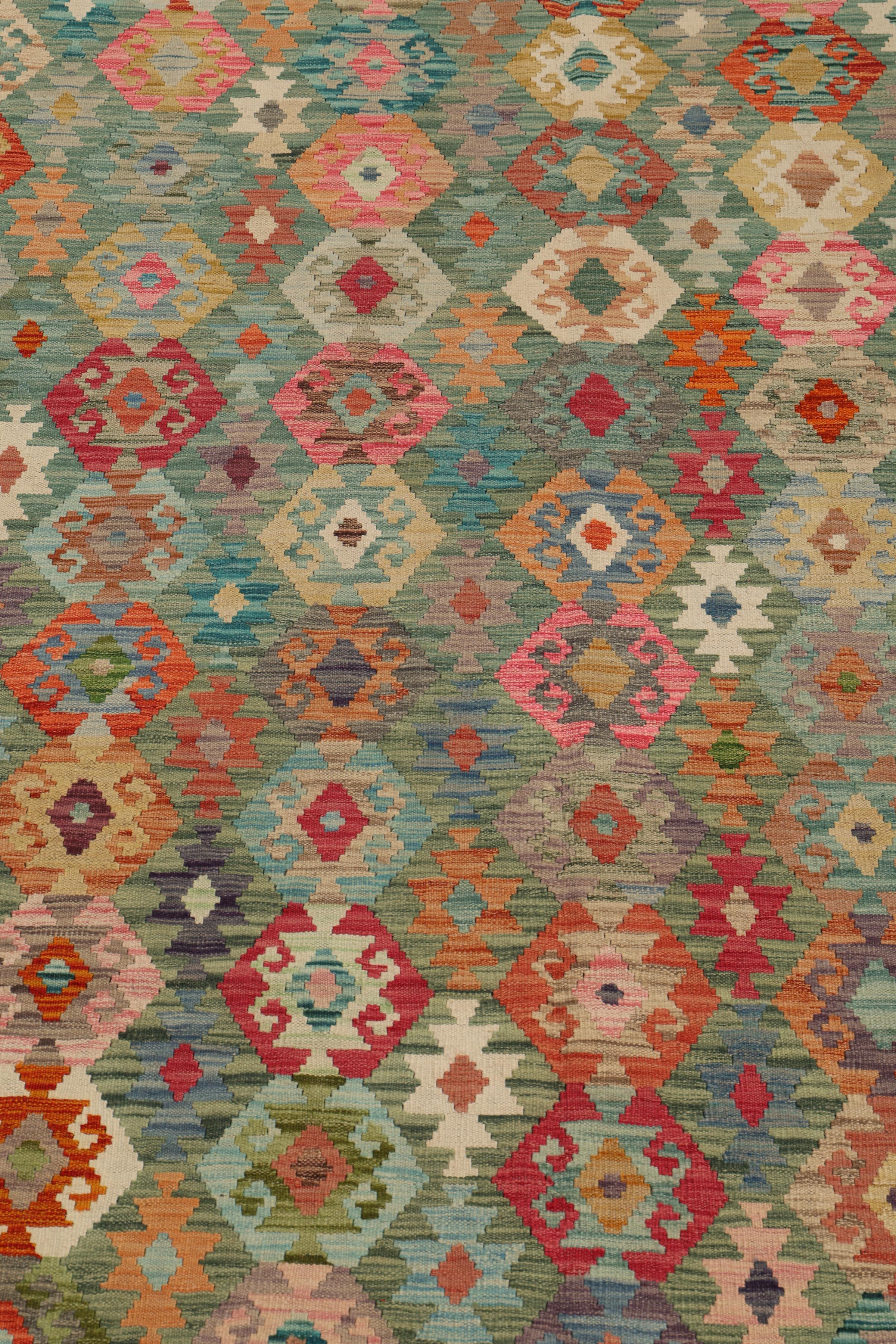
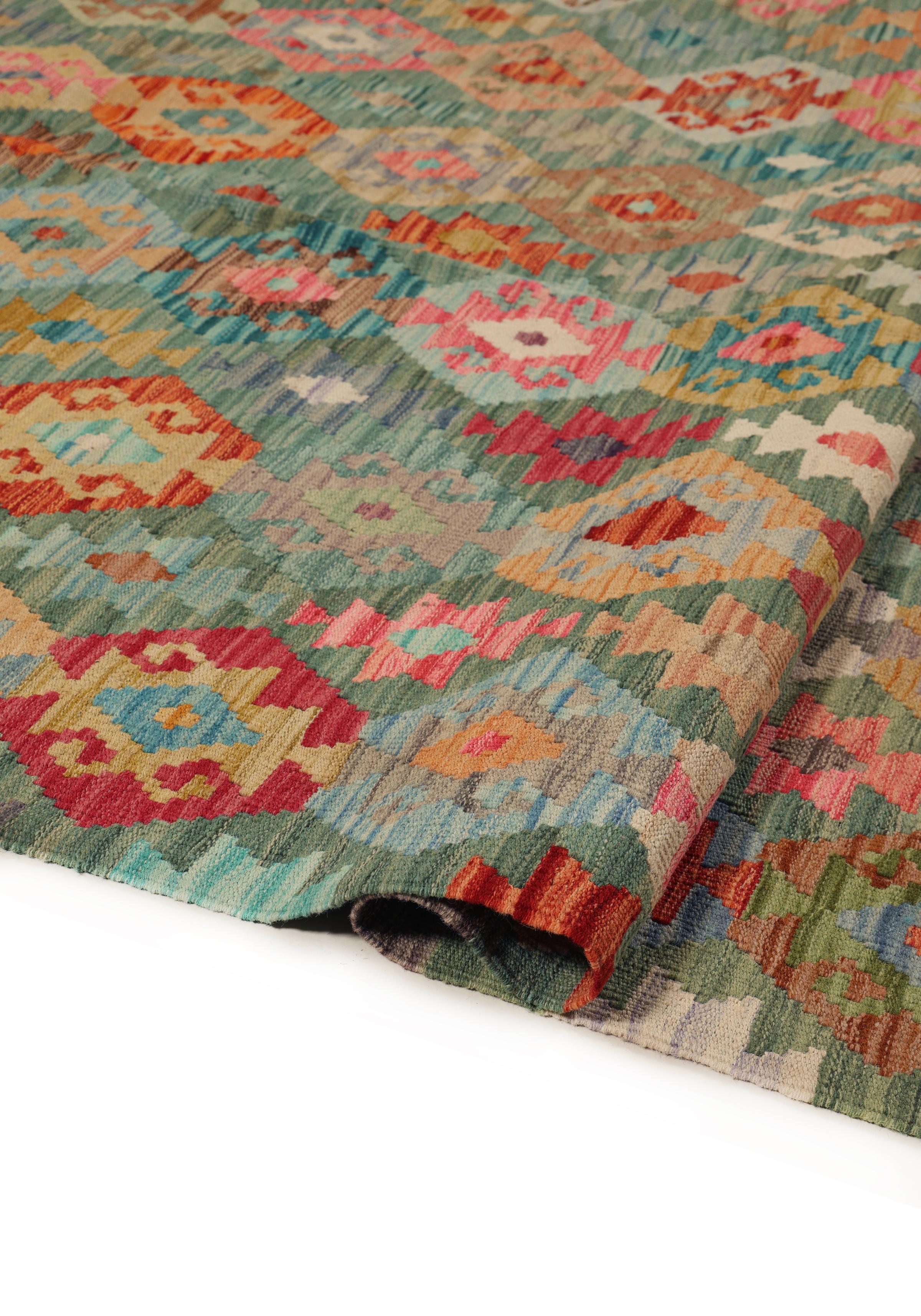
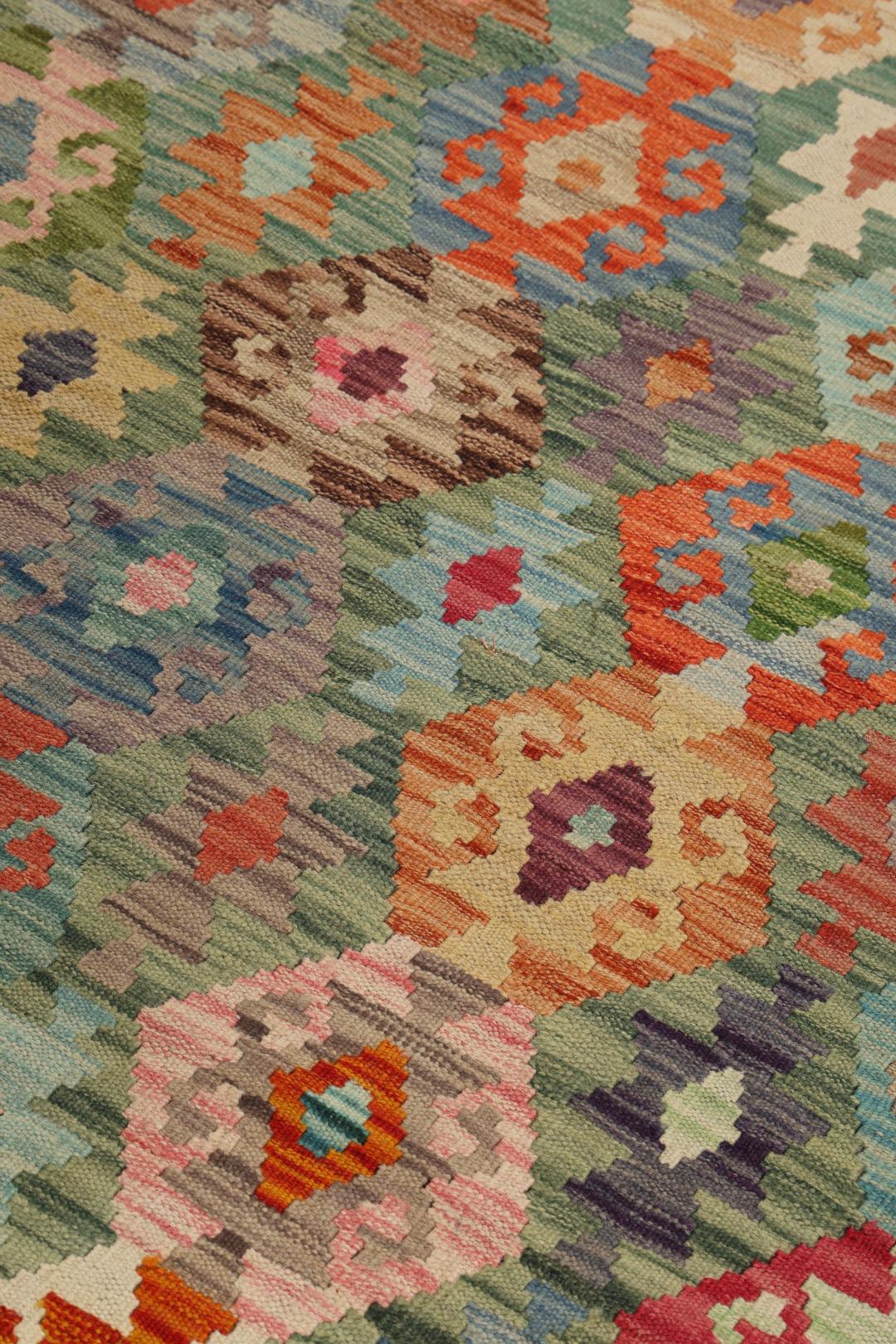
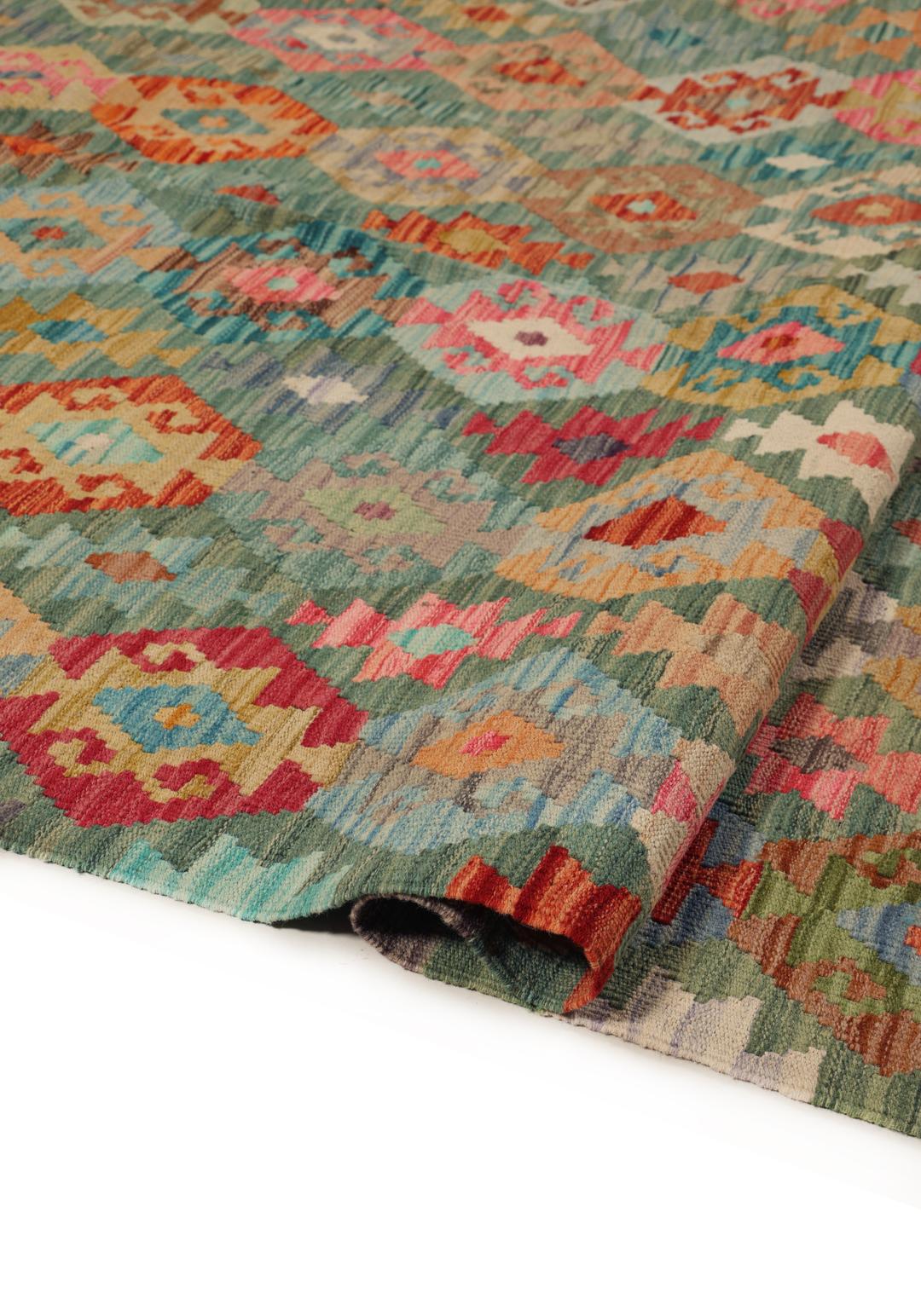
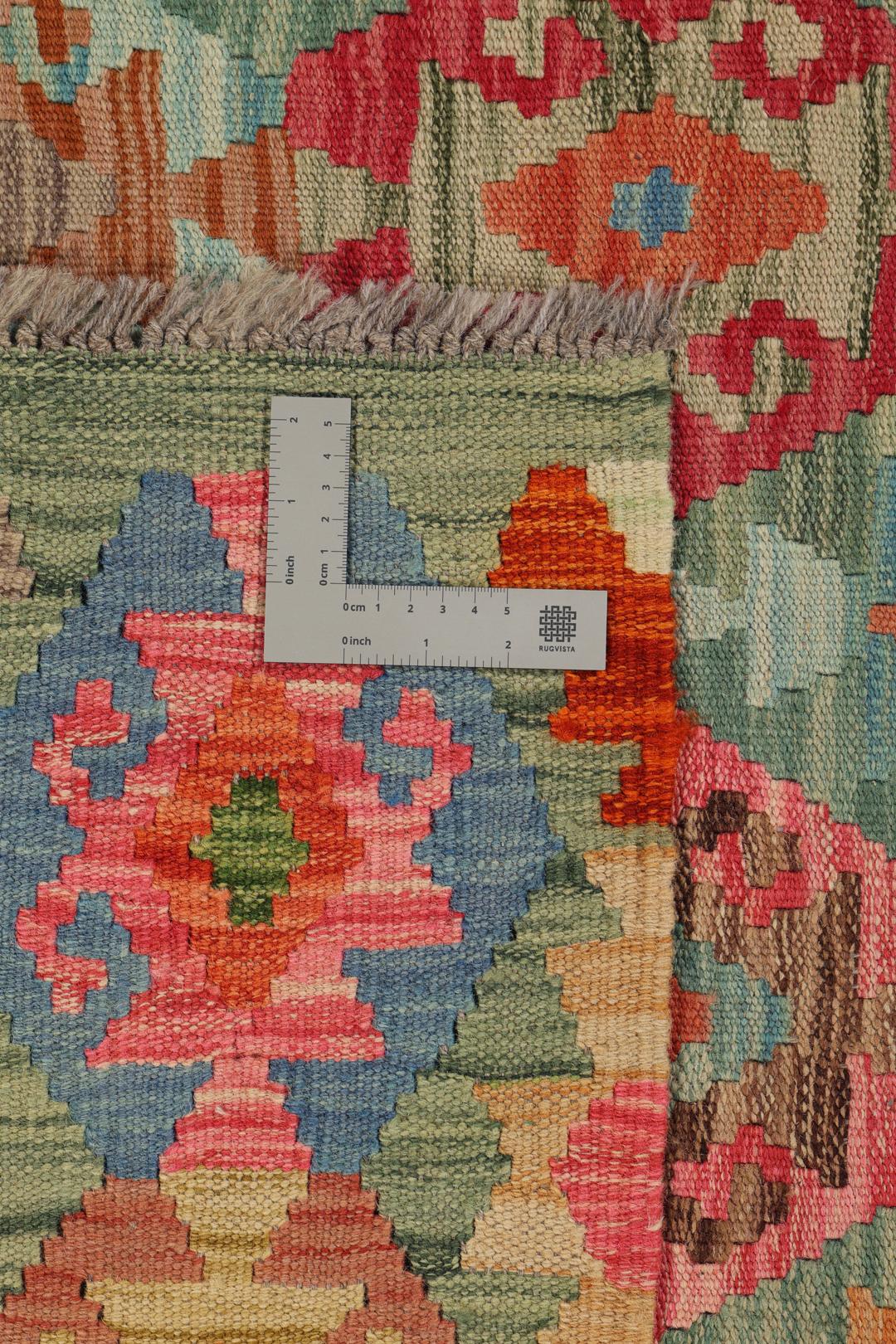
The term 'kelim' refers to a specific weaving technique where the weft threads are passed through the warp threads to create a flat, pileless surface. This method is distinct from knotted rugs, as it relies on the interlacing of threads to build the design itself. This results in a reversible rug with a clean, crisp pattern on both sides, which is a hallmark of high-quality craftsmanship in this tradition.
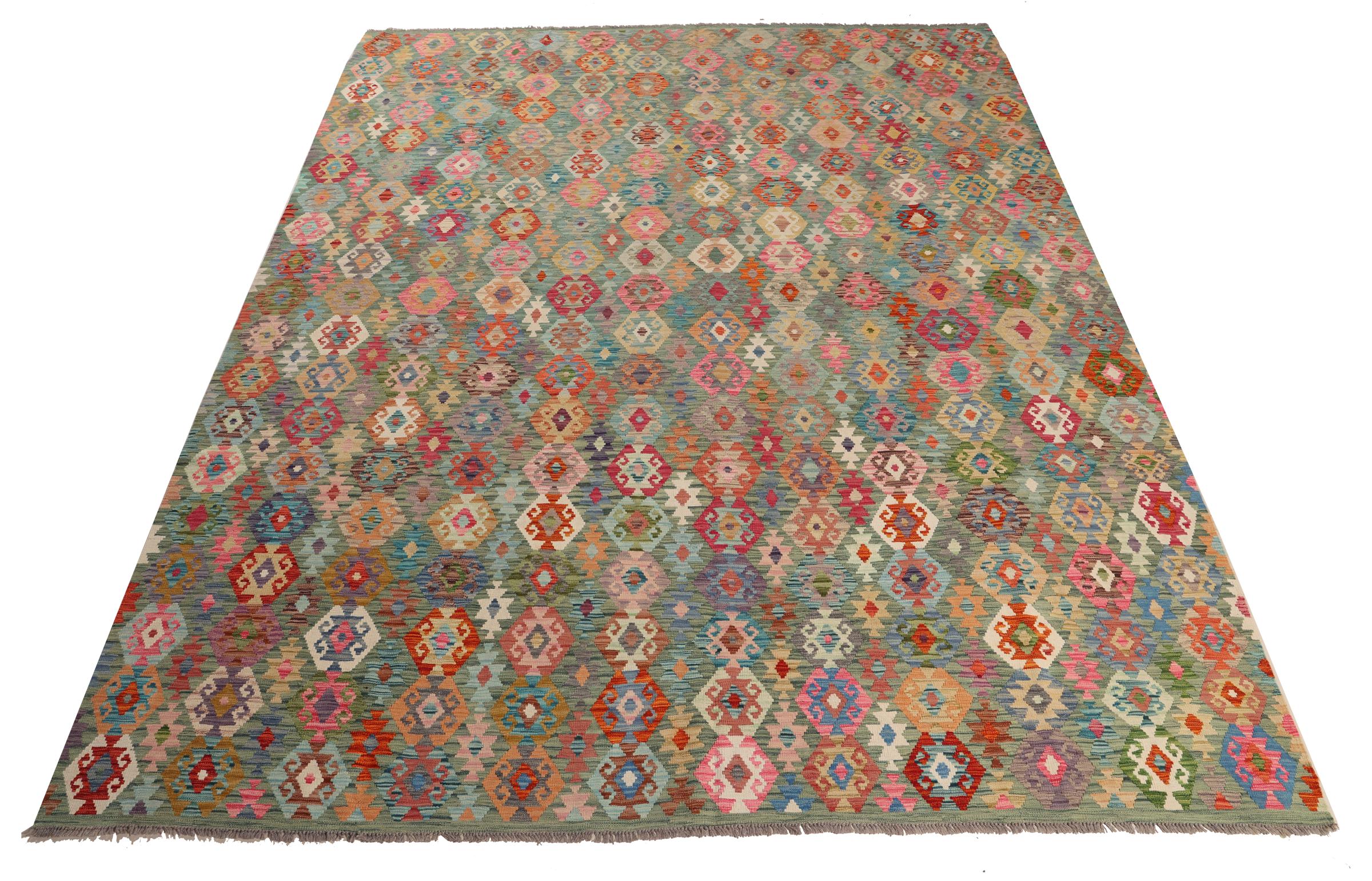
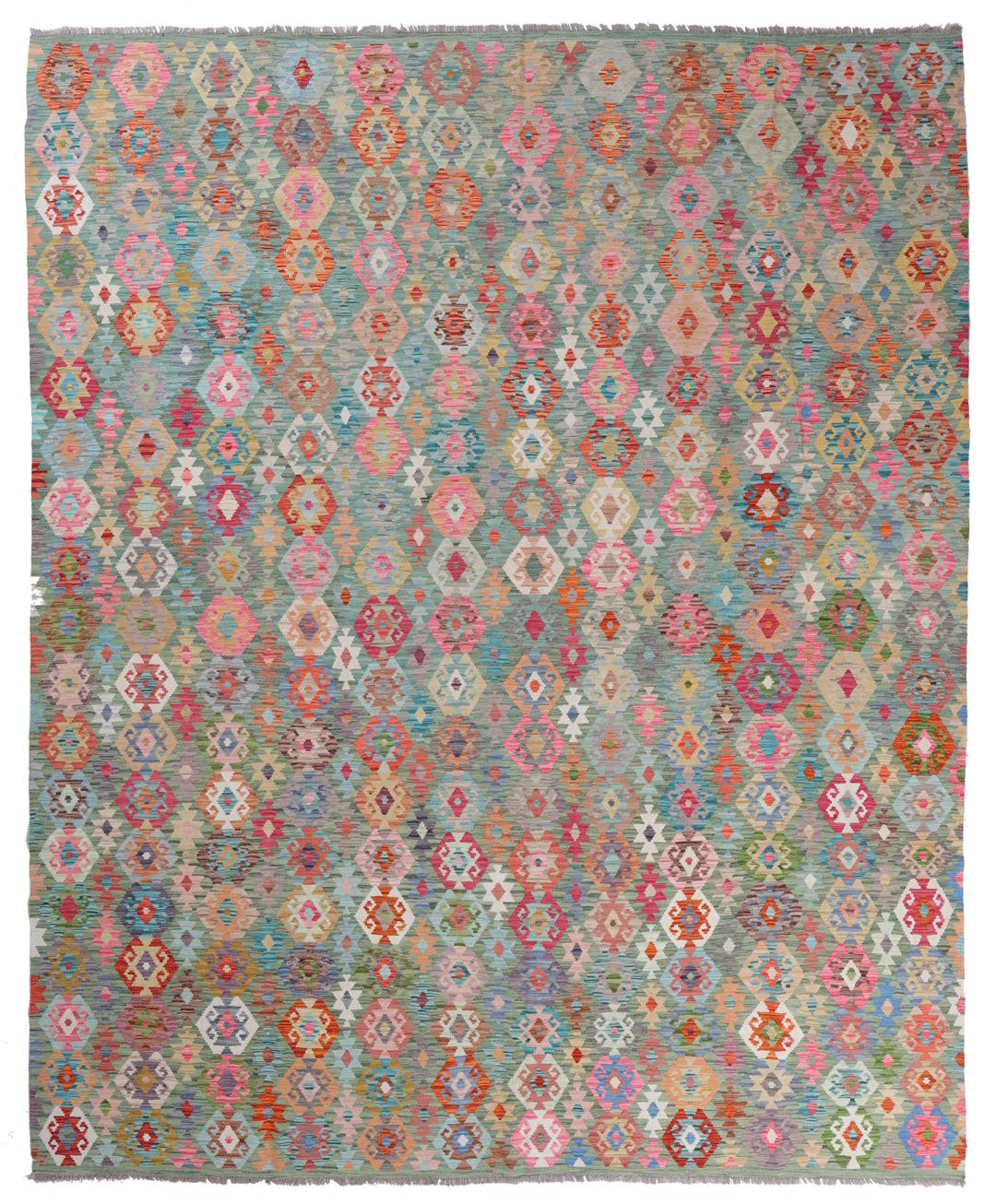
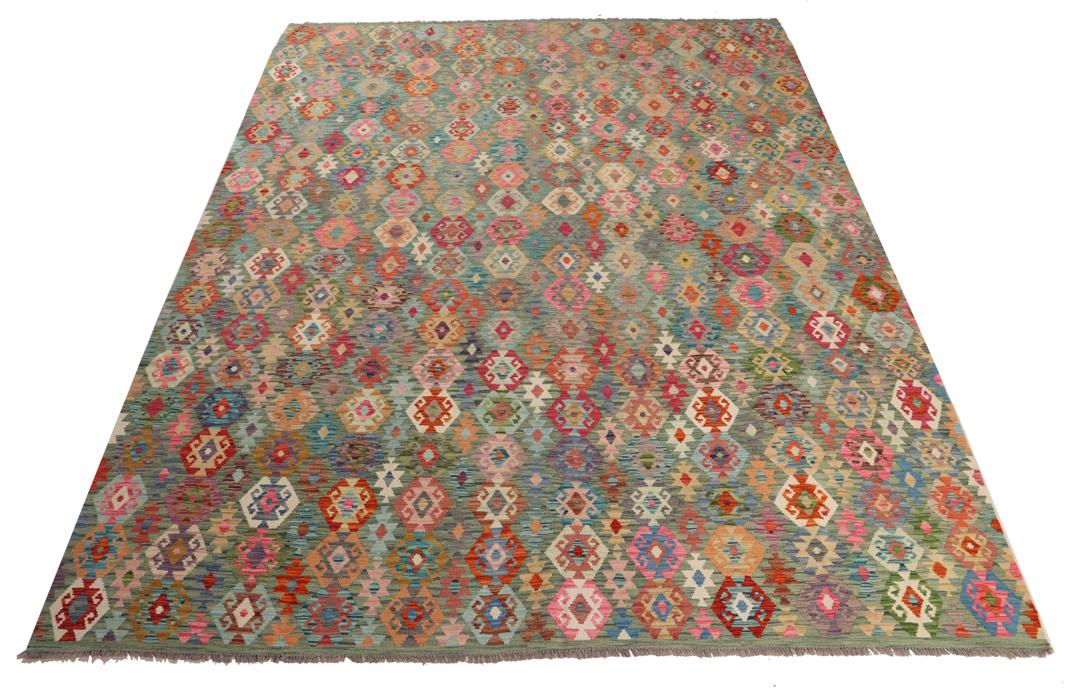
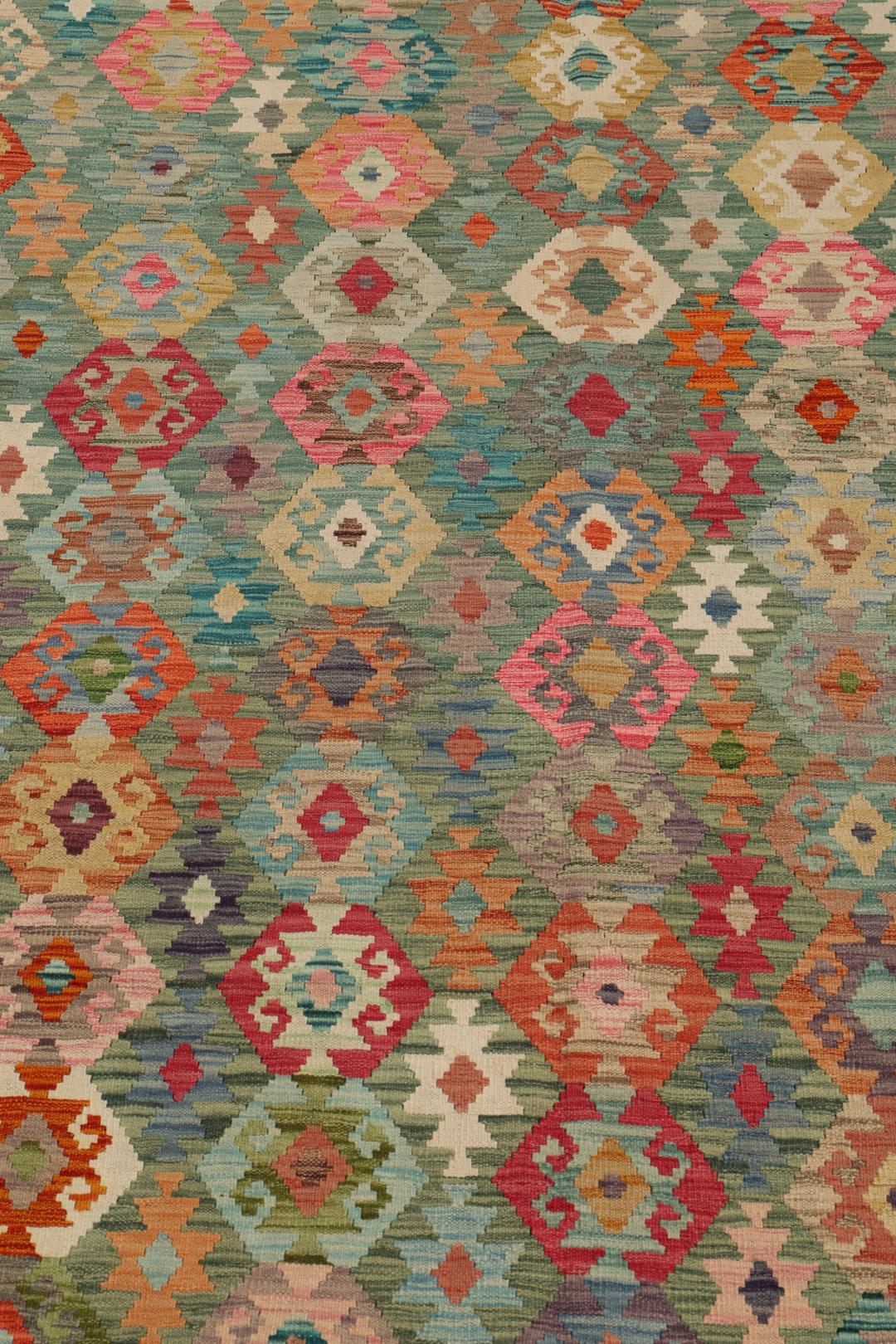
Visually, the Afghan kelim is often distinguished by its bold geometric language. Motifs such as the diamond or 'gul' are not merely decorative but often carry symbolic meanings related to protection, fertility, and the weaver's environment. The use of a multicoloured palette against a distinct field colour, such as the teal seen here, is a classic way to showcase the intricate interplay between different wool tones, creating a rhythmic visual experience.
Collecting a piece from this tradition is an investment in history and human skill. Because these rugs are produced in limited quantities and rely on ancestral knowledge passed down through generations, they represent a tangible connection to a rich cultural heritage. Owning an Afghan kelim is a way to bridge the gap between traditional artistry and contemporary living, ensuring that these vital craft practices continue to be valued in modern homes.