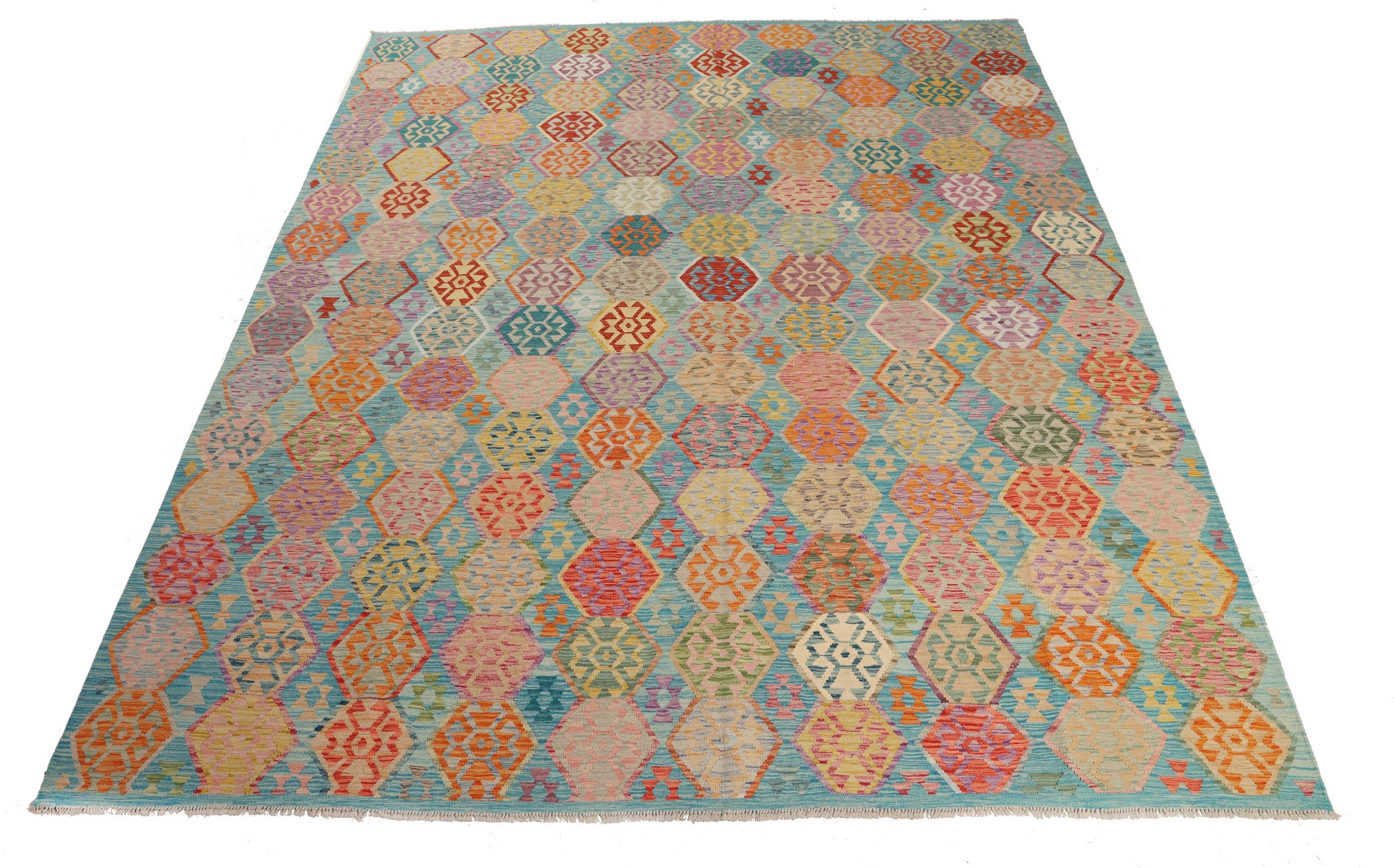
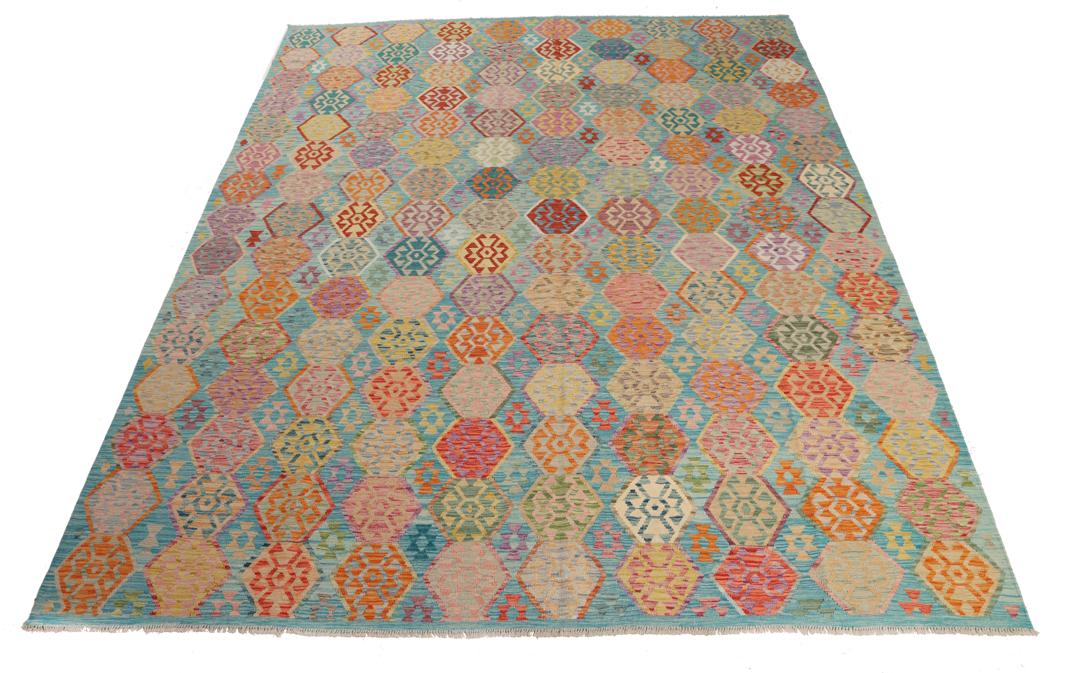
The Kelim tradition in Afghanistan is deeply rooted in the nomadic and semi-nomadic lifestyles of the region, where flat-weave rugs were essential for their versatility and portability. These rugs were traditionally crafted by tribal weavers to serve as floor coverings, wall hangings, and storage bags, reflecting a history of utility and artistic expression. Today, Afghan weavers continue to draw upon this rich cultural heritage, blending ancient techniques with evolving design sensibilities to create pieces that are both functional and highly decorative.
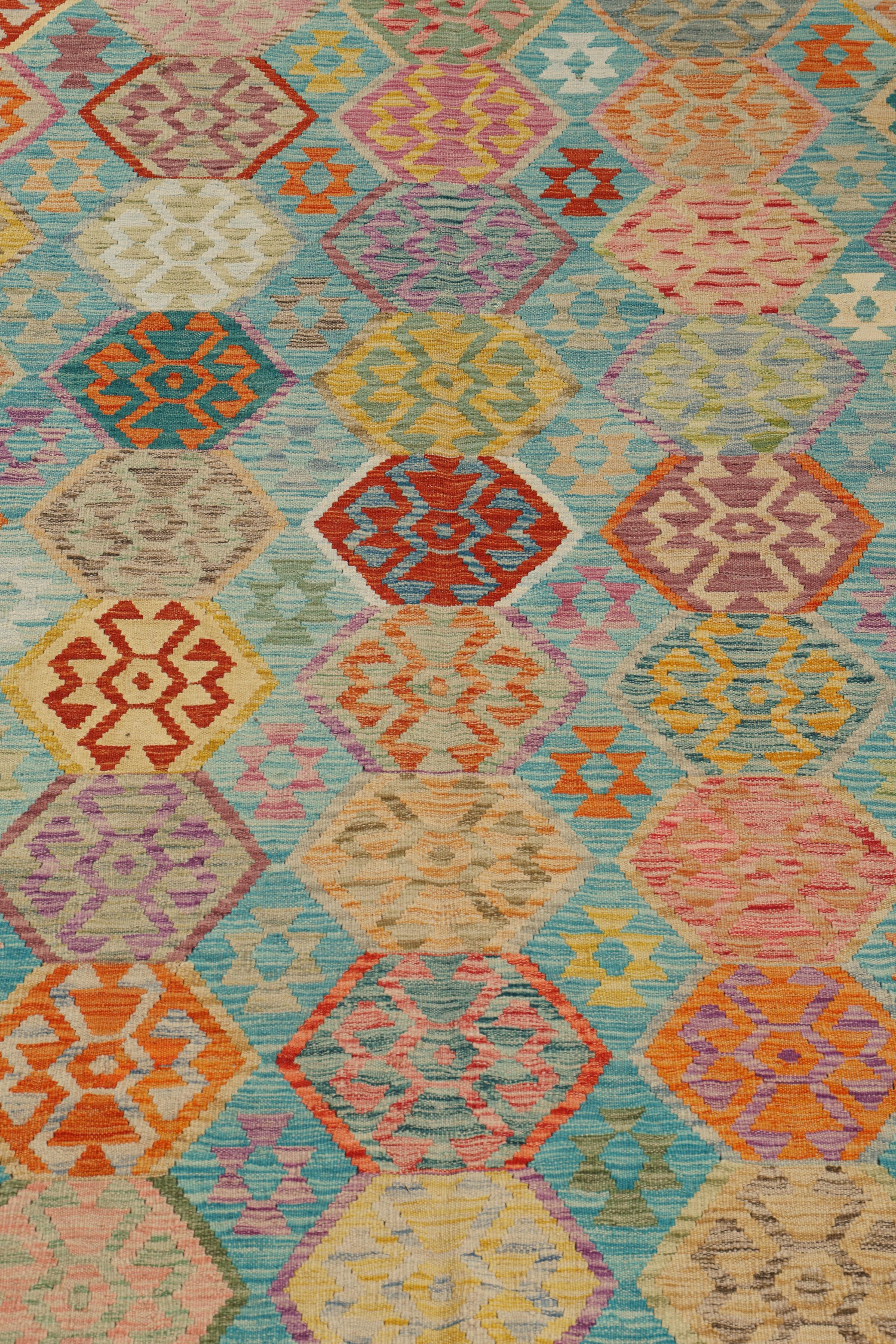
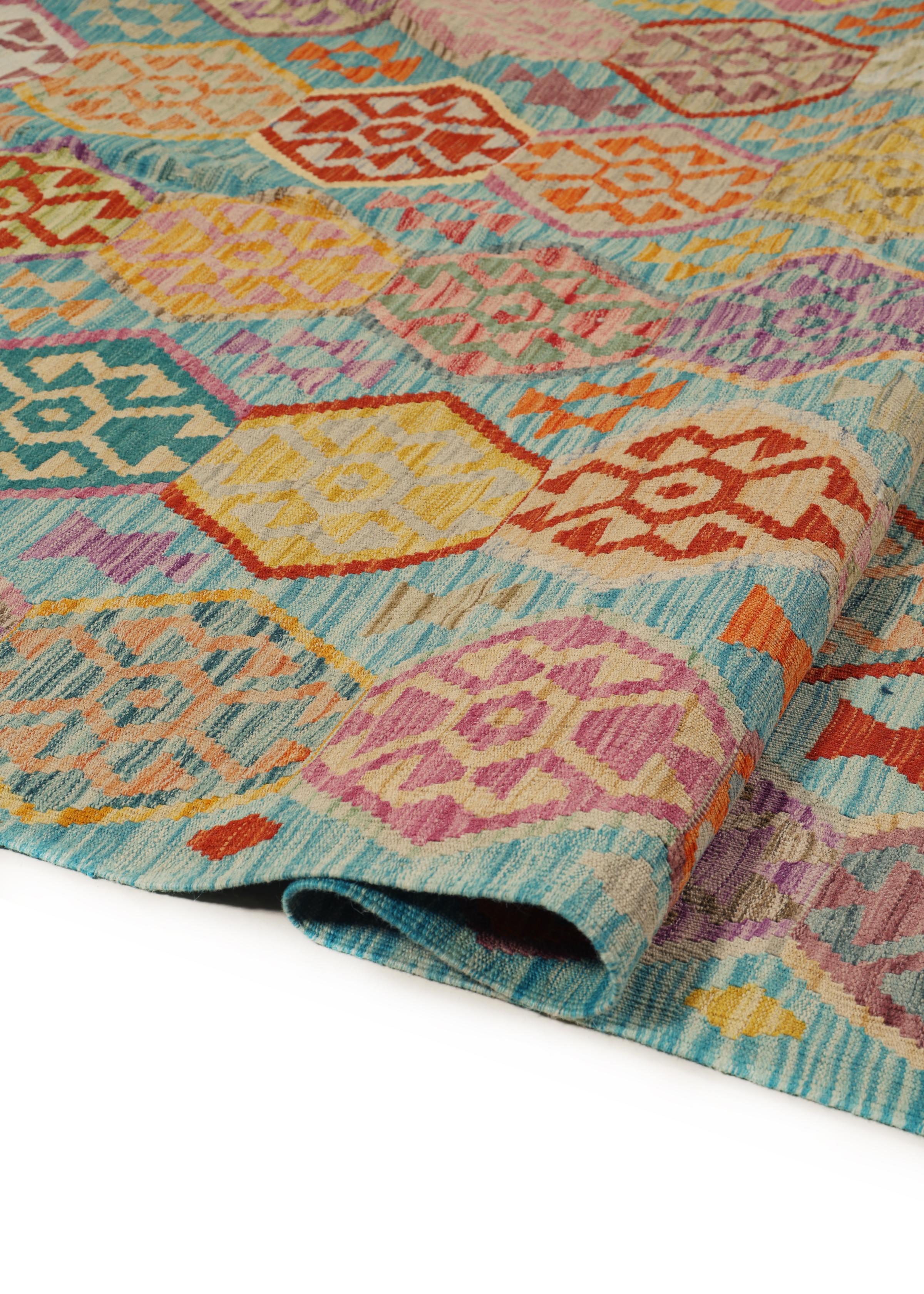
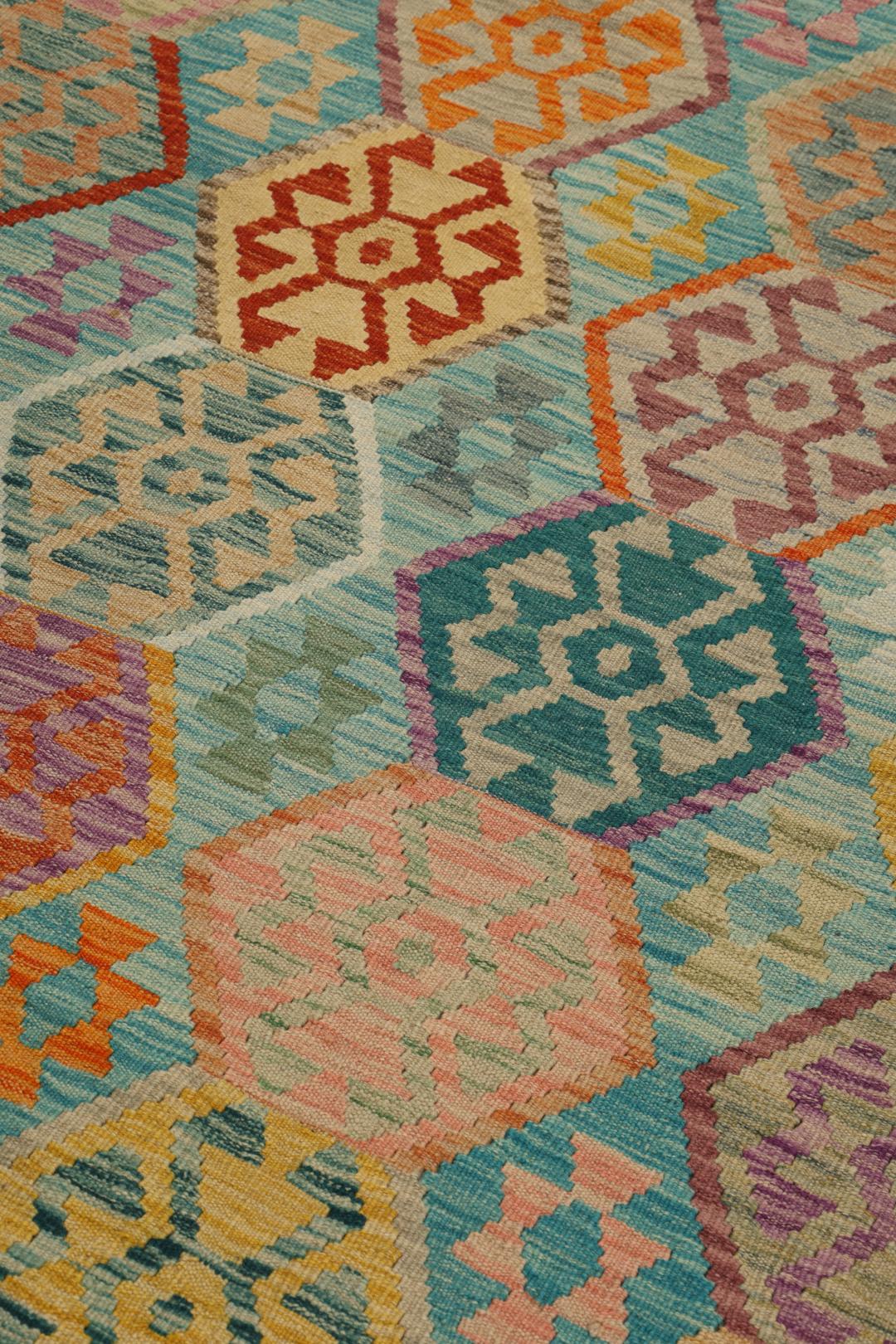
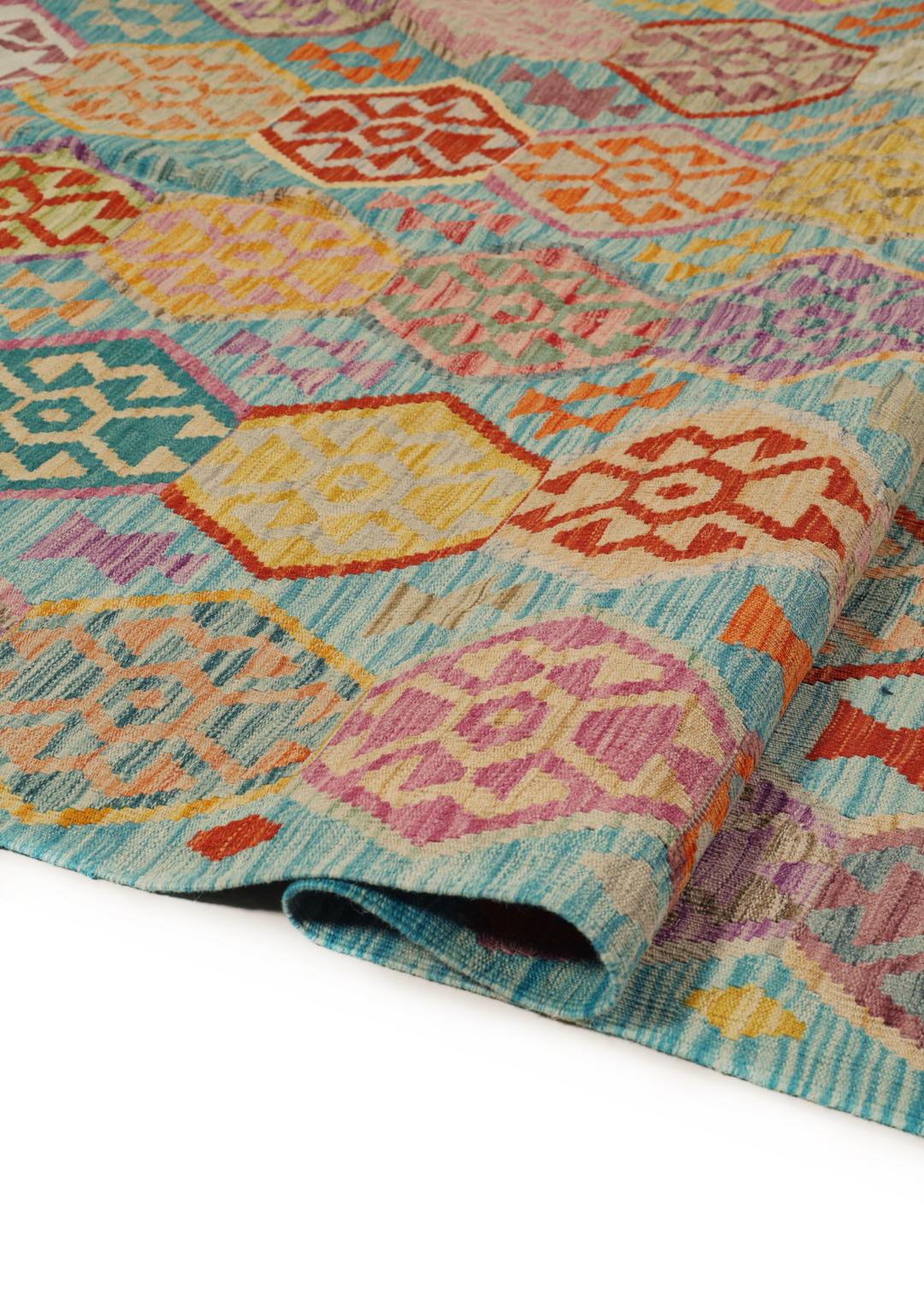
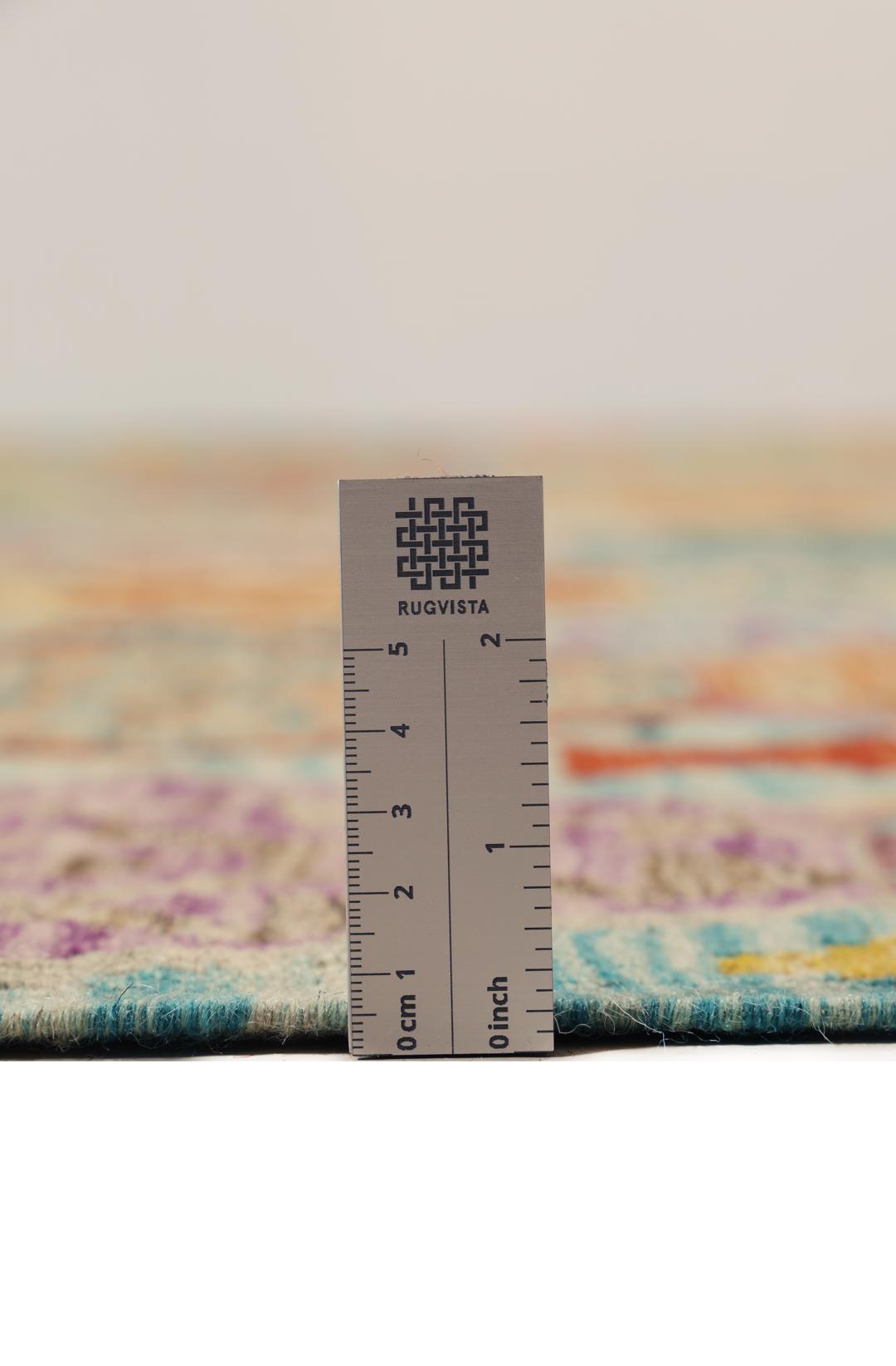
A Kelim is defined by its flat-weave construction, meaning it is created without a pile. This technique involves interlacing the horizontal threads over and under the vertical threads, resulting in a smooth, durable, and reversible textile. The quality of a Kelim is often determined by the tightness of this weave, which ensures the longevity of the design and the ability of the rug to remain flat on the floor even after years of use.
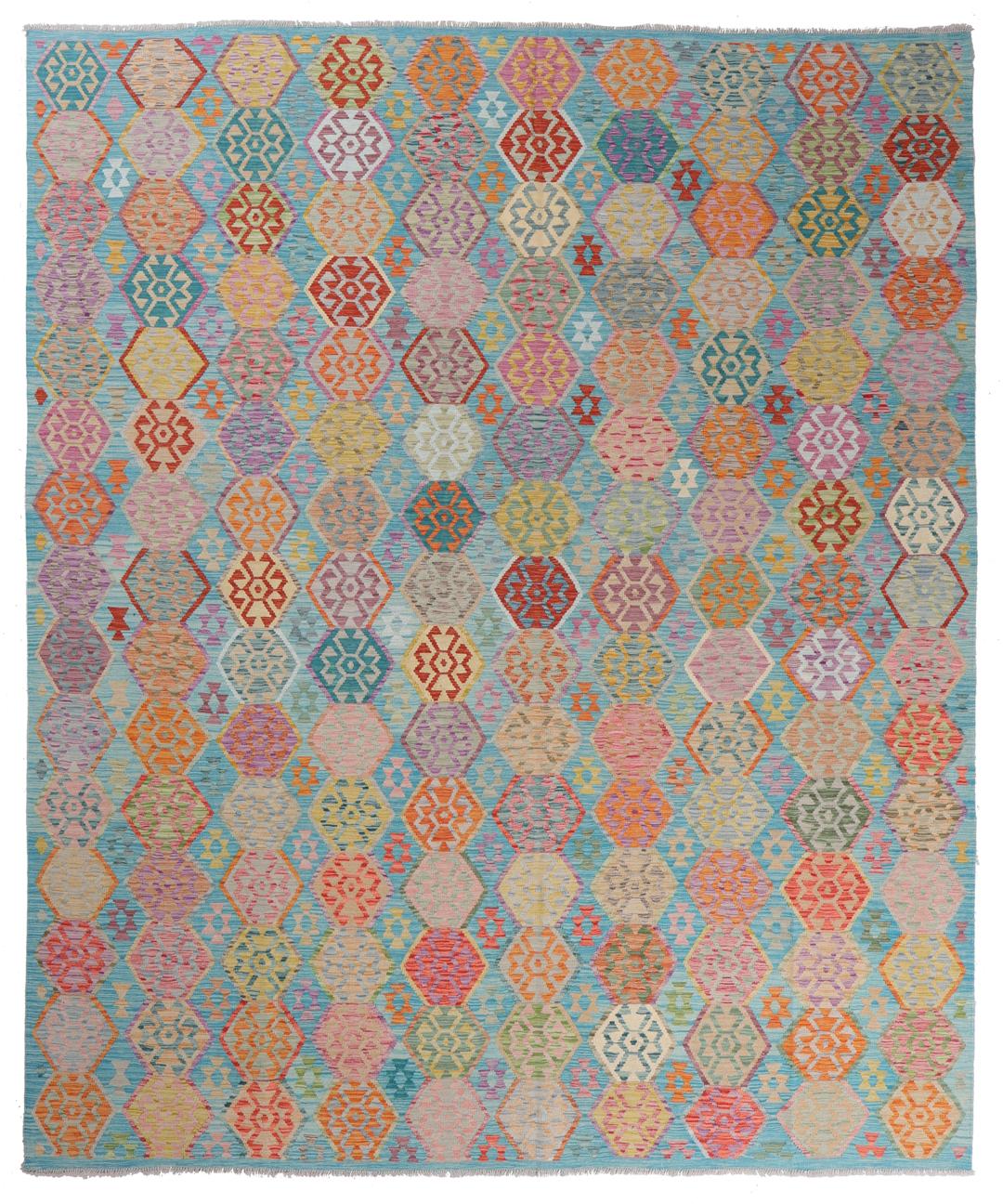
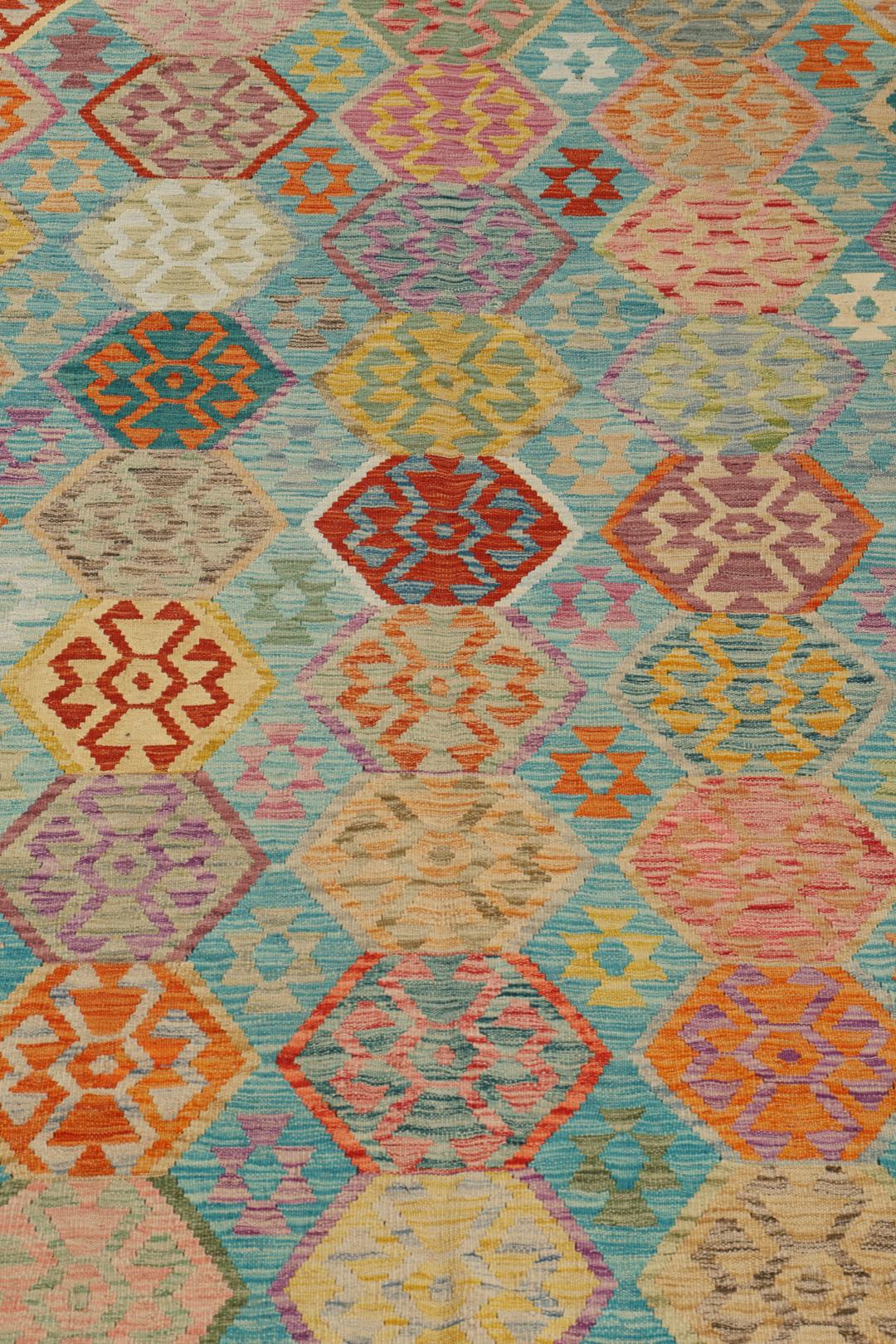
The signature design language of these rugs often features bold geometric motifs, such as the honeycomb or diamond shapes seen here. These patterns are not merely decorative but are often symbolic, representing the weaver's environment, beliefs, and ancestral stories. The use of vibrant, contrasting colours is a hallmark of the Afghan style, often achieved through natural dyes that give the rug a depth and character that synthetic alternatives cannot match.
Collecting an authentic Afghan Kelim is an investment in human skill and cultural continuity. These pieces are valued for their raw, honest construction and their ability to bring warmth and a sense of place to any interior. By bringing one into your home, you are preserving a legacy of craftsmanship that has been passed down through generations, ensuring that these beautiful traditions continue to thrive in the modern world.