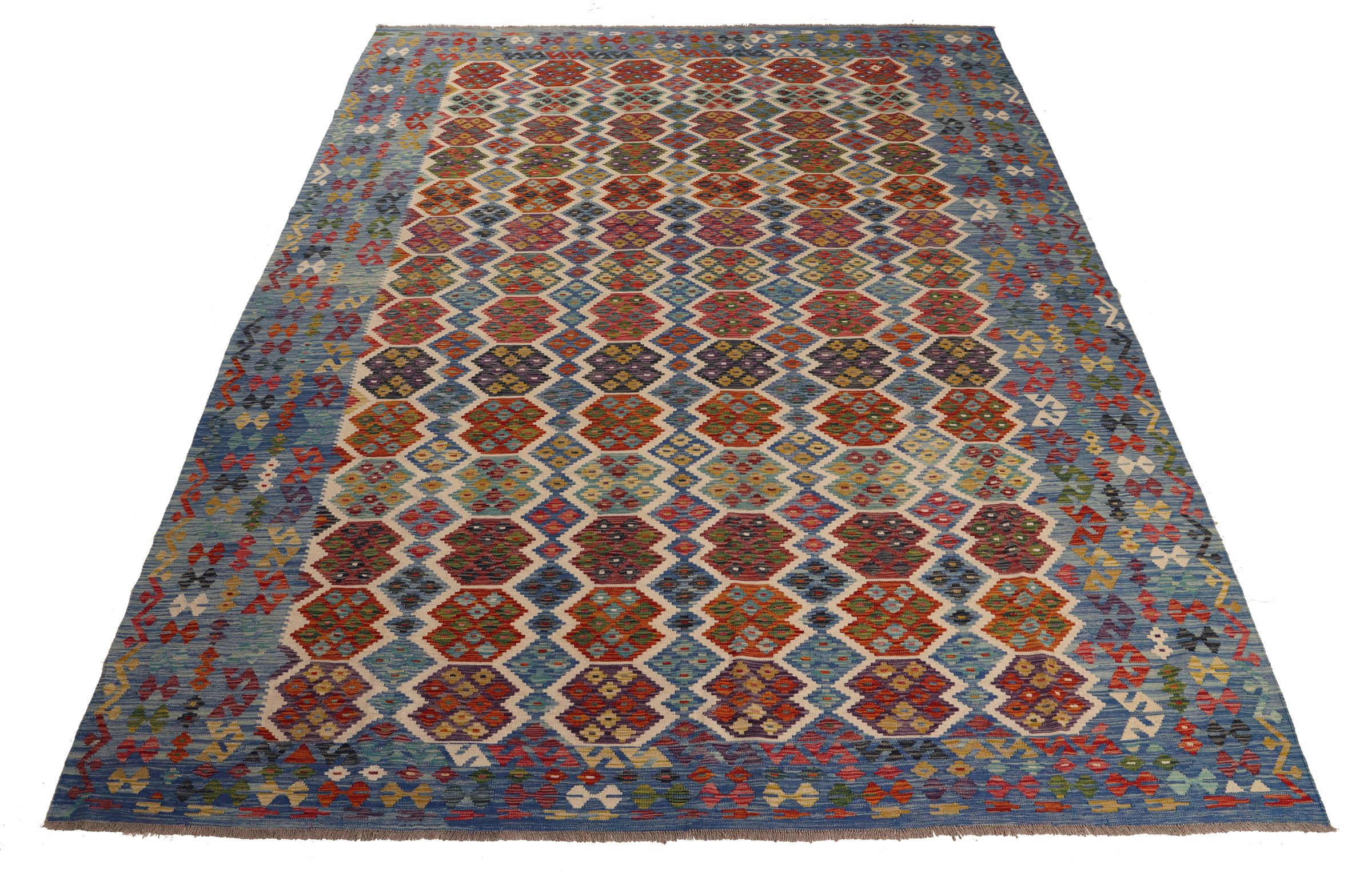
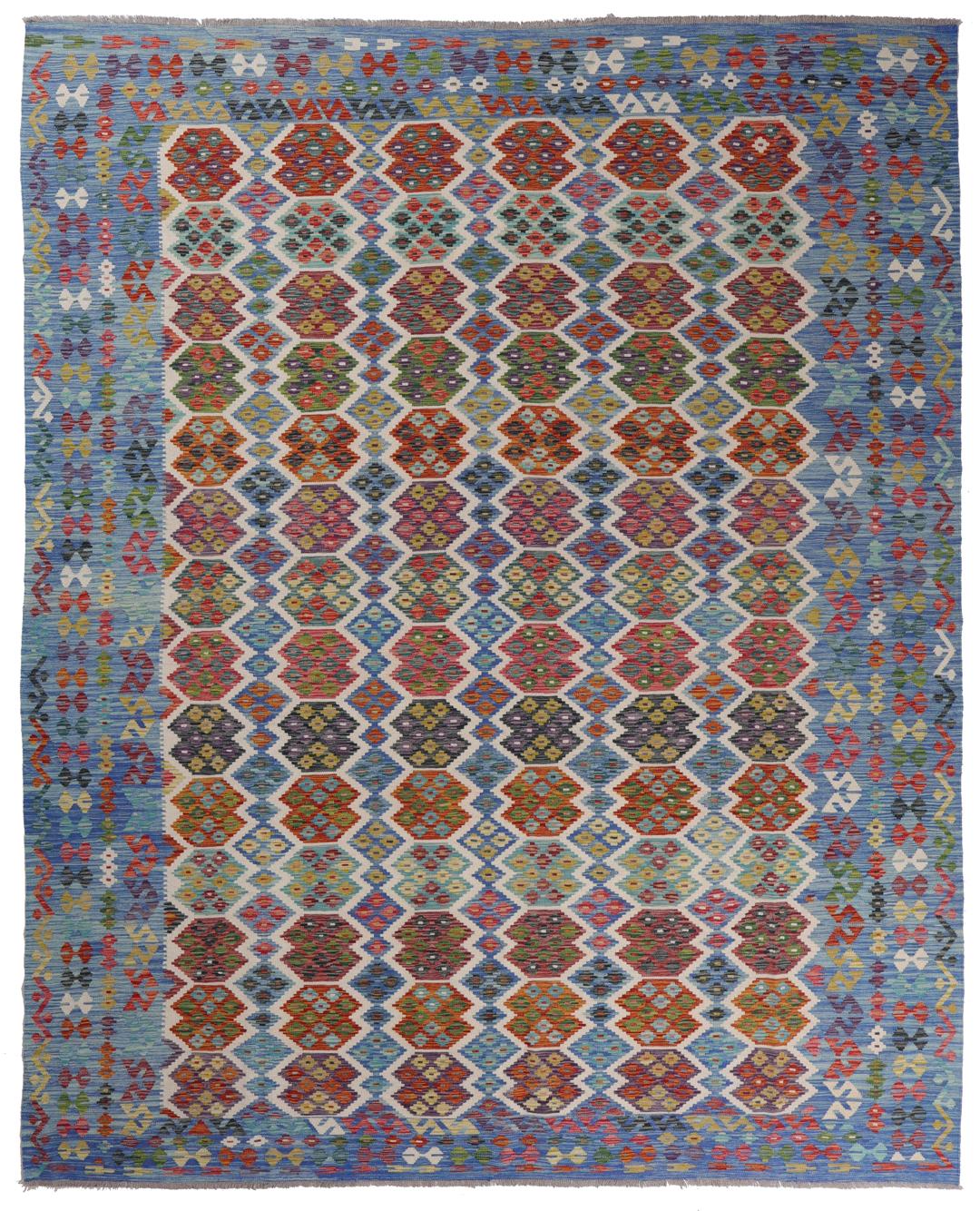
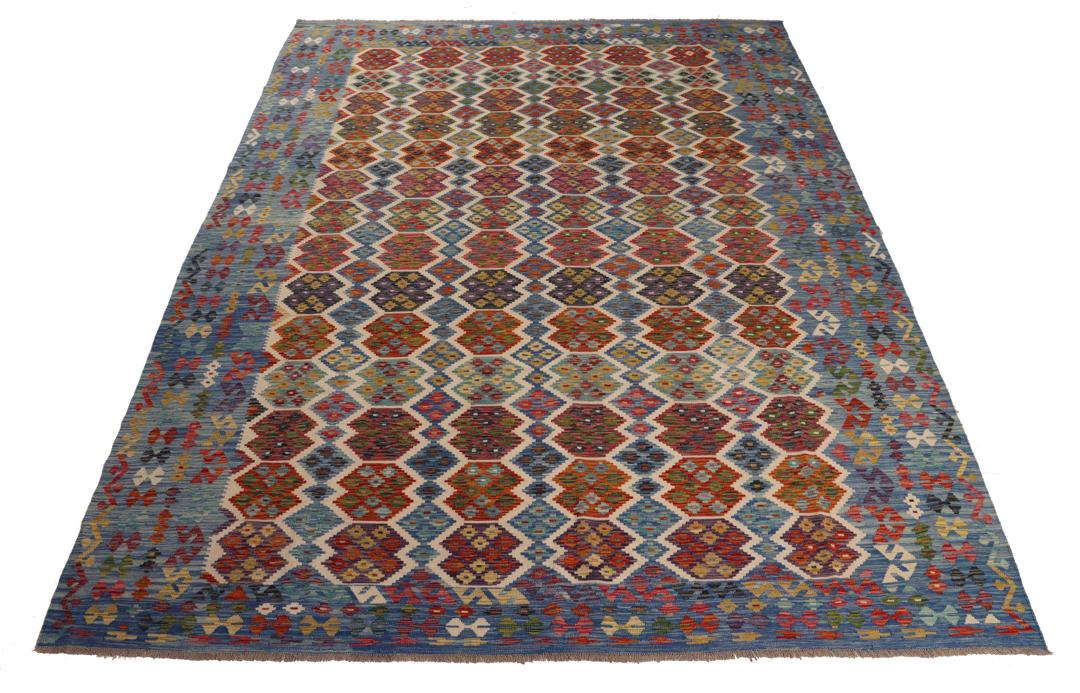
Kelim rugs, or kilims, are a storied tradition in Middle Eastern textile art, celebrated for their flat-weave technique and bold, graphic designs. Originating from the nomadic and semi-nomadic tribes of the region, these rugs served as functional necessities, used as floor coverings, blankets, and storage bags. Over time, they have evolved from purely utilitarian items into highly sought-after decorative pieces that carry the legacy of their tribal origins.
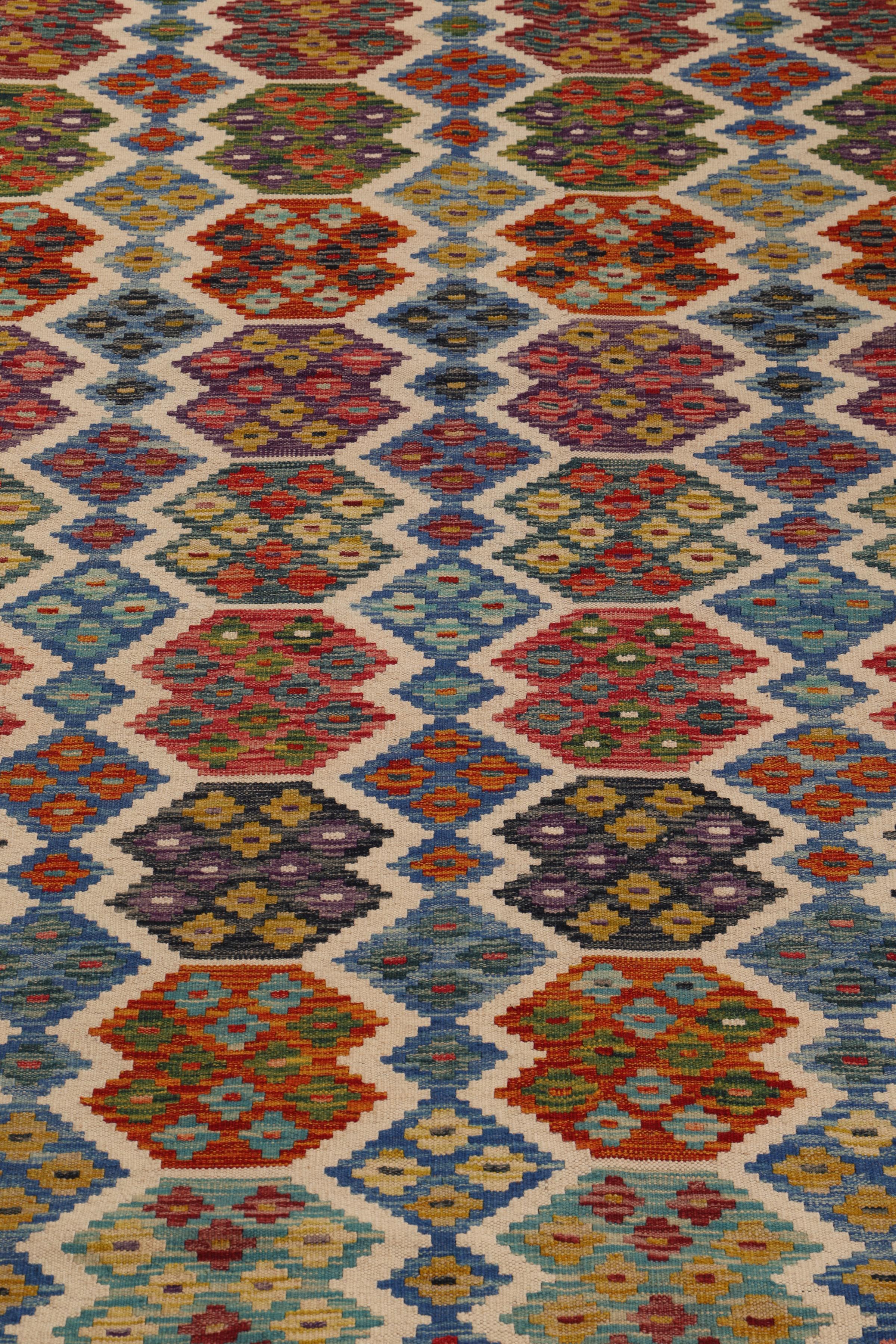
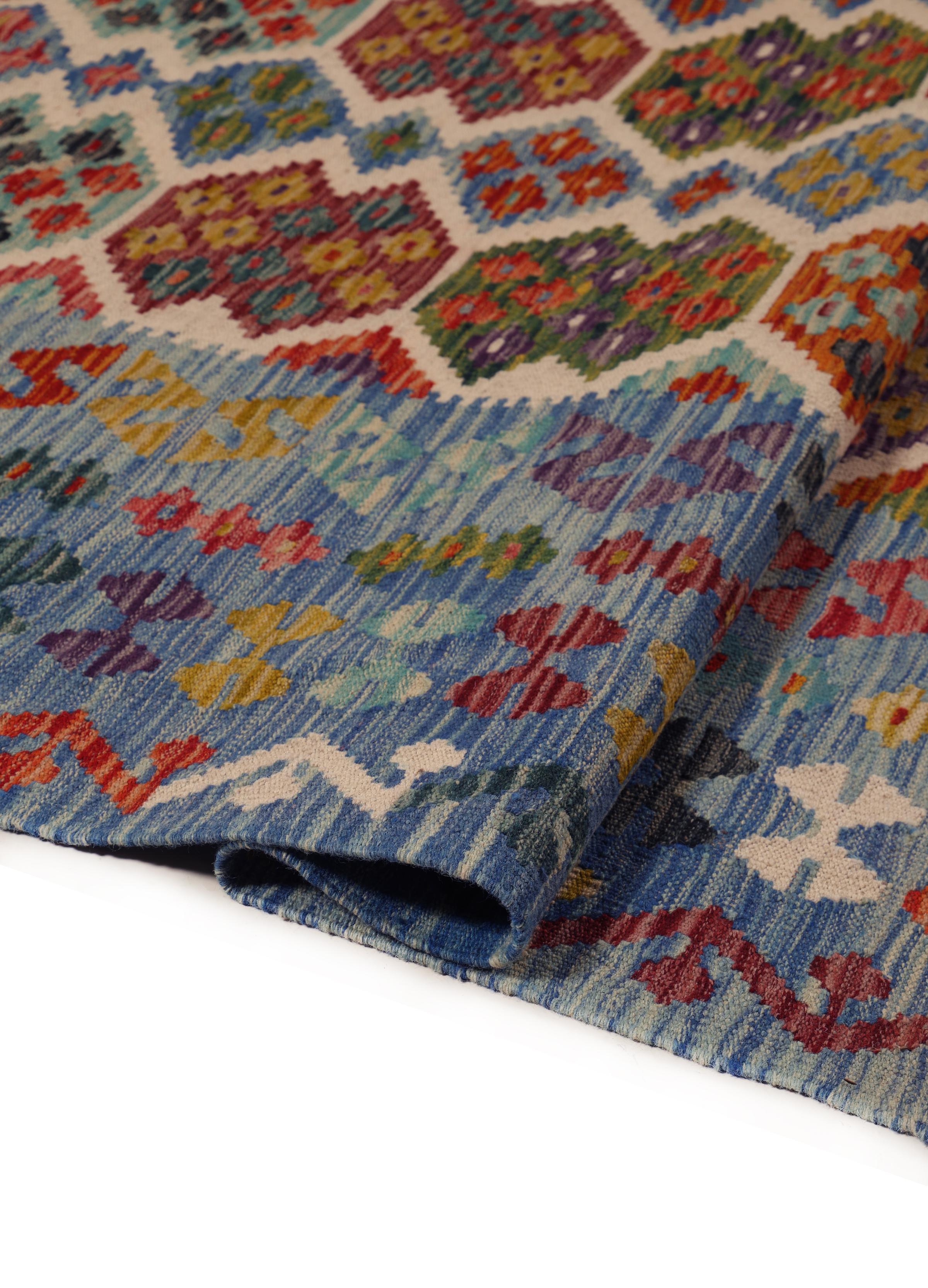
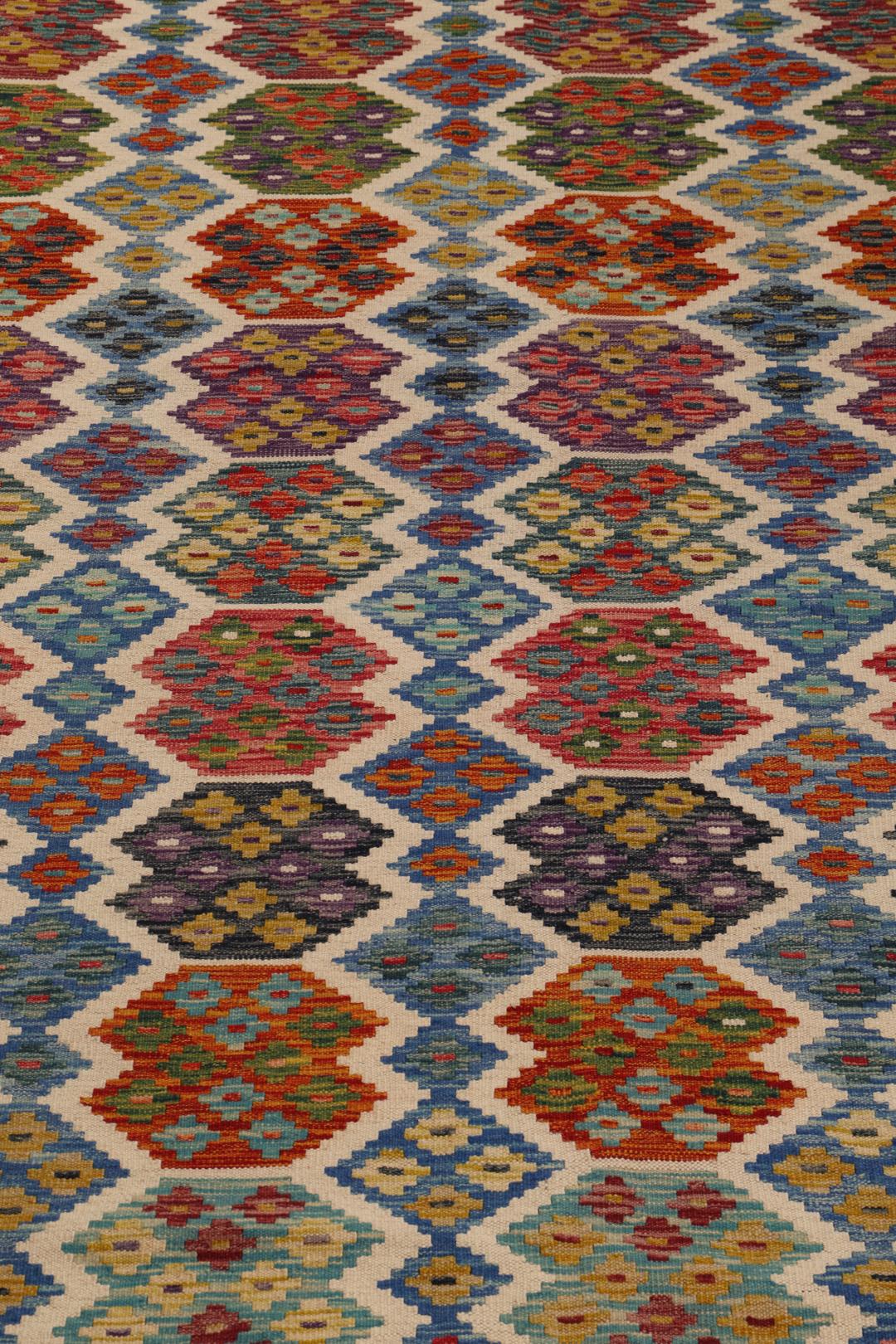
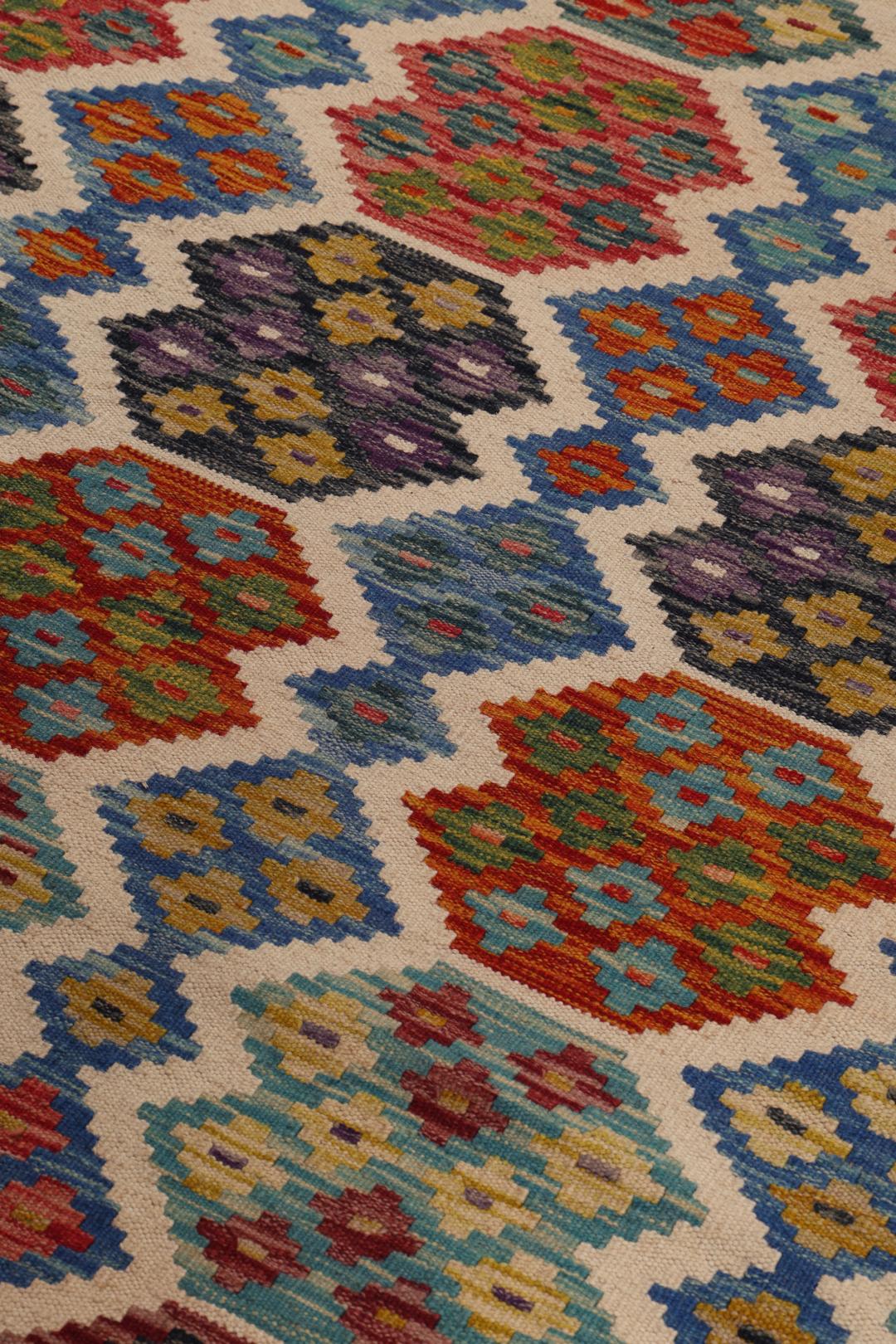
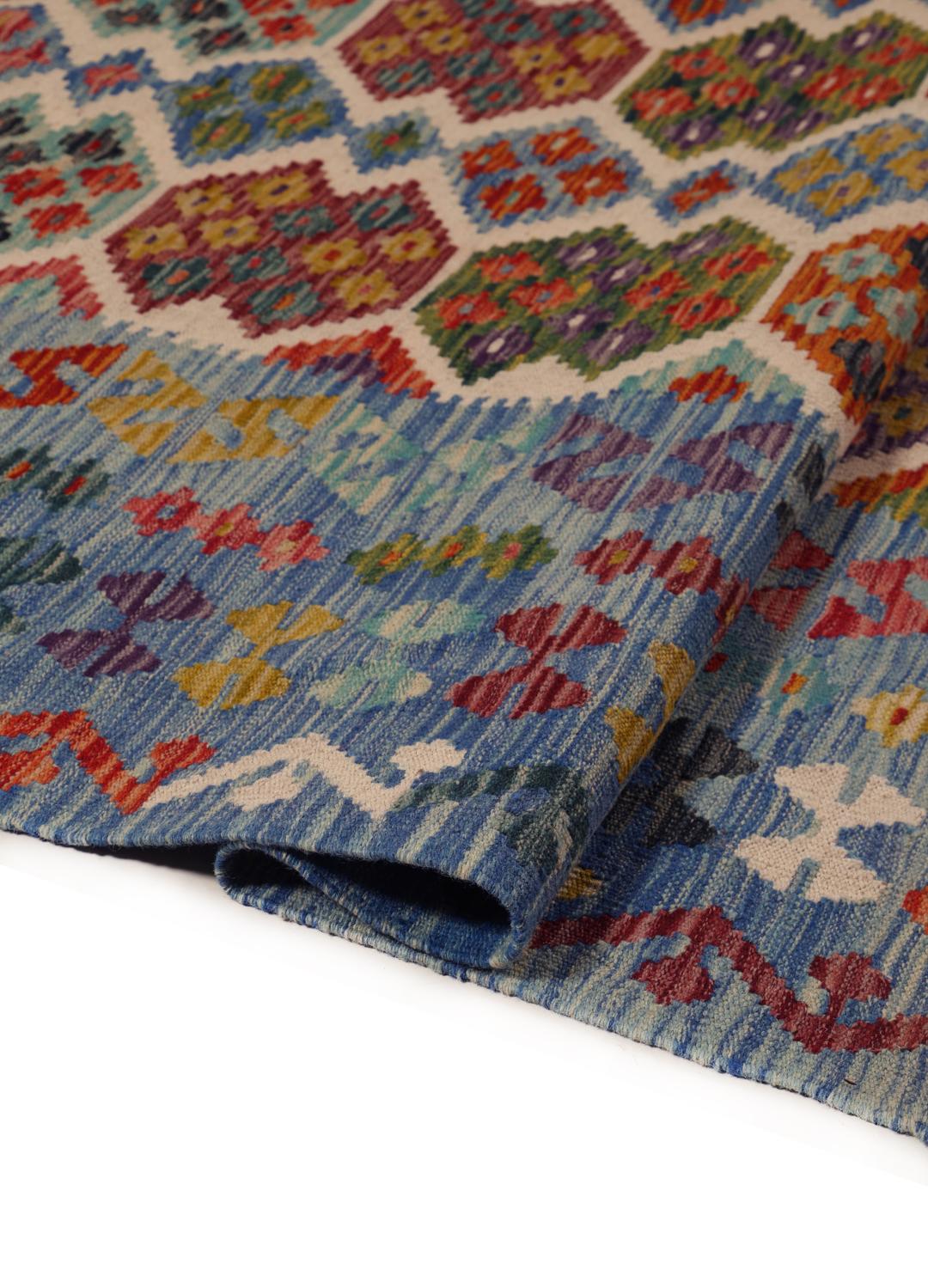
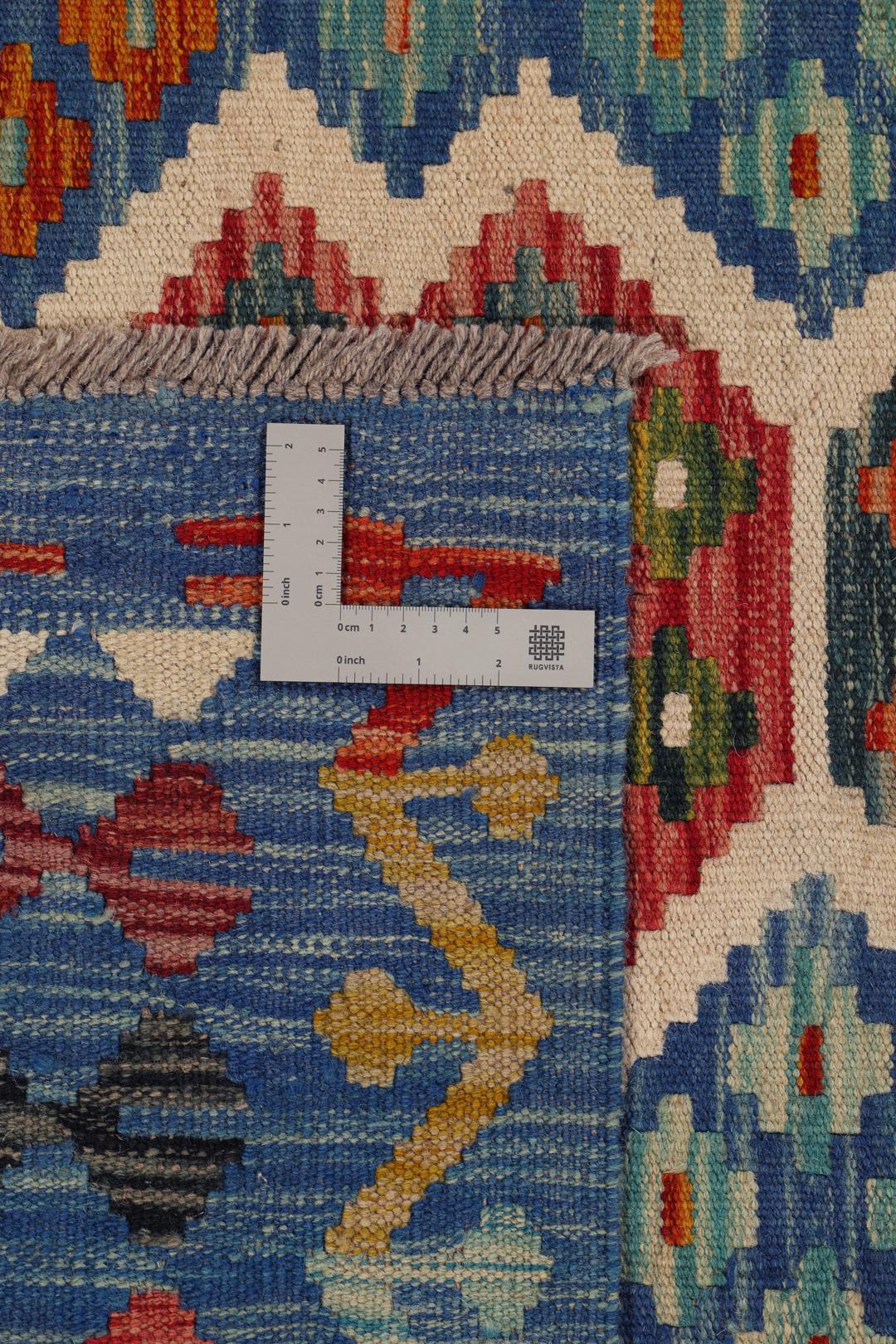
The term 'Kelim' refers specifically to the tapestry-weave method, where the weft strands are pulled tightly over the warp to create a smooth surface without a pile. This technical approach allows for the sharp, geometric clarity that defines the style. Unlike knotted rugs, the design in a Kelim is created by the interweaving of different coloured threads, resulting in a rug that is identical on both sides and exceptionally portable, a trait essential to the nomadic lifestyle that birthed these creations.
Signature design elements of the Afghan Kelim include repeating diamond-shaped medallions, serrated edges, and vibrant geometric borders. These motifs are not merely decorative but often hold deep cultural significance, representing protection, fertility, or the natural world. This particular piece showcases a rich, multicolour palette that reflects the traditional dyes and aesthetic preferences of its region, providing a visual depth that is both complex and harmonious.
Today, these rugs are valued by collectors and enthusiasts for their authentic connection to a centuries-old craft. Owning a Kelim is a way to honour the skill of the weavers who continue to uphold these ancient traditions. It is a testament to the enduring appeal of handmade textiles, offering a blend of historical narrative and structural integrity that brings lasting value to any home.