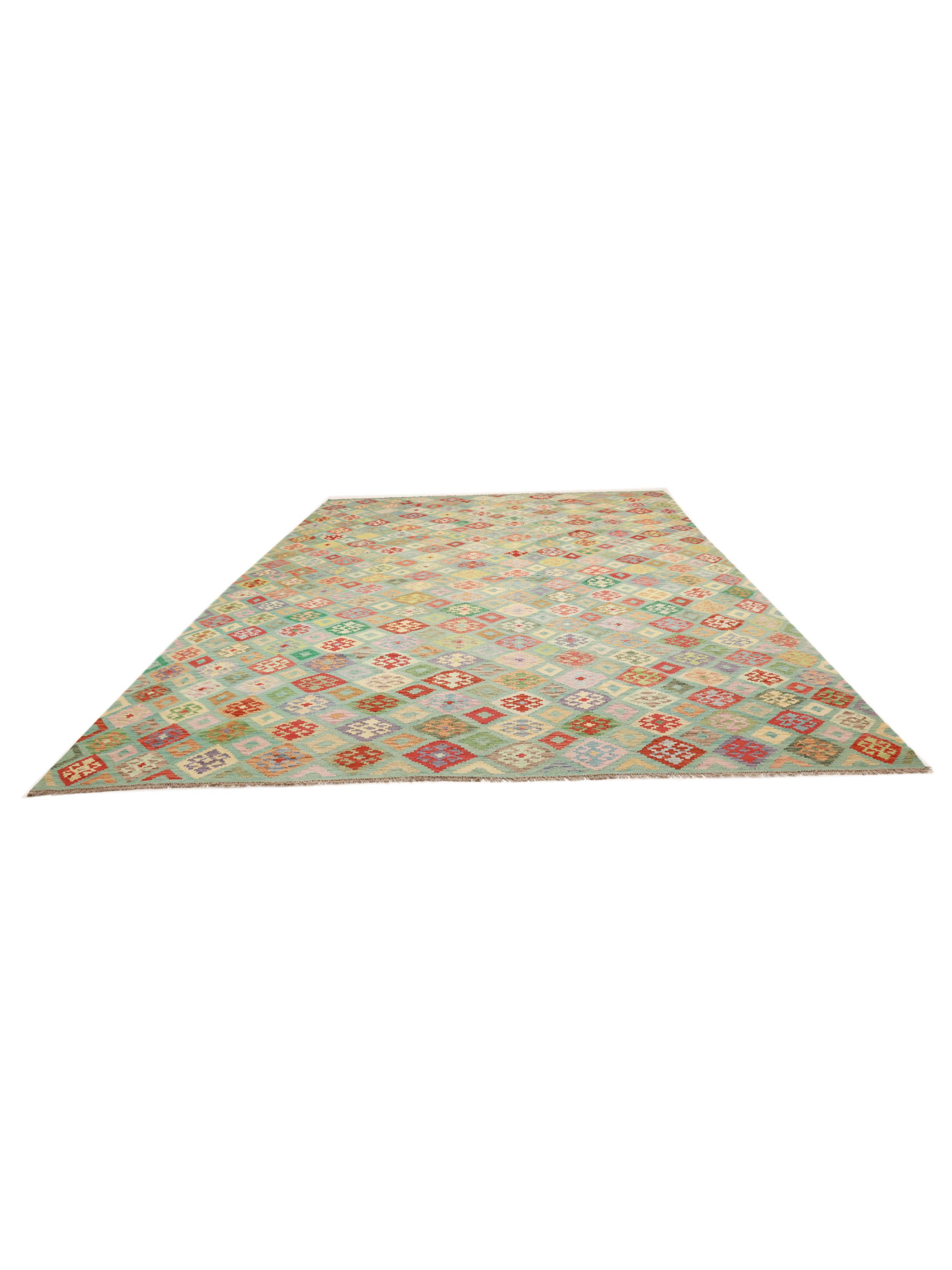
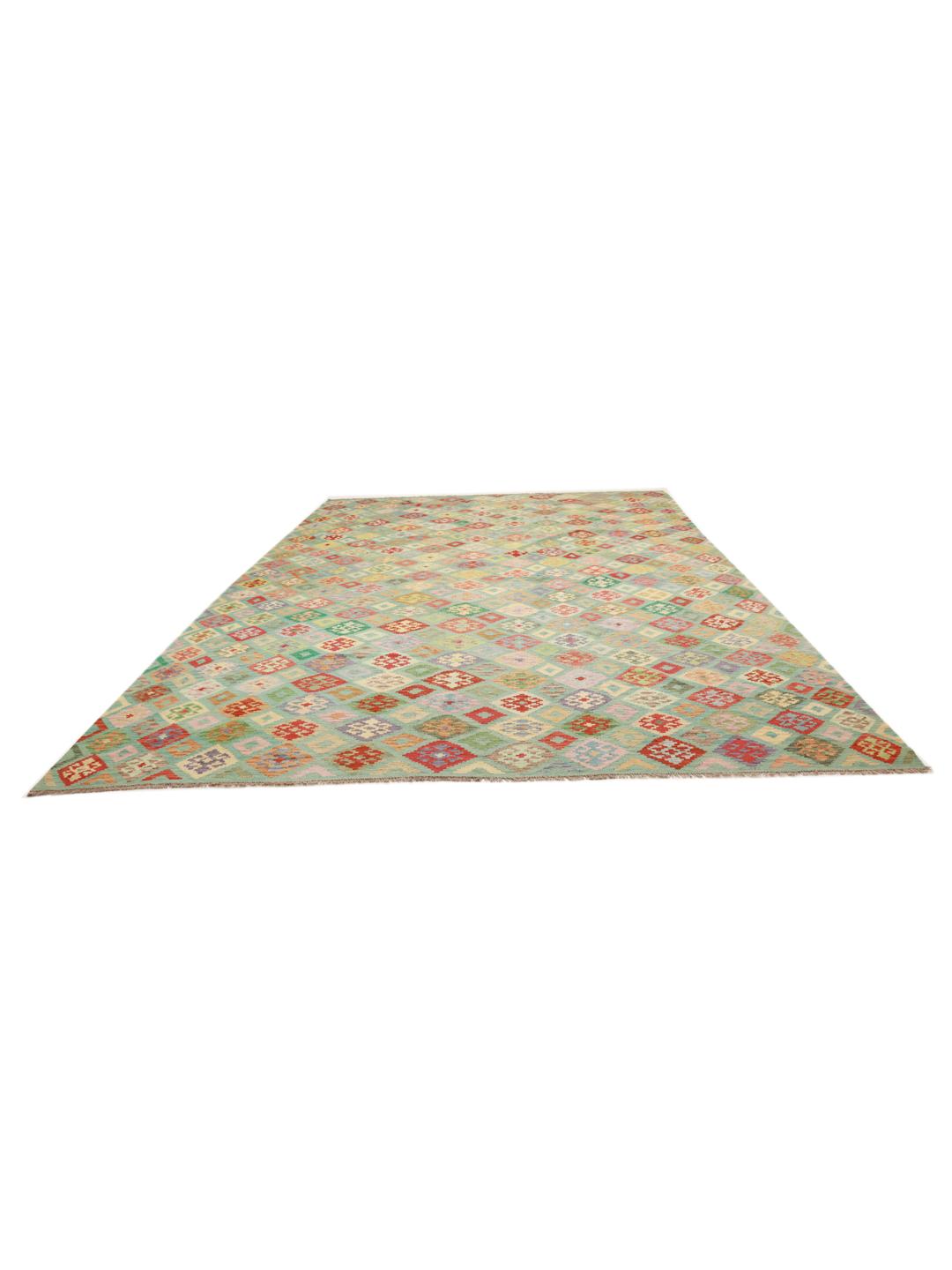
The Afghan Kelim is a celebrated tradition rooted in the nomadic lifestyle of the Middle East. These rugs were historically created by tribal groups to serve as practical, portable, and durable floor coverings, beddings, or wall hangings. Over generations, the craft has evolved while maintaining its connection to the rugged, high-altitude regions of Afghanistan, where the climate and culture demand textiles that are both functional and deeply expressive.
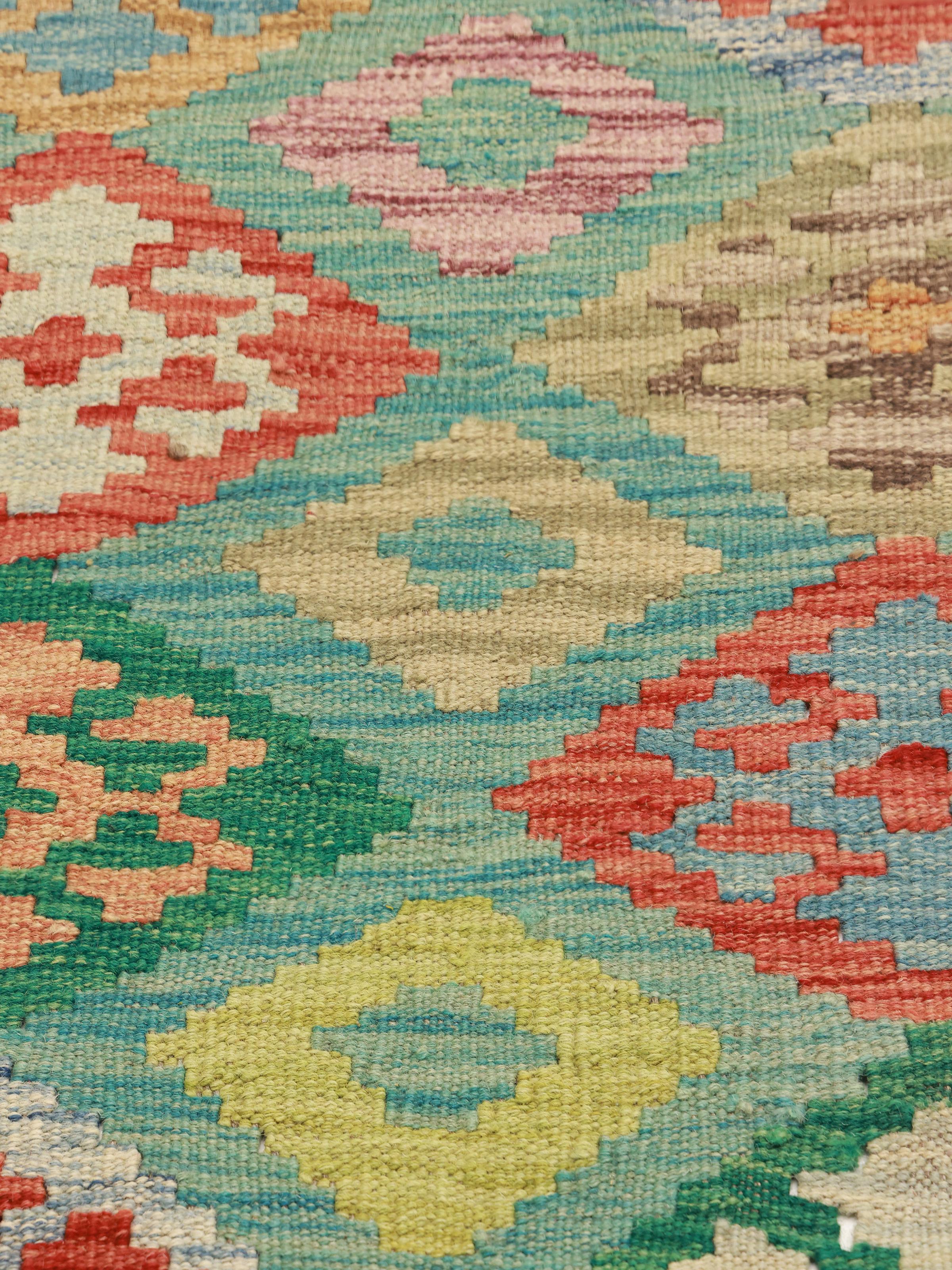
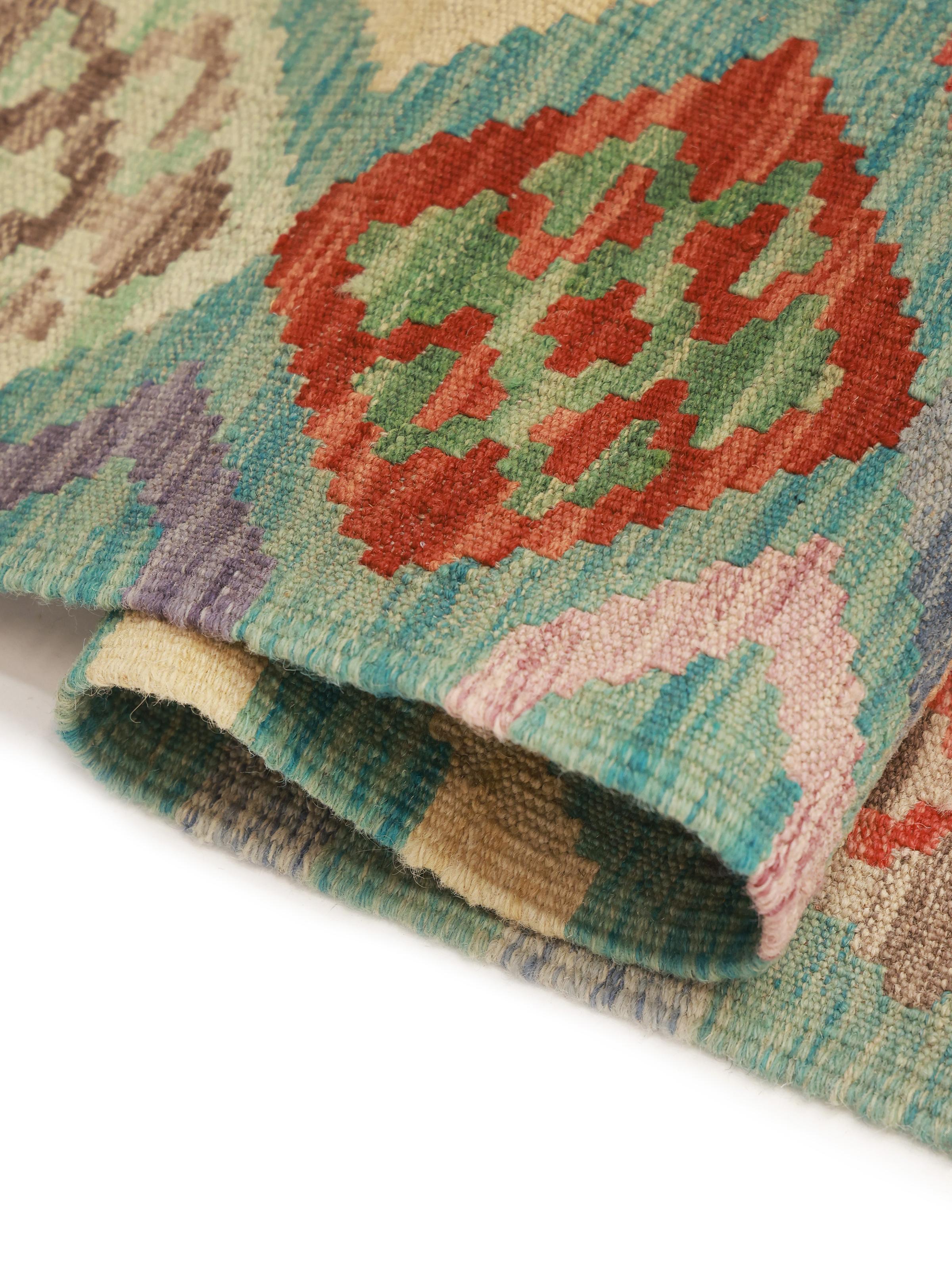
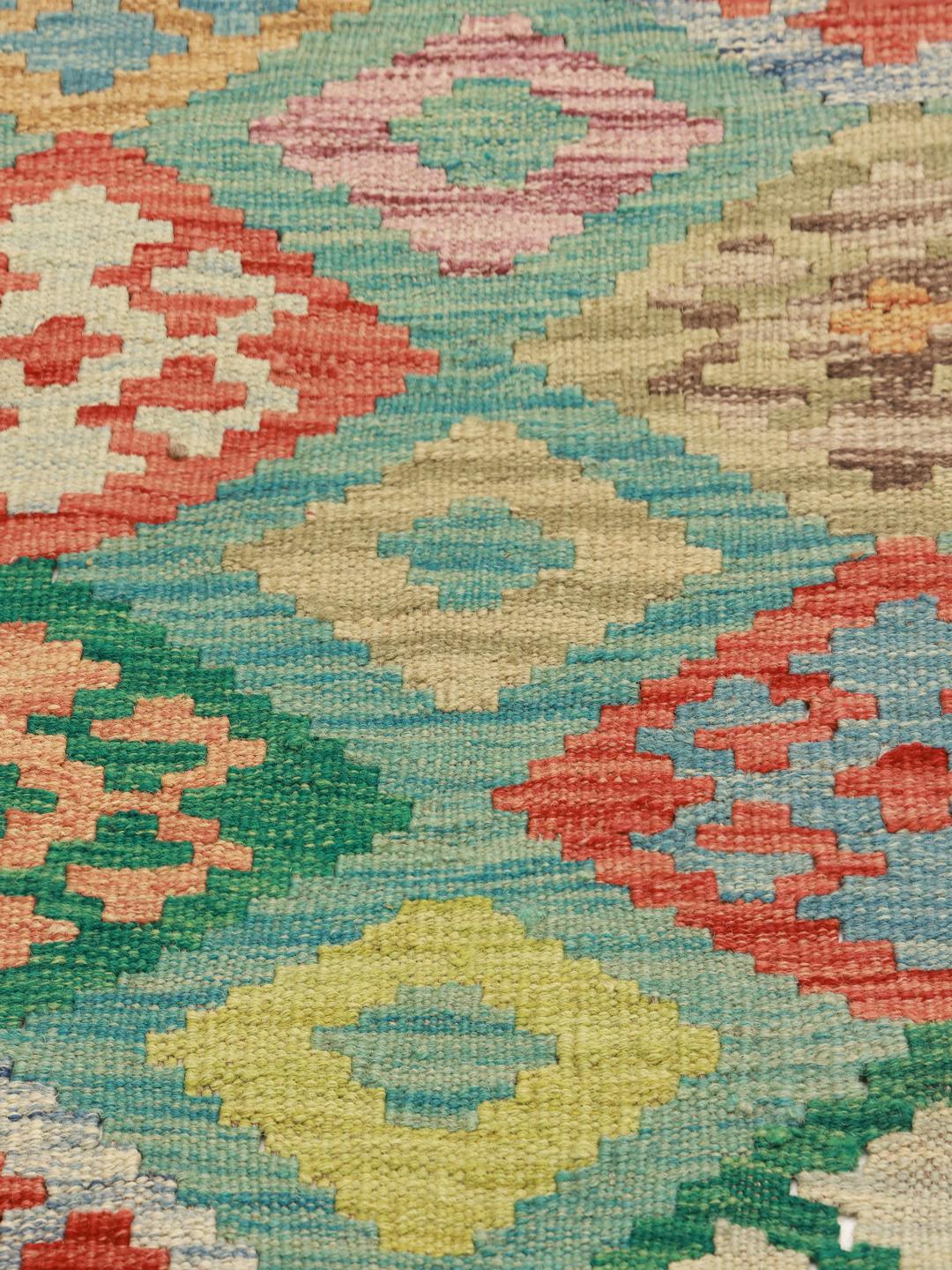
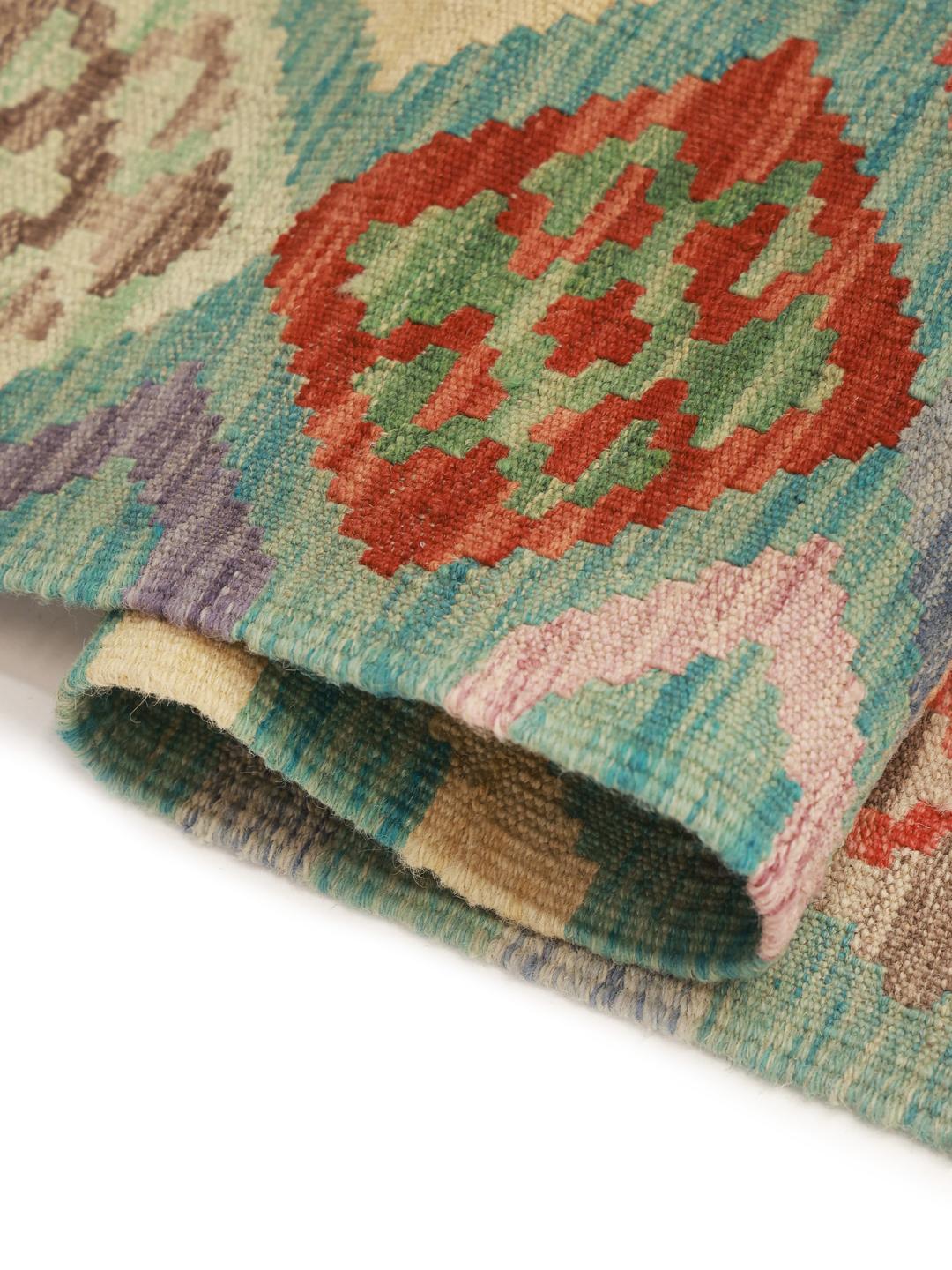
A Kelim is defined by its flat-weave construction, meaning it is created without a pile. This technique is achieved by interweaving the warp and weft threads to form the pattern, resulting in a reversible, lightweight, yet incredibly strong fabric. The quality of a Kelim is often determined by the tension of the weave and the quality of the wool; a tighter, more consistent weave is a hallmark of a masterfully produced piece that can withstand decades of use.
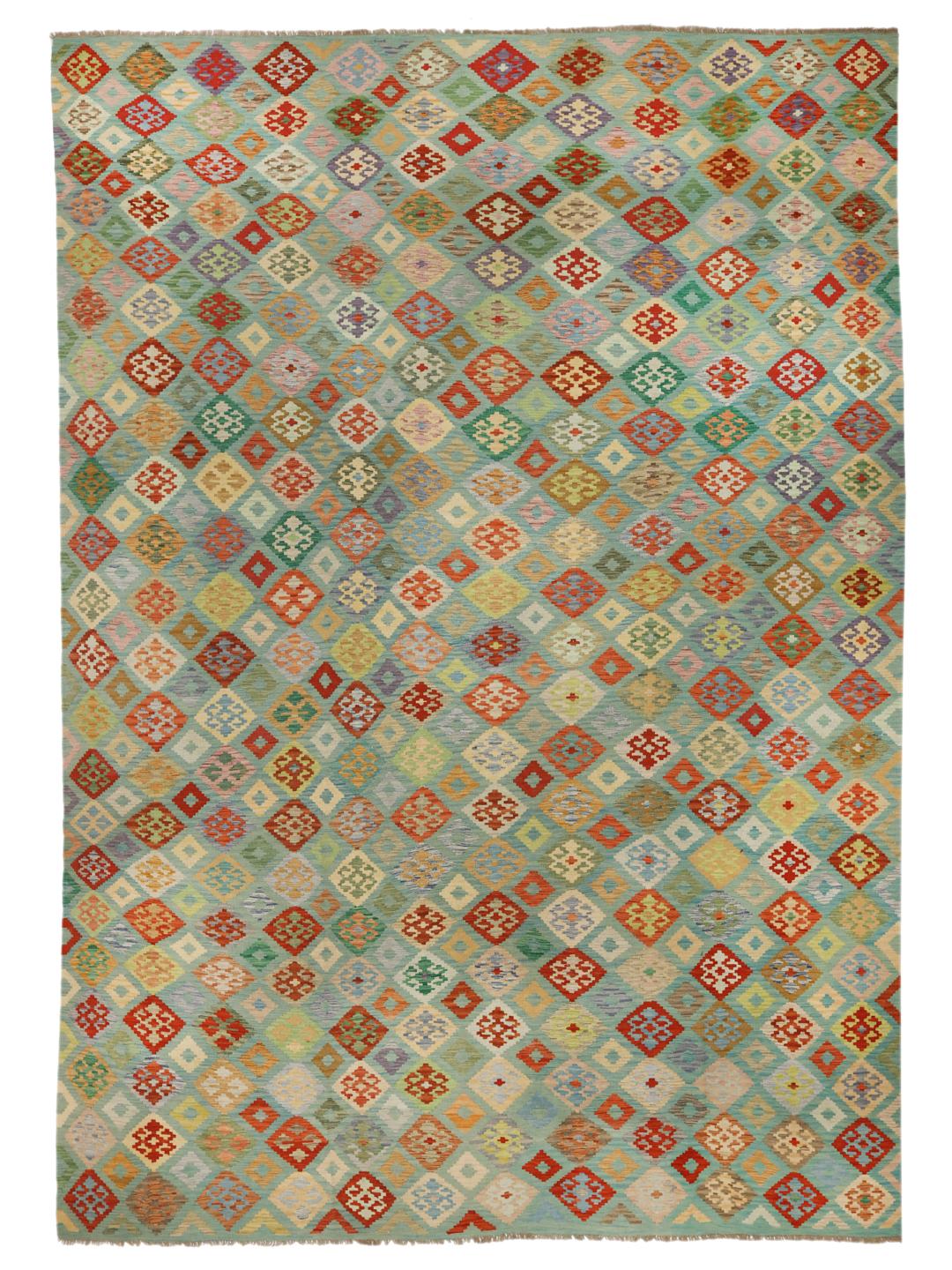
Visually, these rugs are renowned for their geometric language. While designs vary by tribe and region, the use of diamonds, triangles, and stylised floral or animal motifs is common. In this specific piece, the repeating geometric medallions showcase a complex use of colour, where each shape is carefully outlined to create a harmonious mosaic. Such patterns are not merely decorative but often carry symbolic meanings related to protection, fertility, and the natural world.
Collecting an Afghan Kelim is an investment in cultural heritage. Because they are woven by hand using traditional methods passed down through families, each rug serves as a document of the weaver's personal aesthetic and the broader regional history. Valued for their adaptability and enduring style, these rugs are prized by collectors who appreciate the blend of raw, natural materials and sophisticated, centuries-old design logic.