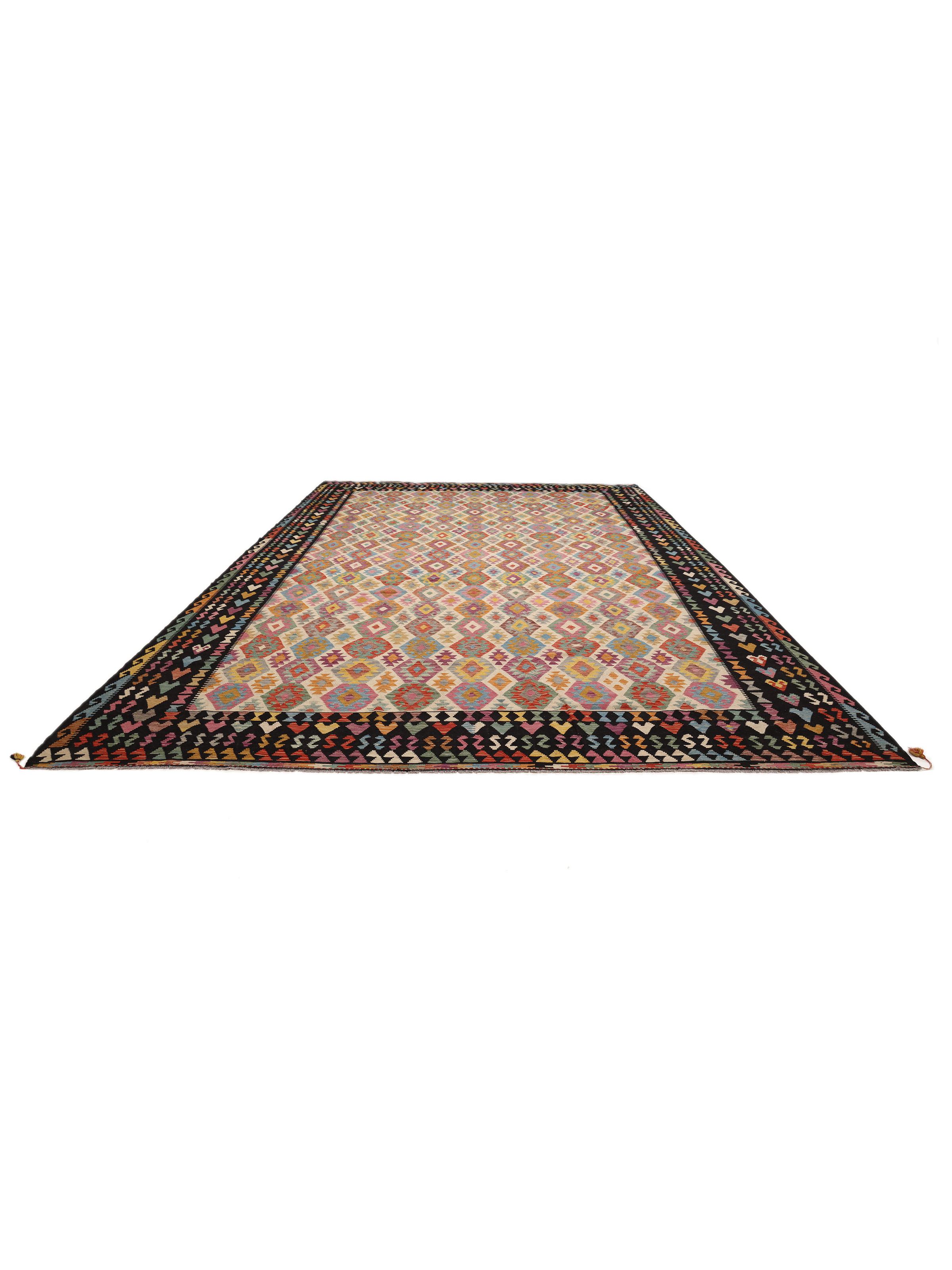
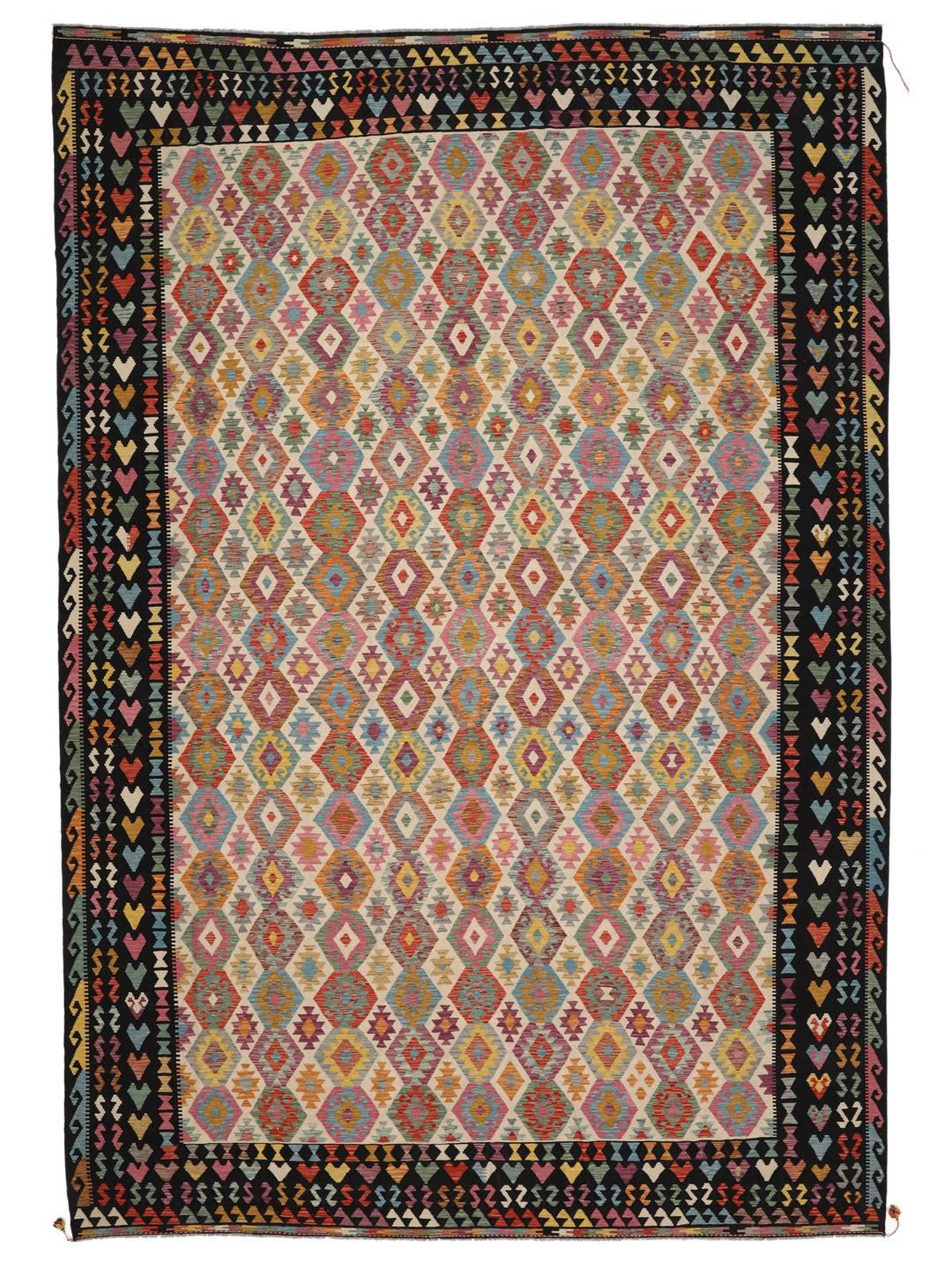
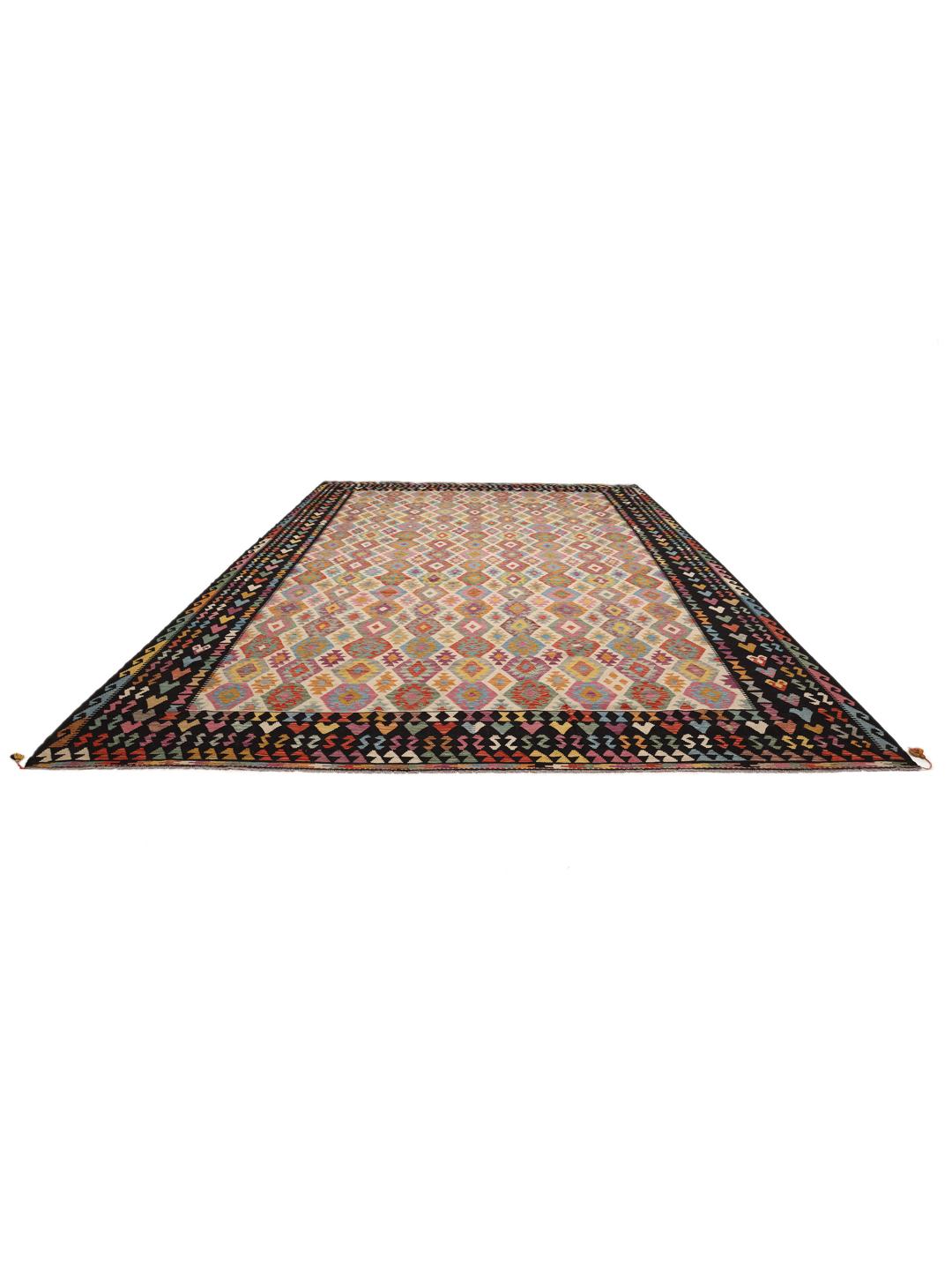
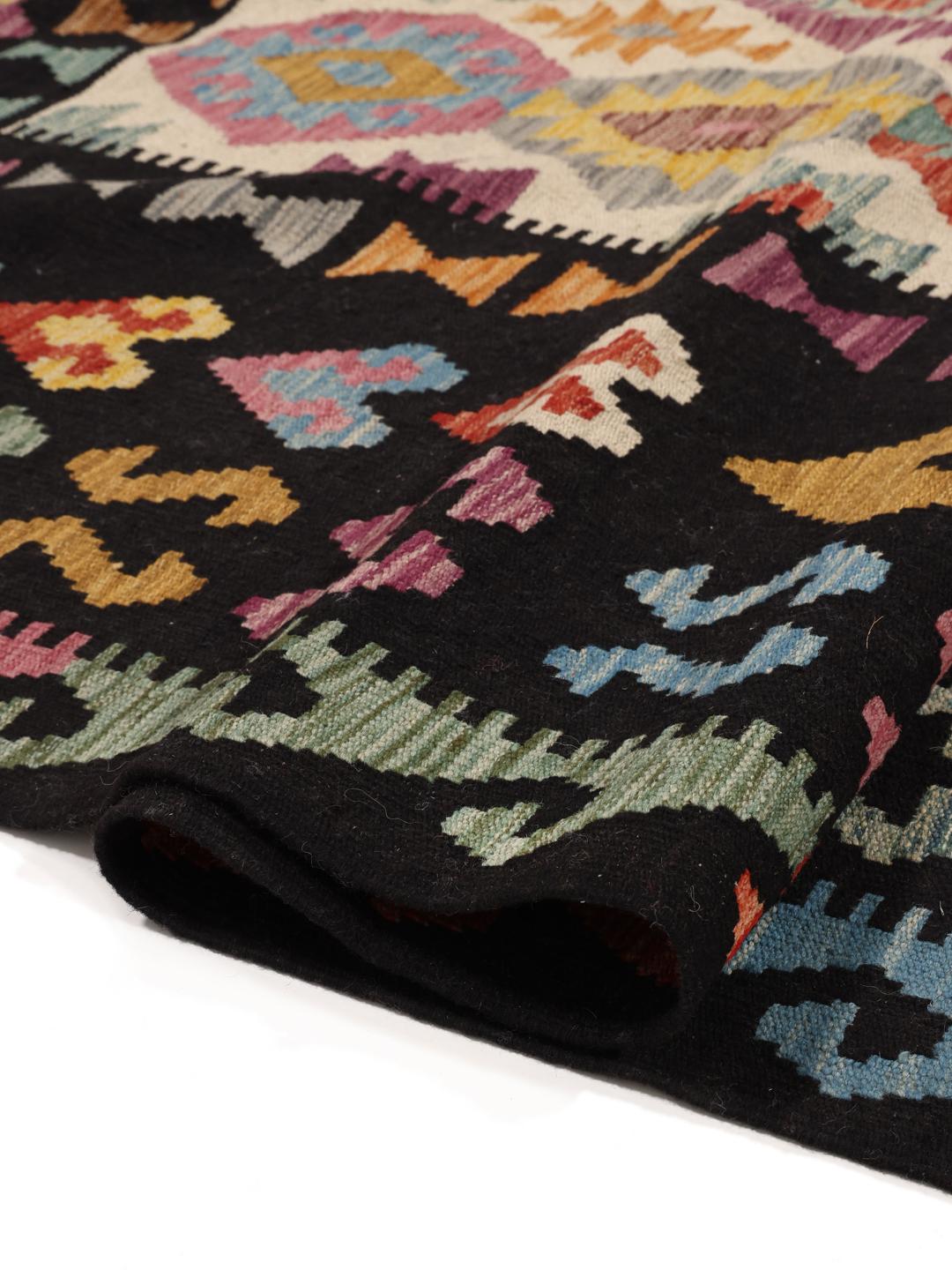
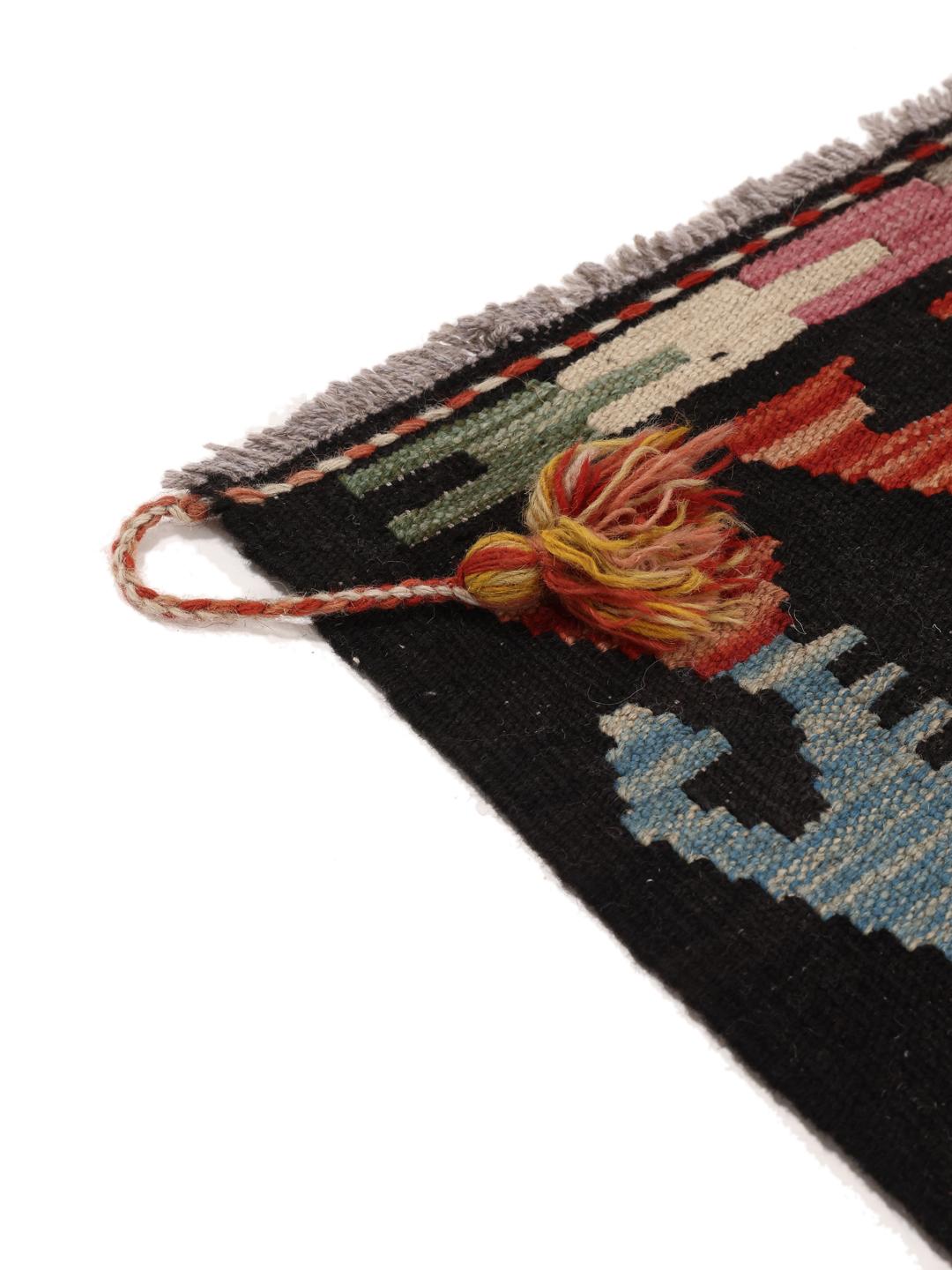
The Kelim tradition in Afghanistan is deeply rooted in the nomadic and semi-nomadic lifestyles of the region's diverse tribal groups. For centuries, these flat-woven rugs have served as essential, portable furnishings in homes and tents, valued for their durability, versatility, and the storytelling woven into their motifs. This particular style honours that heritage, reflecting a craft that has been passed down through generations, evolving from practical household items into highly sought-after decorative pieces.
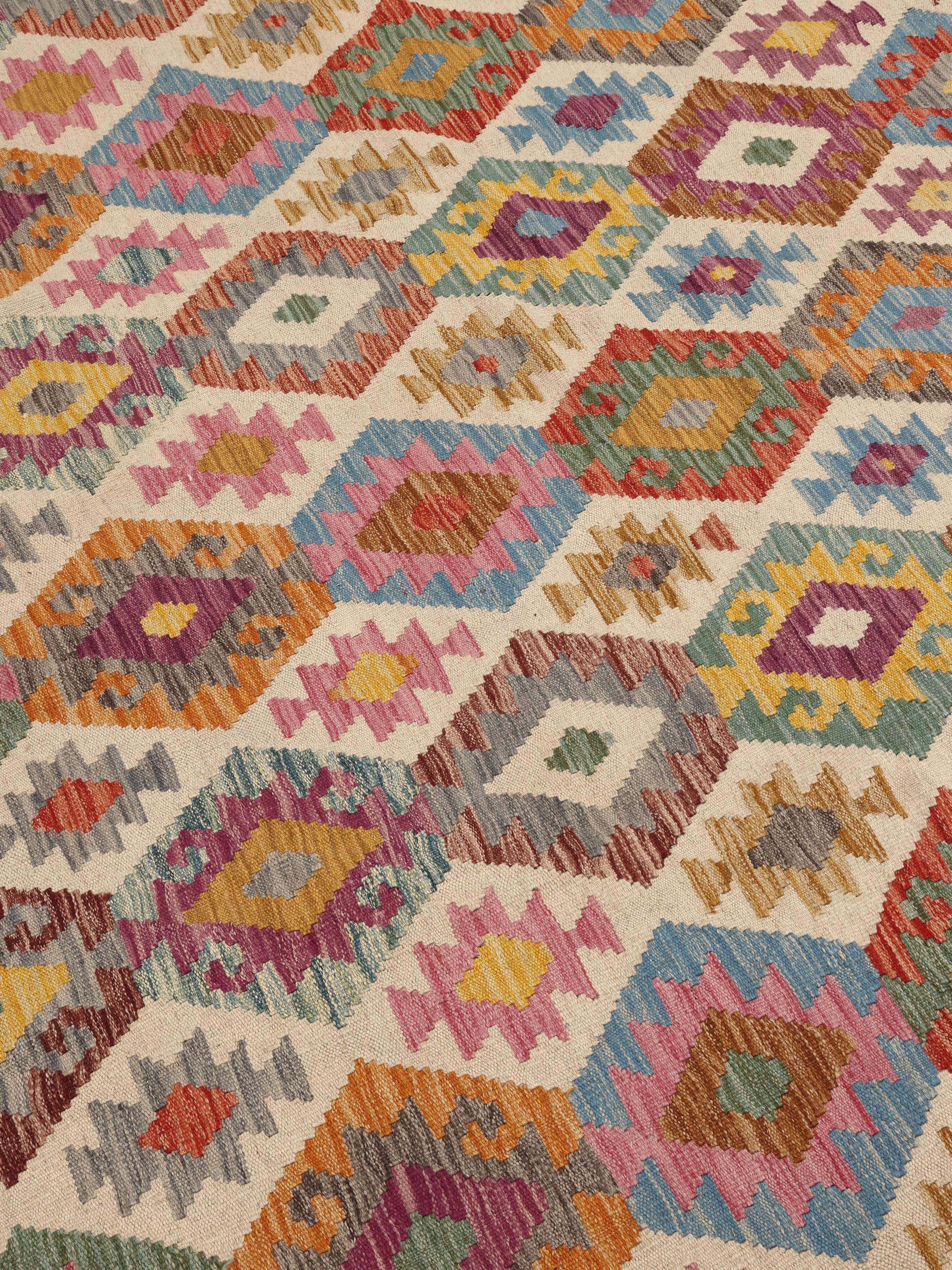
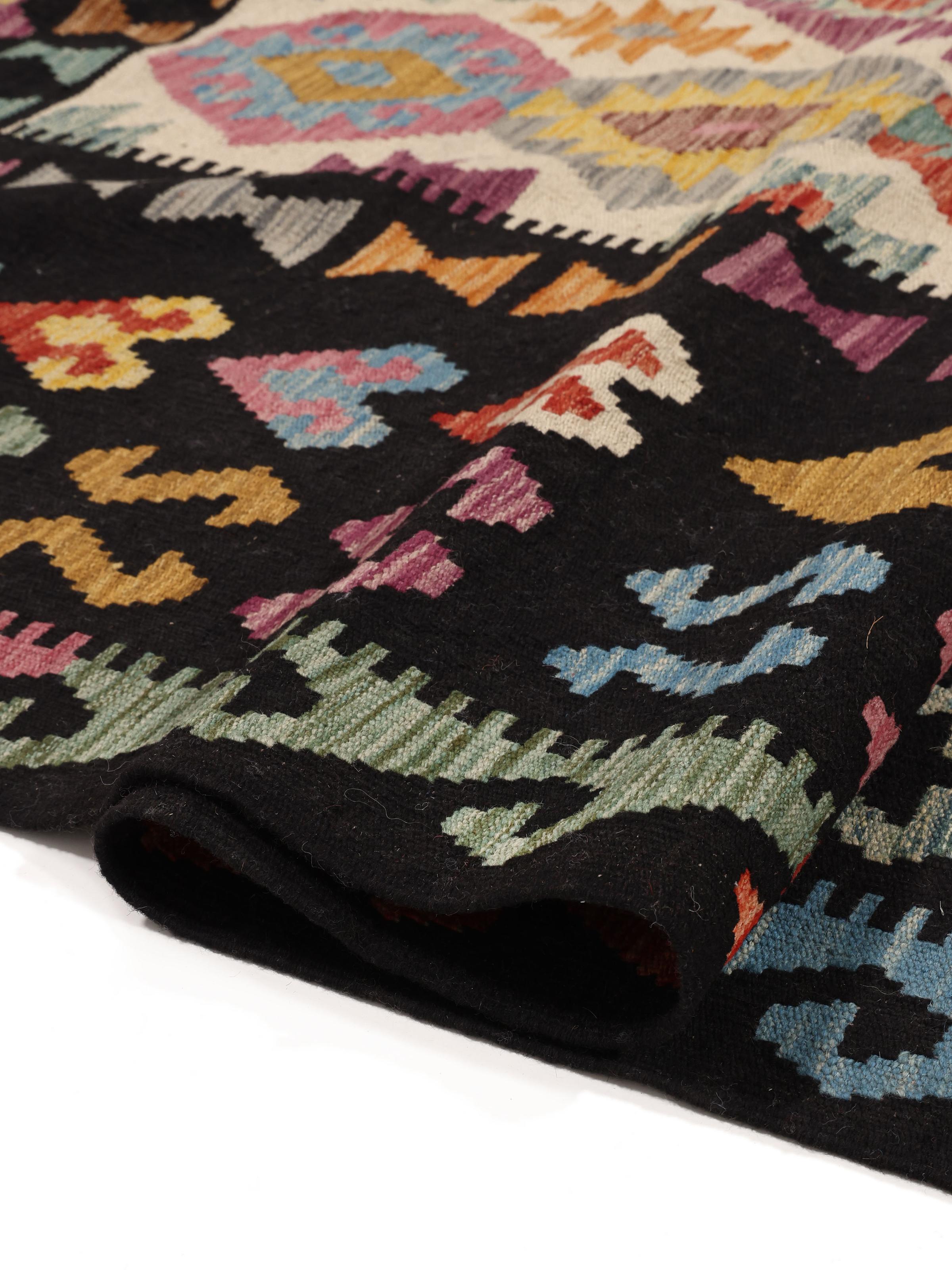
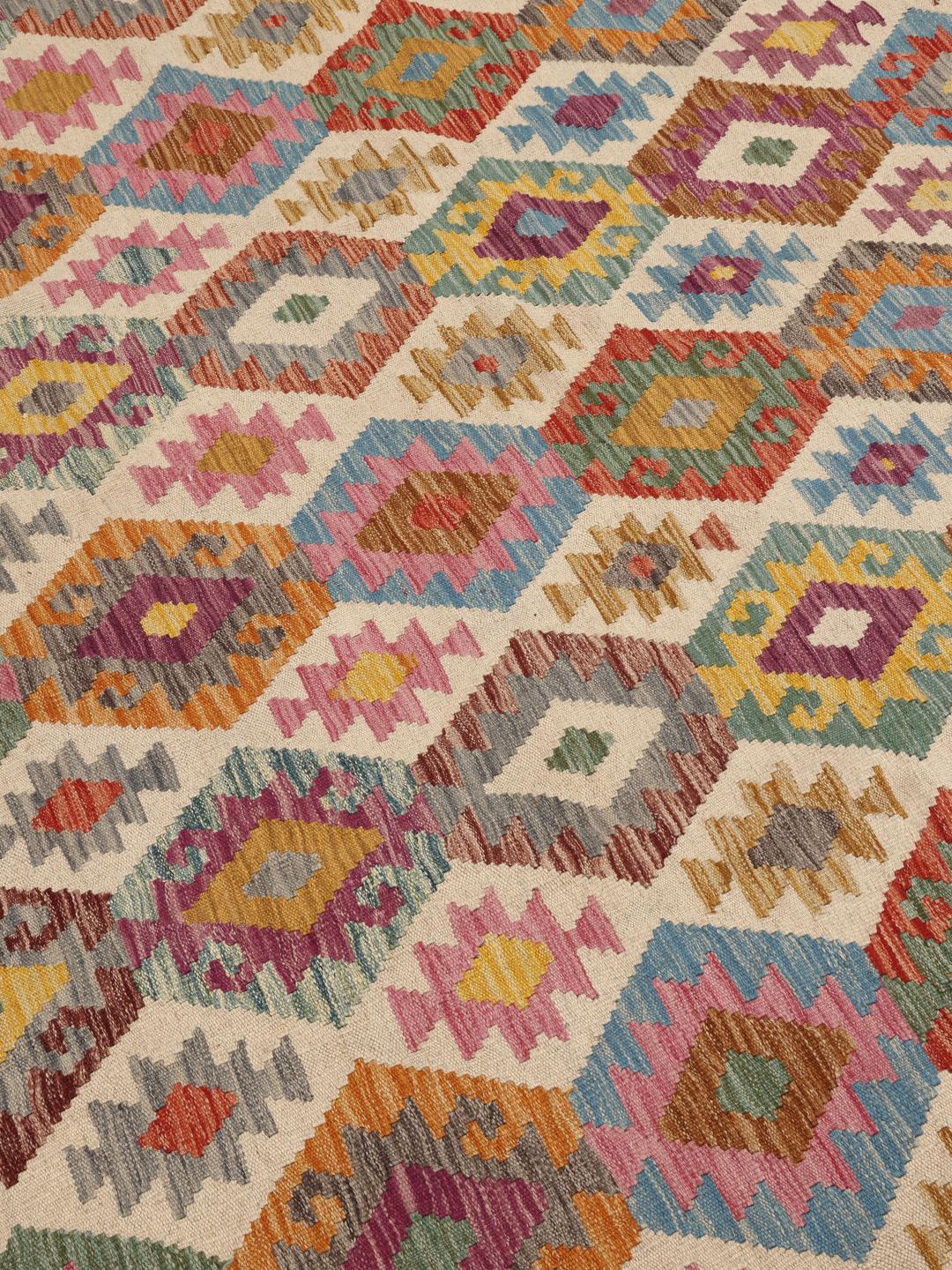
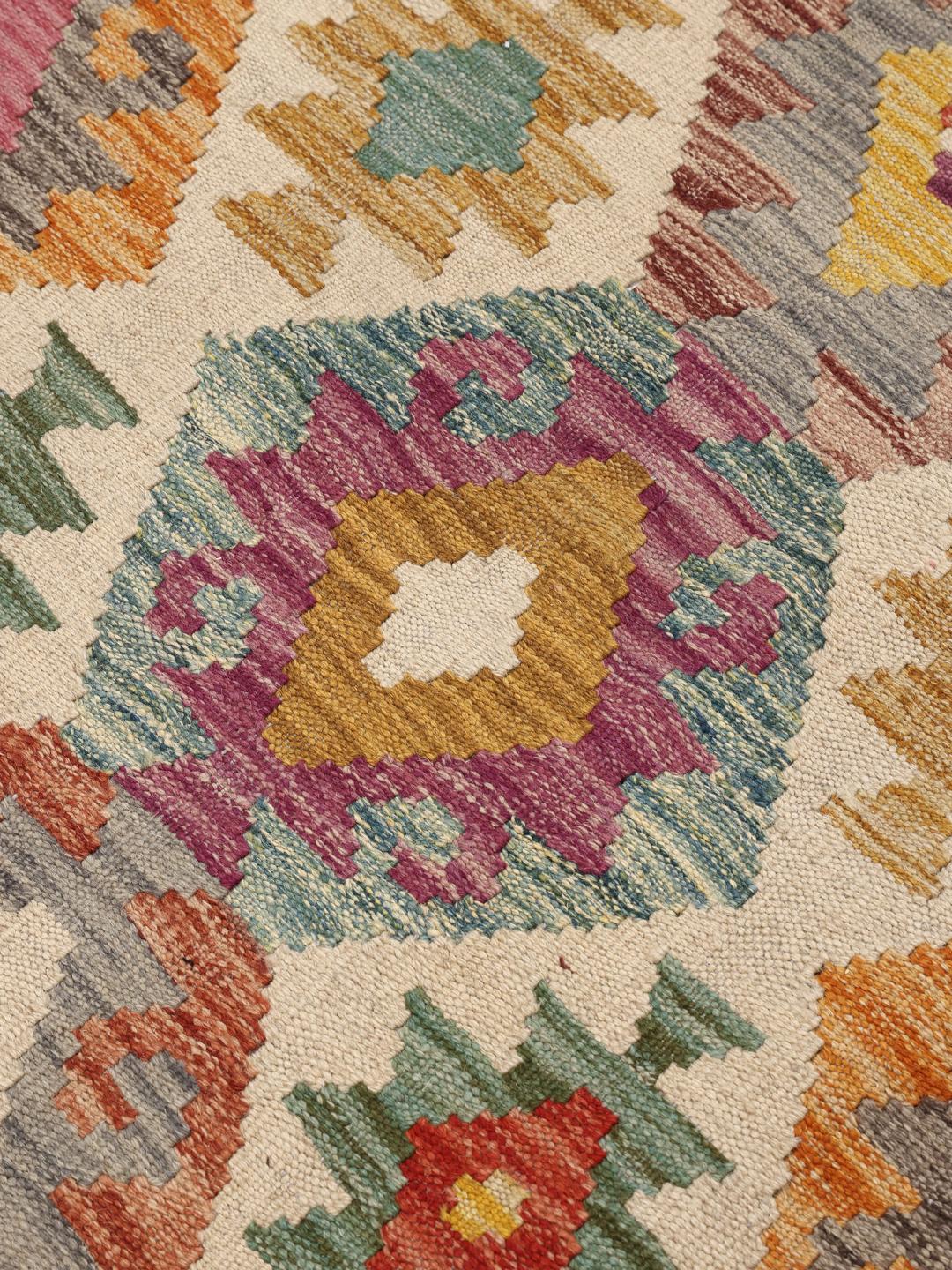
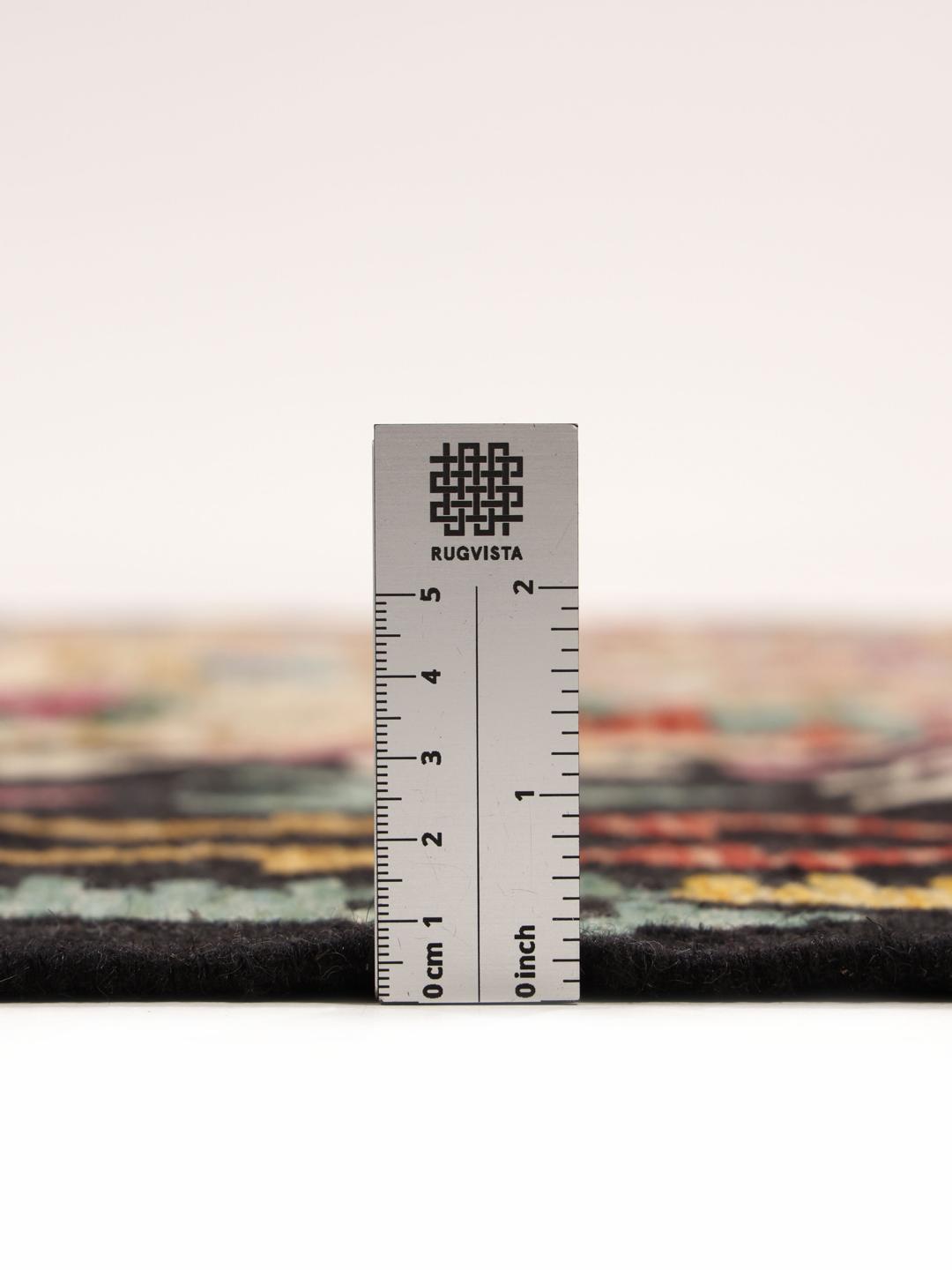
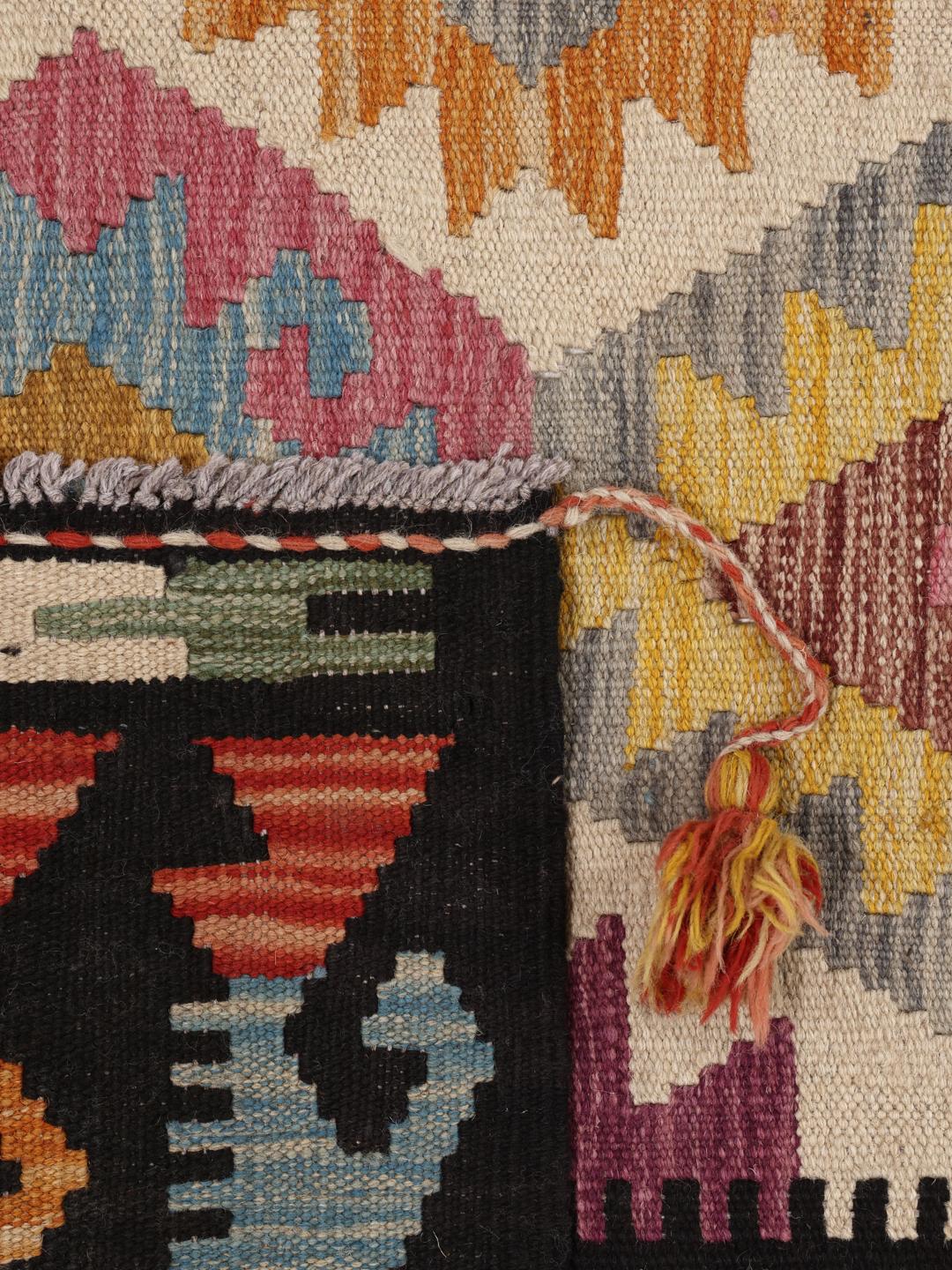
The term Kelim—or Kilim—refers to a specific tapestry-weave technique that eschews a pile, resulting in a thin, lightweight, yet remarkably strong rug. Unlike knotted rugs where individual tufts of wool are tied to a foundation, the Kelim is created by interweaving the coloured weft threads through the warp. This process allows for sharp, clear geometric designs, as the colour changes are determined by the path of the thread, requiring a high level of mathematical precision from the weaver.
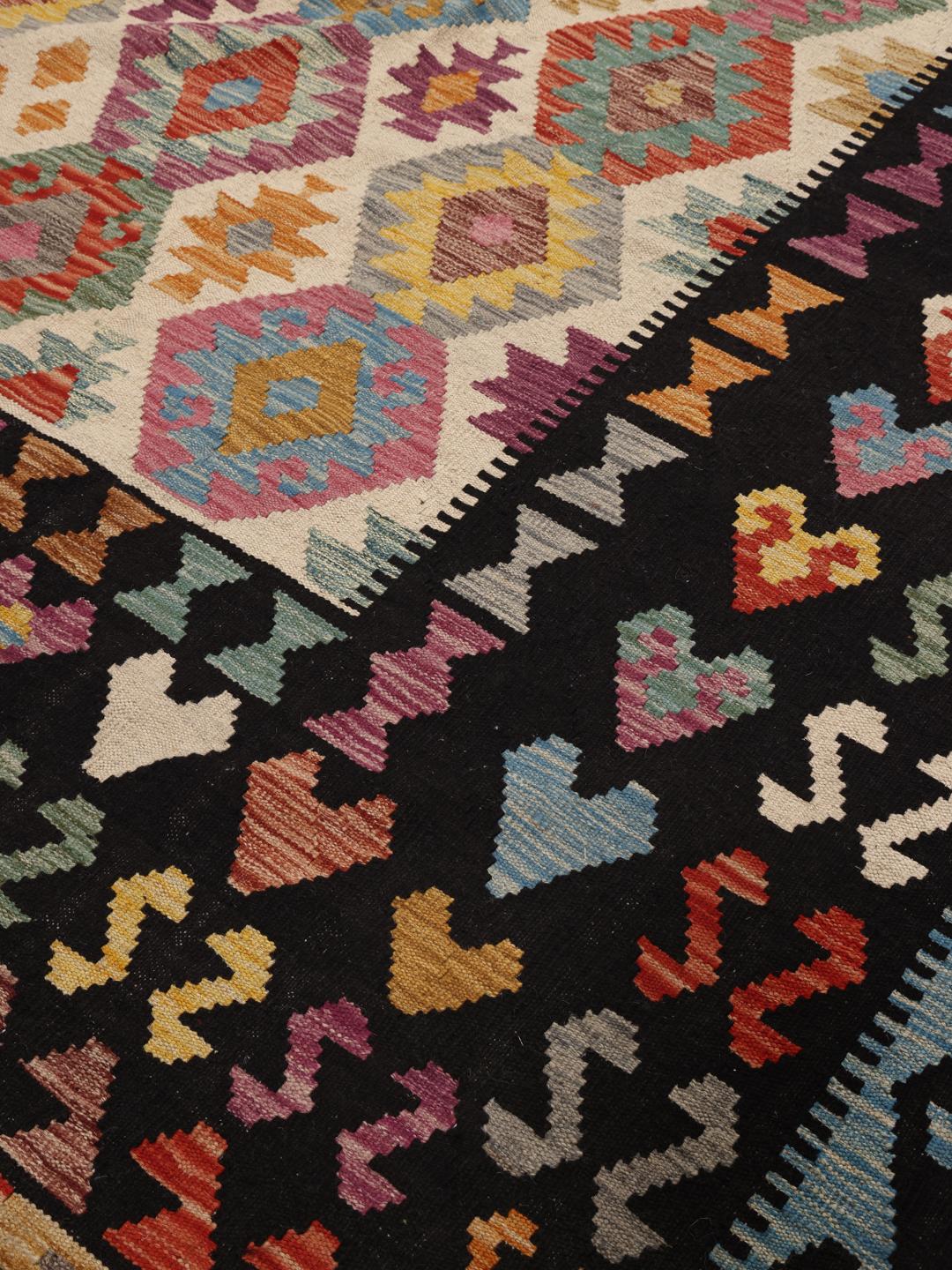
Signature design elements in Afghan Kelims often include bold geometric shapes, most notably diamonds and triangles, which hold symbolic meaning within the weaving communities. These patterns are frequently enclosed by complex, multi-layered borders that provide a sense of structure and completion. The vibrant colour palette seen here is achieved using traditional dyeing methods, which lend a depth and character to the wool that synthetic dyes cannot replicate.
Collecting a Kelim from this tradition is an investment in human skill and cultural continuity. Each piece represents the unique interpretation of the weaver, making every rug a historical document of its time and place. By choosing such a piece, you are supporting the preservation of a craft that celebrates human effort over mechanical automation, ensuring these ancient traditions continue to thrive in the modern world.