Kelim rugs have a storied past that traces back to the nomadic tribes of the Middle East and Central Asia. Originally designed as functional, portable floor coverings and blankets for migratory life, these flat-woven textiles were essential for both warmth and decoration in tents and homes. Over centuries, these traditions evolved into the sophisticated craft we see today, with Afghan weavers becoming particularly renowned for their mastery of colour and complex geometric arrangements.
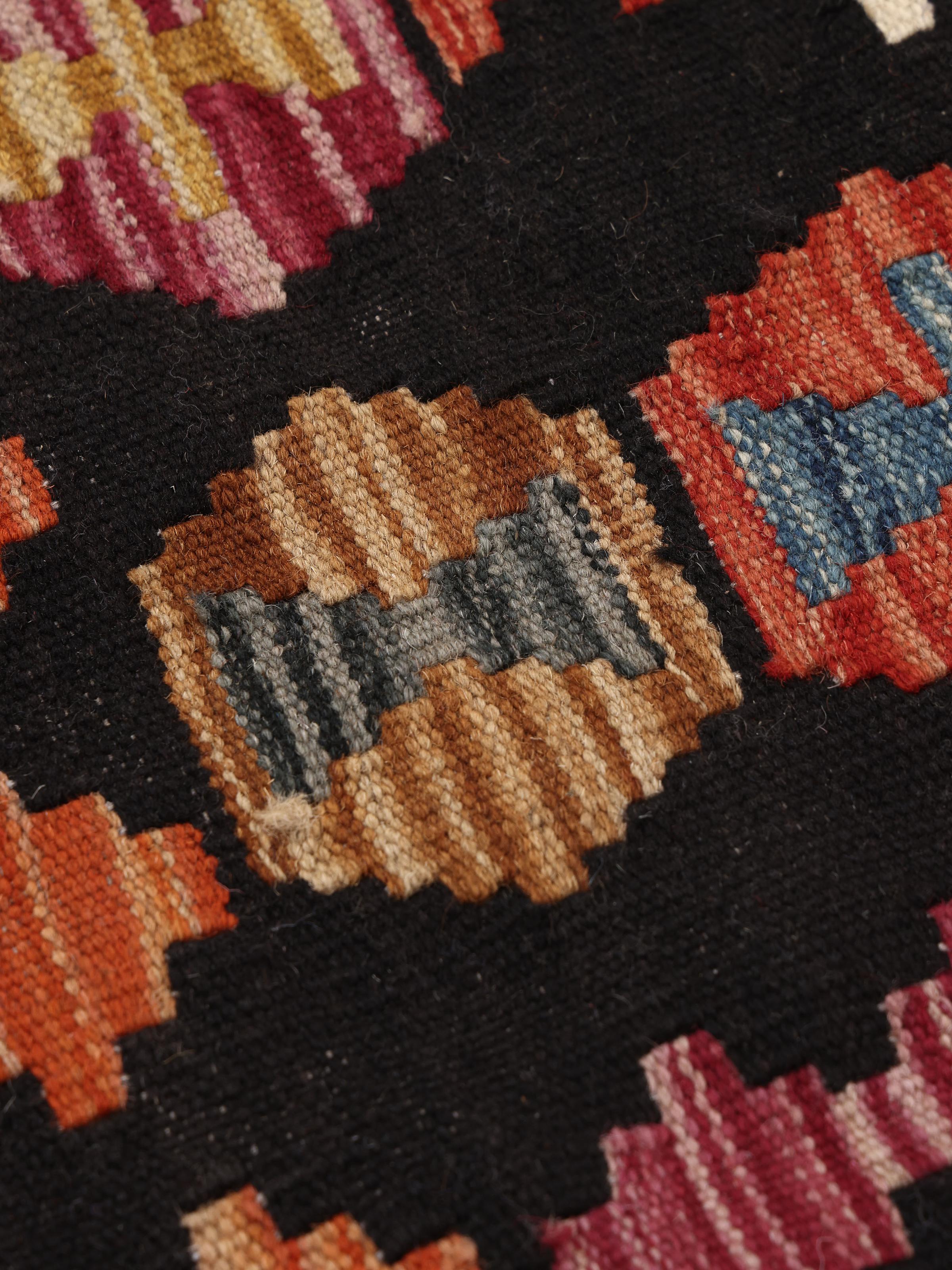
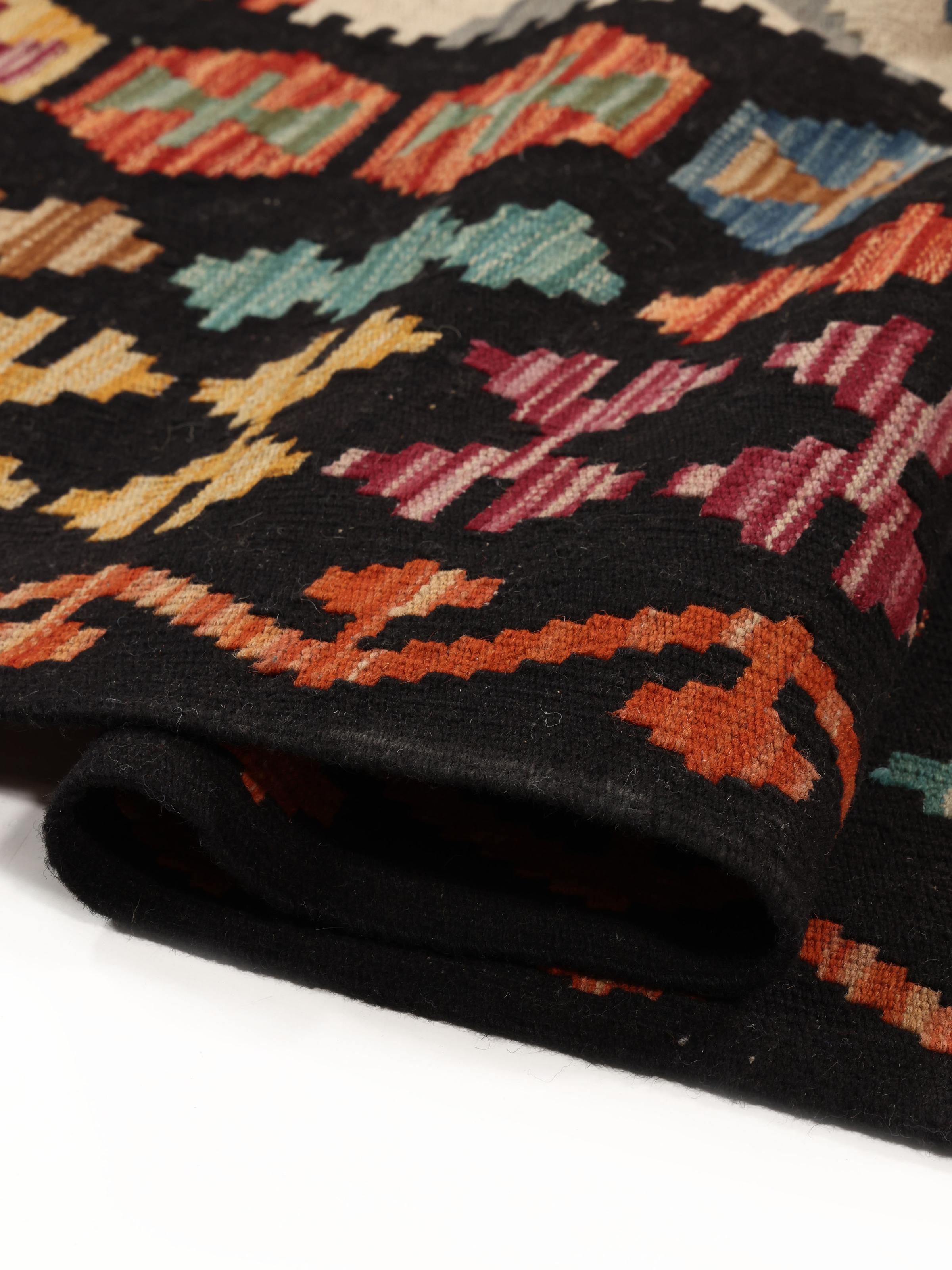
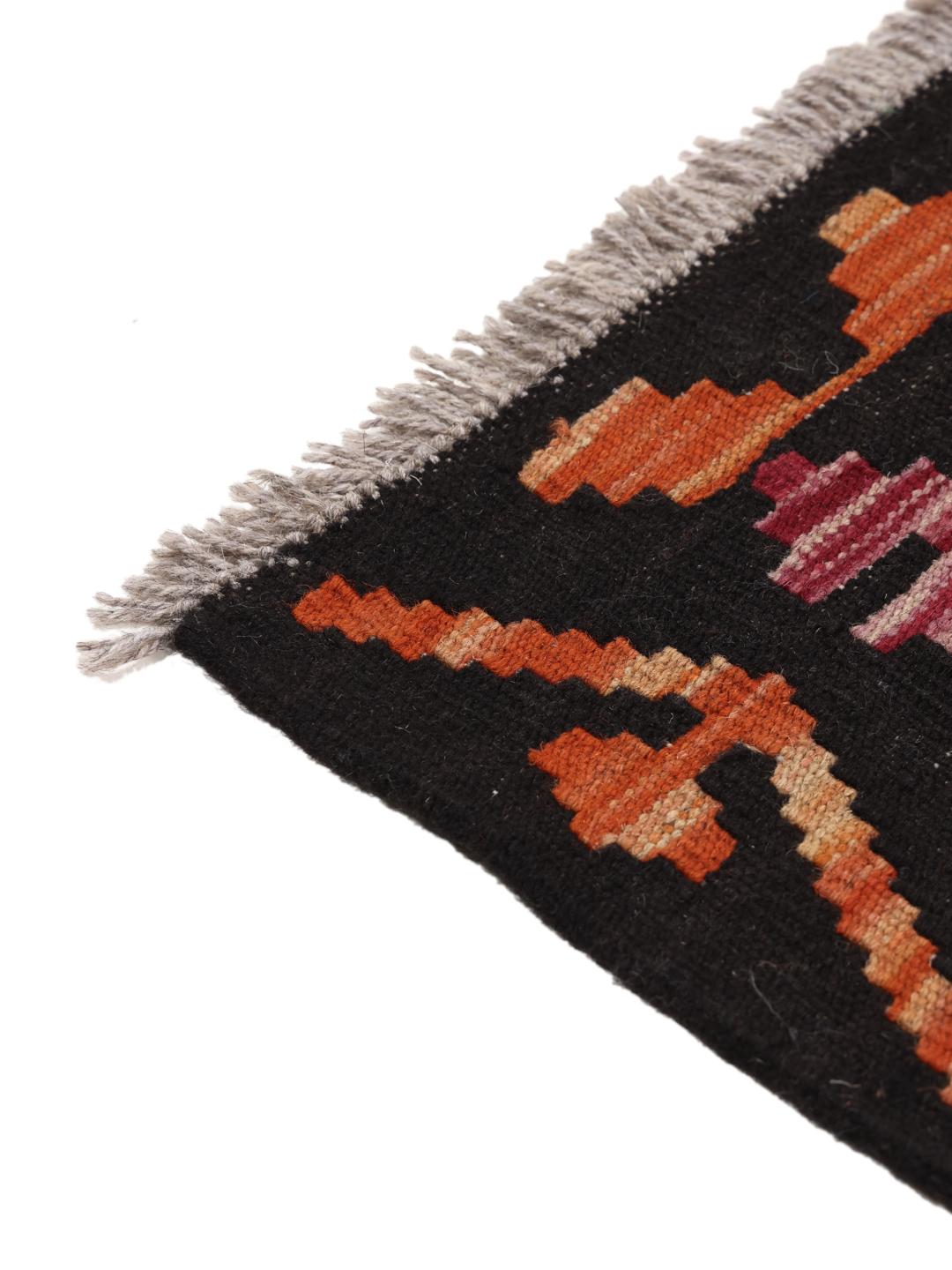
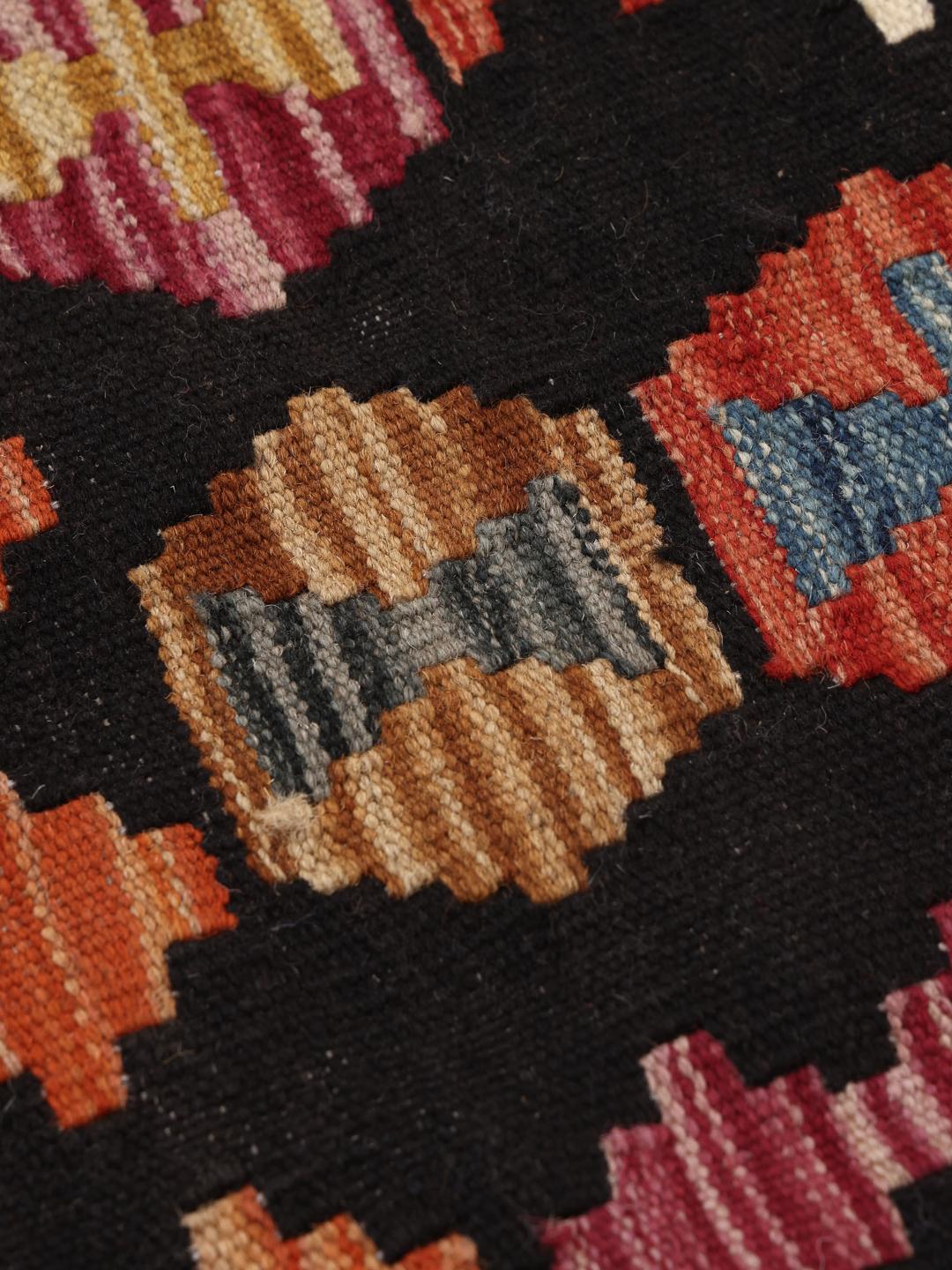
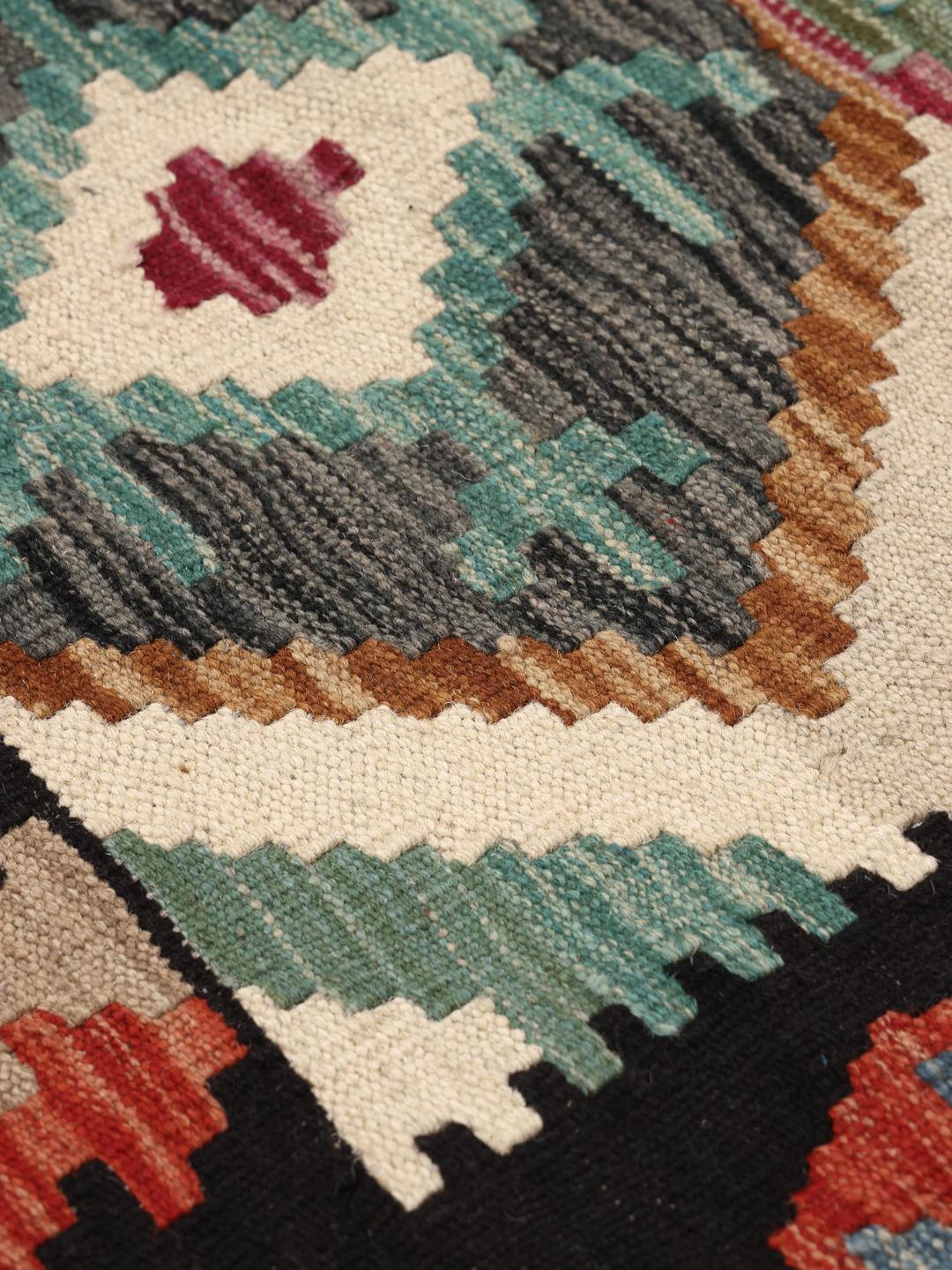
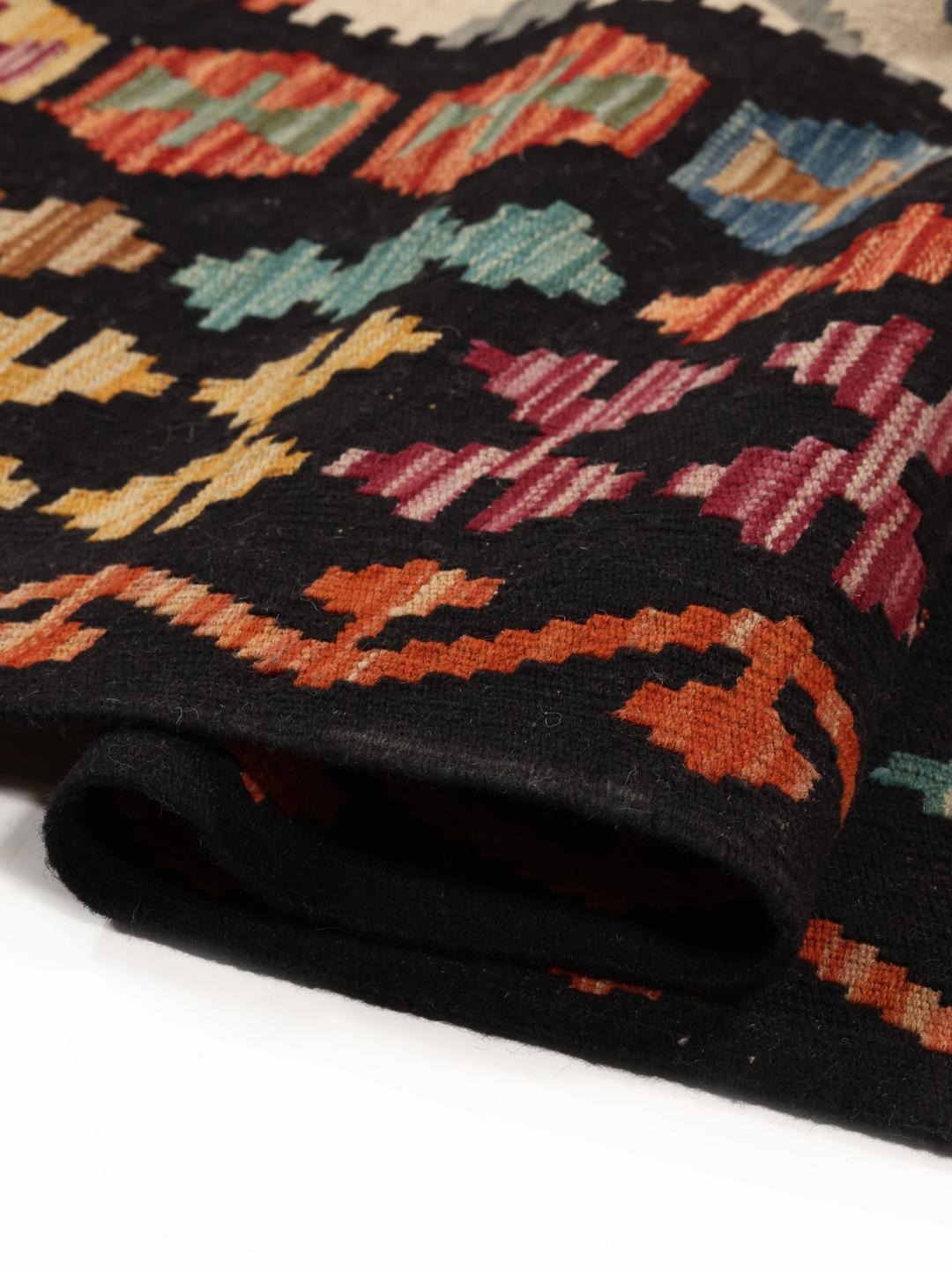
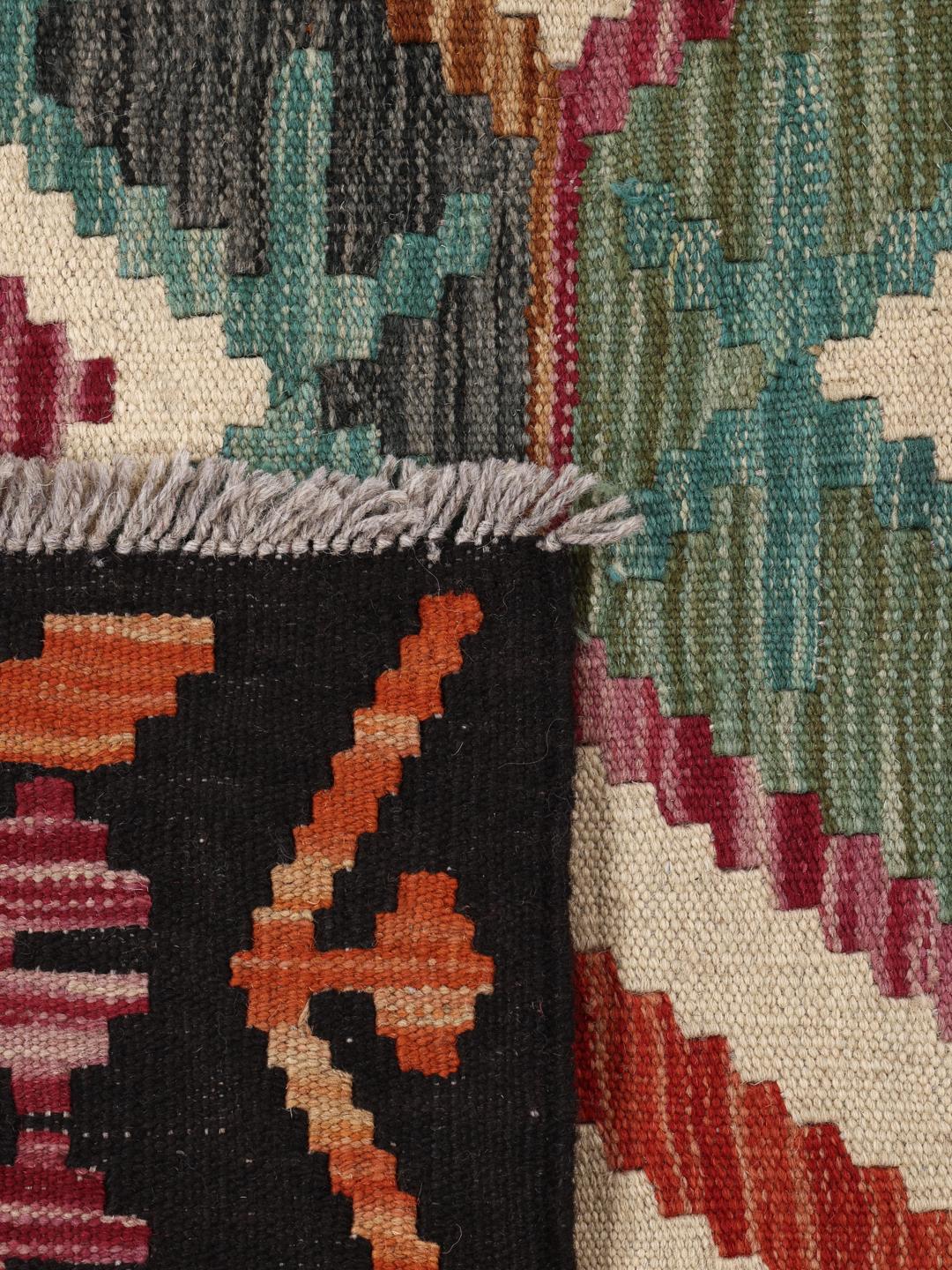
The term 'Kelim' refers specifically to a tapestry-weave technique where the weft threads are passed through the warp threads to create the pattern, resulting in a rug that is reversible and remarkably thin yet strong. This method is distinct from knotted rugs because it lacks a pile, creating a flat surface that highlights the intricacy of the weave. Mastering this technique requires a deep understanding of tension, as the weaver must maintain perfect consistency throughout the entire project to prevent warping or uneven edges.
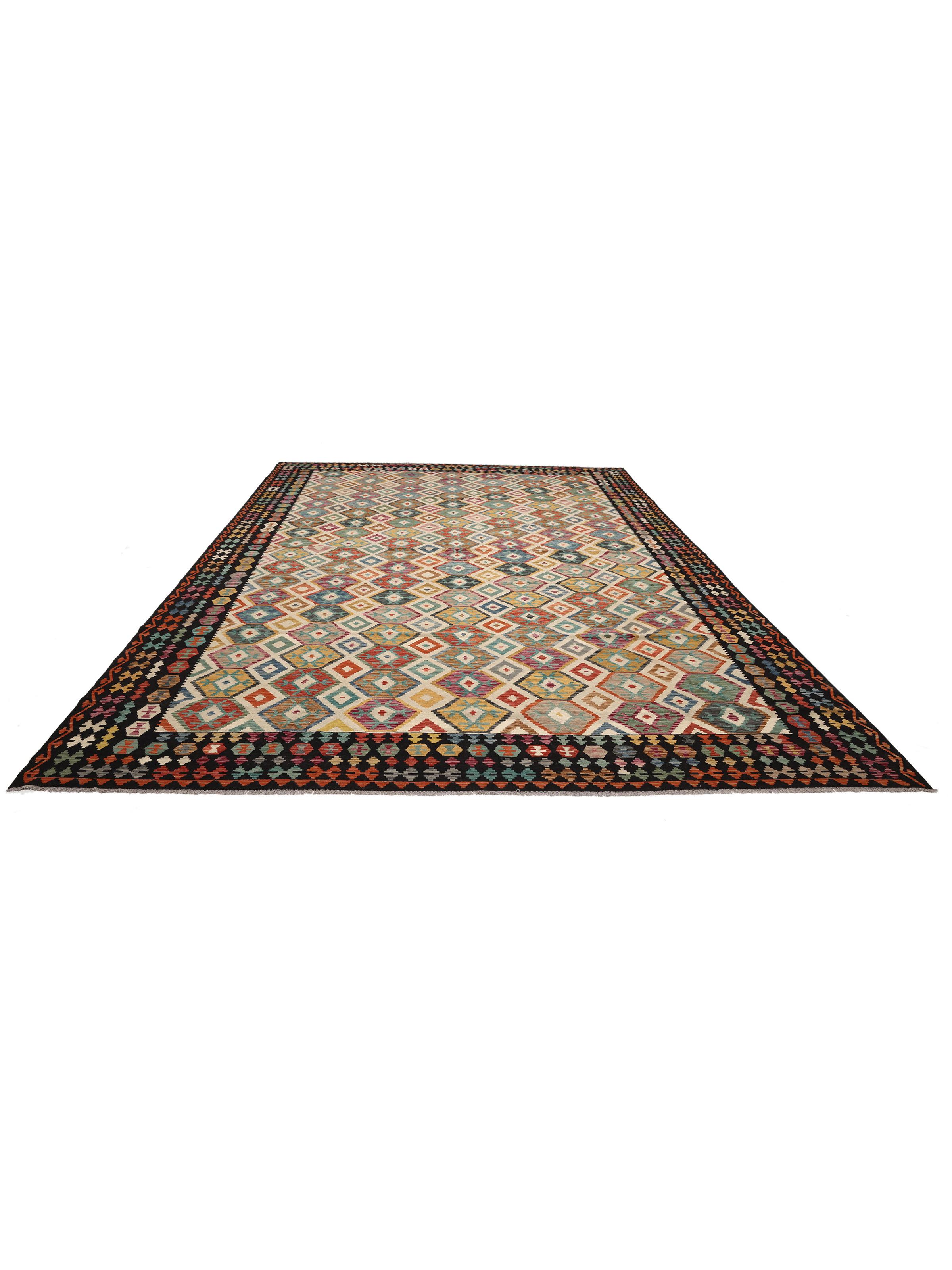
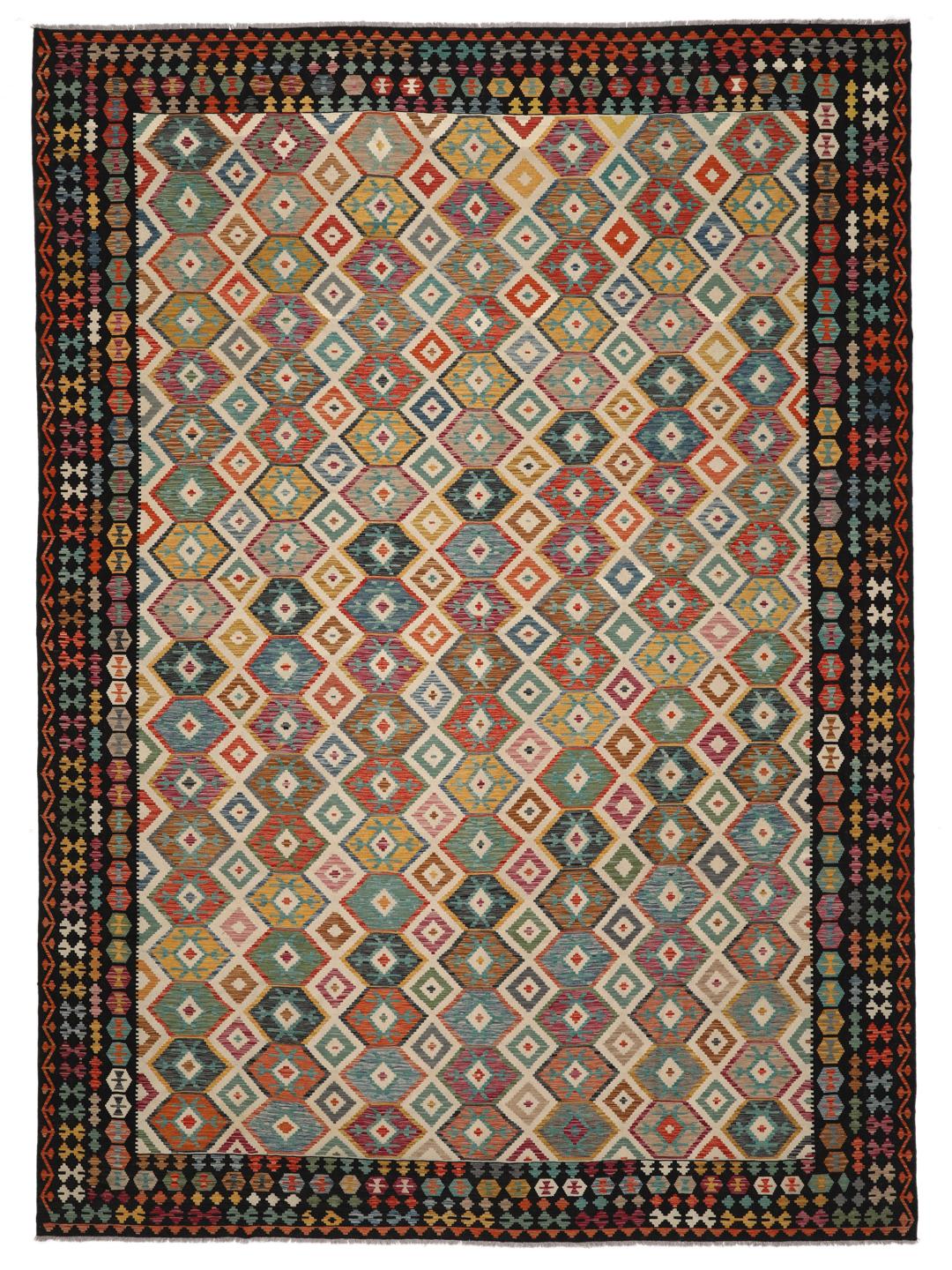
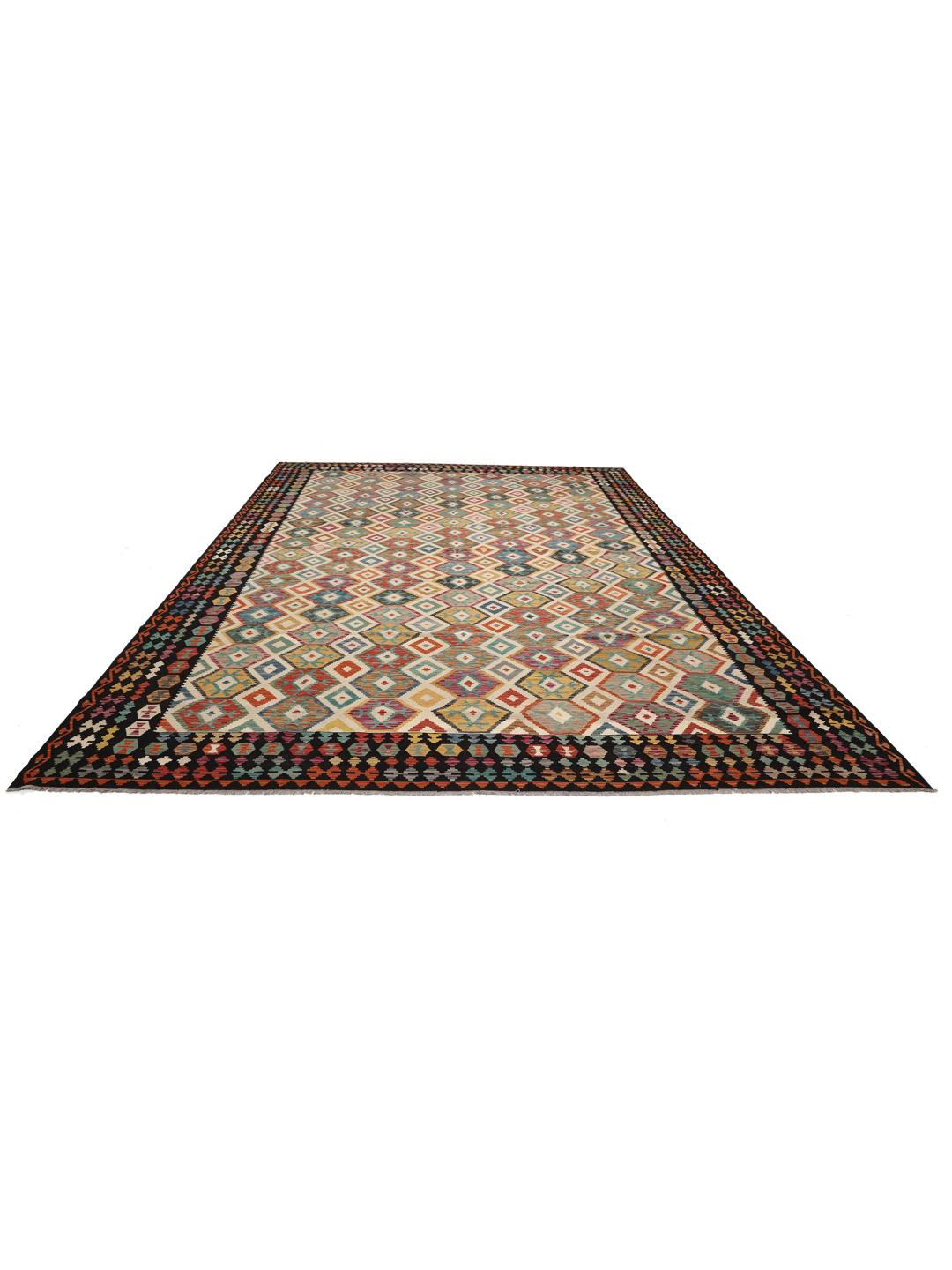
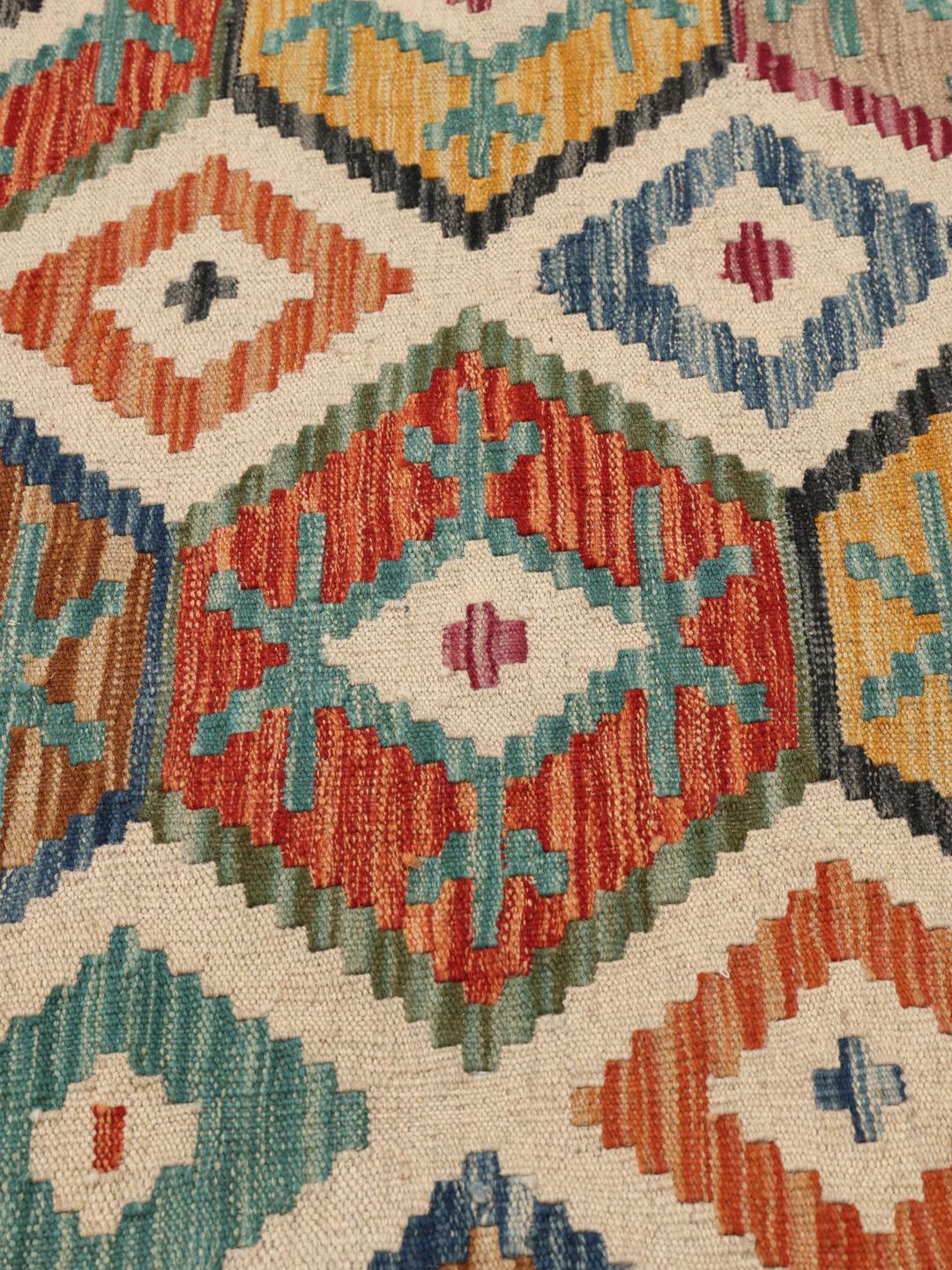
The design language of this Afghan Kelim is defined by its repetitive diamond motif, a classic symbol in regional rug lore often associated with protection and fertility. The use of a bold, dark border frames the colourful, kaleidoscopic field, which is a hallmark of the 'Old Style' aesthetic. This style often emphasises a rich palette that reflects the natural dyes traditionally used in the region, providing a visual depth that feels both ancient and remarkably relevant for contemporary interiors.
Collecting a hand-woven Afghan Kelim is an investment in cultural heritage and human skill. Because these rugs are produced without a pre-drawn pattern, each piece is a reflection of the weaver's personal interpretation of traditional motifs, making every rug a singular artifact. Owning one is a way to celebrate the enduring legacy of Middle Eastern craftsmanship and to add a layer of historical authenticity to your home.