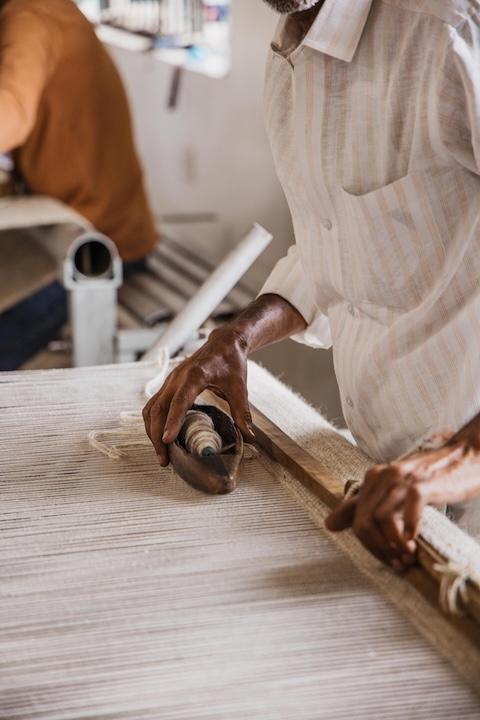
Kelim weaving in Afghanistan is an ancient nomadic tradition, passed down through generations of weavers who use flatweaving techniques to create durable, functional art. Unlike piled rugs, Kelims are constructed by tightly interlacing the warp and weft threads, resulting in a light, flexible, and highly versatile textile that was historically used for everything from floor coverings to saddlebags.
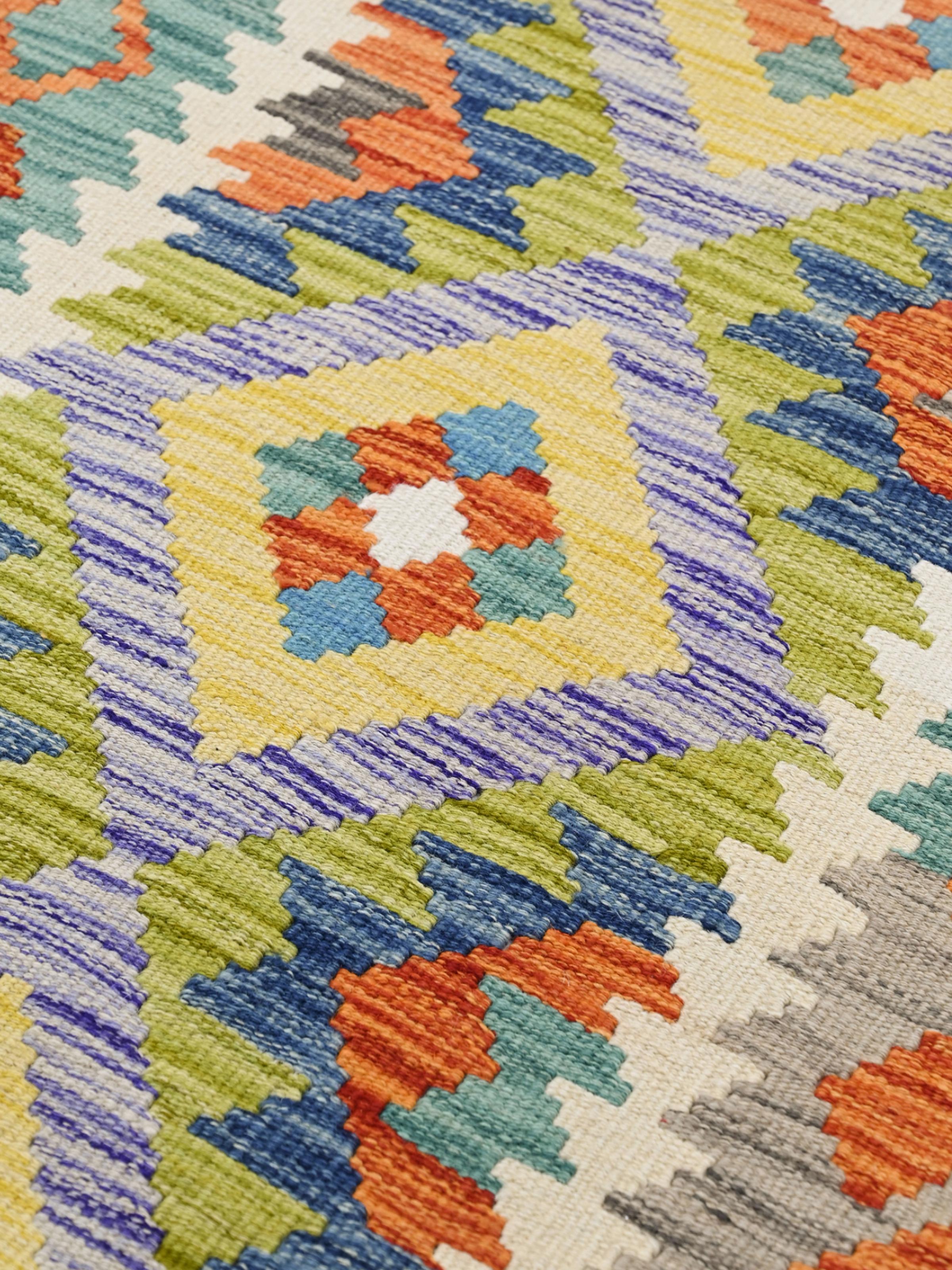
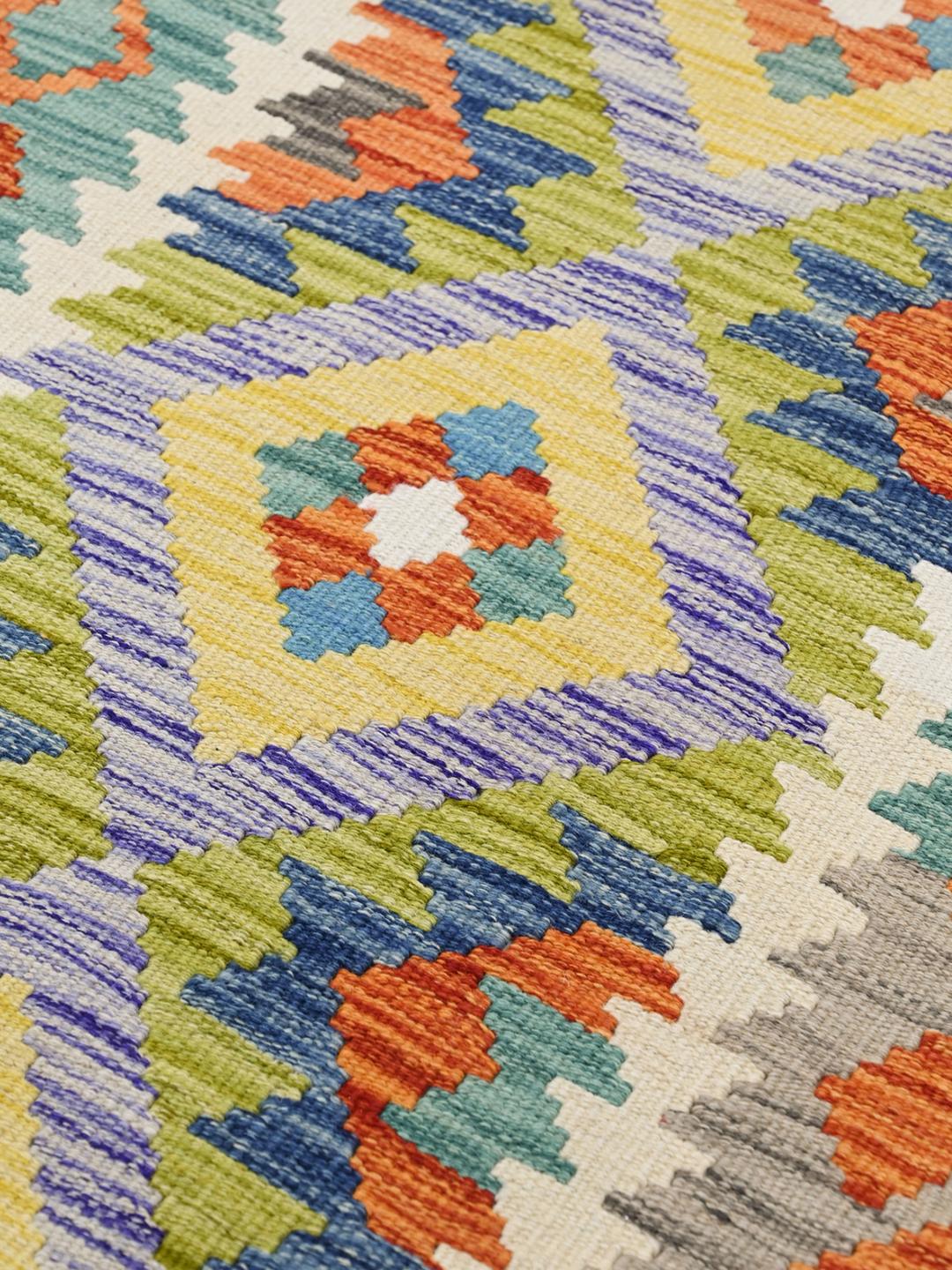
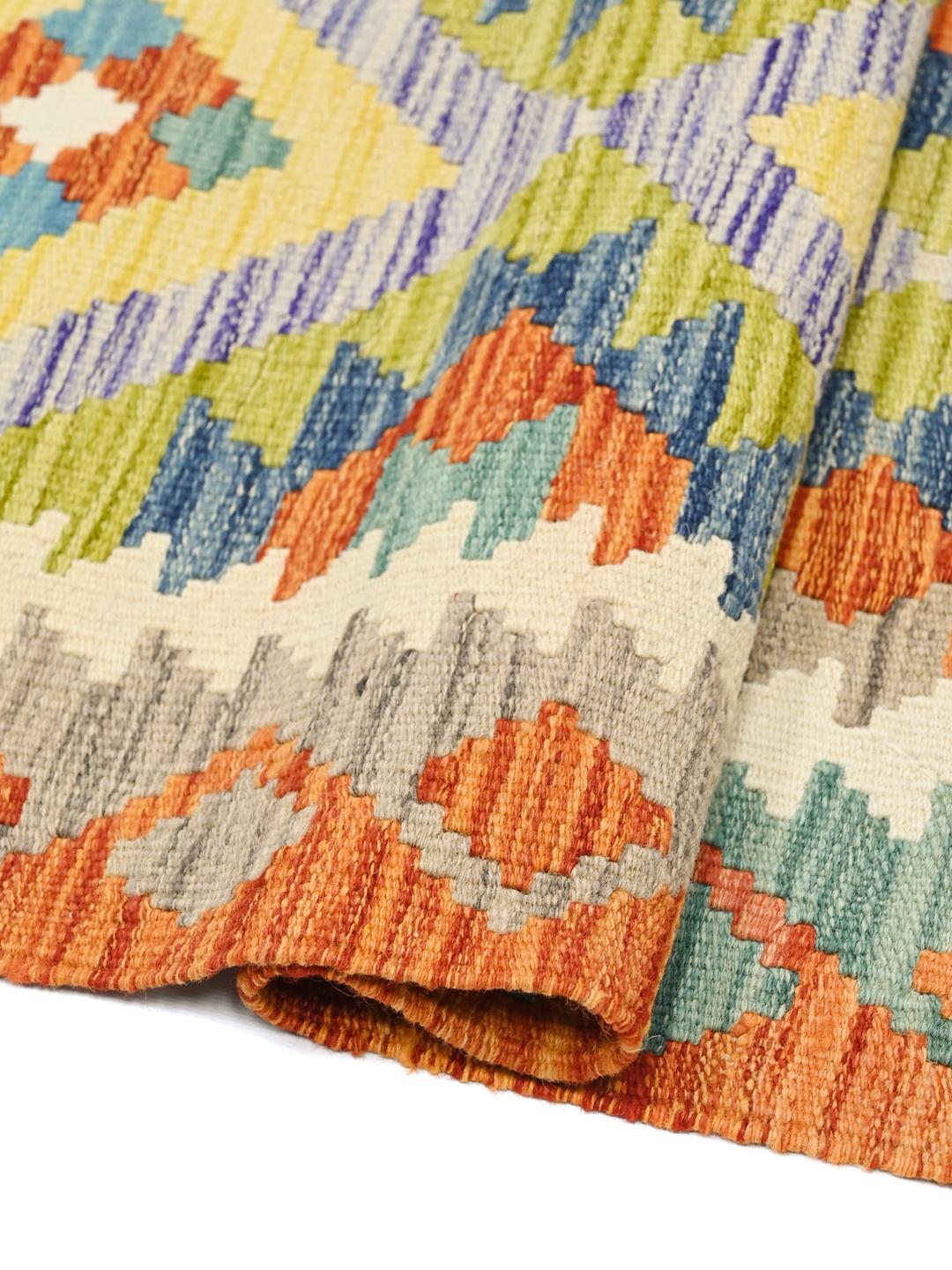
The term Kelim refers specifically to this slit-weave technique, where the weaver creates gaps between color blocks to produce sharp, clean geometric lines. Because the design is woven directly into the structure of the rug rather than knotted on top, the patterns are crisp and visible on both sides, showcasing the incredible precision required to maintain tension across the loom.
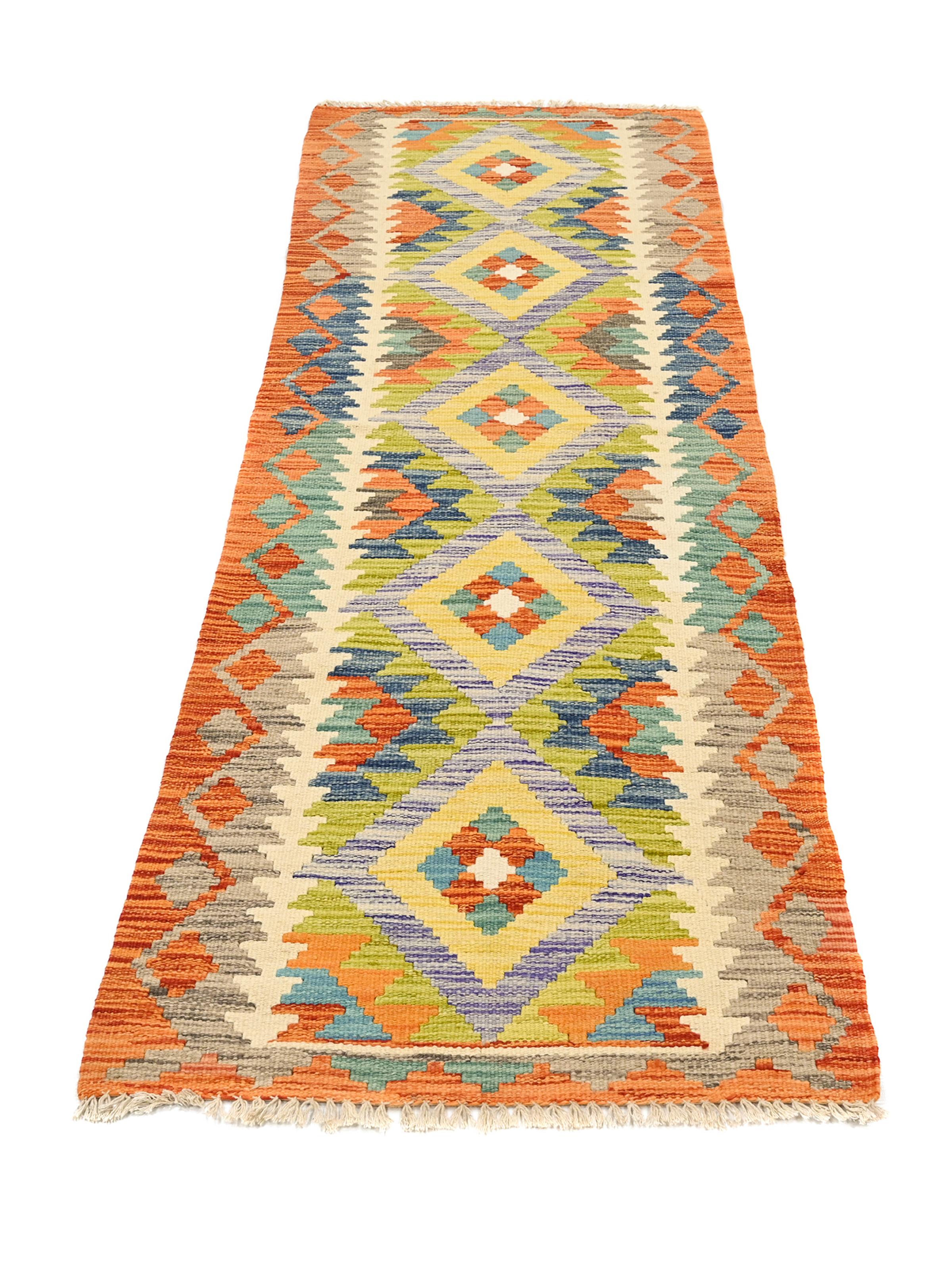
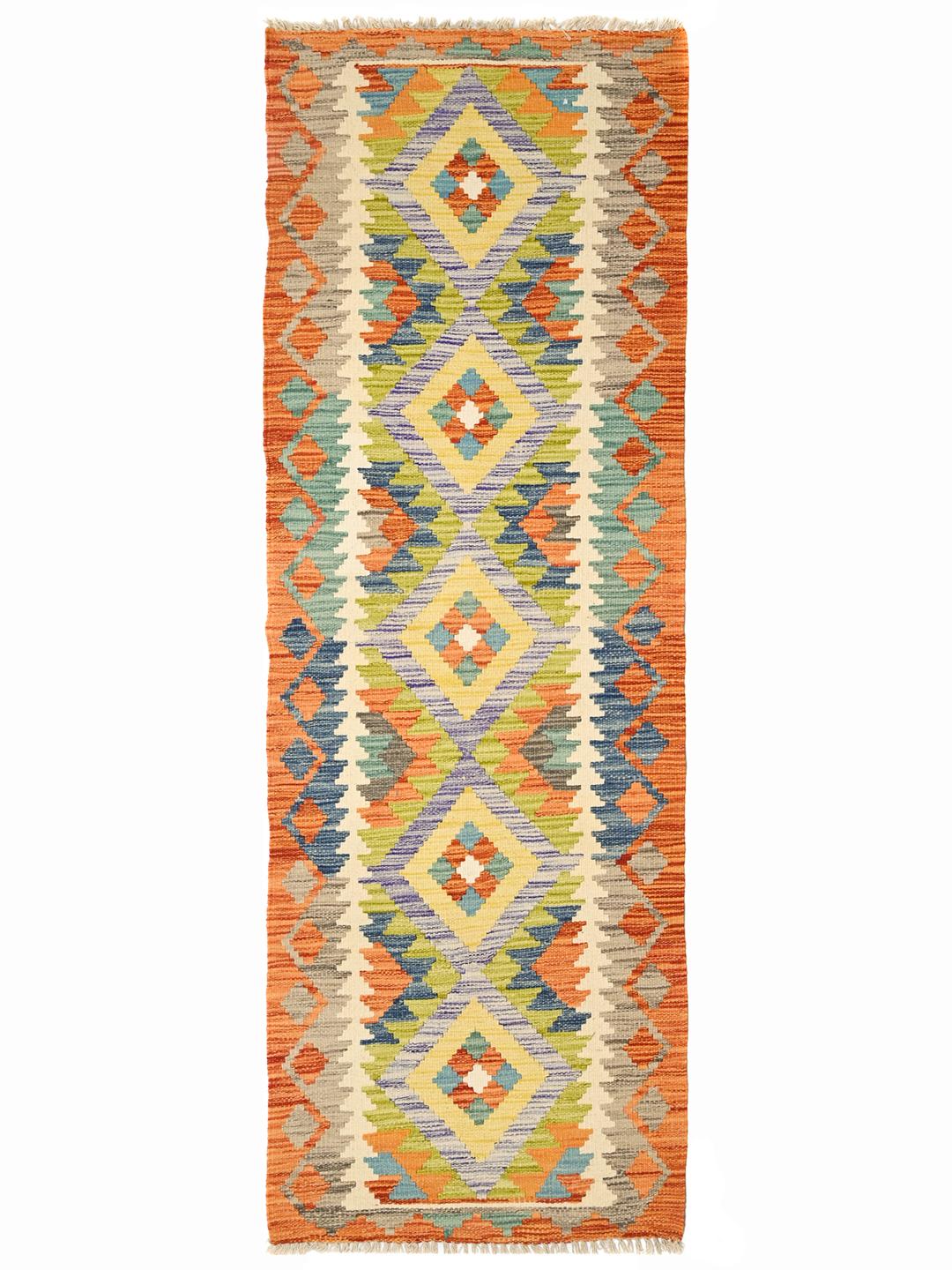
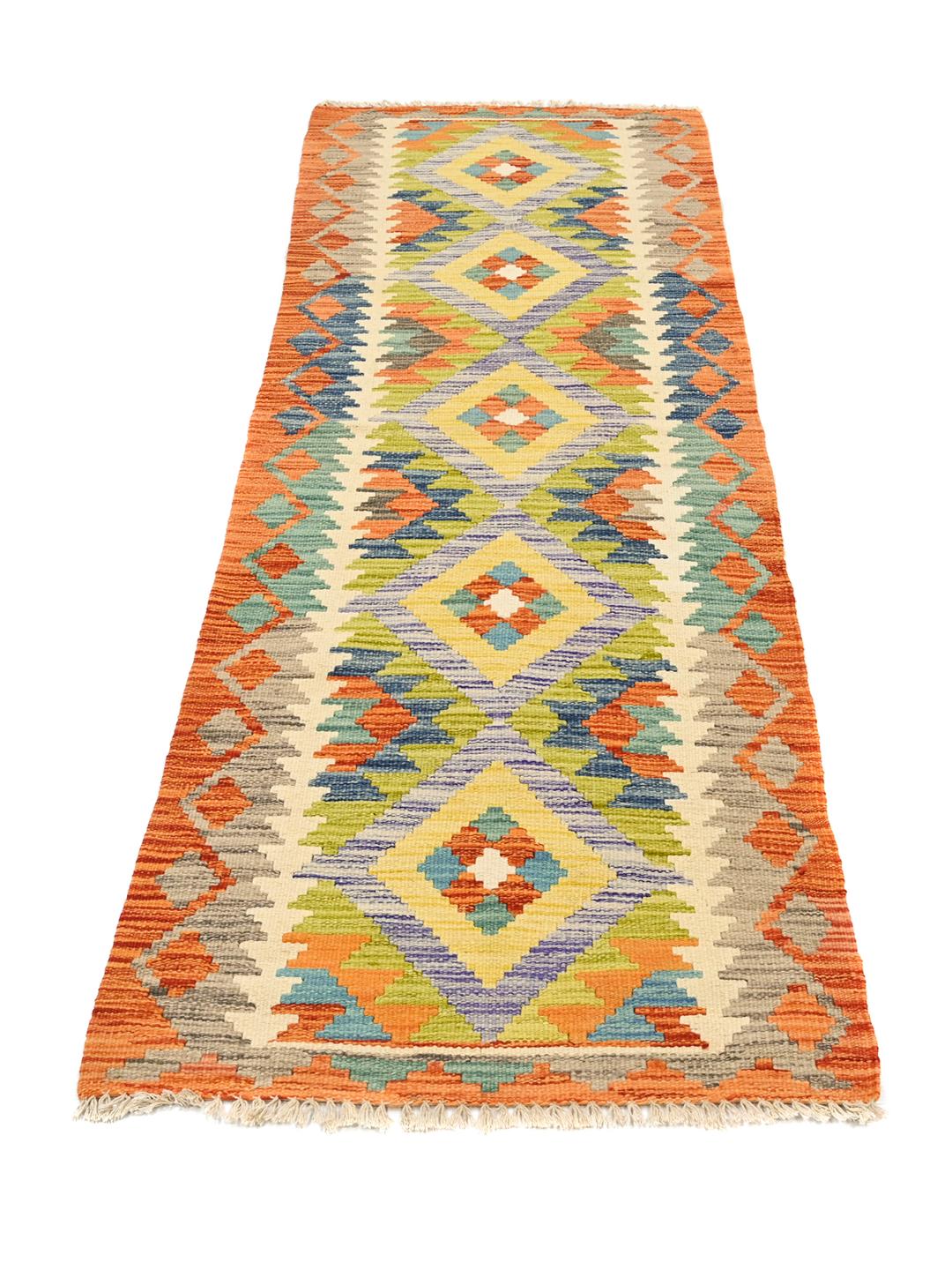
This particular piece features a classic Afghan design language, characterized by repeating diamond motifs and stepped geometric borders that run the length of the runner. The bold use of orange, blue, and accent tones reflects the regional preference for expressive, warm color palettes that bring life and energy to interior spaces.
Owning an authentic Afghan Kelim is an appreciation of tribal heritage and hand-weaving history. These rugs are highly valued by collectors and homemakers alike for their graphic appeal and cultural depth, bringing traditional nomadic craft into contemporary living spaces.