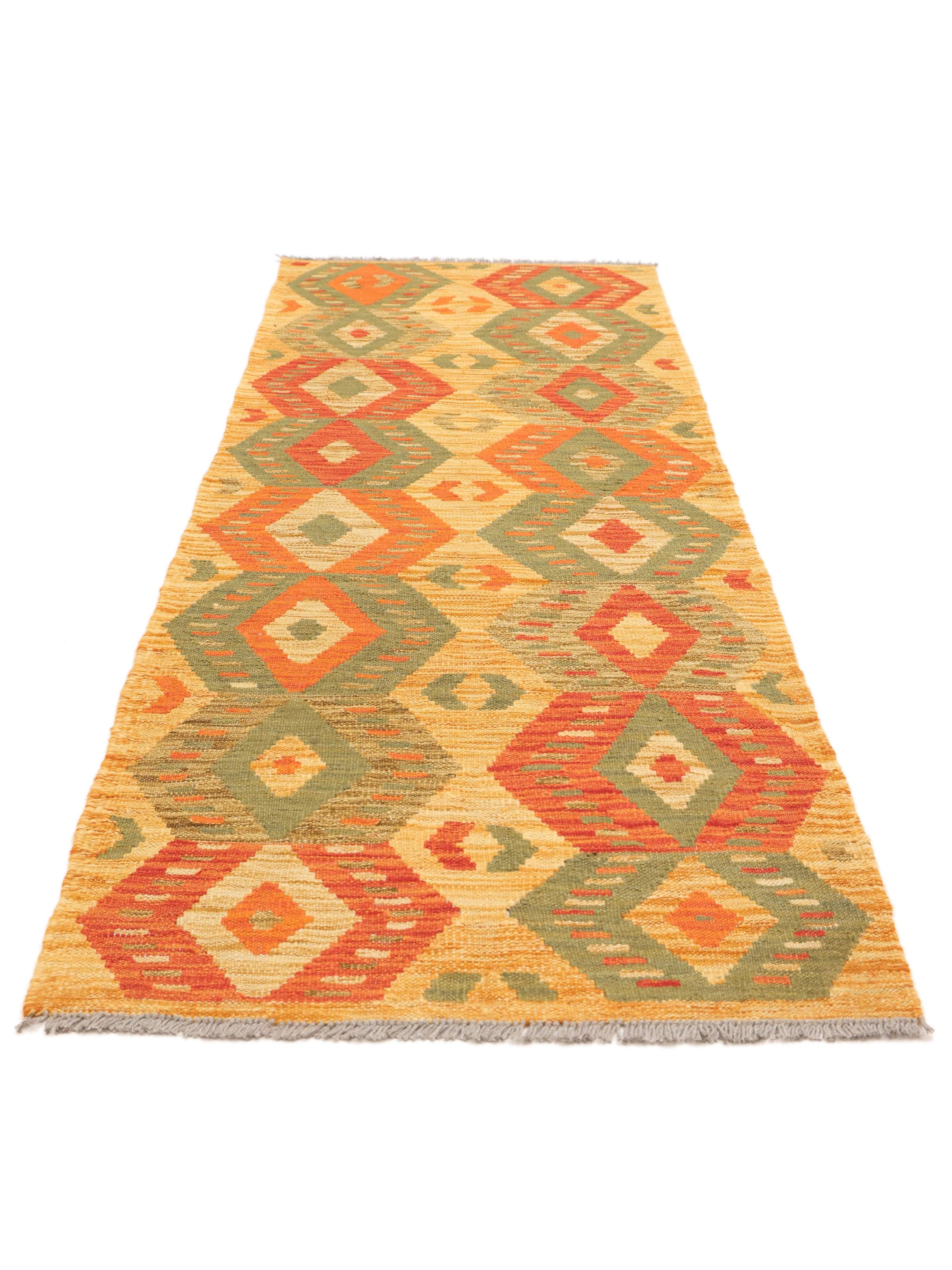
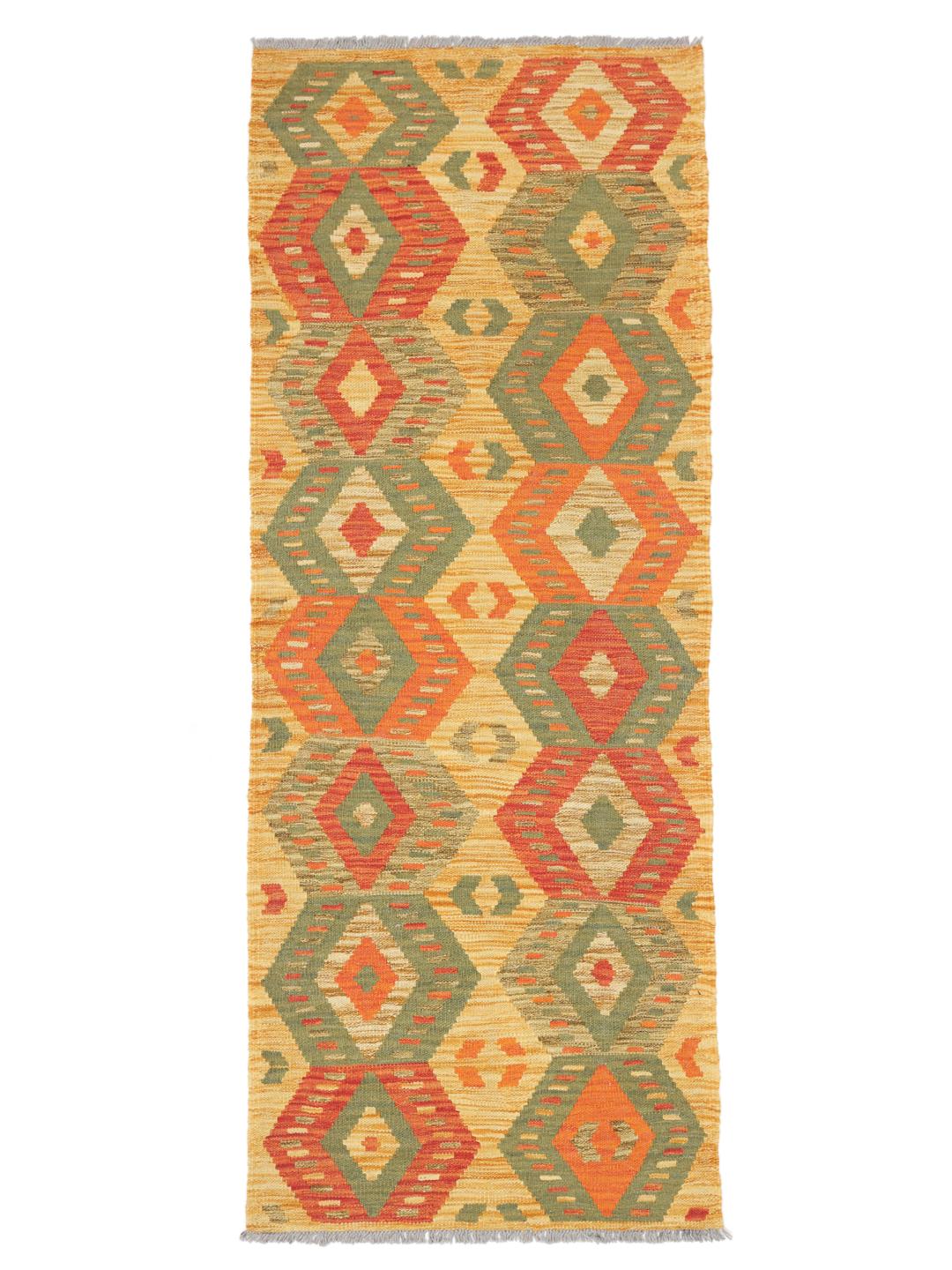
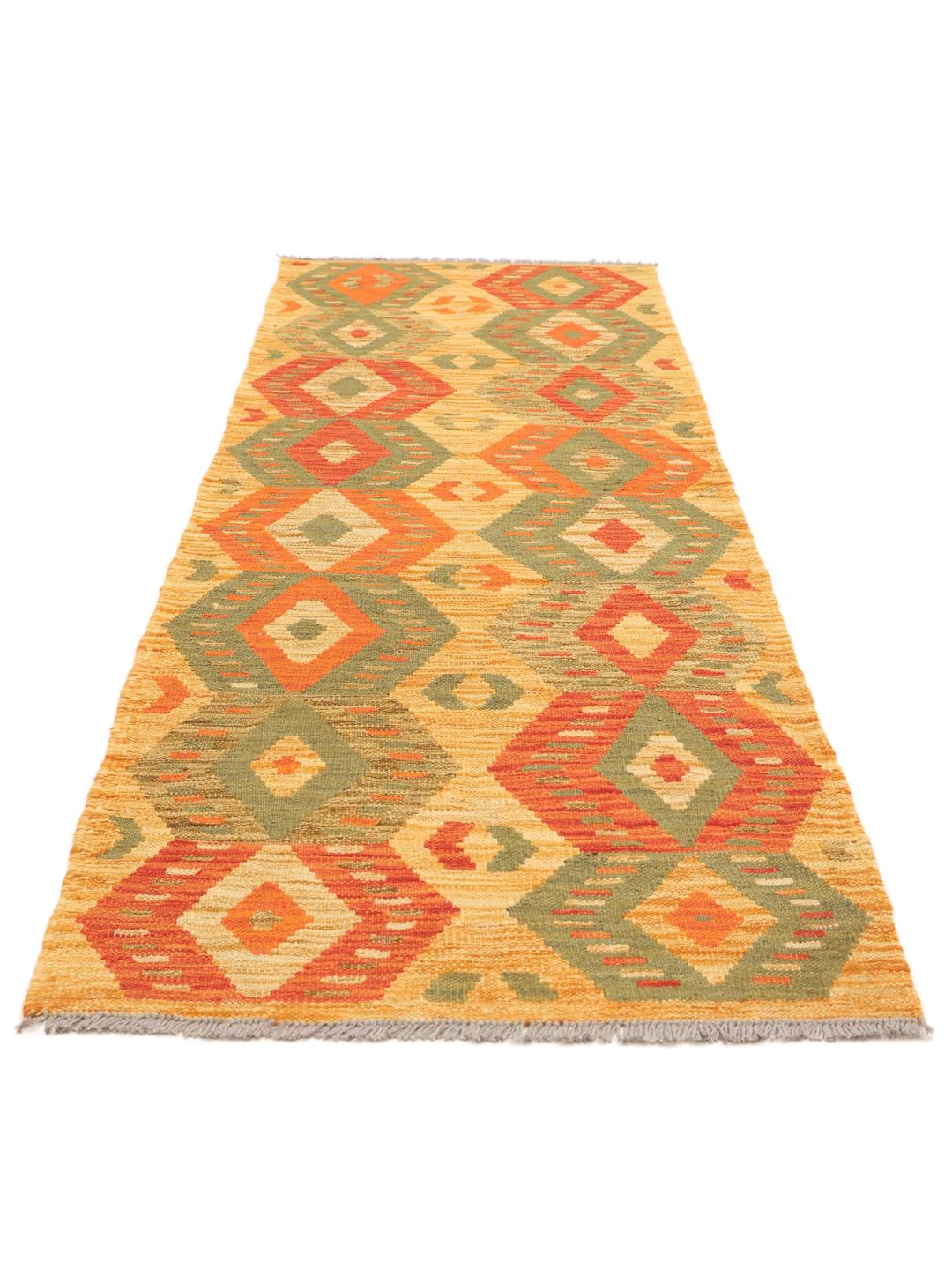
The tradition of Kelim weaving in Afghanistan is deeply rooted in the nomadic history of the region. These flat-woven rugs were historically created by tribal groups for practical use in tents, serving as floor coverings, blankets, and storage sacks, which necessitated a durable and portable design.
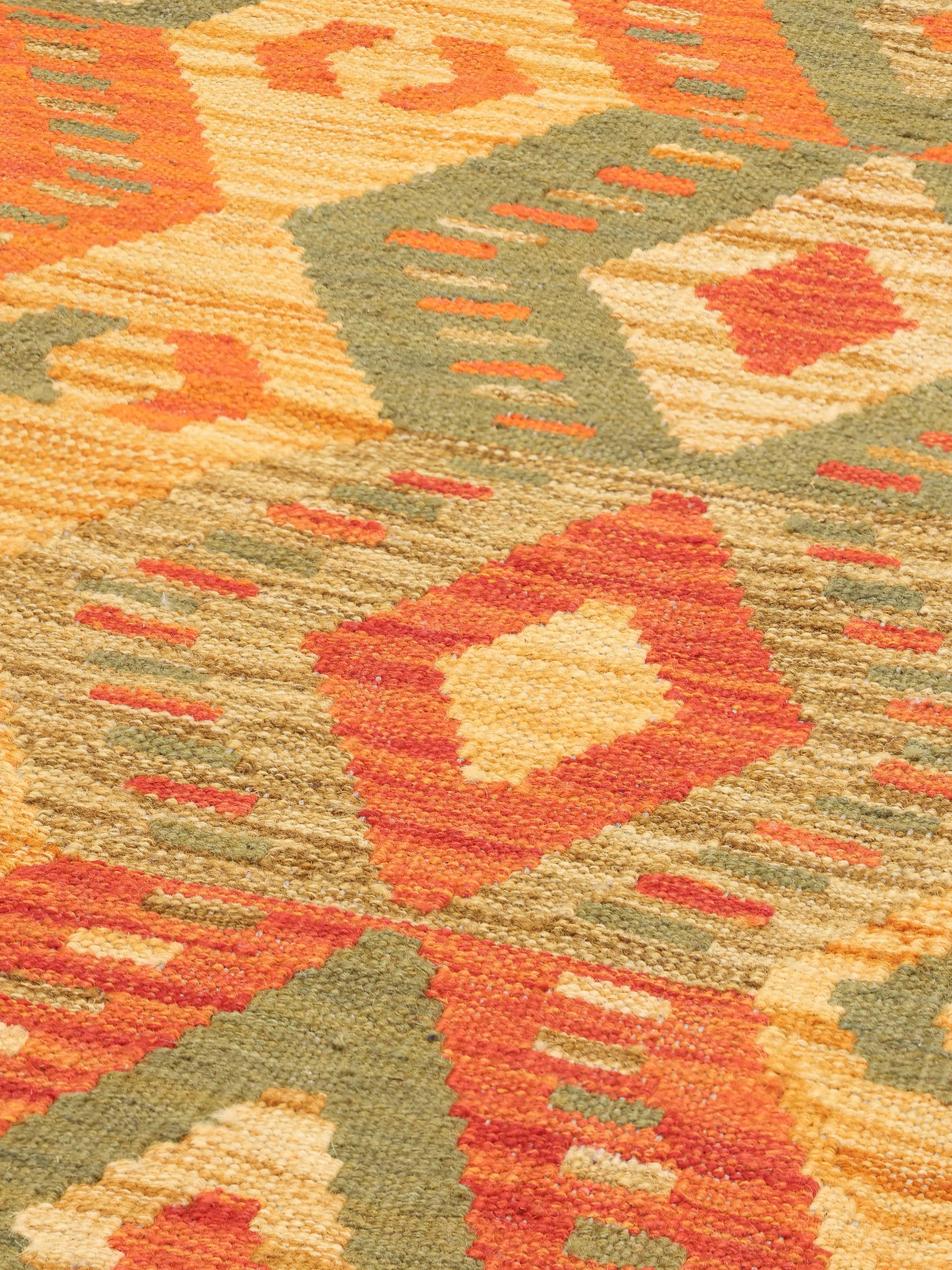
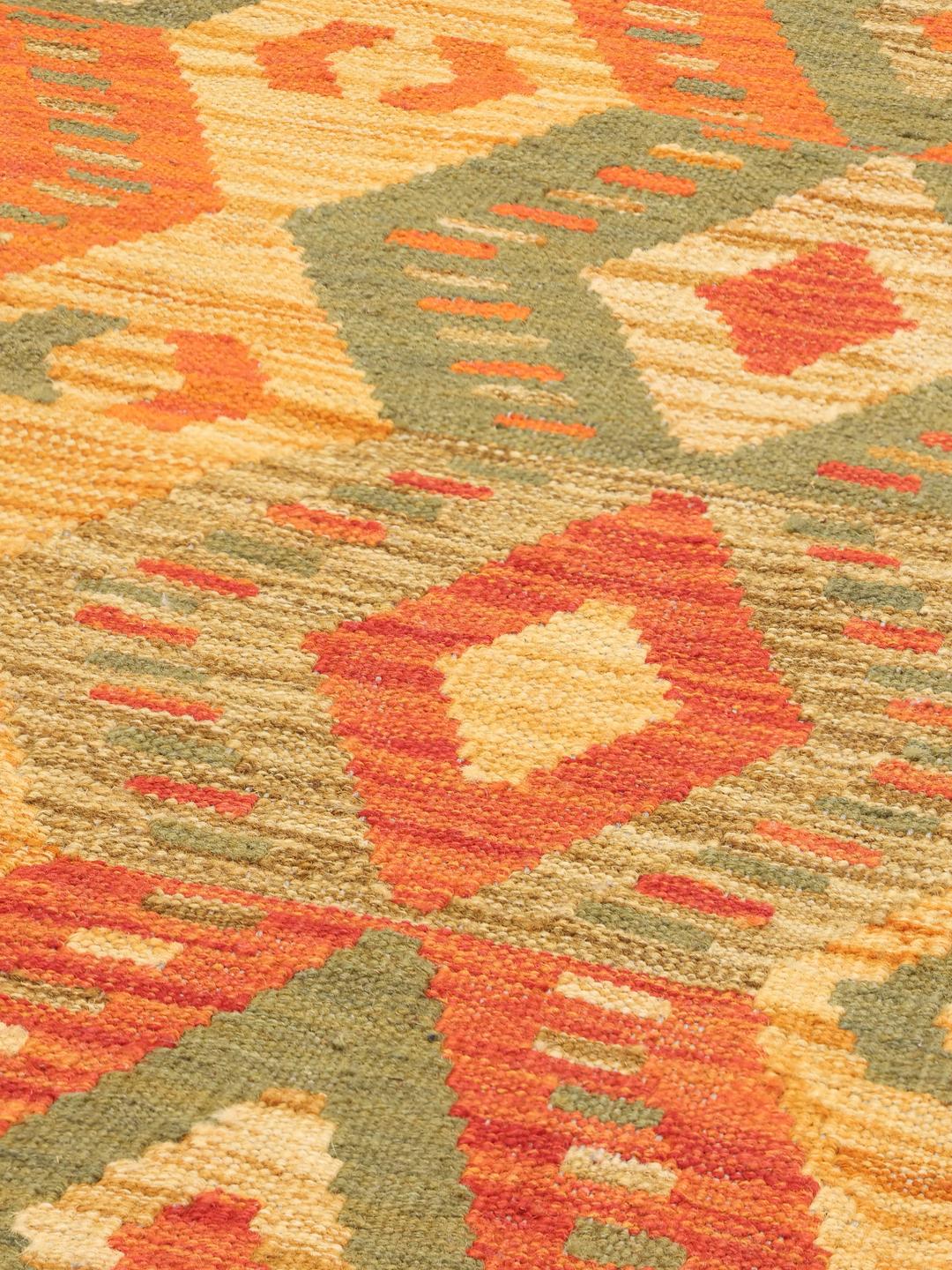
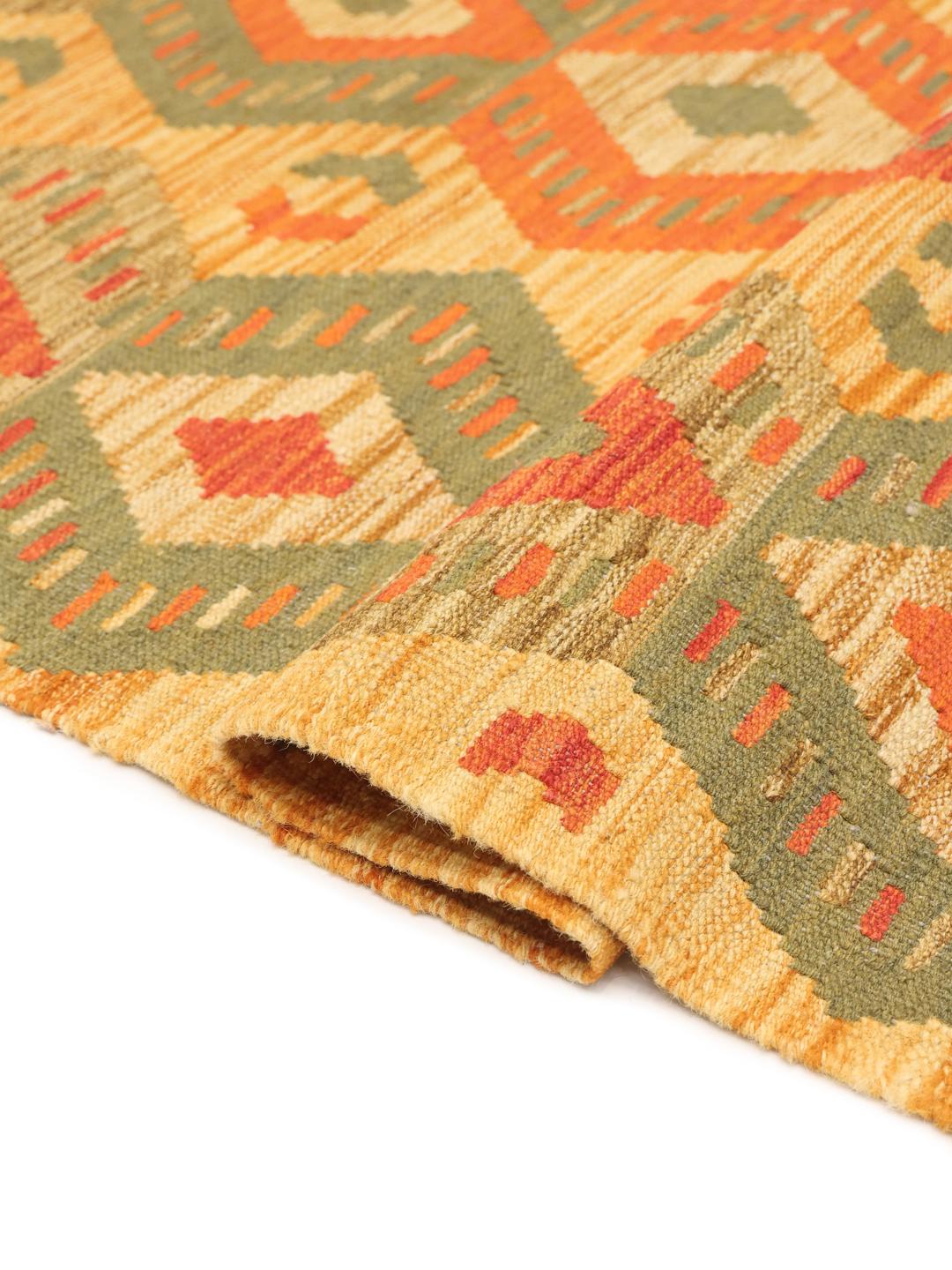
The term 'Kelim' refers to the specific tapestry-weave technique where the weft threads are passed over and under the warp threads to create a completely flat surface without a pile. This method results in a reversible rug, meaning both sides are identical and can be used interchangeably to ensure even wear over the years.
Visually, these rugs are defined by their bold geometric patterns, particularly the diamond and medallion motifs seen here. These symbols are often stylized representations of tribal identity or protective charms, rendered in a palette of organic dyes that have historically been derived from local roots, flowers, and minerals.
Collecting an Afghan Kelim is a way to preserve a rich craft heritage. These rugs are highly valued for their honest, functional aesthetic and the immense skill required to produce them. Owning one means you are a steward of a centuries-old tradition, bringing a piece of cultural history into your home that celebrates human creativity and enduring utility.