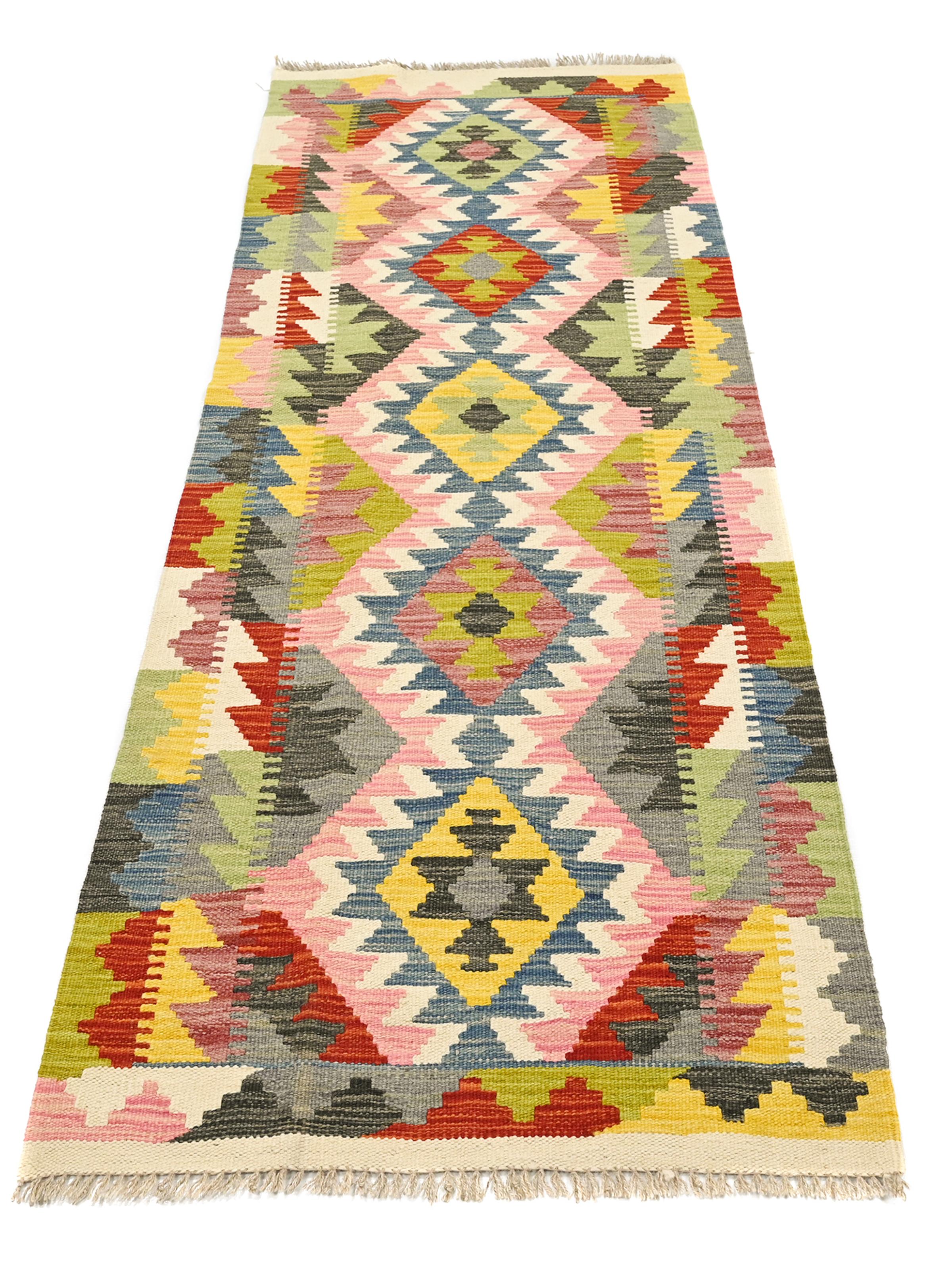
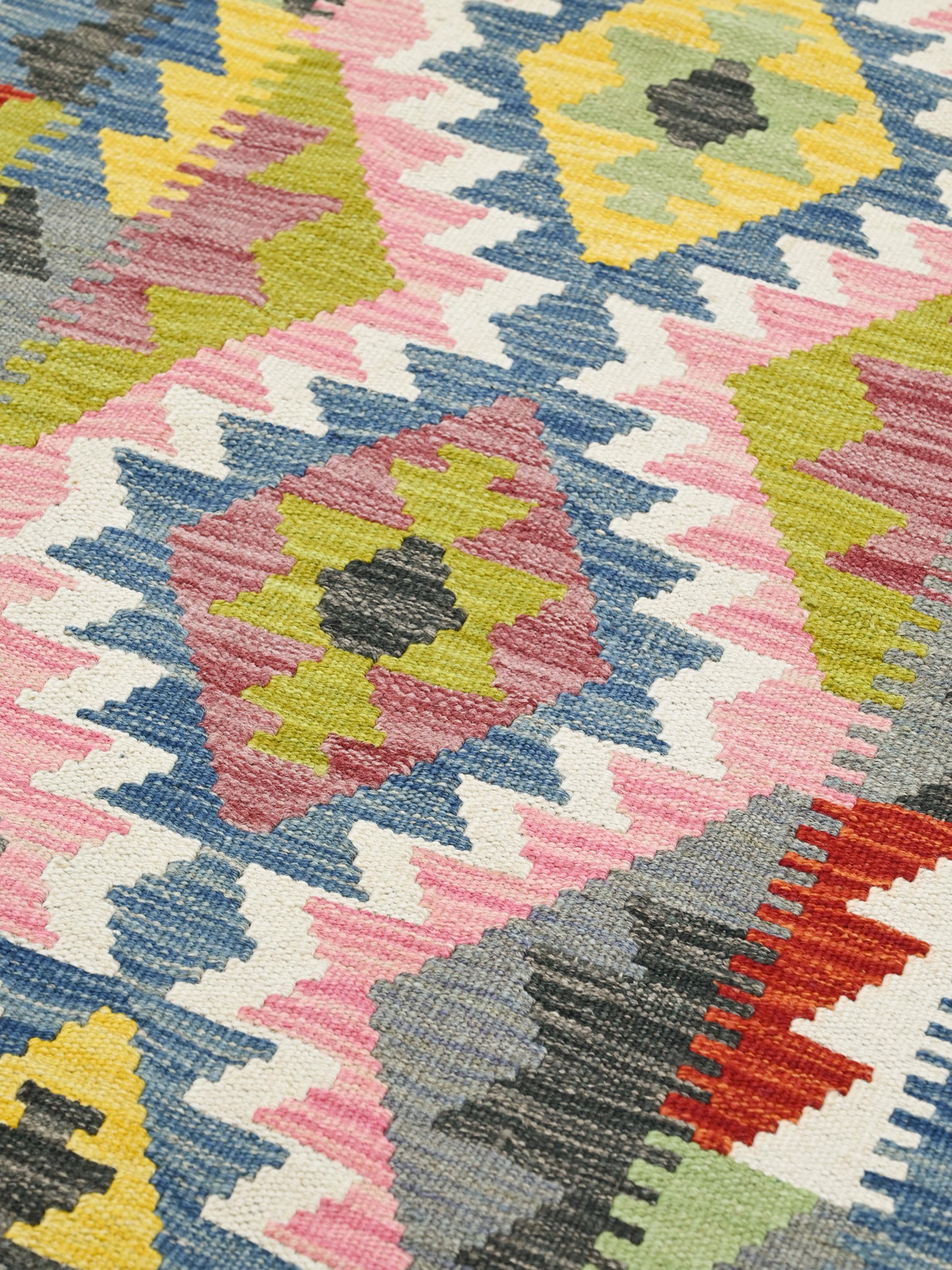
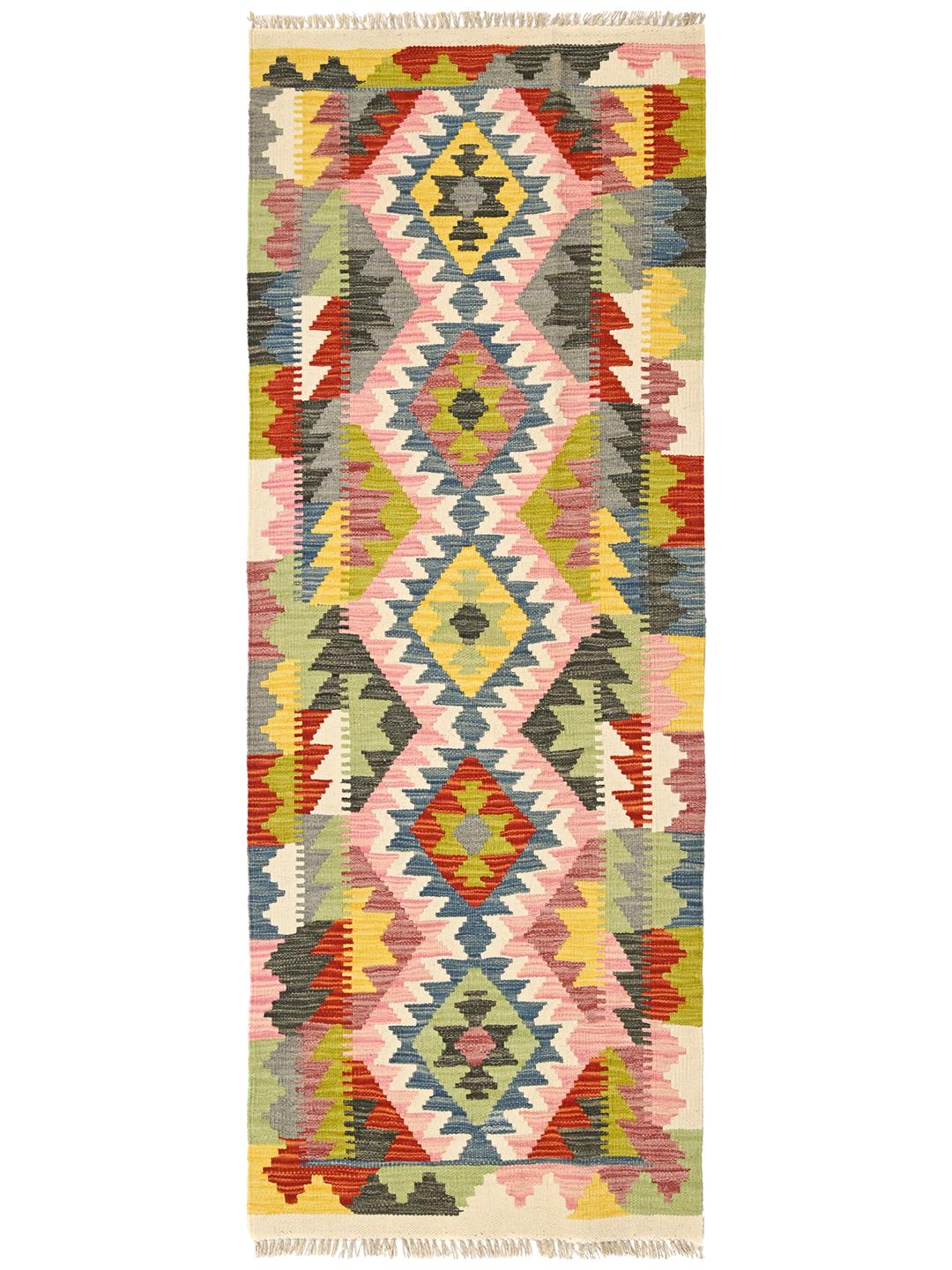
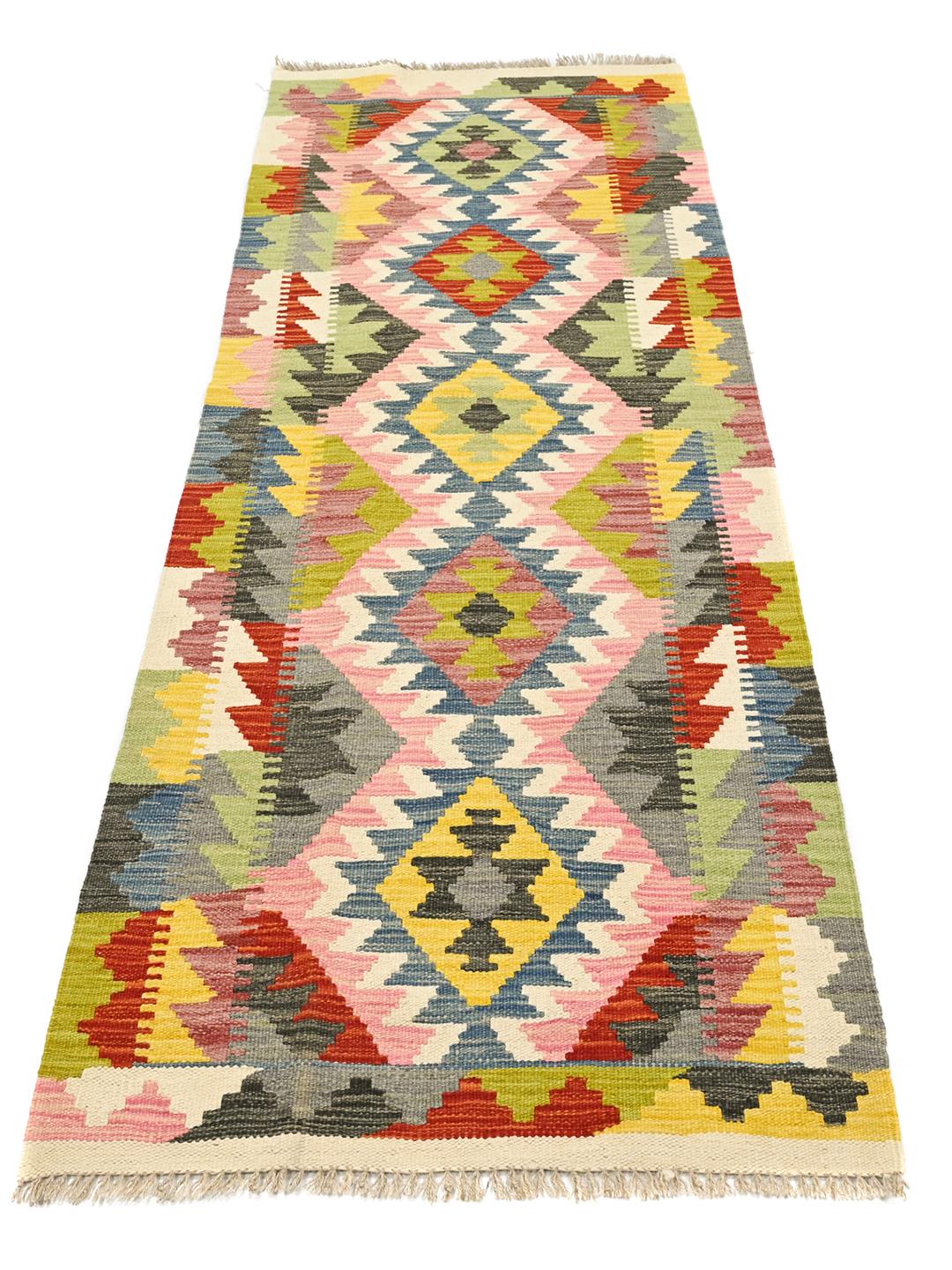
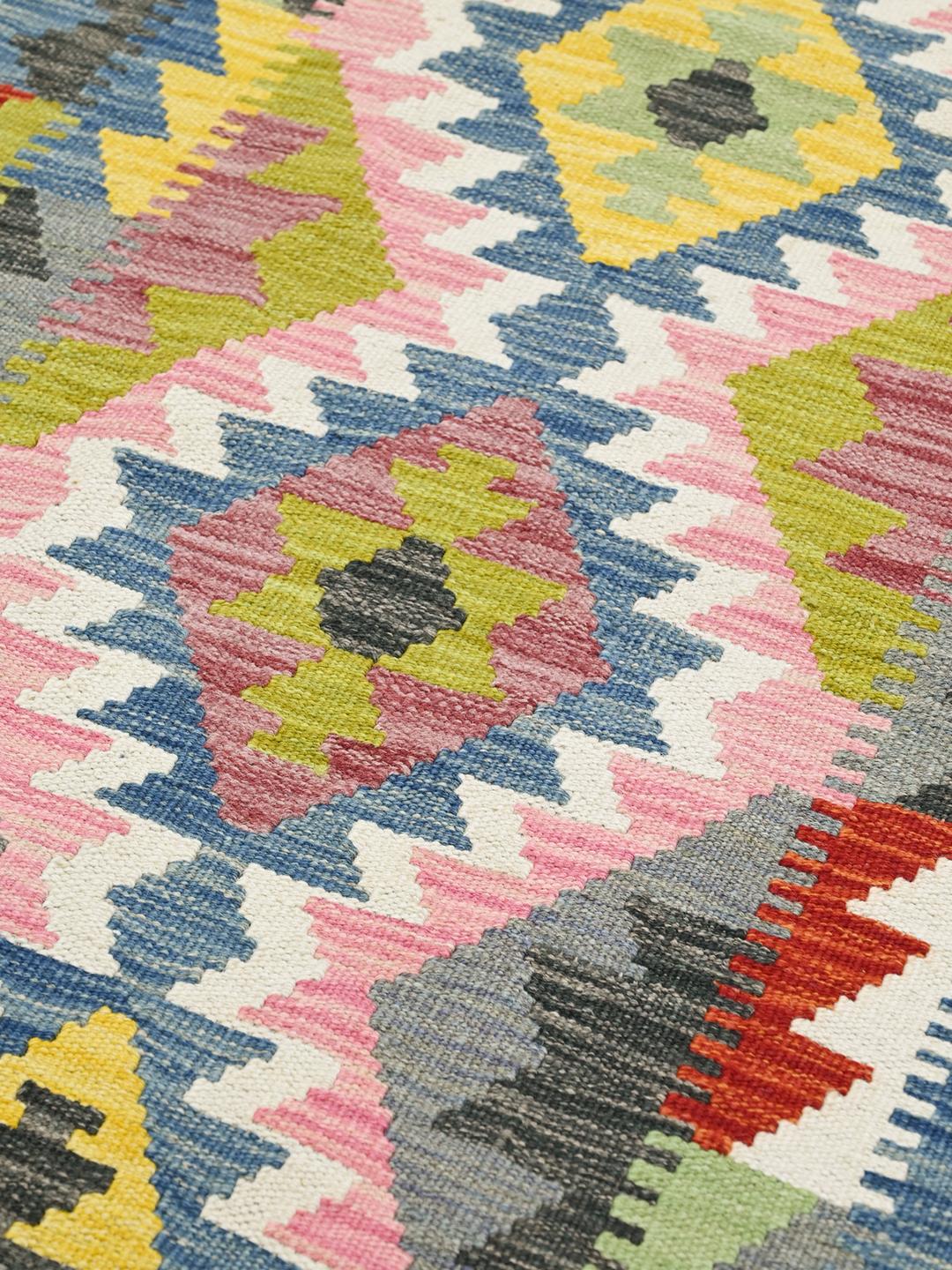
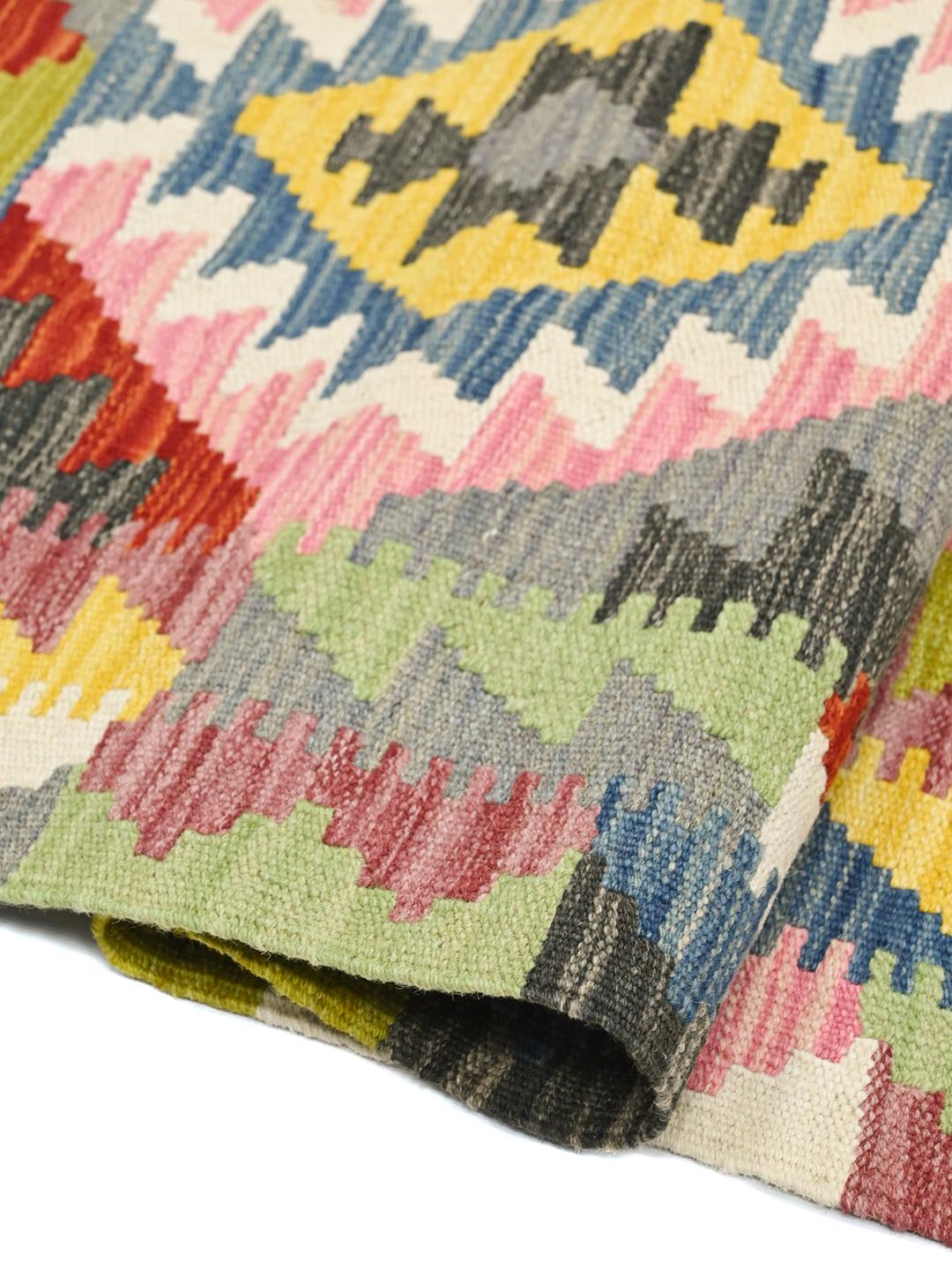
The Kelim rugs of Afghanistan are celebrated for their deep connection to nomadic weaving traditions. These textiles have historically served both functional and decorative roles in the lives of the people of the Middle East, often used as floor coverings, wall hangings, or even practical storage sacks during migration.
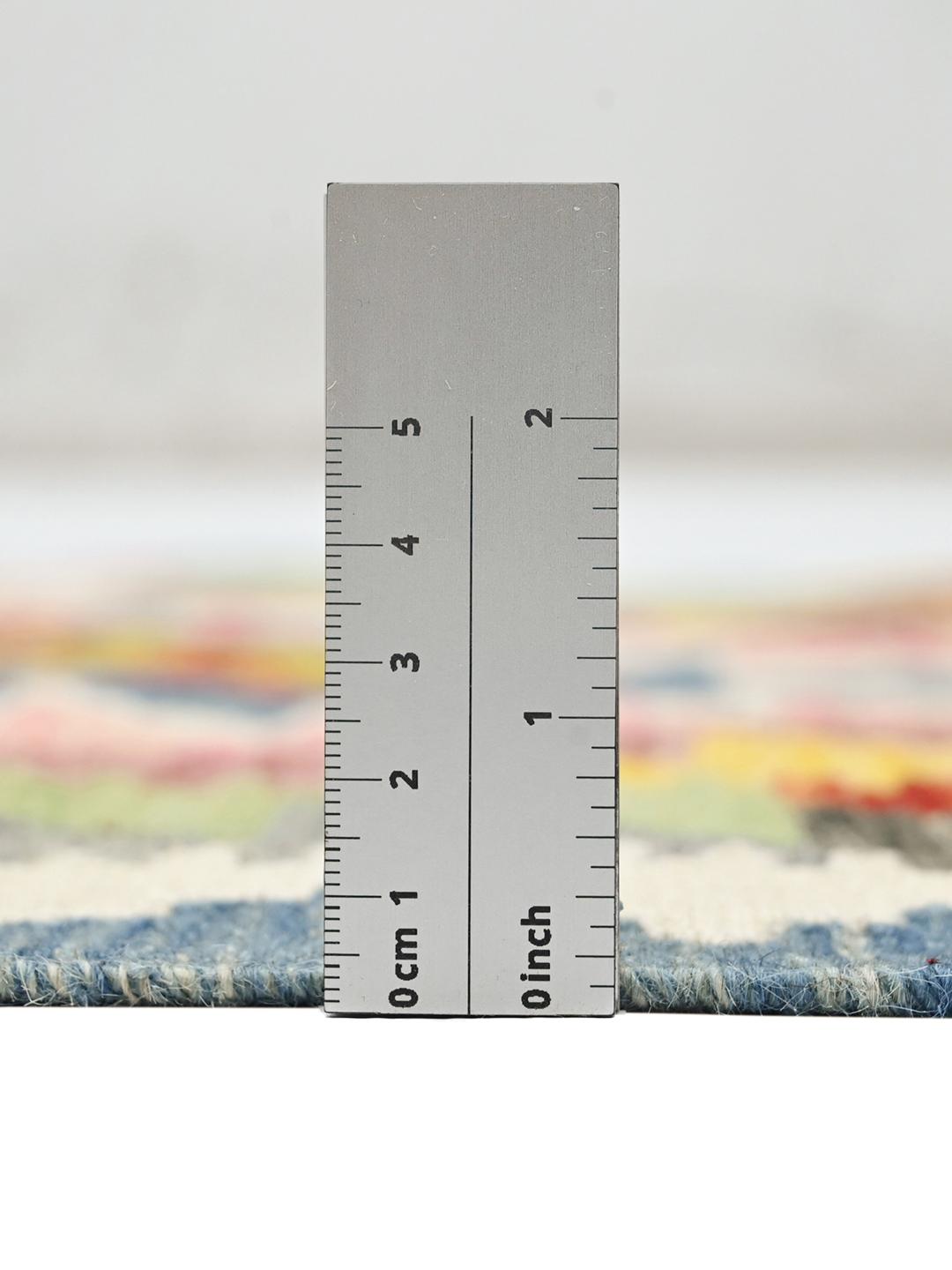
Kelim refers to the specific flat-weave technique where the weft threads are woven tightly through the warp threads to create the design, omitting a pile entirely. This method is highly valued for its simplicity and strength, as it allows for sharp, crisp geometric patterns that are essentially reversible and exceptionally long-lasting.
The design language of this tradition is defined by its bold, angular motifs, often including diamonds, triangles, and intricate borders. These patterns are not merely decorative but are deeply rooted in cultural symbolism, with each shape often representing protection, prosperity, or the natural landscape of the region.
Collecting a Kelim is an investment in human skill and cultural heritage. Because they are crafted without modern mechanical aids, they embody the resilience and creativity of their makers. Owning one allows you to participate in a long-standing tradition of craft that values the beauty of the handmade over the uniformity of the industrial.