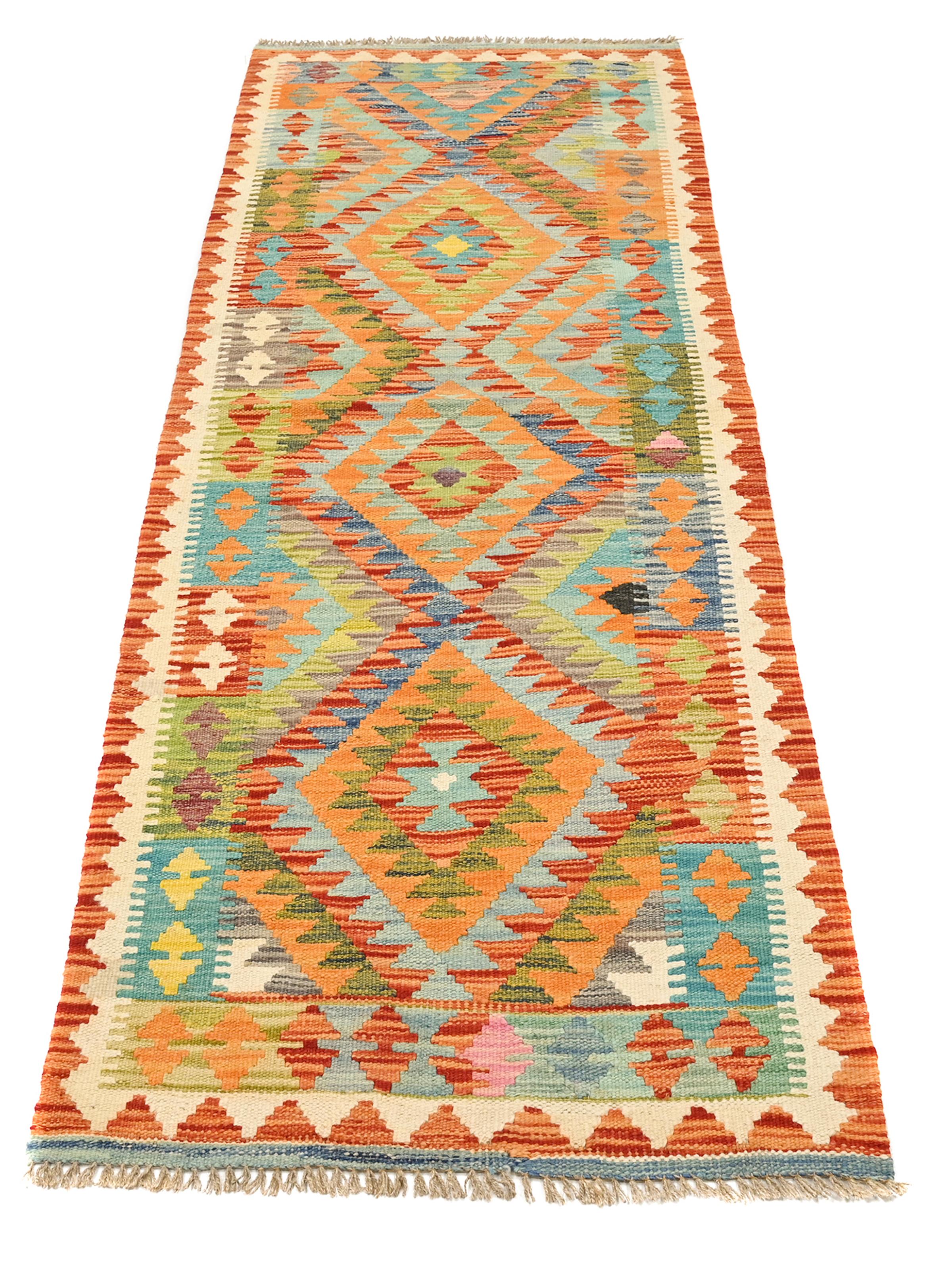
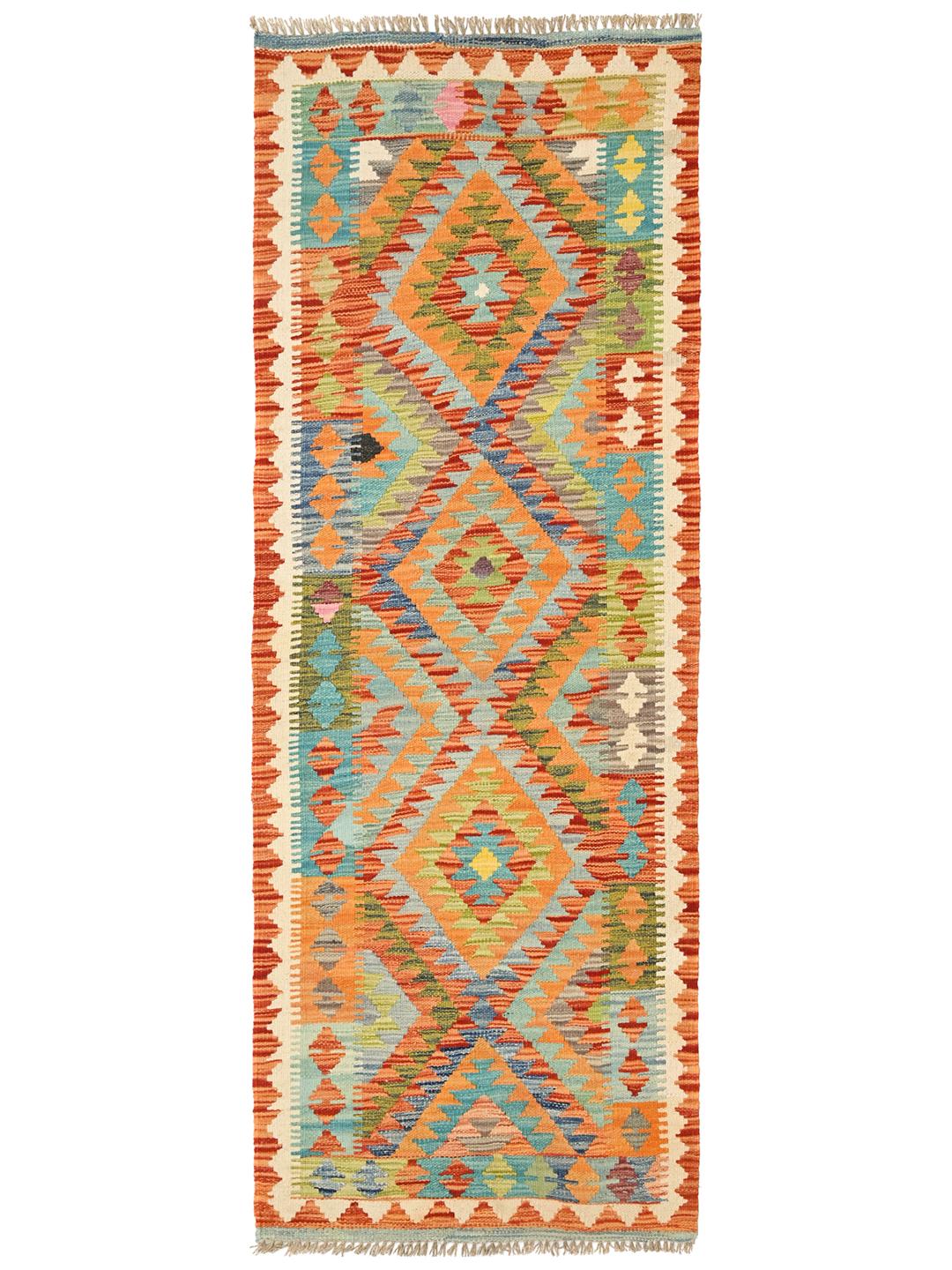
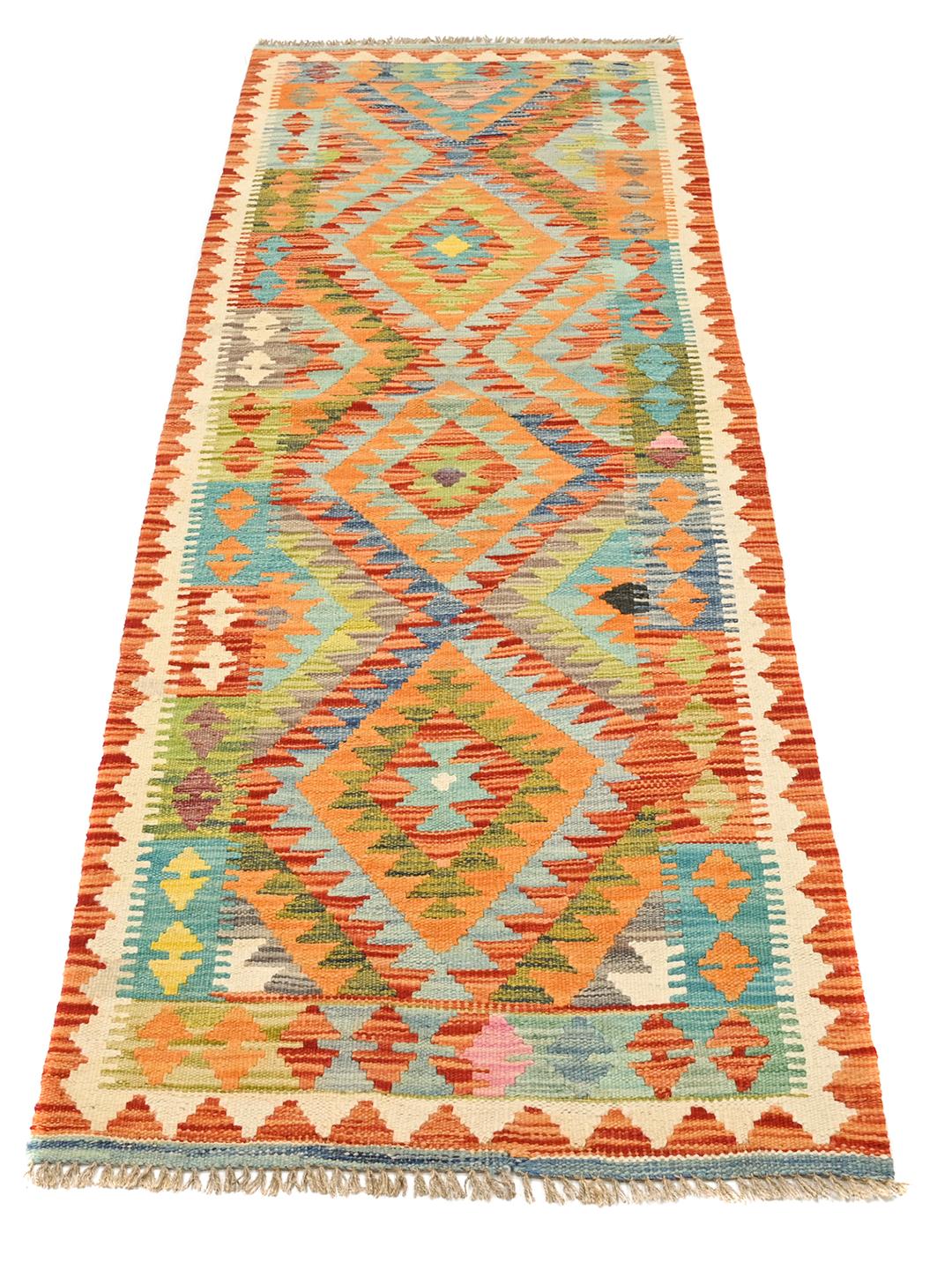
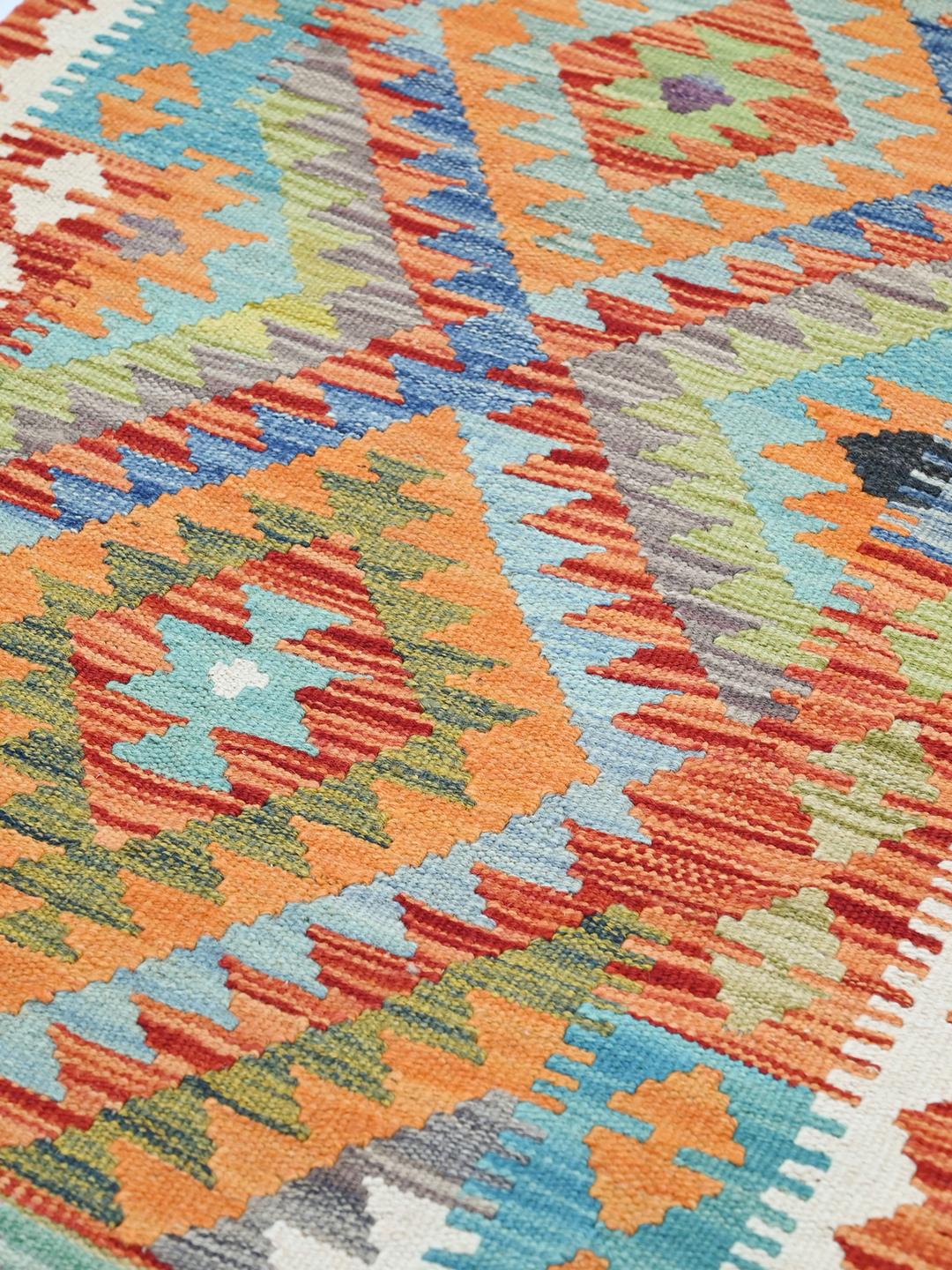
The Kelim tradition in Afghanistan is a testament to centuries of nomadic and village weaving heritage. These rugs, known for their flat-woven, pile-less construction, were historically crafted by families to serve as versatile floor coverings, wall hangings, or storage bags, reflecting the practical needs of life across the rugged landscapes of the Middle East.
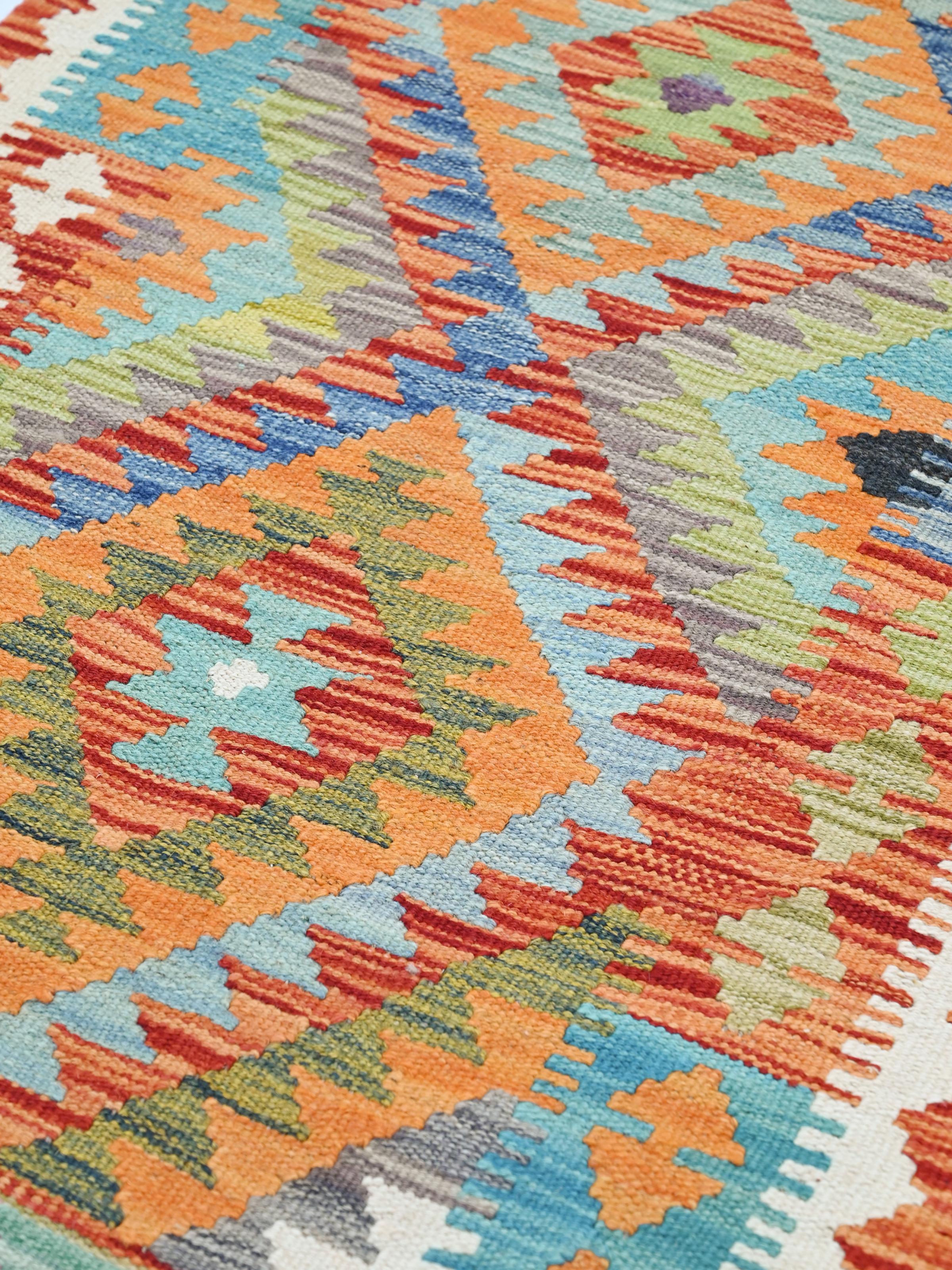
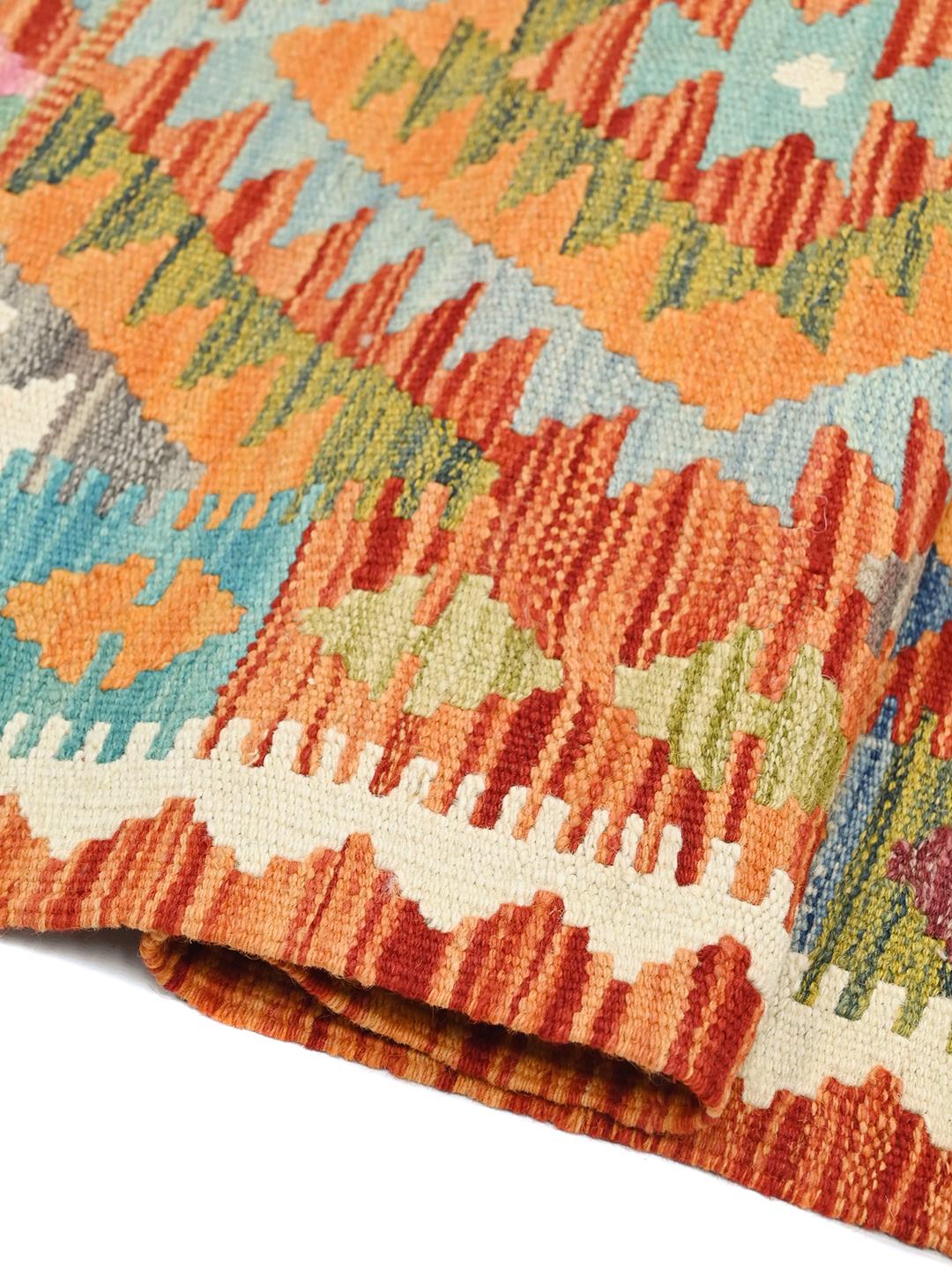
The term 'Kelim' refers to the specific slit-weave technique used to create these rugs. By alternating the coloured threads of the weft to cover the warp, the weaver produces a clean, sharp pattern that is identical on both sides. This technique is highly valued for its ability to create crisp, bold geometric designs that remain sharp and clear even after years of use.
Visually, these rugs are defined by their use of repeating geometric motifs, with diamonds and triangles being central to the aesthetic. The borders often feature smaller, rhythmic patterns that frame the larger central designs, creating a harmonious balance. The vibrant colours are traditionally derived from natural dyes, which give the wool a rich, organic appearance that matures beautifully over time.
Owning an authentic Afghan Kelim is an opportunity to connect with a living craft tradition. These pieces are highly sought after by collectors and enthusiasts alike because they represent a marriage of artistic expression and extreme durability. They are not merely floor coverings but artefacts of a culture that prioritises skill, memory, and the enduring quality of natural materials.