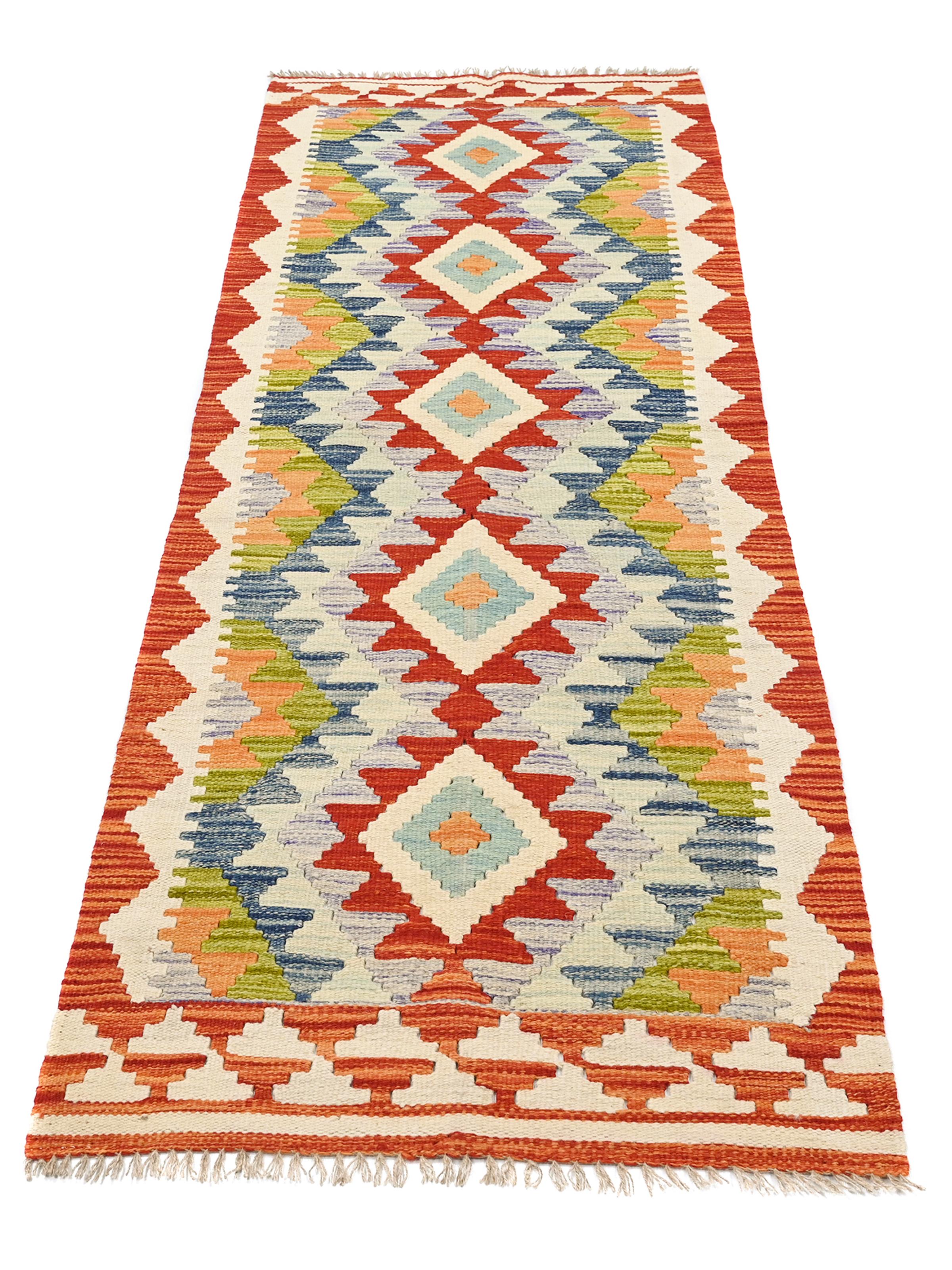
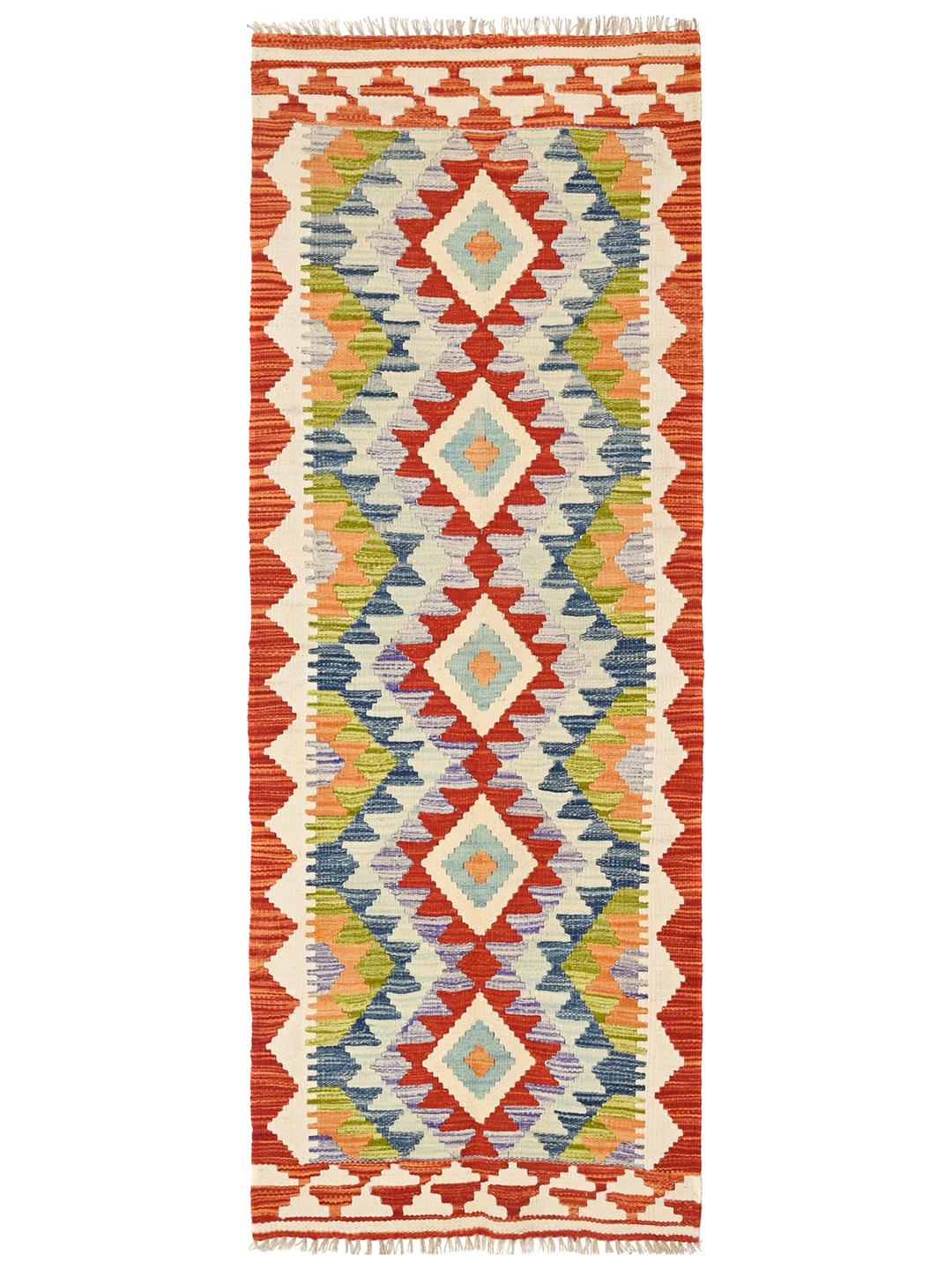
Kelim rugs have long been a cornerstone of textile traditions across the Middle East and Central Asia. Originally produced by nomadic tribes for practical use as floor coverings, tent decorations, and transport bags, these flat-woven textiles were designed to be both portable and exceptionally durable. The Afghan Kelim, in particular, is renowned for its earthy tones and bold, geometric aesthetics that reflect the rugged landscapes and rich cultural heritage of the region.
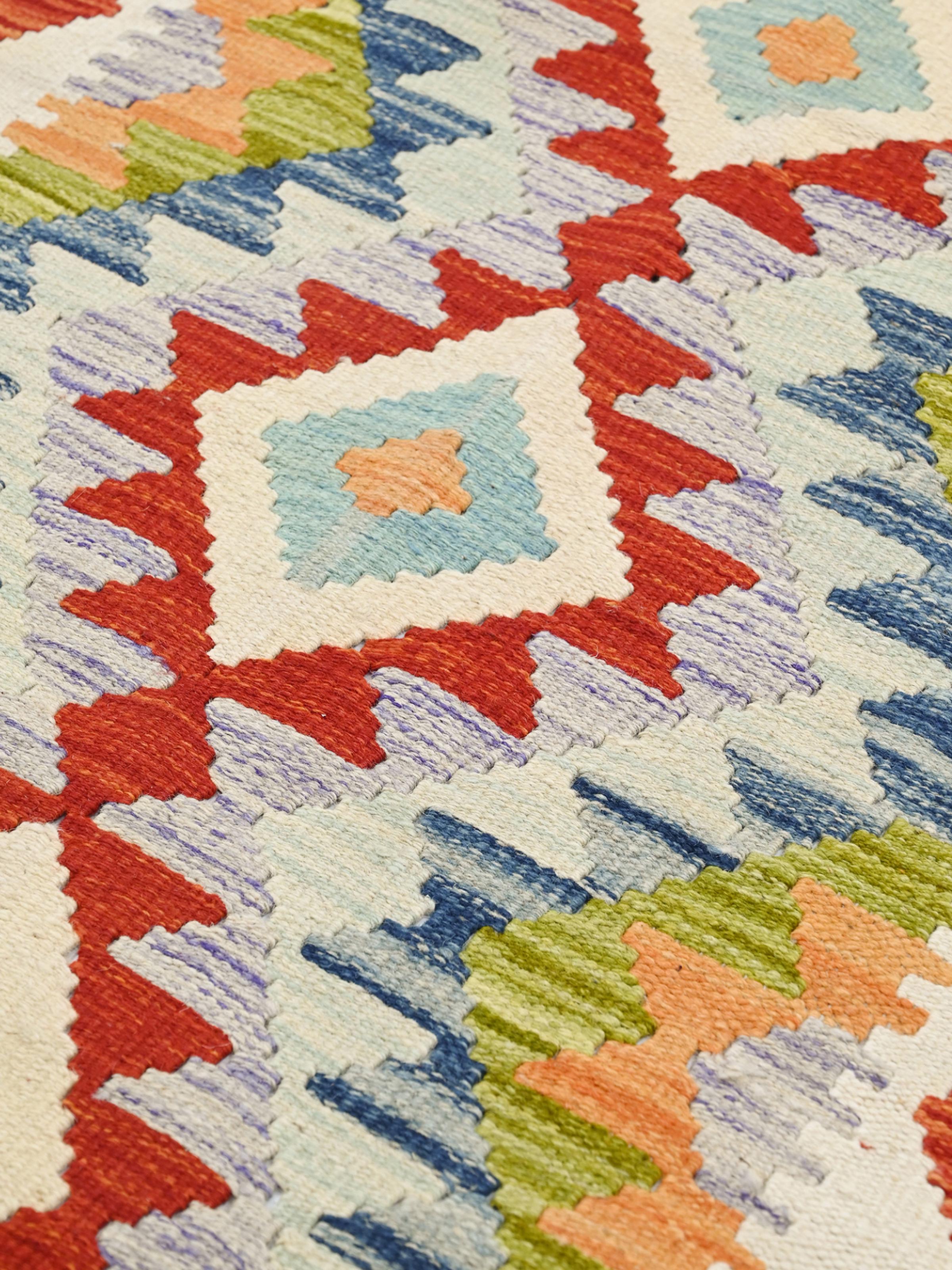
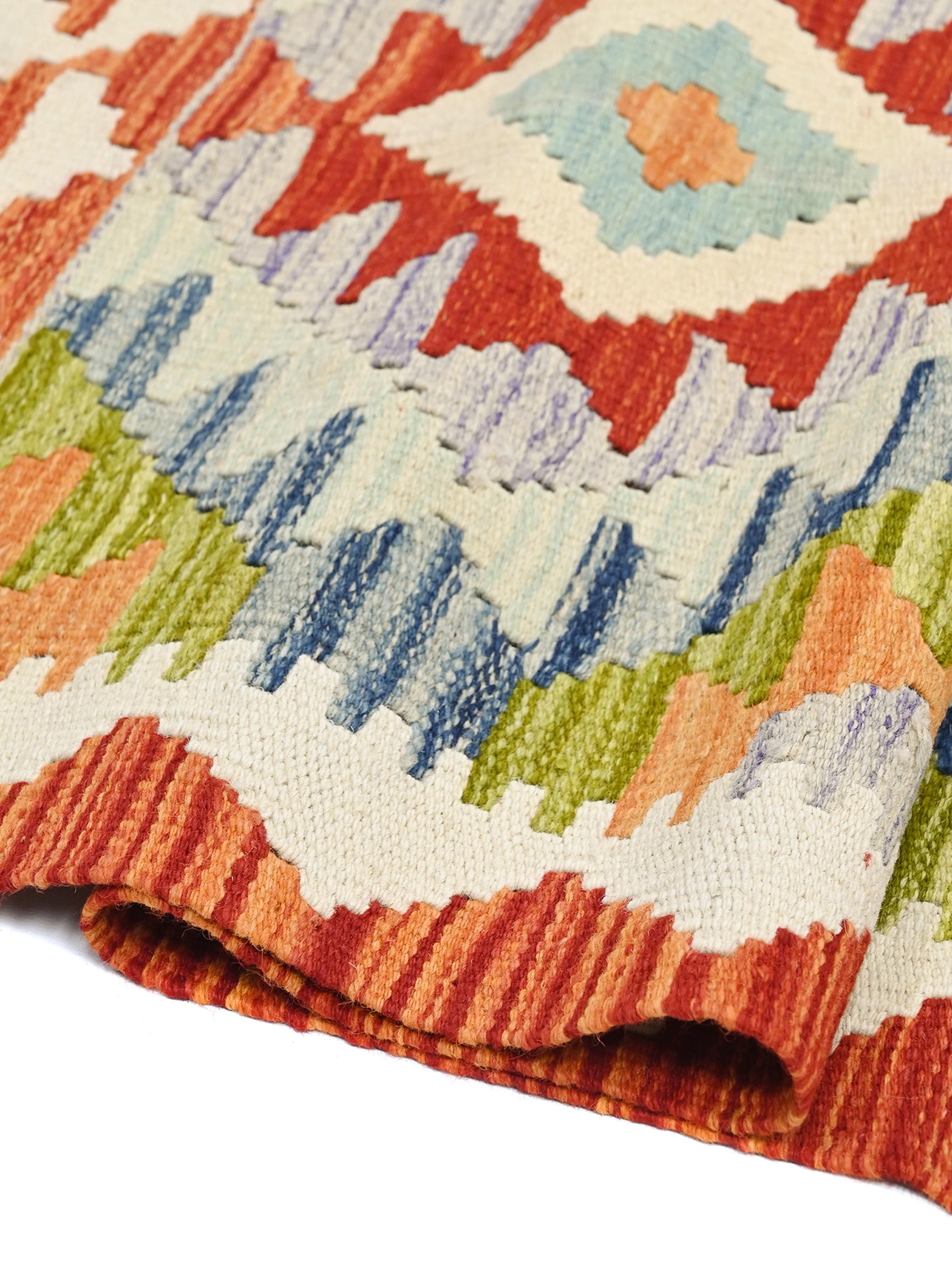
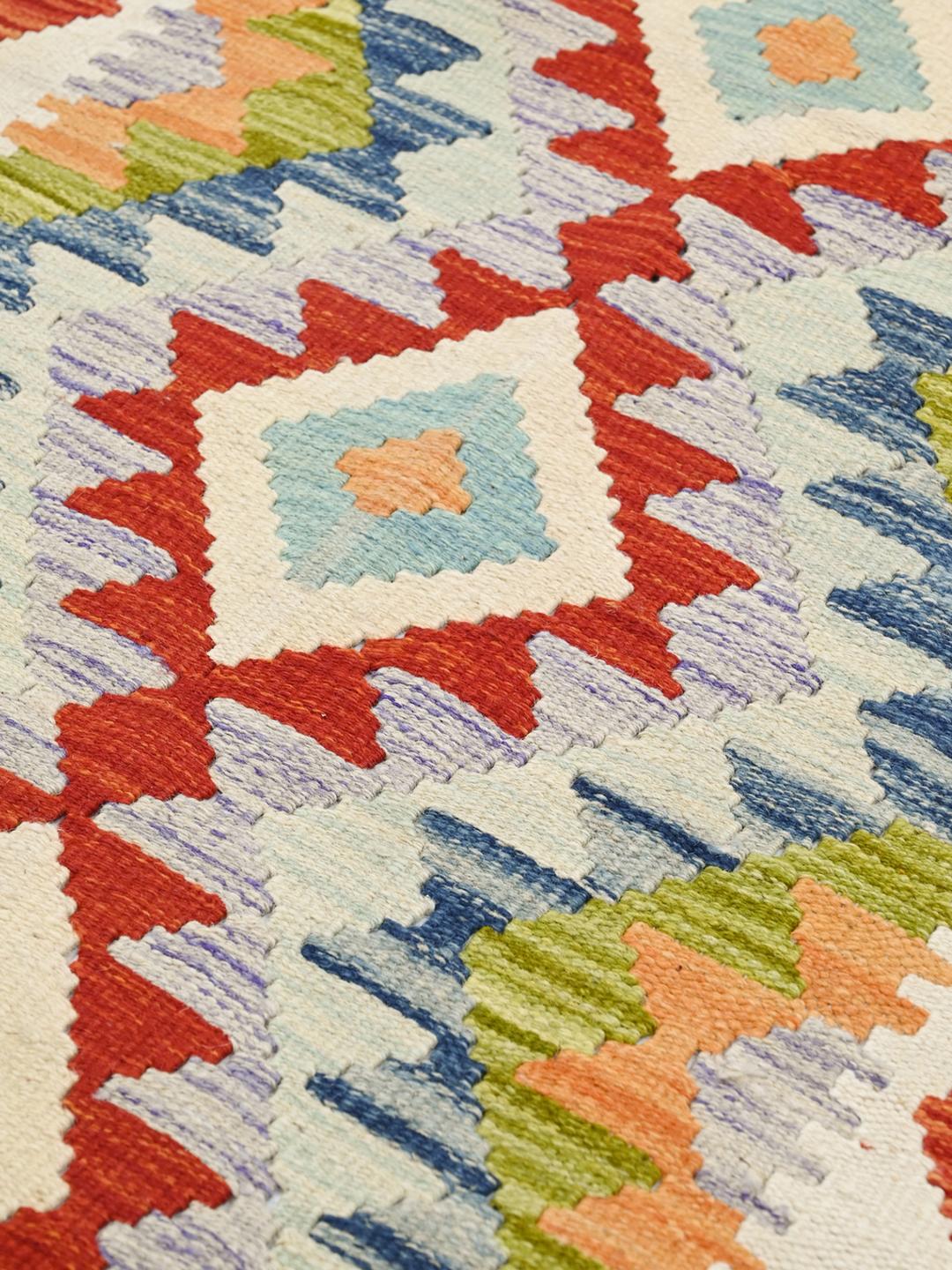
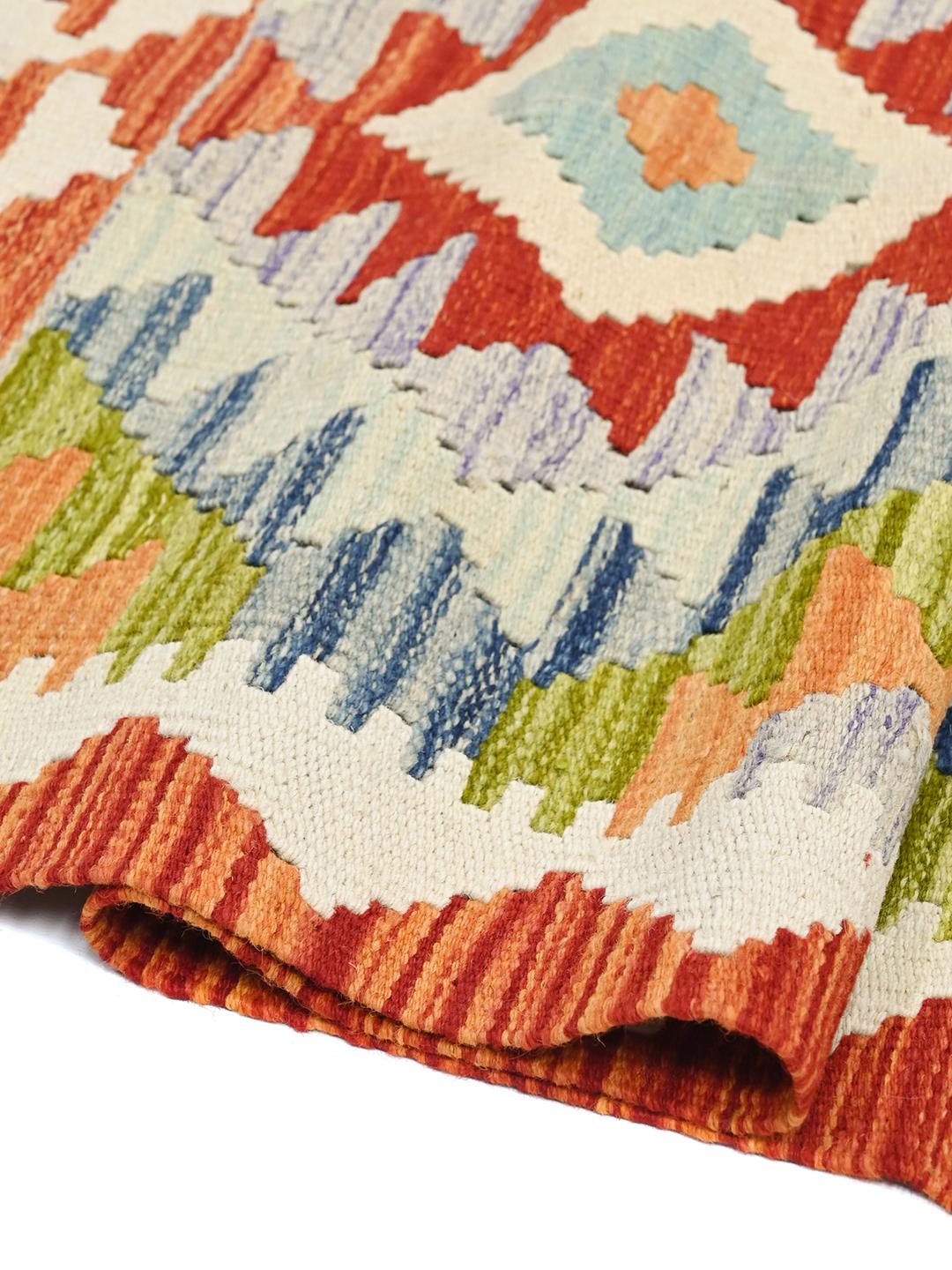
The term 'Kelim' refers specifically to the weaving technique where the weft threads are pulled tightly over the warp threads to hide them completely, resulting in a smooth, pileless surface. This requires immense skill, as the weaver must maintain consistent tension and master the complex colour-shifting necessary to form sharp, clean-edged patterns. The resulting fabric is lightweight yet remarkably strong, a testament to the sophistication of ancient weaving methods.
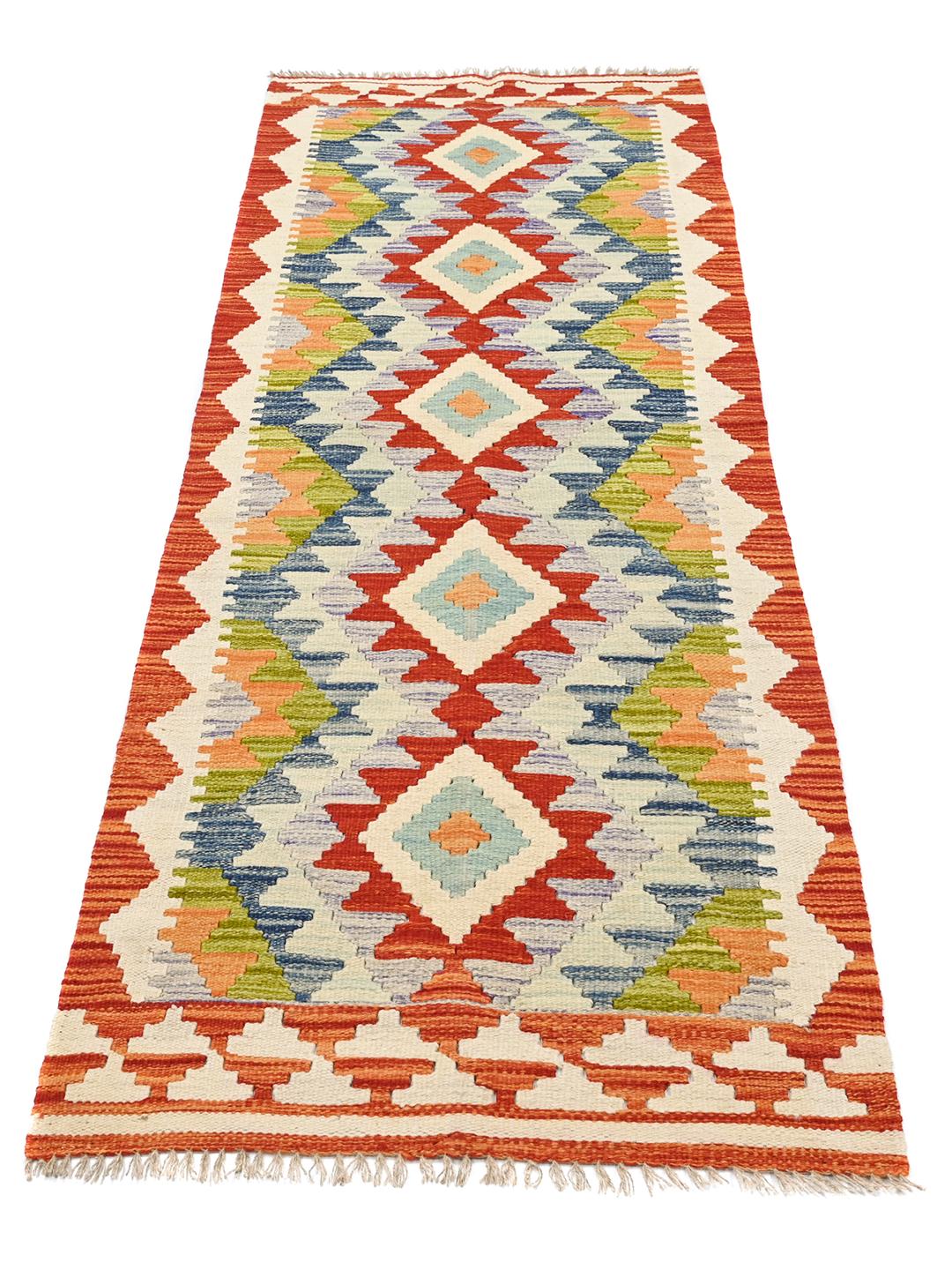
Signature design elements of these rugs often include tribal motifs, such as the prominent diamond or medallion shapes seen here, which are frequently arranged in repeating patterns. The borders are typically decorated with smaller, complementary geometric shapes that frame the central field. These designs are not merely decorative but are deeply symbolic, often representing local folklore, protection, or the tribal identity of the weaver.
Today, these rugs are highly sought after by collectors and enthusiasts who appreciate the human effort and historical continuity they represent. Owning a hand-woven Afghan Kelim is an investment in a storied craft that bridges the gap between ancient nomadic traditions and modern interior design. Each piece serves as a cultural artifact that brings depth, texture, and a sense of history into a contemporary home.