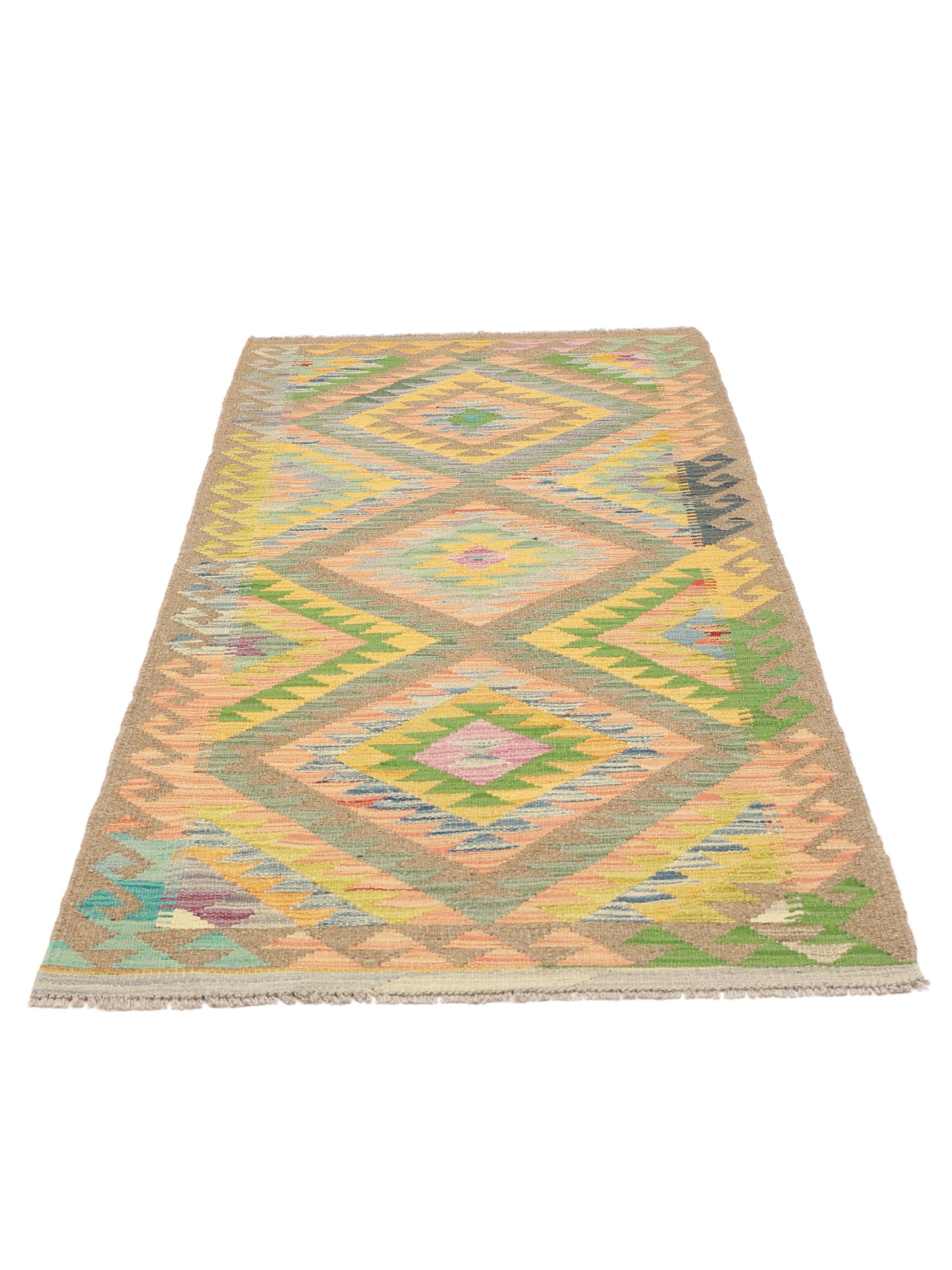
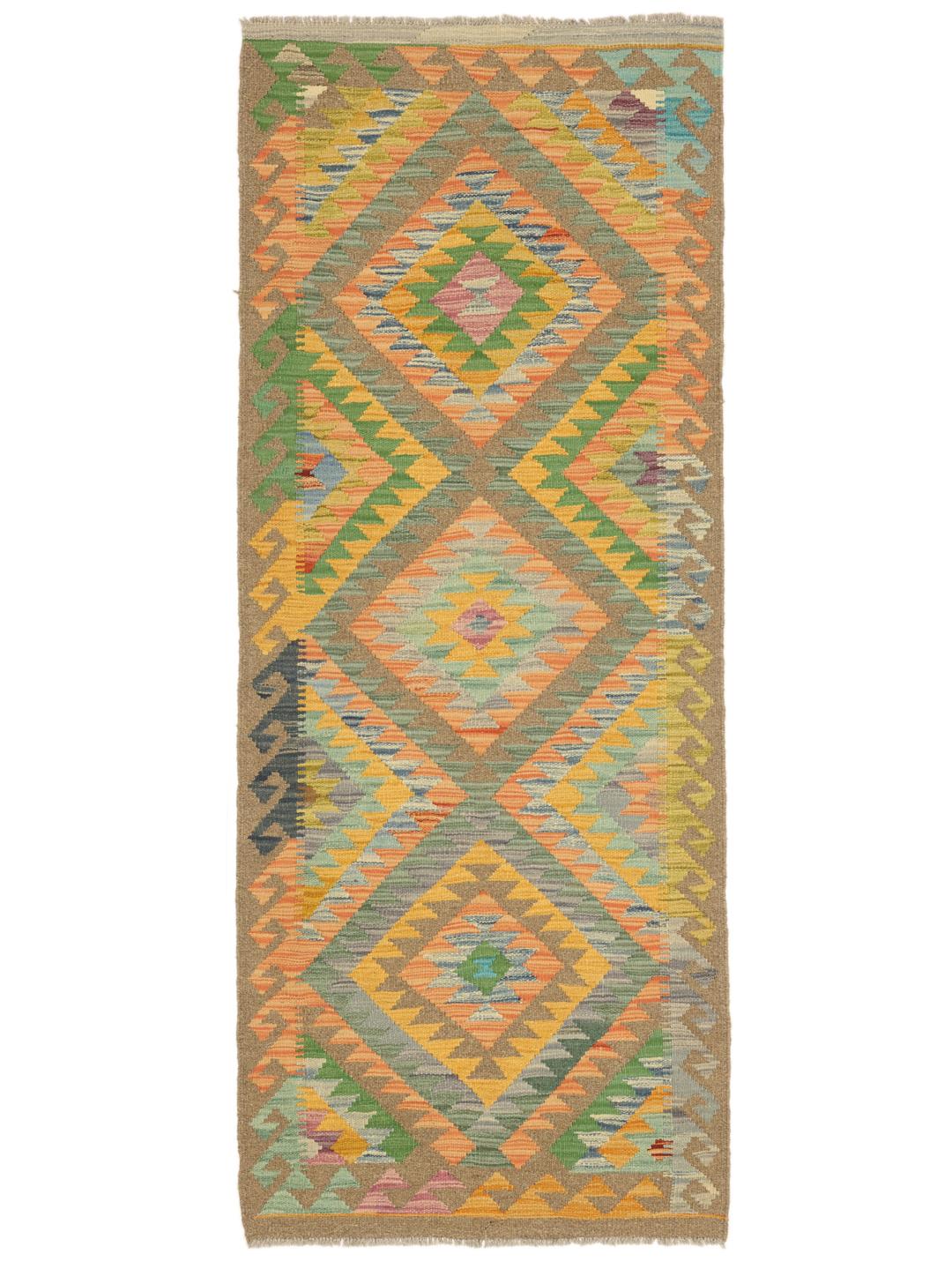
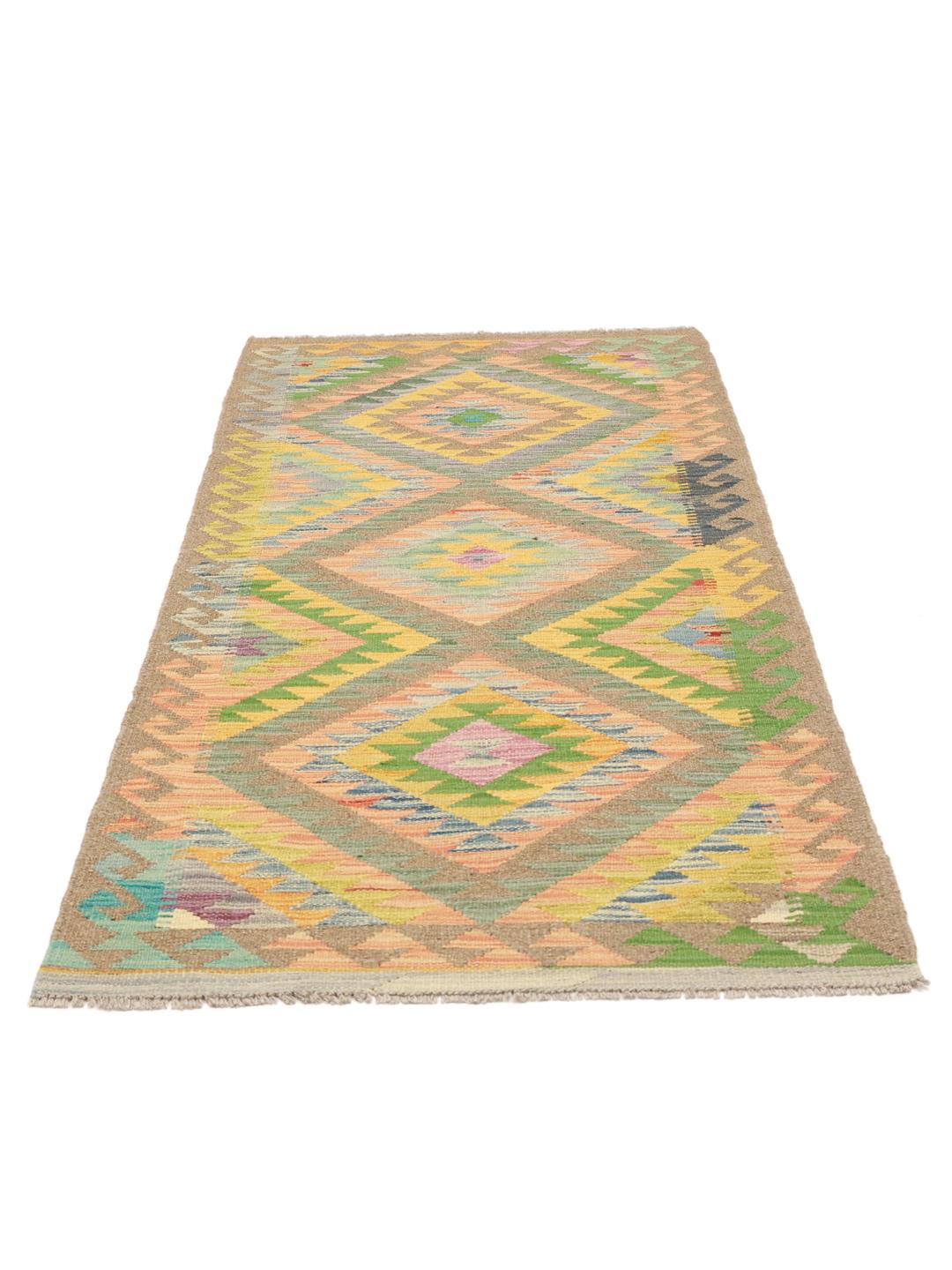
Kelim rugs have been a cornerstone of life in the Middle East and Central Asia for centuries, serving as essential, versatile textiles for nomadic tribes and settled communities alike. The Afghan tradition is particularly celebrated for its bold use of colour and geometric motifs, which often draw inspiration from the rugged landscapes and natural surroundings of the region.
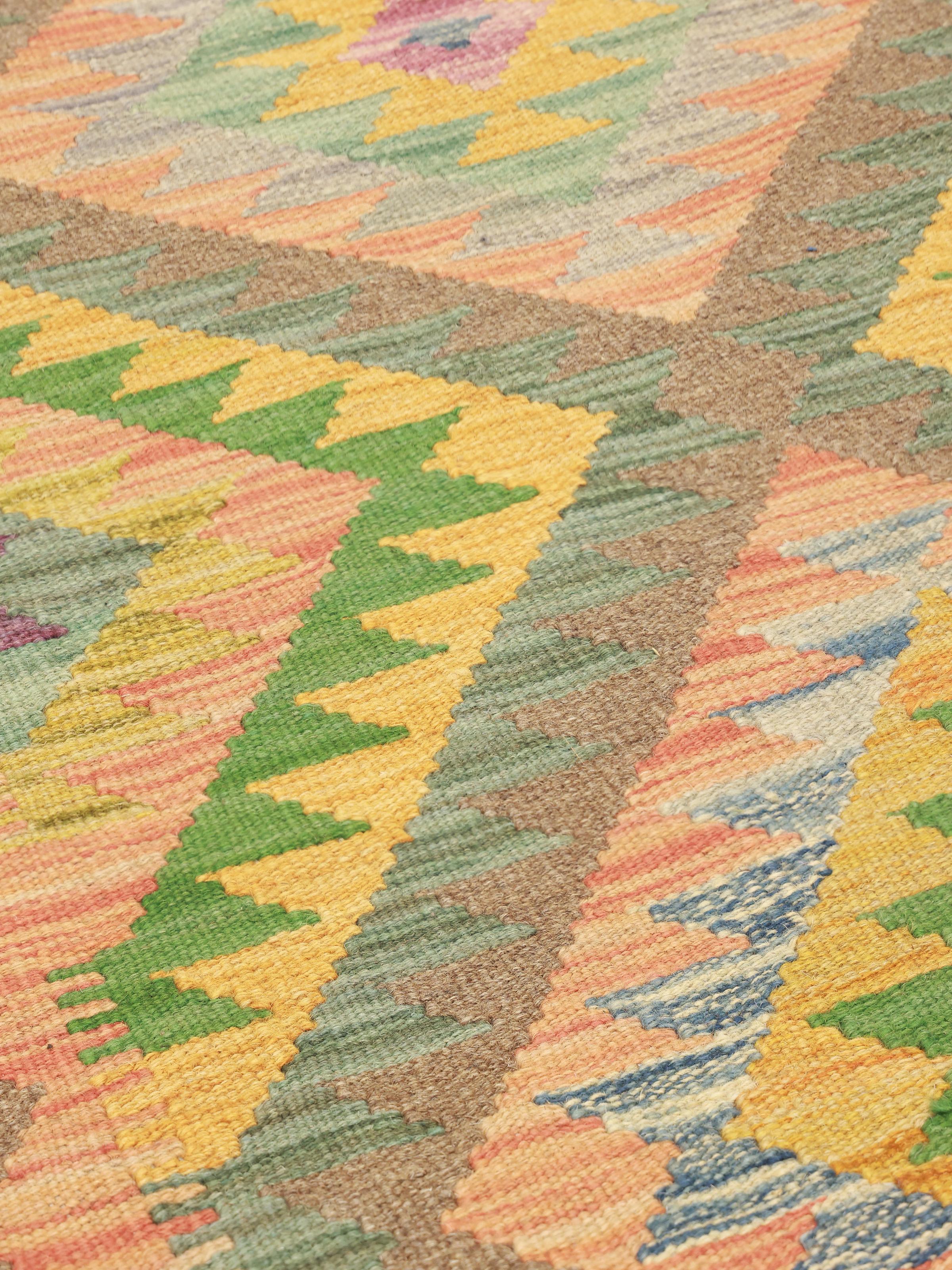
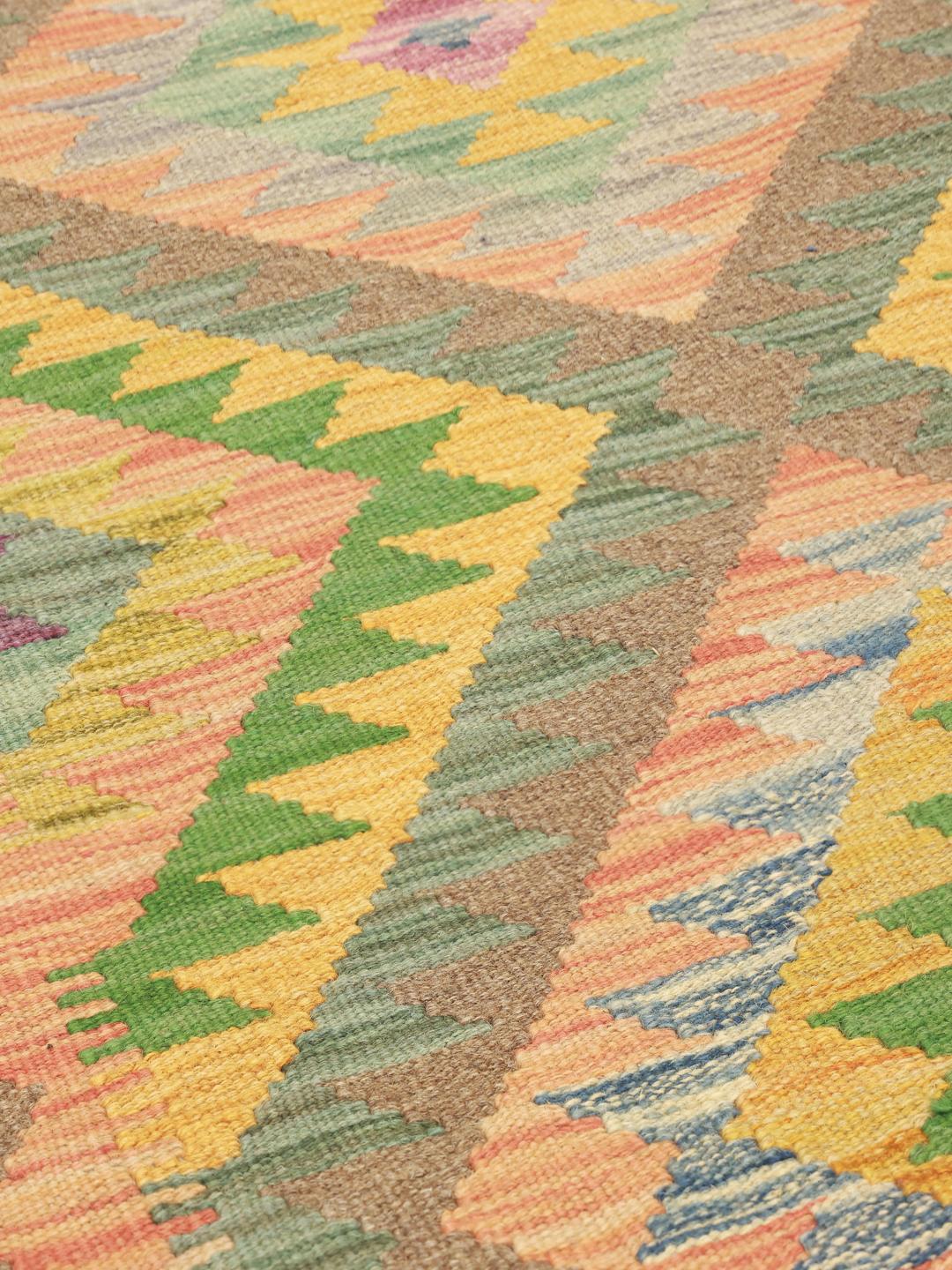
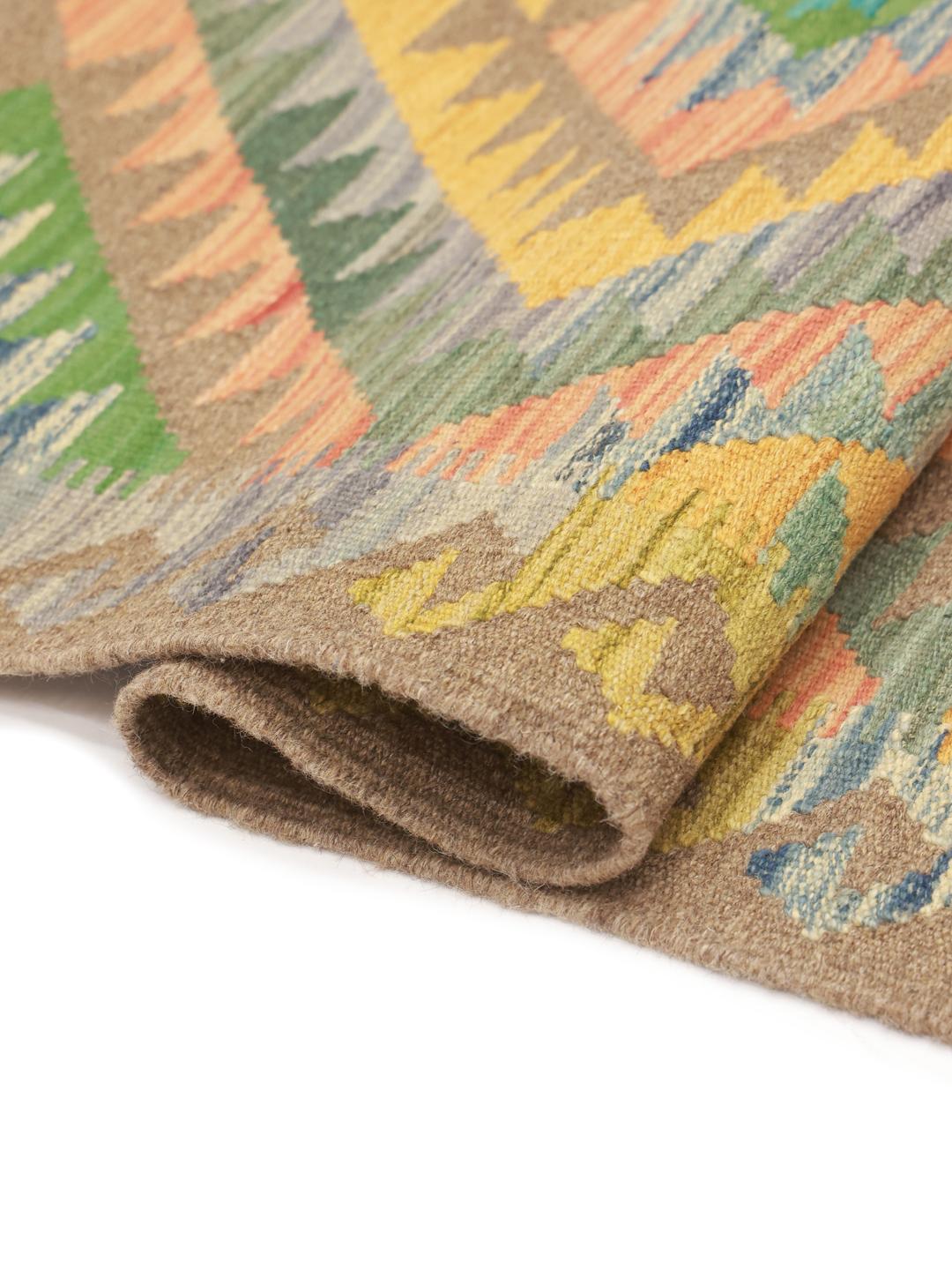
The term Kelim refers to a flat-weaving technique where the design is created by interweaving the coloured weft threads through the warp. This process creates a rug that is reversible and remarkably durable, as the lack of pile prevents the accumulation of dust and makes the textile easy to maintain. This technical approach is what gives these rugs their signature clean, sharp edges and intricate, repeating patterns.
Signature design elements in these rugs often include large, bold diamonds or hooked motifs known as guls, which are arranged in rhythmic sequences across the field. The borders are typically framed by simpler, geometric lines that provide a sense of structure to the more complex central designs. The use of vibrant, contrasting colours is a hallmark of the Afghan style, designed to stand out against the earthy tones of traditional living spaces.
Owning a Kelim from this tradition is a way to connect with a long-standing history of artistry and utility. These rugs are highly valued by collectors and homeowners alike for their ability to bring a sense of history and human touch into modern interiors. Each piece represents a continuation of a craft passed down through generations, making it a meaningful addition to any home.