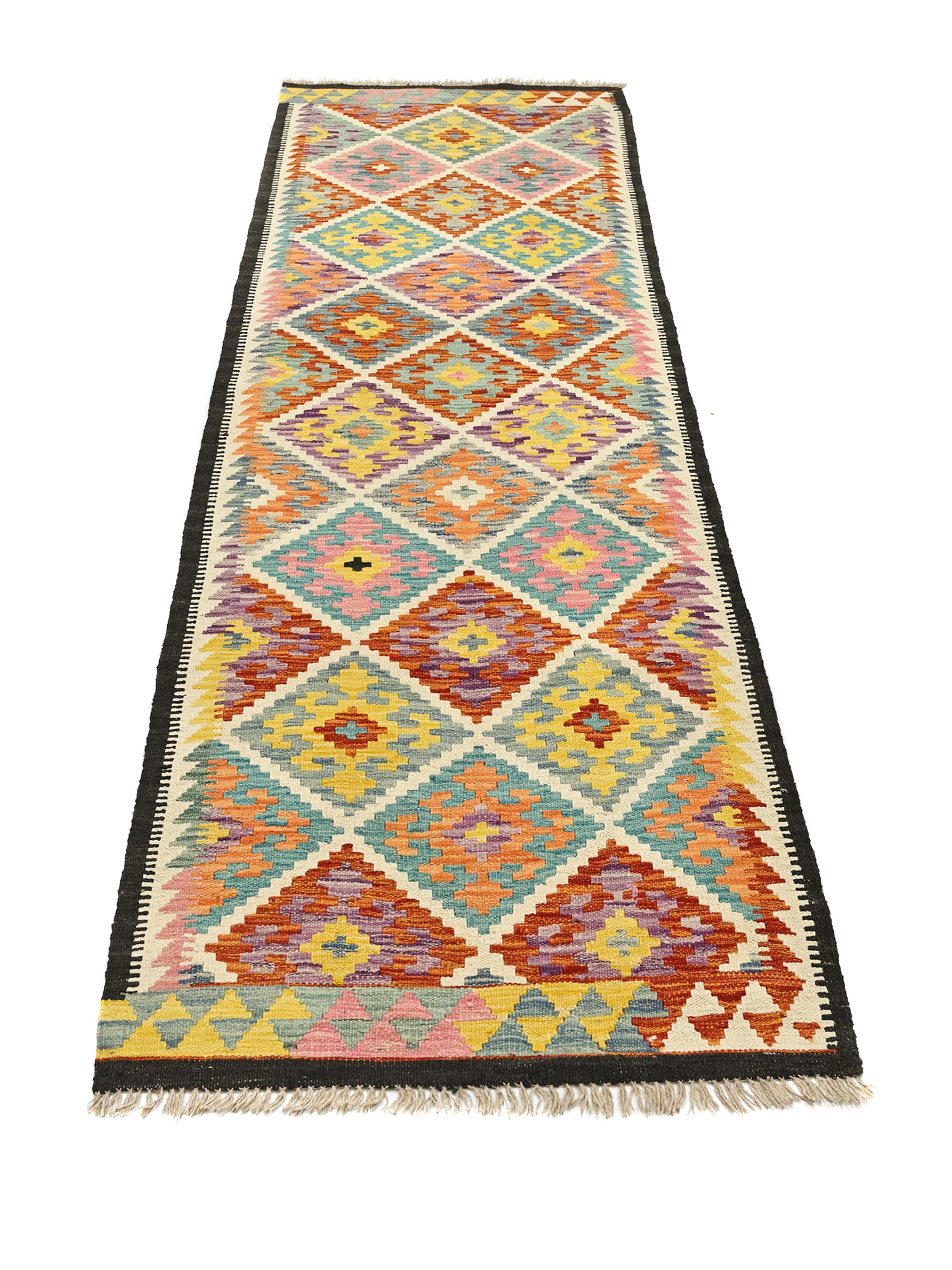
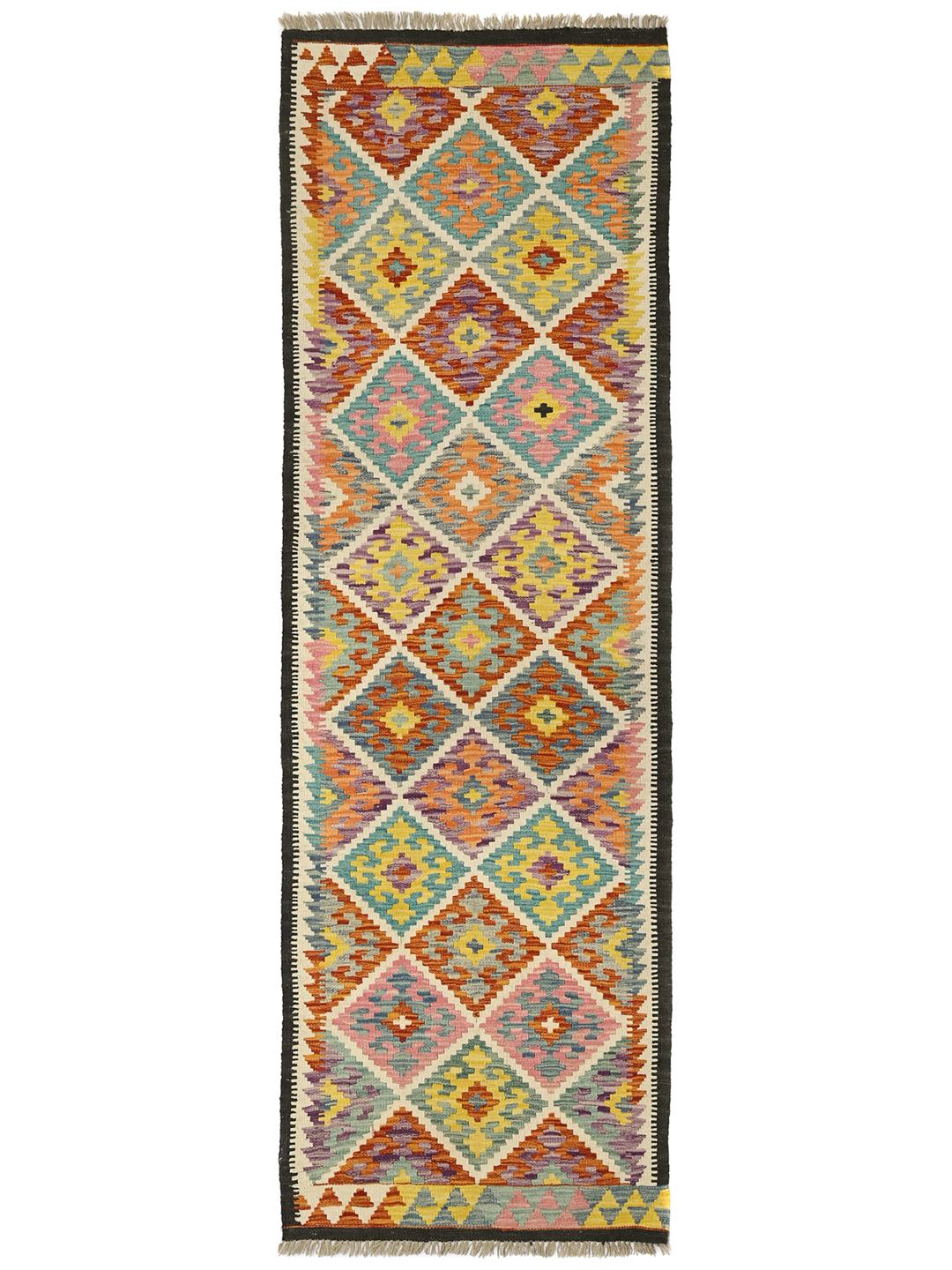
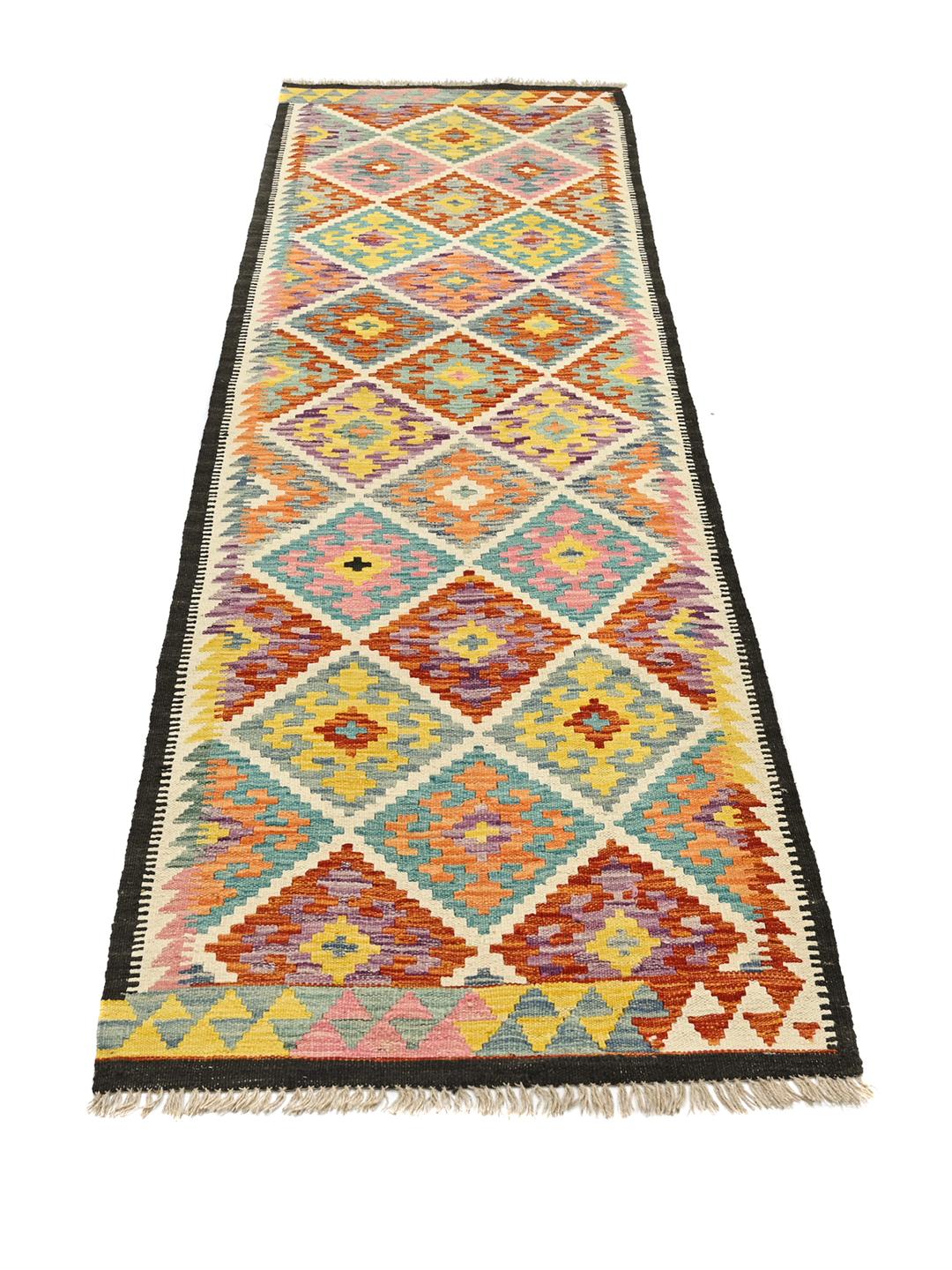
The Kelim tradition is deeply rooted in the history of the Middle East and Central Asia. These flat-woven rugs have been a staple of nomadic and village life for centuries, serving as everything from floor coverings and wall hangings to saddlebags and tent dividers. The Afghan style, in particular, is celebrated for its earthy tones and robust construction.
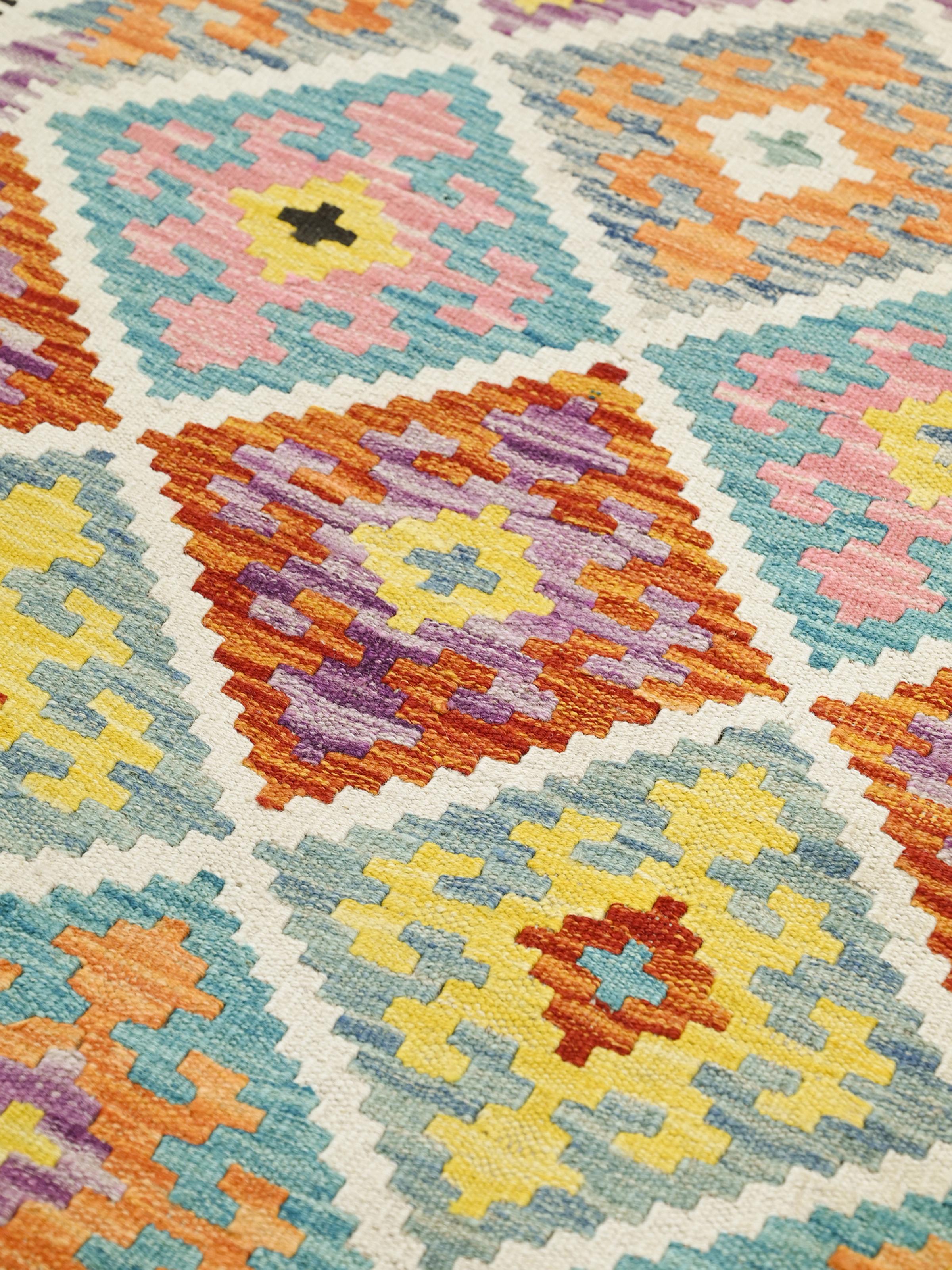
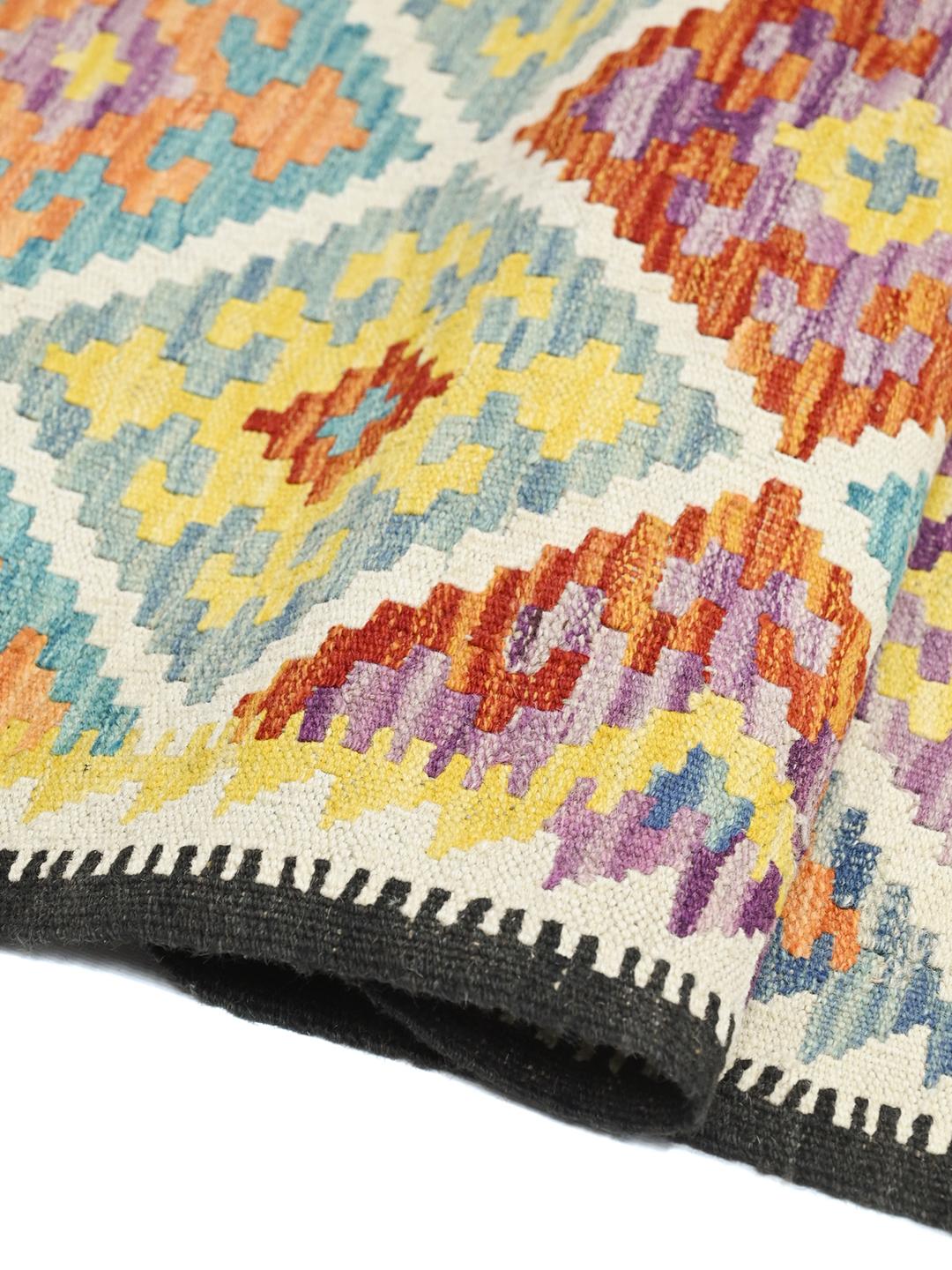
Technically, a kelim is defined by its lack of a pile, as it is created by interweaving the warp and weft strands directly. This technique allows for the creation of crisp, sharp geometric patterns, as the design is built into the structure of the rug itself rather than knotted into a foundation. This requires immense focus to maintain consistent tension and pattern alignment.
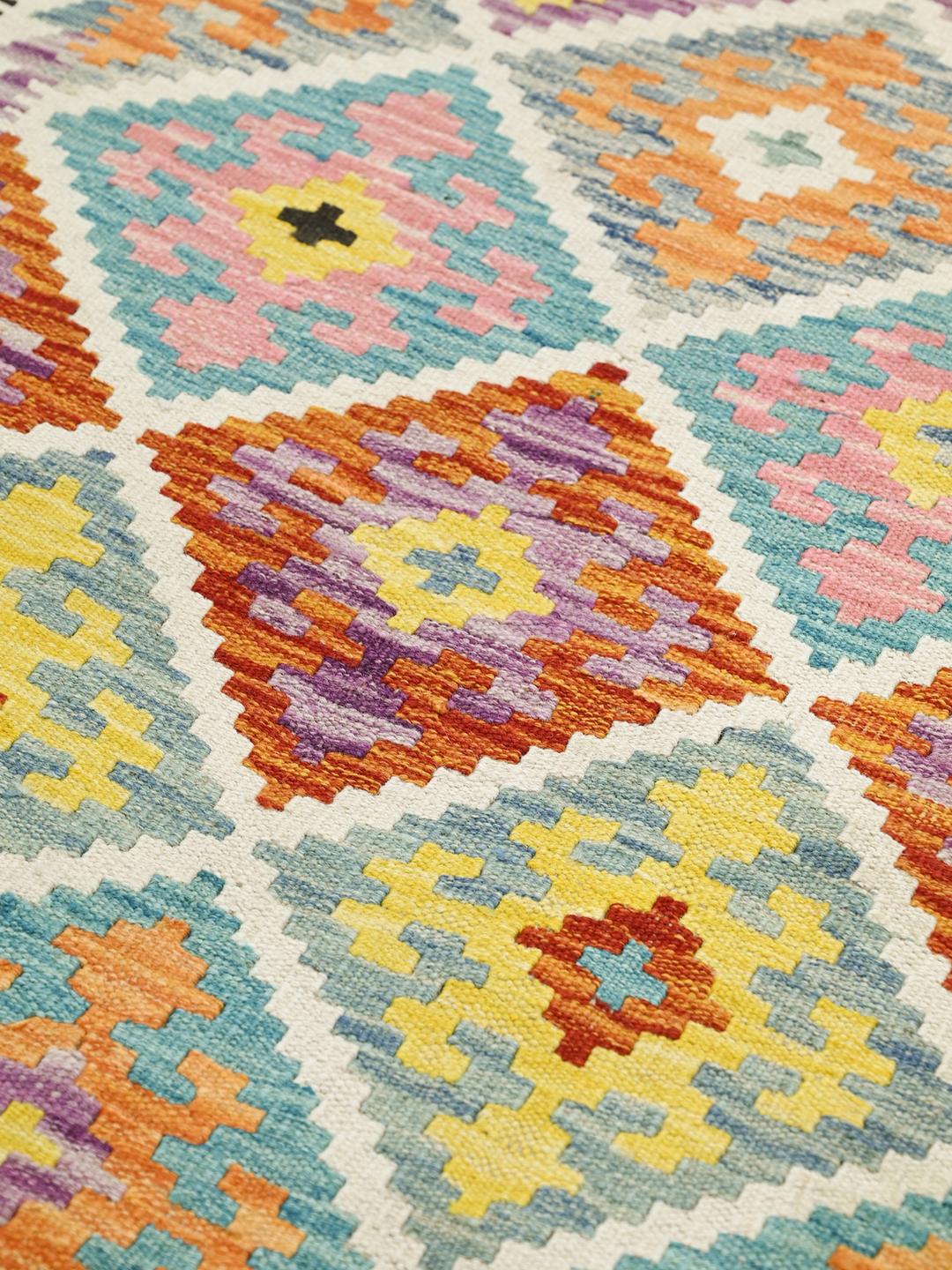
The signature design elements of these rugs are their bold, repeating geometric motifs. Diamond shapes, triangles, and stepped patterns are common, often framed by intricate, decorative borders. While traditional examples often relied on natural dyes and local sheep wool, modern Afghan kelims continue this legacy by blending classic motifs with a diverse and lively colour palette that feels fresh and contemporary.
Owning a kelim is a way of connecting with a rich heritage of functional craft. These pieces are highly valued by collectors not only for their beauty but for the skill and patience required to create them. By bringing a piece of this tradition into your home, you are preserving a craft that values longevity, utility, and the creative spirit of the weaver.