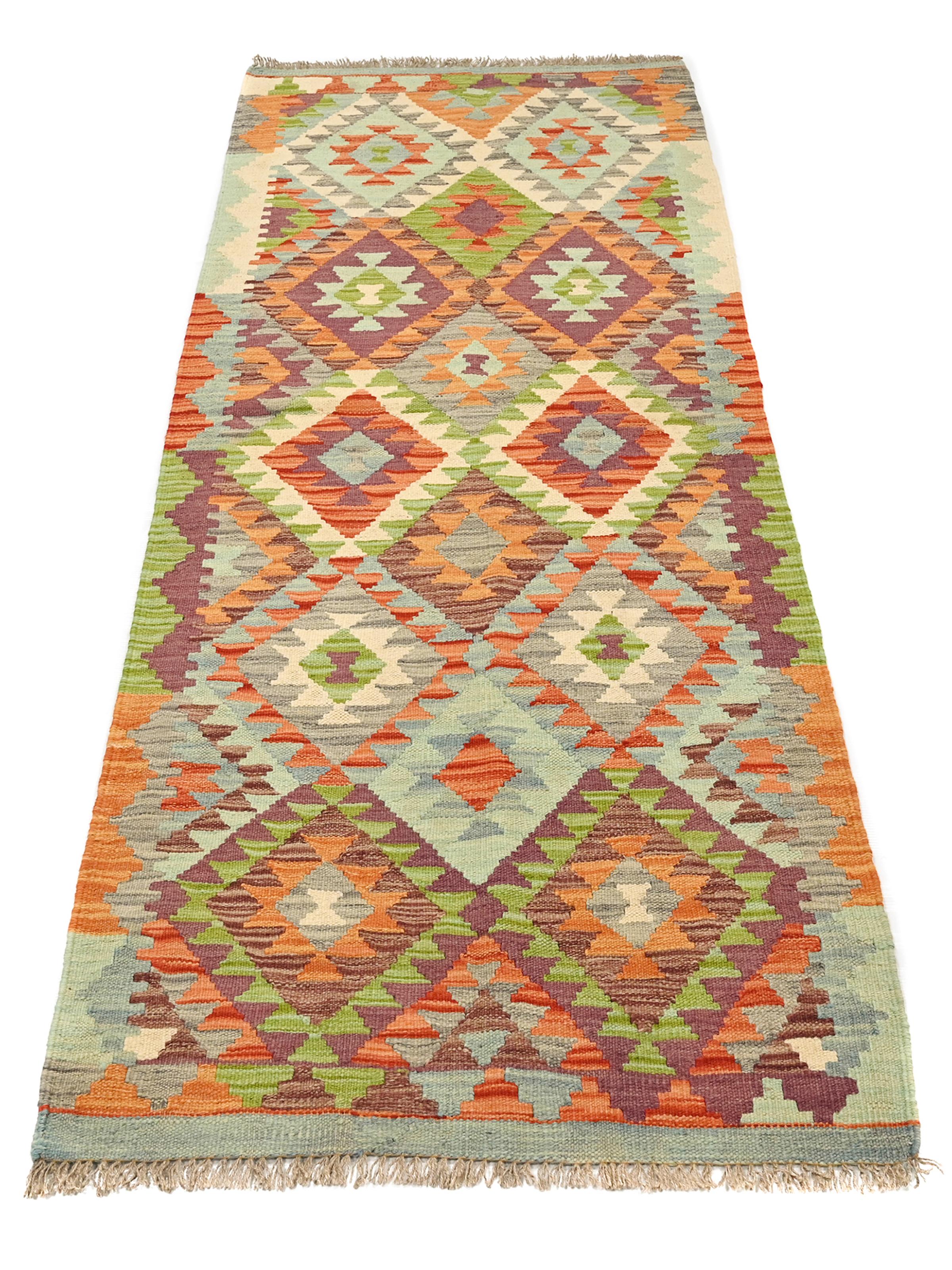
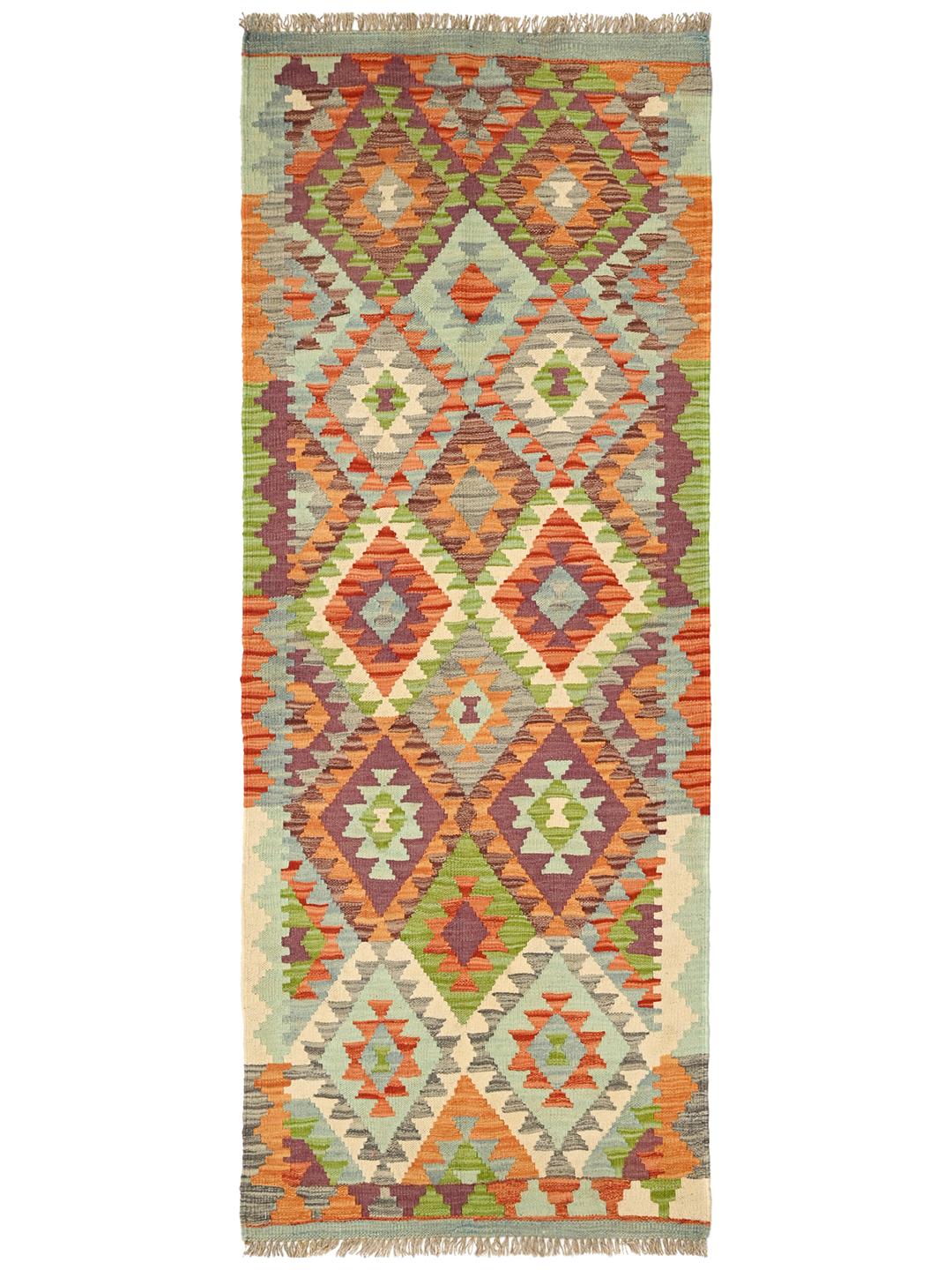
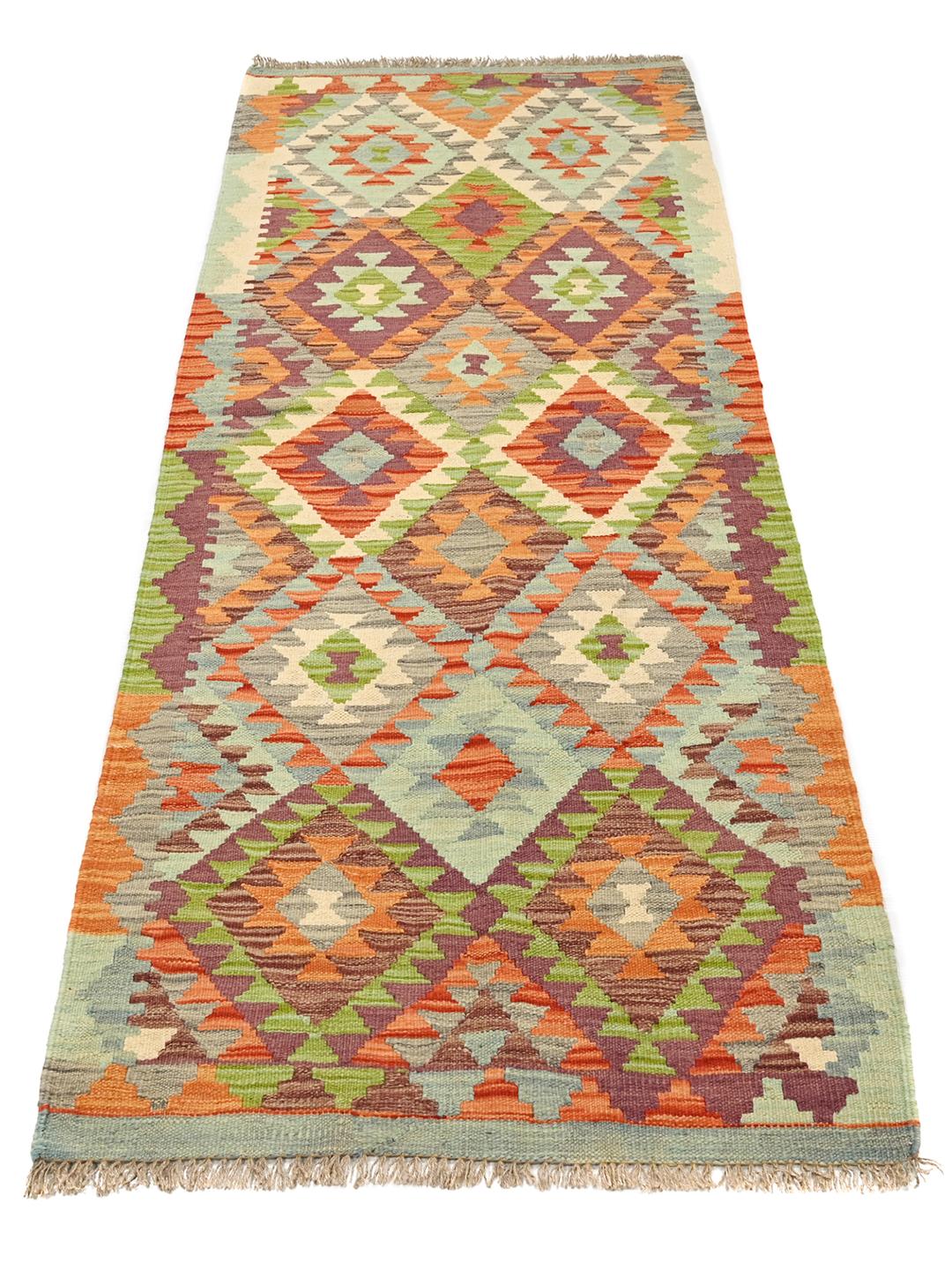
Kelim rugs from Afghanistan are deeply rooted in a nomadic tradition that spans centuries. These textiles were historically created by tribal weavers to serve both functional and decorative purposes, from floor coverings to bags and tent dividers. The techniques used today are a direct continuation of these ancient methods, preserving a cultural legacy that prioritises natural materials and geometric storytelling.
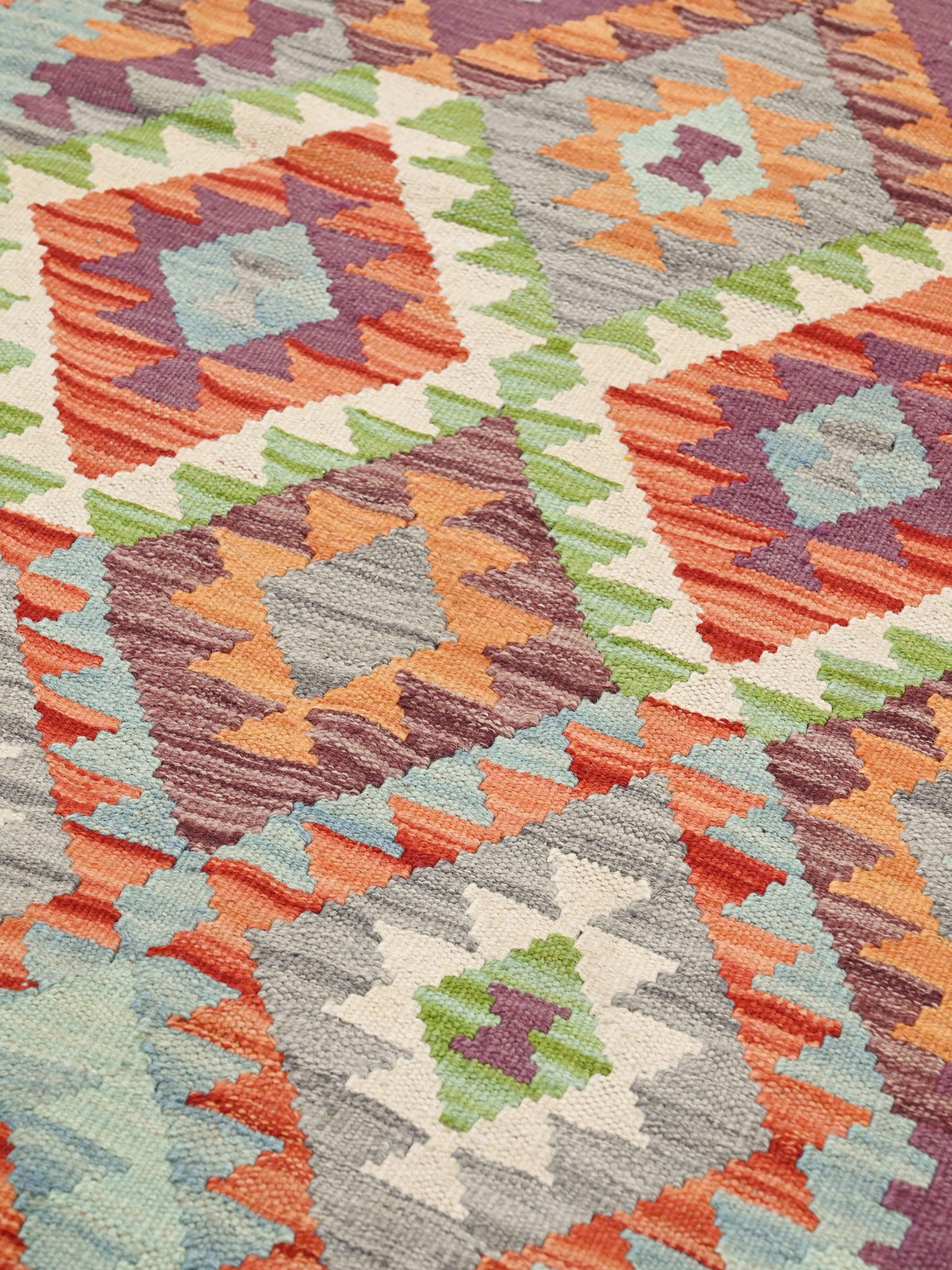
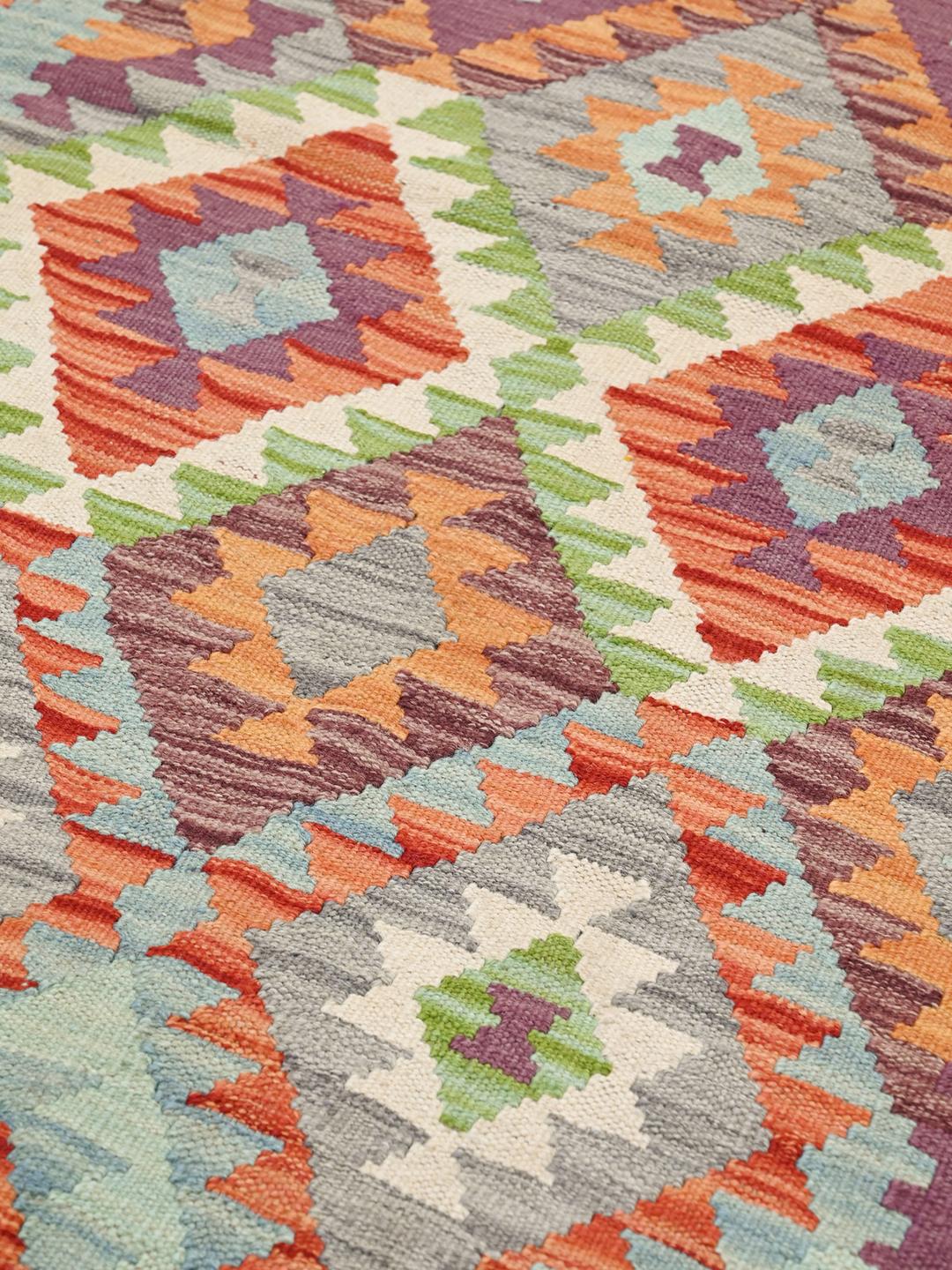
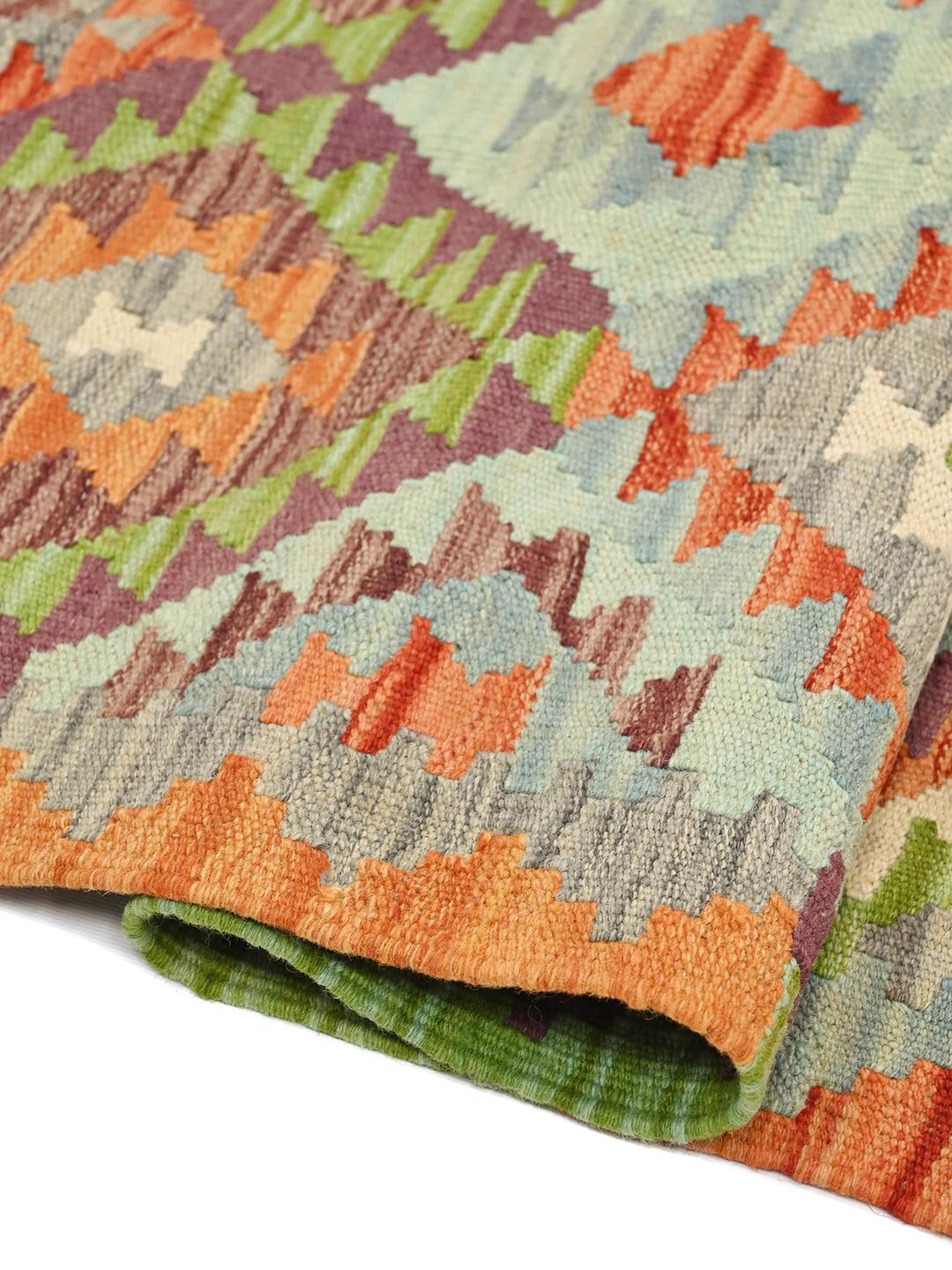
The term 'Kelim' refers to the flat-weaving technique where the warp and weft are interlaced to create a smooth, pileless surface. This method results in a durable, reversible, and lightweight rug that is prized for its versatility. The lack of pile allows the vibrant, intricate patterns to take centre stage, showcasing the precision of the weaver who must manage tension and colour changes entirely by hand.
The signature design elements of these rugs typically include bold geometric motifs such as diamonds, triangles, and stylised floral or tribal symbols. These shapes often carry symbolic meaning, representing elements of nature, protection, or tribal identity. The use of vibrant, contrasting colours is a hallmark of the Afghan style, often achieved through traditional dyeing methods that result in a warm, earthy, and deeply saturated aesthetic.
Collecting these rugs is an investment in cultural heritage and the preservation of human skill. Each piece serves as a physical record of the weaver's environment and creative vision. By bringing a piece like this into your home, you are not just acquiring a floor covering, but a connection to a long-standing tradition of craftsmanship that values individuality, patience, and the enduring beauty of handmade textiles.