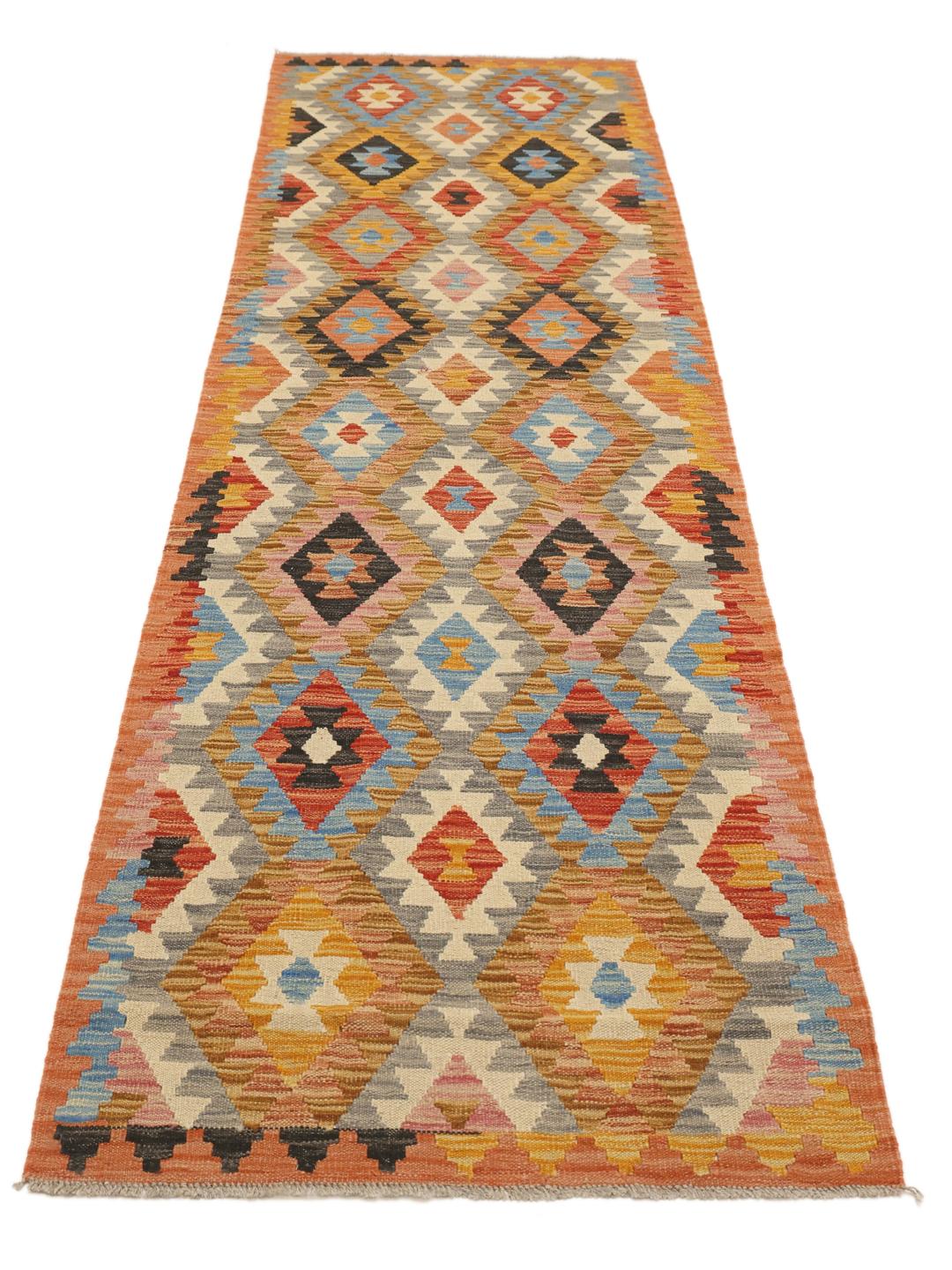
The Kelim rugs of Afghanistan are celebrated for their rich cultural heritage and deep roots in the nomadic traditions of the region. Historically, these flat-woven textiles were crafted by tribal groups for practical use in tents, serving as floor coverings, blankets, or wall hangings. Over time, these rugs have evolved into cherished interior pieces that bridge the gap between ancient craftsmanship and contemporary home decor.
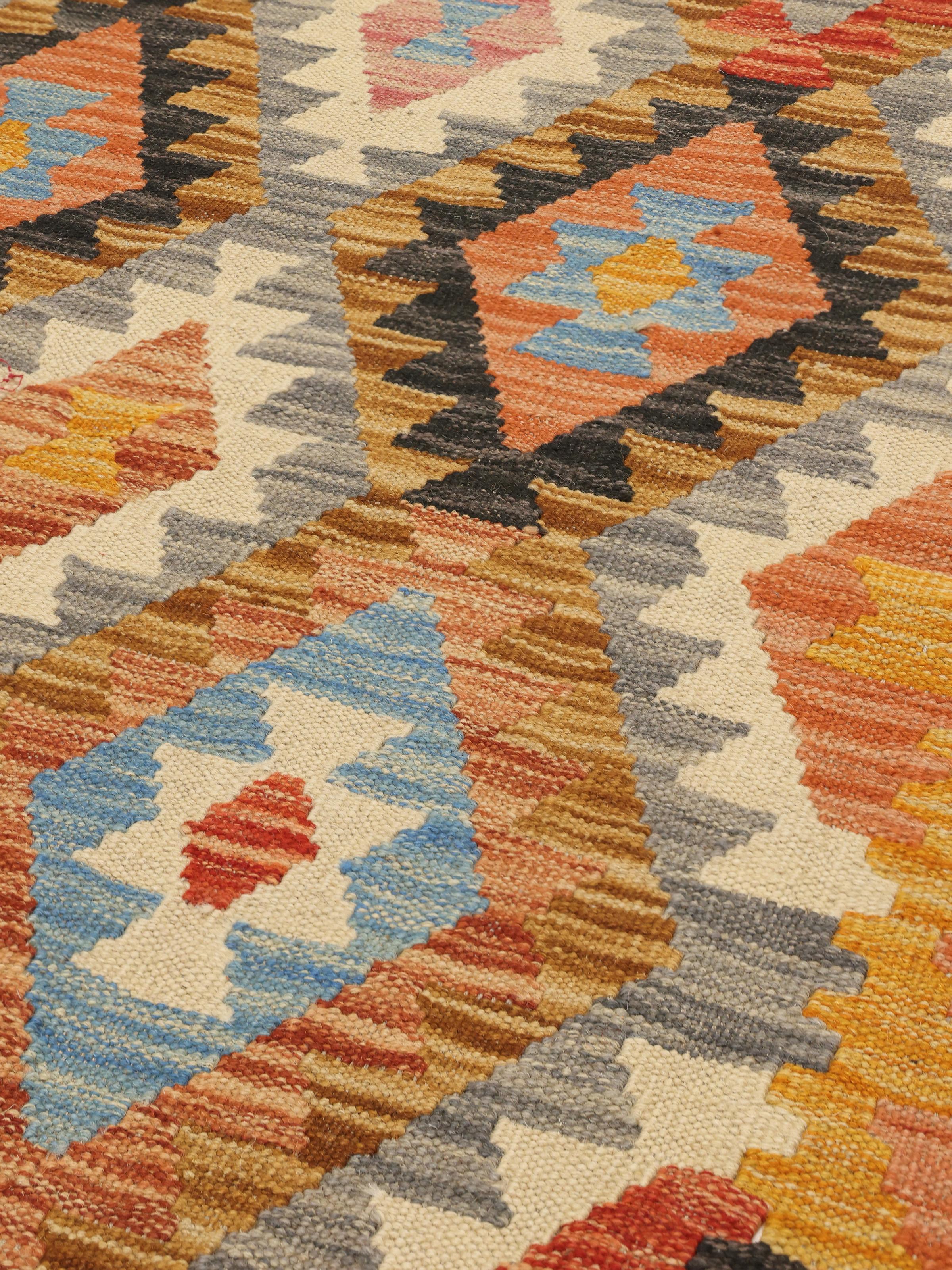
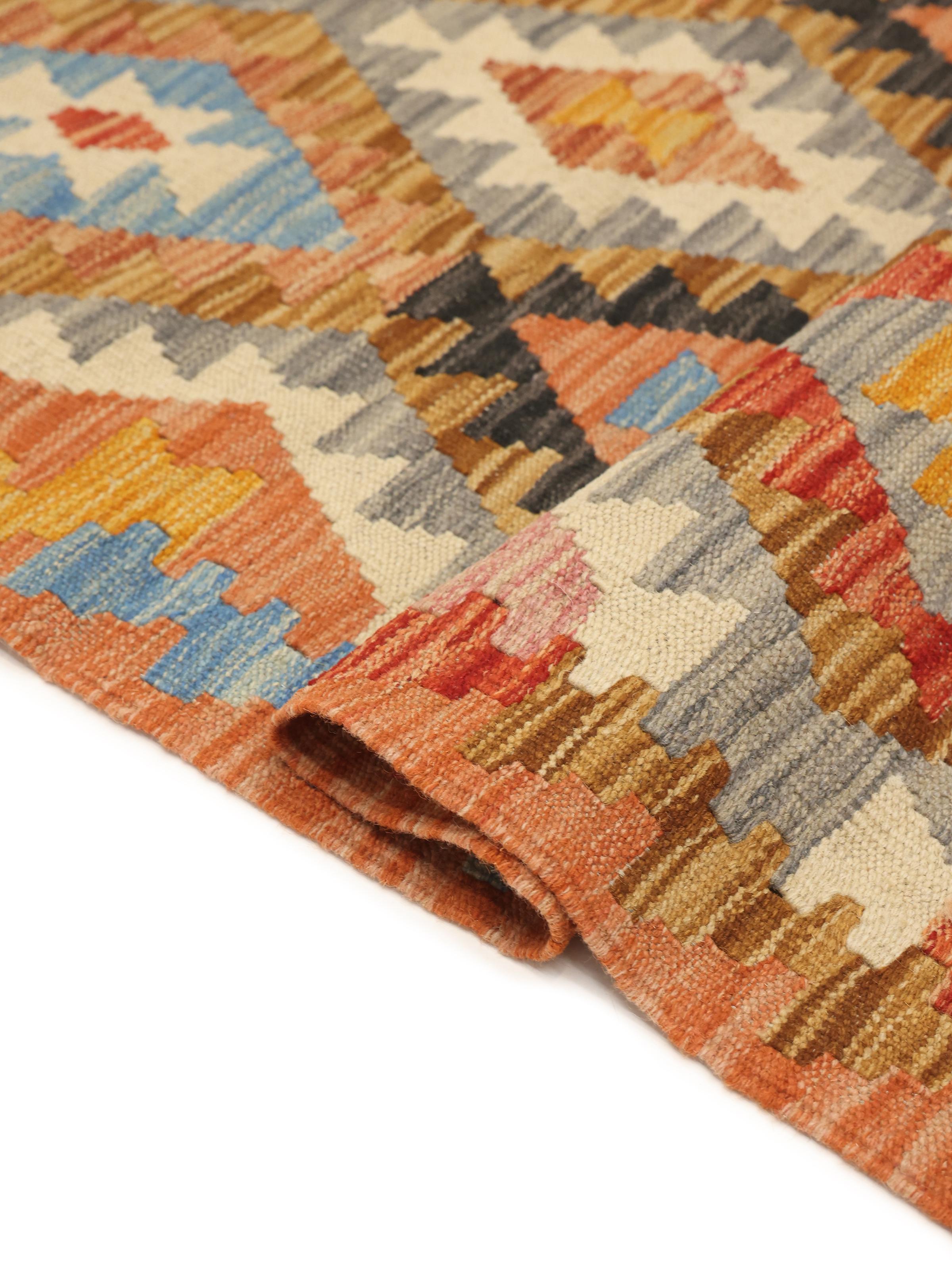
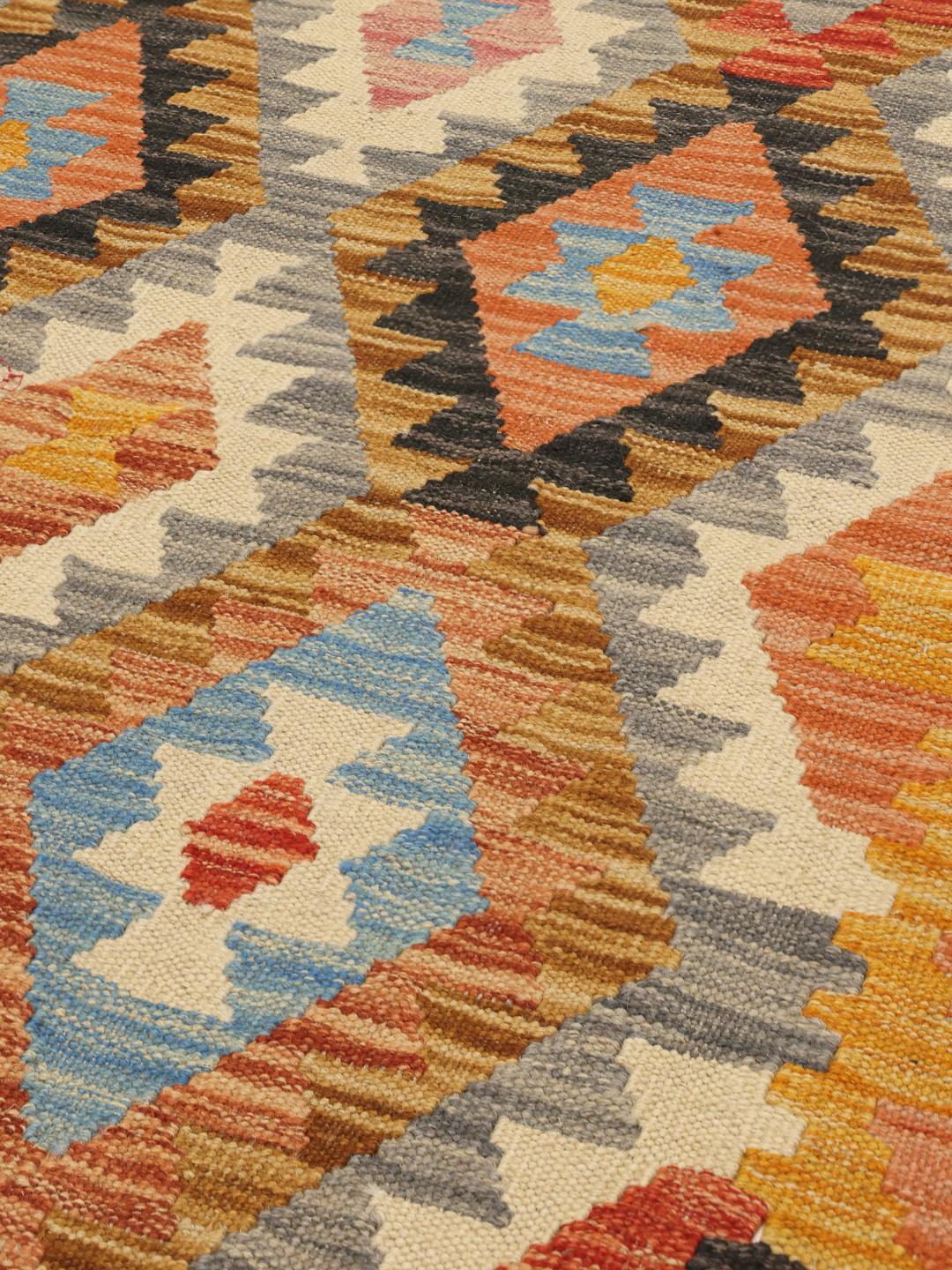
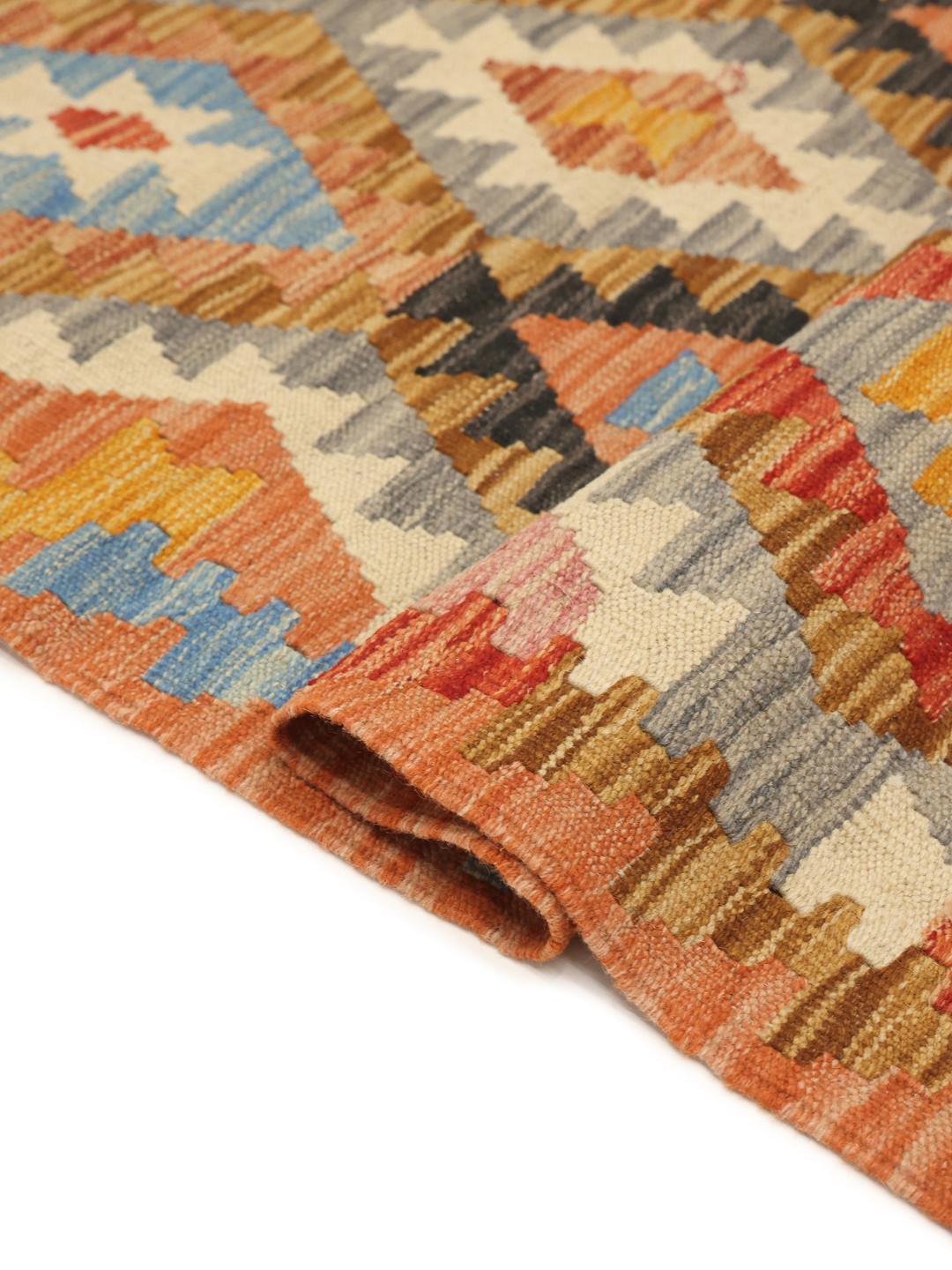
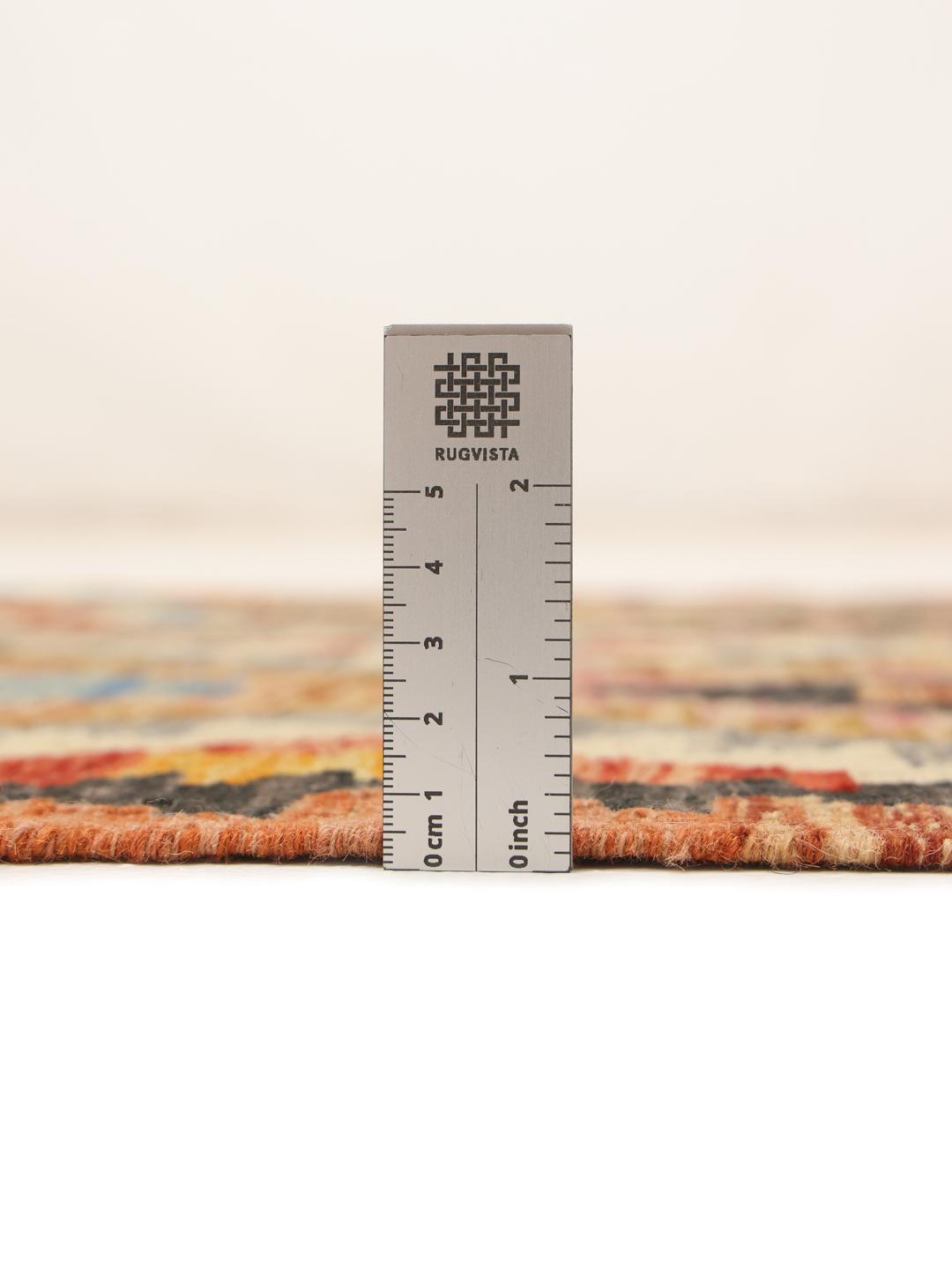
The term Kelim refers to the specific flat-weaving technique where the warp and weft threads are tightly interlaced to form a smooth surface without a pile. This method results in a durable and reversible textile that is prized for its clarity of pattern and lightweight nature. Because they lack a traditional pile, these rugs are exceptionally versatile and remain a staple in homes looking for a blend of historical depth and functional elegance.
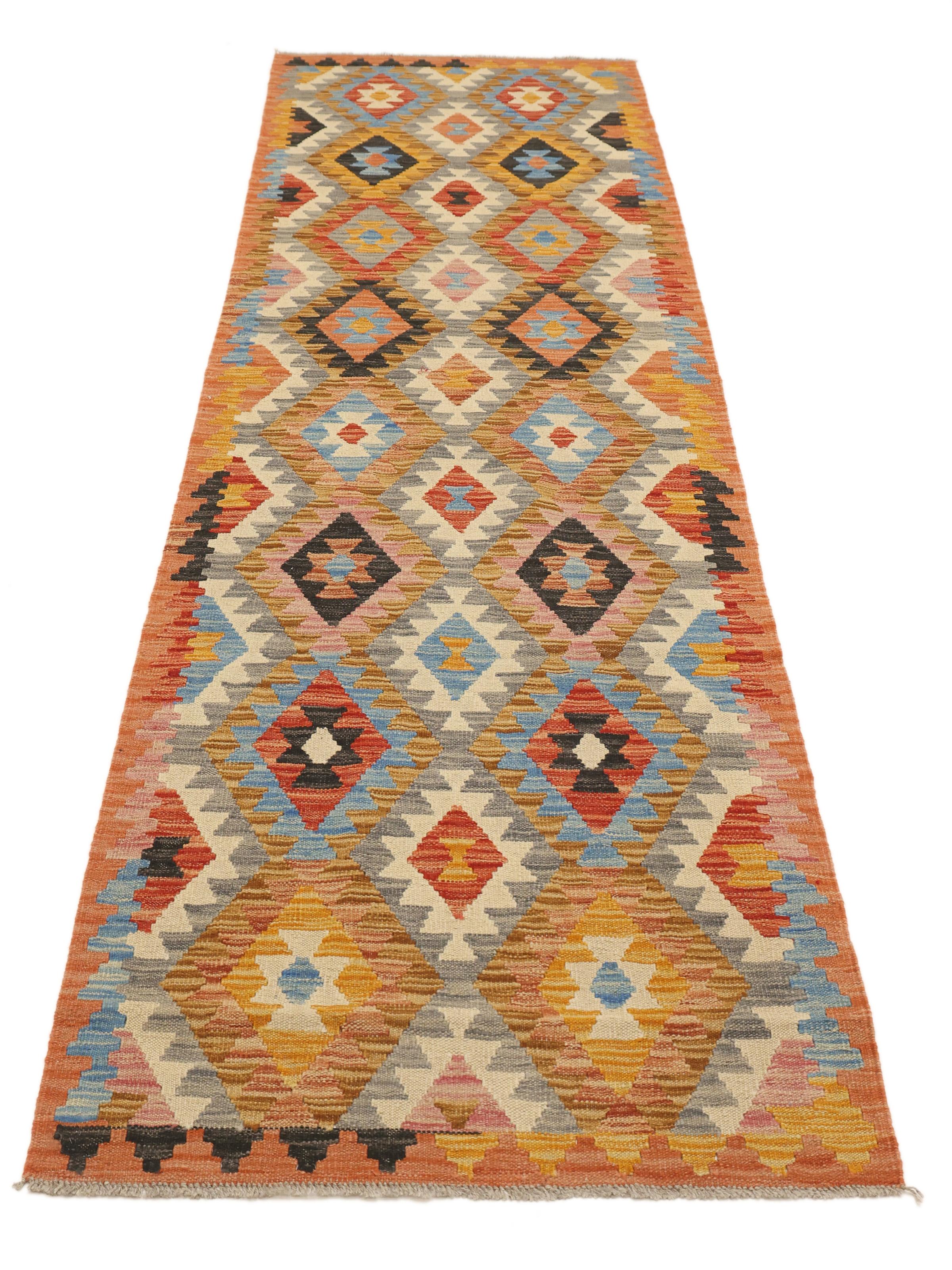
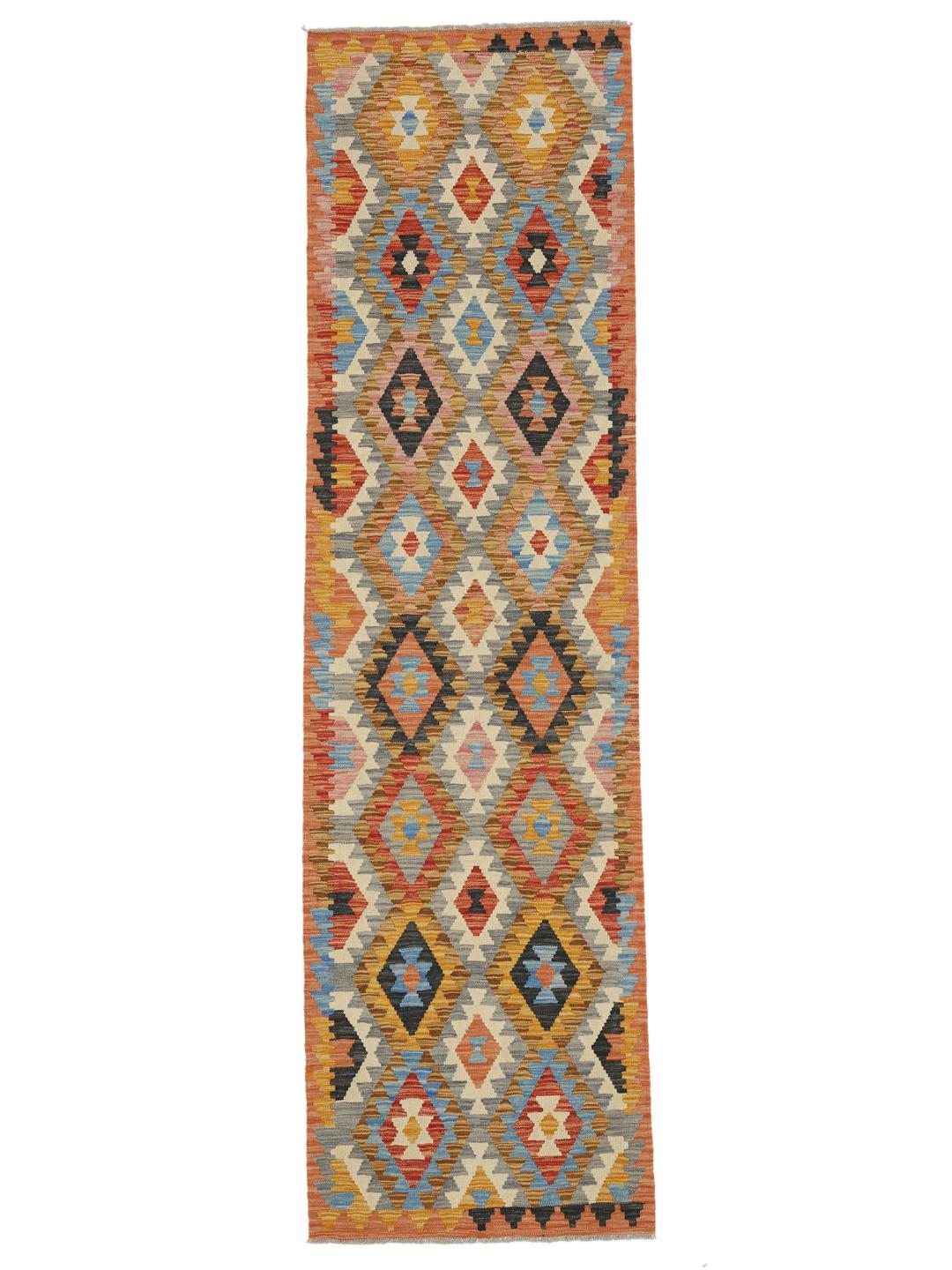
Visually, these runners are defined by their bold geometric language, often featuring diamonds, triangles, and intricate borders that tell stories of the weaver's environment and tribal identity. The use of vibrant, natural-looking dyes creates a striking contrast against the earthy base tones, making them instantly recognisable. This specific piece reflects the traditional Afghan penchant for balance and symmetry within complex, interlocking motifs.
Collecting a piece from this tradition is an investment in cultural preservation. Each runner is not merely a floor covering but a reflection of the skill, patience, and artistic vision of the artisans who made it. By adding this to your home, you are honouring a long-standing tradition of textile artistry that continues to be admired and collected by enthusiasts around the world.