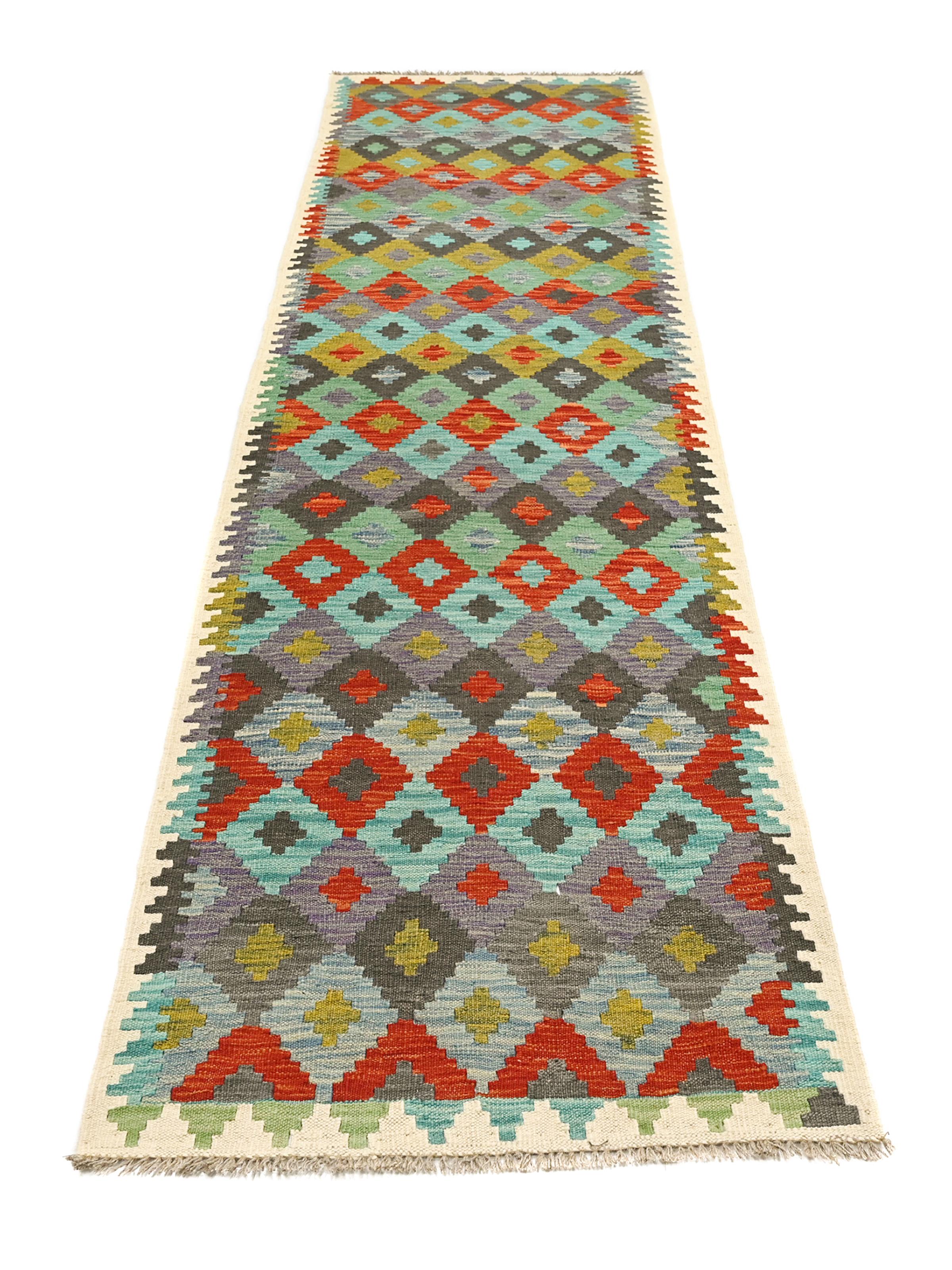
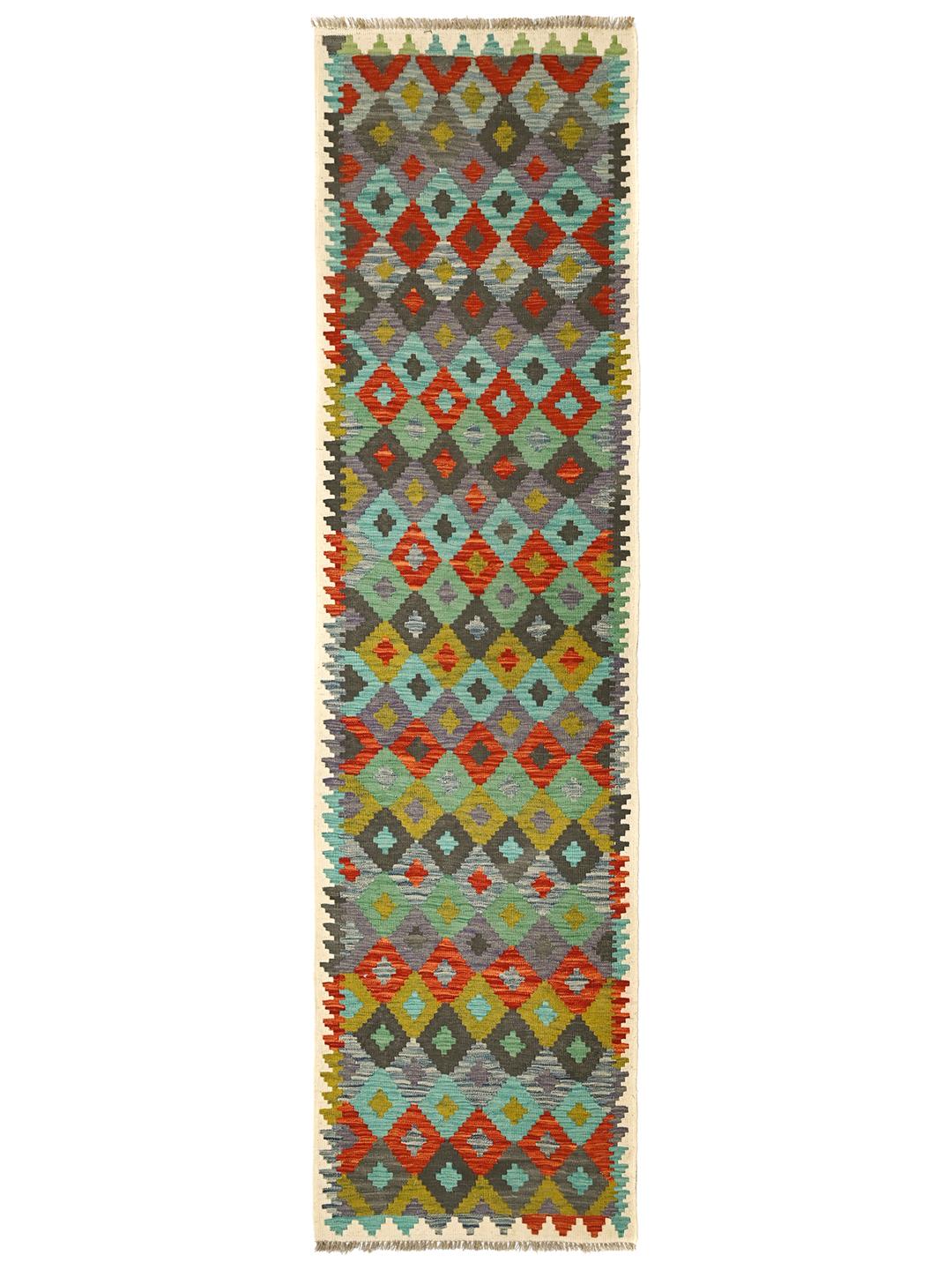
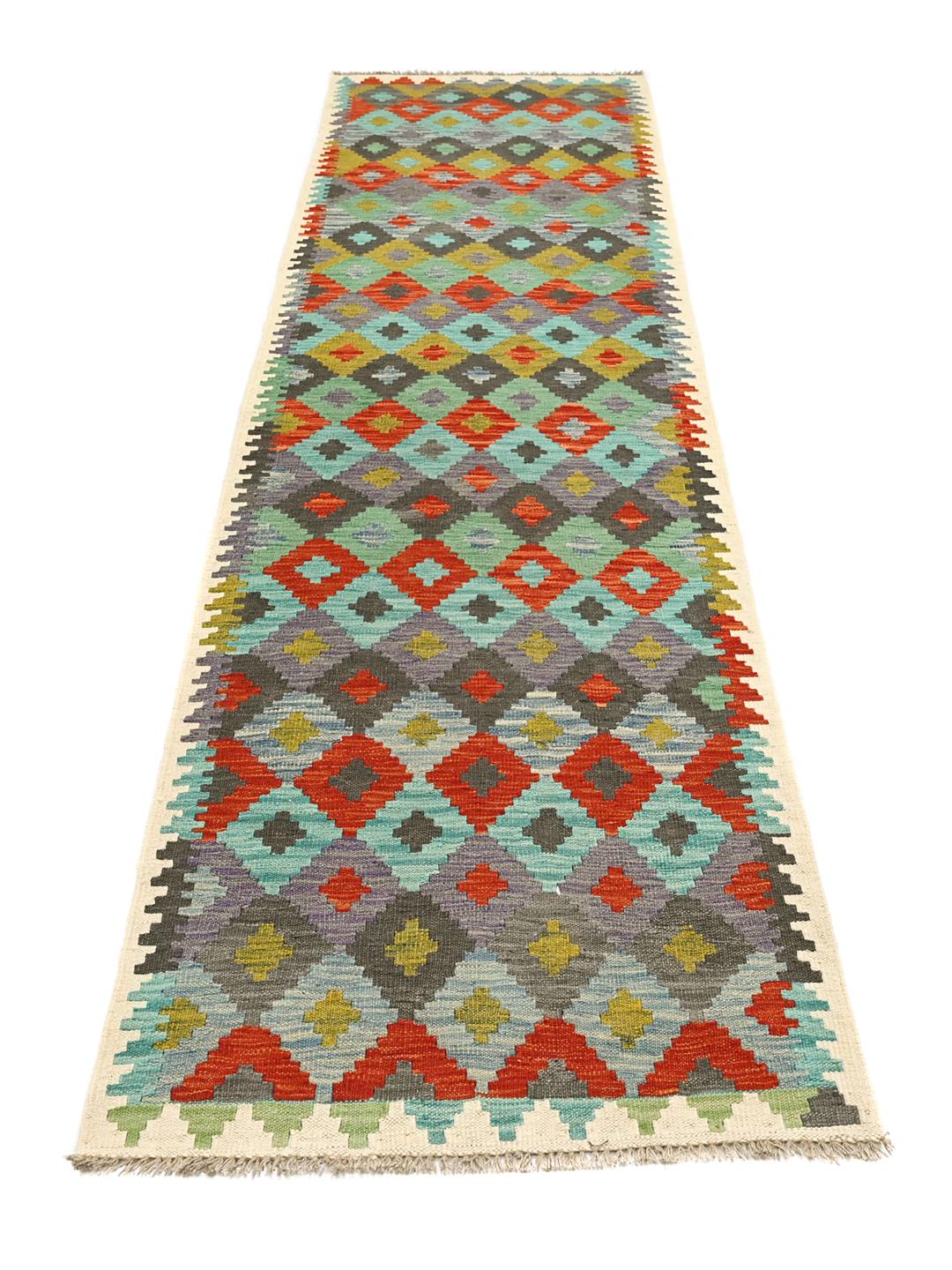
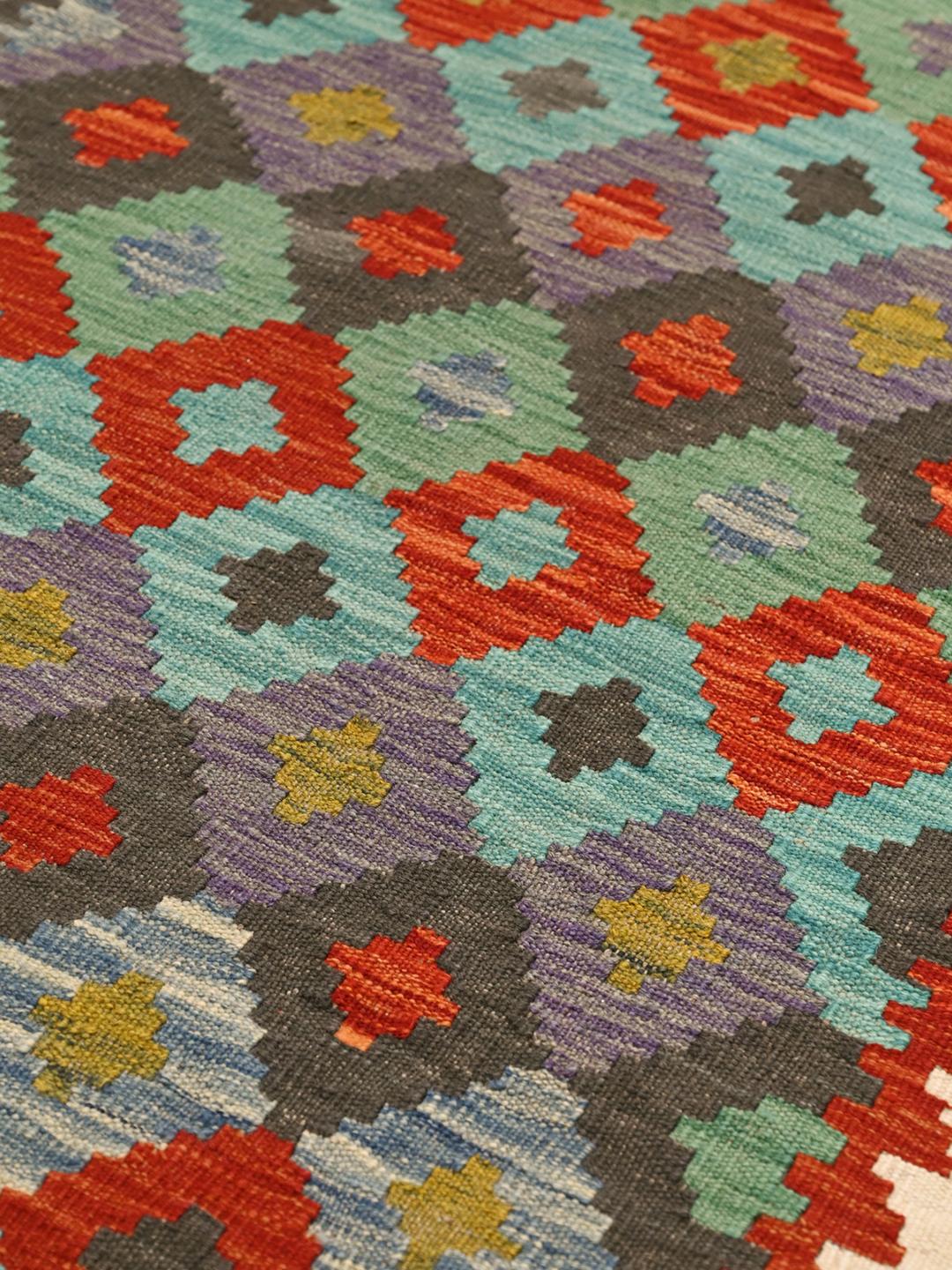
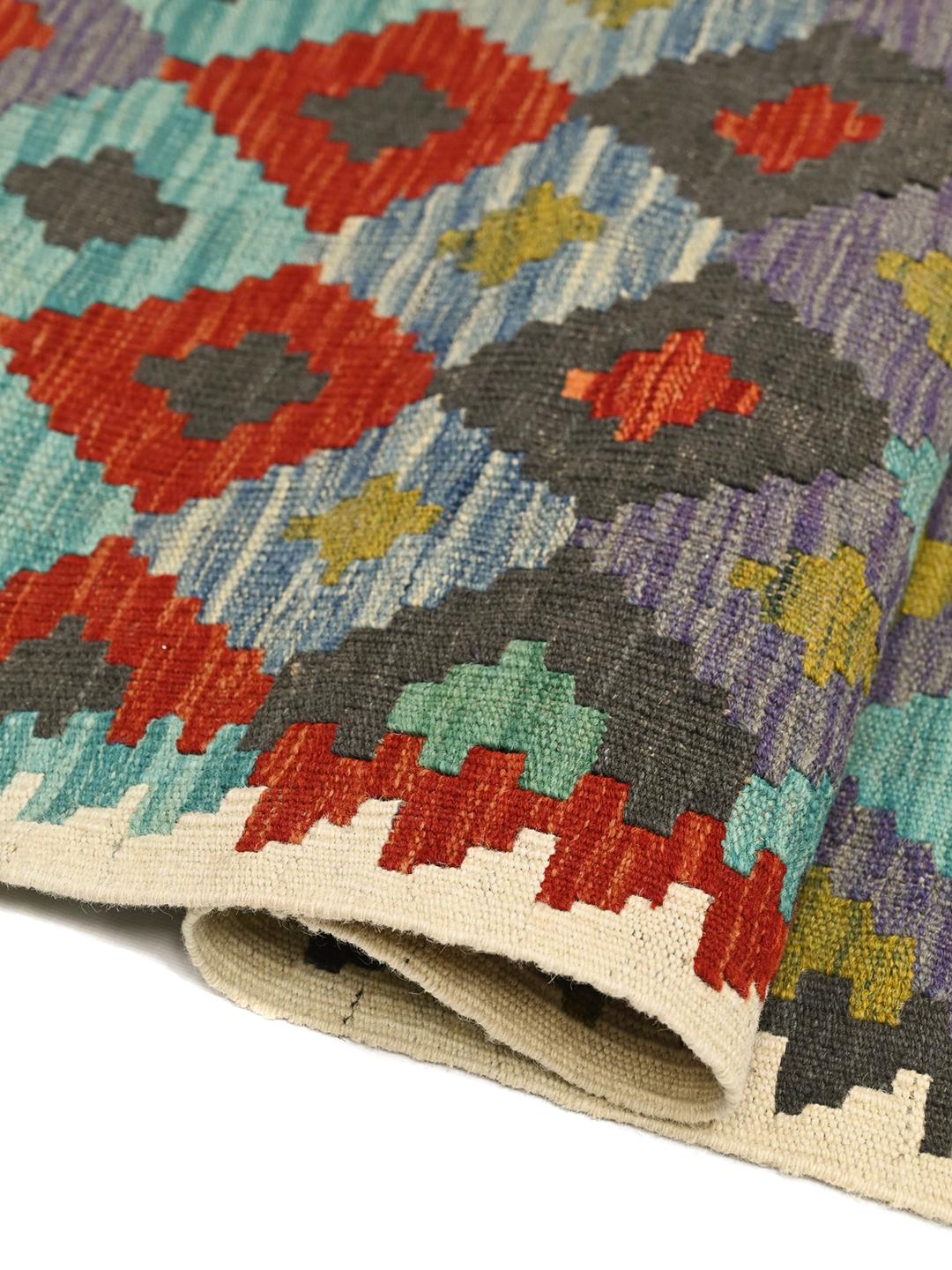
Kelim rugs have long been a cornerstone of Middle Eastern textile traditions, originating from the nomadic cultures that travelled the vast landscapes of the region. These flat-woven pieces were historically essential for daily life, used as floor coverings, wall hangings, and storage bags, reflecting the versatile needs of a wandering lifestyle.
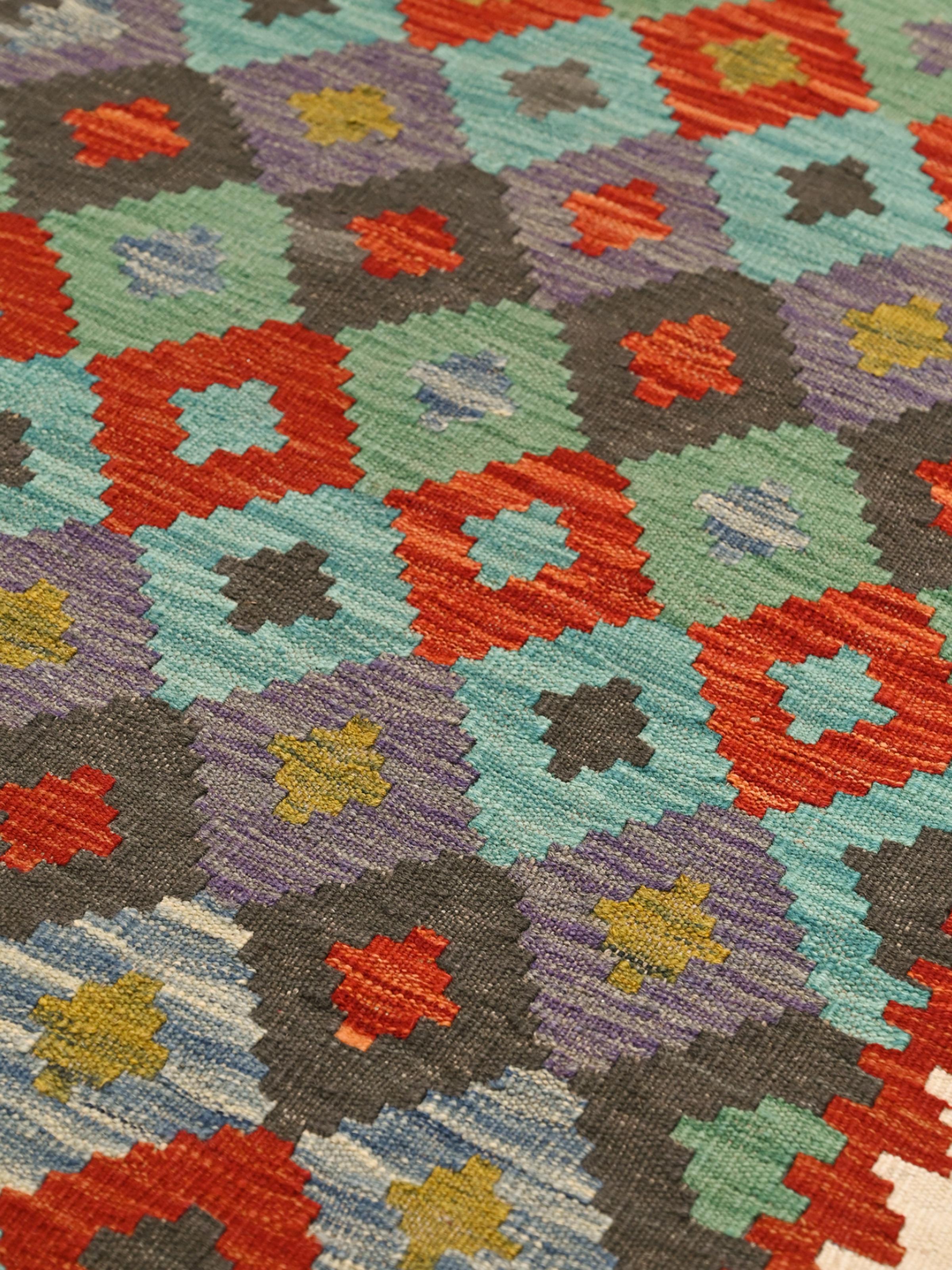
The term 'Kelim' refers to the specific slit-weave technique used to create these rugs, where the weft threads are woven back and forth through the warp threads. This method is what gives the rug its characteristic flat, pileless finish, which is highly prized for its durability and ease of maintenance, making it a practical choice for modern homes.
Signature design elements in Afghan Kelims often feature geometric motifs, with the diamond being one of the most prominent shapes. These patterns are not just decorative but are deeply rooted in the cultural heritage of the weavers, often serving as a visual language that conveys stories, tribal identity, and protective symbolism through the use of bold, contrasting colours.
Collectors value these rugs for their authenticity and the human story behind every thread. By acquiring a piece from this tradition, you are participating in a legacy of craft that values slow, deliberate work over mass production. It is this connection to history and the tangible evidence of the artisan's skill that makes these rugs highly sought after by those who appreciate heritage and quality.