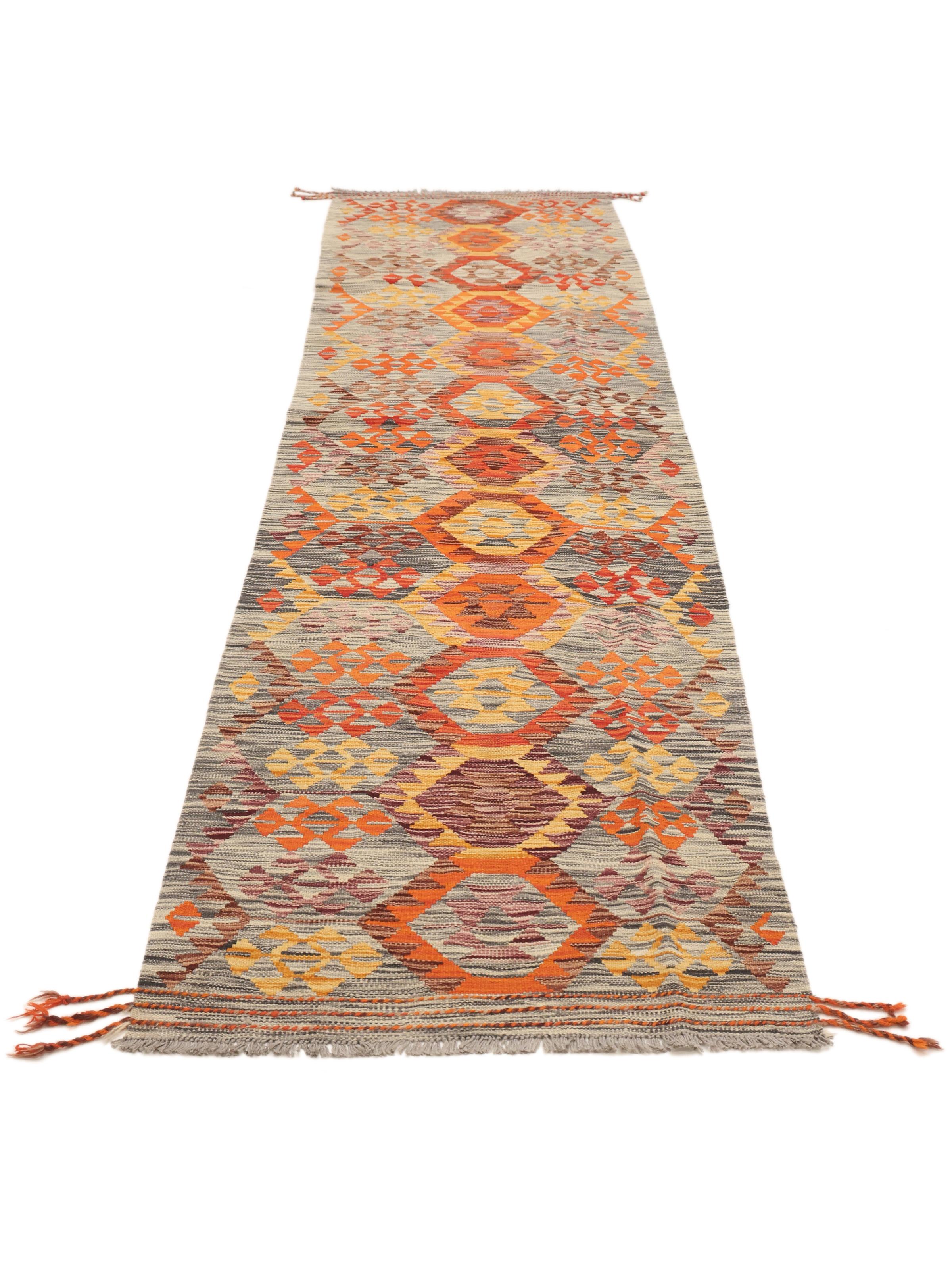
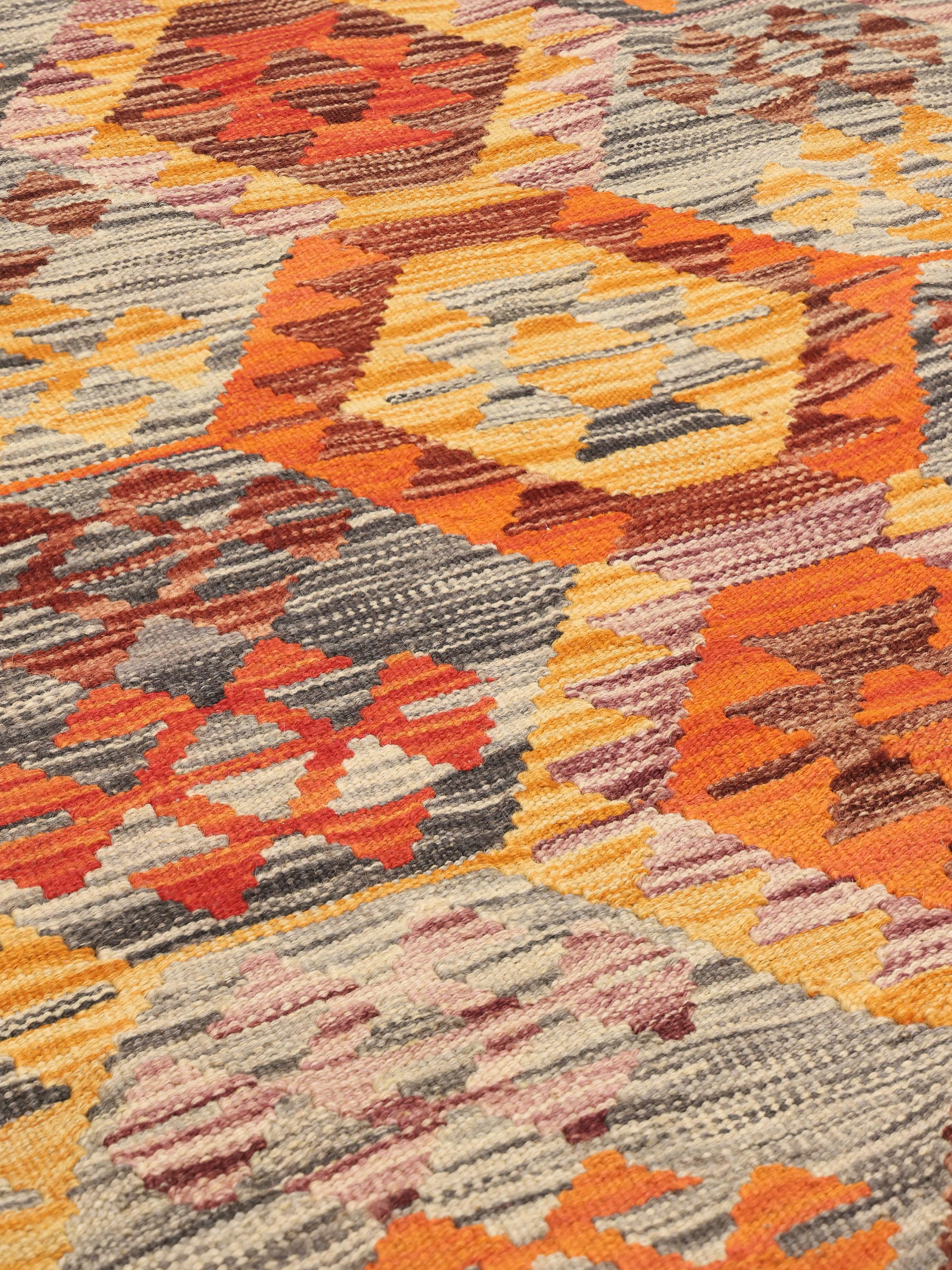
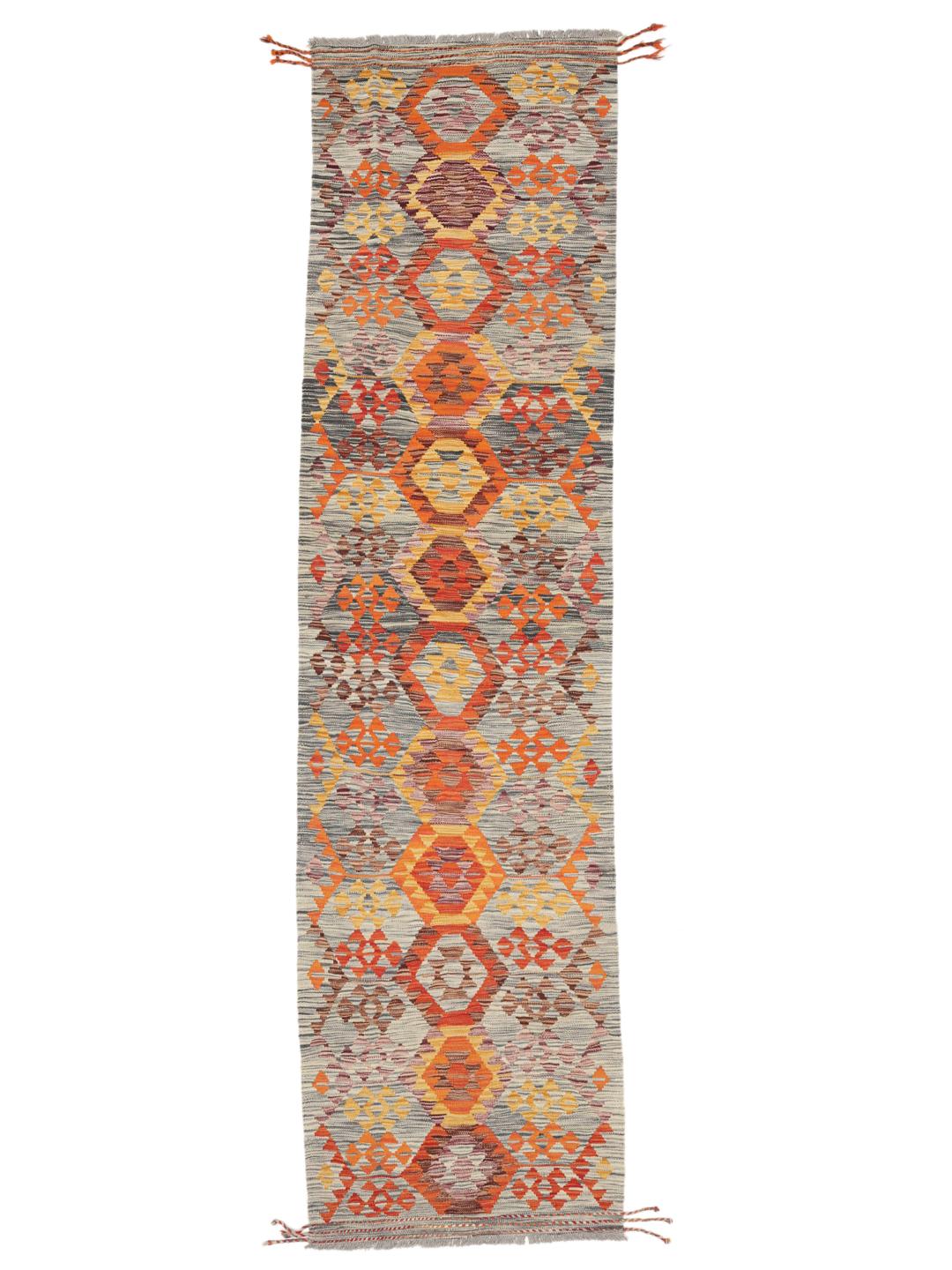
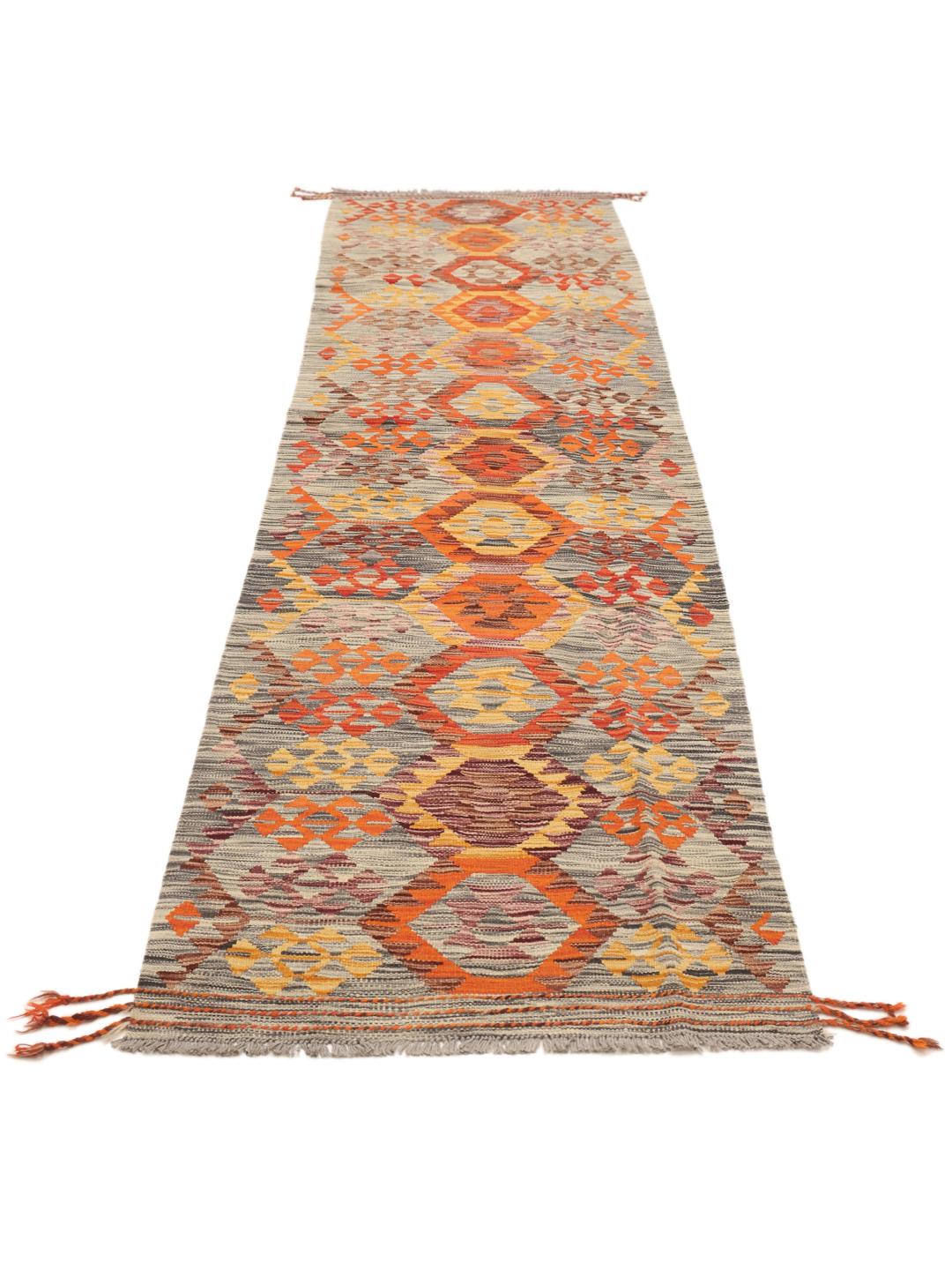
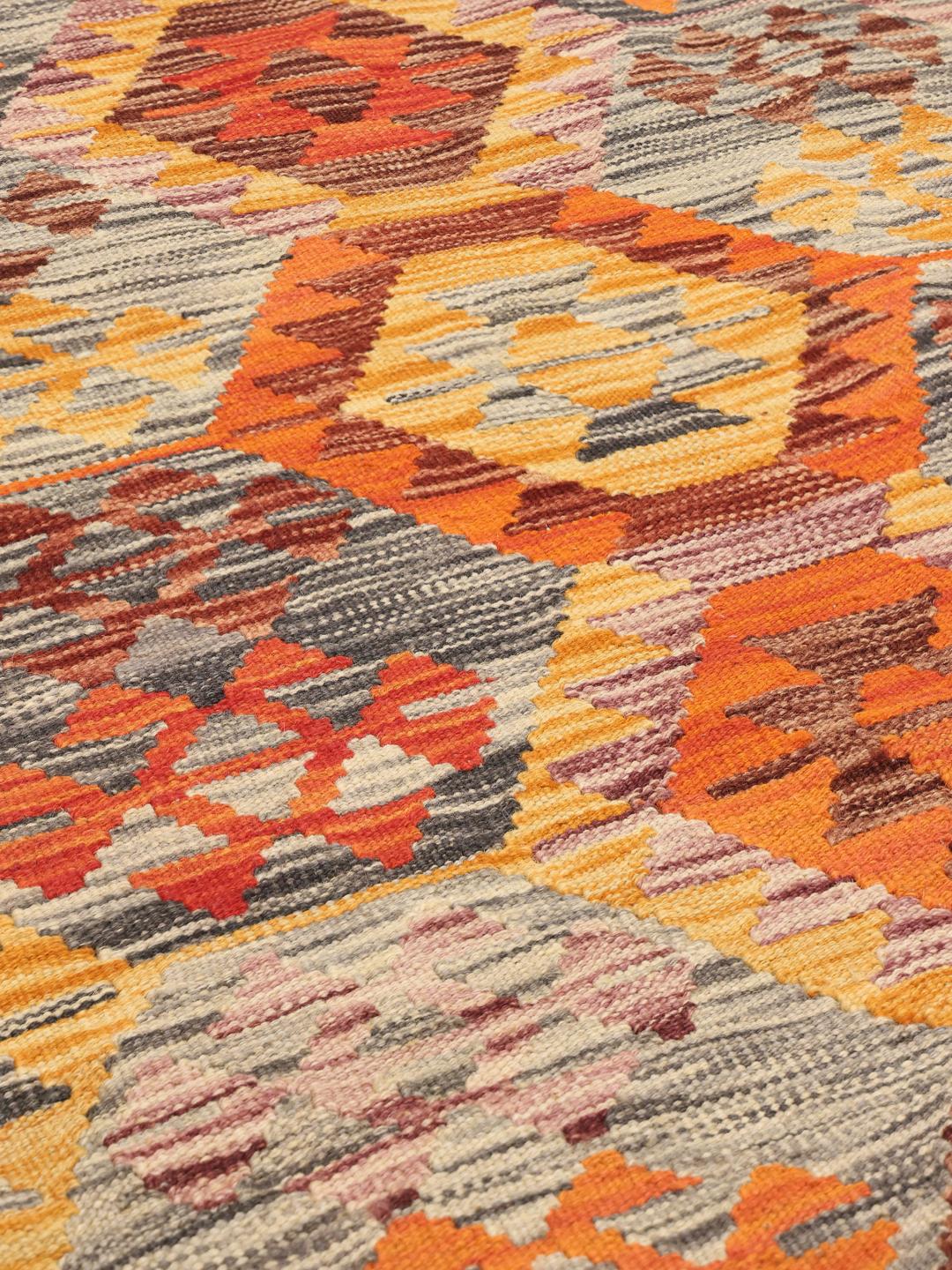
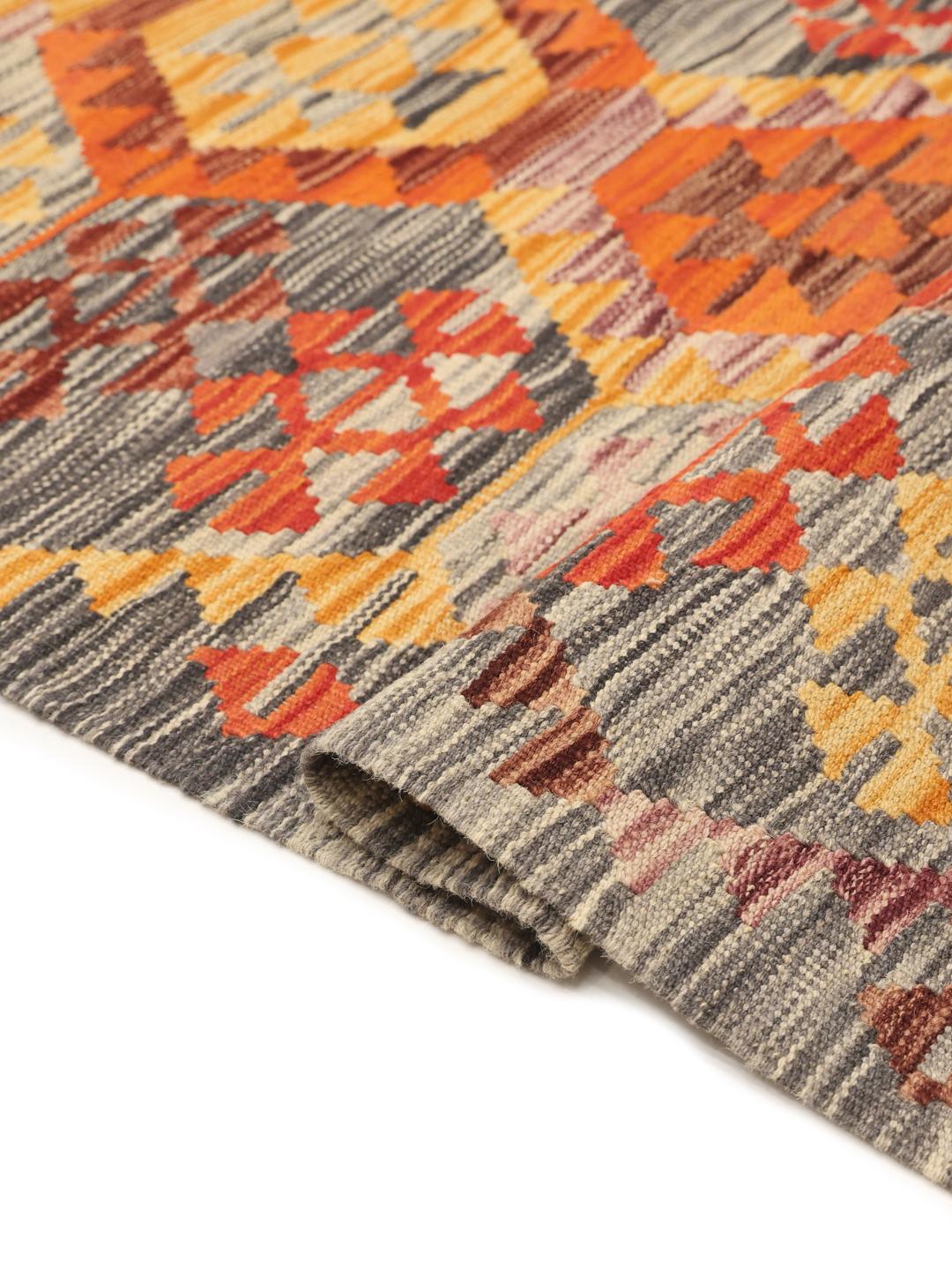
Kelim rugs have a long and storied history across the Middle East and Central Asia. Originally created by nomadic tribes, these flat-woven pieces were essential for daily life, serving as floor coverings, tent dividers, and storage sacks. The term Kelim refers to the specific technique where the weft threads are woven tightly through the warp to create a smooth, pileless surface.
The craftsmanship behind these rugs is defined by the slit-weave technique. This method allows artisans to create sharp, clean geometric designs by interlocking different coloured threads. Because there is no pile to hide the structure, the weaver's precision is on full display, making the technical skill required to maintain uniform tension throughout the entire length of the runner essential for its lasting quality.
The design of this runner is rooted in the tribal aesthetics of Afghanistan. You will typically find repeating geometric medallions and intricate borders that tell a story of regional heritage. These motifs are not merely decorative but often carry symbolic meanings passed down through generations, representing protection, fertility, or the natural landscape of the region.
Collecting a piece from this tradition is an investment in cultural history. These rugs are highly valued for their durability and their ability to bring a sense of warmth and authenticity to modern interiors. By bringing this runner into your home, you are connecting with a centuries-old craft that continues to be celebrated for its artistic depth and practical resilience.