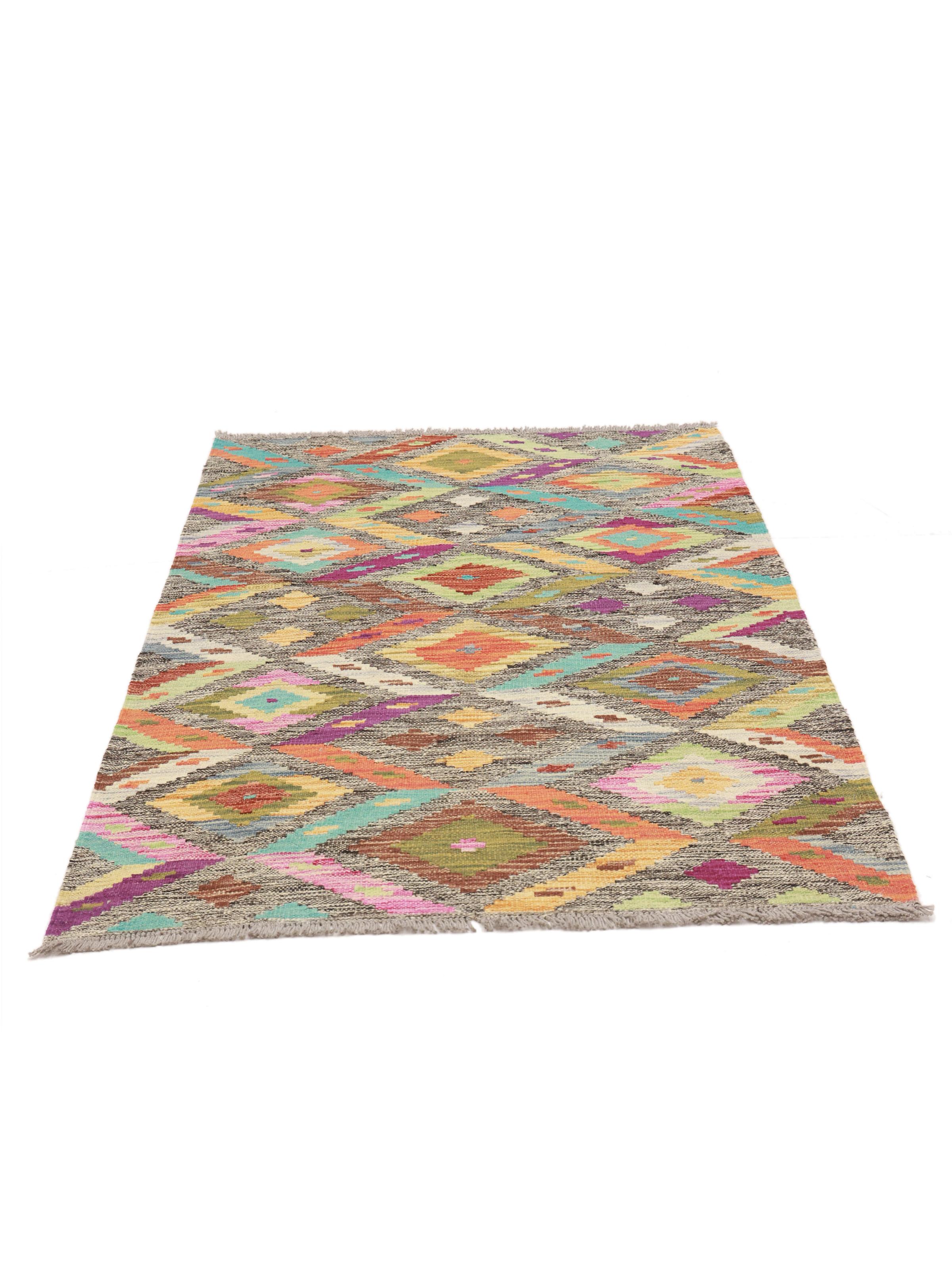
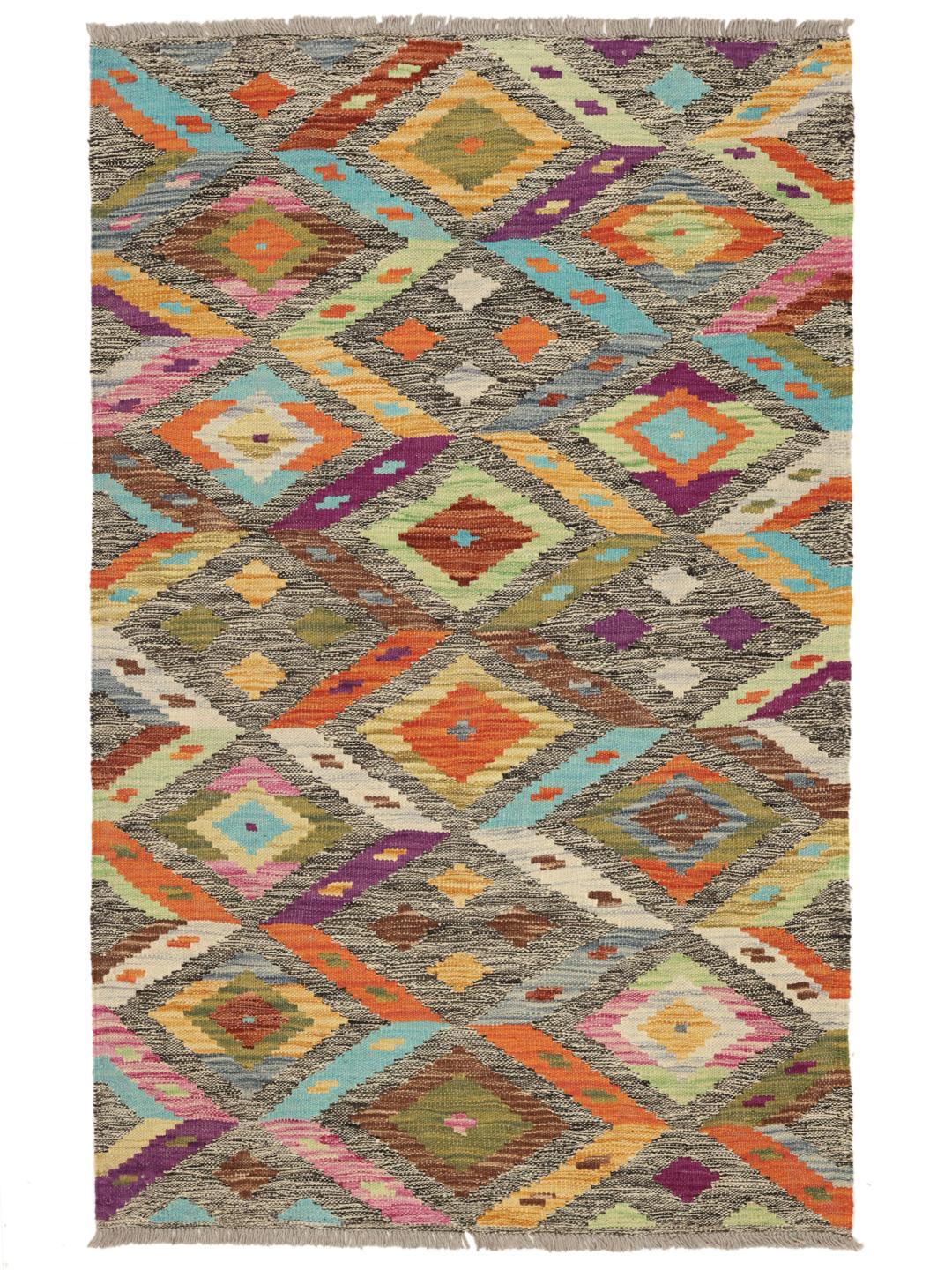
Kelim rugs have a storied history rooted in the nomadic cultures of the Middle East and Central Asia. Originally created by tribal groups for practical use as floor coverings, tent hangings, and storage bags, these rugs were designed to be both portable and durable. The Afghan Kelim tradition, in particular, has evolved over centuries, blending ancient regional techniques with a bold, distinct visual language.
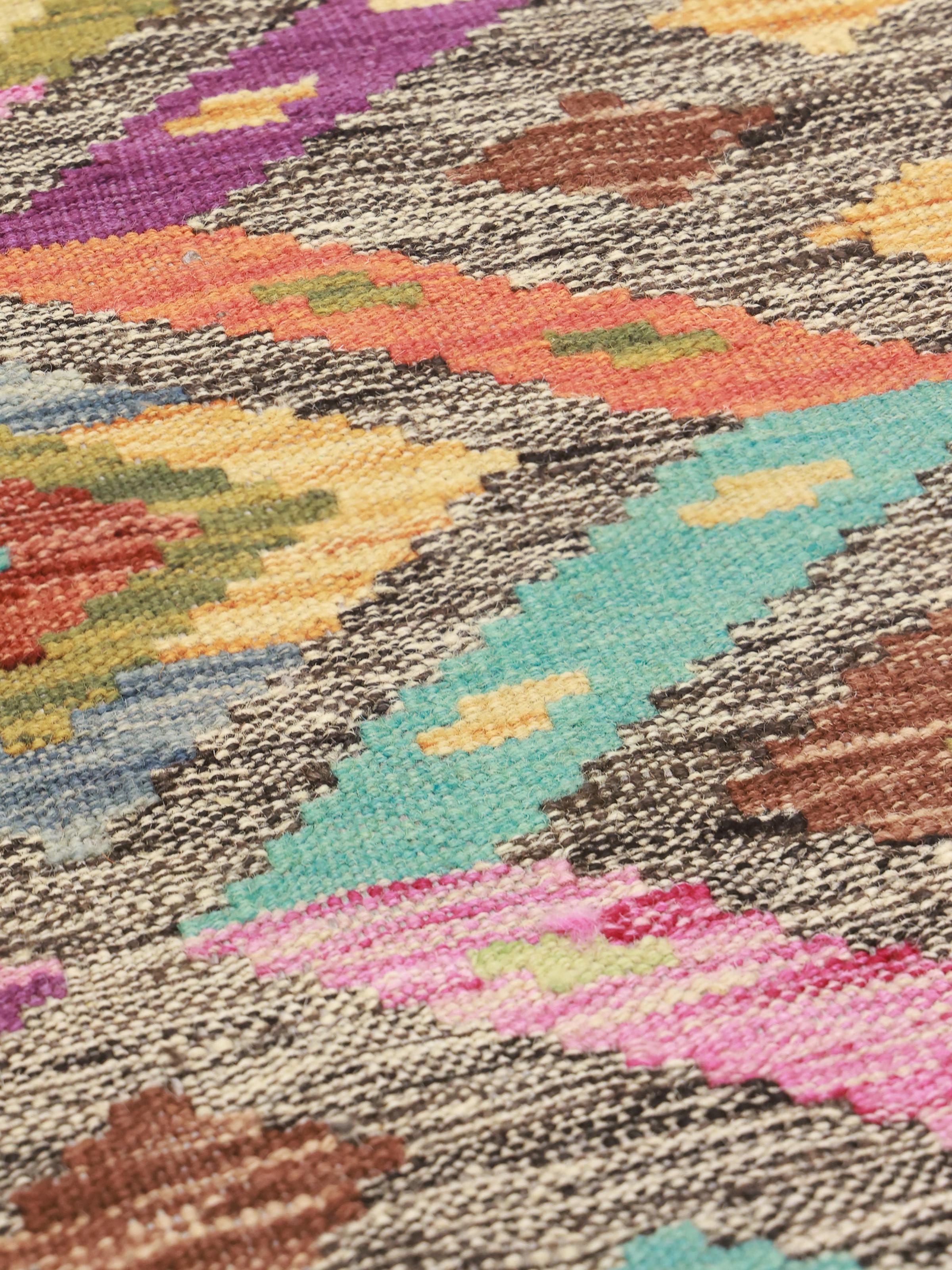
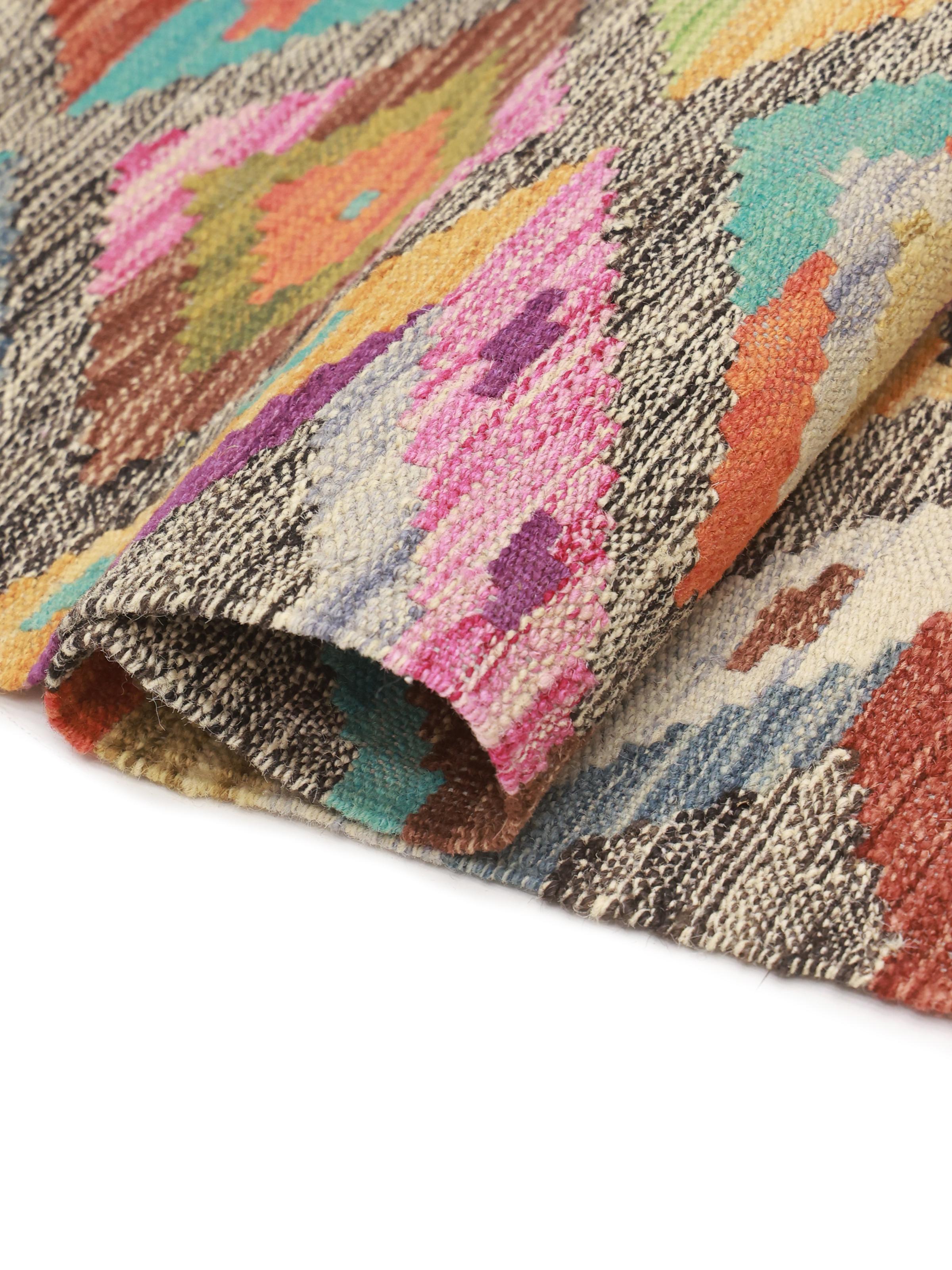
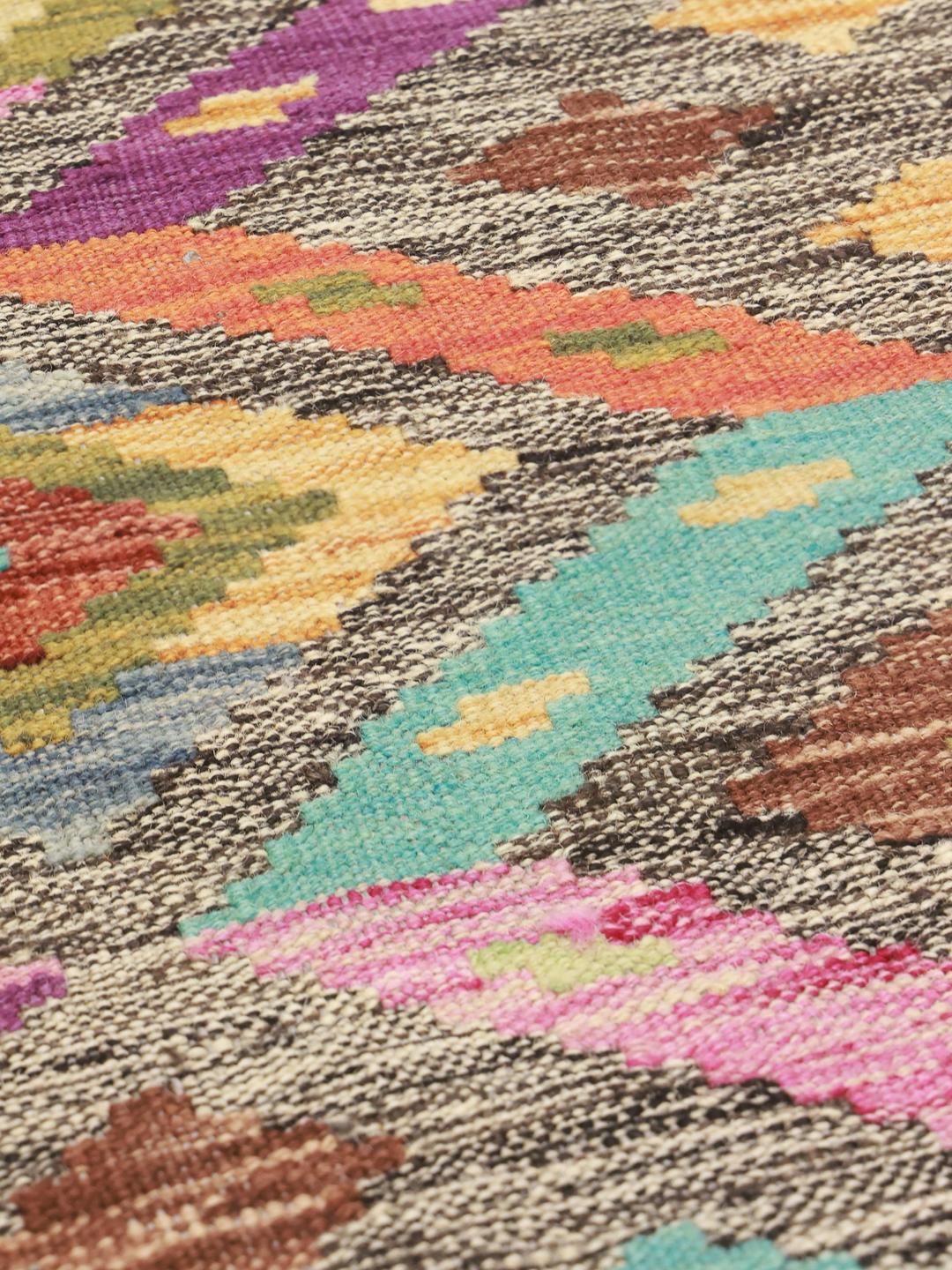
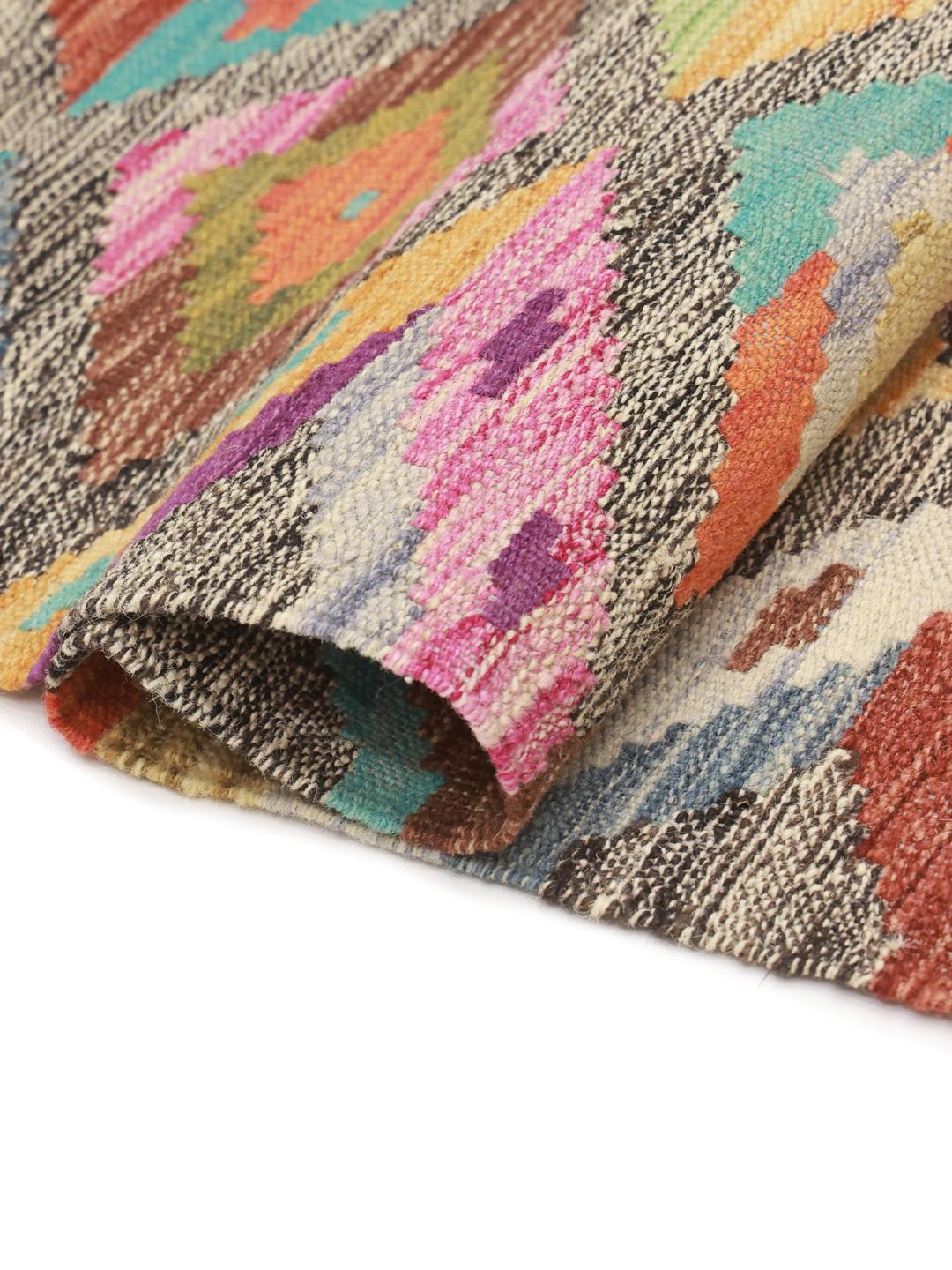
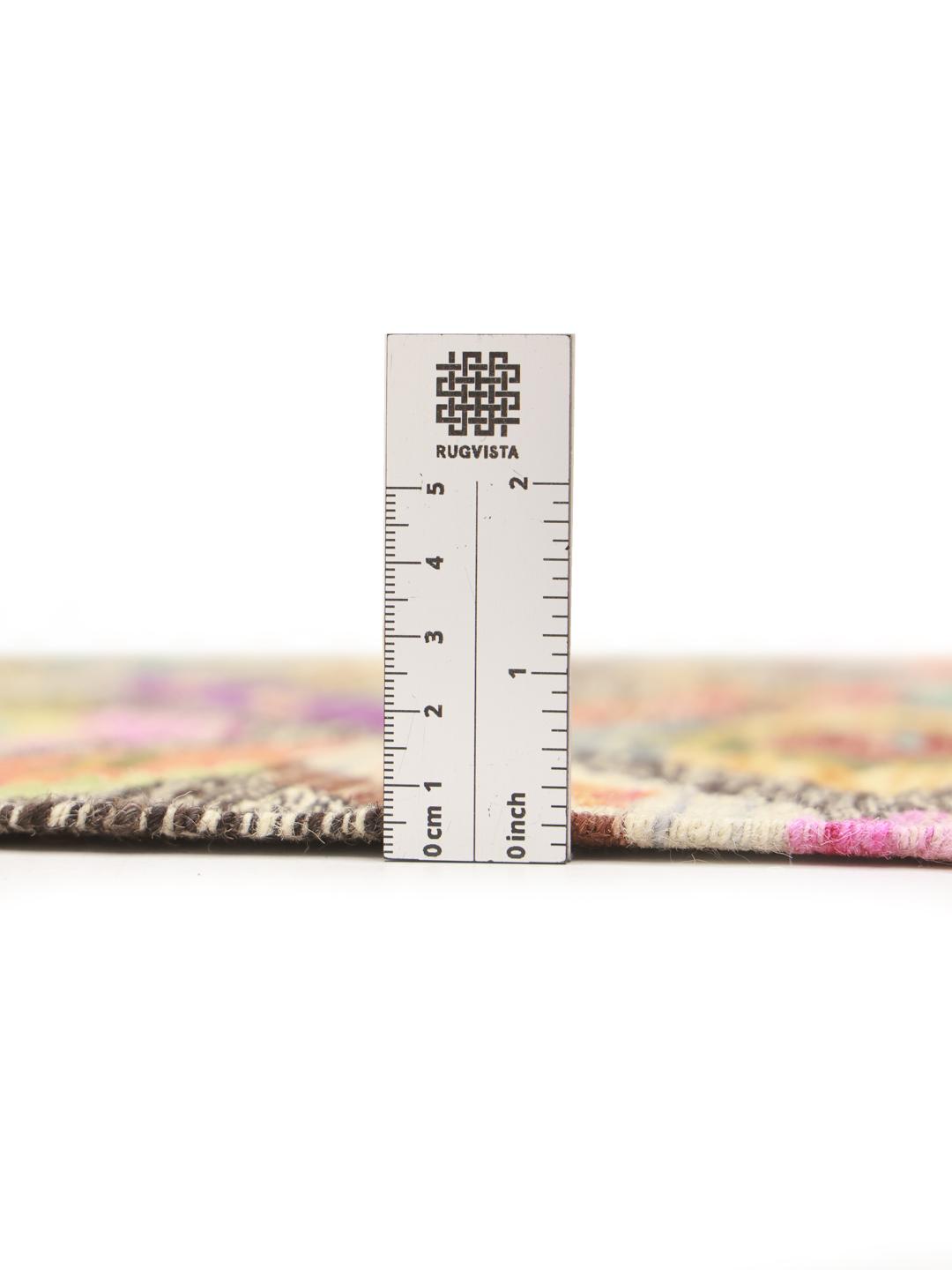
The term 'Kelim' refers specifically to the flat-weaving technique where the warp and weft threads are interlaced to create a smooth, pileless surface. This method is technically demanding, as the weaver must manage the colour changes at every junction to prevent gaps in the structure. The result is a reversible, lightweight rug that is remarkably resilient, making it a functional masterpiece of textile engineering.
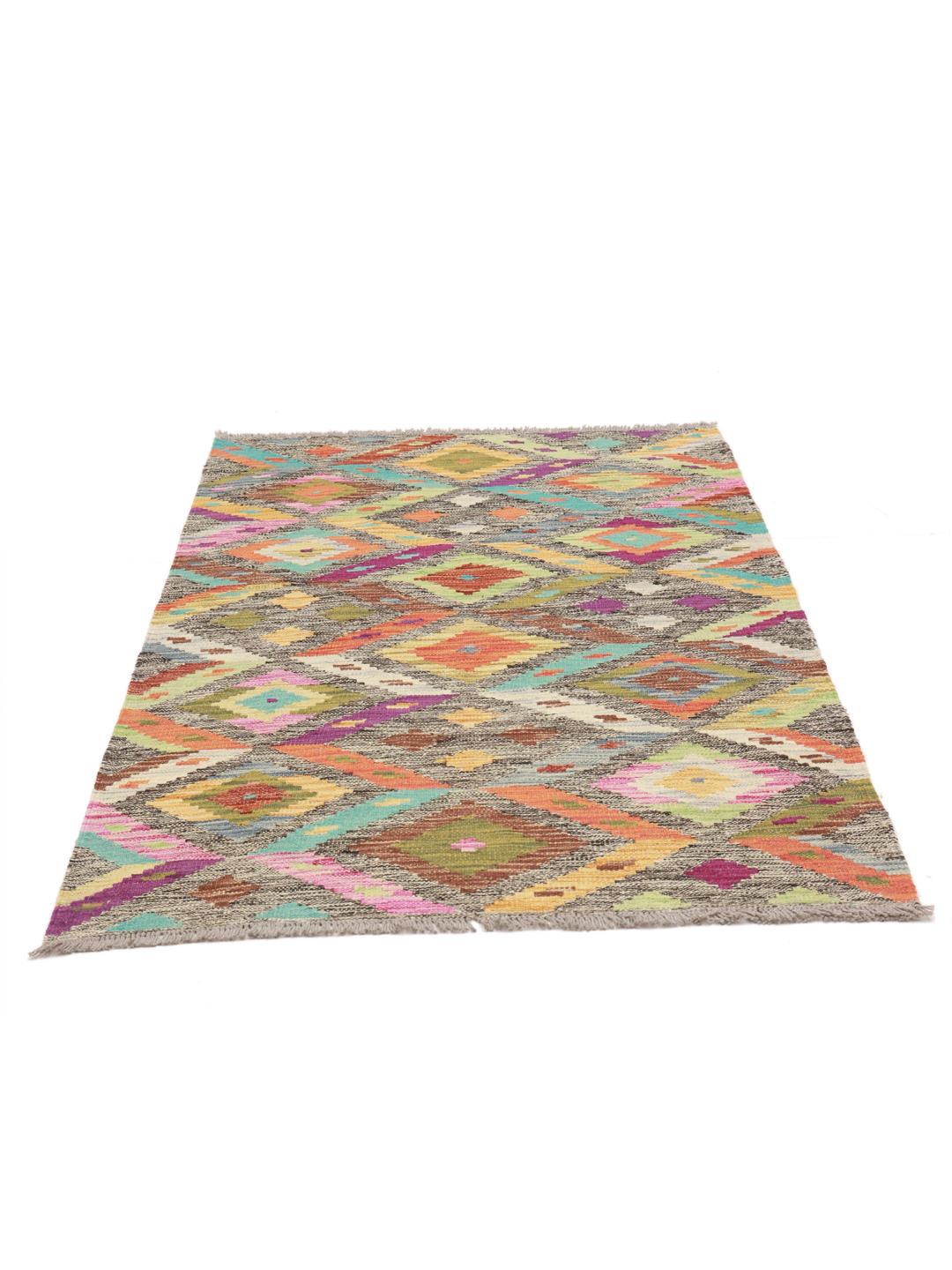
Visually, these rugs are defined by their sharp, geometric motifs and vibrant, often contrasting colour palettes. The designs frequently feature diamonds, triangles, and intricate borders that carry symbolic meaning, often reflecting the surroundings and history of the weaver's tribe. In this specific piece, the use of diverse, bold colours creates a dynamic energy that makes it a focal point in any interior.
Collecting Afghan Kelims is an appreciation of a living craft that has survived shifts in technology and culture. Owning one of these rugs connects you to a lineage of skilled weavers whose methods have been passed down through generations. These rugs are highly valued not only for their aesthetic appeal but for their integrity and the story they tell through their intricate, hand-woven patterns.