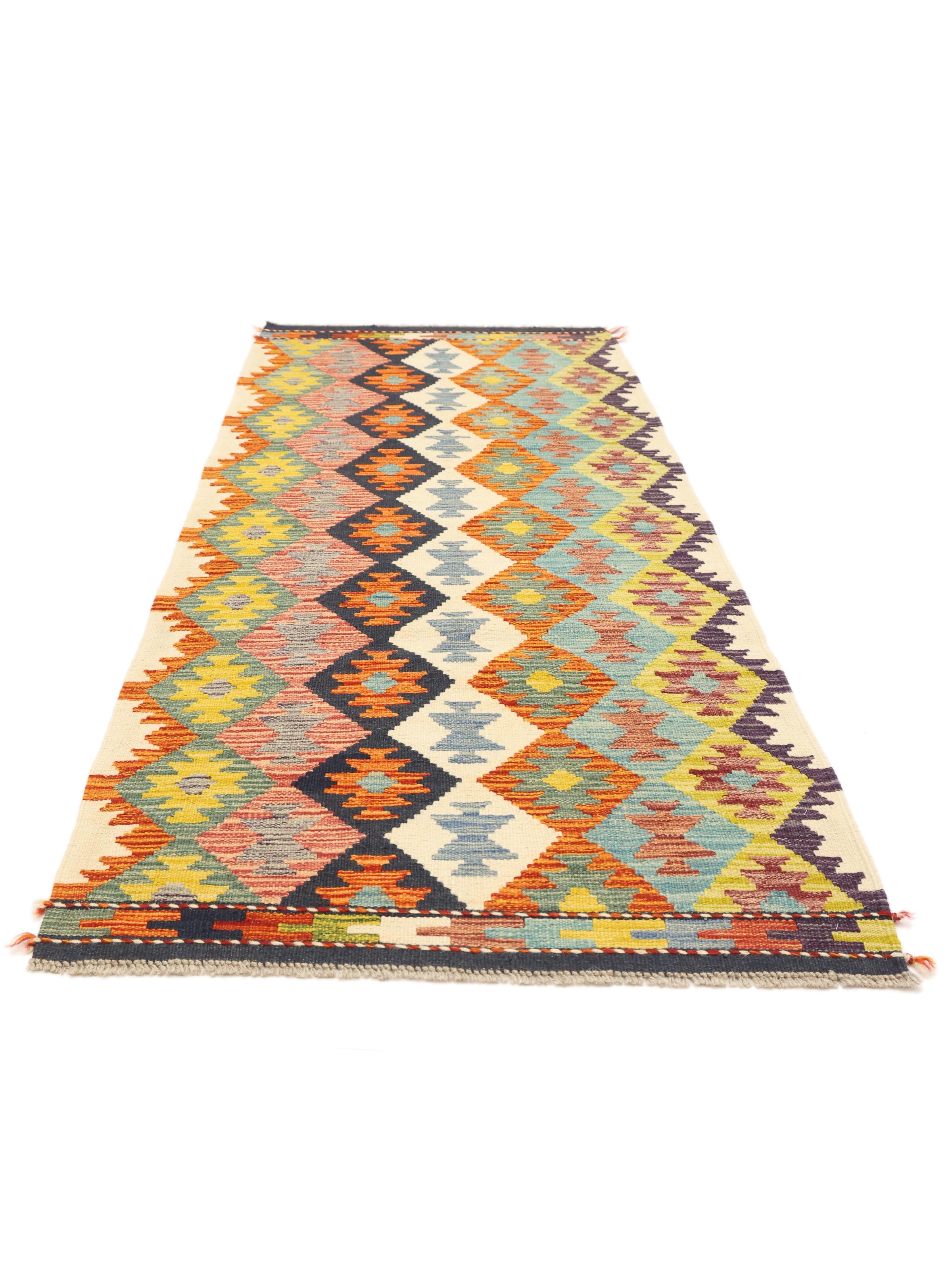
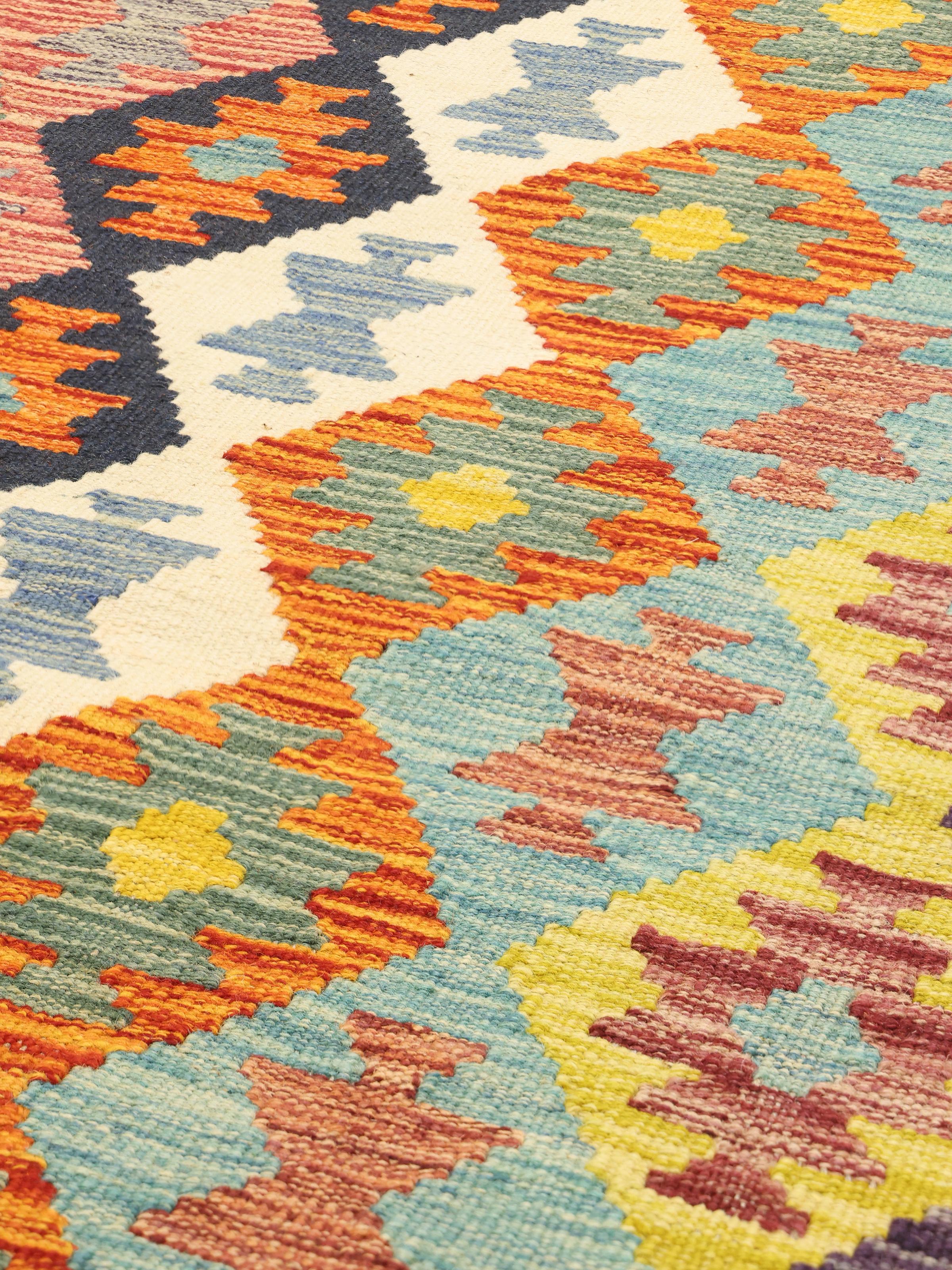
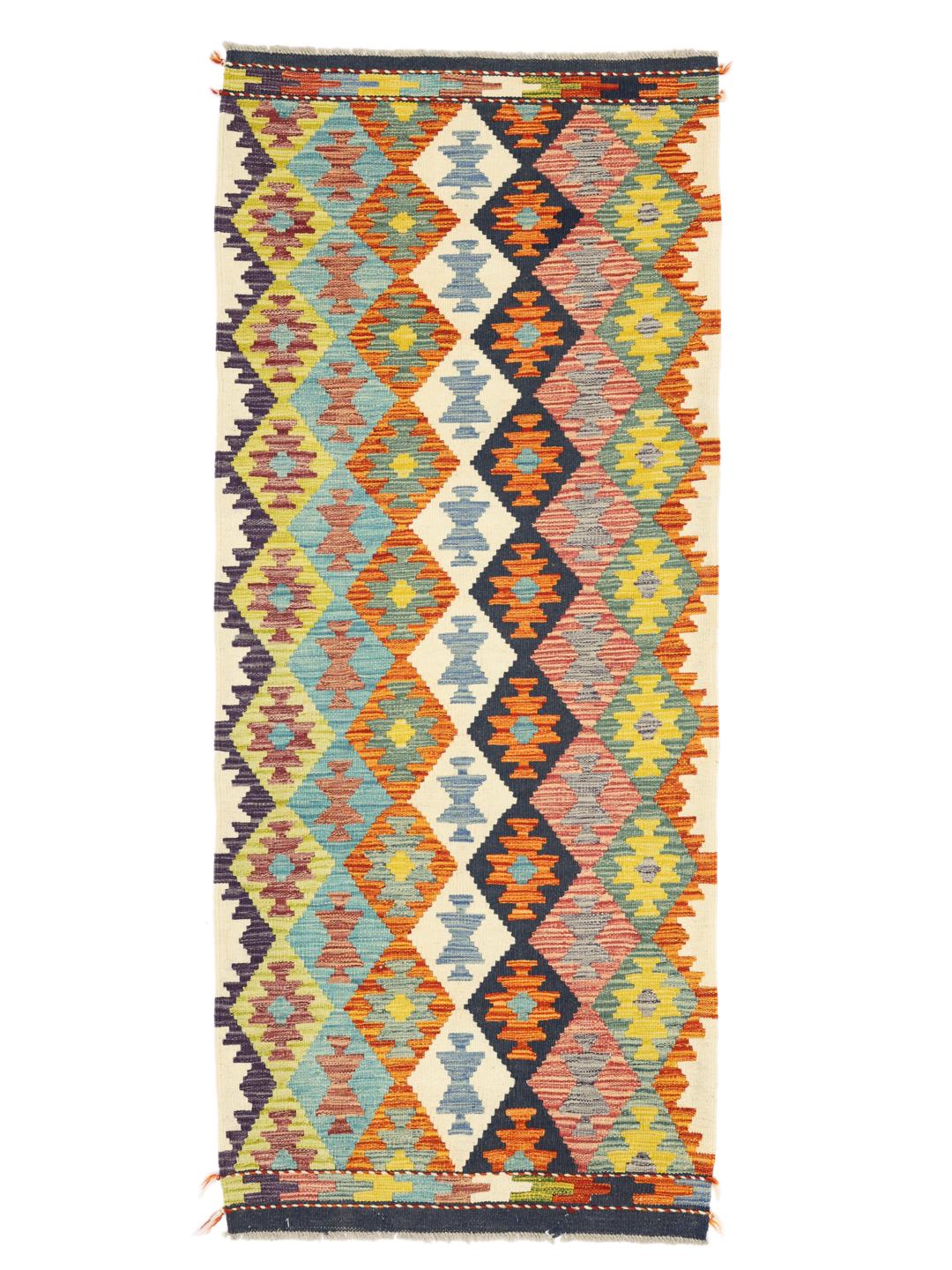
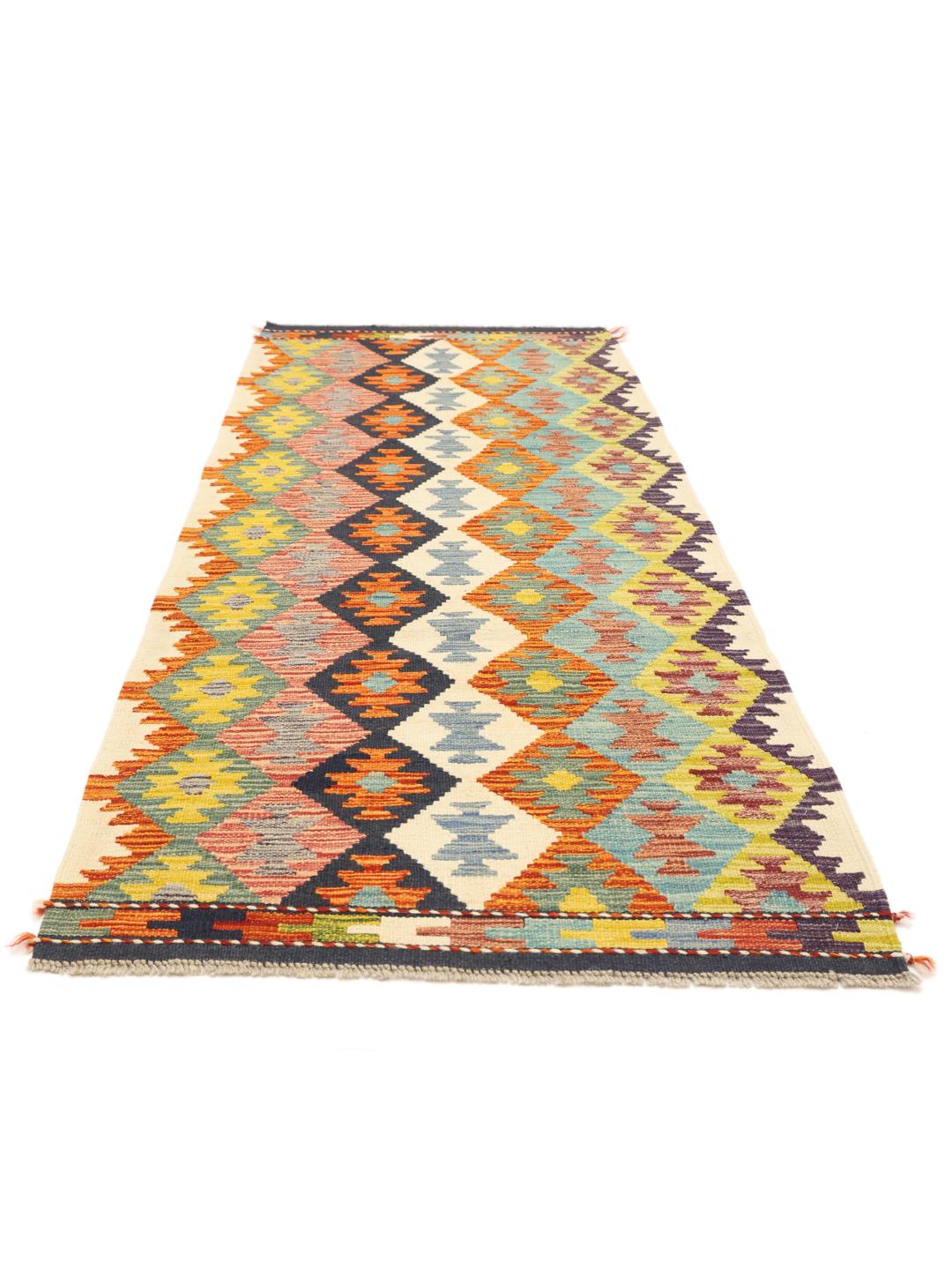
Kelim rugs have long been a cornerstone of textile art throughout the Middle East and Central Asia. The tradition of flat-weaving, or kilim, involves interweaving the warp and weft threads to create a durable fabric without a pile. Historically, these rugs were created by nomadic tribes for practical use as floor coverings, tent dividers, and saddlebags, serving as a functional canvas for the weaver's artistic expression.
The term 'Kelim' refers to this specific weaving technique, which produces a thin, reversible rug that is prized for its portability and strength. Because there is no pile to wear down, these rugs are exceptionally durable and maintain their crisp, geometric patterns for decades. The weaving process is a meditative practice, requiring the artisan to manage complex tension and colour changes to achieve the final design.
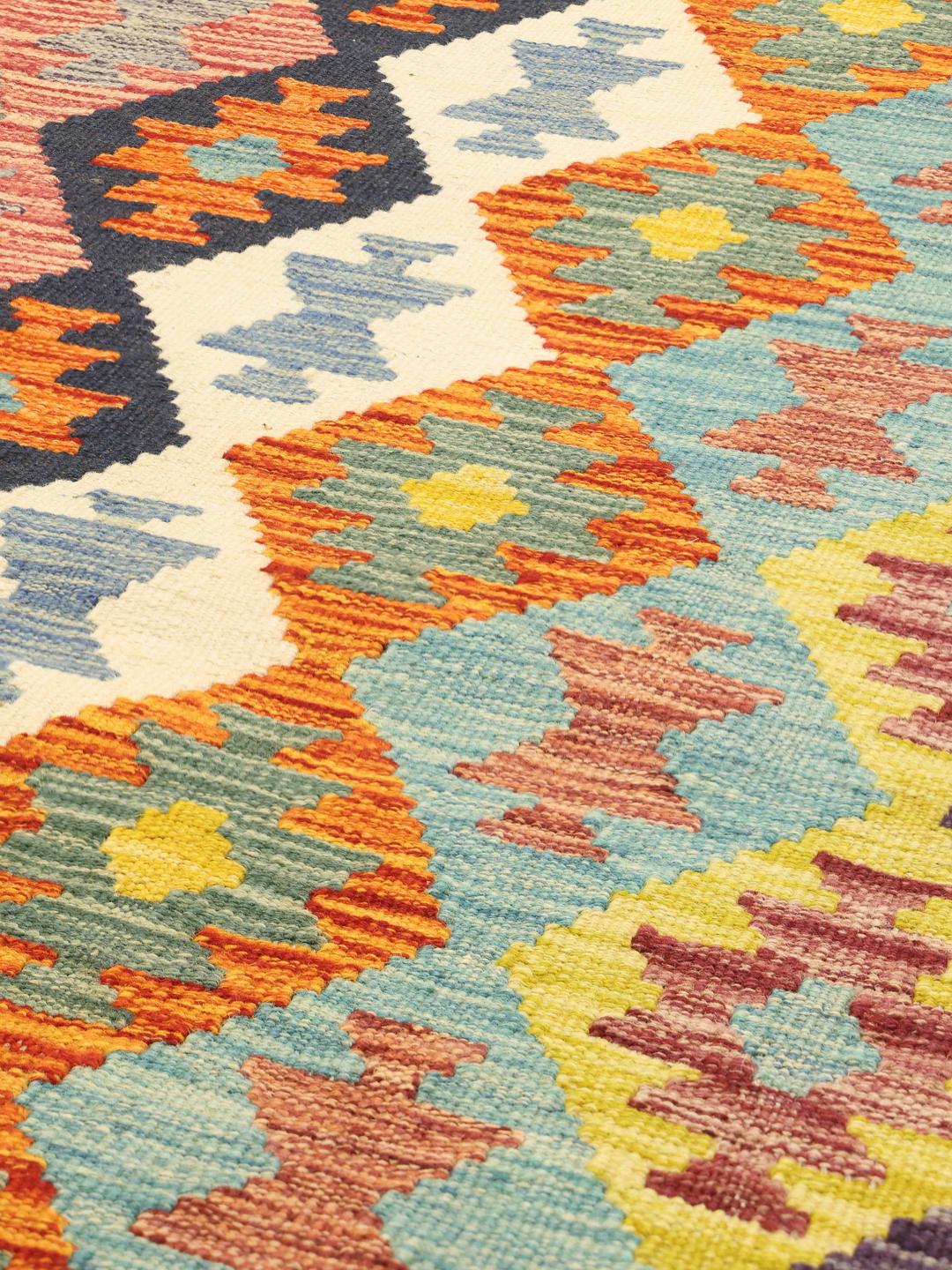
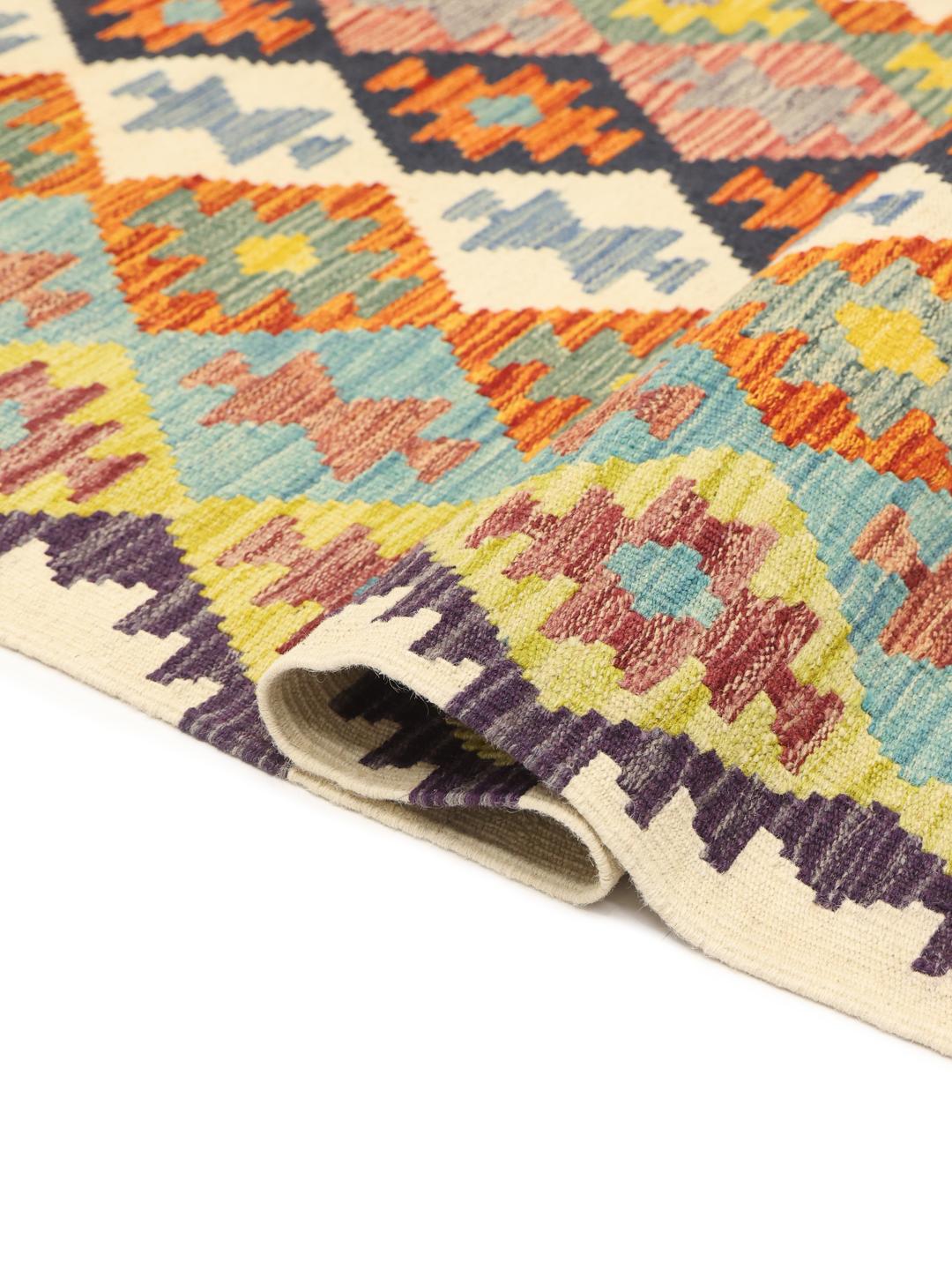
Signature design elements of Afghan Kelims often include bold, geometric motifs such as diamonds, triangles, and stylized floral shapes. These patterns are not merely decorative but often carry symbolic meanings related to protection, fertility, and the history of the weaver's family or tribe. The use of vibrant, natural dyes has historically defined the look of these pieces, allowing them to remain striking and relevant in modern interior spaces.
Owning a Kelim is more than just purchasing a floor covering; it is an investment in a storied craft tradition. These rugs are highly valued by collectors for their ability to bridge the gap between ancient nomadic heritage and contemporary home styling. Each piece represents a connection to the skilled hands that made it and the cultural history of Afghanistan, making it a meaningful addition to any collection.