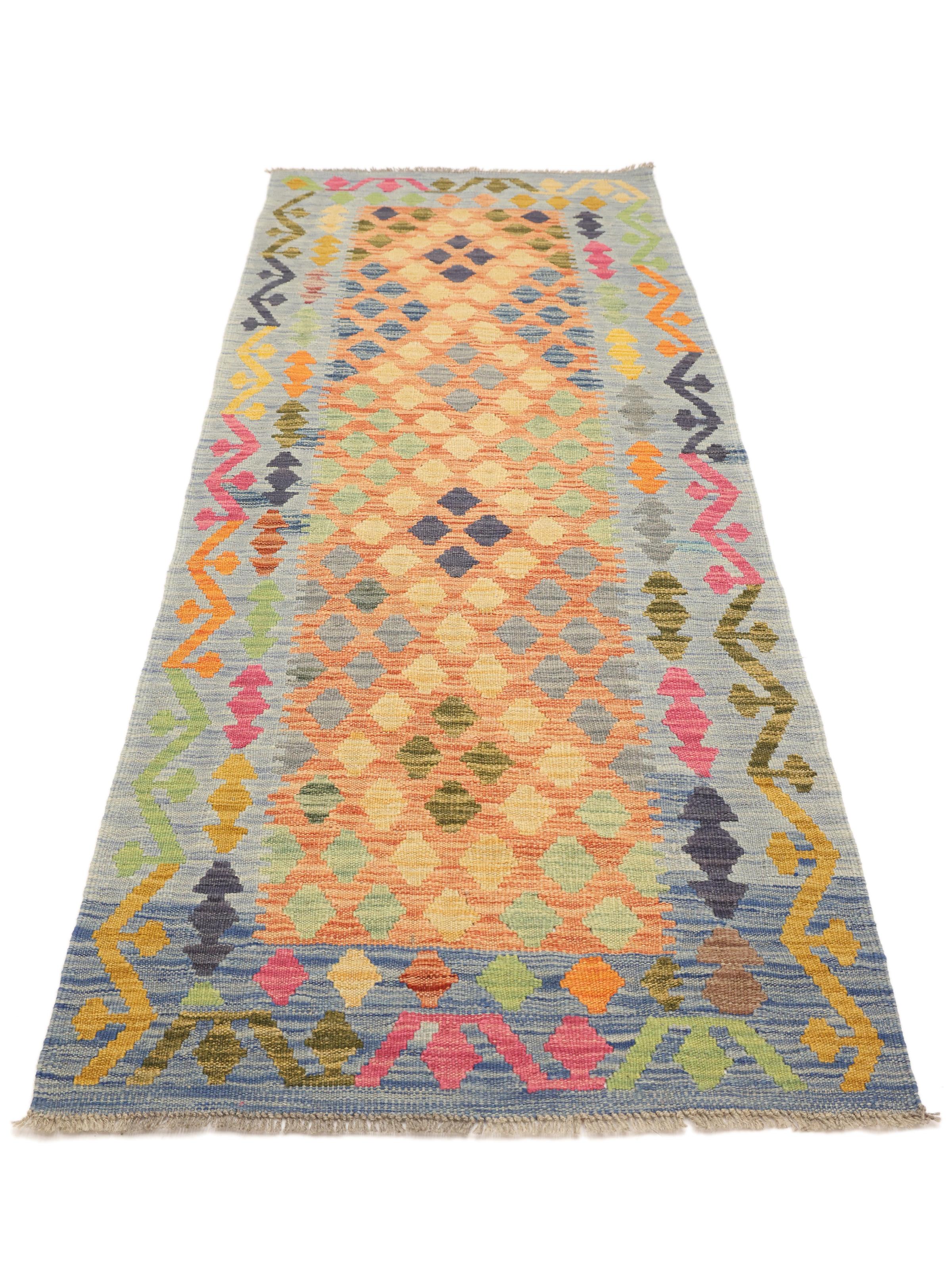
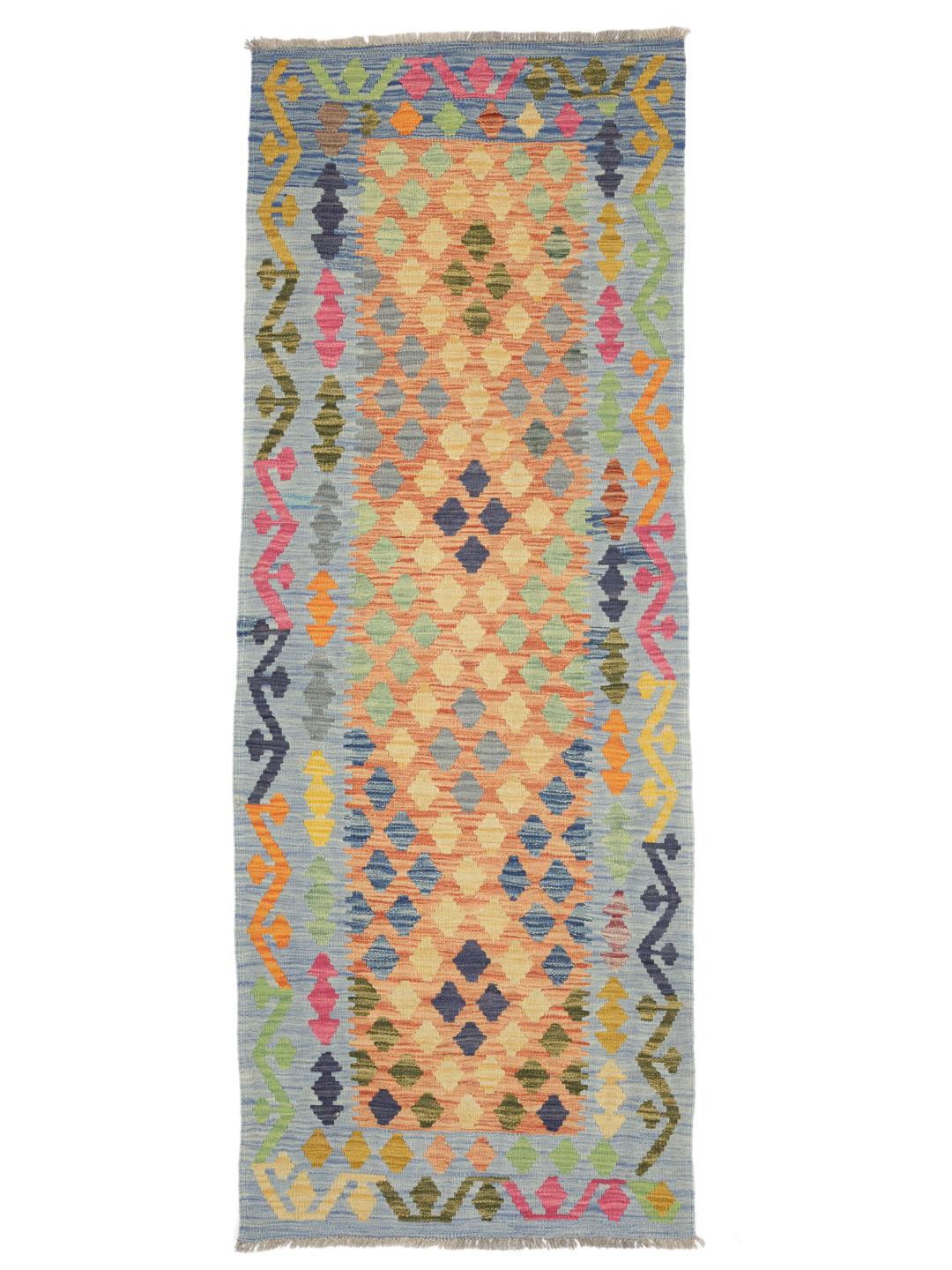
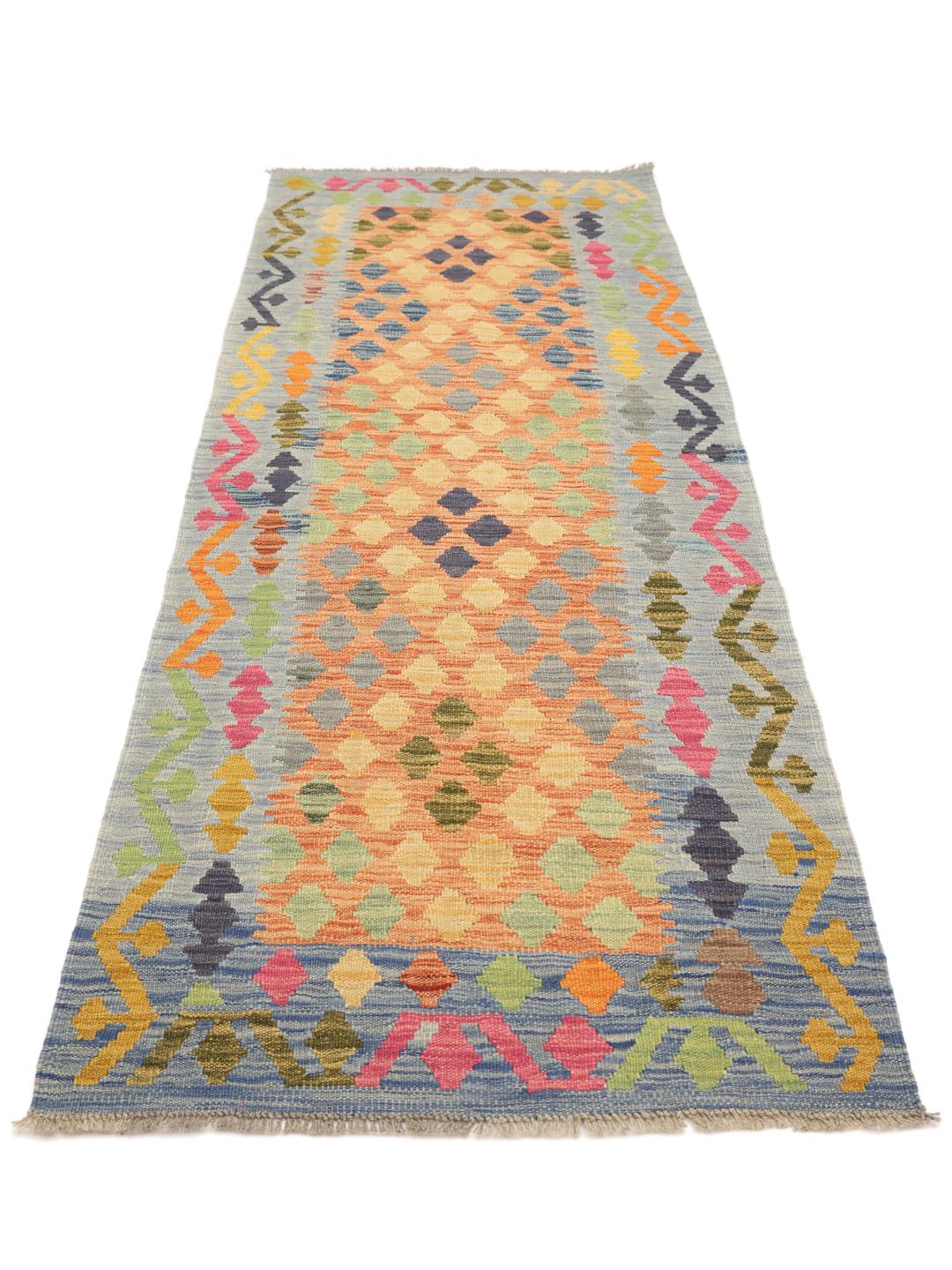
The tradition of weaving flat-weave rugs, known as Kelims, is deeply rooted in the nomadic cultures of the Middle East and Central Asia. These textiles were originally created by tribal communities for practical use as floor coverings, wall hangings, or storage bags, with each design reflecting the specific heritage and environment of the weaver.
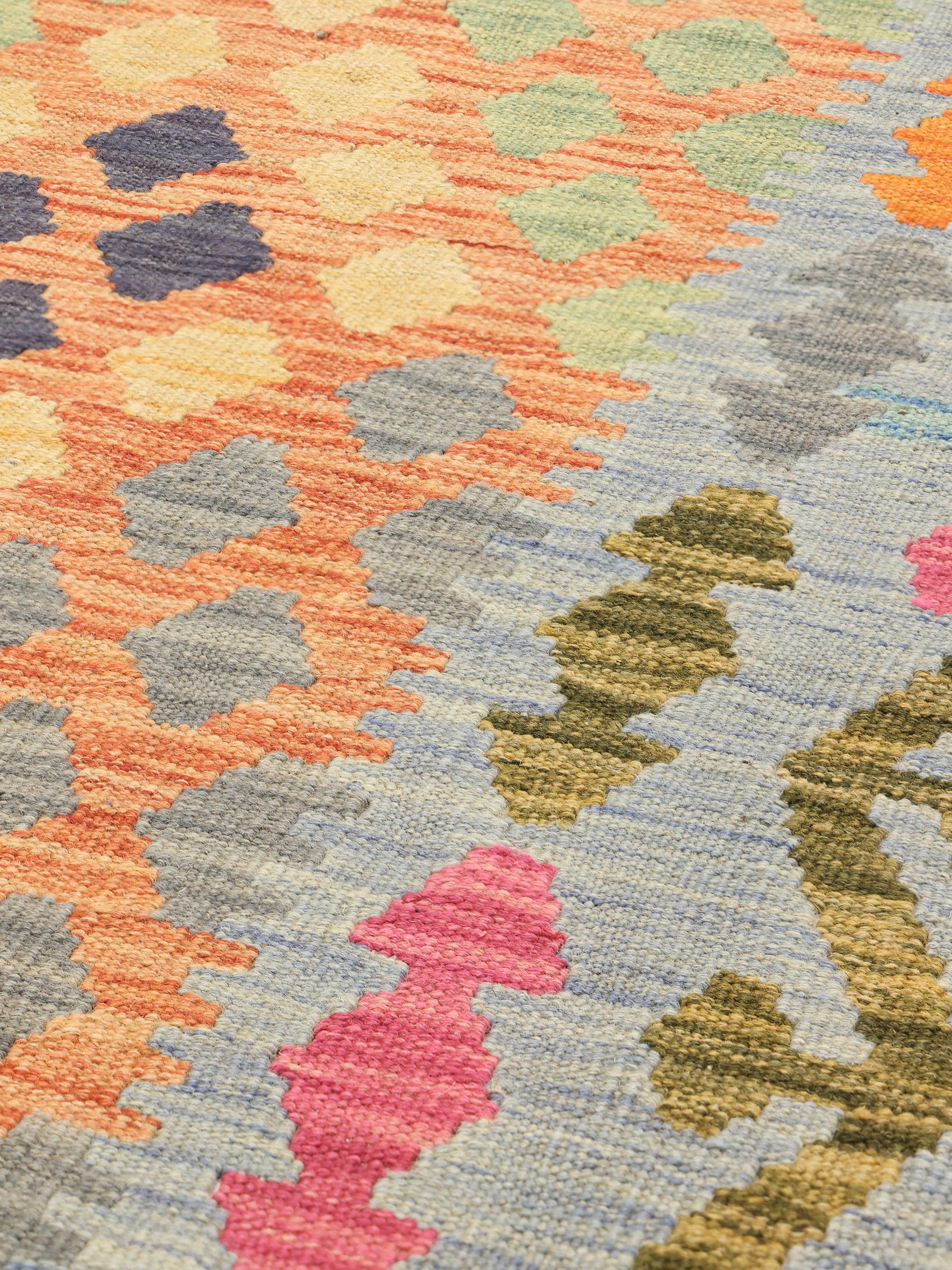
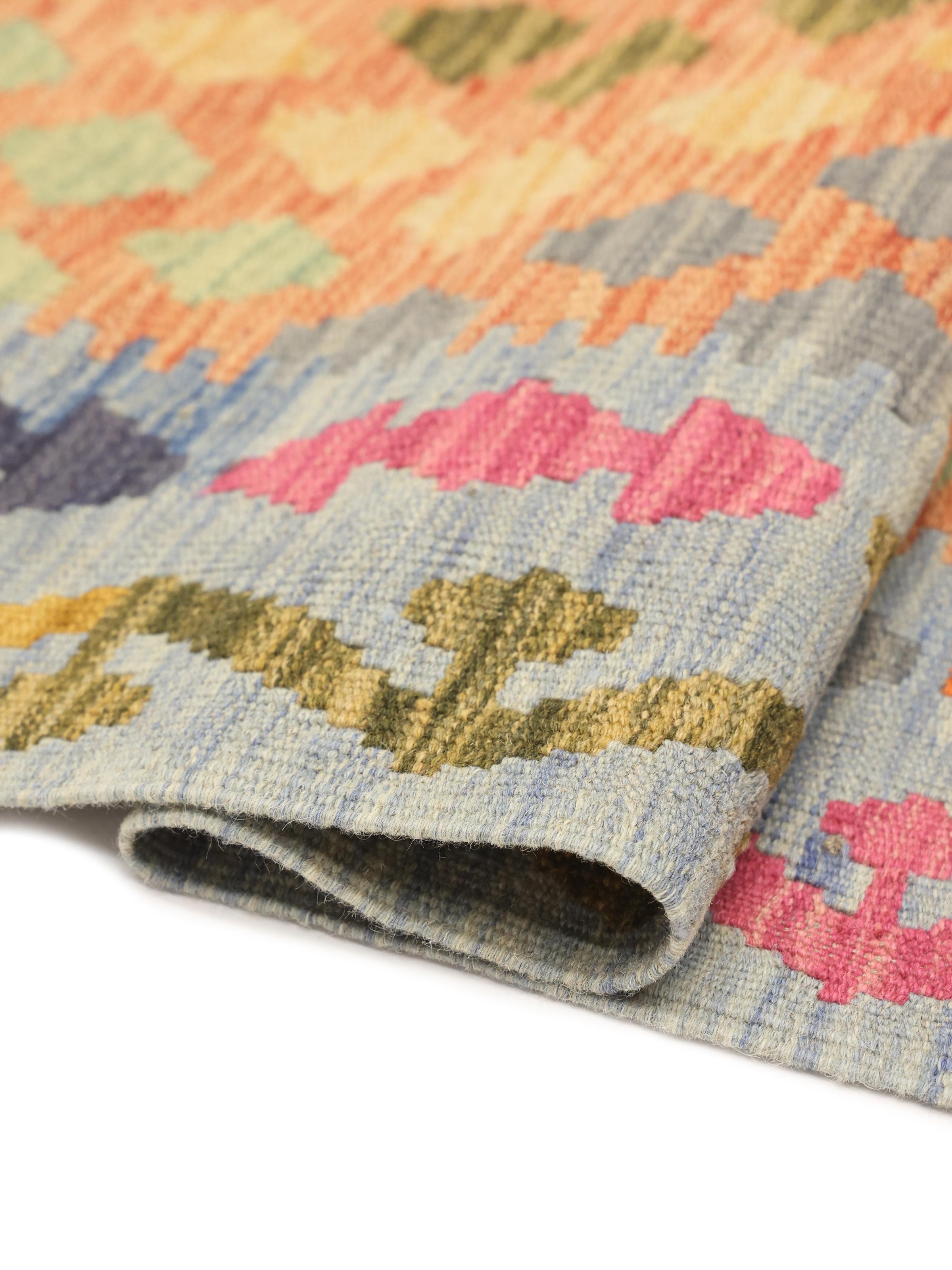
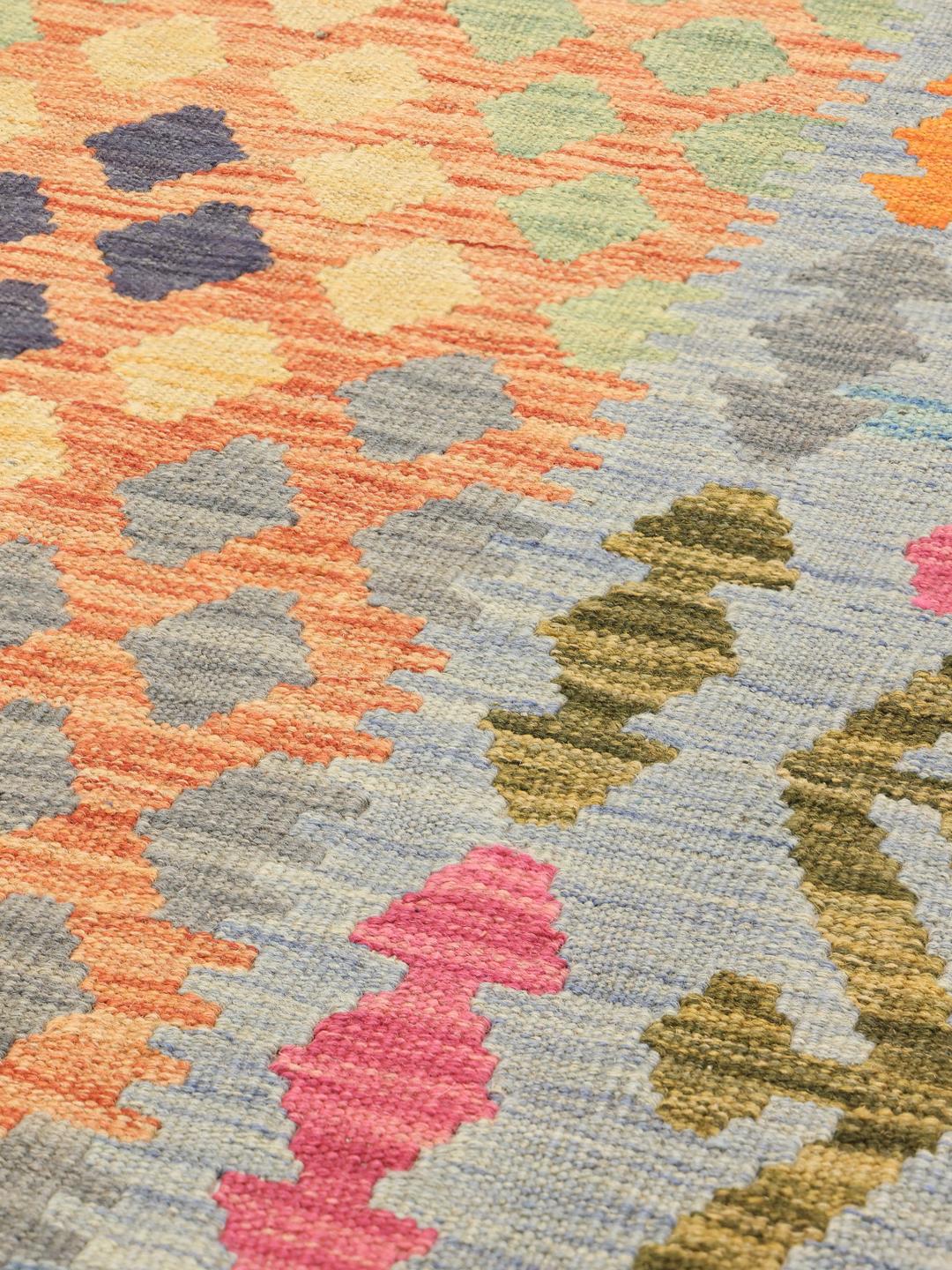
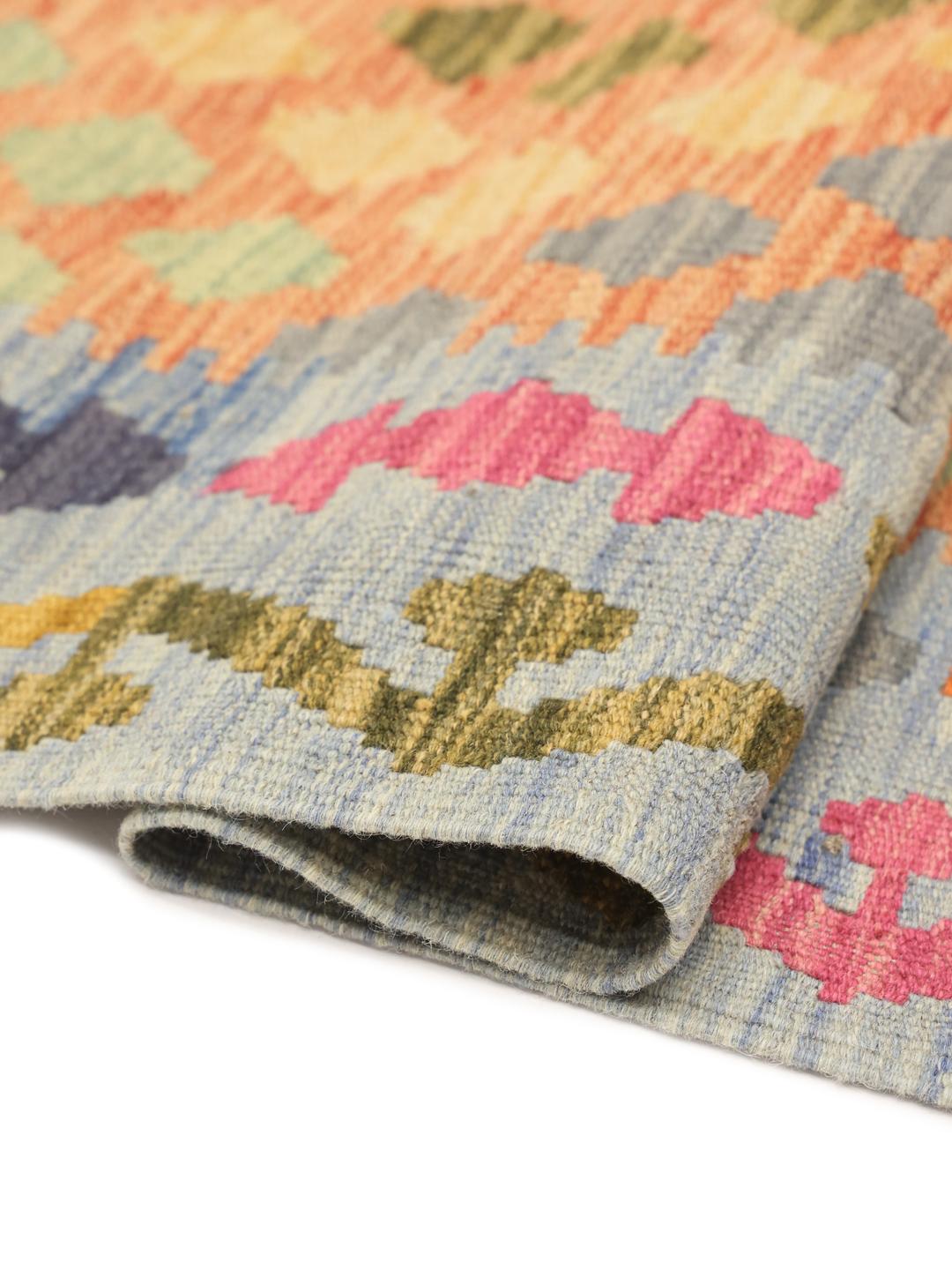
The term 'Kelim' refers to a specific tapestry-weave technique where the weft threads are passed through the warp threads to create a flat, pileless surface. This method results in a lightweight yet incredibly strong fabric that is highly valued for its versatility and clear, sharp geometric lines.
Signature elements of these rugs often include bold, repeating motifs such as diamonds, triangles, and stylised floral shapes. The vibrant colour palette is traditionally achieved using natural dyes derived from roots, flowers, and minerals, which give the wool a subtle, varied depth that evolves beautifully over time.
Owning a hand-woven Afghan Kelim is an opportunity to connect with a centuries-old craft. These pieces are highly prized by collectors for their cultural significance and the personal touch of the artisan, representing a legacy of skill that remains vital and relevant in contemporary homes.