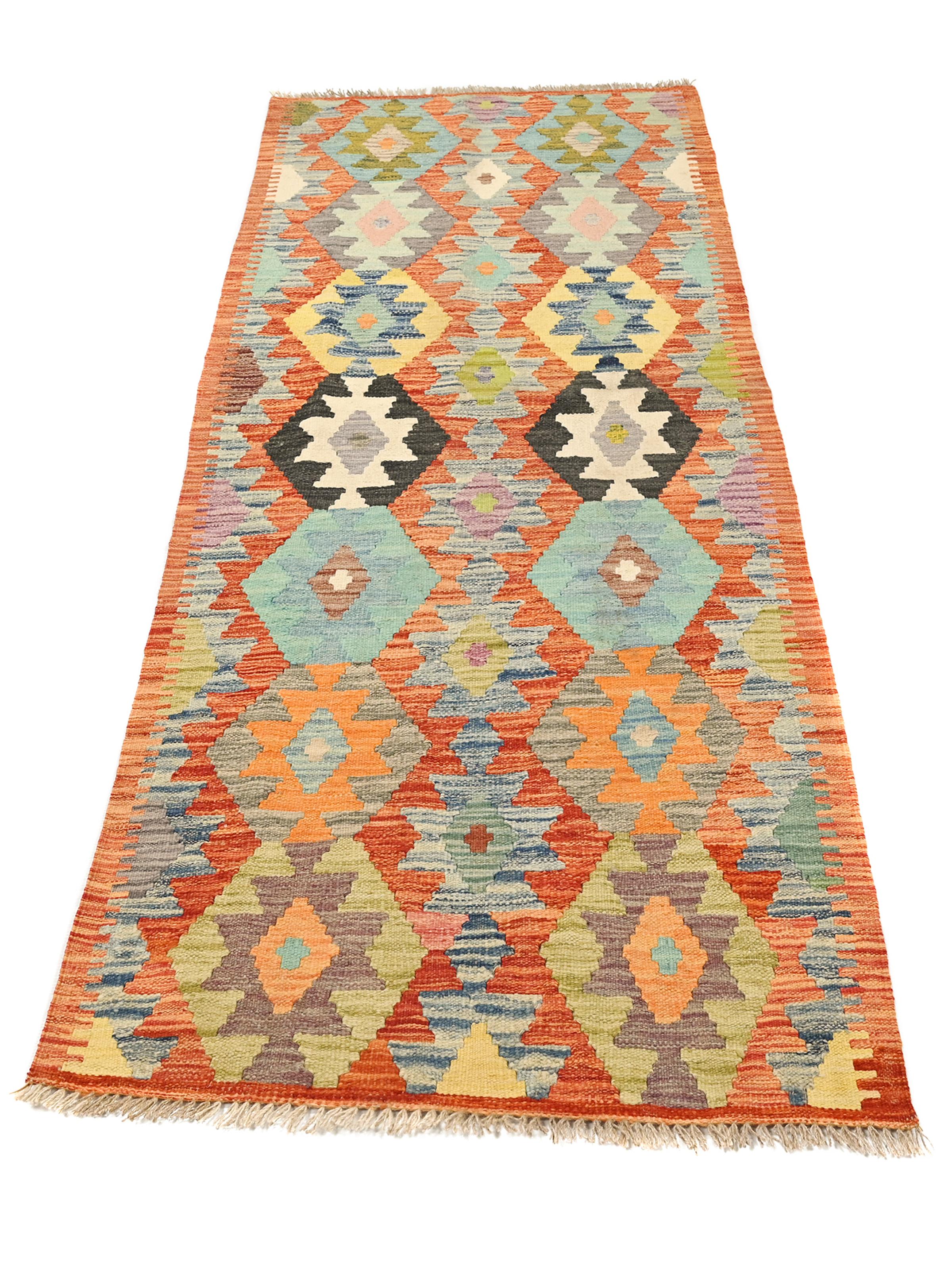
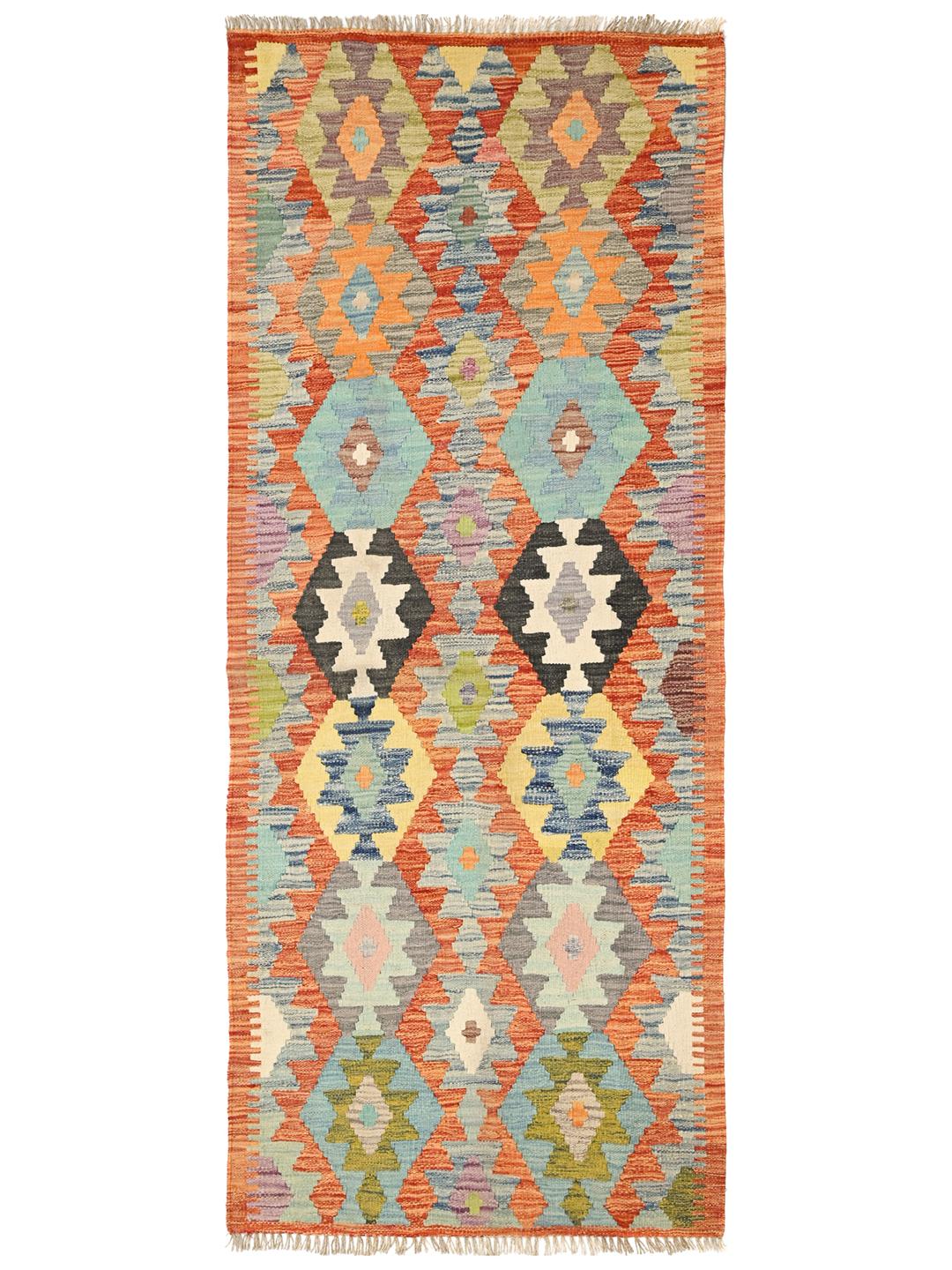
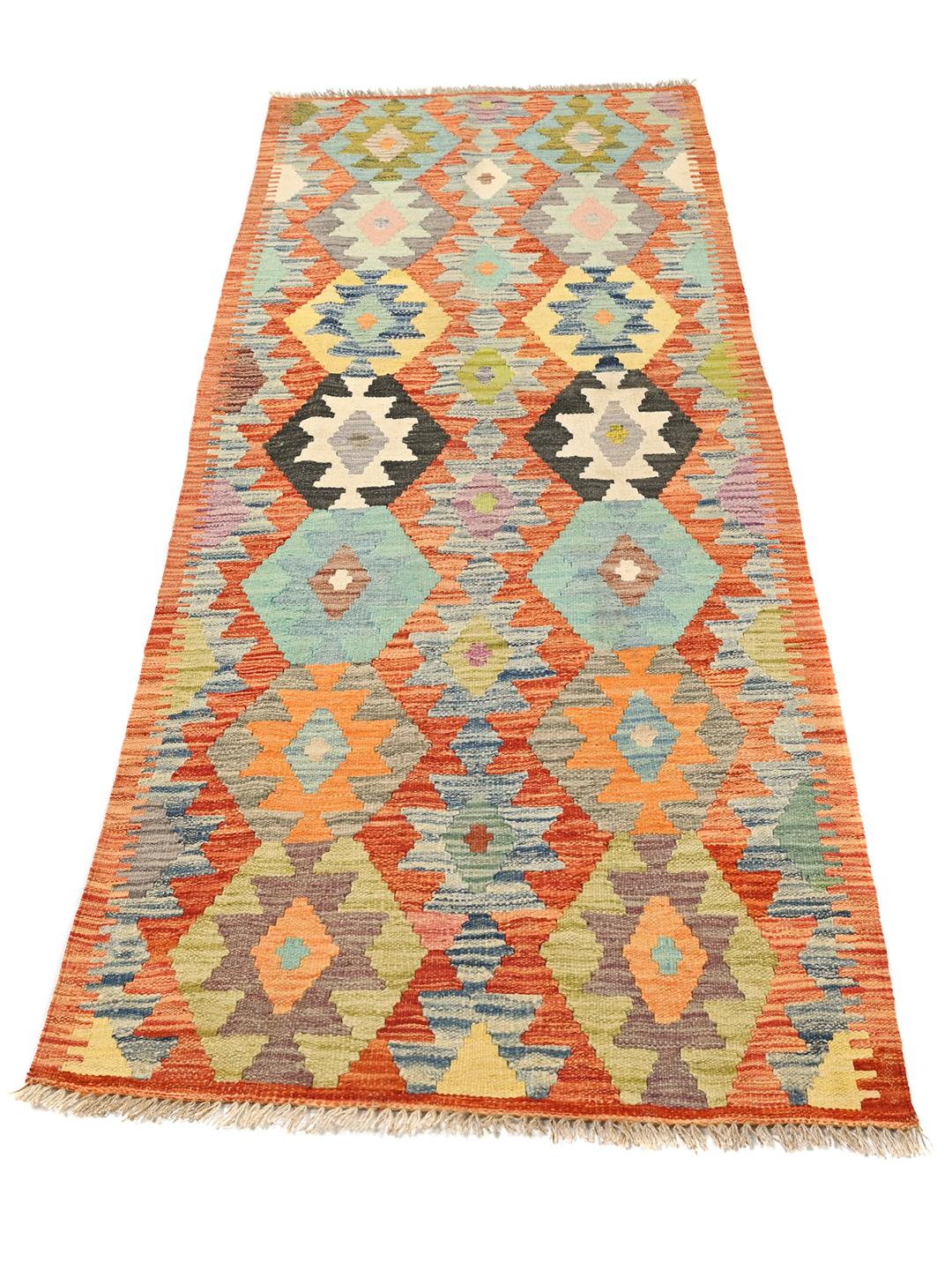
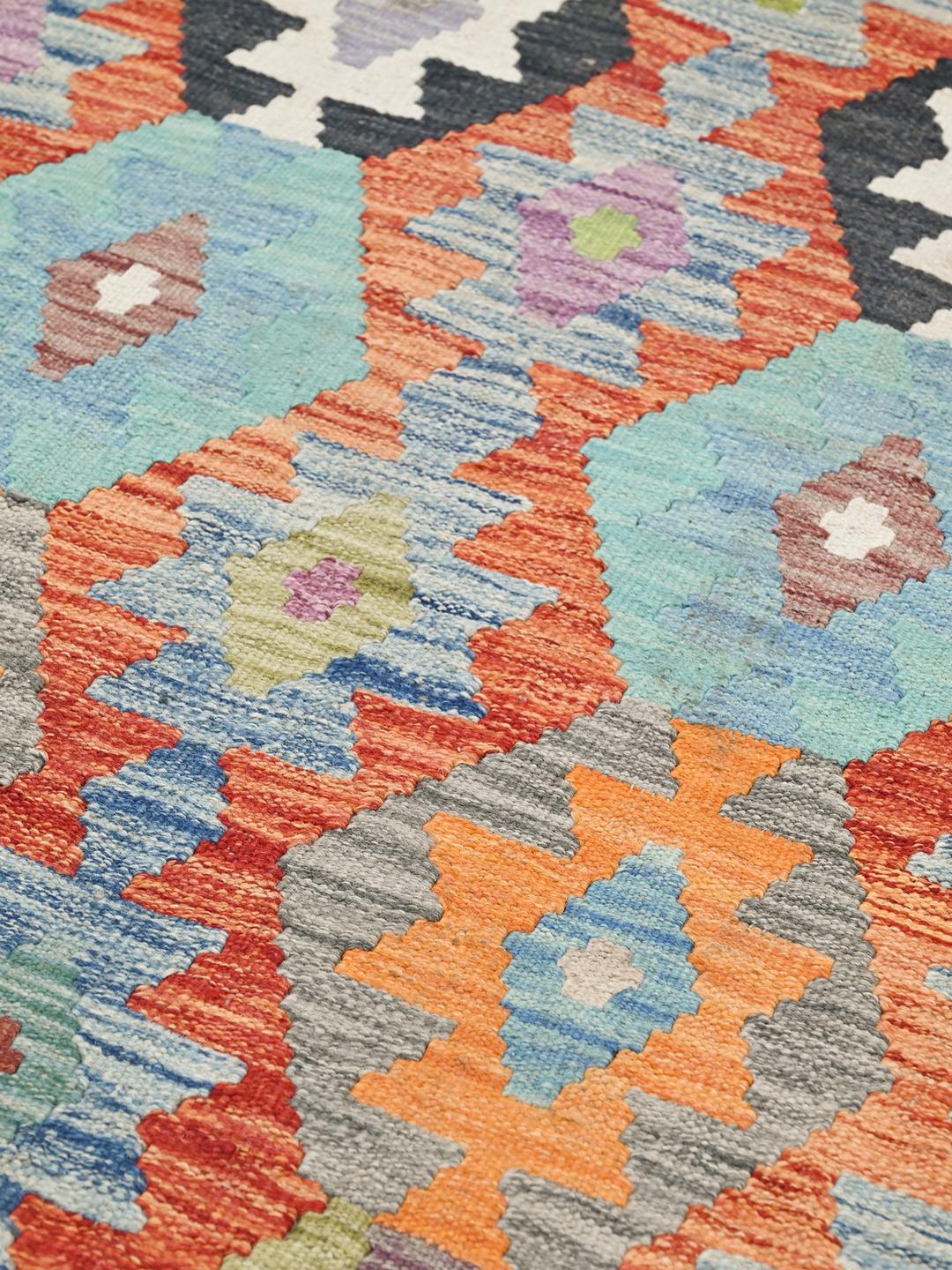
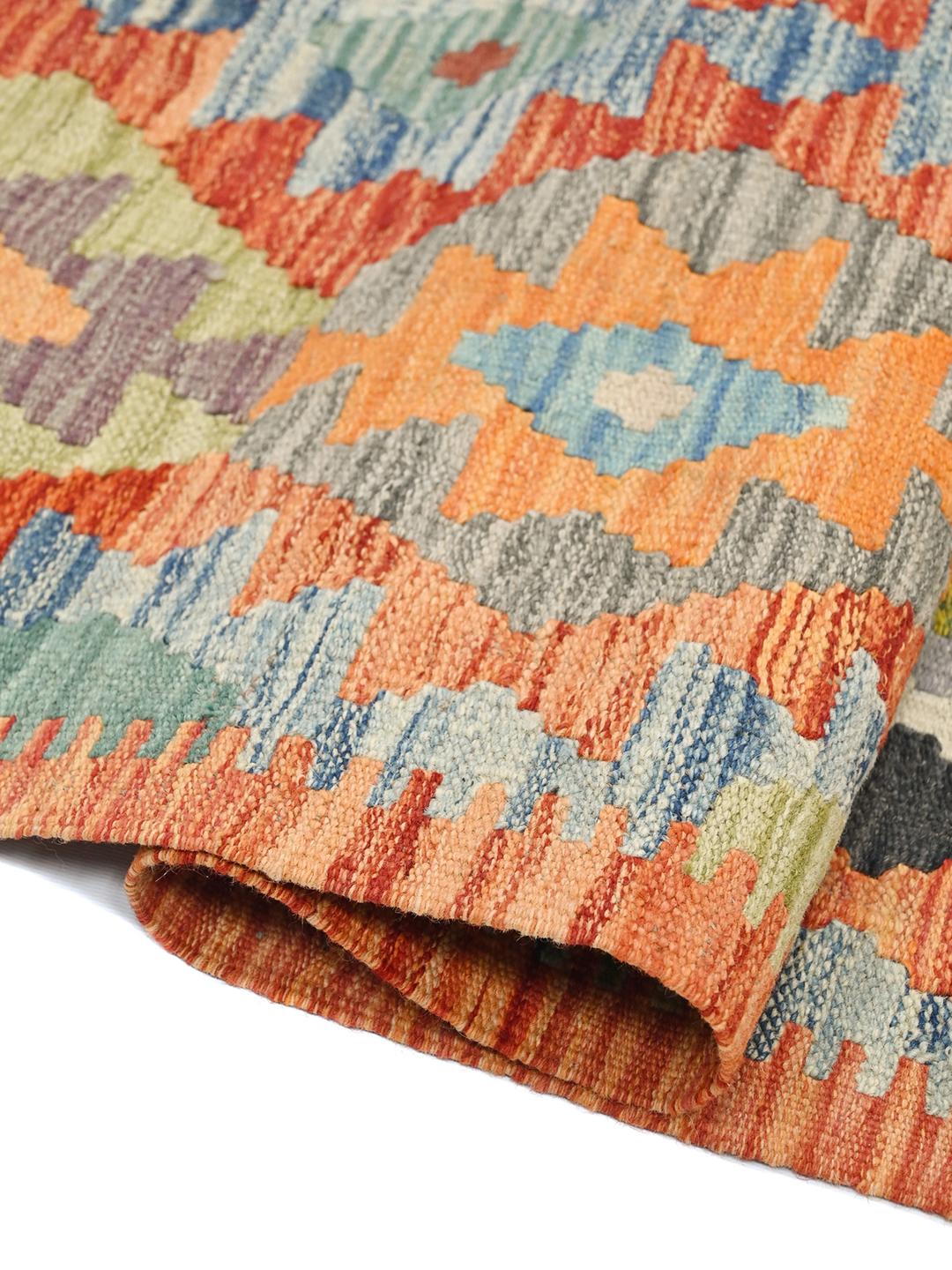
The Kelim tradition in Afghanistan is deeply rooted in the nomadic lifestyle of the region, where flat-woven textiles were essential for both utility and decoration. These rugs were historically crafted to serve as floor coverings, wall hangings, and even saddlebags, reflecting a culture that valued portability, durability, and artistic expression in equal measure.
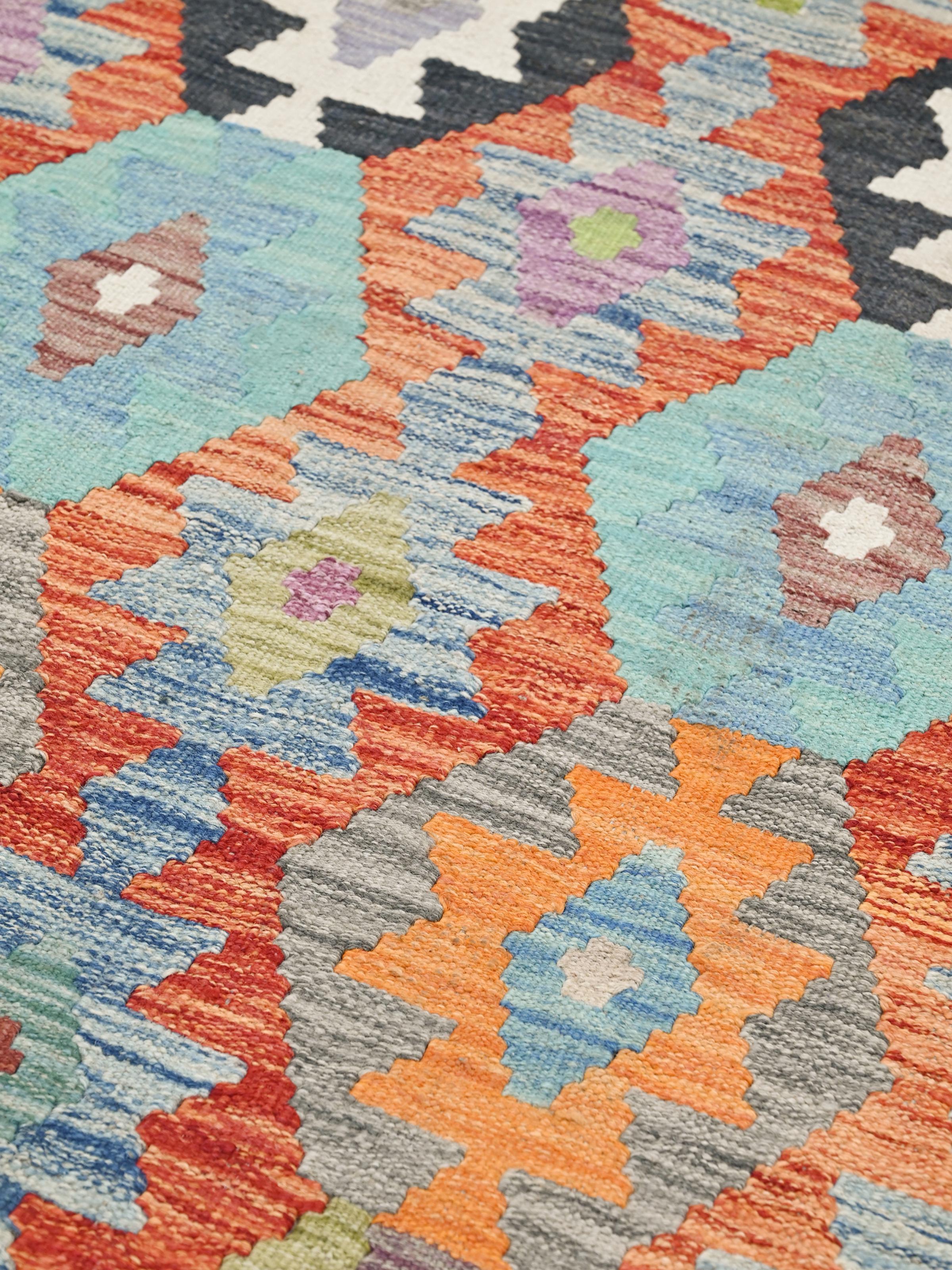
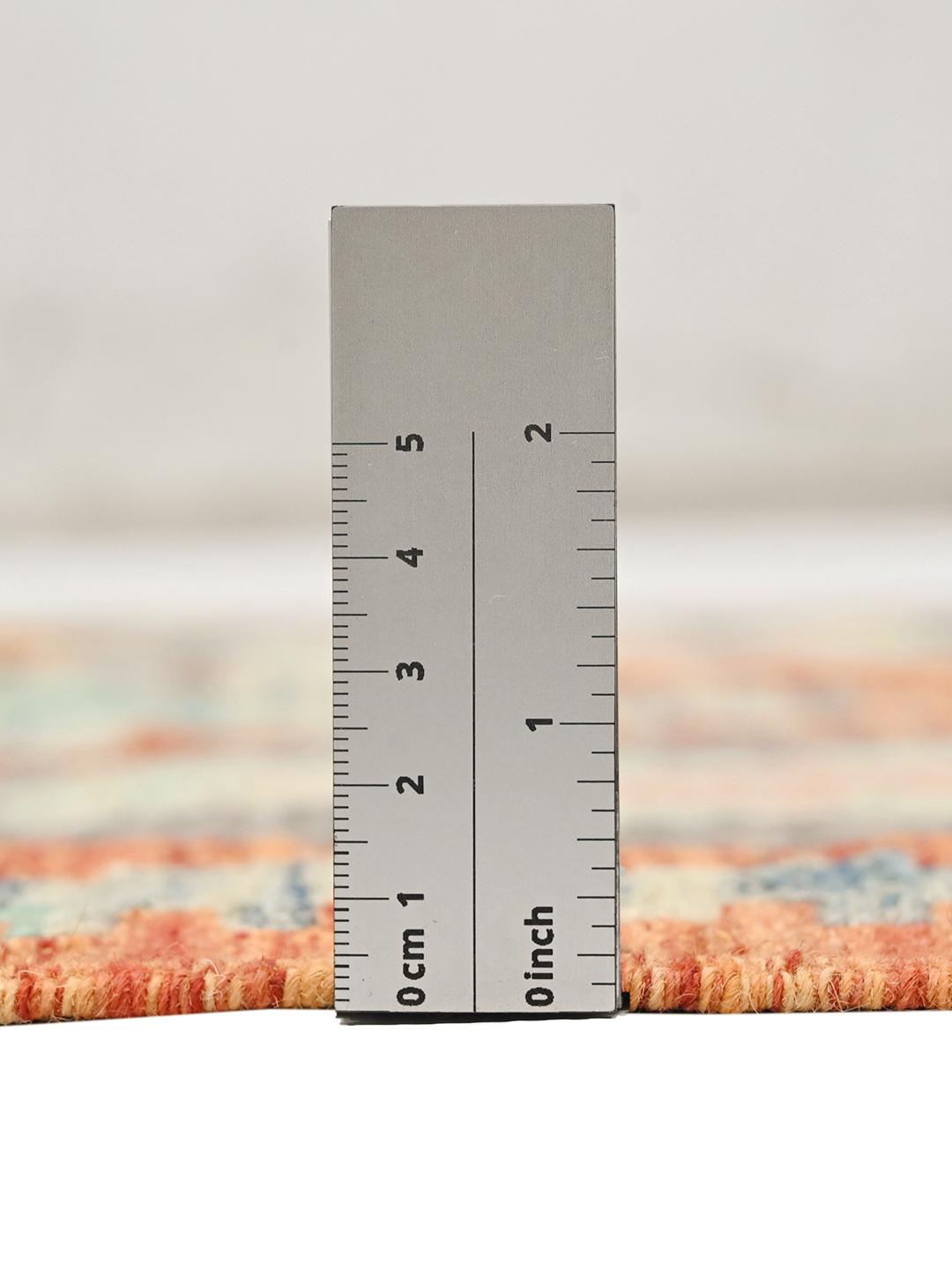
The term Kelim refers to the specific flat-weaving technique where the weft threads are woven tightly through the warp threads, creating a rug without a pile. This style is known for its crisp, graphic patterns and its ability to lie flat, making it a practical choice that has been refined over centuries of Middle Eastern textile history.
Signature design elements of this tradition often include bold geometric motifs such as diamonds, triangles, and stylised floral forms. The use of vibrant, natural dyes and symbolic patterns allows each weaver to tell a visual story, with the diamond shapes often representing protection or fertility within the tribal lexicon of the region.
Today, these rugs are highly sought after by collectors who value the human connection embedded in every piece. Owning an Afghan Kelim is more than just a decor choice; it is an appreciation of a heritage craft that preserves ancient techniques and provides a tangible link to the rich cultural tapestry of Central Asia.