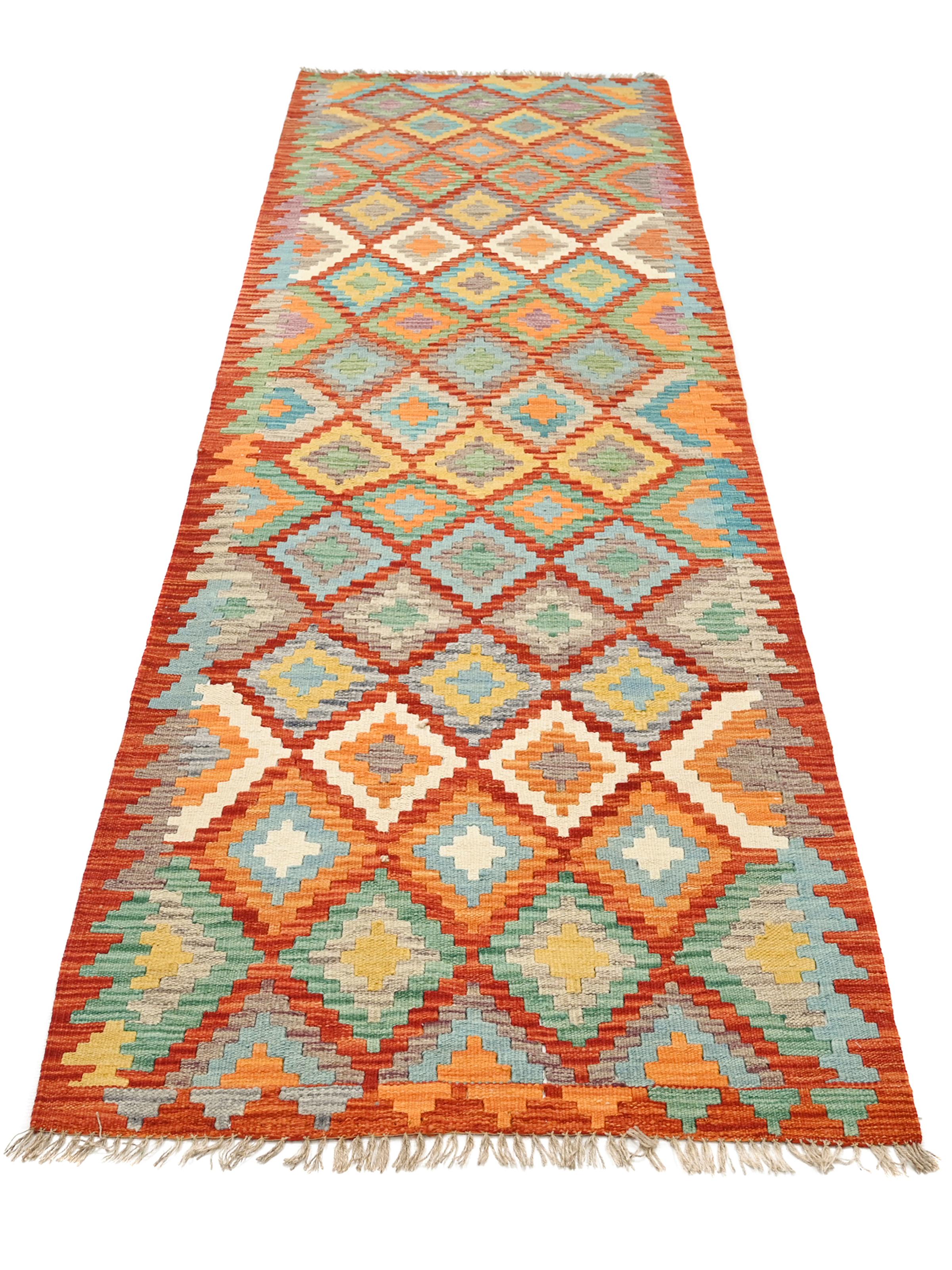
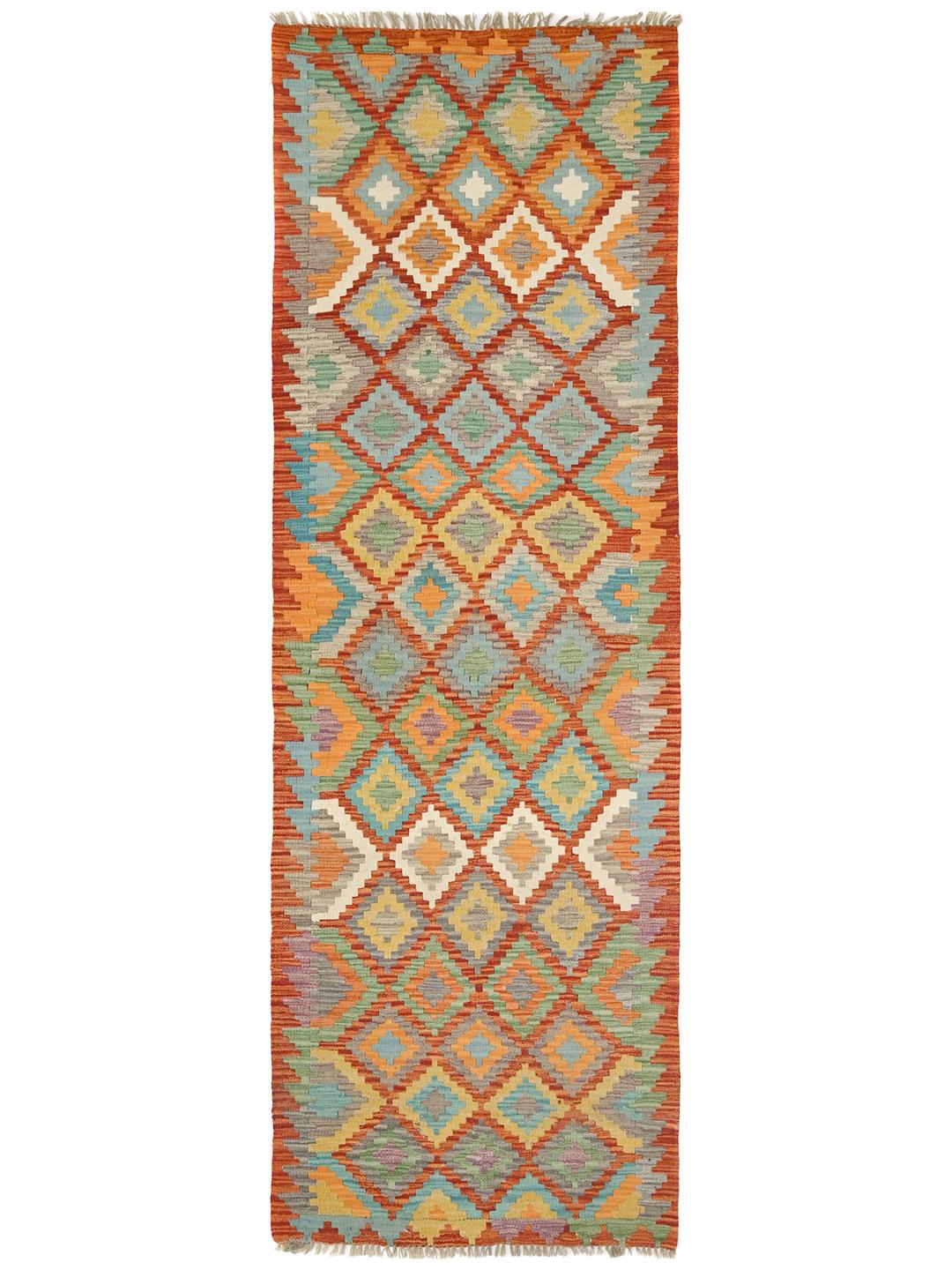
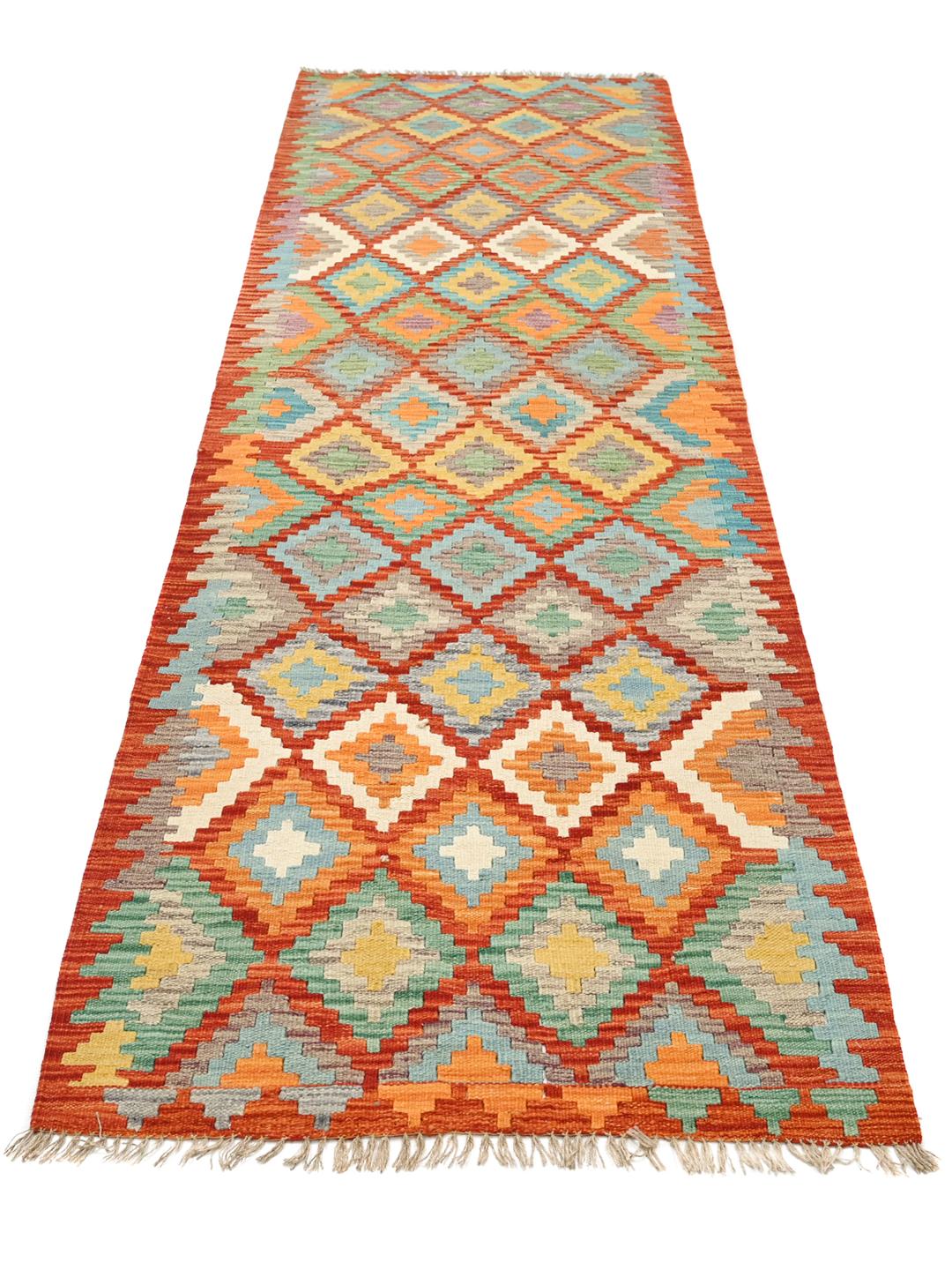
The history of the Kelim Afghan Old Style is deeply rooted in the nomadic traditions of the Middle East. These rugs have long been essential to the lifestyle of migratory groups, serving as versatile floor coverings, wall hangings, and storage bags that could be easily transported across the rugged landscapes of the region.
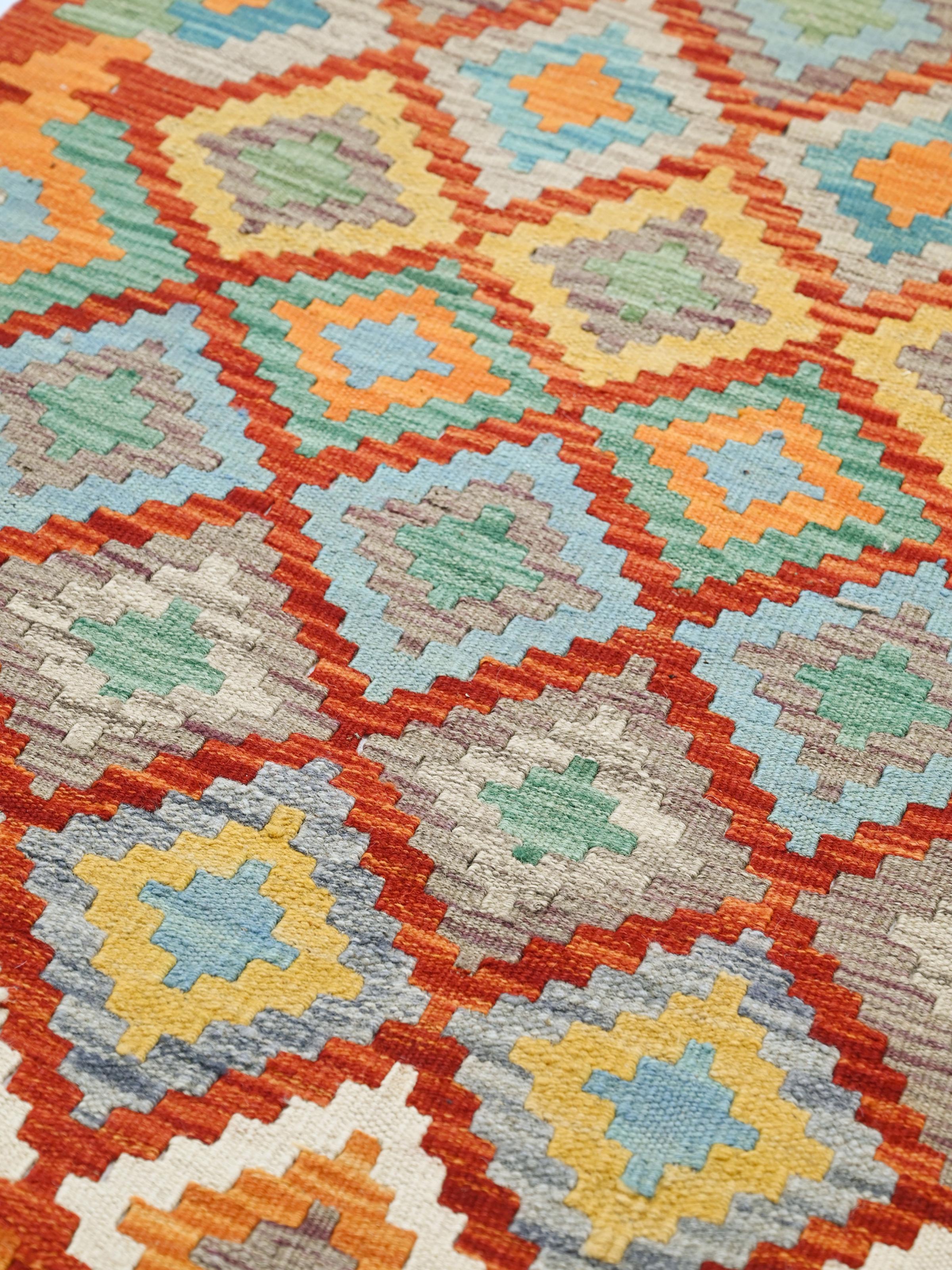
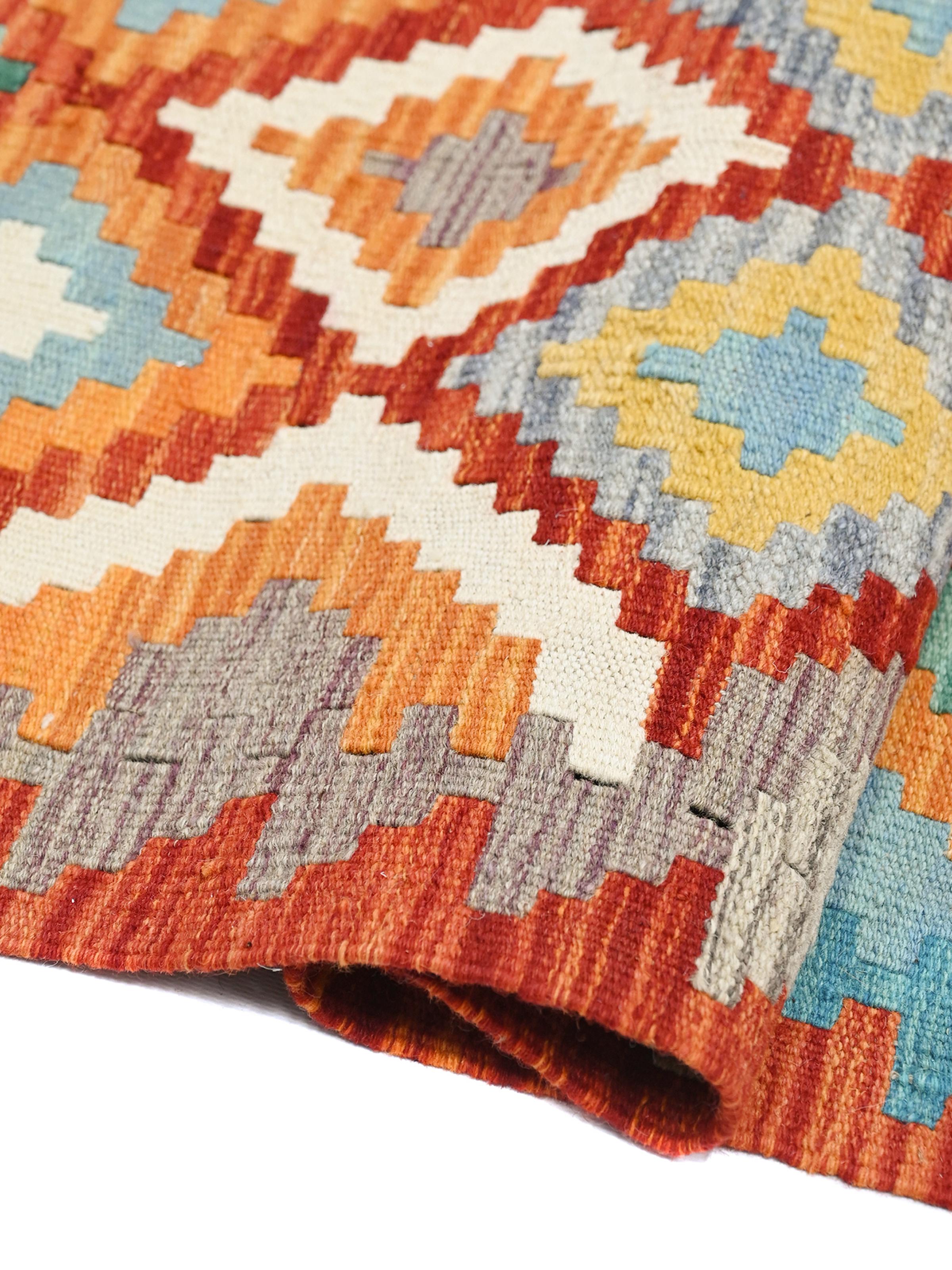
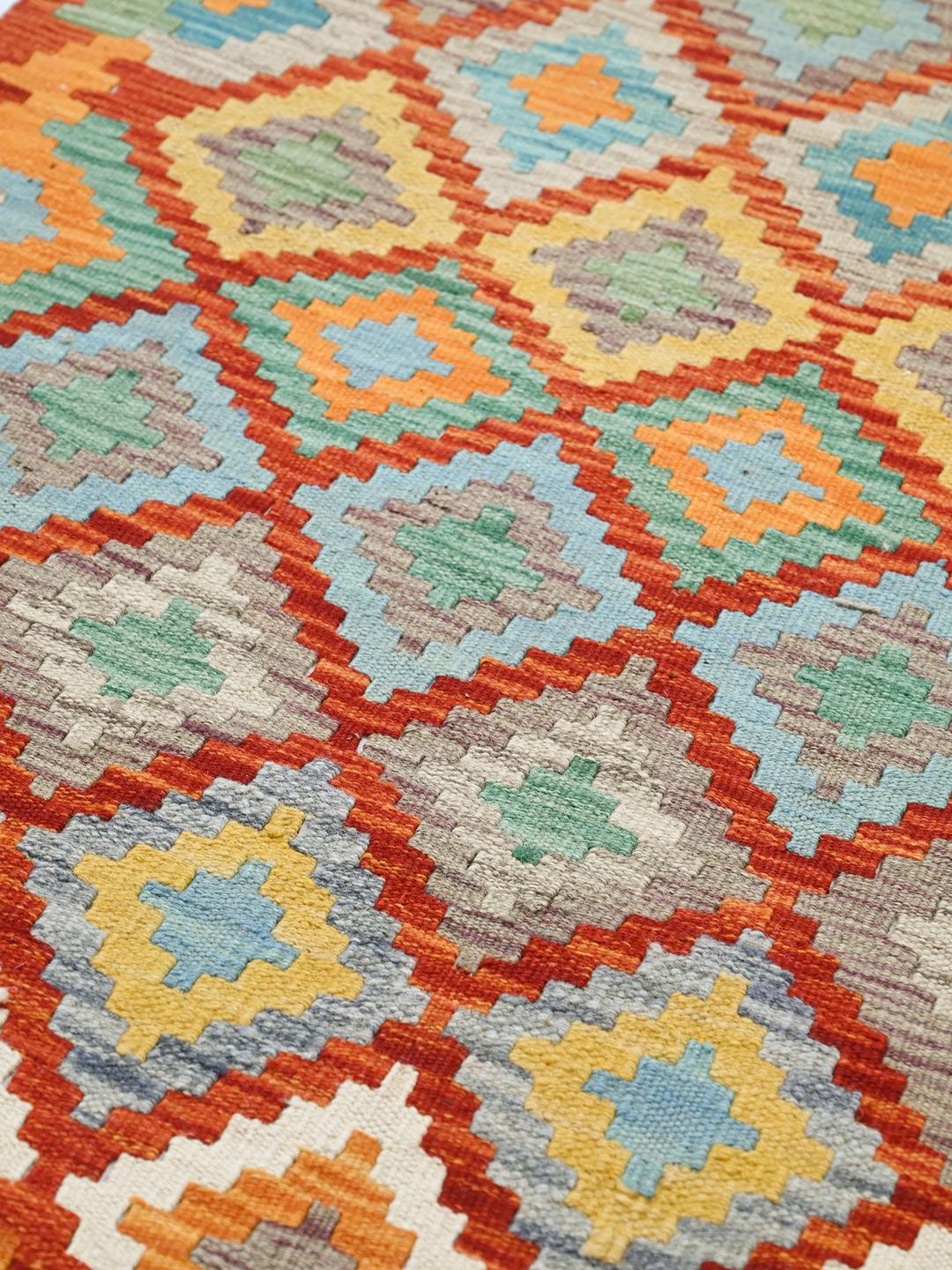
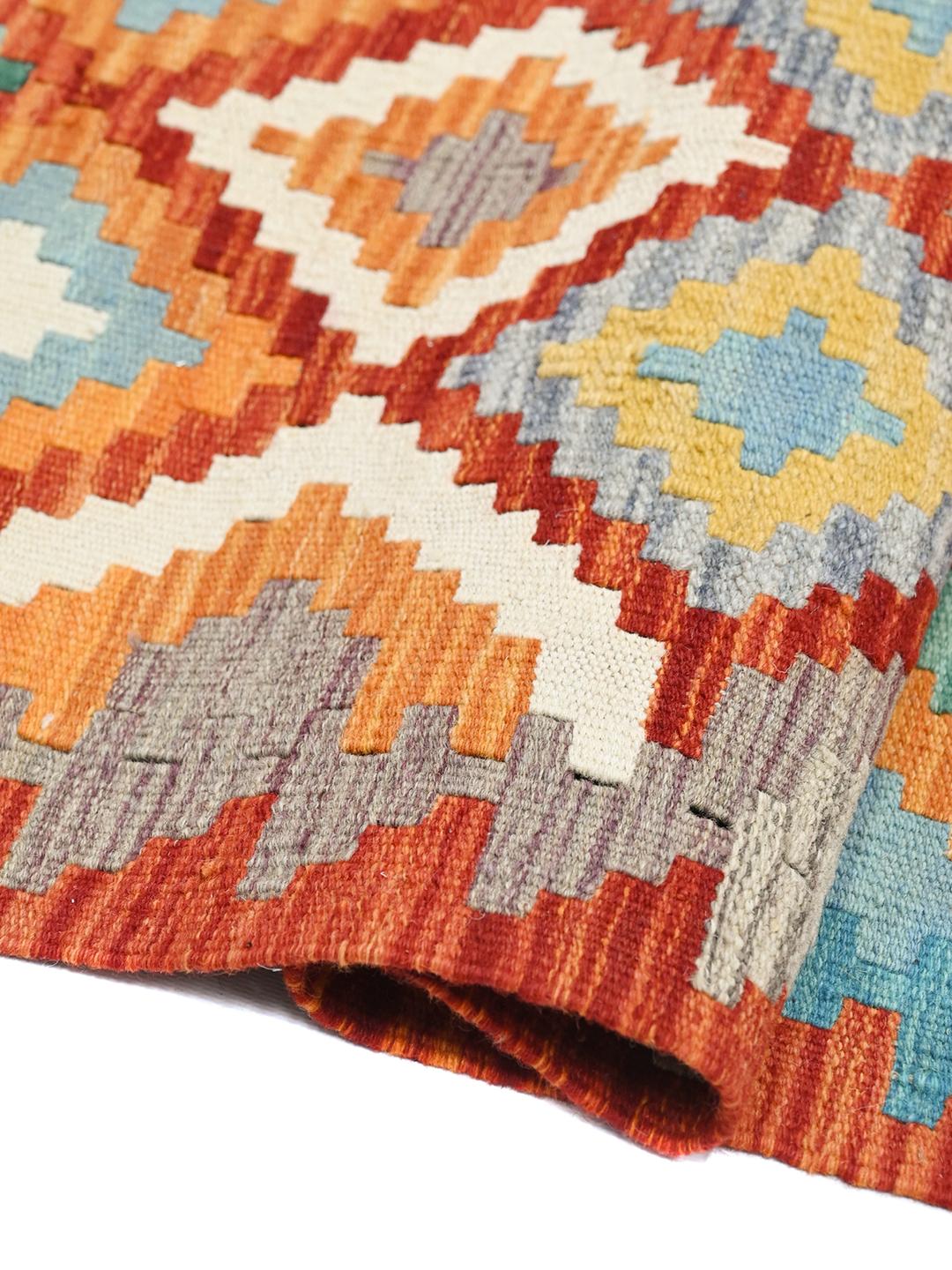
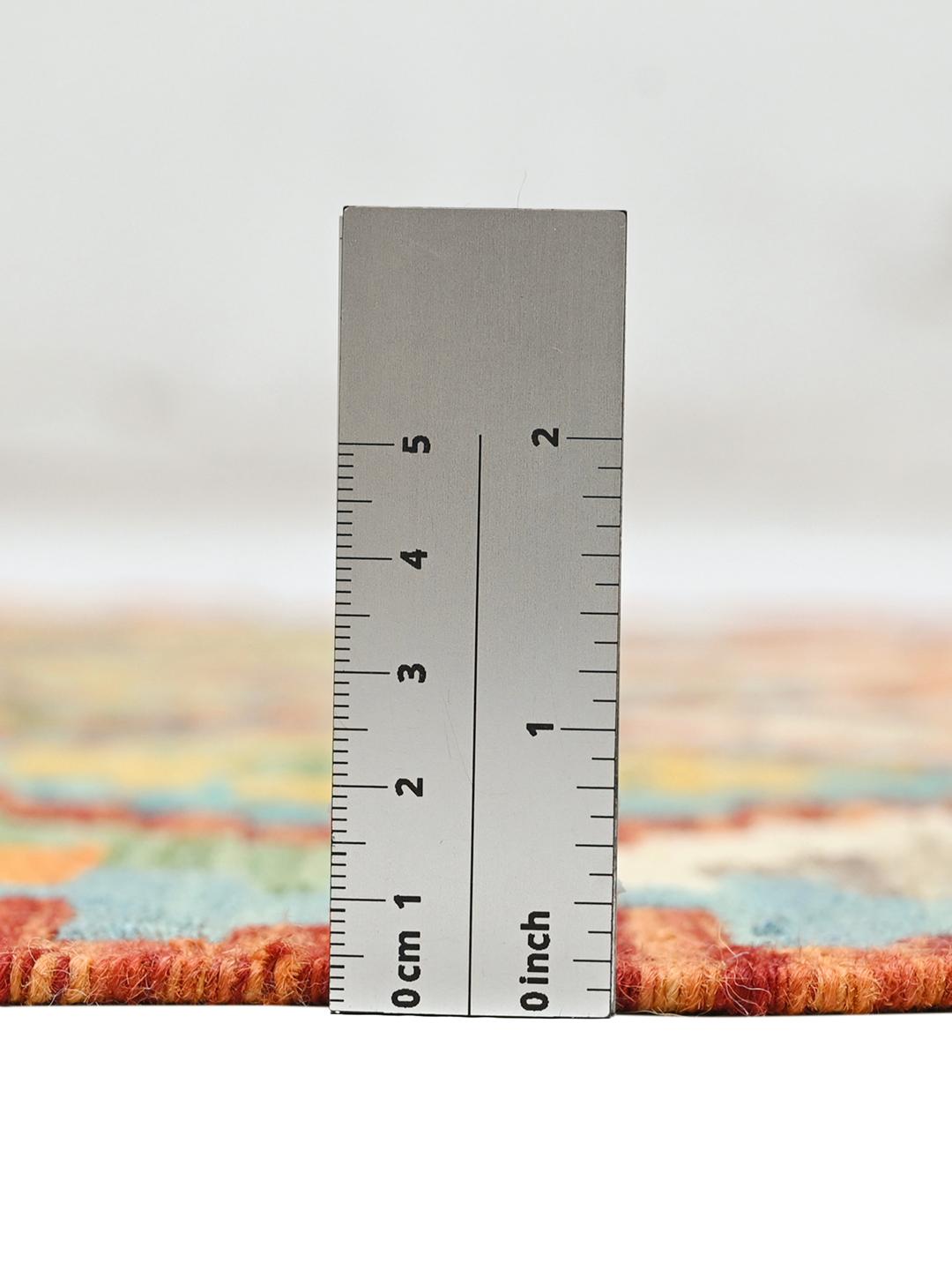
Technically, a kelim is a flat-weave rug, meaning it is constructed without a pile. This specific weaving style is achieved by tightly interlacing the warp and weft threads, creating a lightweight yet incredibly sturdy fabric. Because they lack the knots found in traditional pile rugs, they possess a clean, graphic quality that emphasises the clarity of their intricate patterns.
The visual language of these rugs is defined by bold geometric motifs. You will often find diamonds, triangles, and stepped polygons arranged in rhythmic, symmetrical sequences. These designs are not merely decorative but often carry cultural symbols and stories from the weaver's community, passed down through the generations as a living visual archive.
Collectors value these pieces for their authenticity and the sheer skill required to maintain uniform tension without the support of a pile. Owning a Middle Eastern kelim is an opportunity to connect with a centuries-old craft tradition, bringing a piece of cultural heritage into a modern home environment.