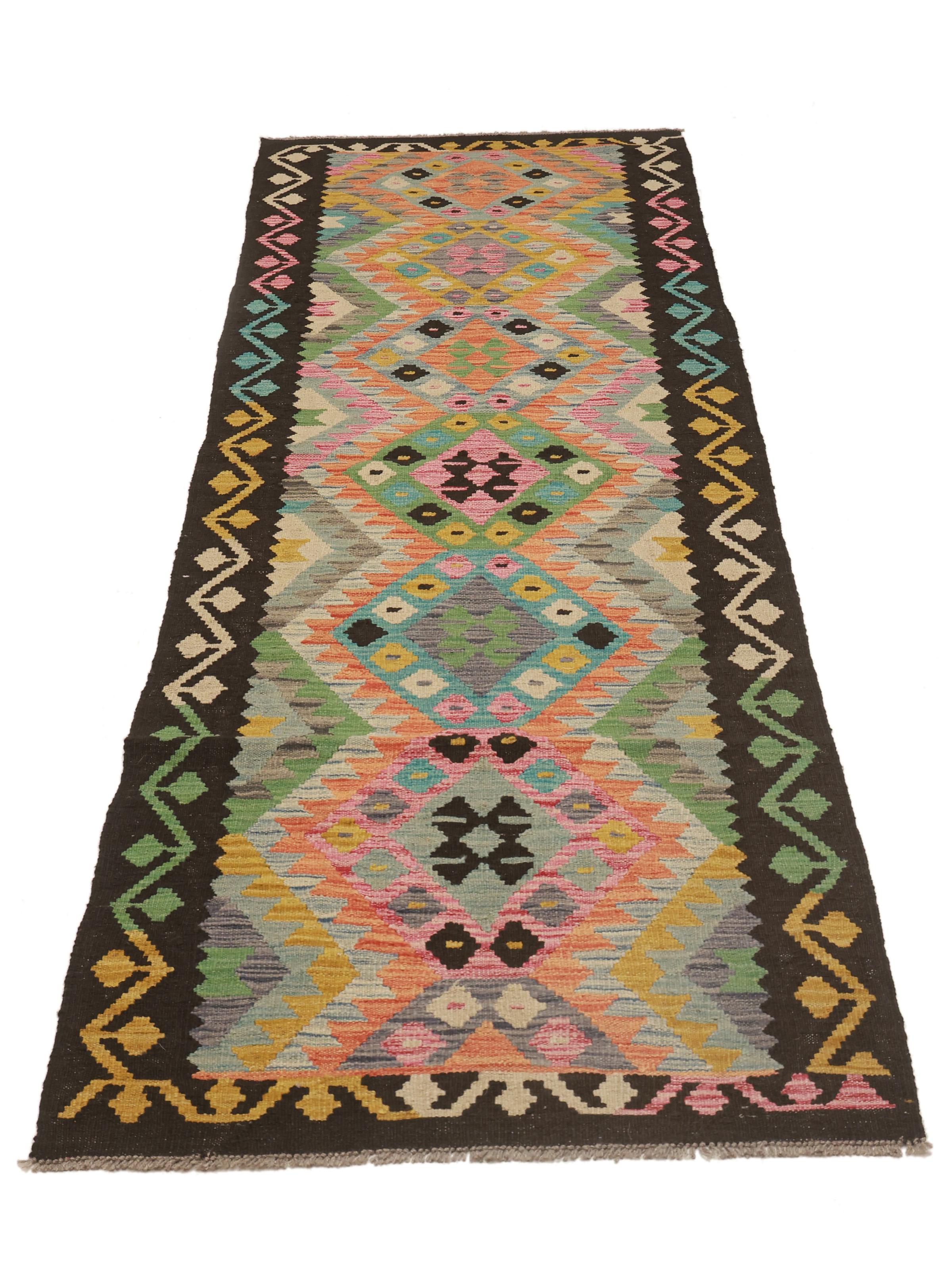
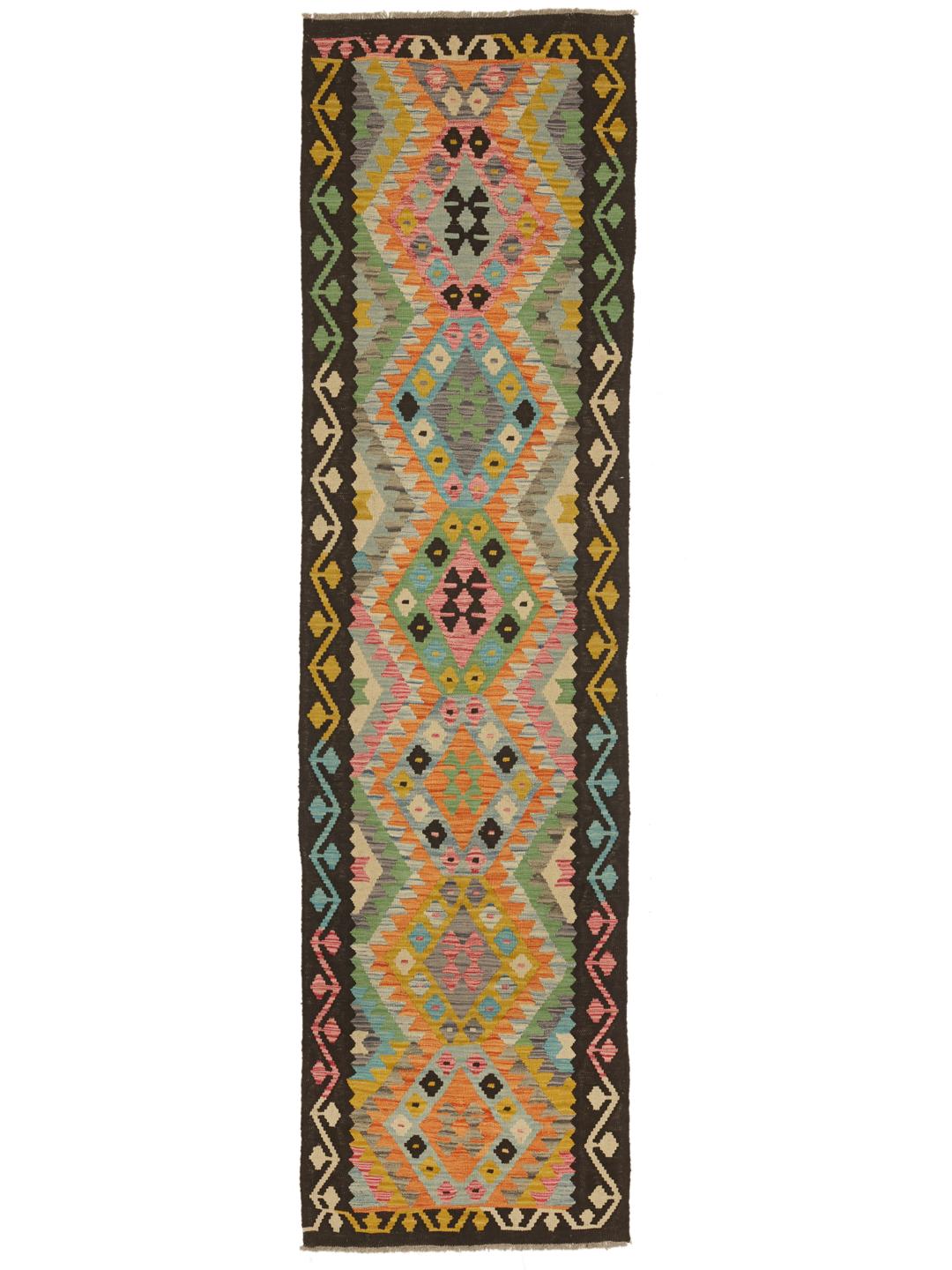
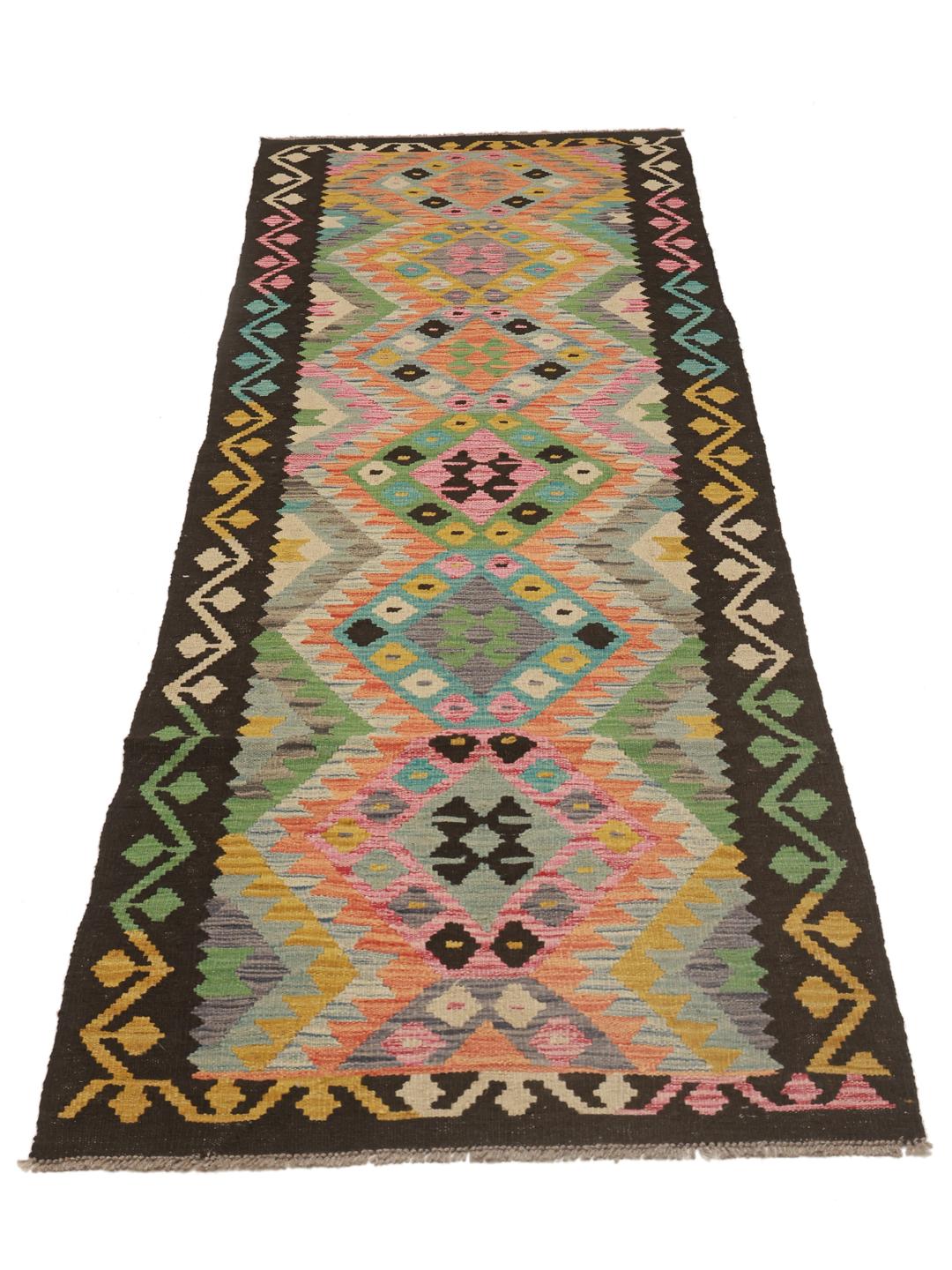
The Kelim tradition in Afghanistan is deeply rooted in the nomadic history of the region, where these flat-woven rugs served as essential, portable furnishings. Historically, these textiles were designed to be versatile and durable, functioning as floor coverings, wall hangings, or even saddlebags for travelling tribes.
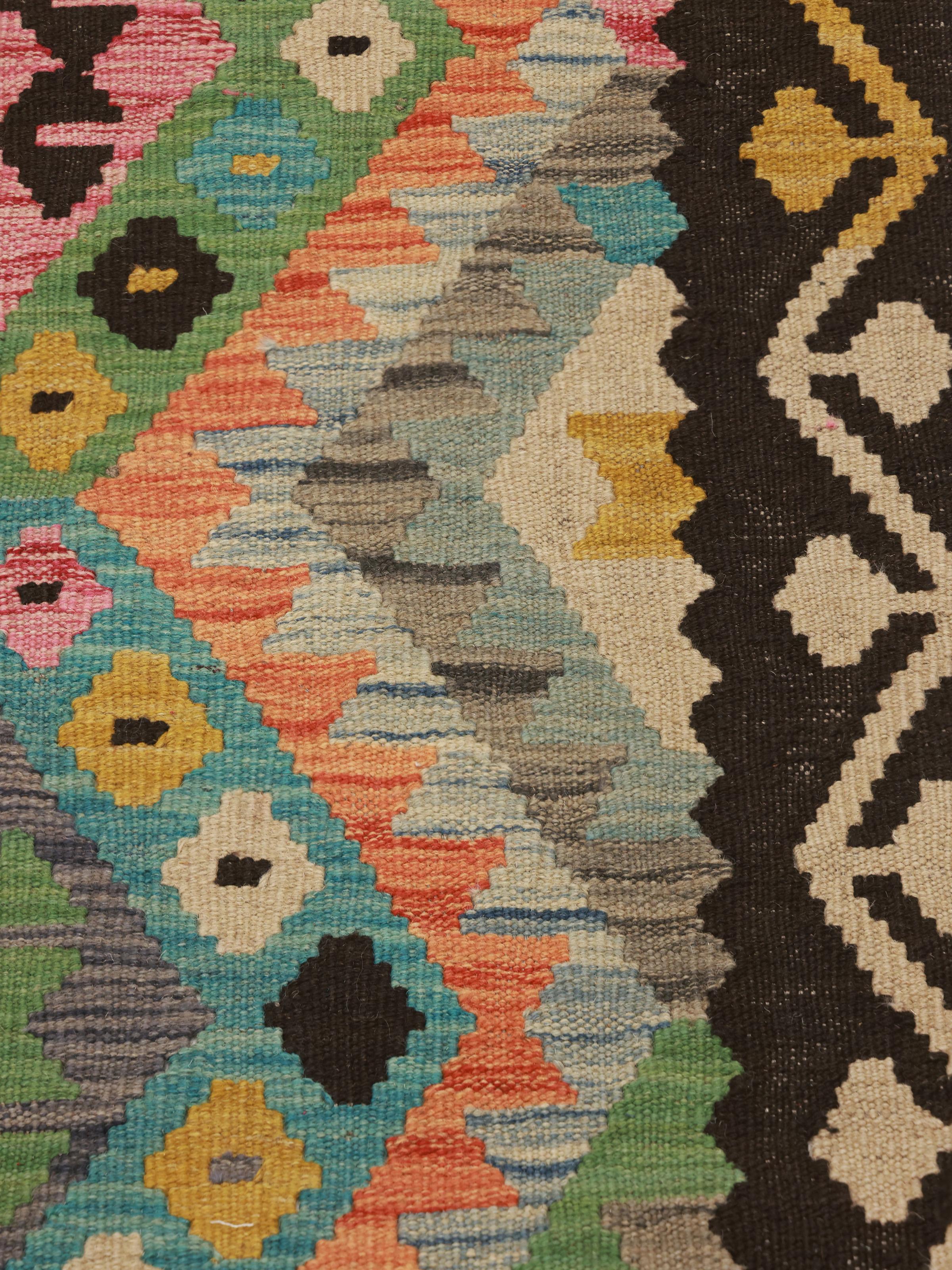
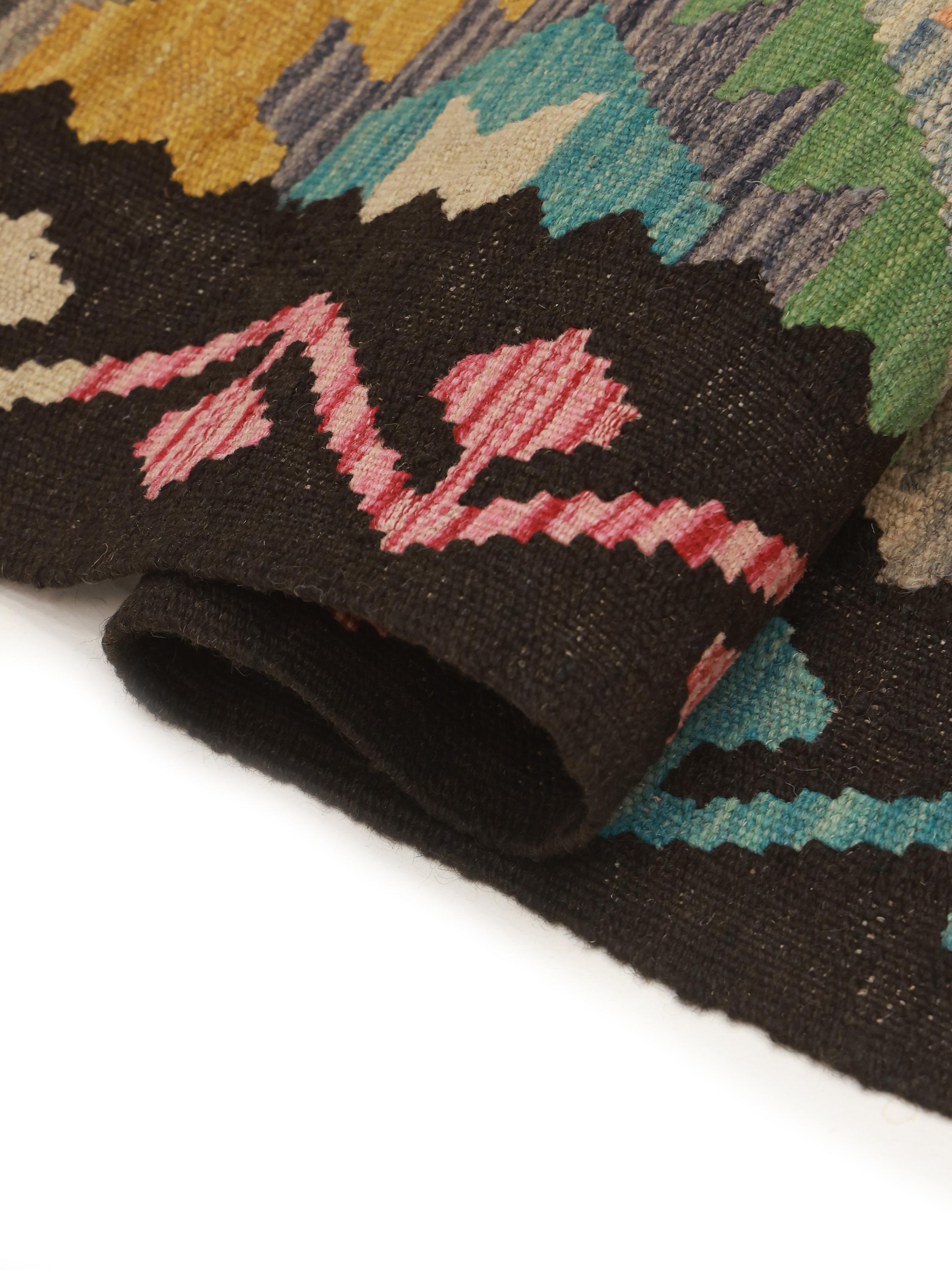
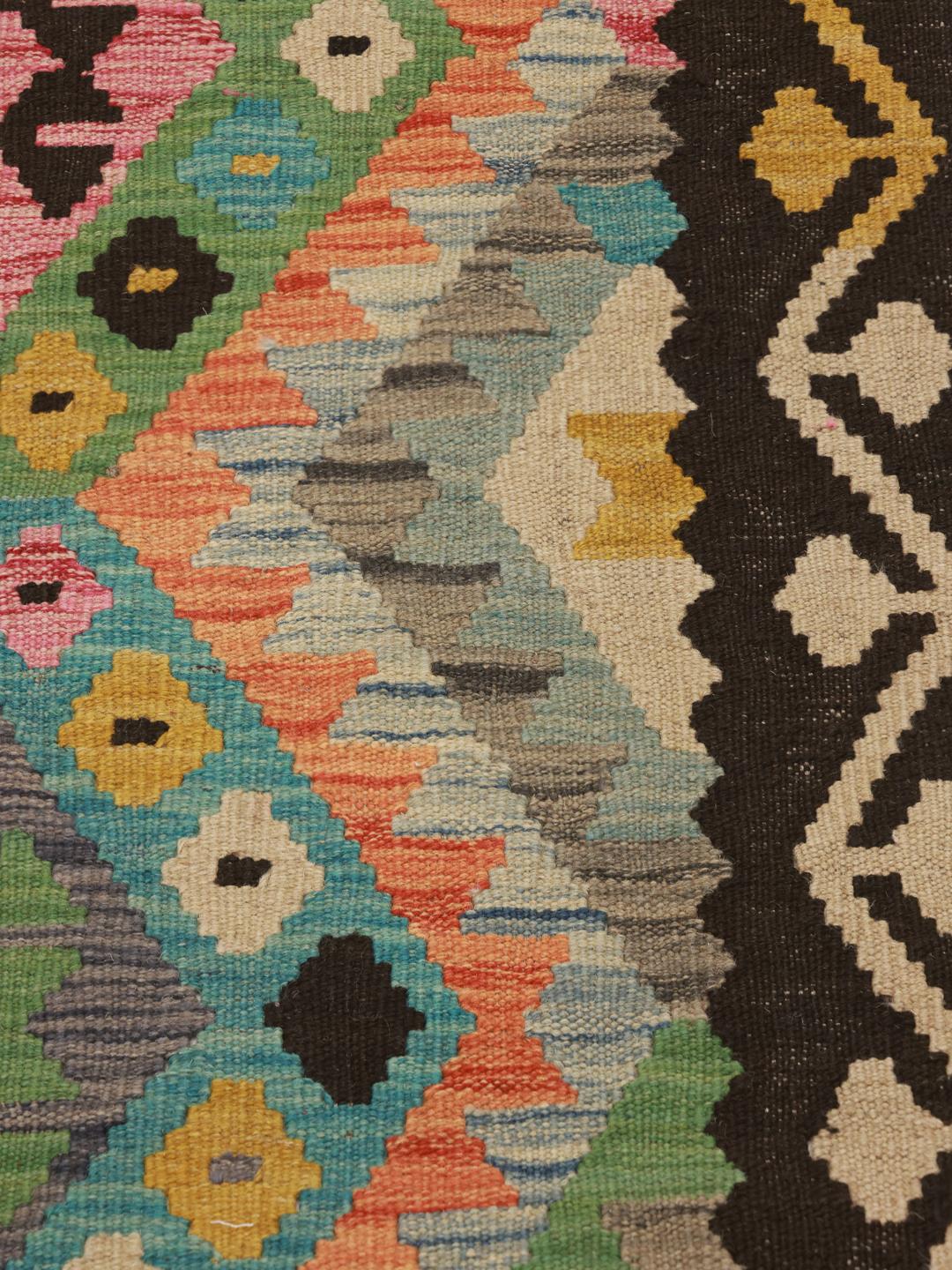
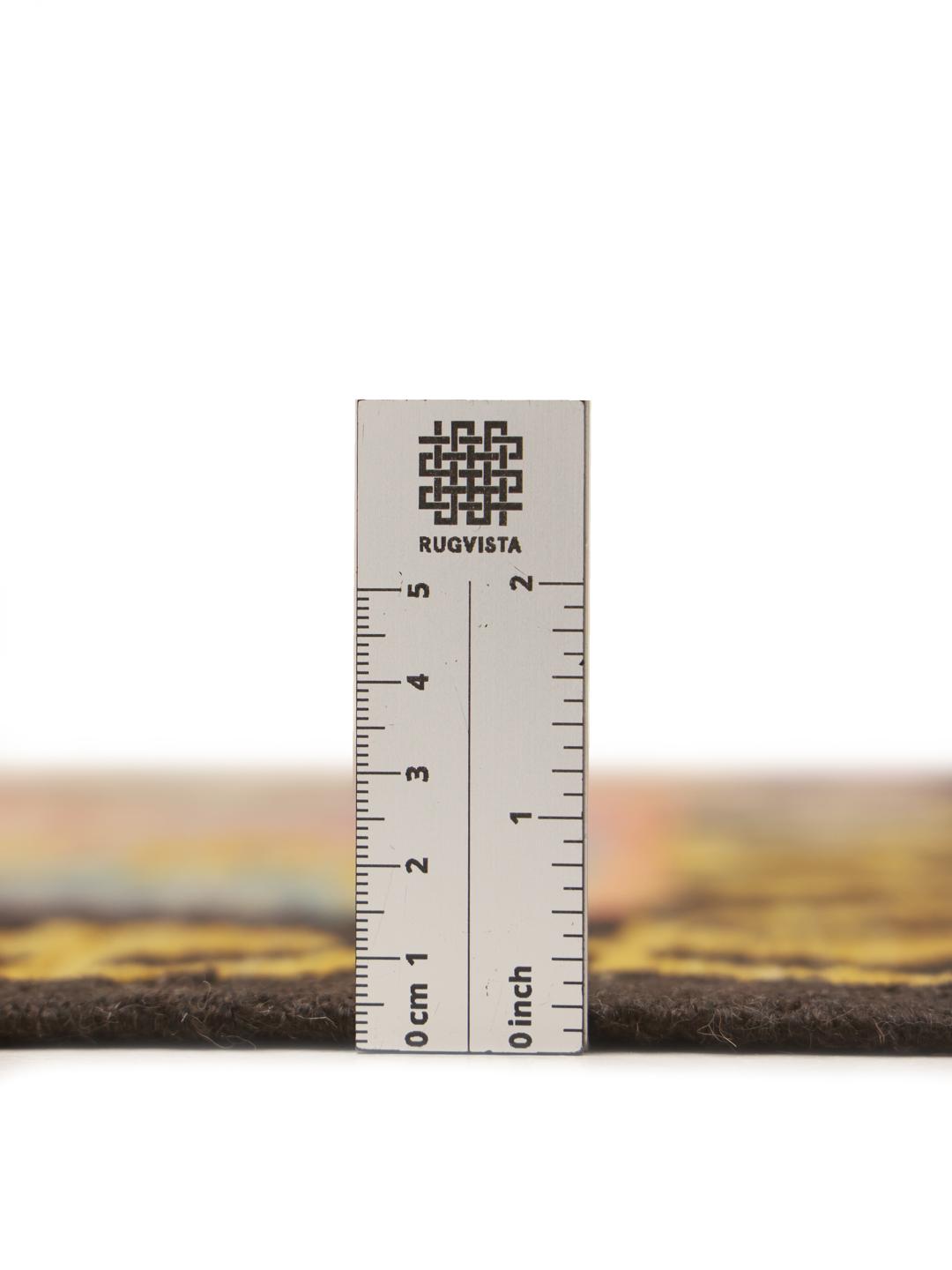
The term 'Kelim' refers to the specific slit-weave technique where the weft threads are woven tightly around the warp to create a smooth, pattern-forward surface. This method is what gives the rug its signature low profile, making it highly practical for modern living while maintaining an authentic, historical aesthetic.
Design-wise, these rugs are characterised by bold geometric motifs and a vibrant colour palette derived from regional natural dyes. The patterns often carry symbolic meaning, reflecting the environment and cultural identity of the weaving communities, with repeating diamonds and serrated borders being hallmark elements of the style.
Collecting a Kelim is an investment in cultural heritage and human skill. These rugs are highly valued for their ability to bring a sense of history and warmth into a room, serving as a reminder of the enduring traditions that continue to shape the world of textile art.