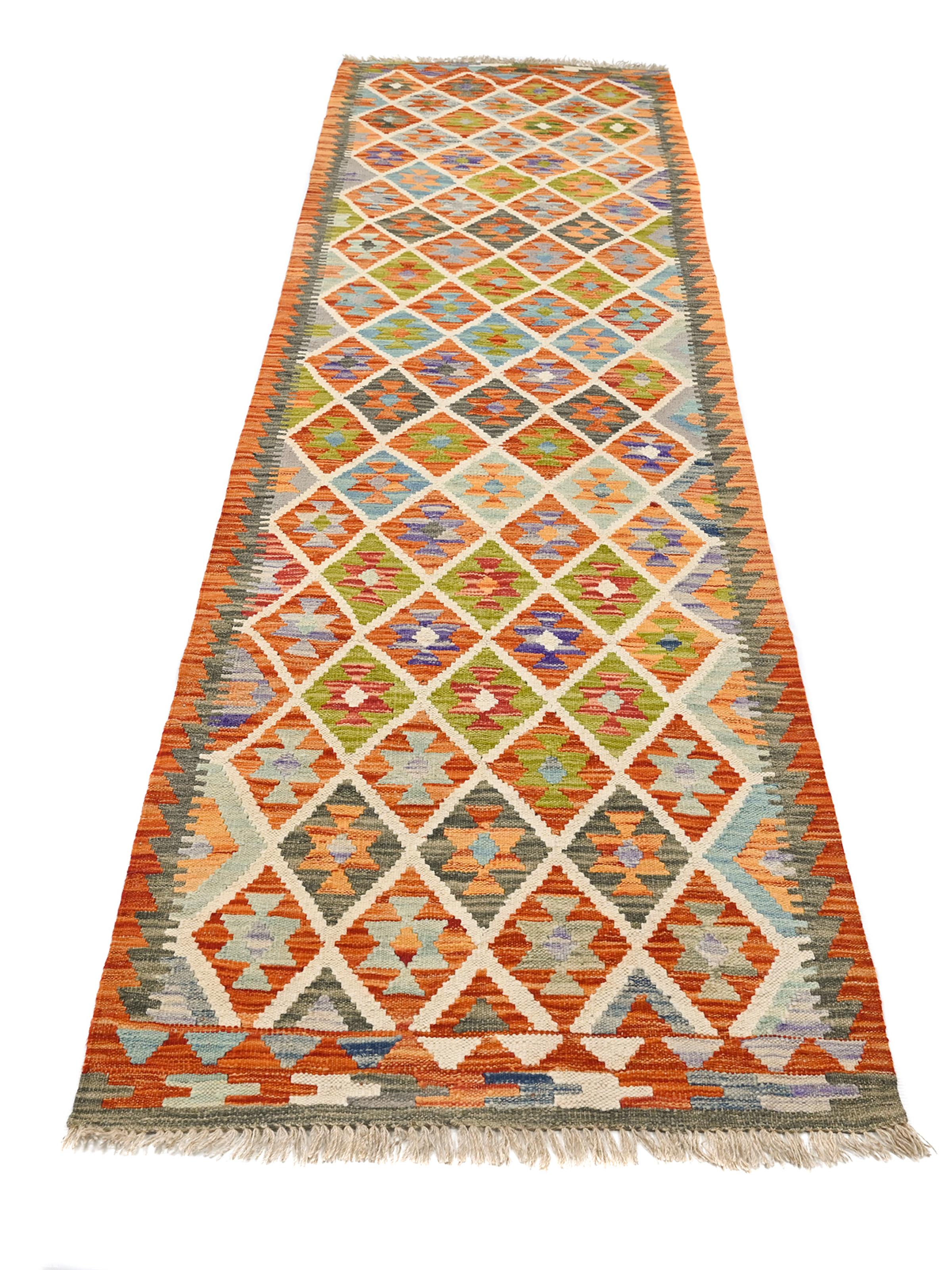
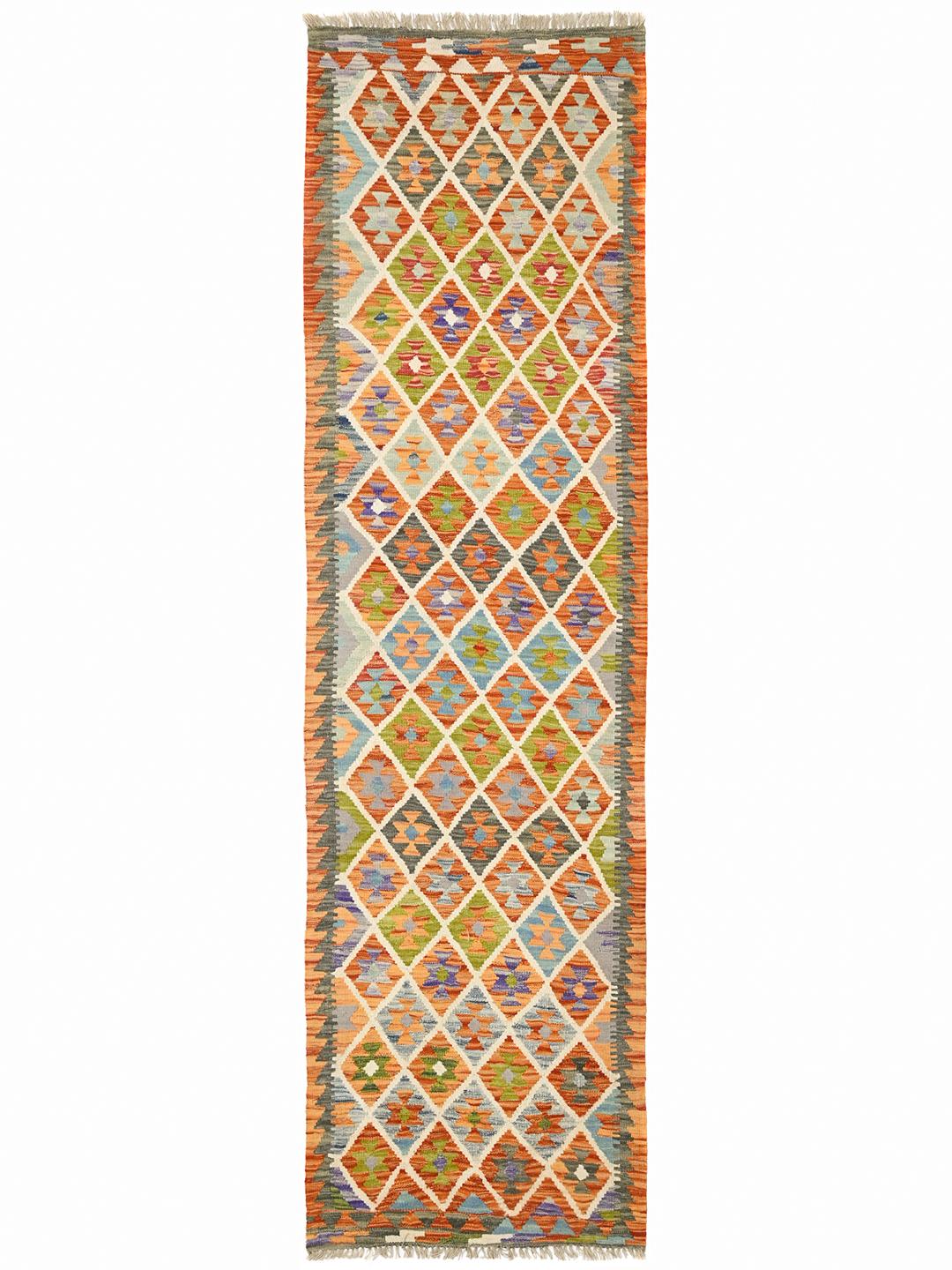
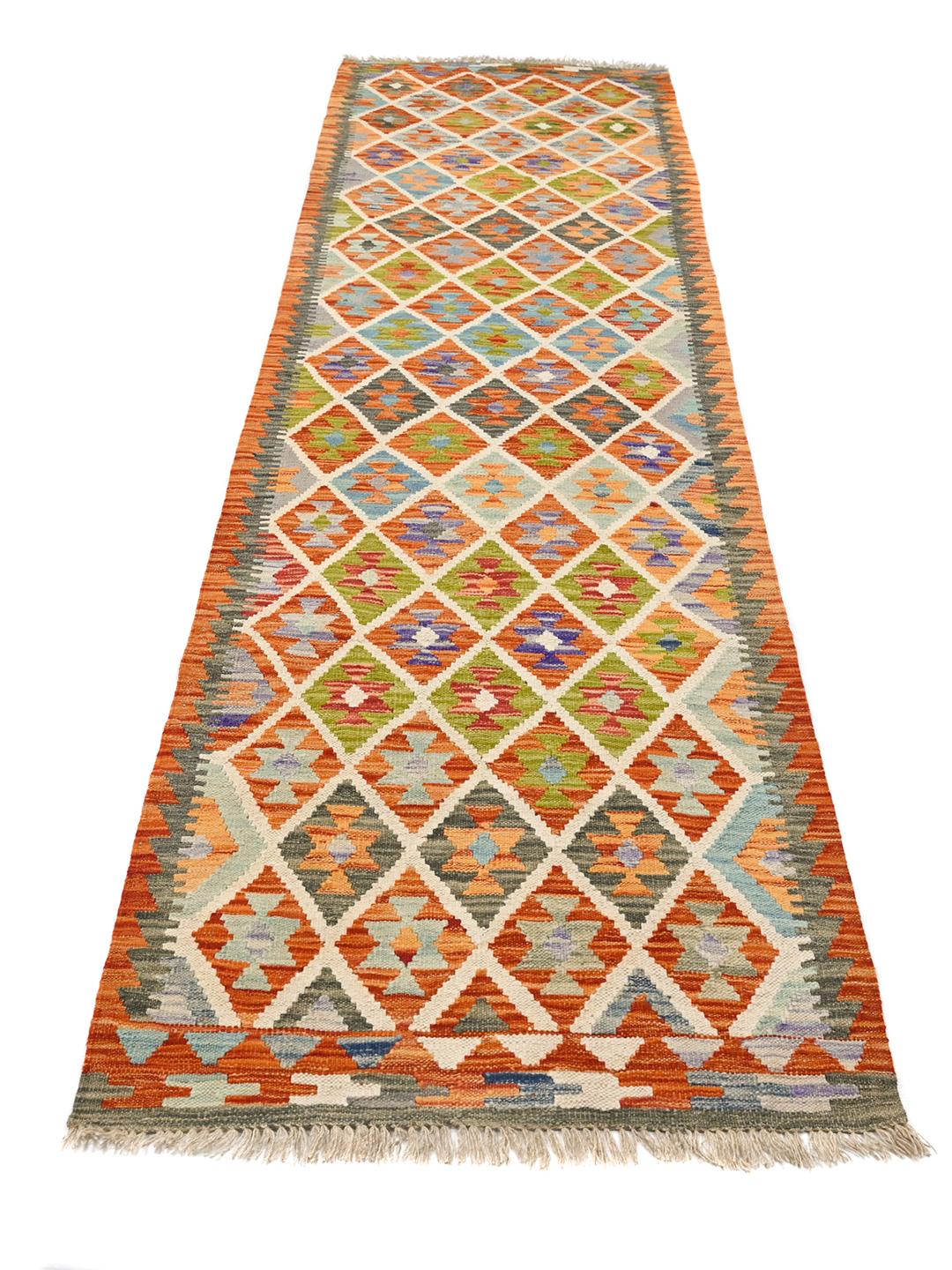
Kelim weaving in Afghanistan is an ancient nomadic art form, developed by tribal weavers who created these flatwoven textiles for practical use in daily life. Traditionally used as floor coverings, blankets, and protective bags, these rugs were designed to be lightweight, durable, and easy to transport across the rugged terrain of Central Asia.
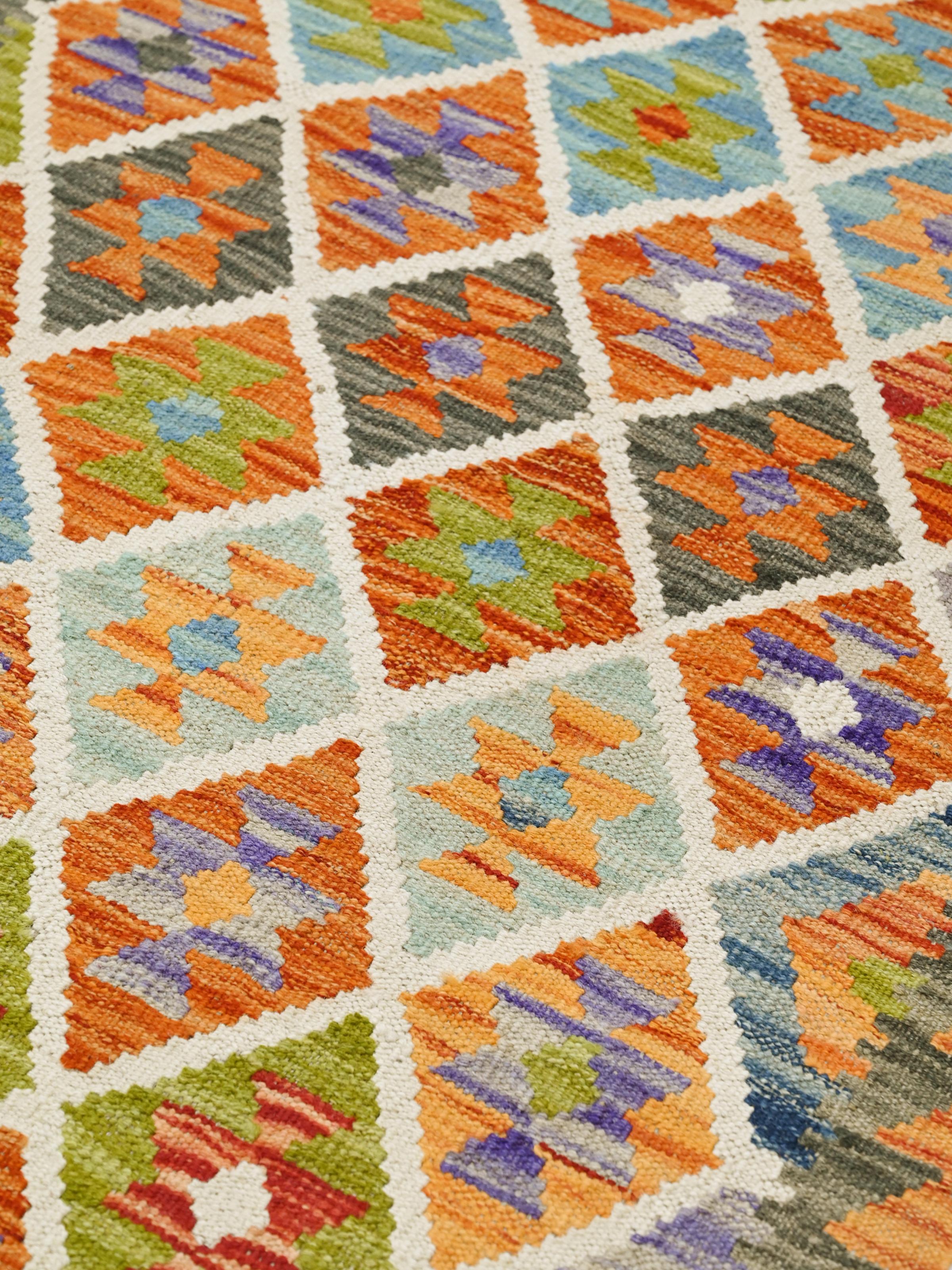
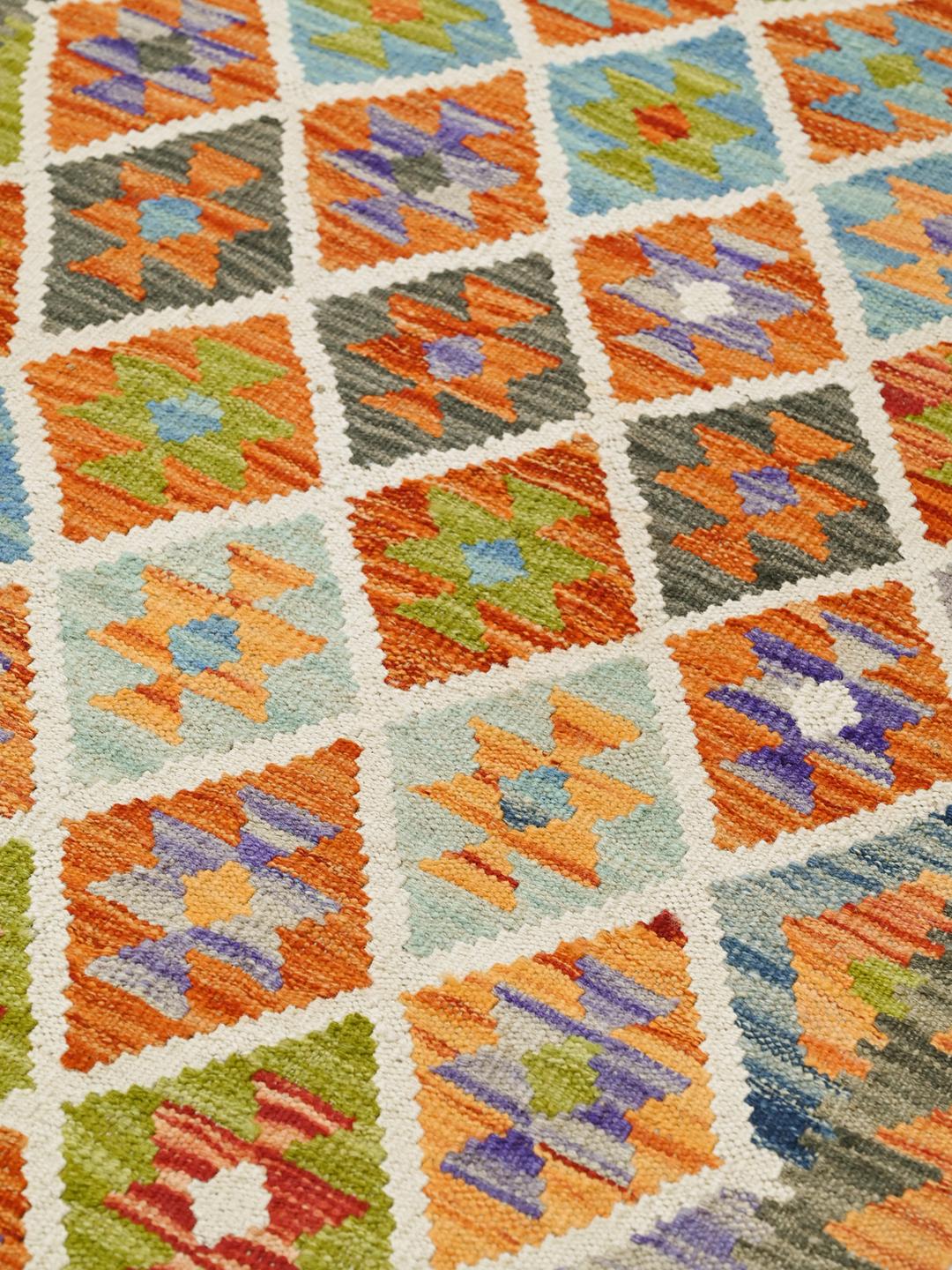
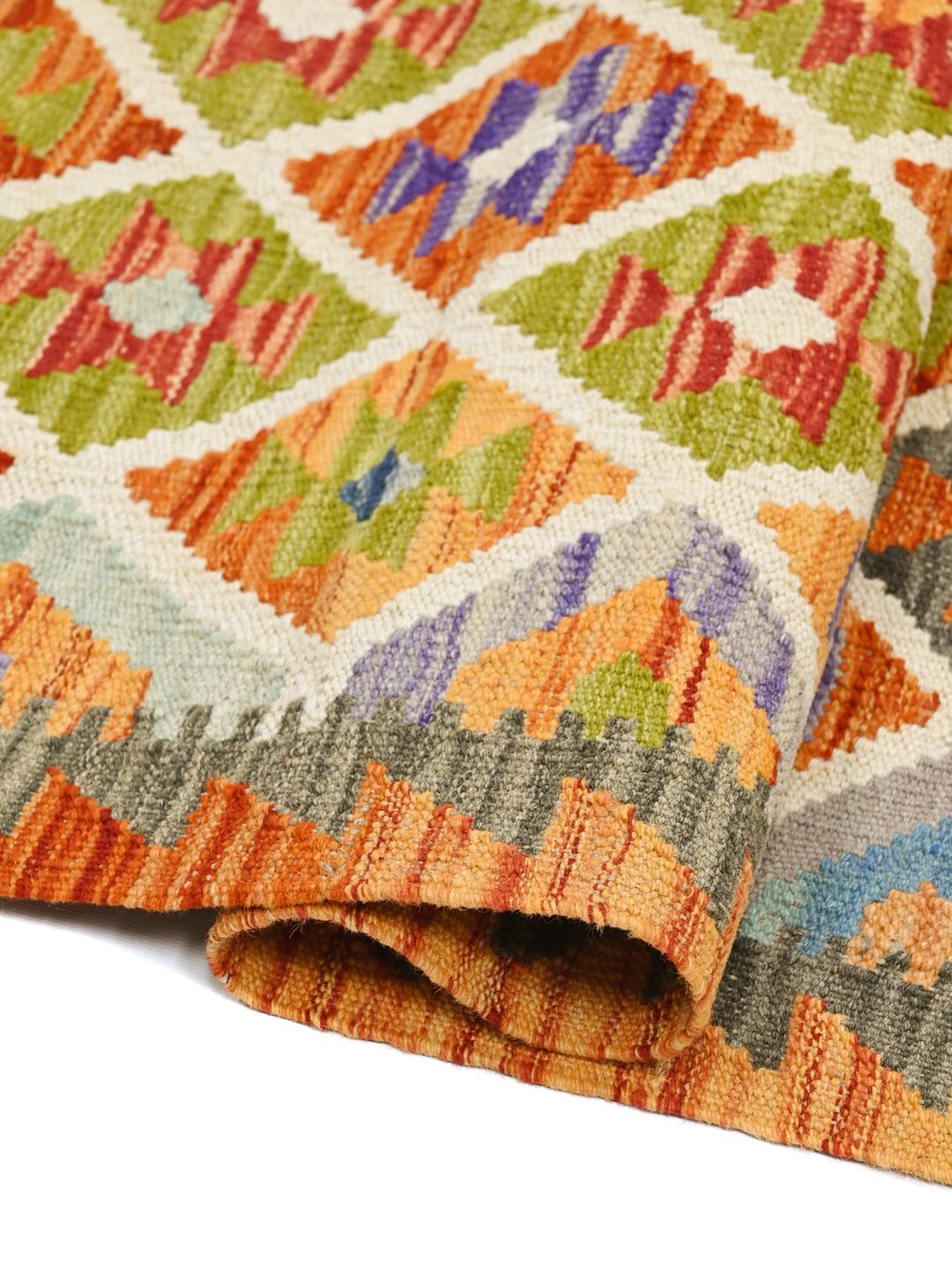
The term Kelim, or Kilim, refers specifically to a flat, pileless rug woven using a slit-weave technique. This process involves tightly interweaving the warp and weft strands, leaving small vertical gaps where different colour blocks meet, which gives the geometric patterns their characteristically sharp, clean edges.
The diamond motifs and geometric borders seen in this runner are not merely decorative; they are part of a shared visual language. These symbols historically represented protection, fertility, and the natural landscape, allowing weavers to express tribal identity and personal stories through their work.
Today, Kelim Afghan Old Style rugs are highly valued by collectors and homeowners alike for their authentic rustic charm and historical depth. Owning one means preserving a piece of this weaving heritage, bringing a sense of global history and human connection into a modern living space.