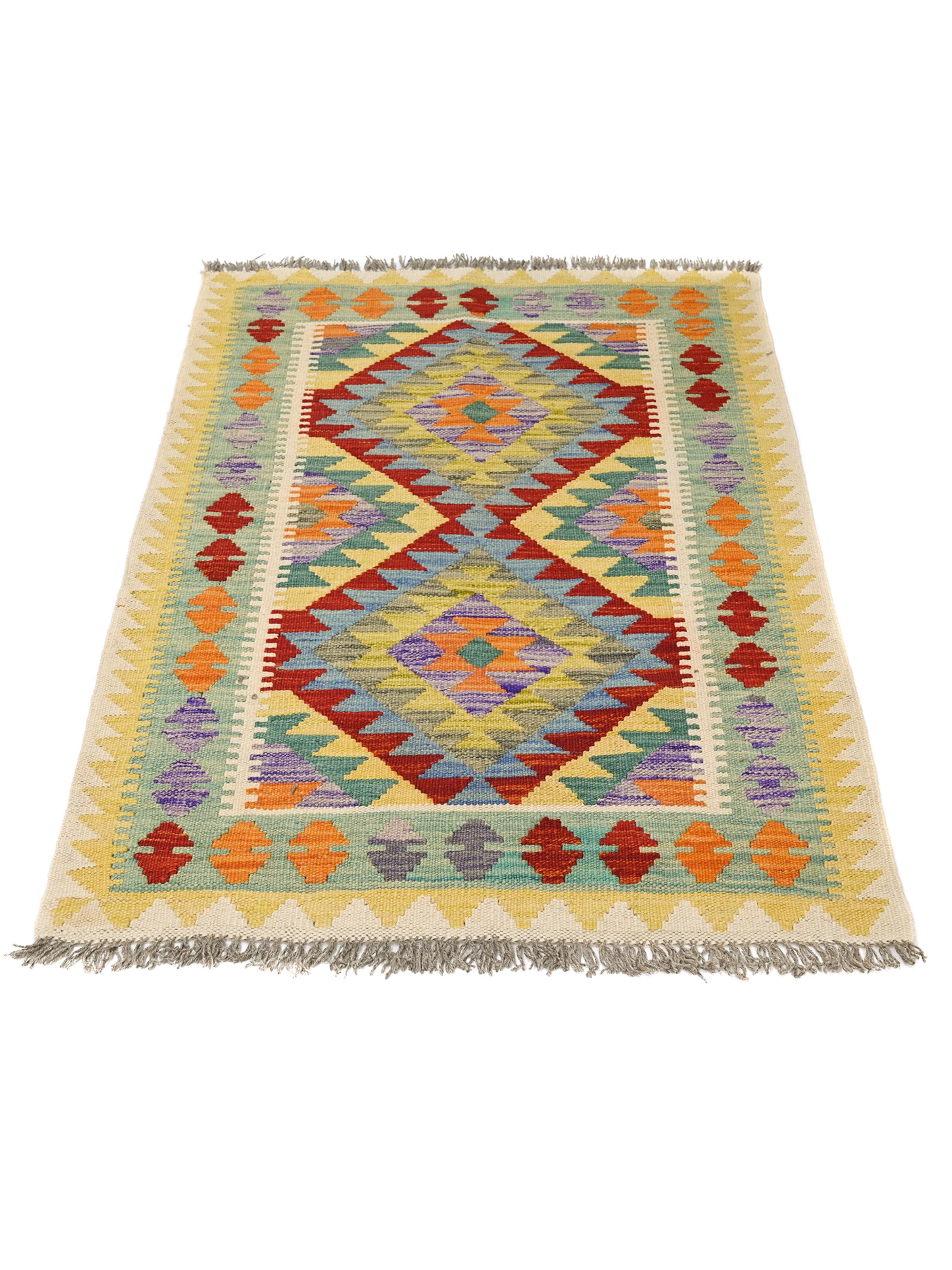
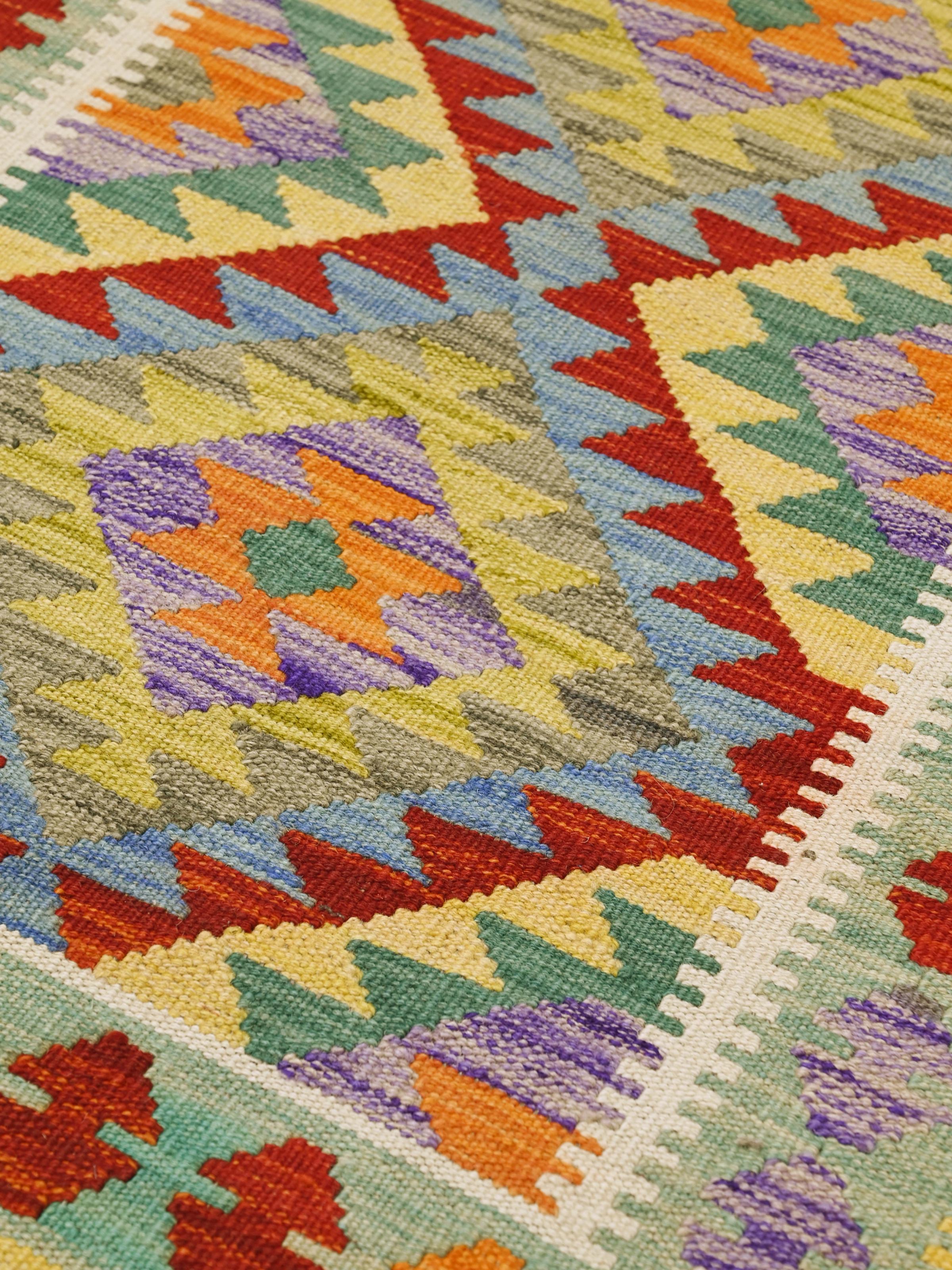
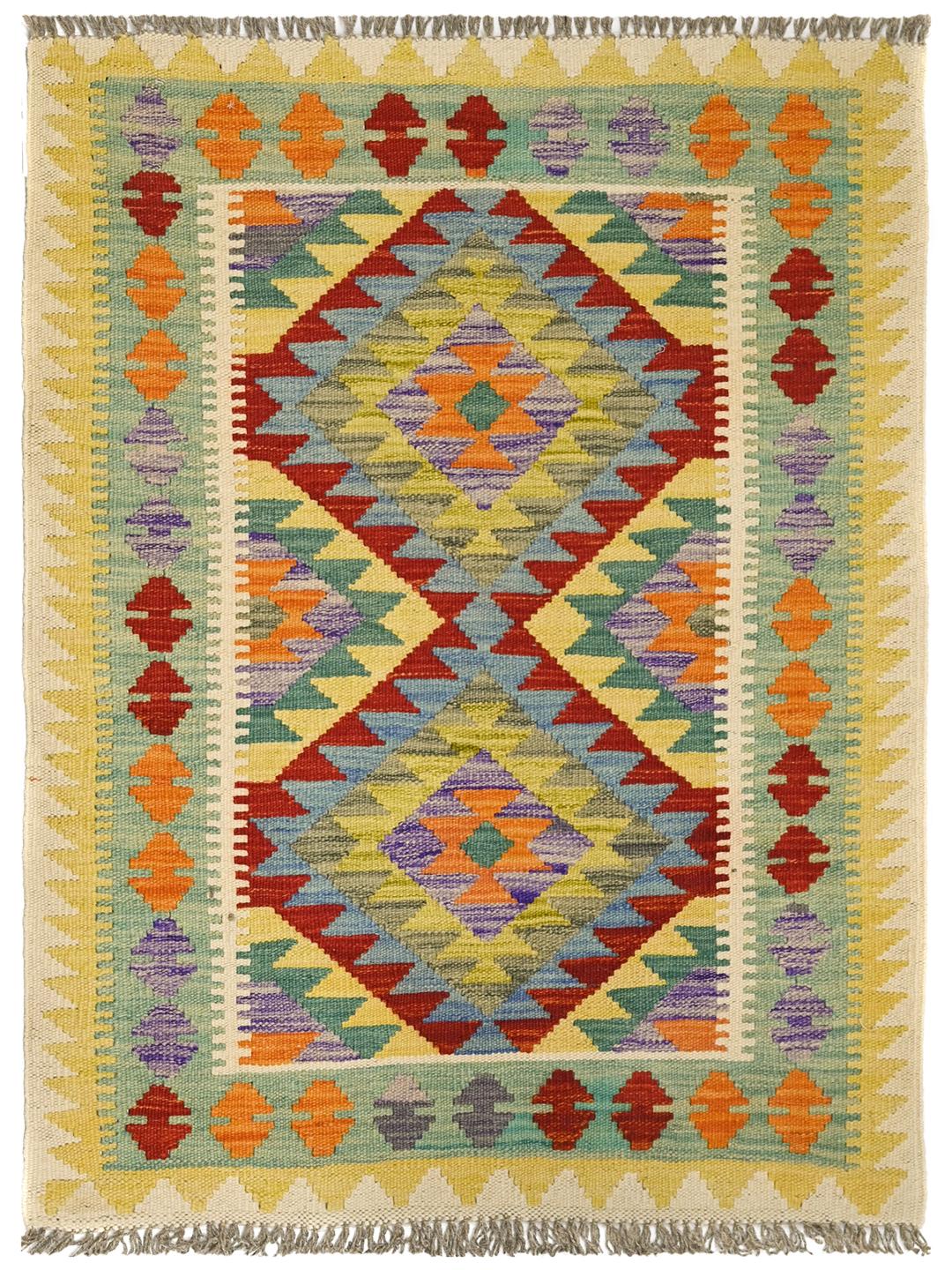
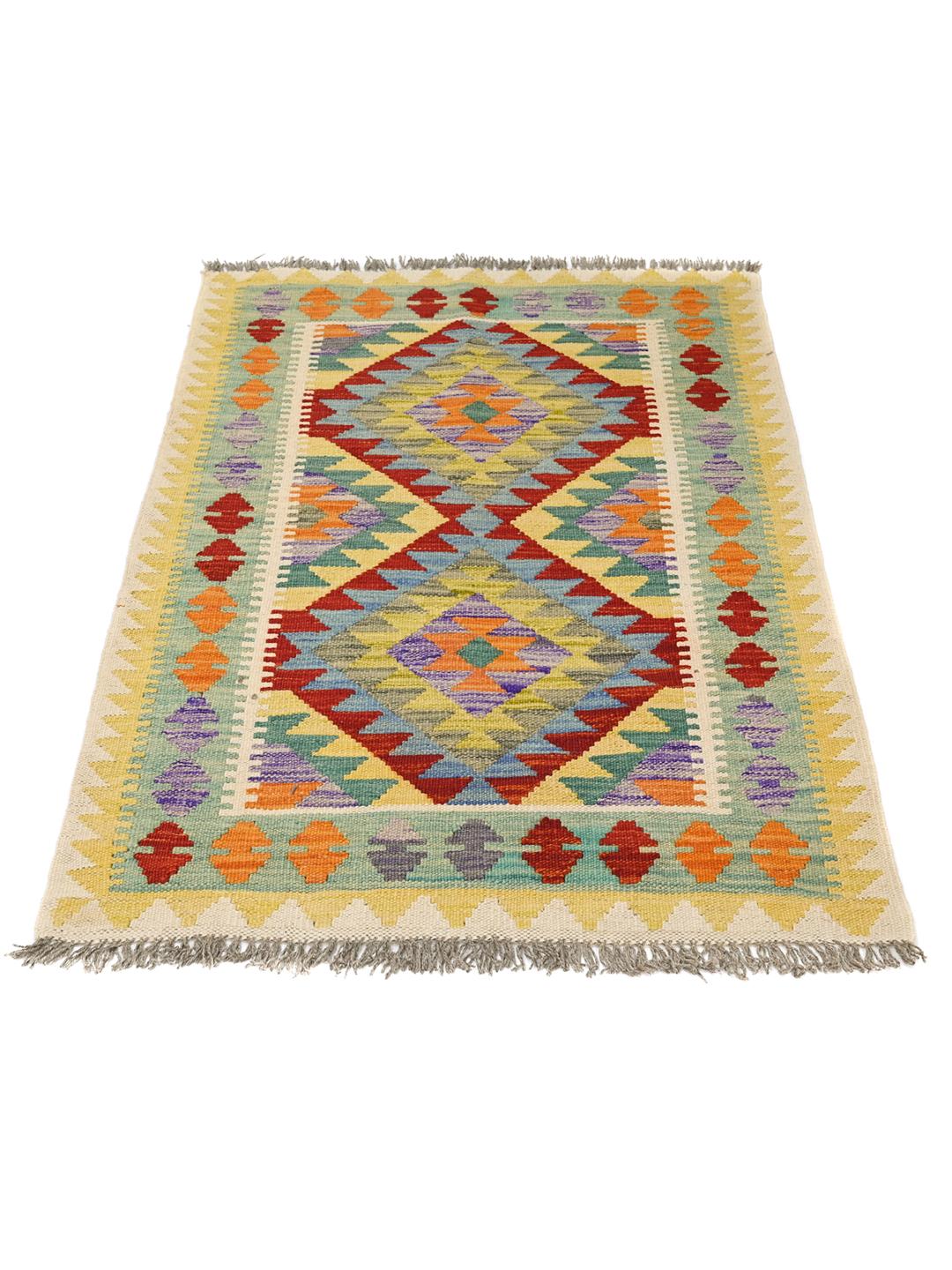
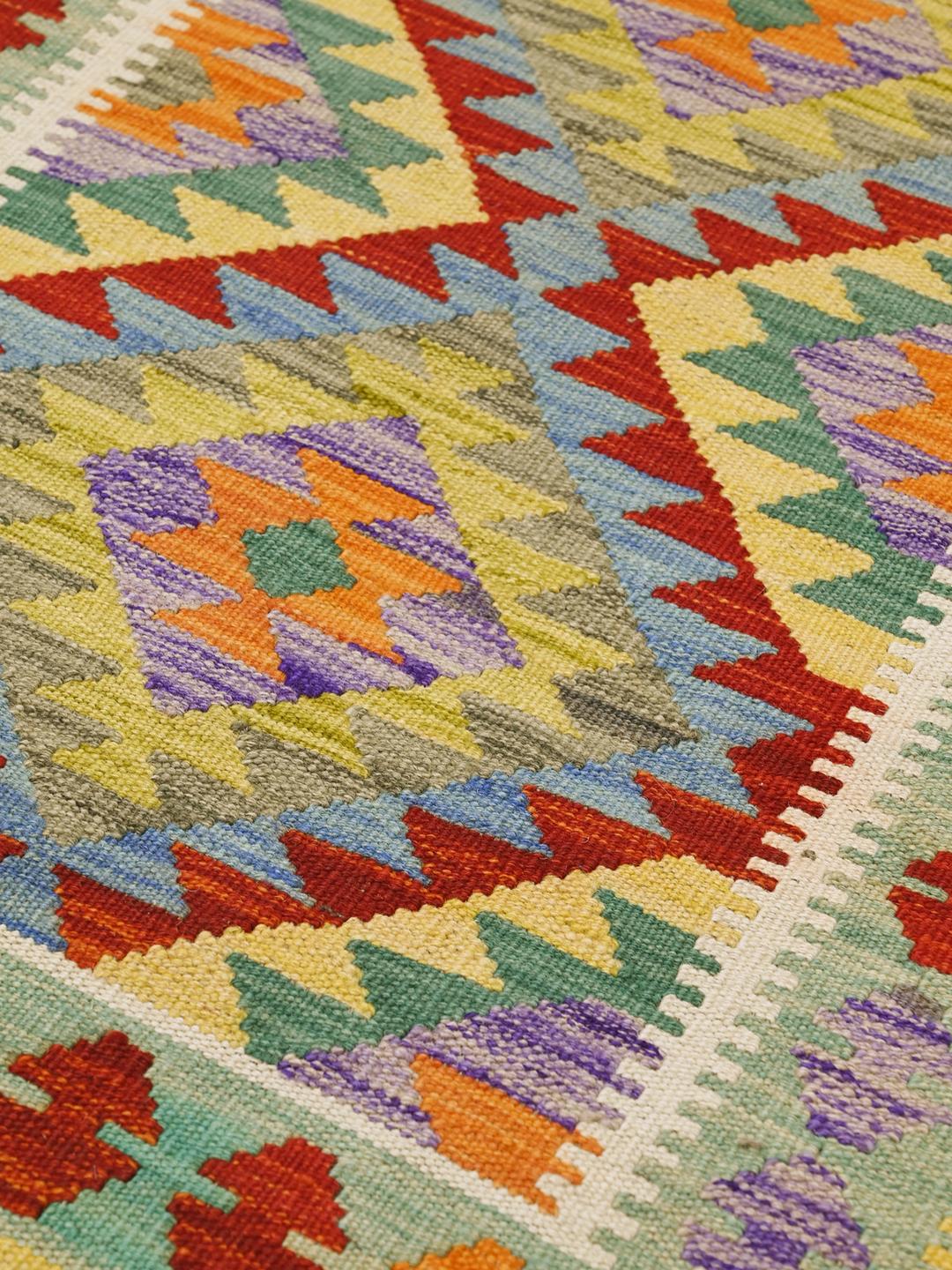
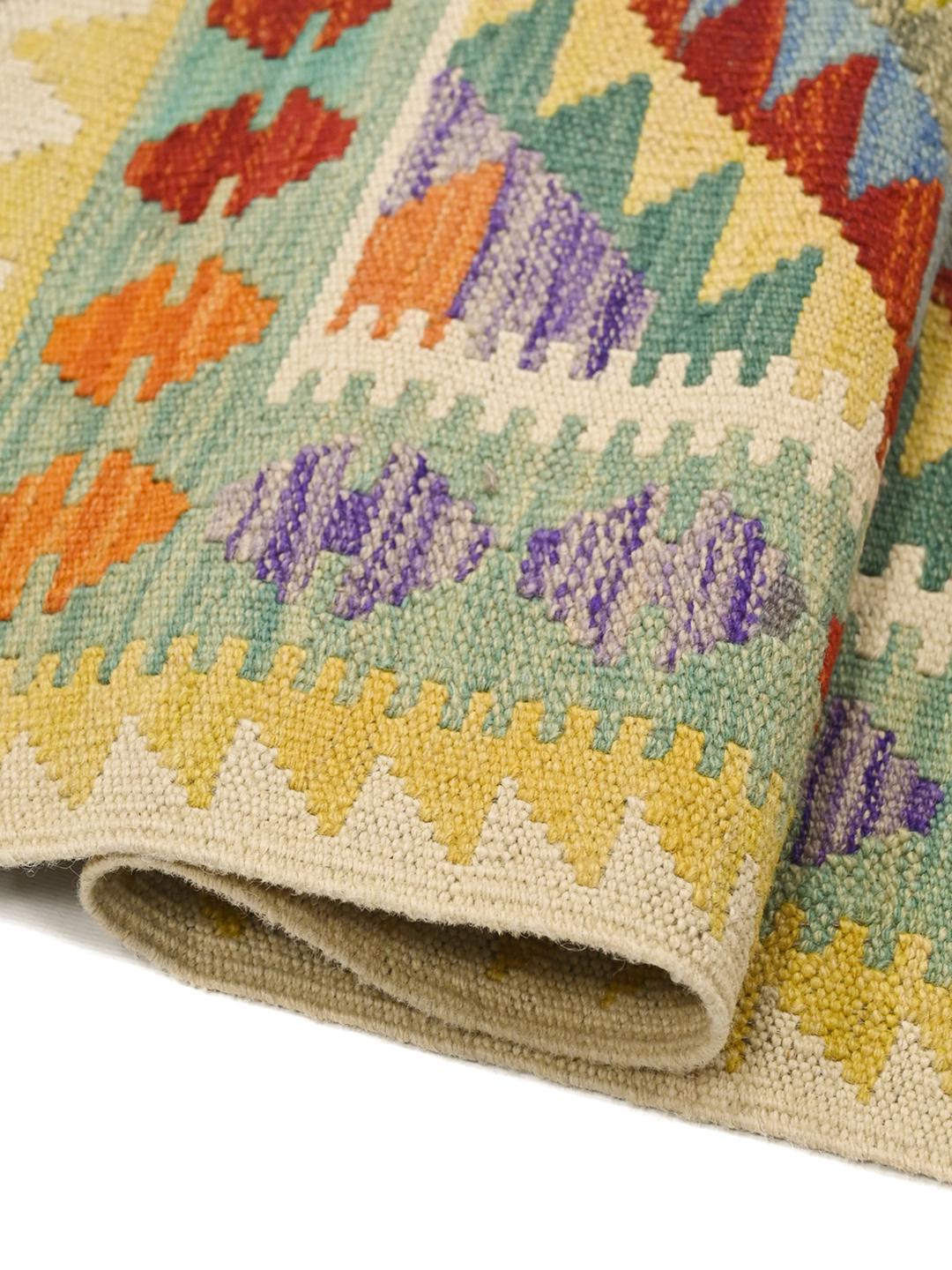
Kelim rugs have a long and storied history rooted in the nomadic and village traditions of Central Asia and the Middle East. Unlike pile rugs, flatwoven kelims are created by interweaving warp and weft strands to produce a lightweight, durable textile that was traditionally easy for nomadic communities to pack, transport, and use across different living spaces.
The flatweaving technique requires immense skill, as the maker must manage tension and color changes entirely by hand during the construction process. This results in a sturdy, reversible textile with a clean surface that shows the pattern clearly from both sides.
The design language of Afghan kelims is deeply tied to regional heritage, typically featuring bold geometric configurations, stacked diamonds, and symbolic motifs passed down through generations. These patterns often serve as a visual language reflecting the maker's surroundings, beliefs, and cultural identity.
Collecting vintage and older kelims allows you to connect with a rich craft tradition that values resourcefulness and enduring skill. Each piece represents a snapshot of textile history, valued by collectors for its authenticity, cultural weight, and timeless artisanal quality.