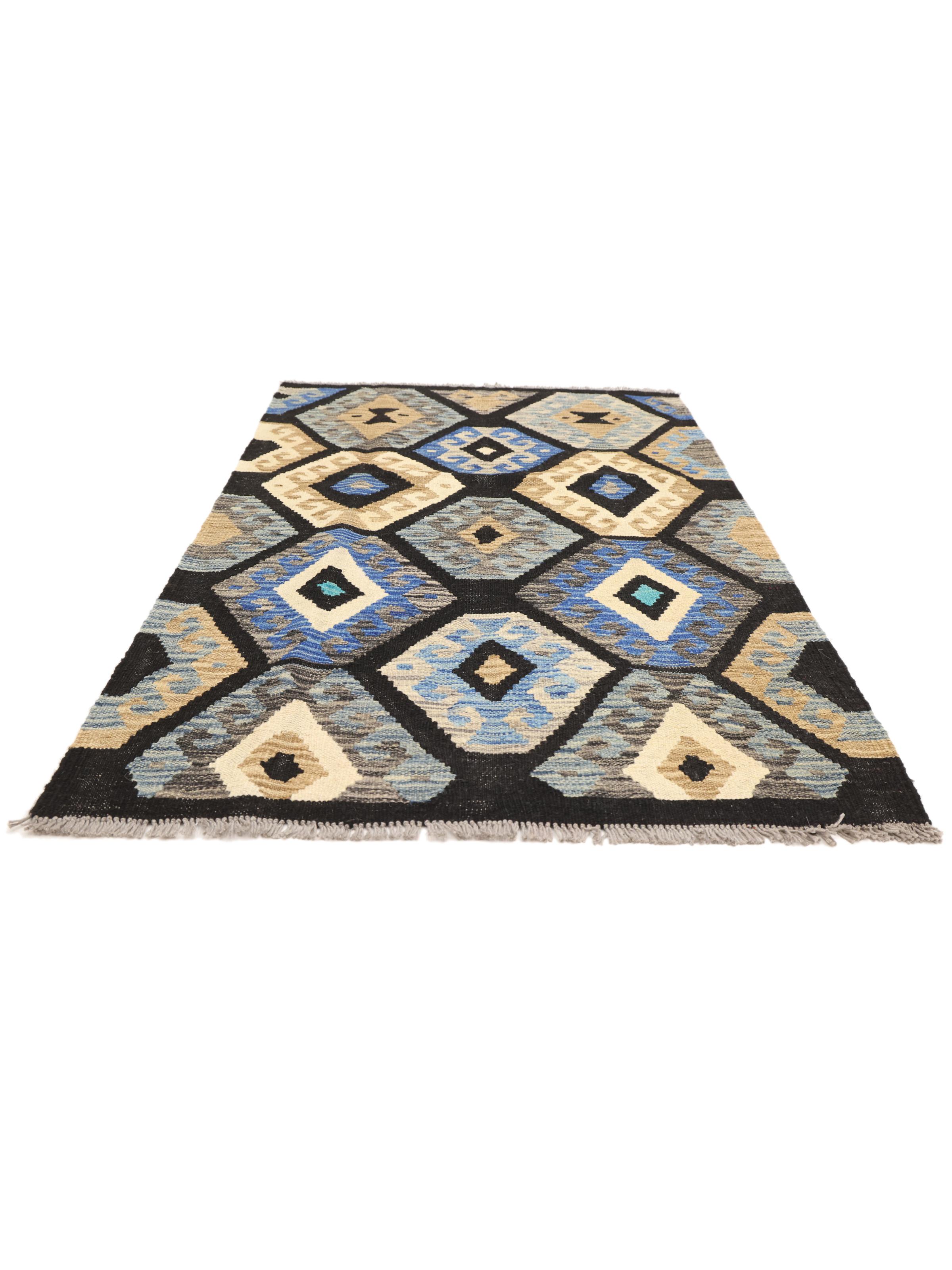
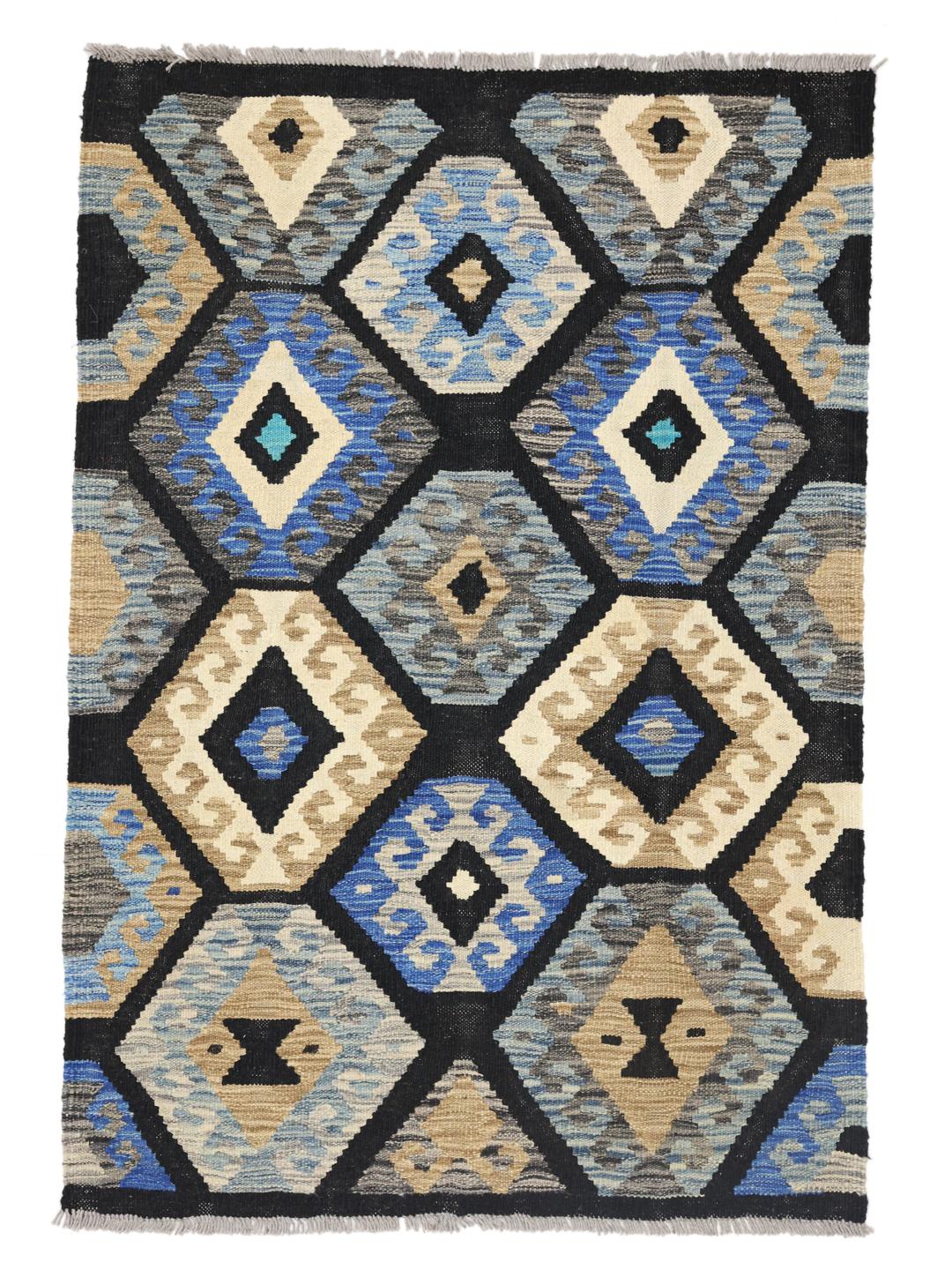
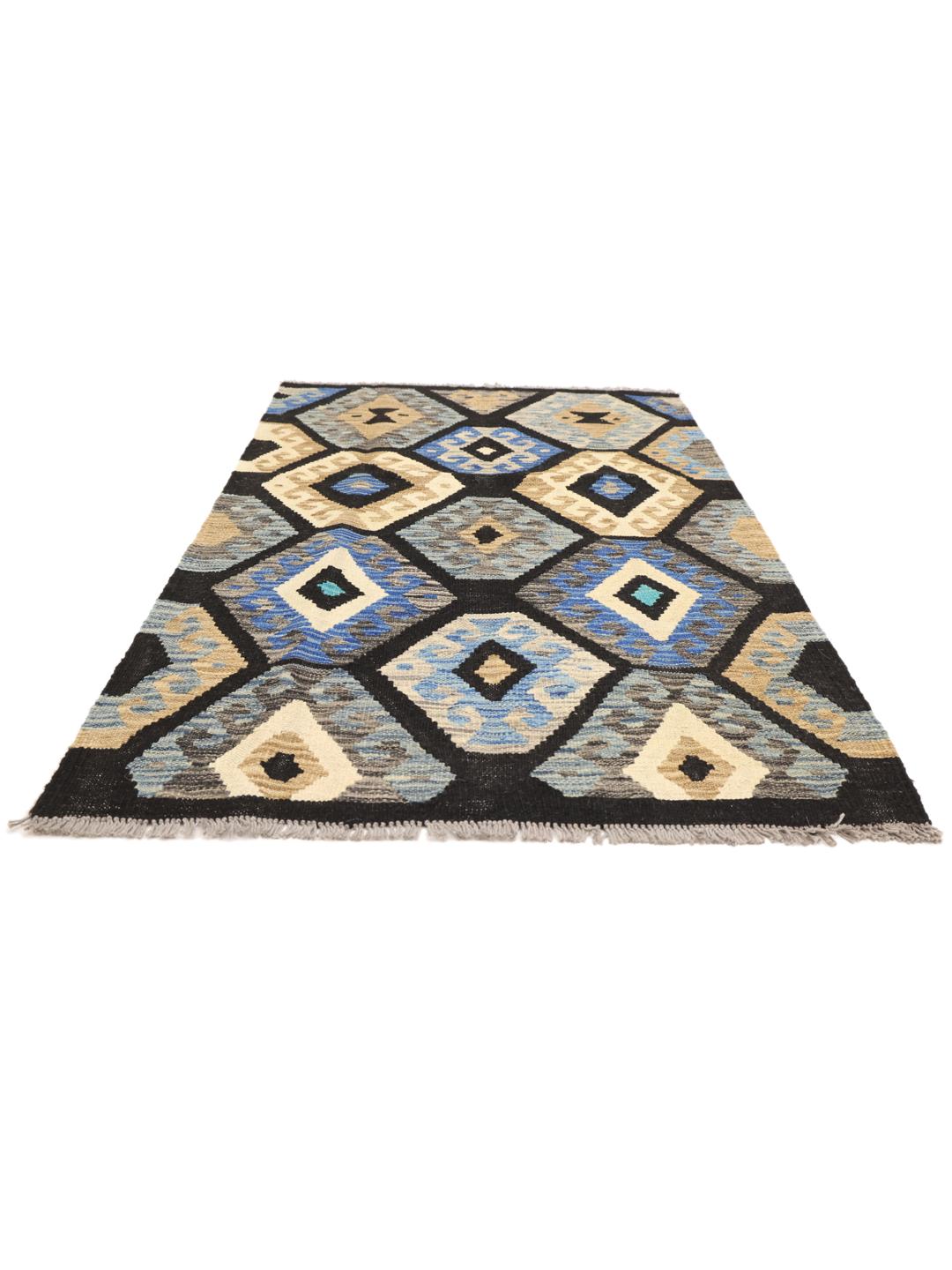
The Kelim tradition in Afghanistan is deeply rooted in the nomadic and semi-nomadic cultures of the region. These flat-woven textiles were historically created by tribal groups to serve as practical, portable floor coverings, storage bags, and wall hangings, reflecting a lifestyle that valued both utility and artistic expression in equal measure.
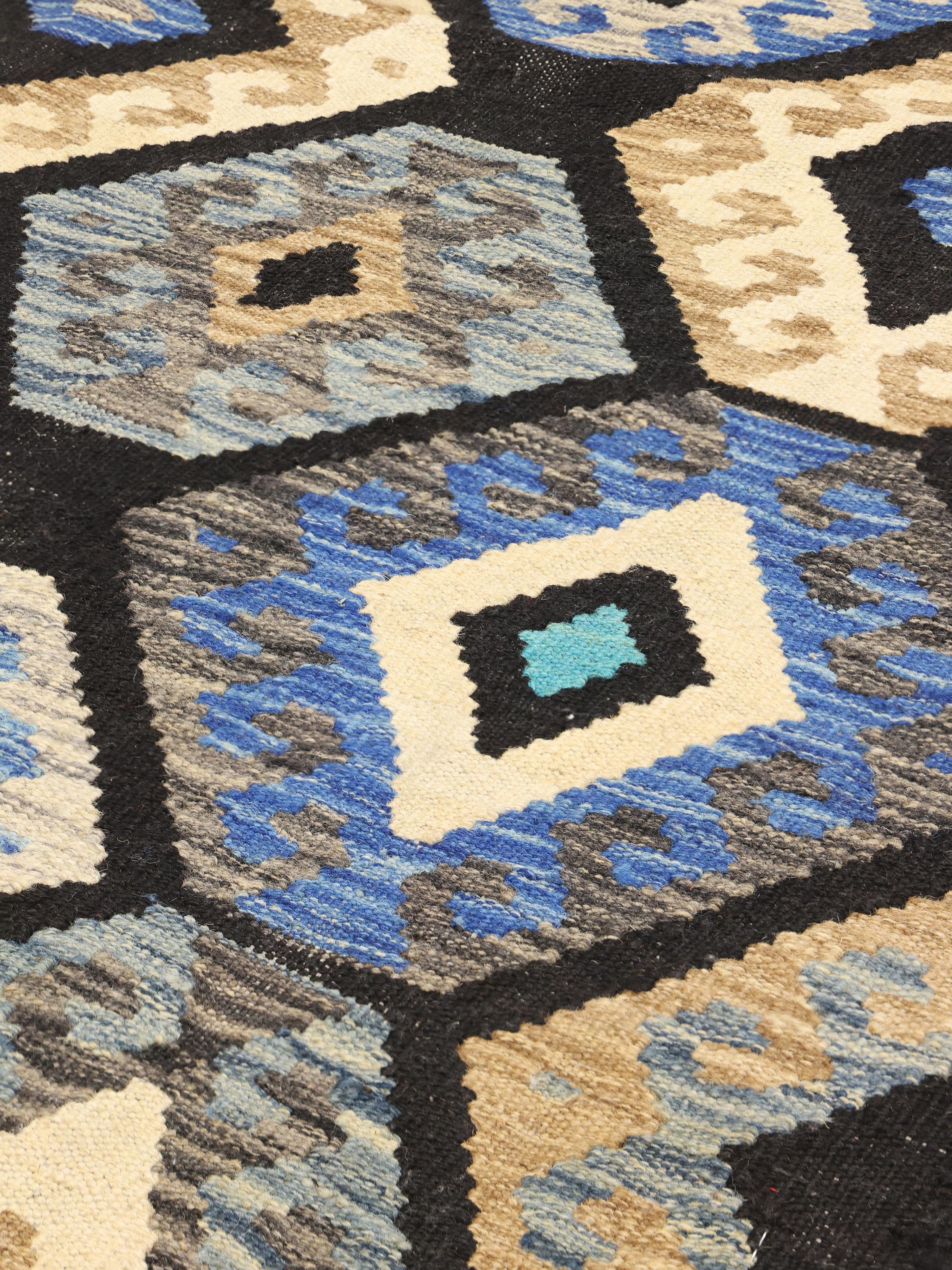
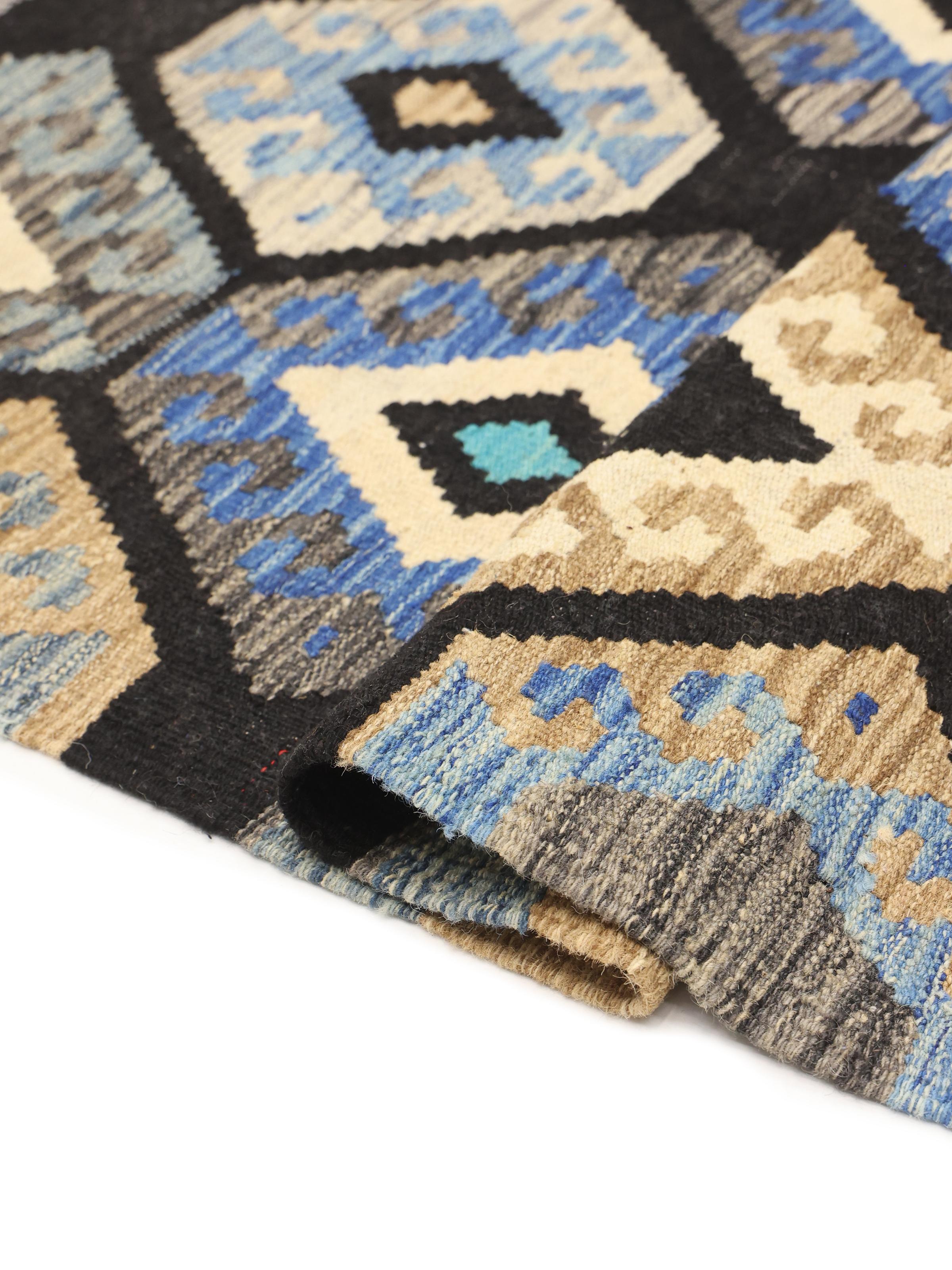
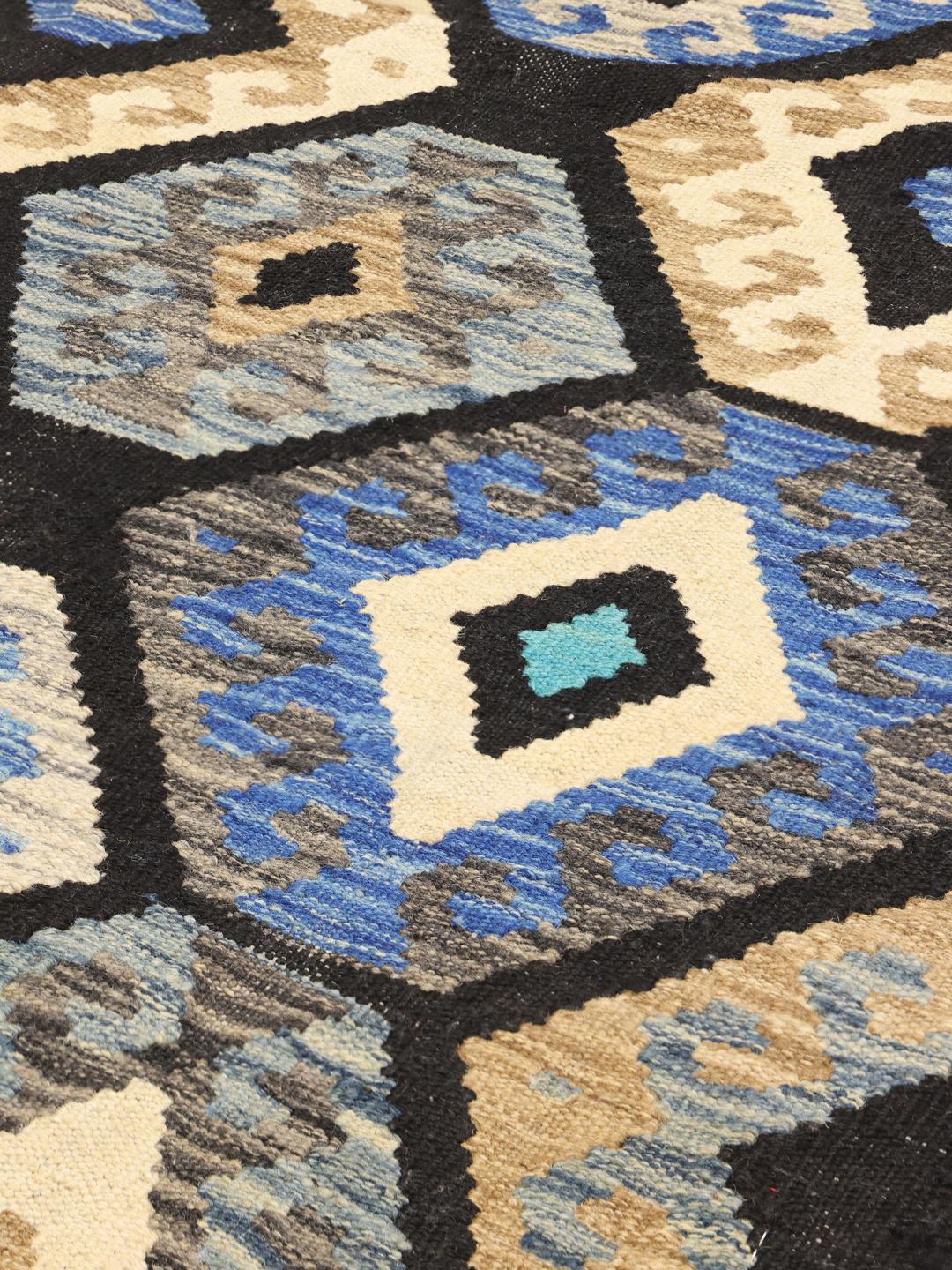
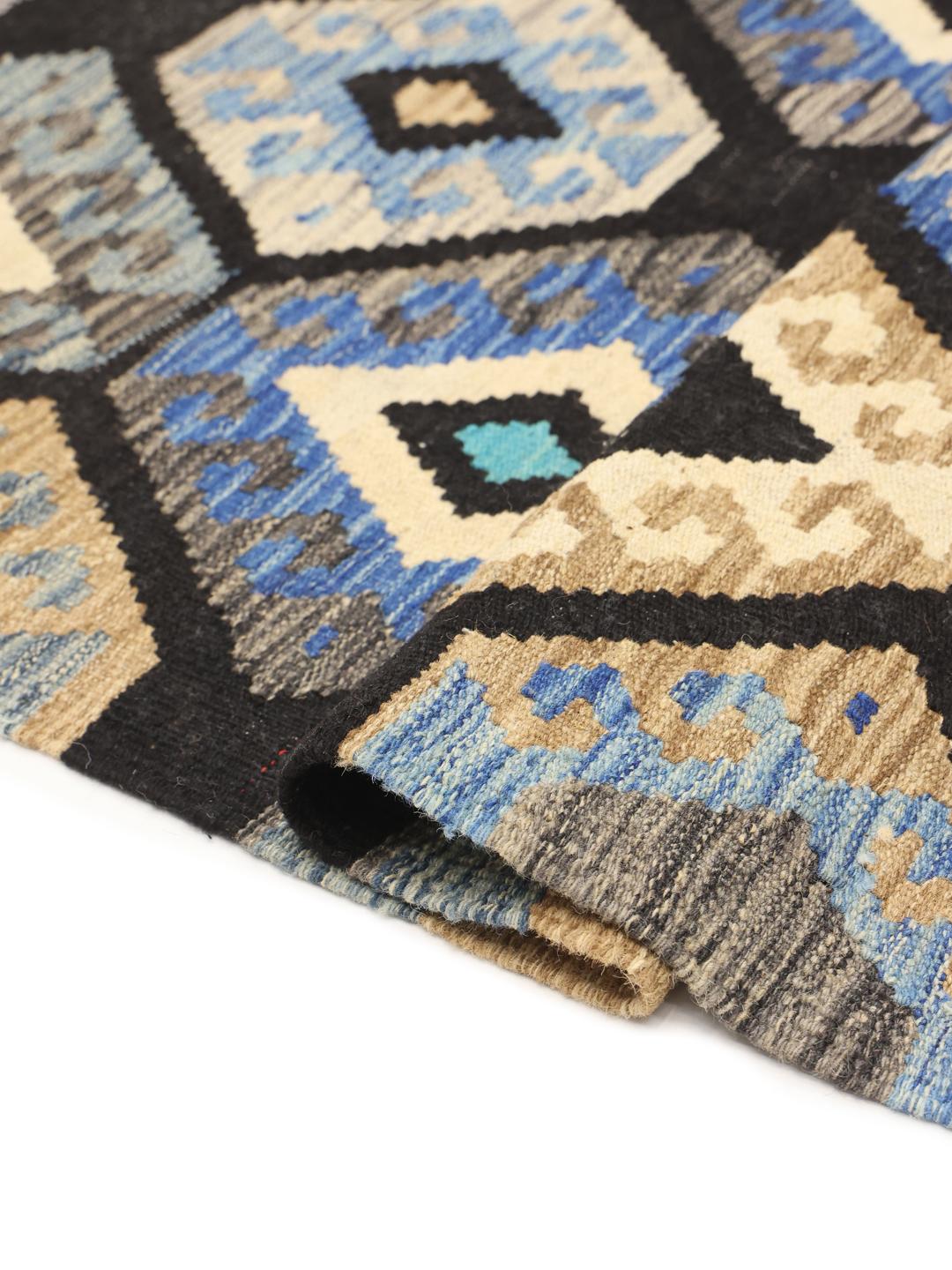
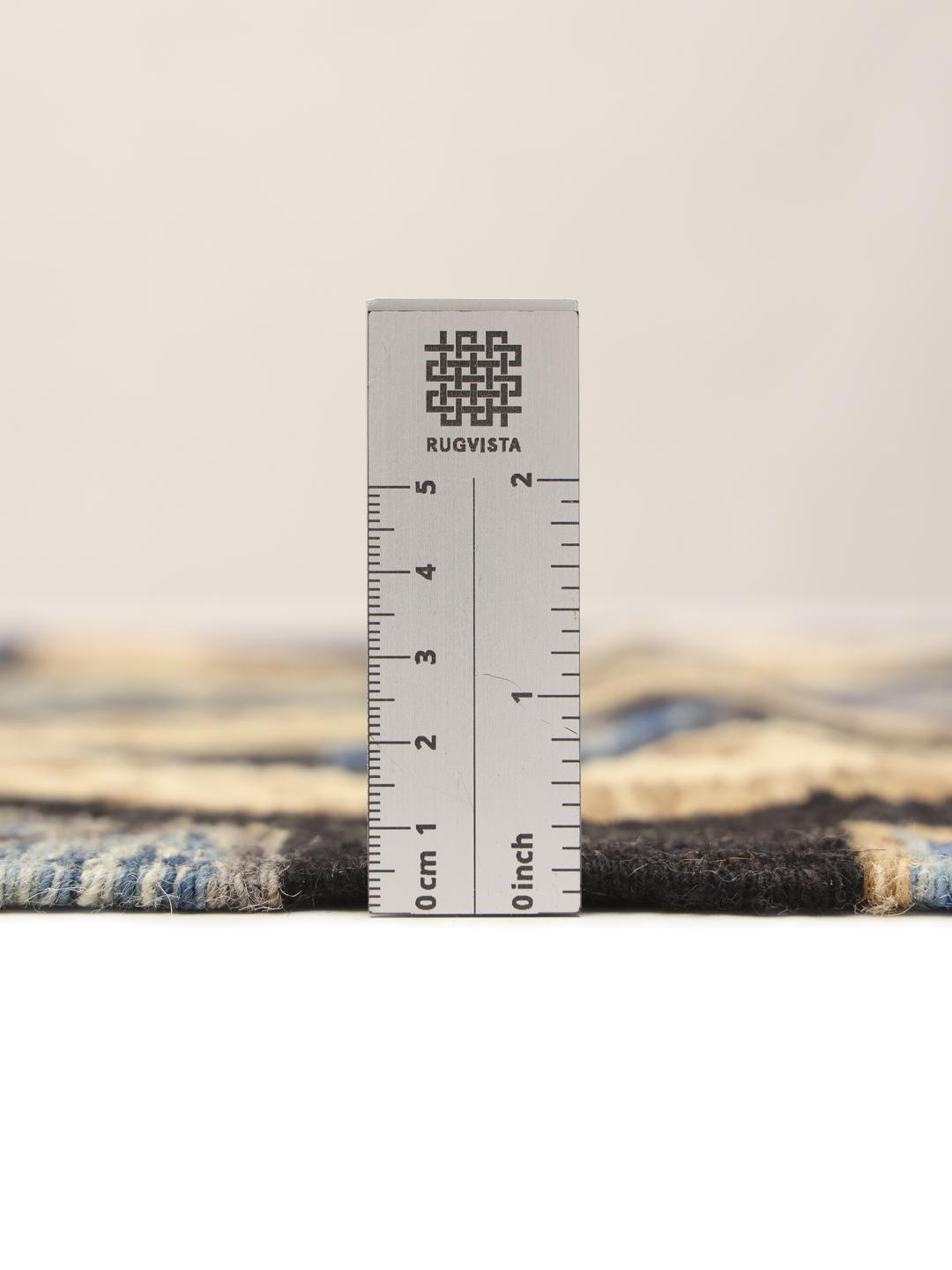
The term 'Kelim' refers to the specific flat-weaving technique used to create these pieces, which involves interweaving the warp and weft strands to form a smooth surface without a raised pile. This technique produces a durable, double-sided textile that is lightweight yet incredibly strong, a quality that has made these rugs prized for centuries.
Visually, these rugs are defined by a vibrant geometric language. The use of sharp diamonds, triangles, and stepped motifs is often inspired by the natural landscapes and cultural symbols of the region. The colours are traditionally derived from natural dyes, which provide a rich, earthy palette that ages gracefully over time, gaining a softer appearance with age.
Owning an Afghan Kelim is an opportunity to connect with a storied tradition of craftsmanship that has survived for generations. These rugs are highly collected not just for their visual appeal, but for the skill and cultural narrative they represent. Each piece is a tangible link to a rich history, offering a sense of authenticity and lasting value to any home.