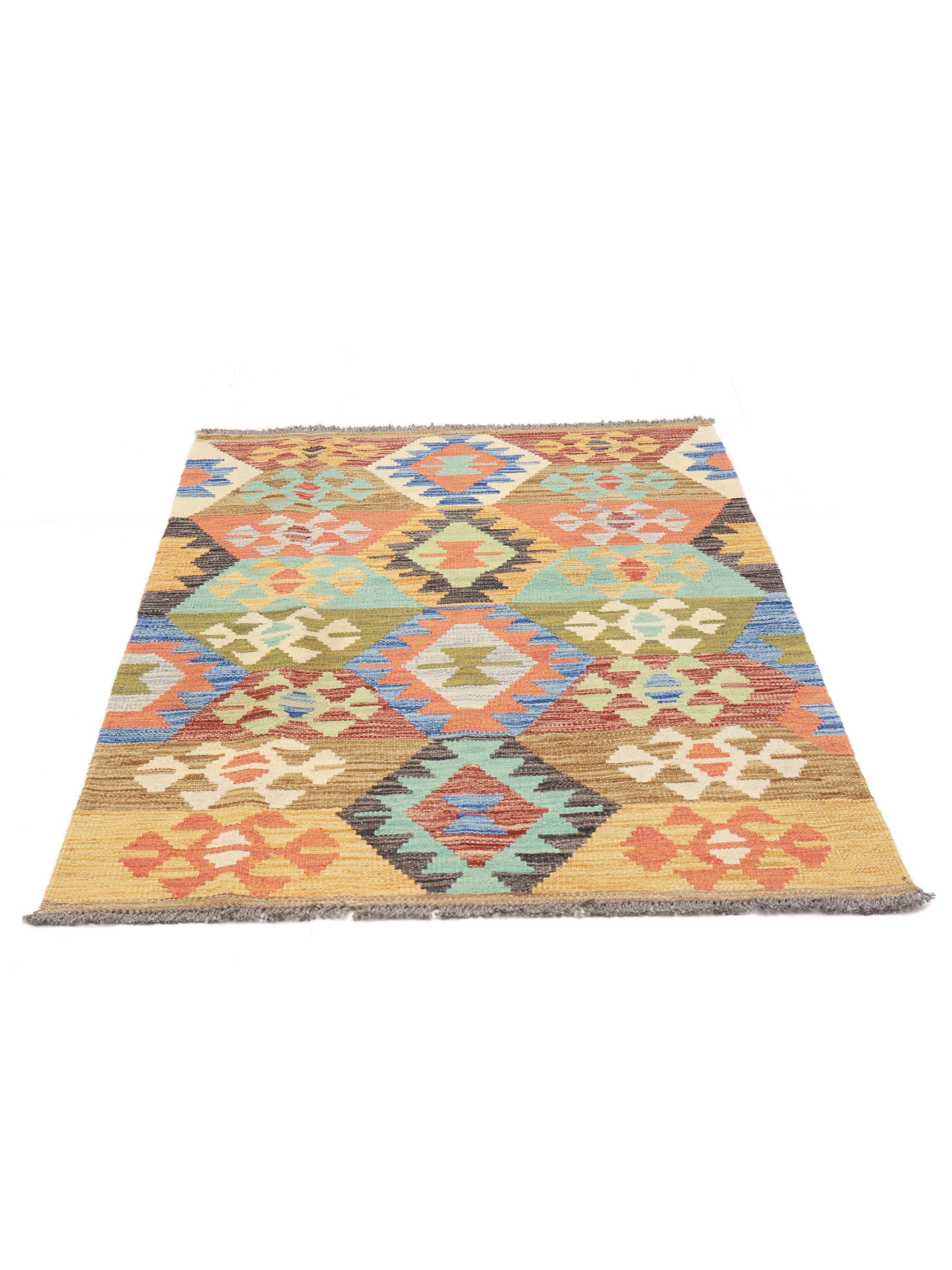
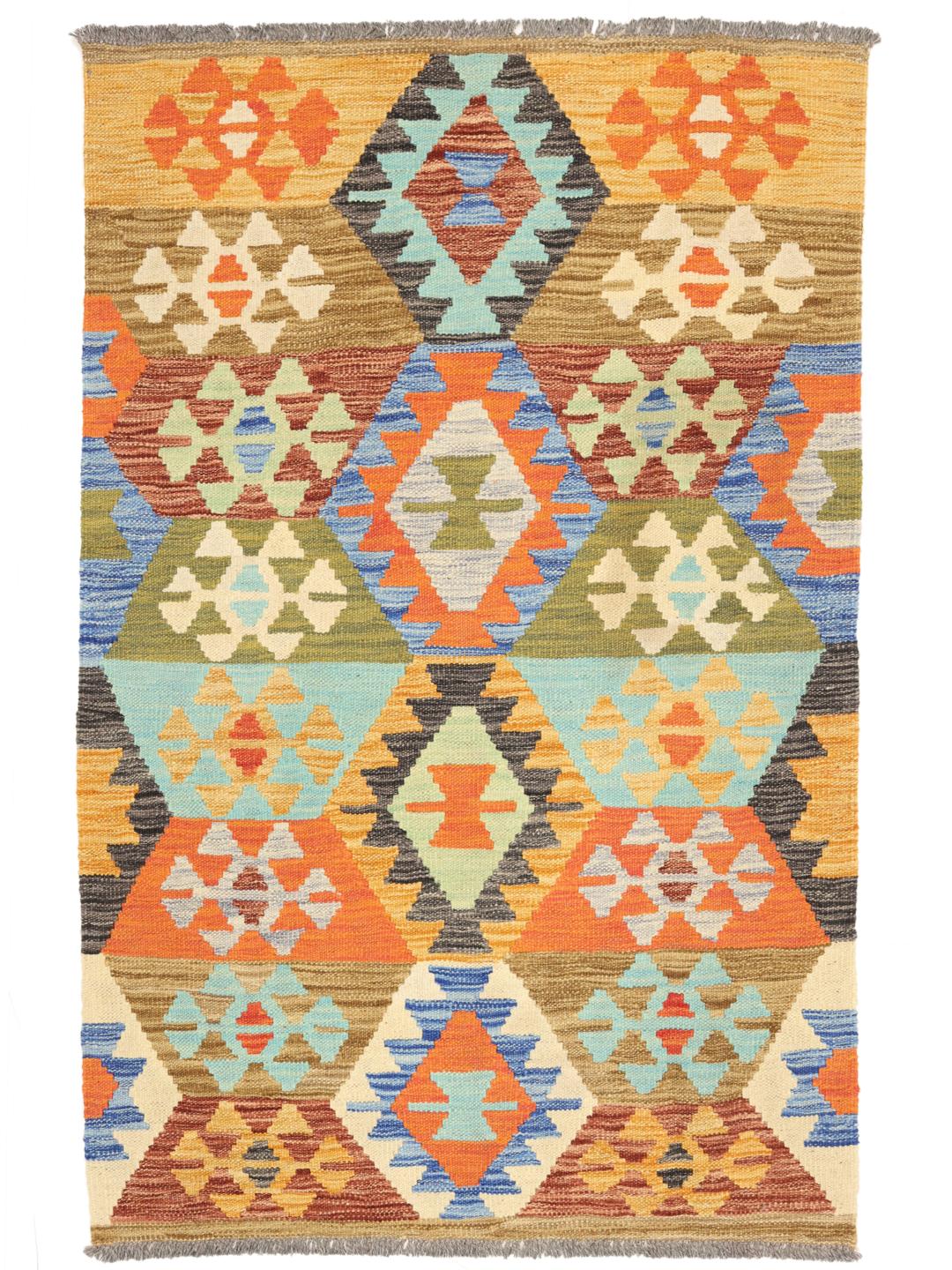
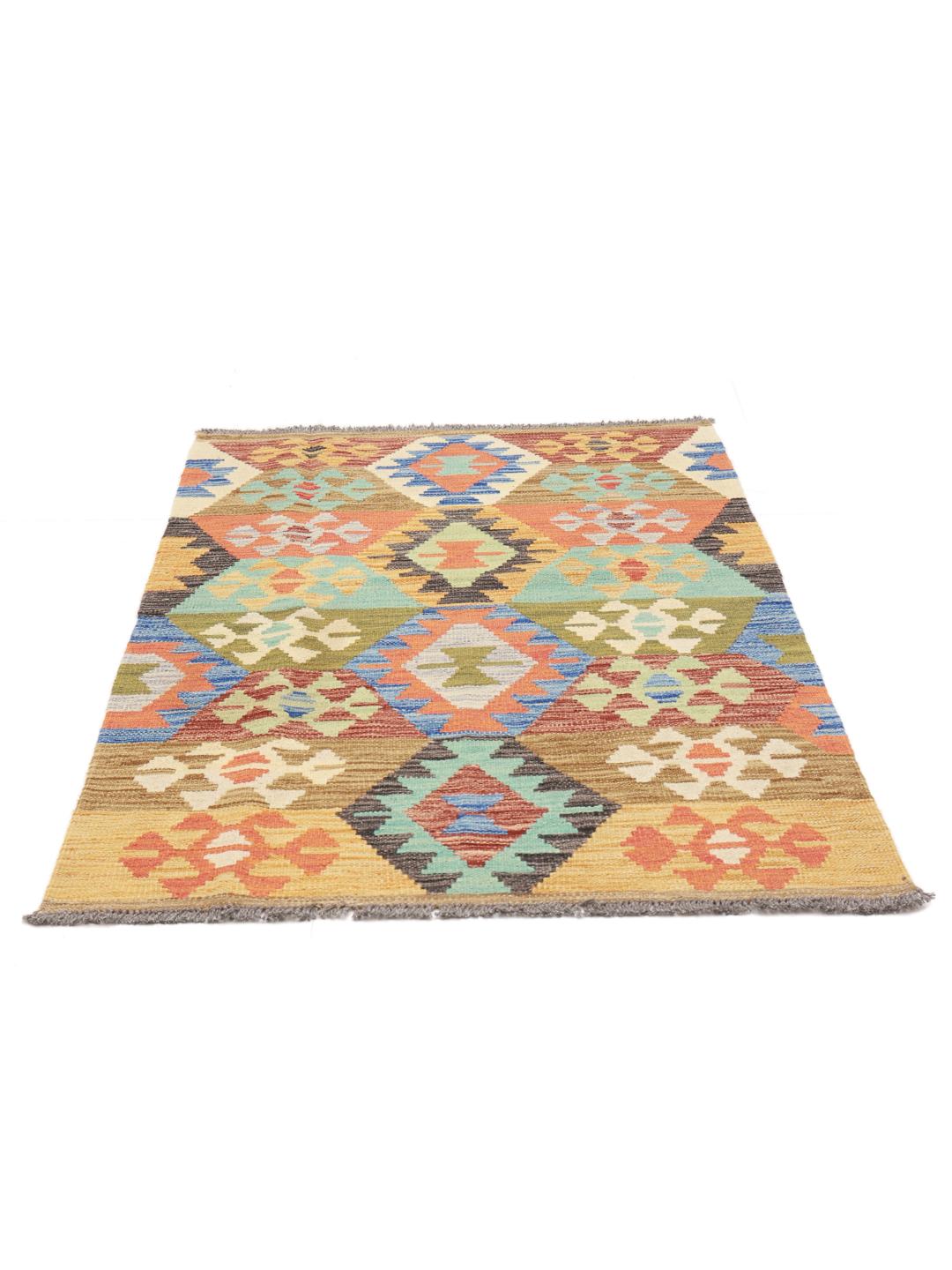
The tradition of weaving Kelim rugs in Afghanistan is deeply rooted in the nomadic history of the region. For centuries, these flat-woven textiles have served as essential, portable elements of daily life, used as floor coverings, blankets, and storage bags by tribes moving across the rugged landscapes of the Middle East.
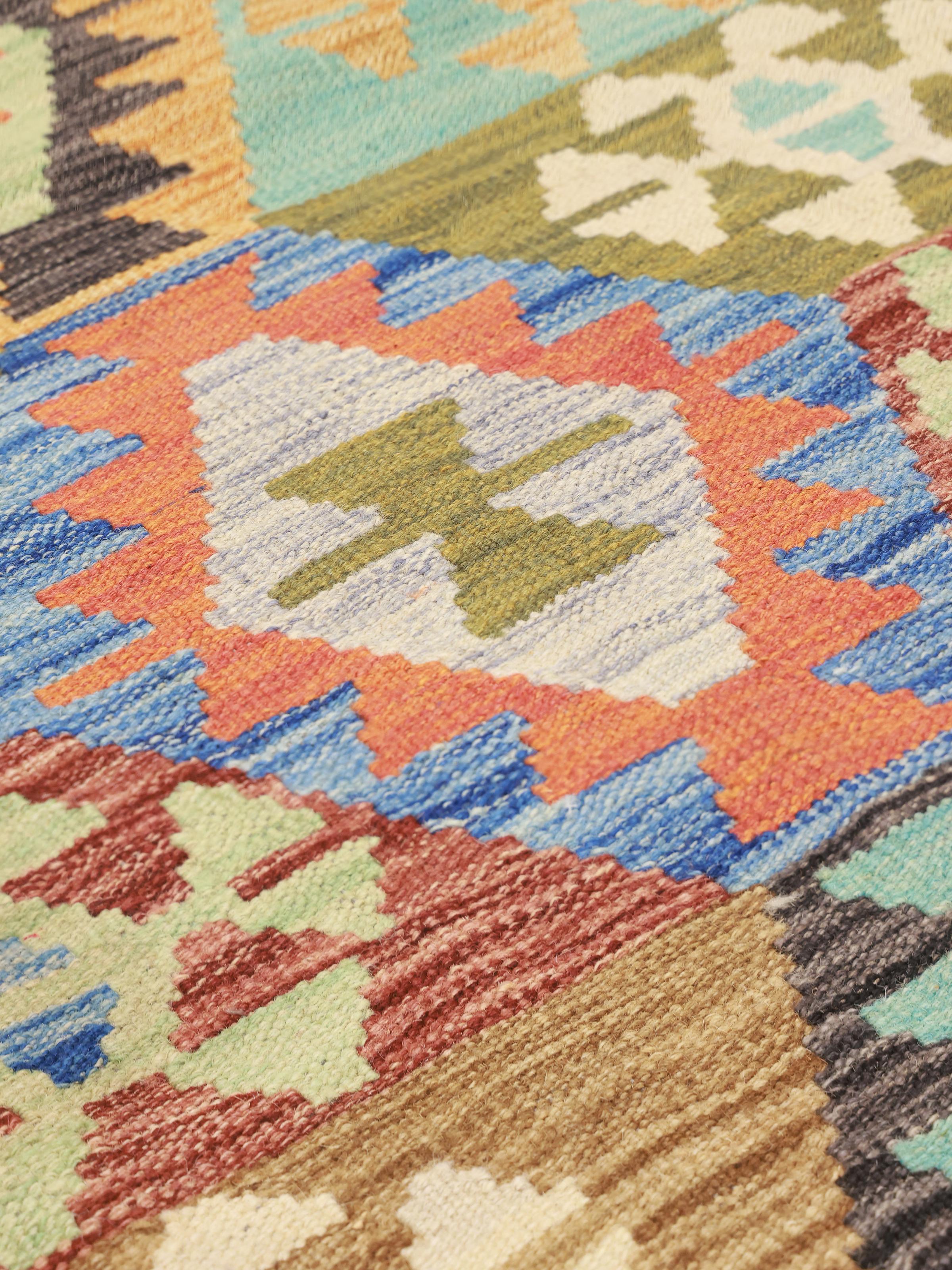
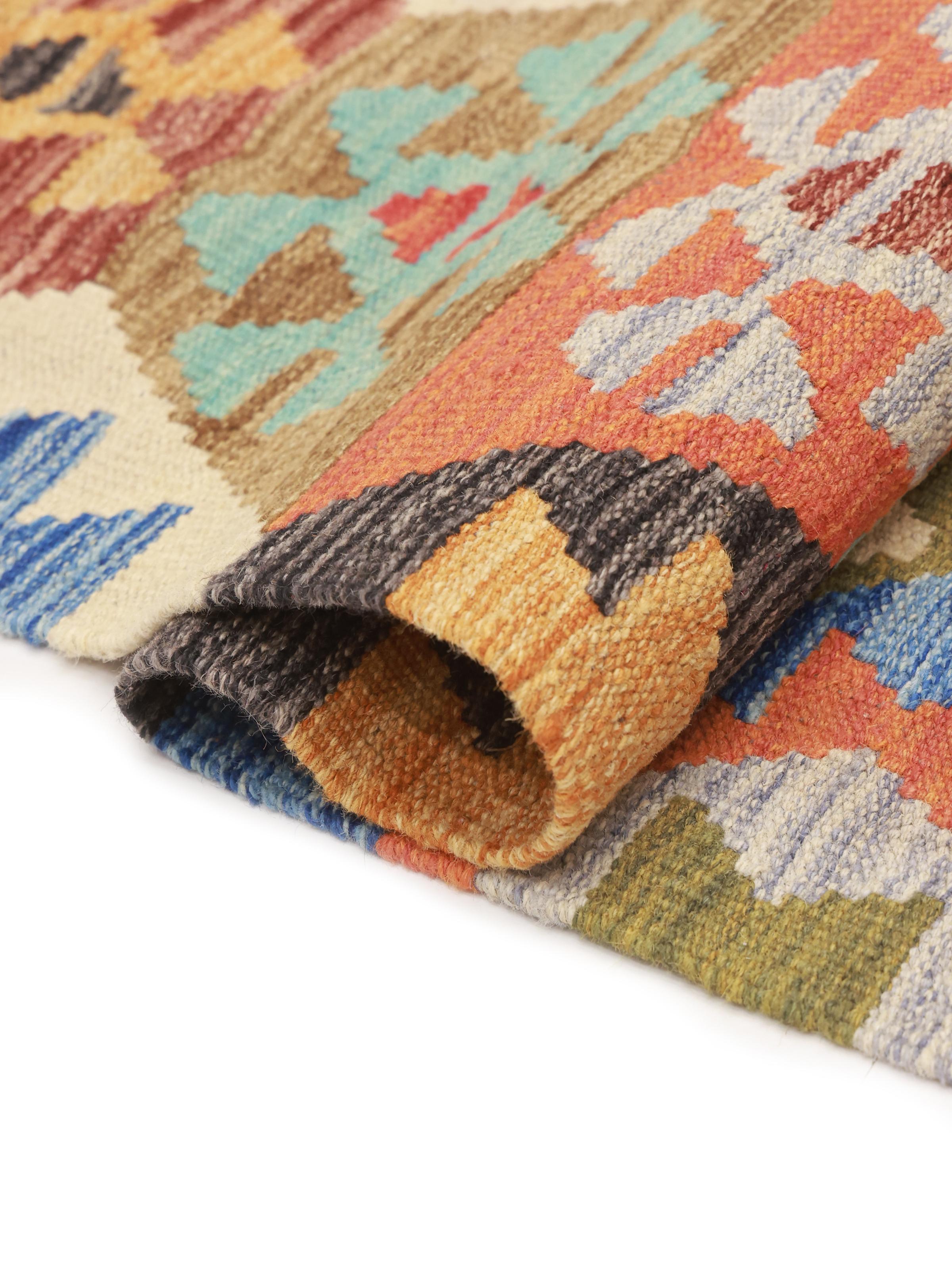
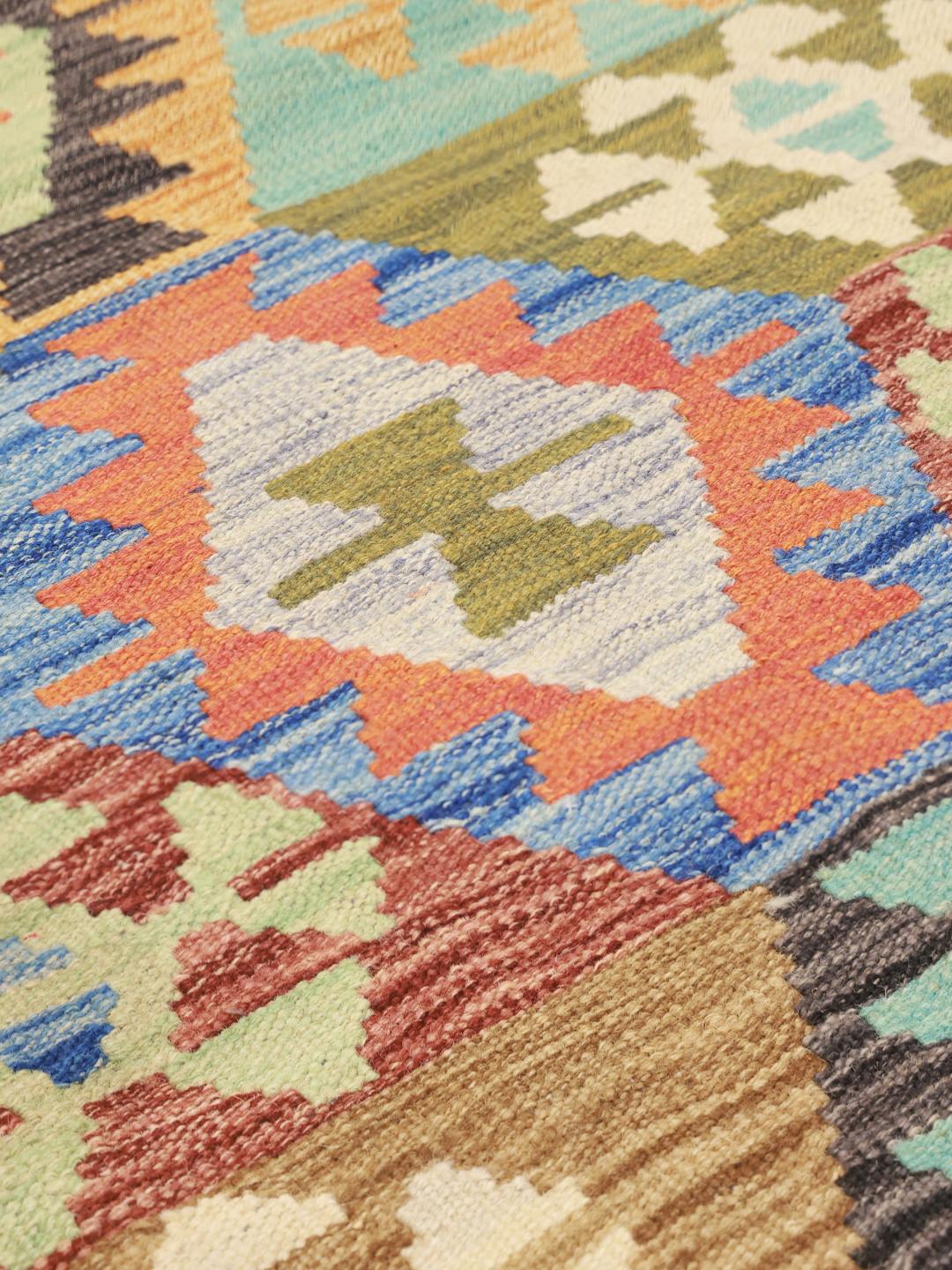
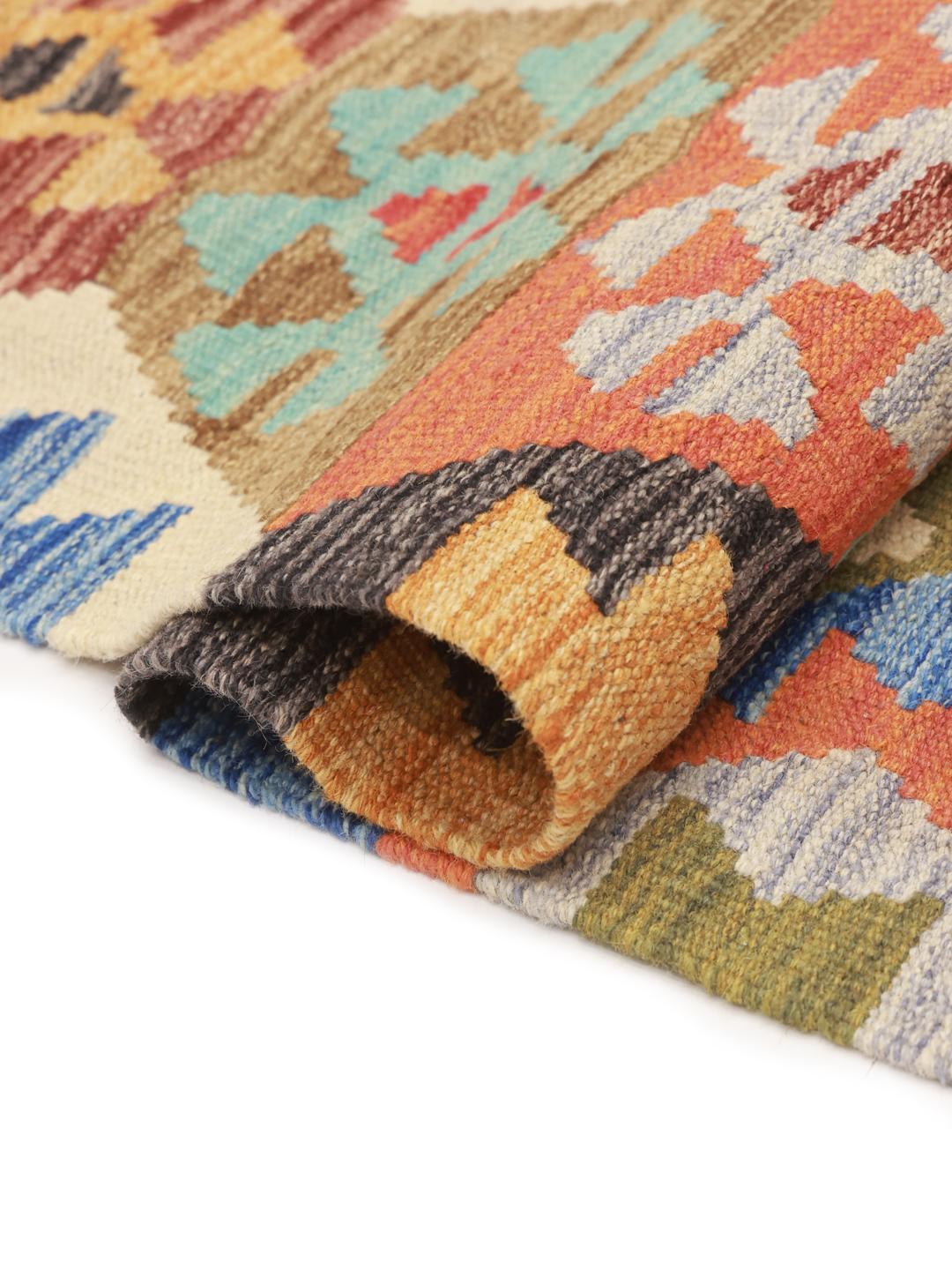
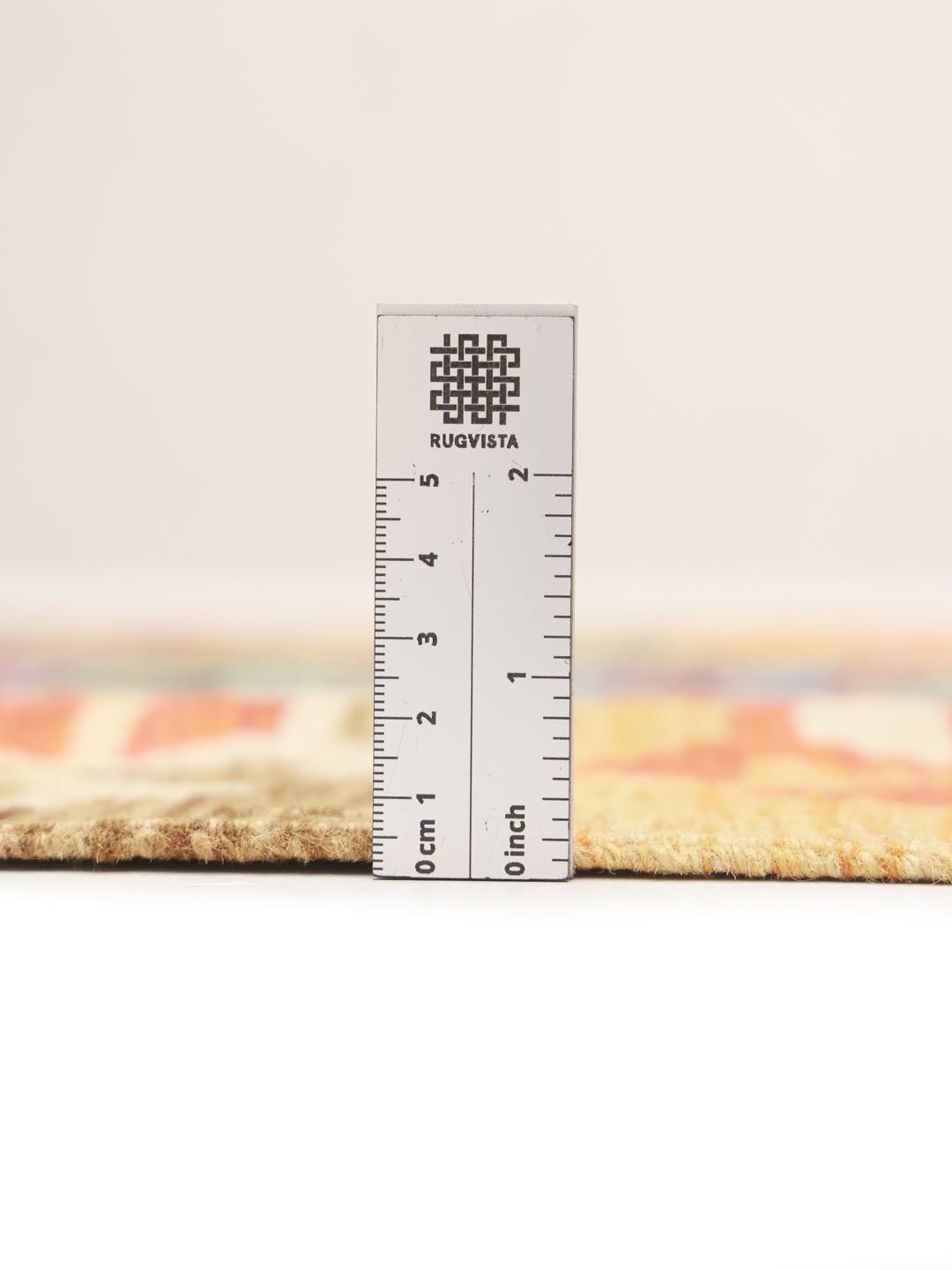
A Kelim is defined by its lack of pile, a technique where the pattern is created by tightly interweaving the coloured weft threads directly into the warp. This method produces a light, thin, and remarkably strong fabric. Because there is no pile to wear down, these rugs are celebrated for their longevity and the way their colours remain clear and distinct over decades of use.
The signature design language of this tradition relies on bold, geometric motifs. You will often see diamonds, triangles, and stylized floral elements arranged in repetitive, rhythmic patterns. These symbols were traditionally used as a visual language, representing everything from protection against the evil eye to regional tribal identities, making each rug a canvas for cultural storytelling.
Owning an Afghan Kelim is an investment in a living heritage. These rugs are highly valued by collectors and design enthusiasts alike, not just for their striking aesthetics, but for the human effort and historical continuity they represent. To bring one into your home is to connect with a craft tradition that has remained largely unchanged for generations.