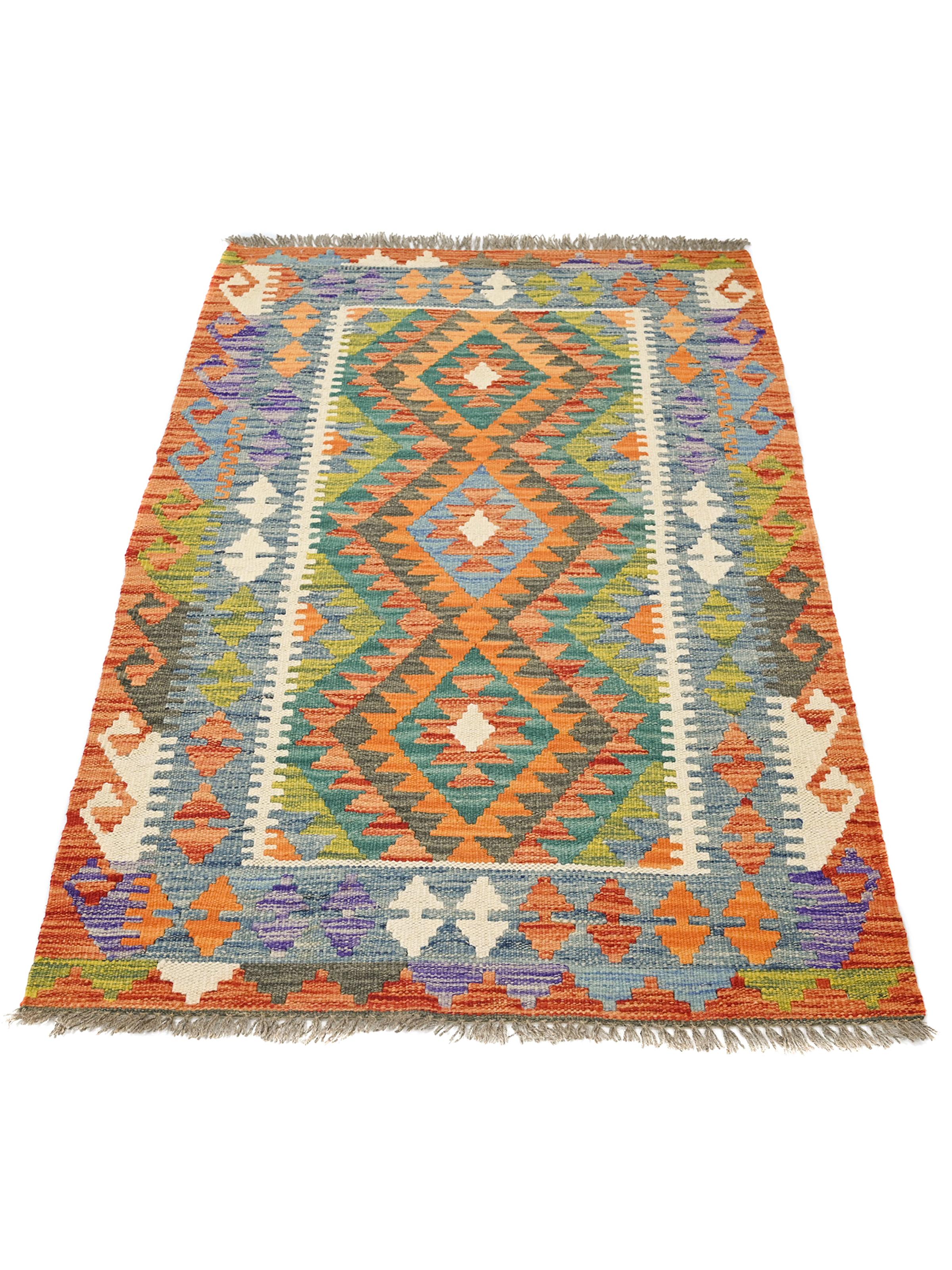
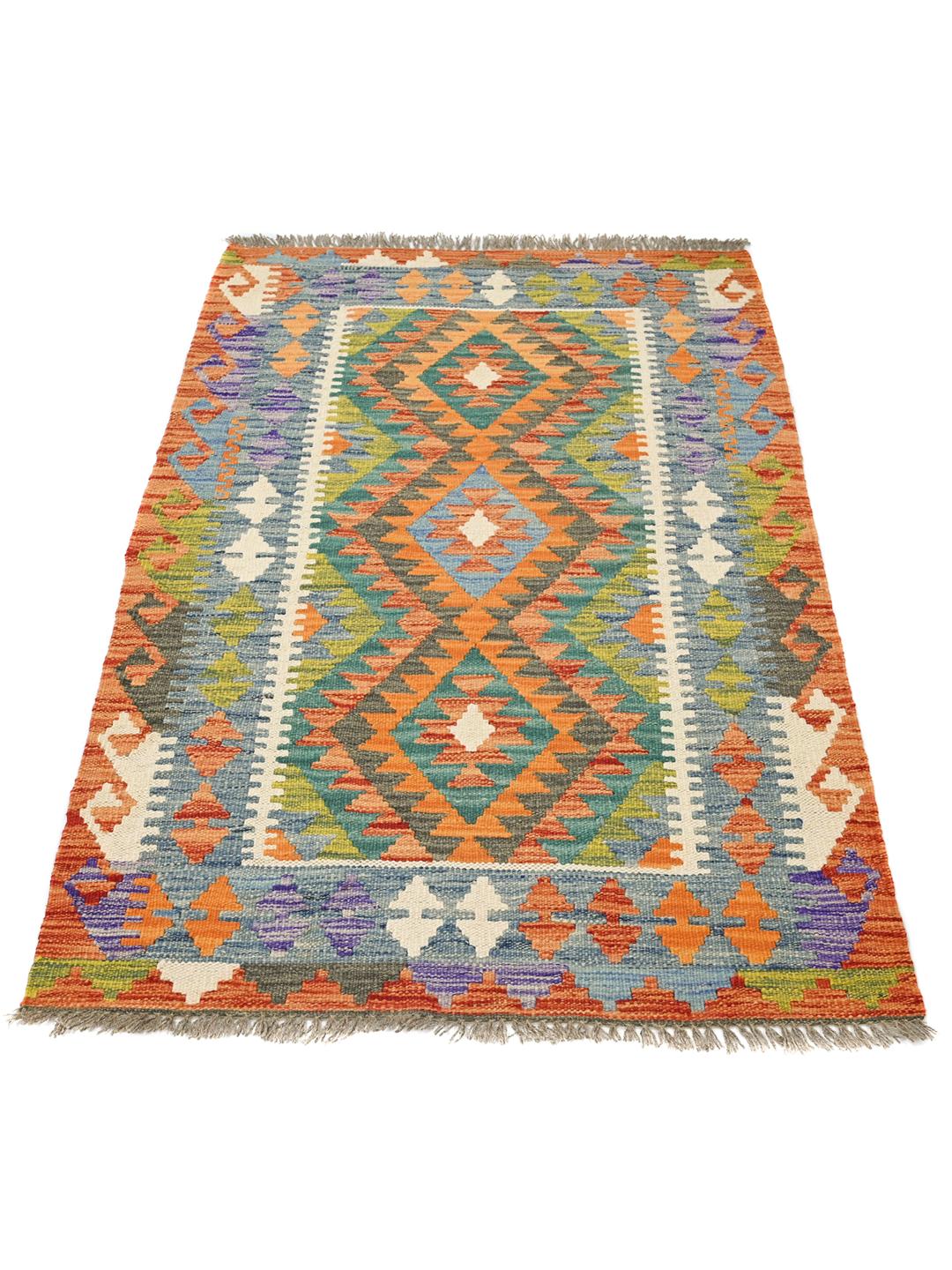
Afghan Kelims have a long and celebrated history tied to the nomadic and semi-nomadic tribes of Central Asia and northern Afghanistan. Traditionally woven for daily household use, tent dividers, or floor coverings, these textiles reflect the artistic traditions and lifestyle of tribal weavers.
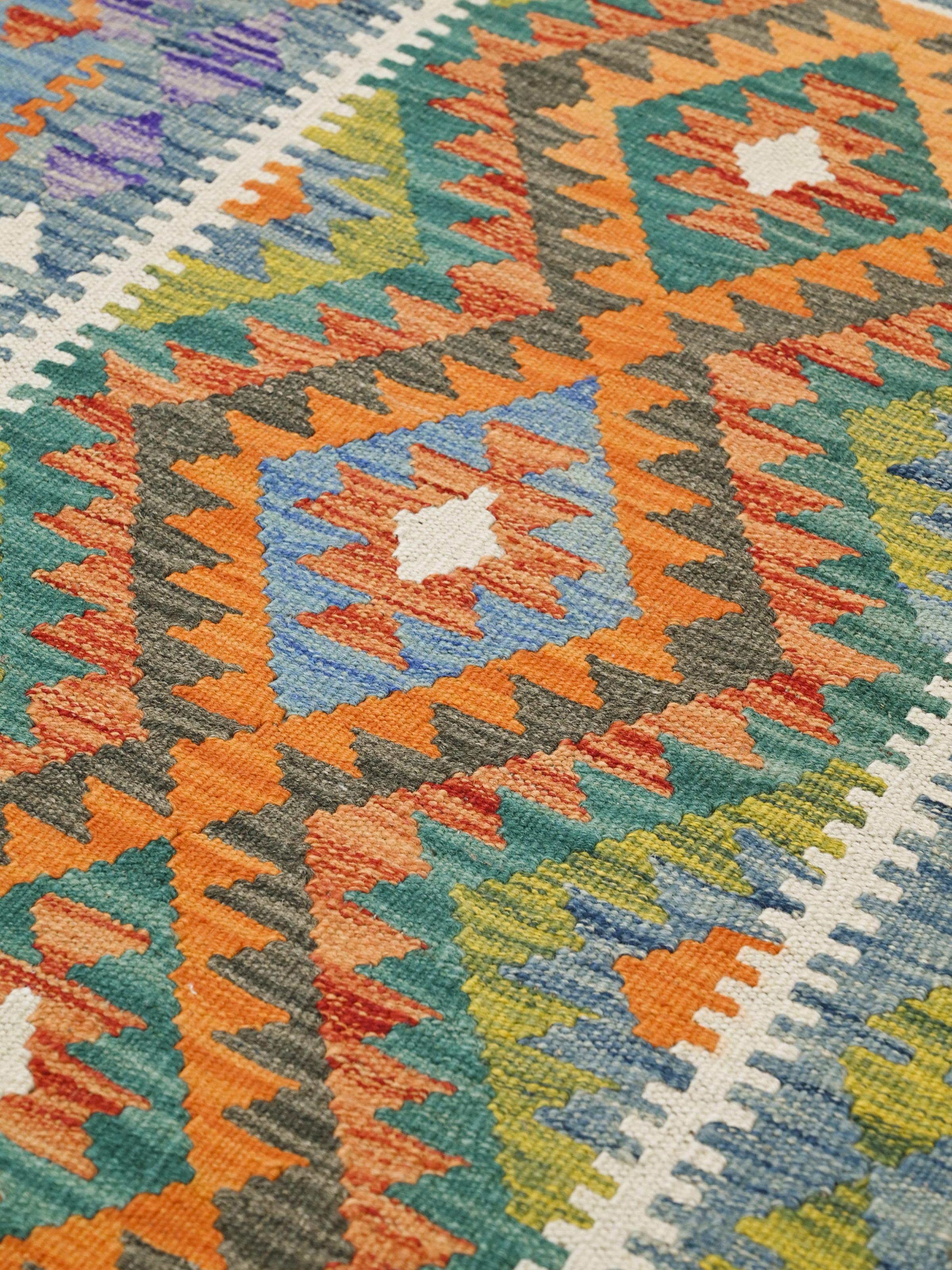
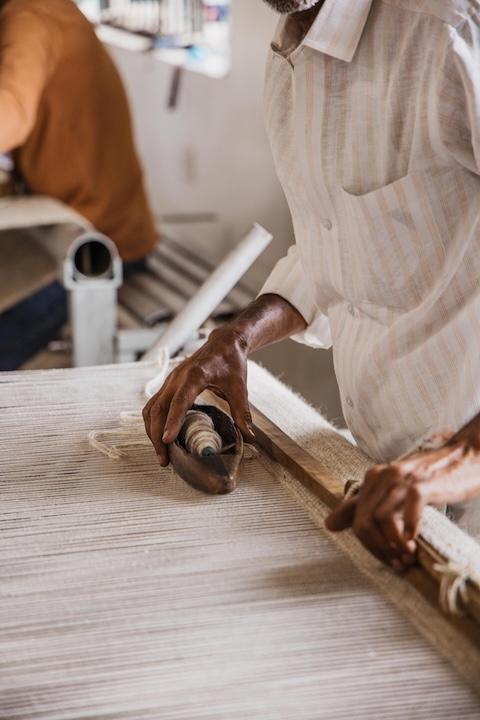
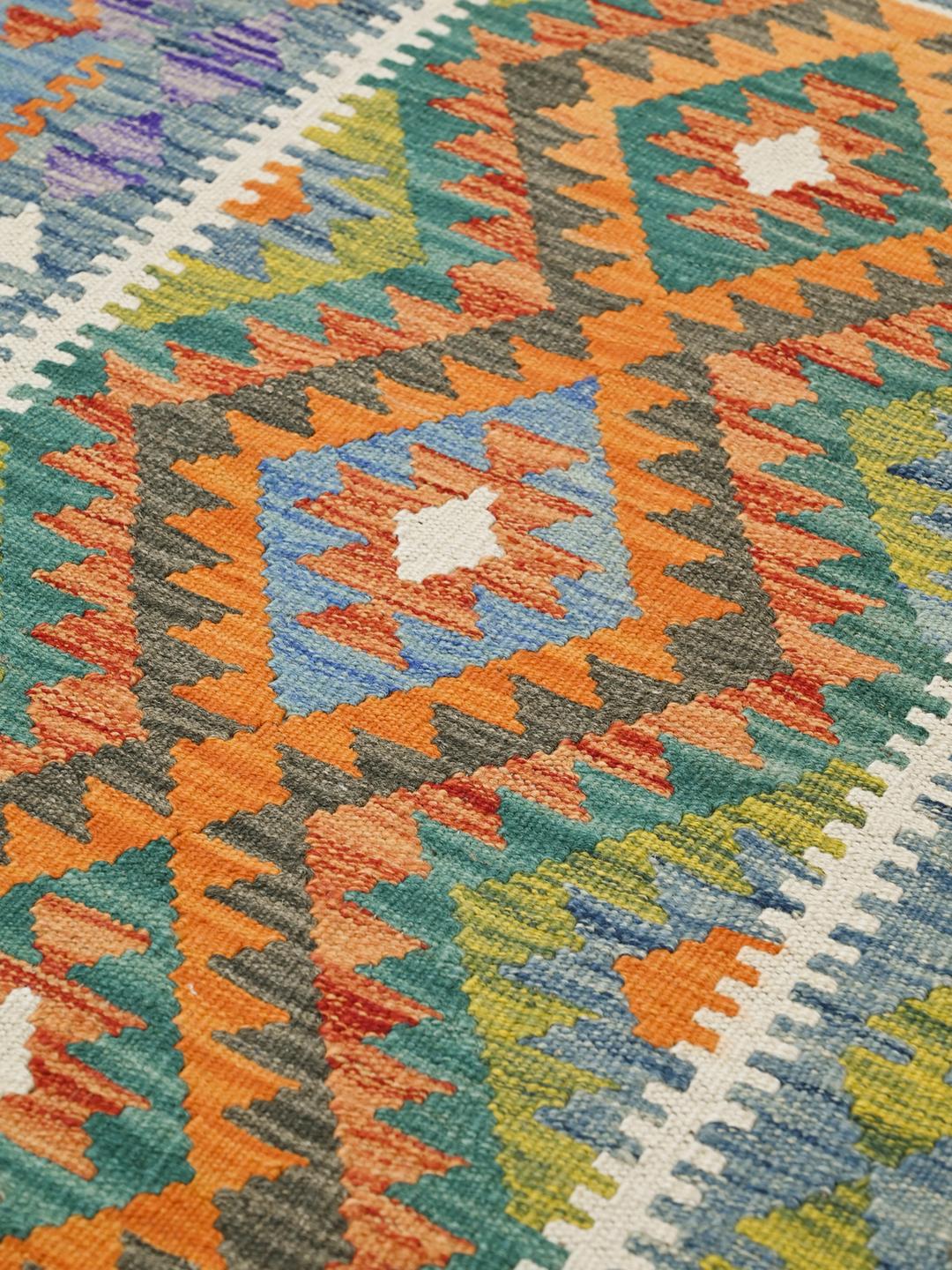
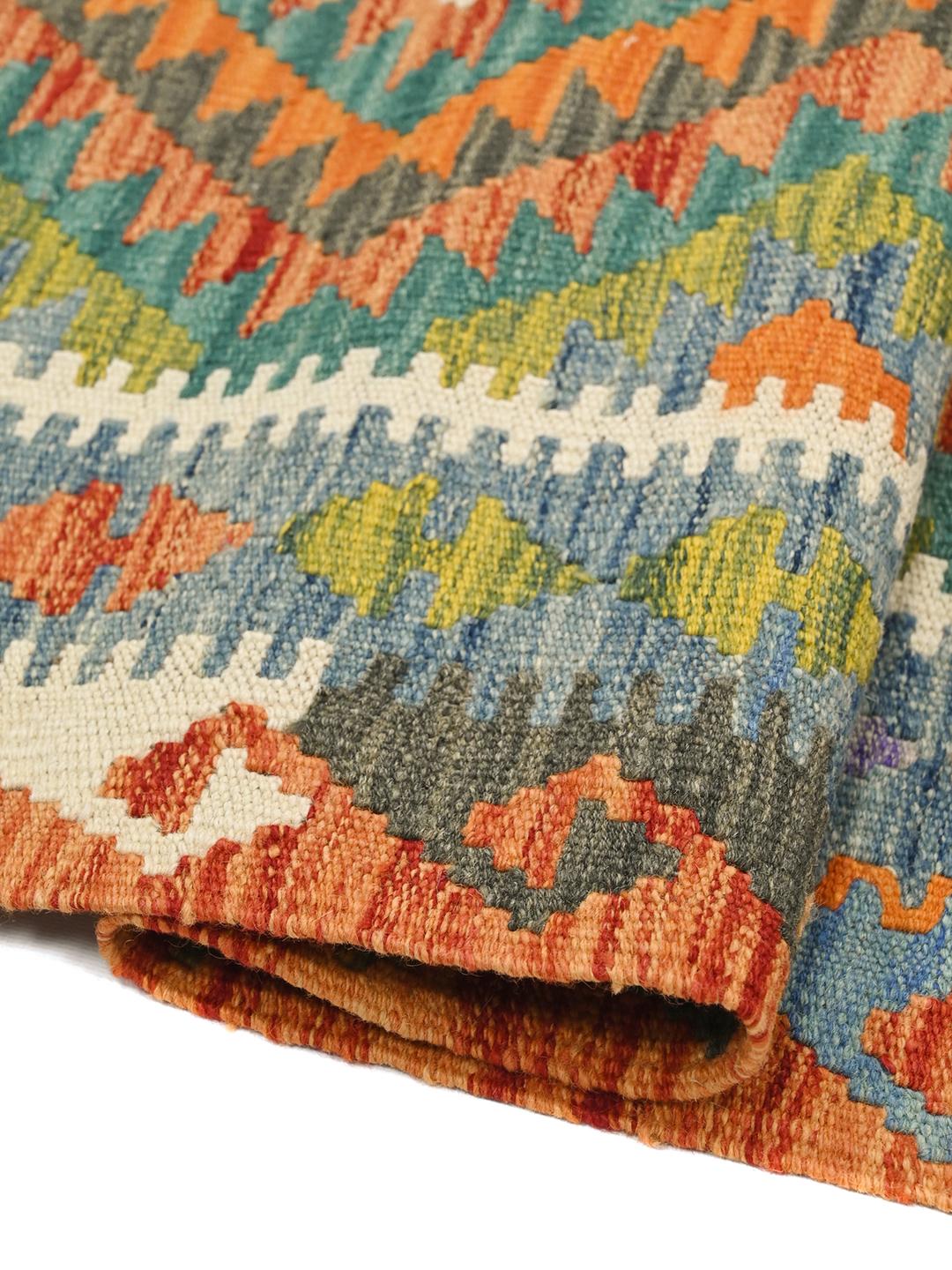
The term kelim refers specifically to a tapestry-woven flatweave. Rather than tying individual knots to create a thick pile, the weaver passes weft yarns through the warp to form both the structure and the visual pattern. This technique produces a flat, lightweight textile that is remarkably strong and reversible.
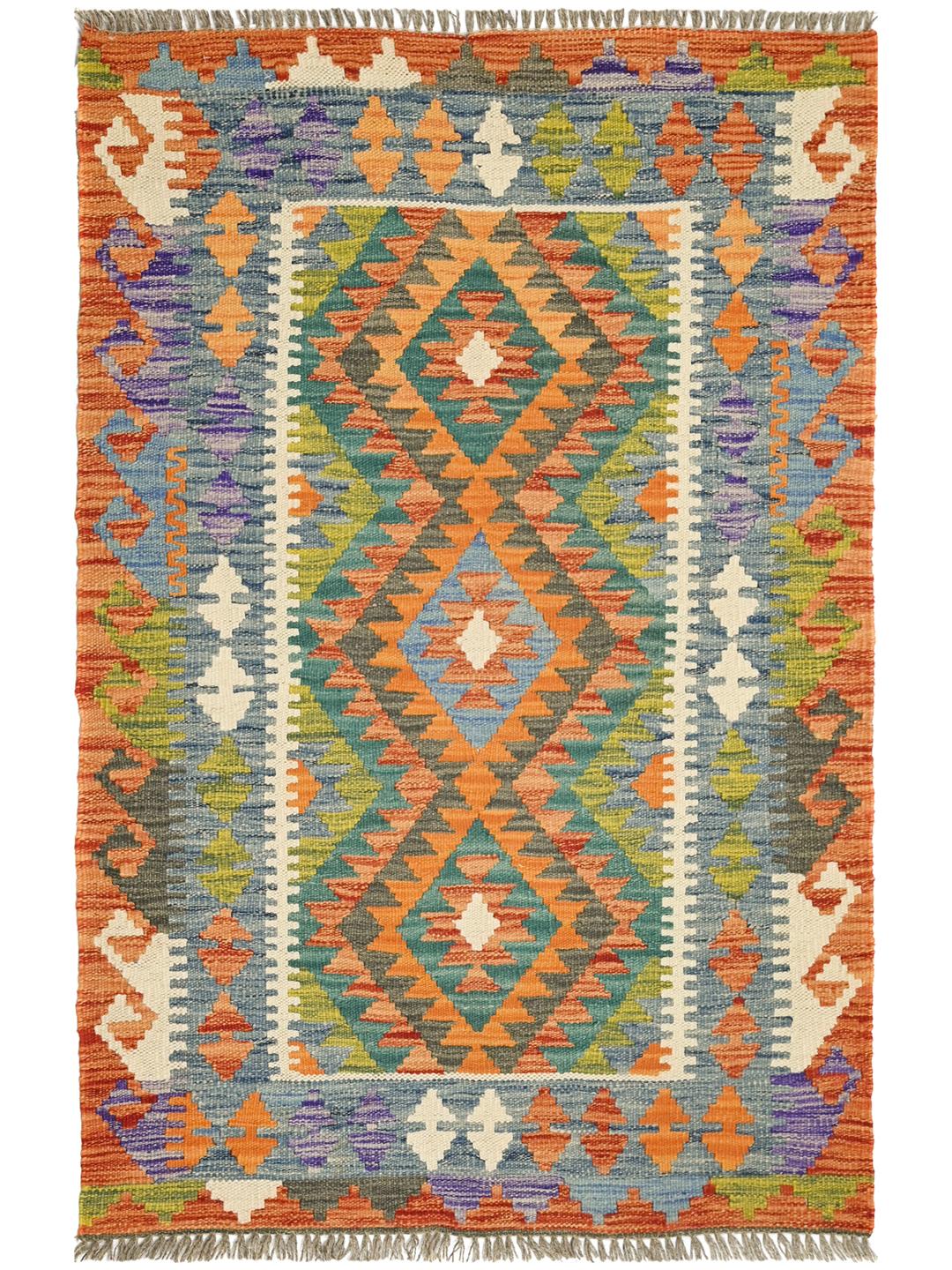
Visually, Afghan Kelims are famous for their bold geometric language. Diamond motifs, stepped medallions, and repeating latch-hook symbols are common features, often representing tribal identity, protection, and harmony. The use of vibrant, contrasting colours creates a dynamic rhythm across the surface.
Today, vintage Afghan Kelims are prized by collectors and interior enthusiasts around the world. Their expressive designs and rugged durability make them versatile decorative pieces, offering an authentic connection to a centuries-old weaving tradition.