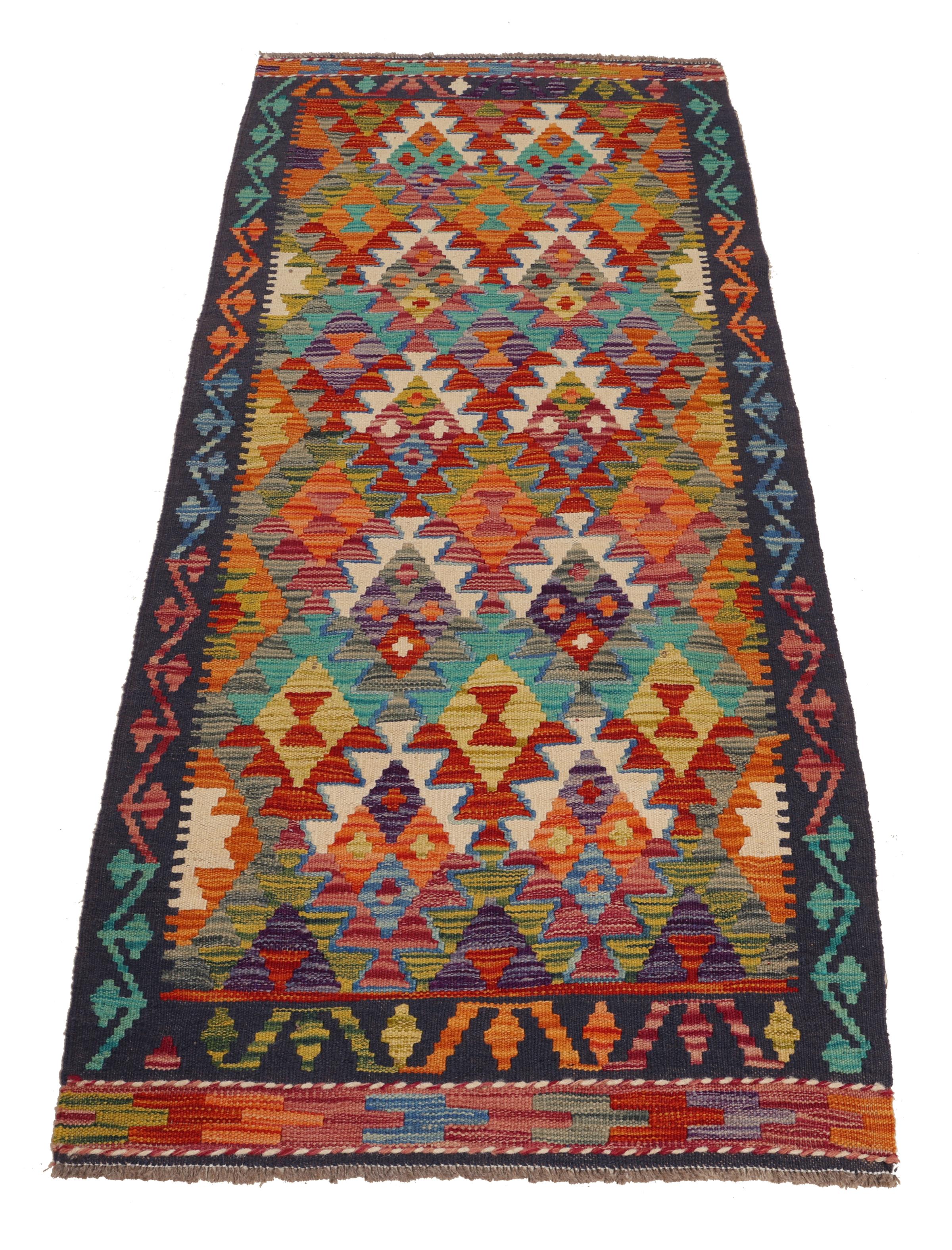
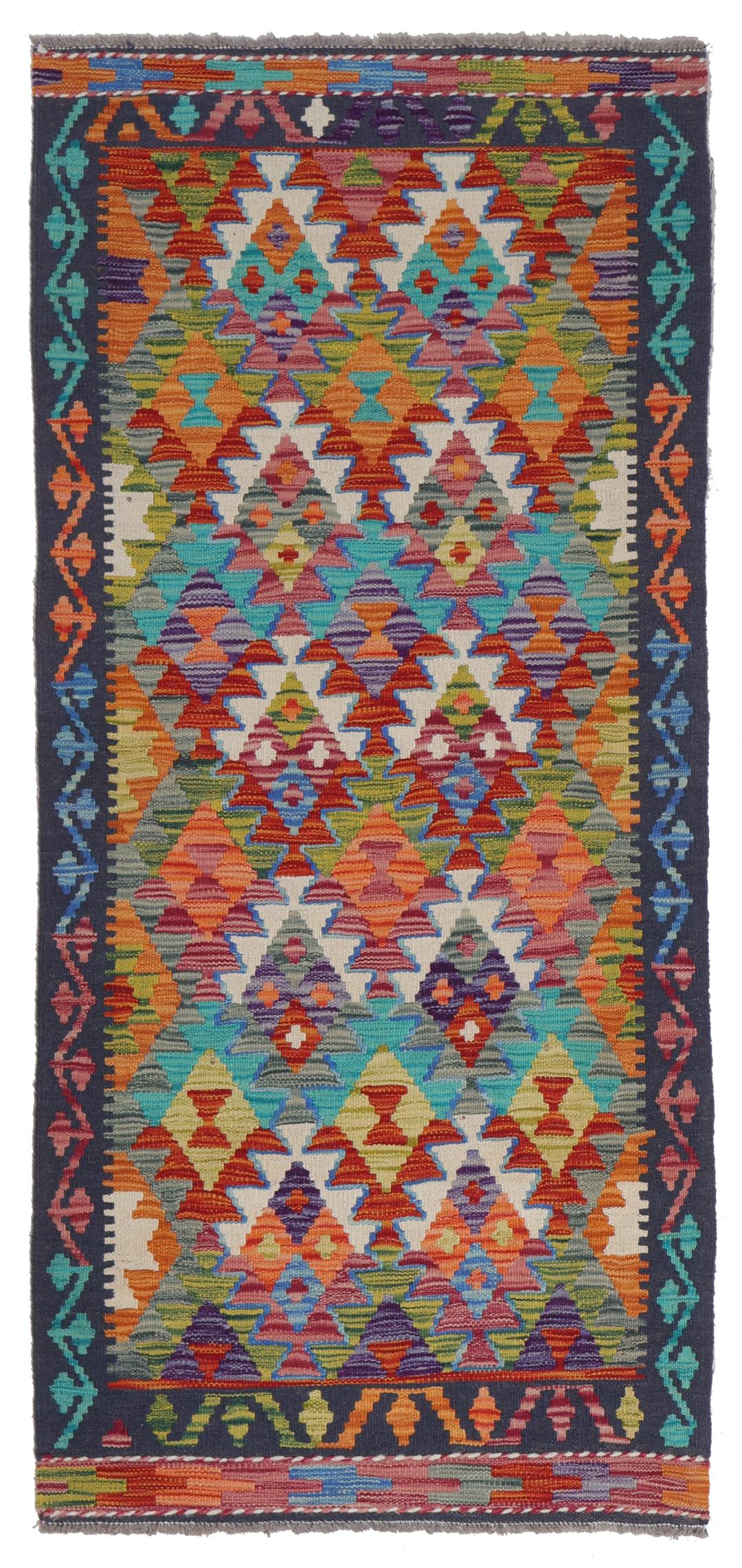
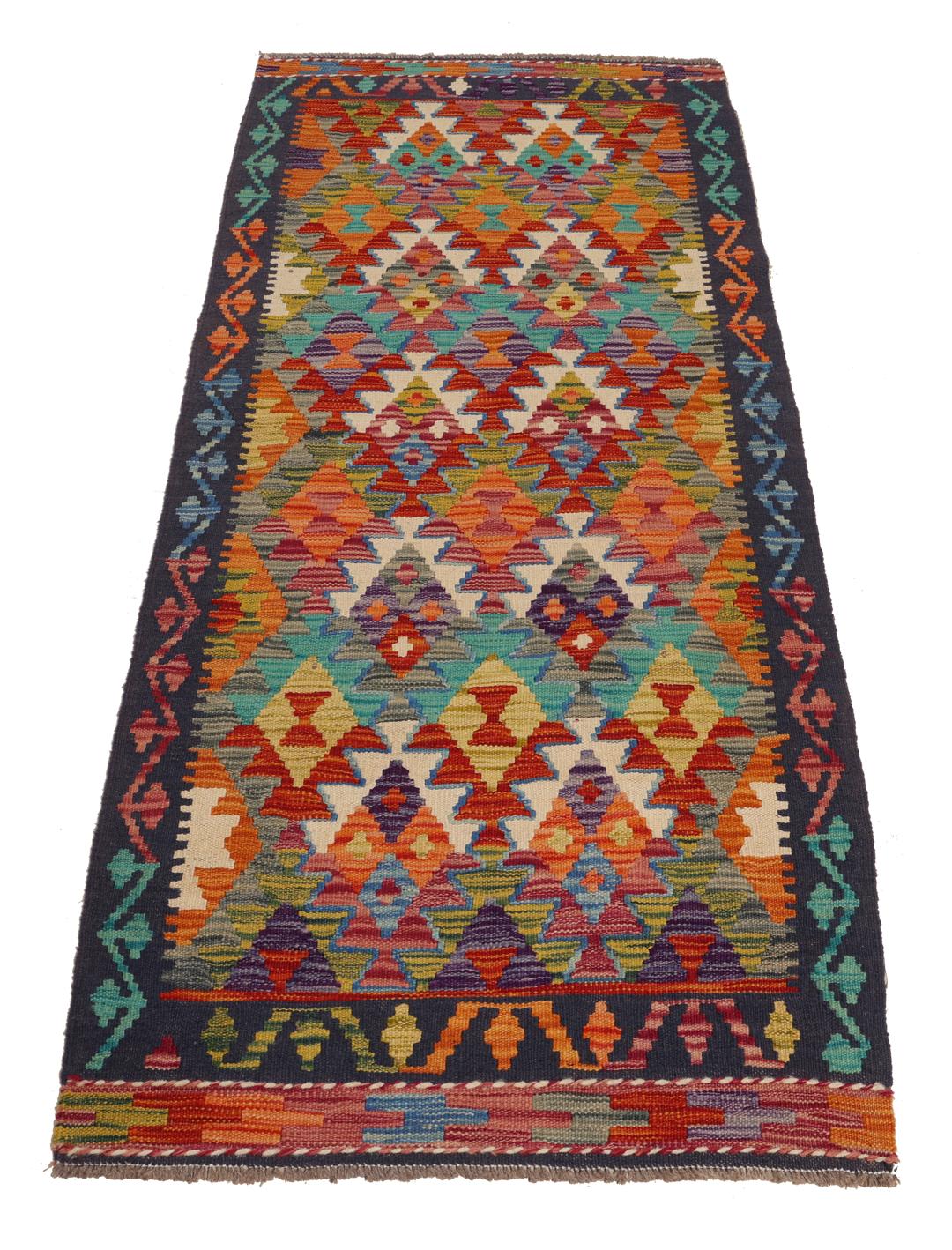
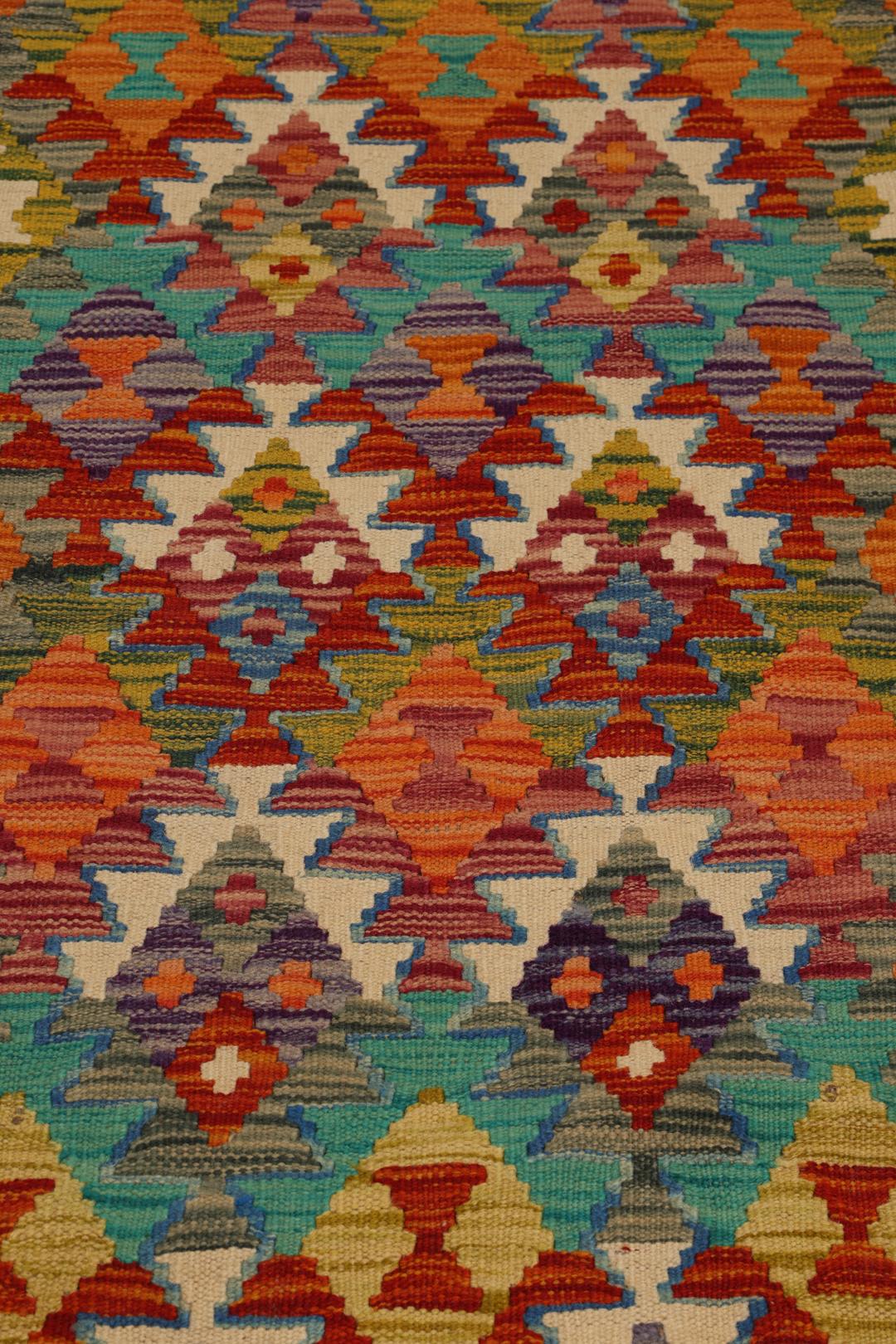
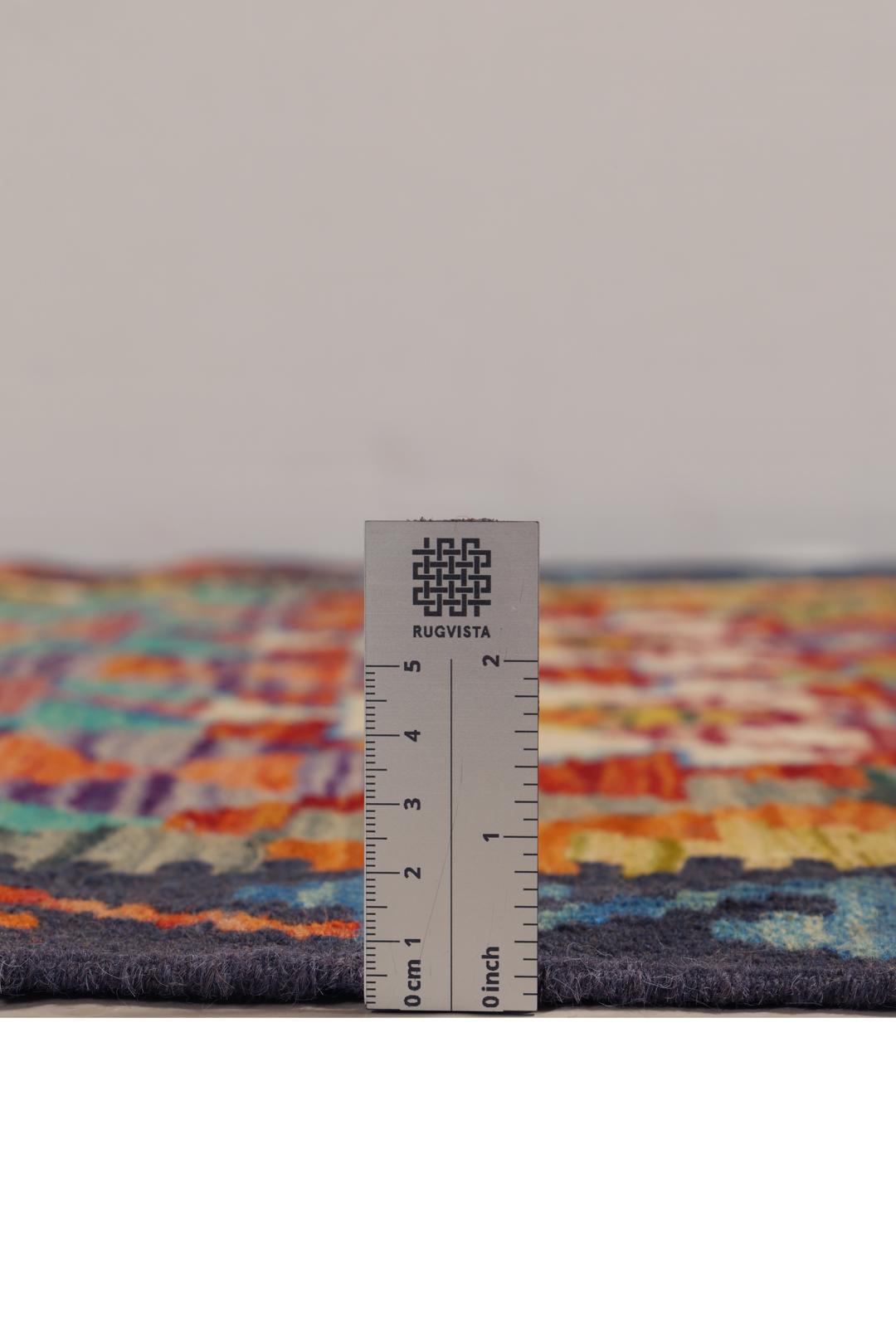
The Kelim Afghan Old Style tradition originates from the rugged, mountainous regions of Afghanistan, where nomadic and semi-nomadic tribes have practised the art of flat-weaving for centuries. These rugs were historically crafted for practical use within the home, serving as floor coverings, wall hangings, or protective saddlebags, and they remain deeply rooted in the cultural identity of the region.
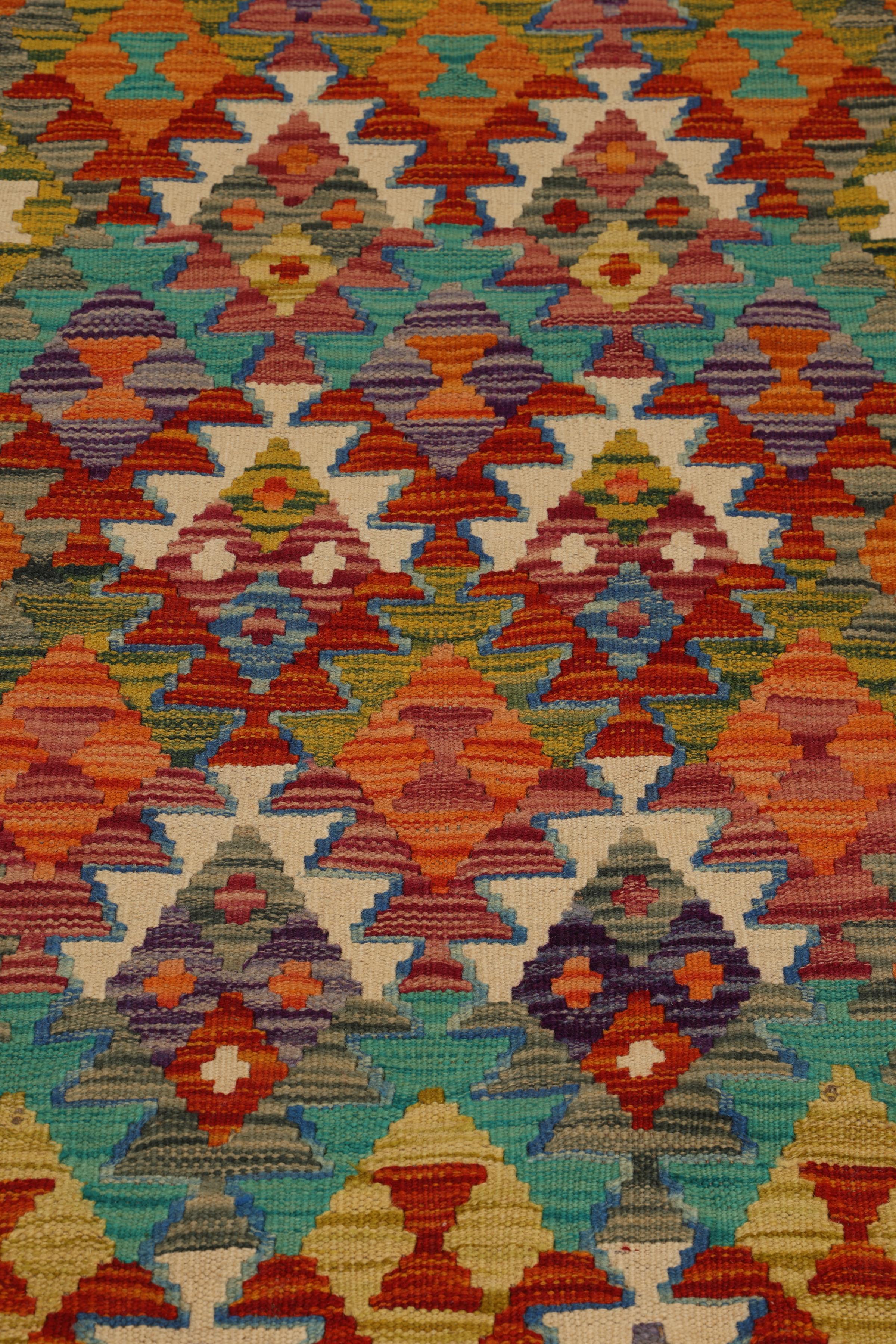
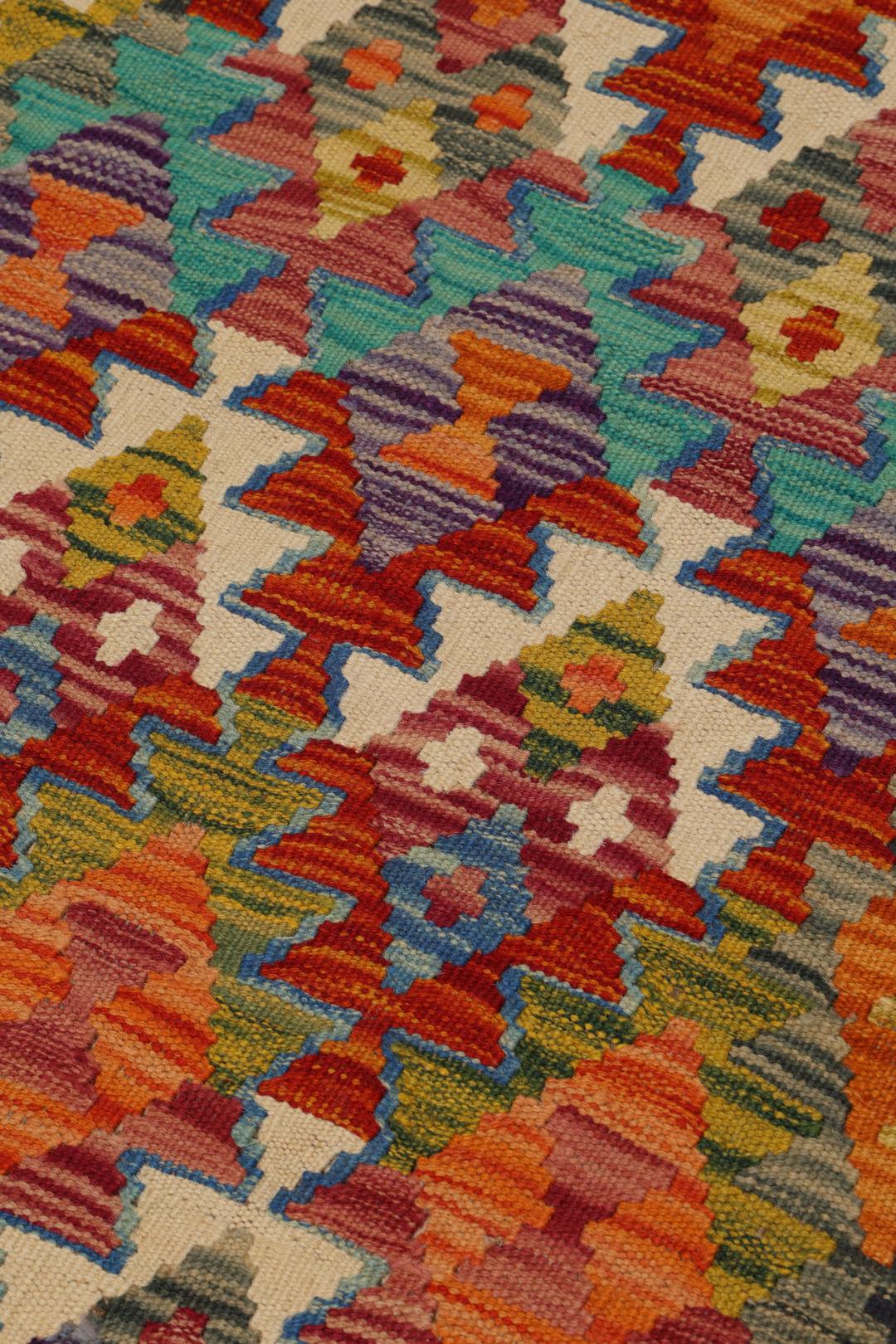
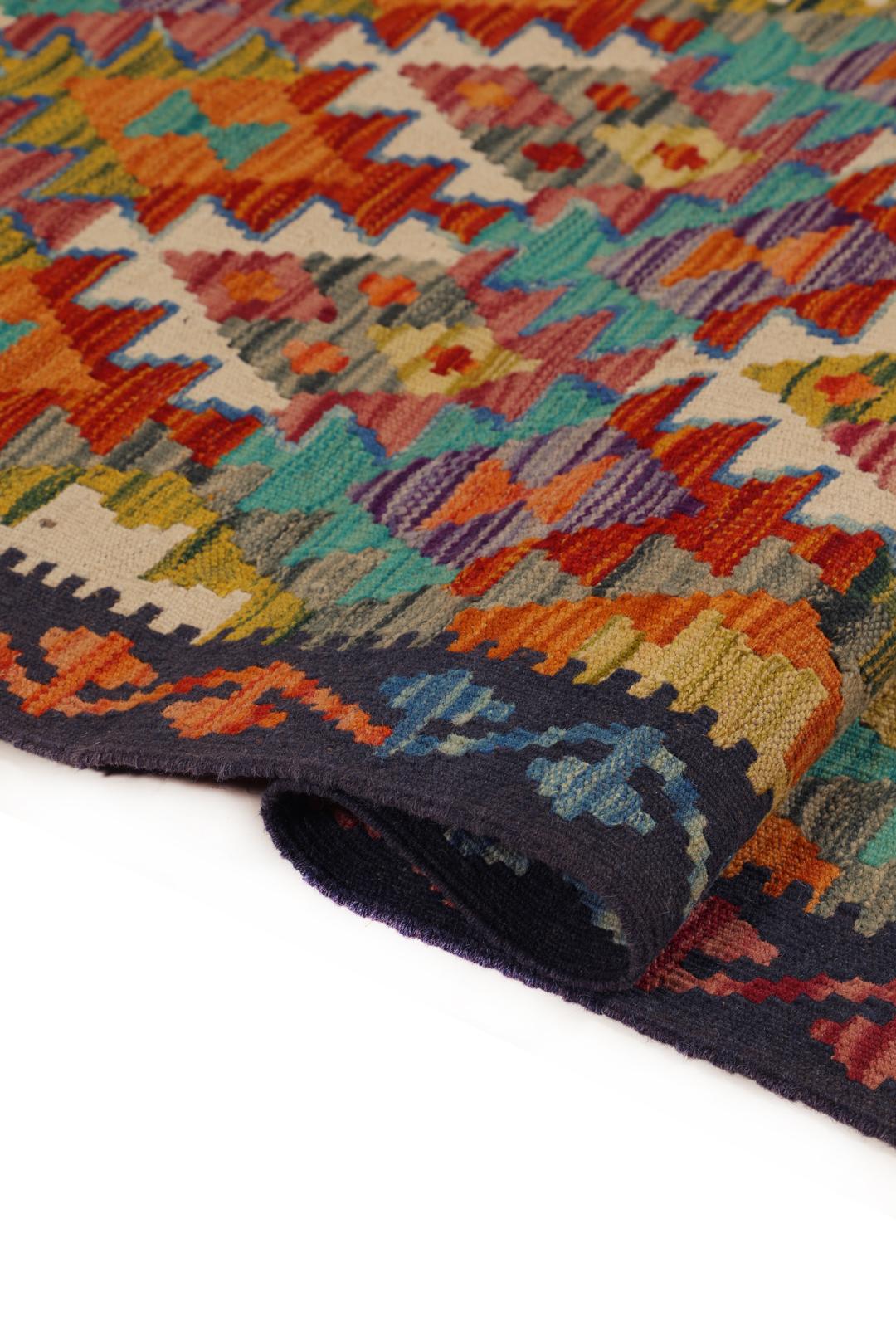
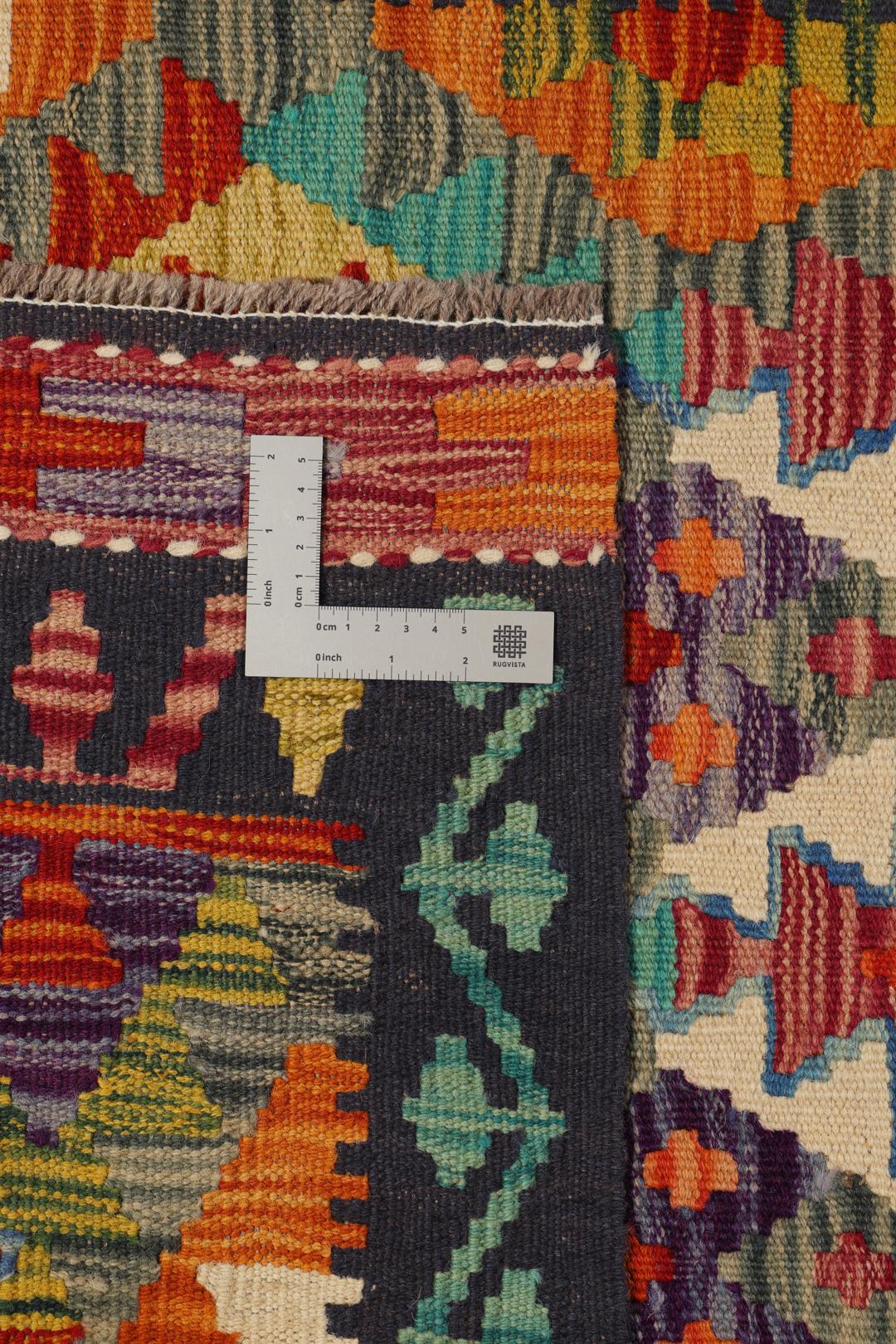
The term 'Kelim' refers specifically to the flat-weaving technique used, where no pile is created. Instead, the warp and weft threads are interlaced to form a smooth, reversible fabric. This method is highly prized for its ability to produce intricate, sharp-edged geometric patterns, as the weaver is not limited by the vertical pile height, allowing for a precise and graphic visual language.
Signature design elements of these rugs often include bold, repeating geometric motifs such as diamonds, triangles, and stylized floral shapes. The use of vibrant, saturated colours is a hallmark of the Afghan style, often achieved through traditional dyeing methods that bring out the natural lustre of the Wool. These patterns are typically framed by elaborate, symbolic borders that reflect the weaver's heritage and environment.
Owning an Afghan Kelim is a way to connect with a legacy of human skill and communal history. These pieces are valued by collectors and homeowners alike for their authenticity and the way they bridge the gap between ancient craft and contemporary interior design. Each rug represents a chapter in a long-standing tradition of storytelling through textile, making it a meaningful addition to any collection.