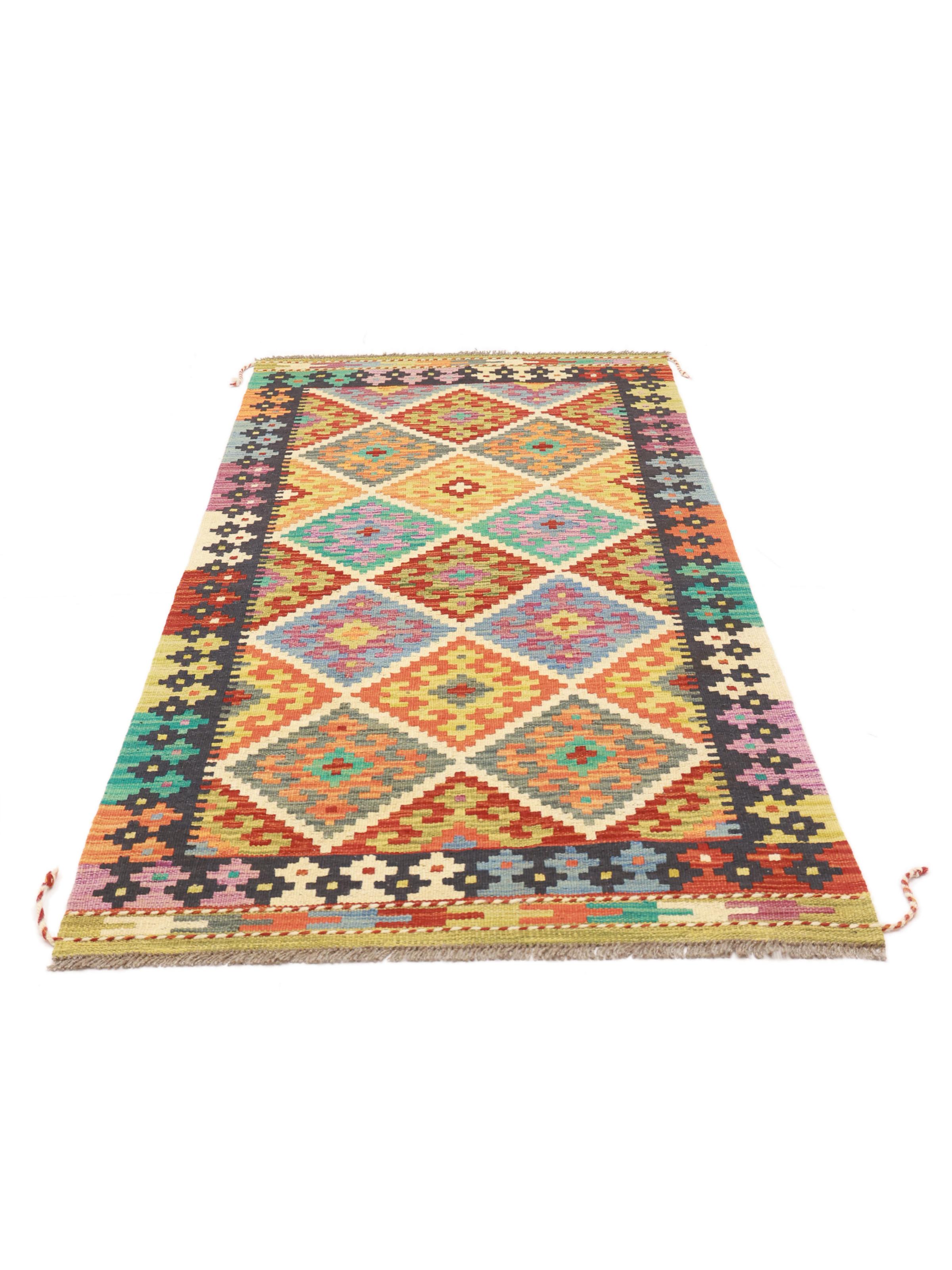
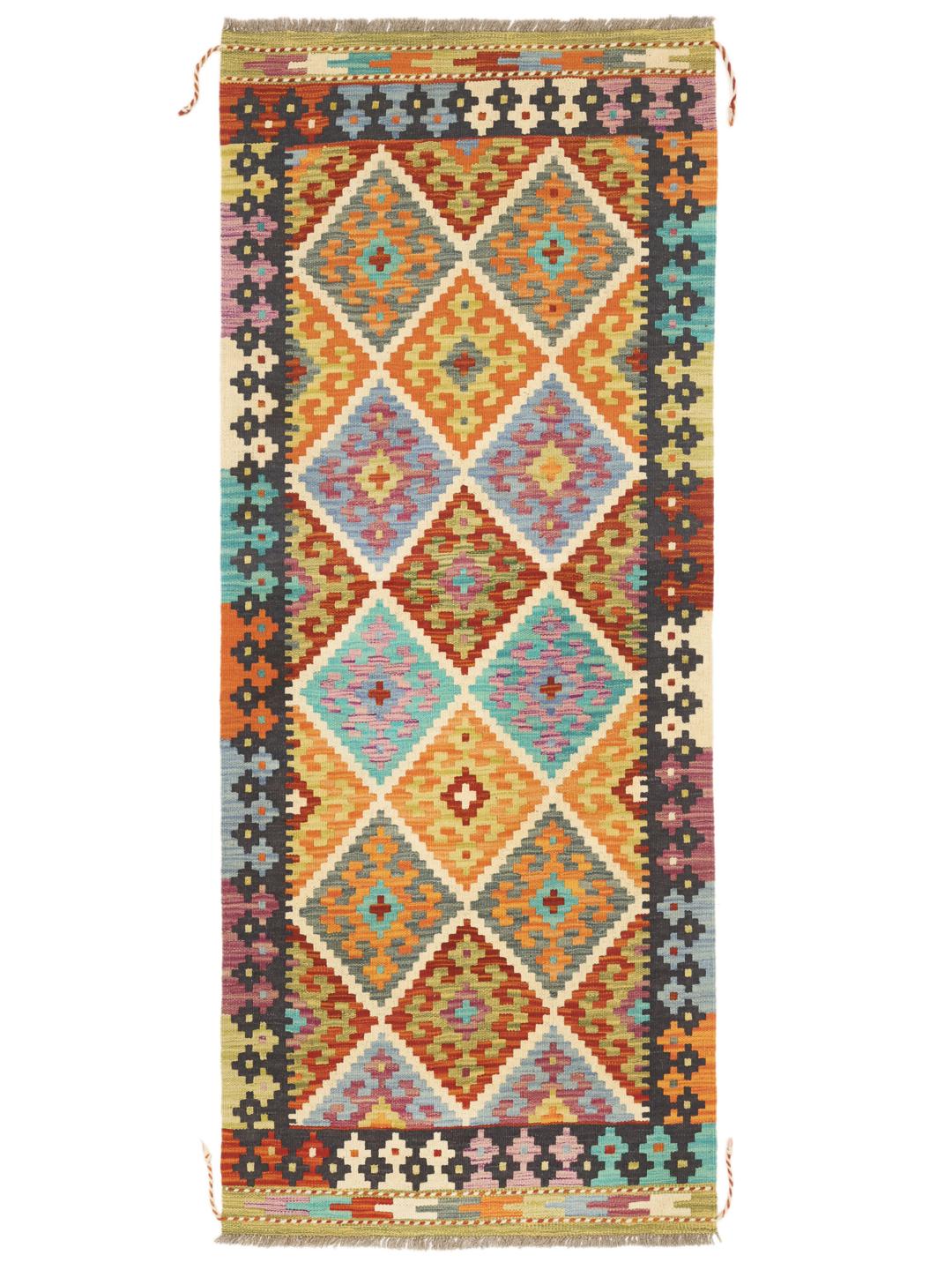
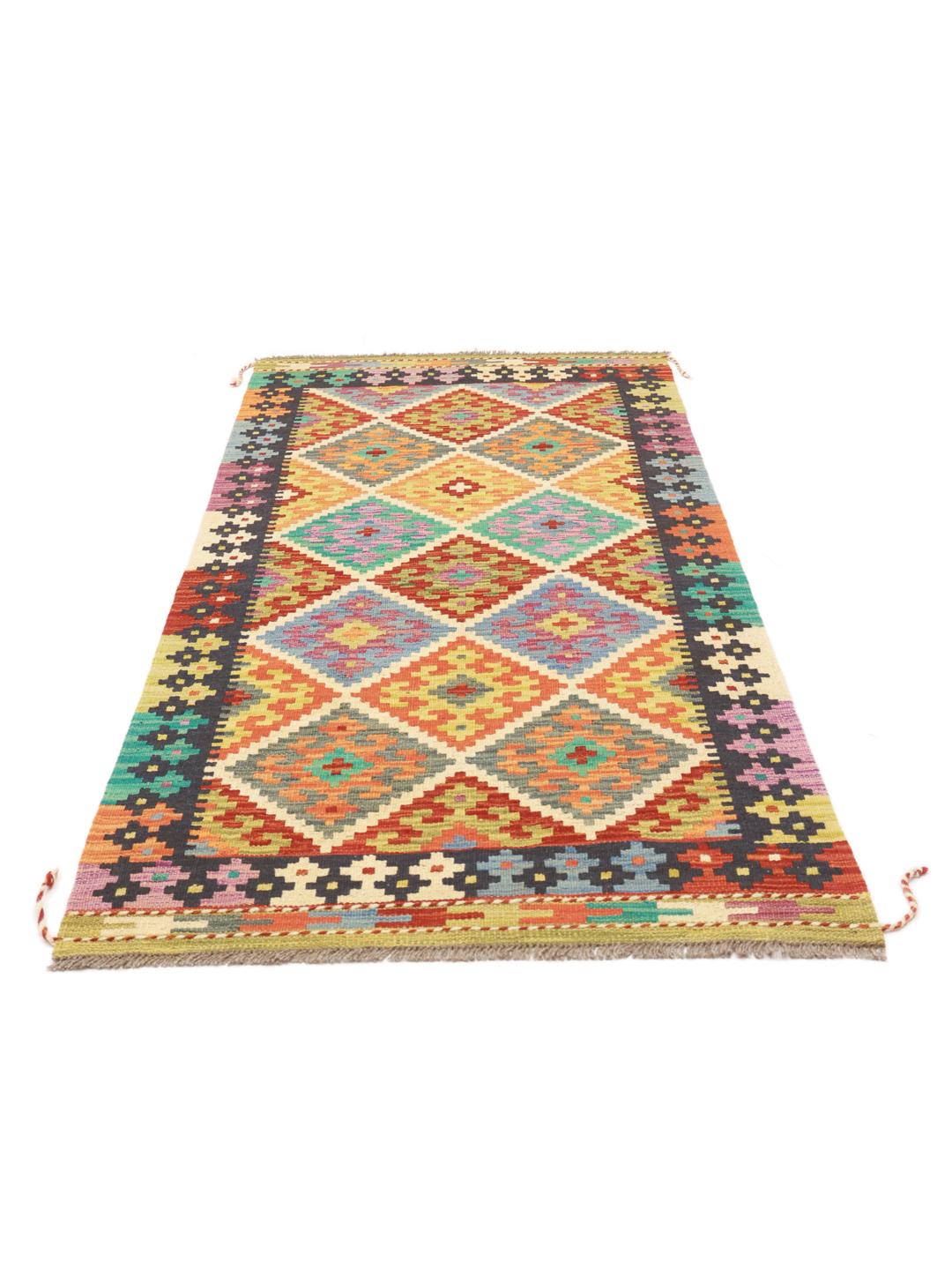
The tradition of weaving flat-woven textiles, known as kelims, is deeply embedded in the history of the Middle East and Central Asia. These rugs were historically created by nomadic tribes for practical use as floor coverings, saddlebags, and tent decorations, serving as both utility and art in the daily lives of their makers.
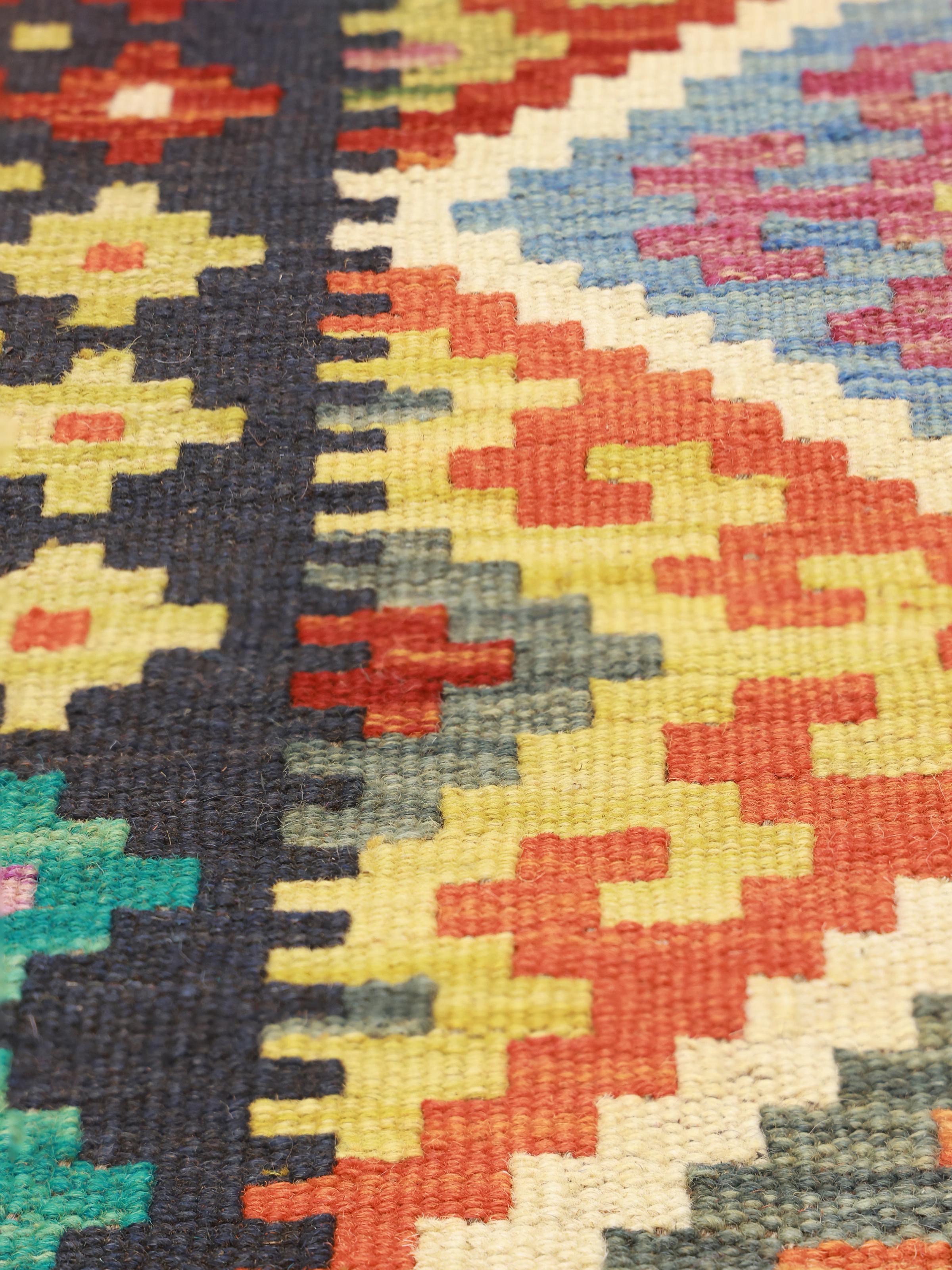
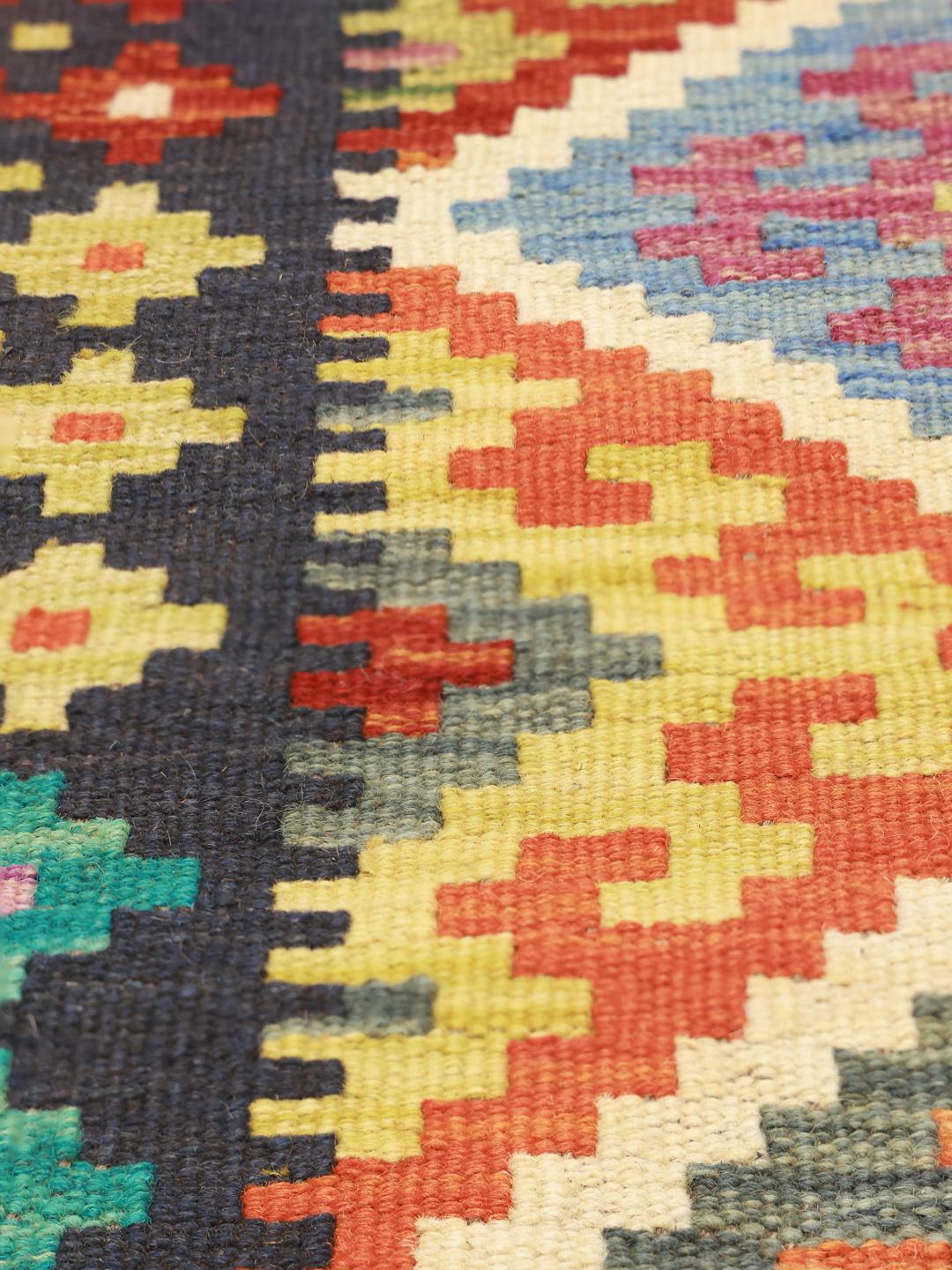
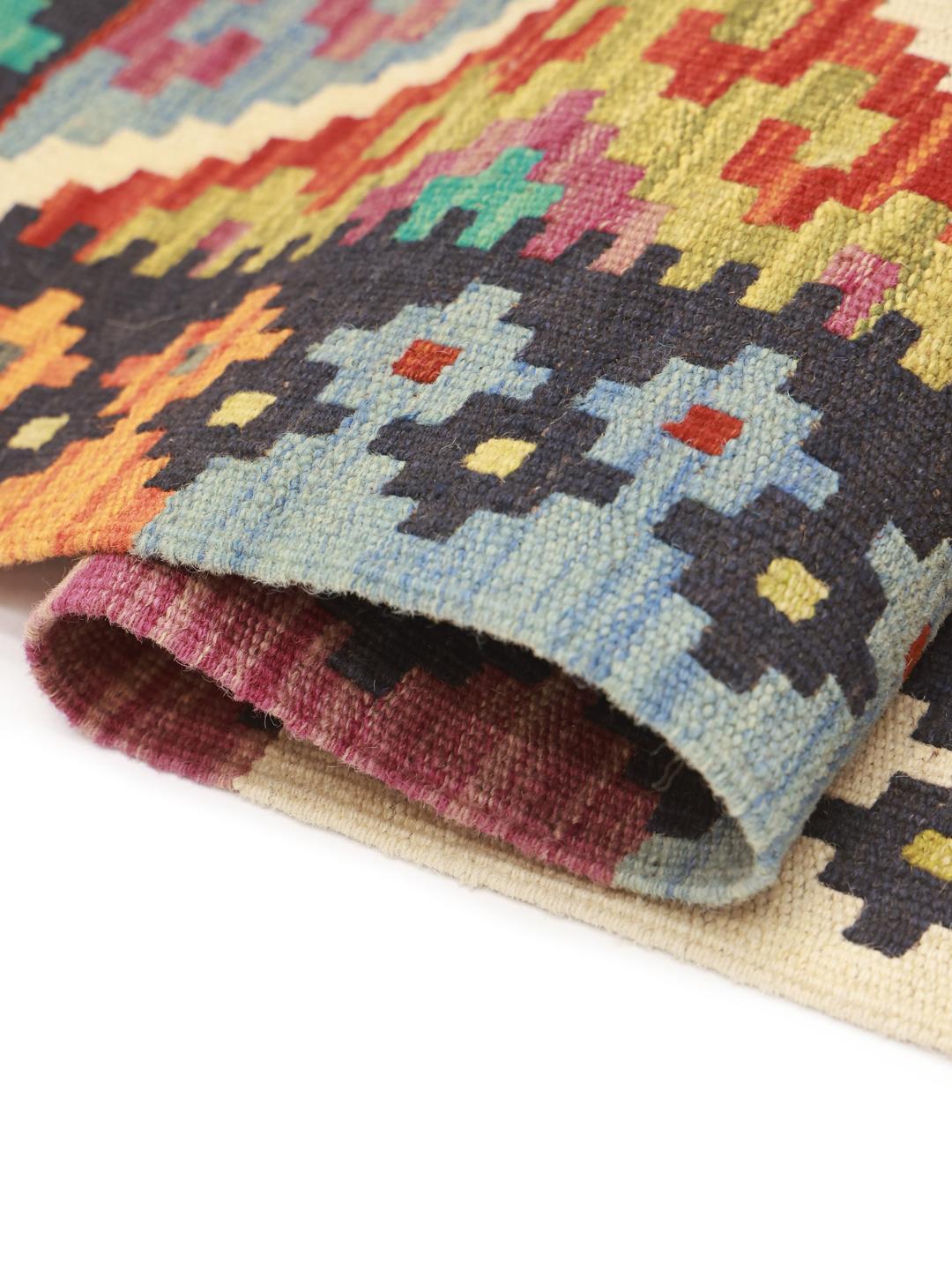
The term 'kelim' refers to the specific technique of weaving where the weft threads are passed through the warp to create a smooth, pileless surface. This method allows for sharp, clean geometric lines and double-sided designs, which is why these pieces are prized for their versatility and clean aesthetic.
Signature elements of these Afghan designs often include repeating diamond or 'gul' motifs, bordered by intricate geometric patterns. The use of bold, saturated colours is a hallmark of the region, often derived from natural dyes that have been passed down through generations of weaving families.
Owning a piece from this tradition is an invitation to connect with a long-standing heritage of craftsmanship. These rugs are collected not only for their beauty but for the human story woven into every thread, representing a level of skill and cultural identity that remains a vital part of the global textile landscape.