The history of Afghan kelims is deeply rooted in the nomadic traditions of Central Asia, where weaving was not merely a craft but a vital necessity for survival. These rugs were traditionally created by tribal artisans to serve as floor coverings, wall hangings, and storage bags, designed to be both portable and durable for life on the move.
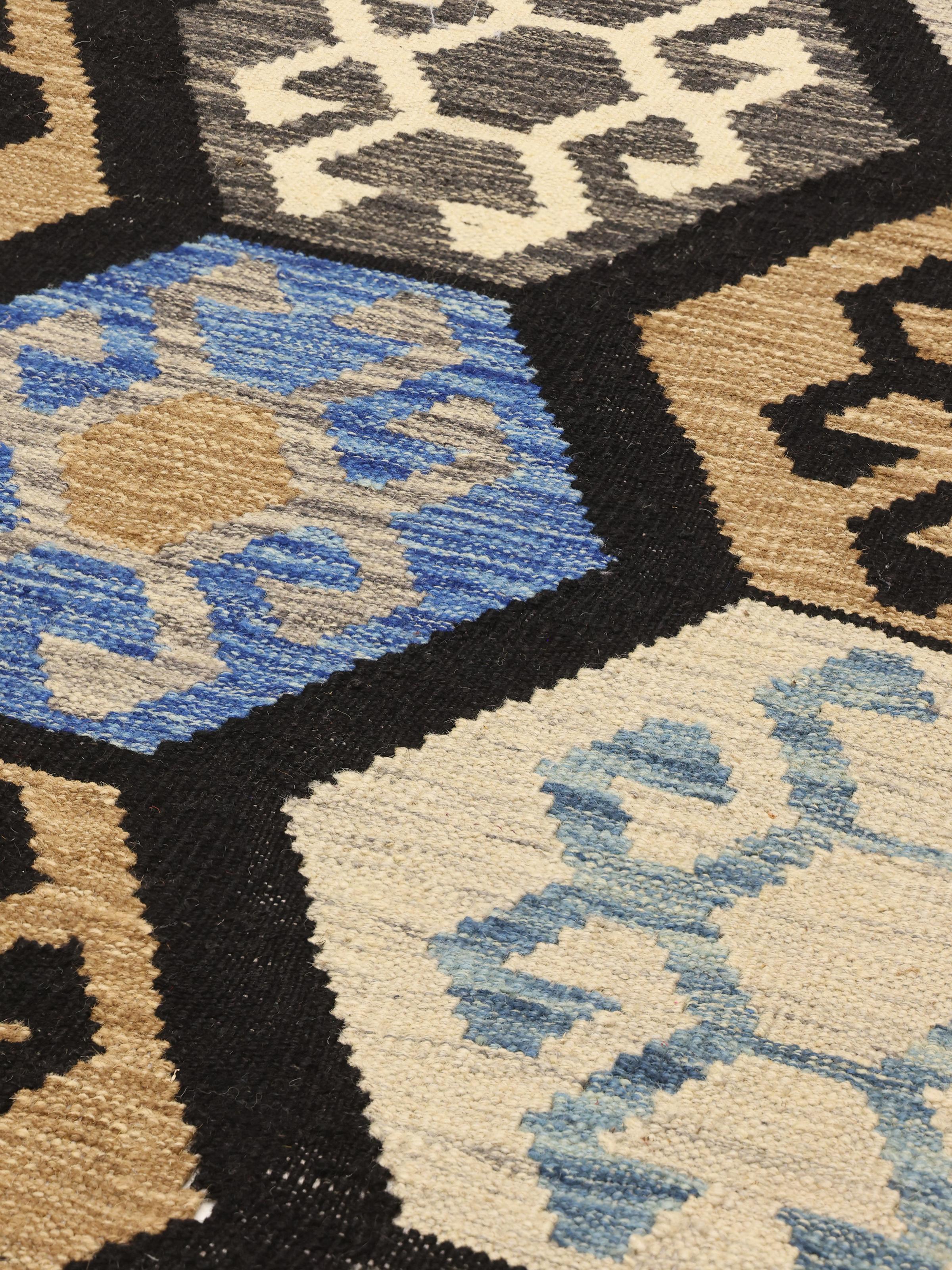
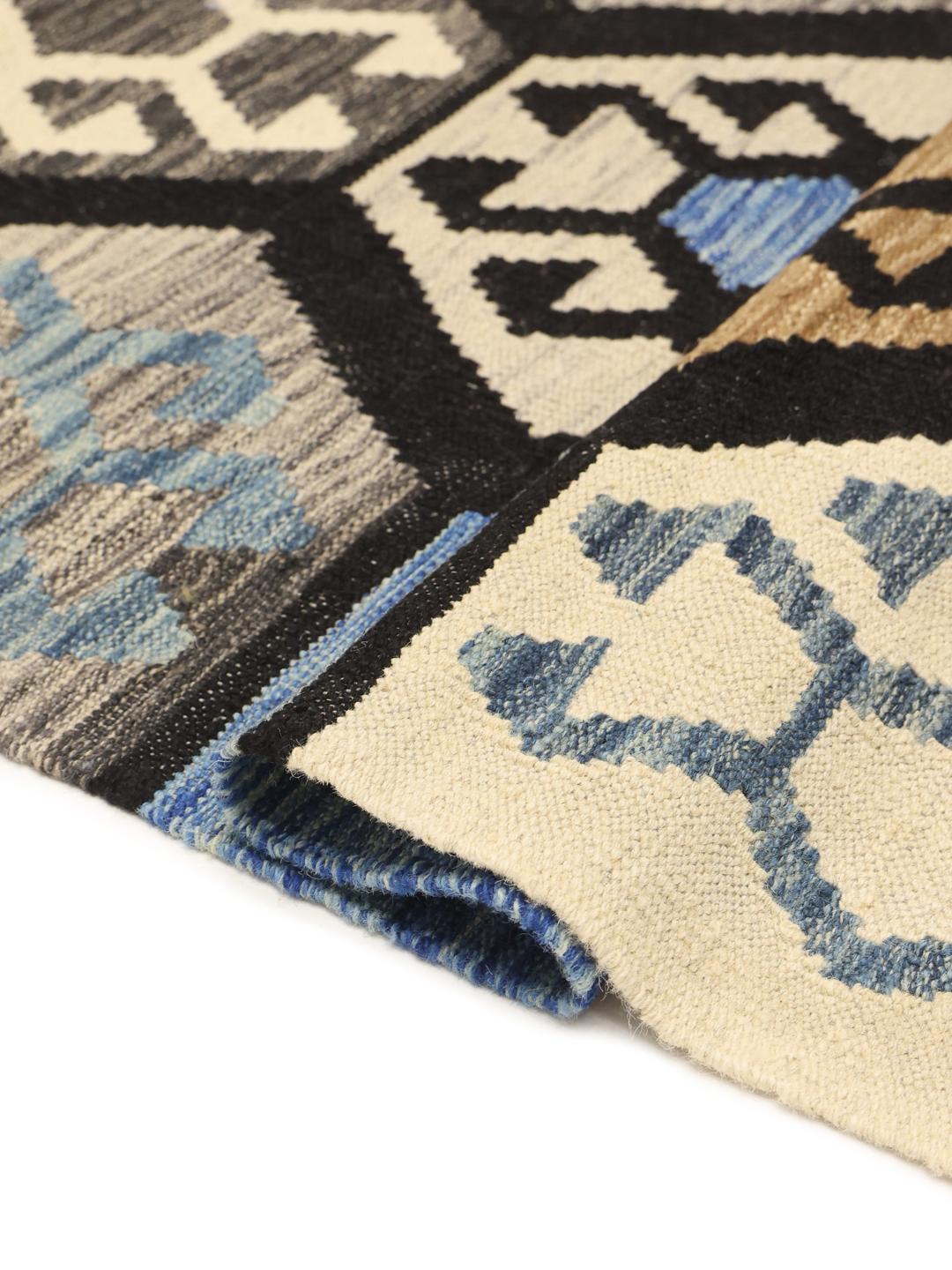
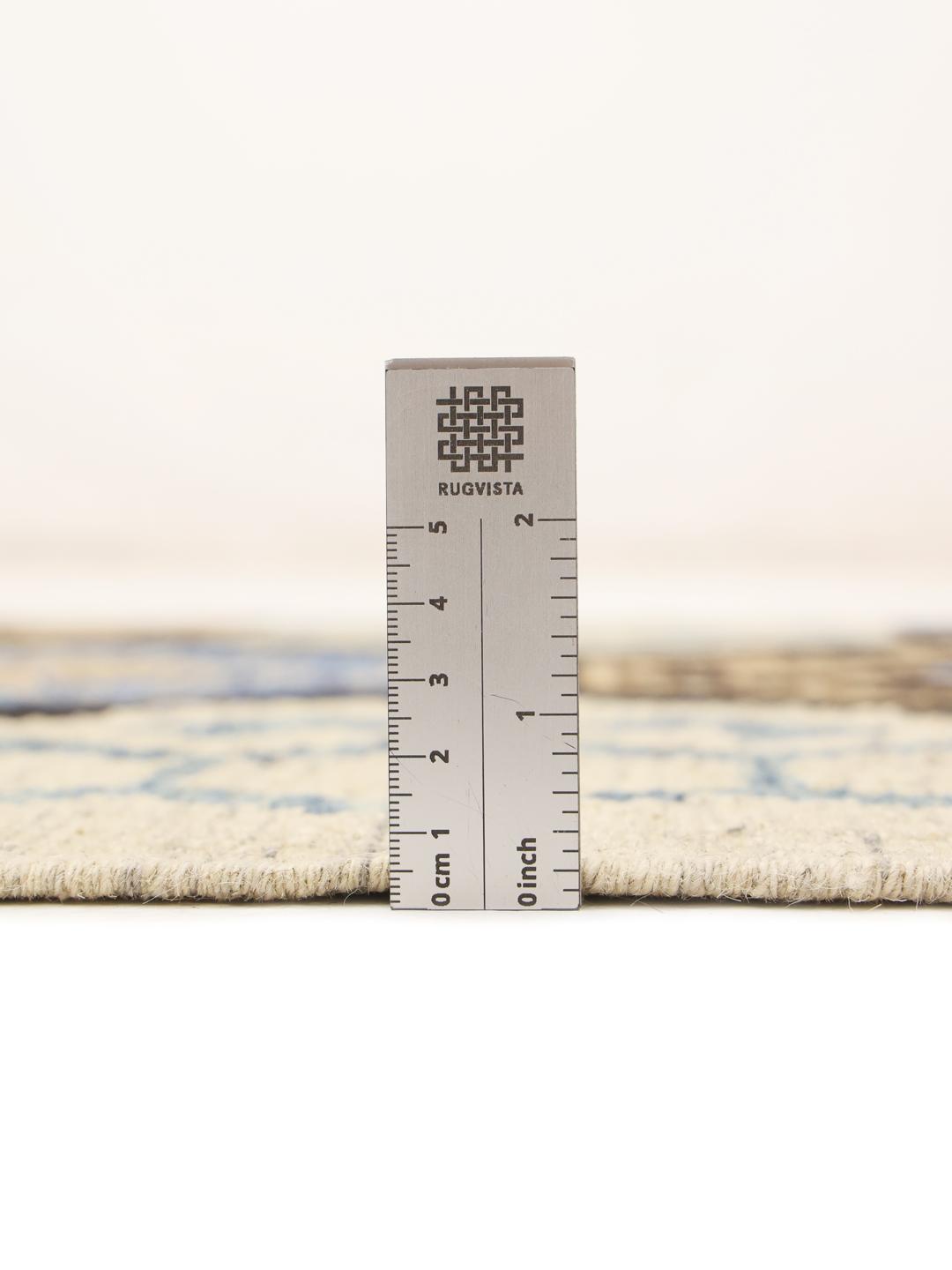
The term kelim refers to a specific flat-weave technique where the warp and weft are interlaced so tightly that no pile is formed. This method produces a thin, reversible textile that is prized for its strength and versatility. In Afghanistan, these weaving traditions have evolved to incorporate both ancient tribal motifs and more contemporary geometric interpretations, reflecting a dynamic and living craft culture.
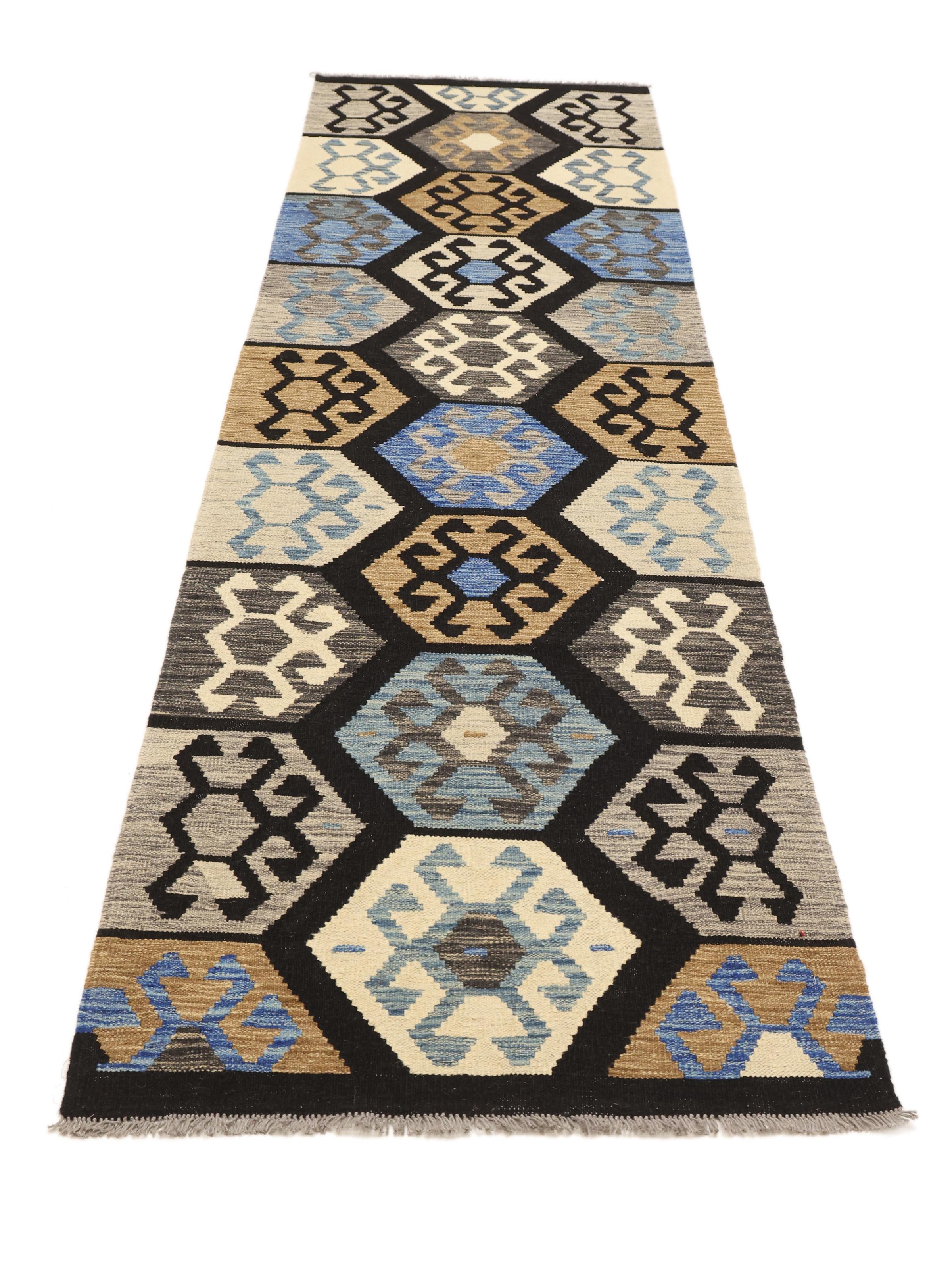
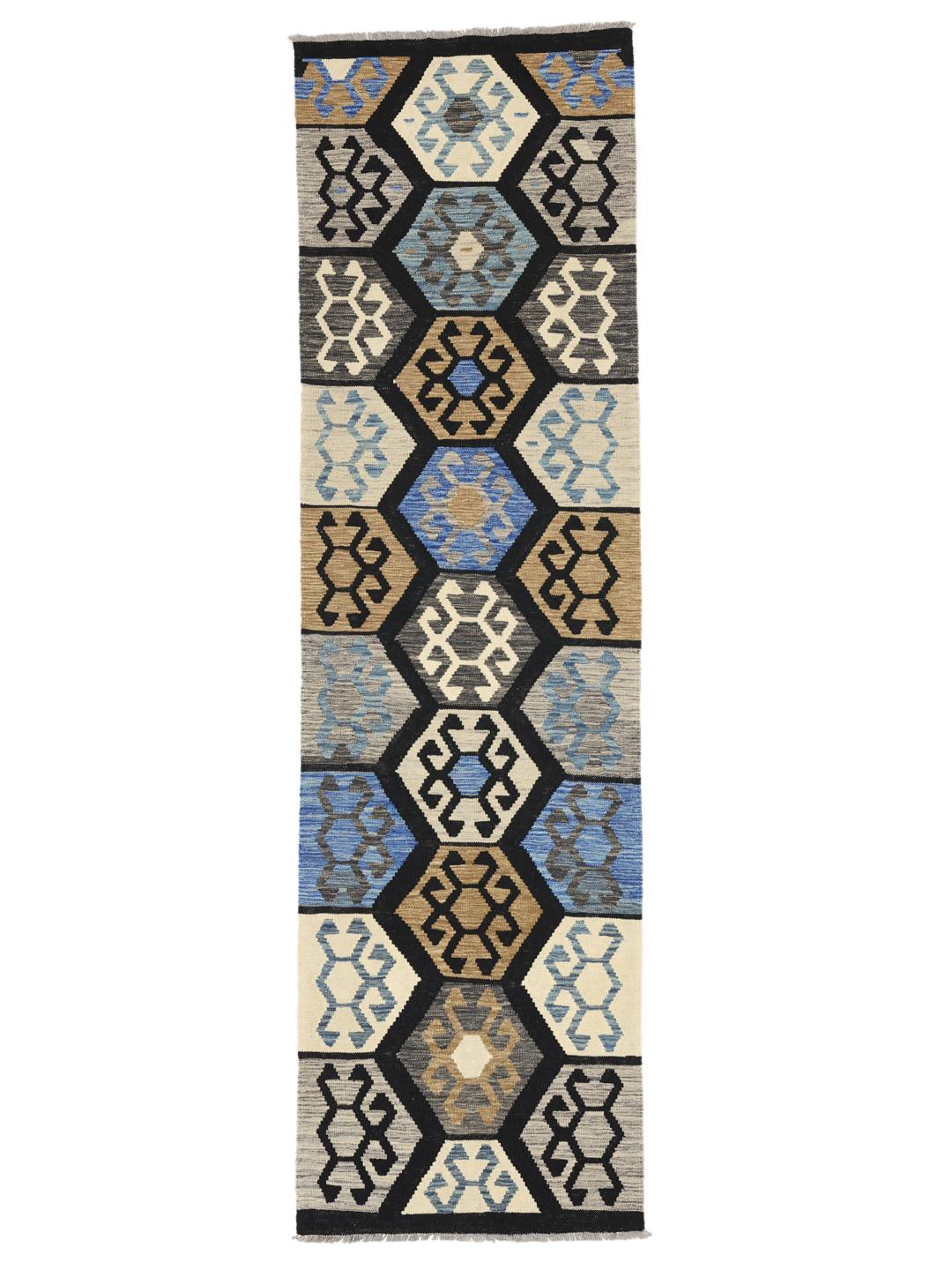
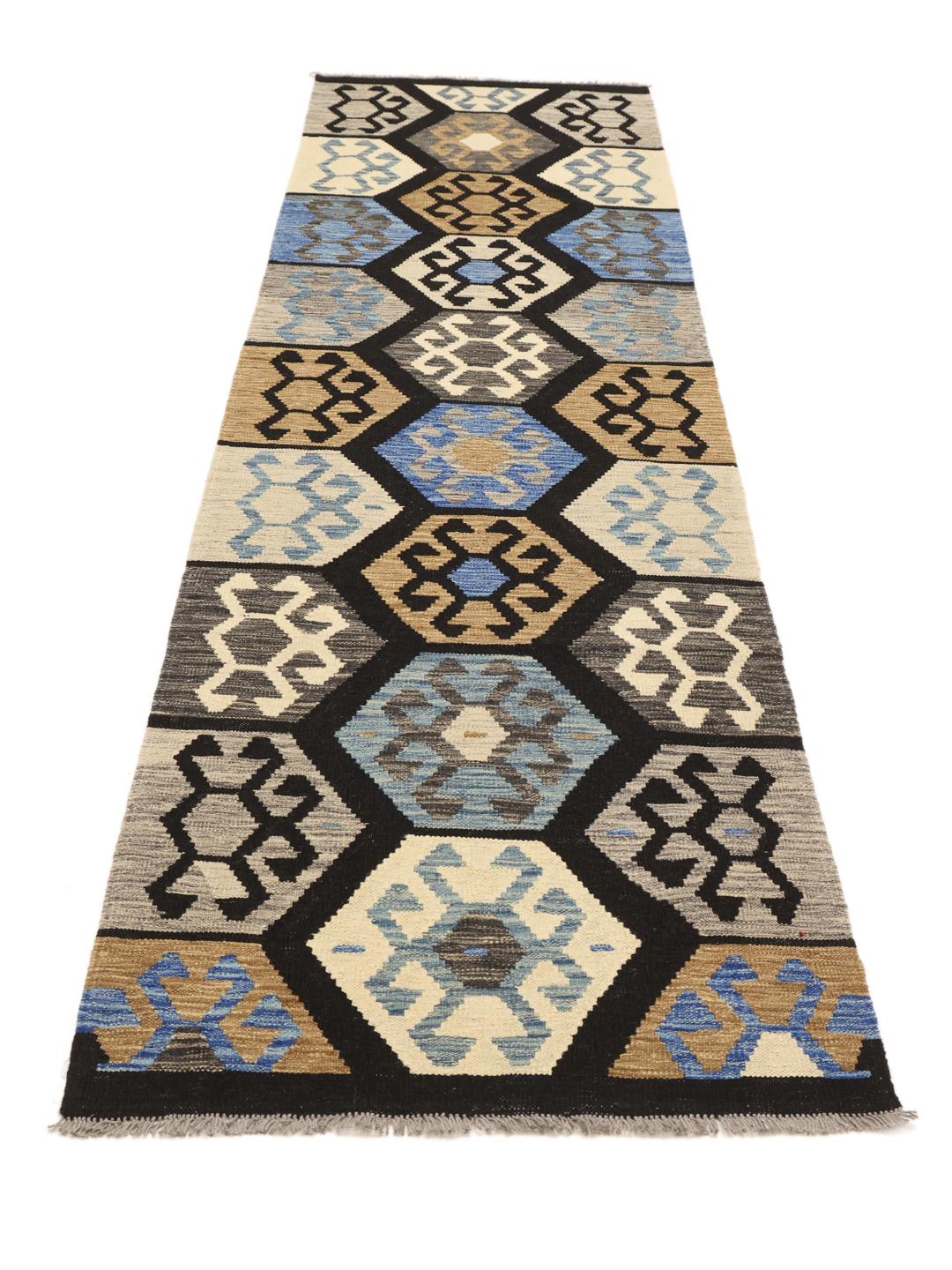
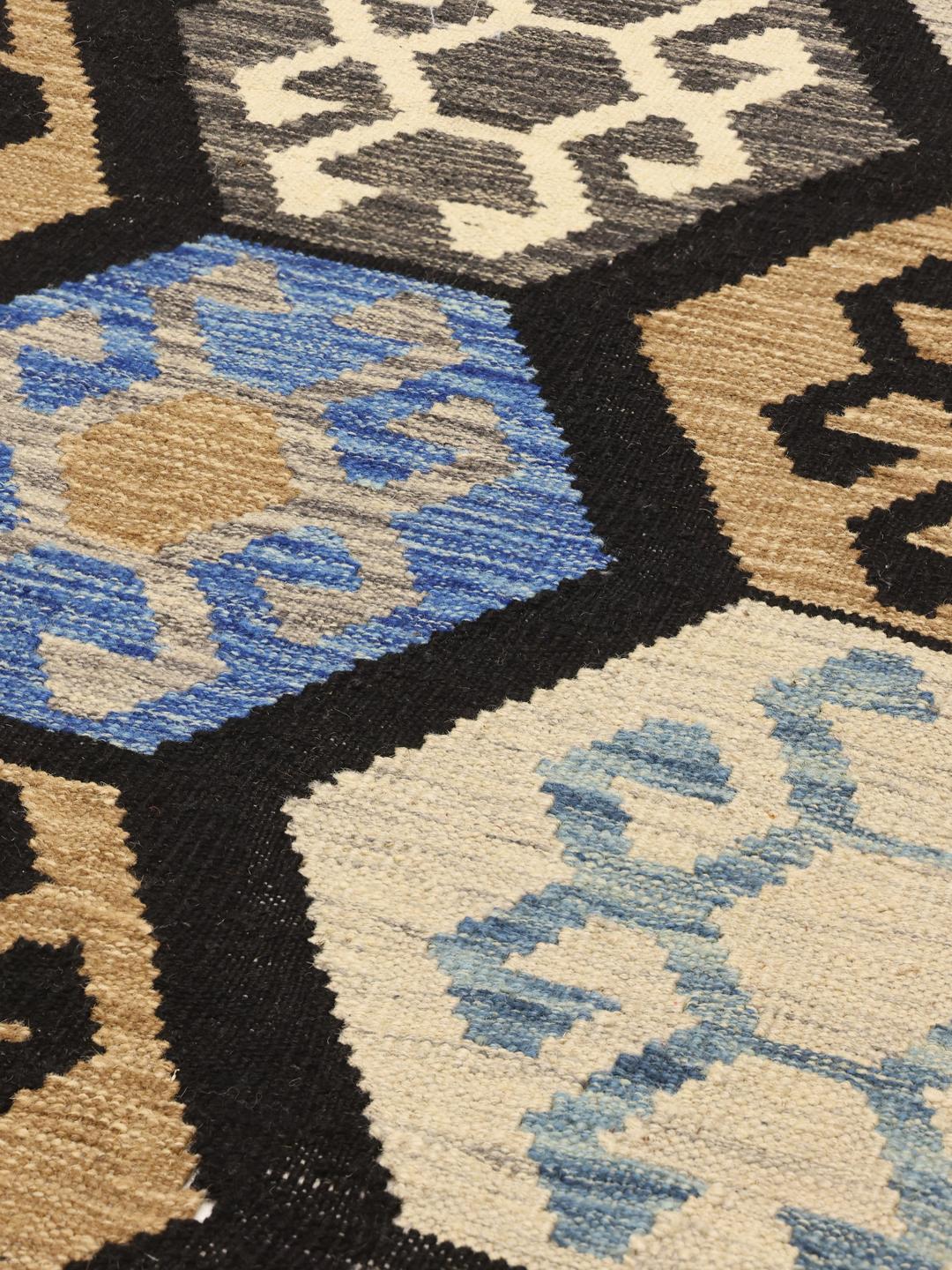
Visually, this runner is defined by its bold honeycomb-inspired geometric pattern. Such designs often draw from a rich vocabulary of tribal symbolism, where repeating shapes are used to represent protection, abundance, or the natural landscape. The use of varied colours within these geometric frames is a signature of the Afghan tradition, blending earthy tones with more vibrant accents to create depth.
Owning a piece like this is an opportunity to connect with a long lineage of skilled craftsmanship. These rugs are highly valued by collectors not just for their aesthetic appeal, but for the human story embedded in every thread. They represent a preservation of ancestral skills and a commitment to quality that remains relevant and cherished in modern homes.