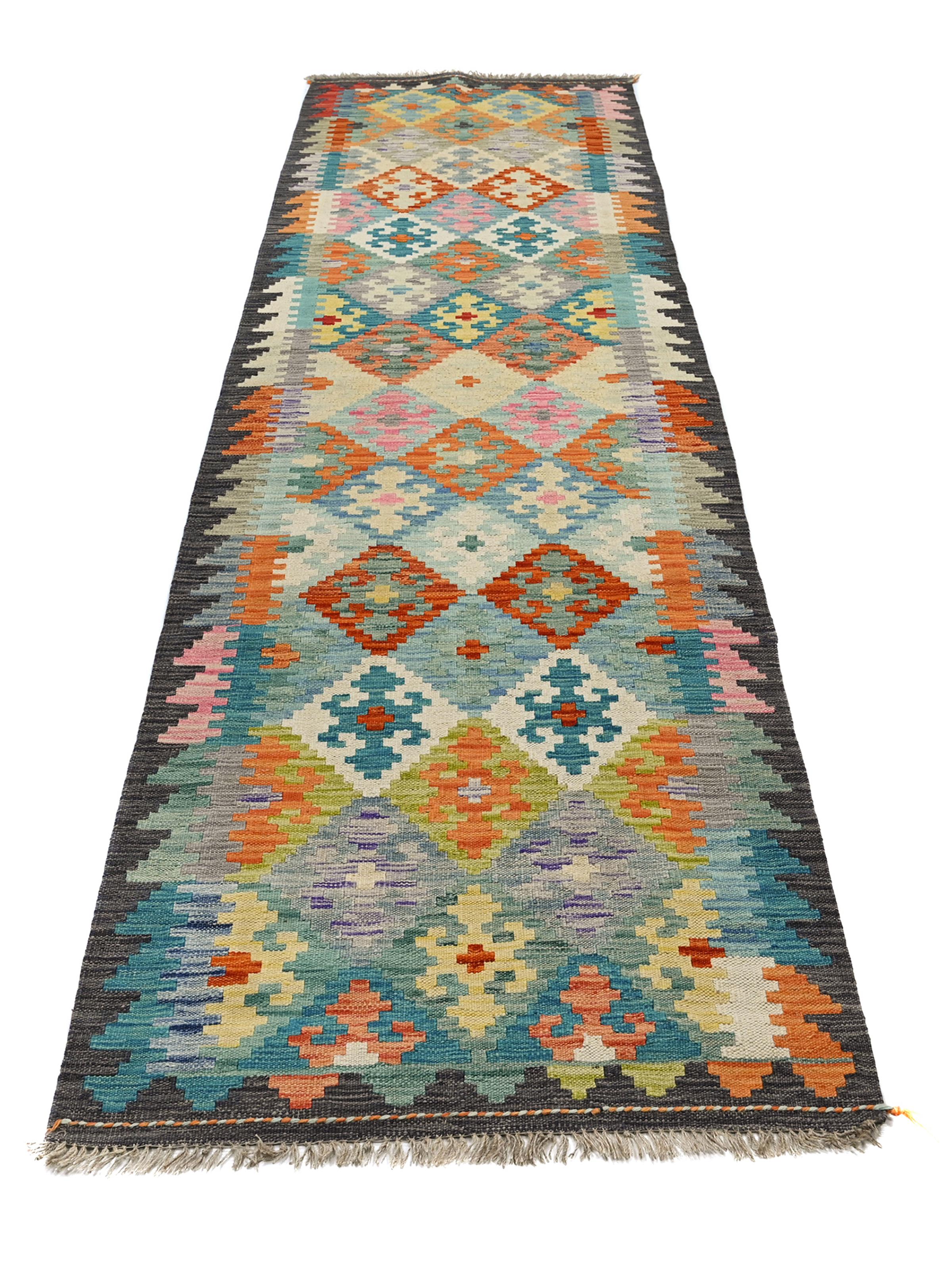
The tradition of weaving kelims in Afghanistan is a practice that stretches back centuries, deeply embedded in the nomadic and village cultures of the region. These flat-woven textiles were originally created for practical use, serving as floor coverings, wall hangings, or saddlebags, with designs often reflecting the local environment and tribal identity.
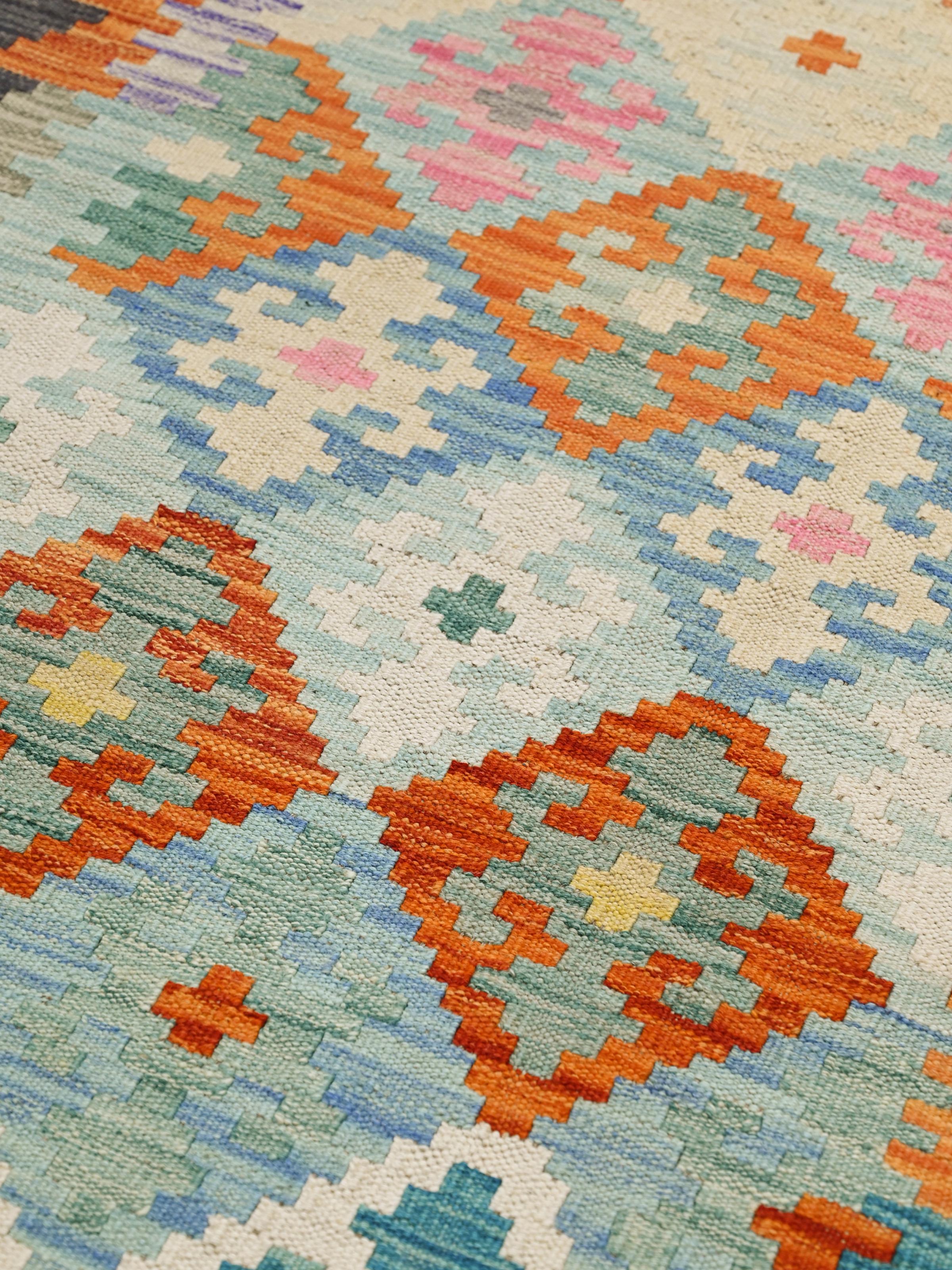
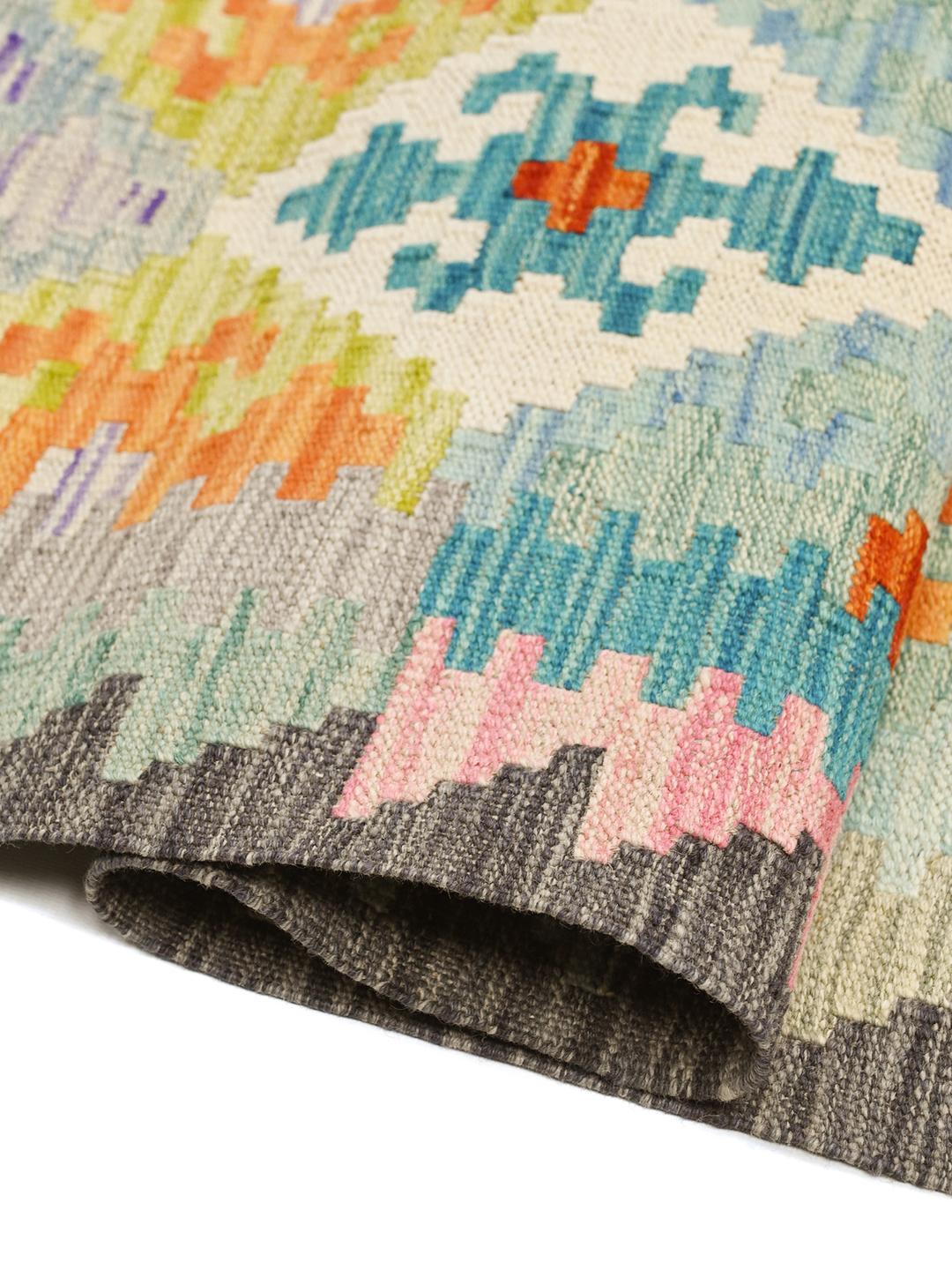
The term 'kelim' refers to the specific slit-weave technique used to create these rugs. By alternating the coloured weft threads over and under the warp, weavers produce a flat, durable surface that is reversible and lightweight. This method is highly prized for its ability to create sharp, clean-edged geometric patterns that have defined the aesthetic of the region for generations.
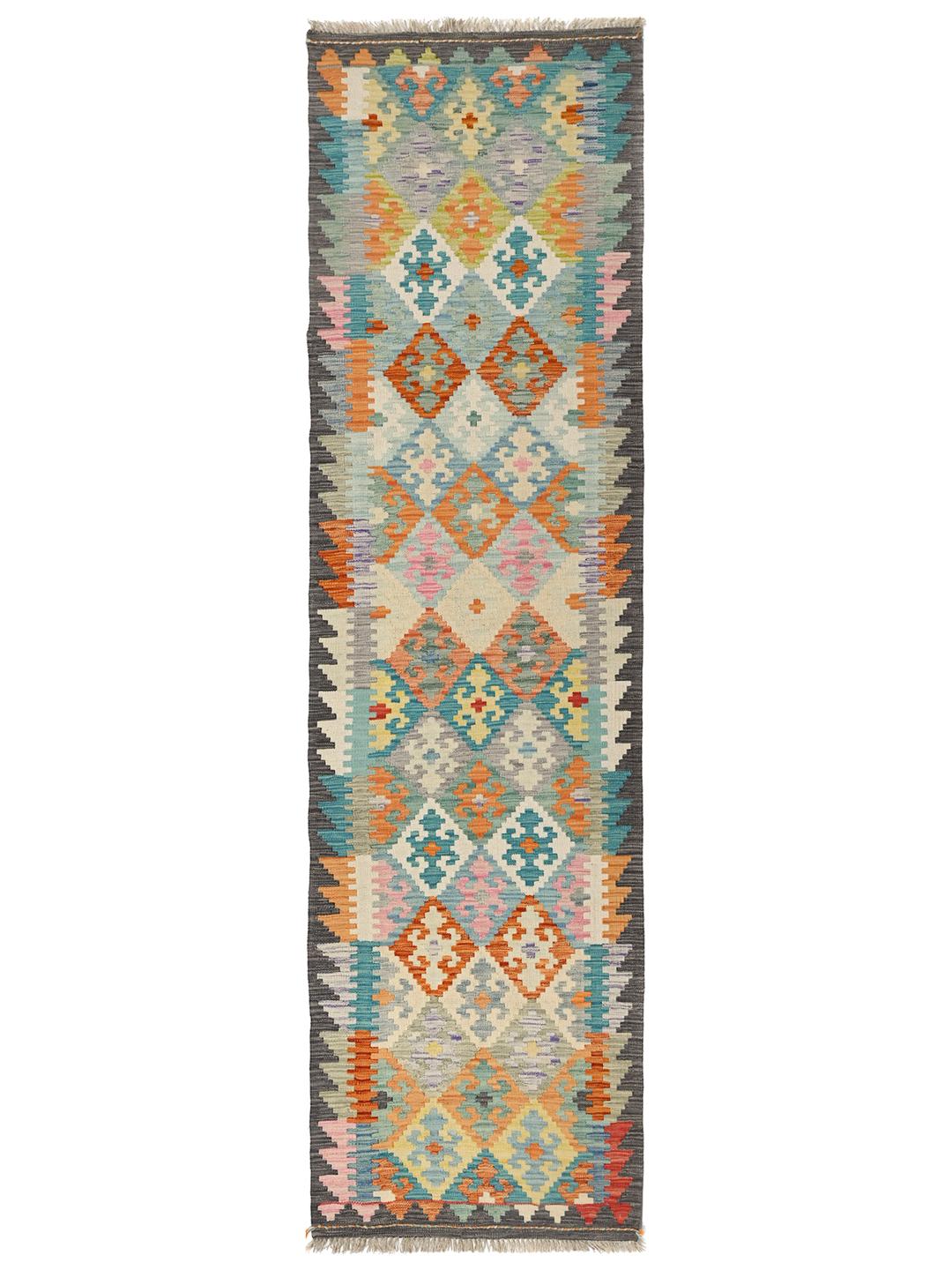
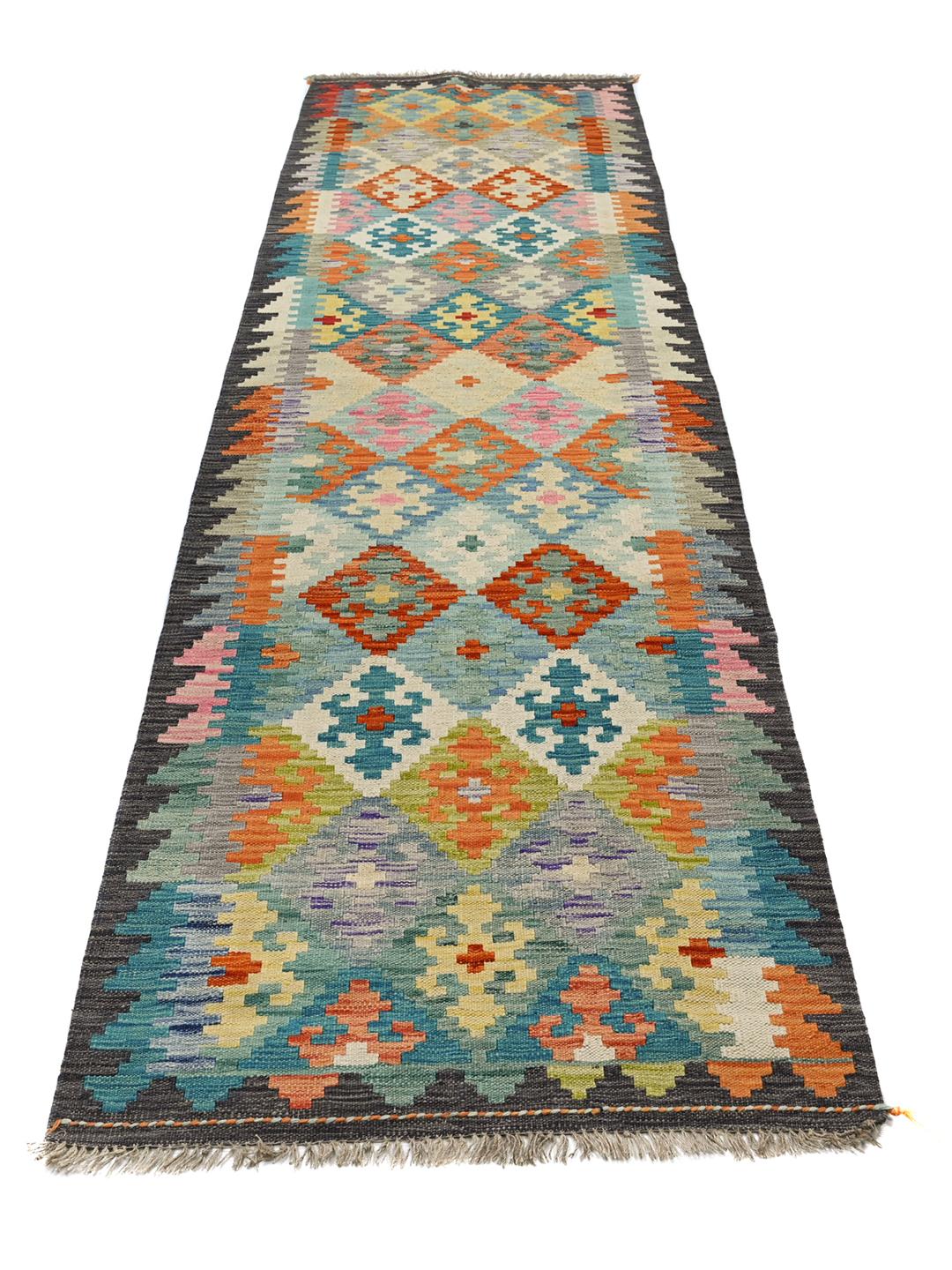
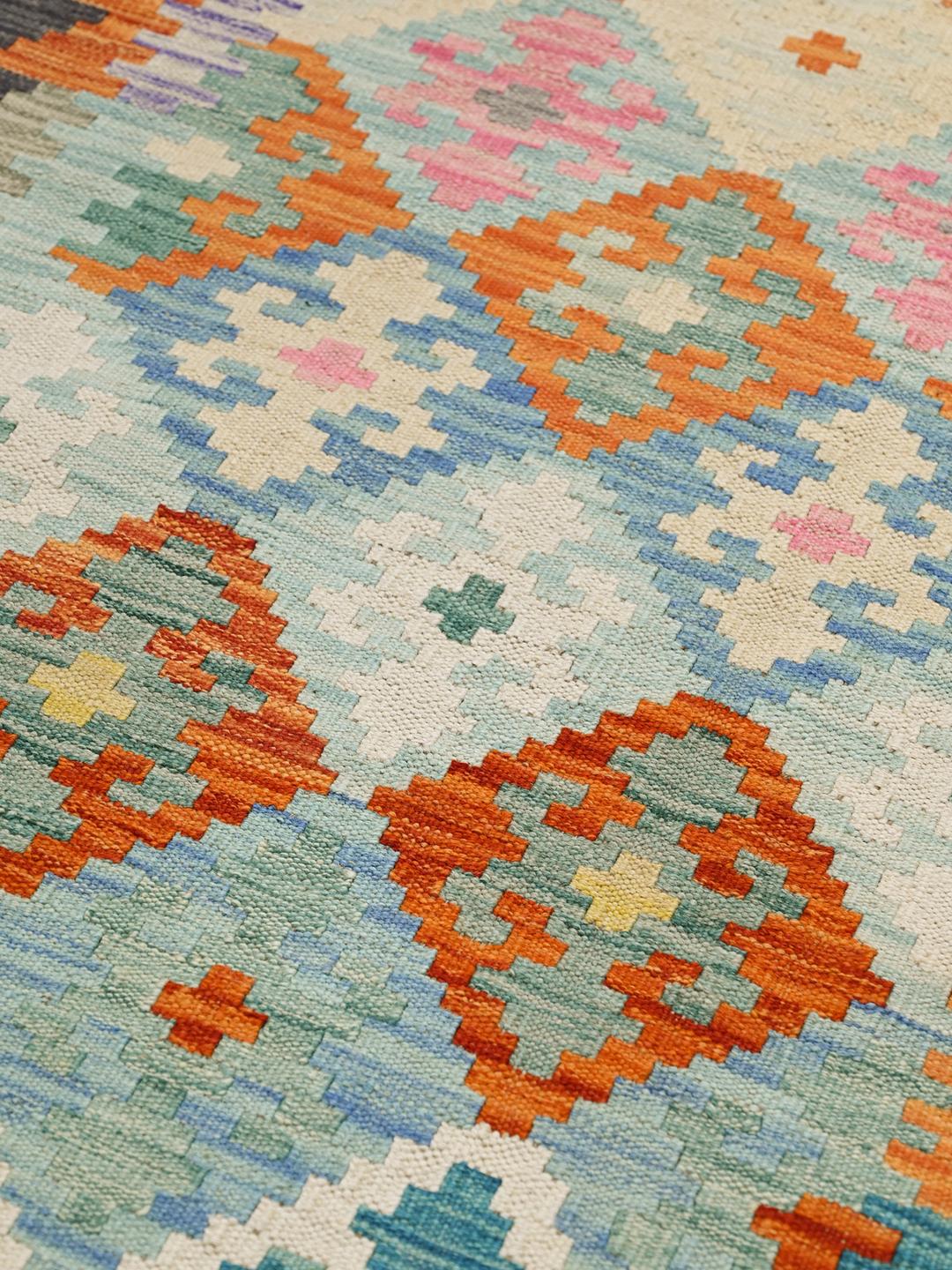
Signature design elements in these rugs often include repeating diamonds, triangles, and stylised floral motifs, frequently enclosed by serrated or decorative borders. The use of vibrant, contrasting colours is a hallmark of the Afghan style, often achieved through natural dyes that soften beautifully over time, giving each piece a distinct, lived-in character.
Owning an Afghan kelim is an invitation to appreciate a craft that prioritises human skill over mass production. Collectors value these pieces not only for their visual impact but for the cultural narrative they represent, as each runner serves as a tangible link to the heritage and enduring artistry of Middle Eastern weaving communities.