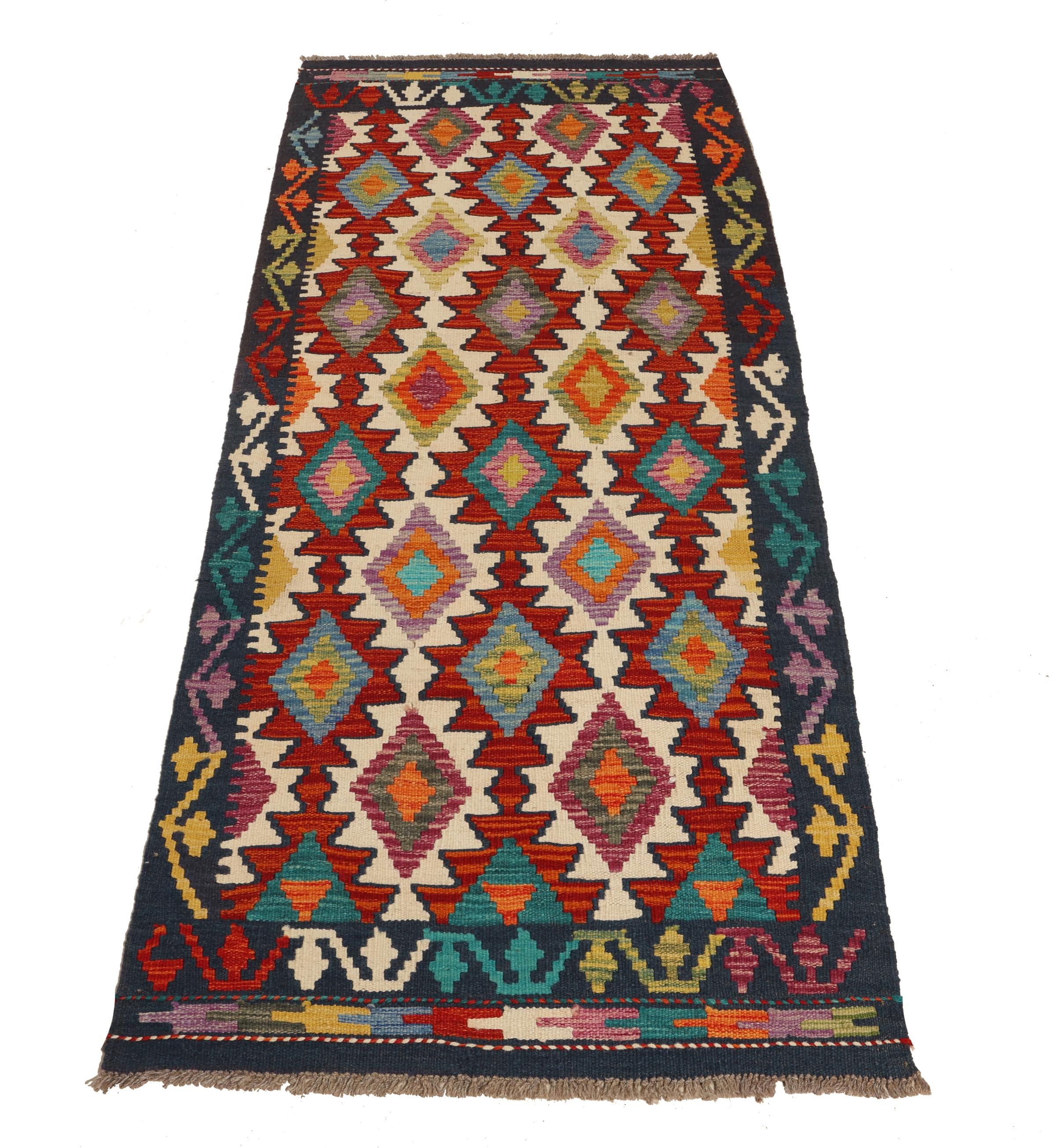
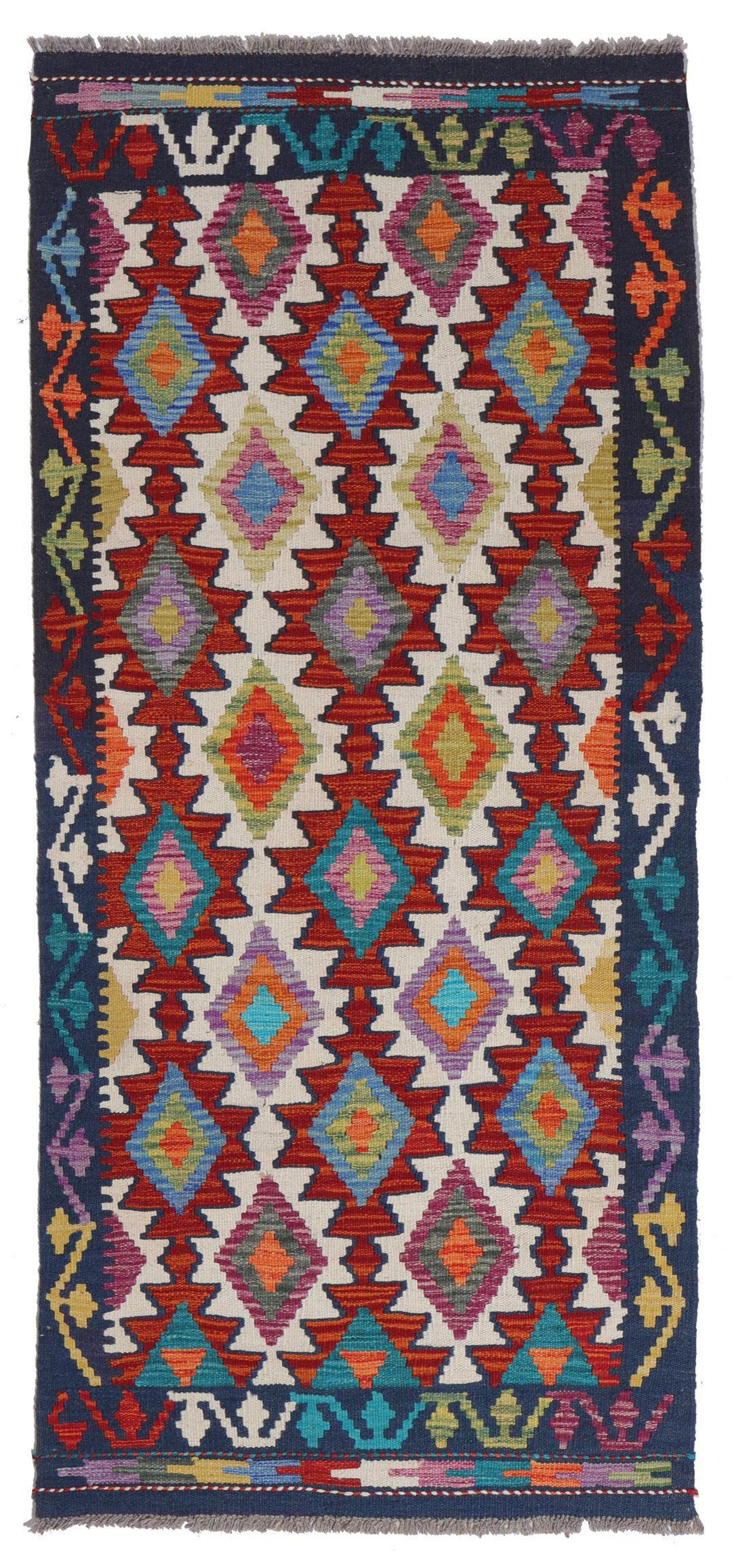
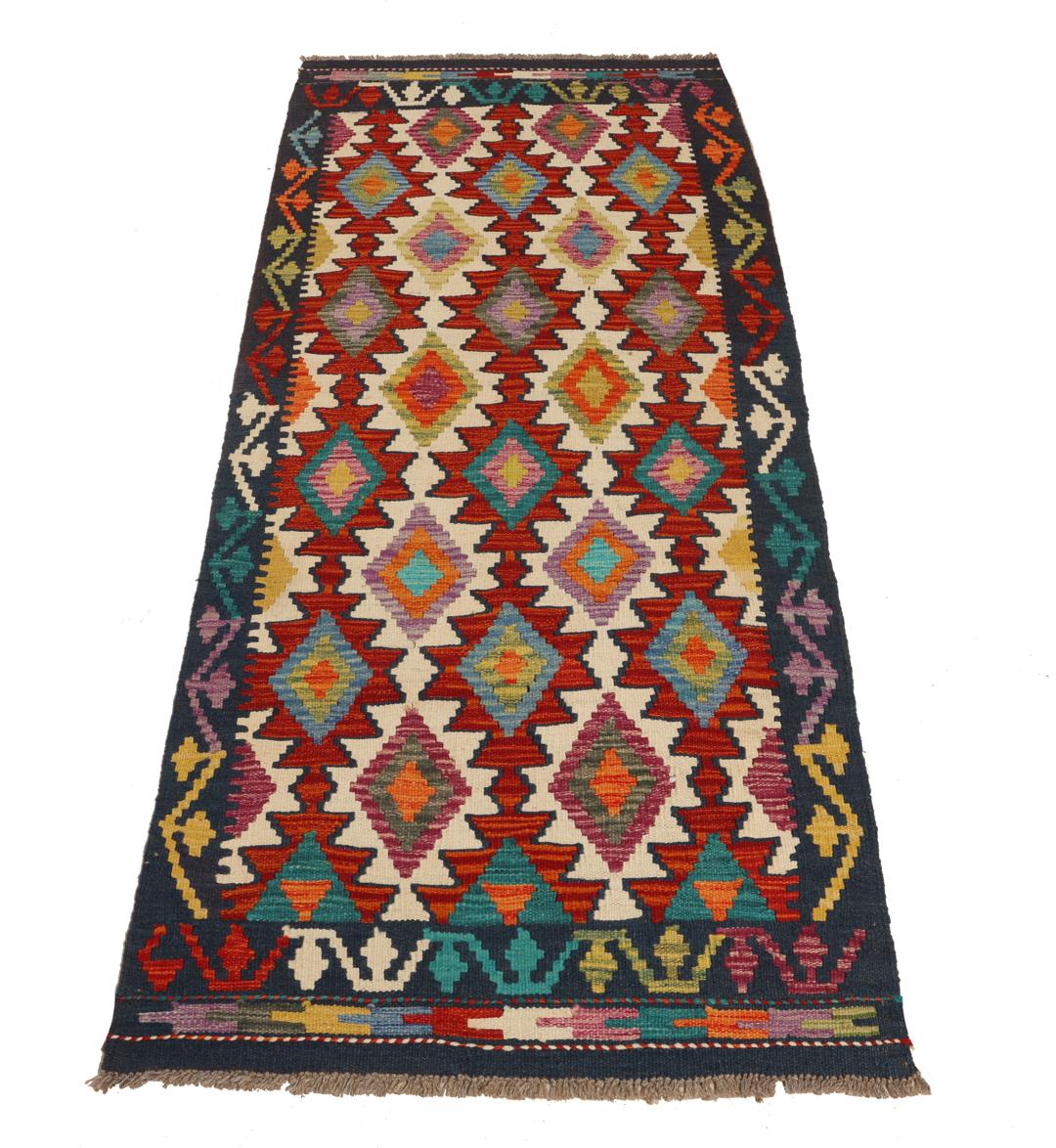
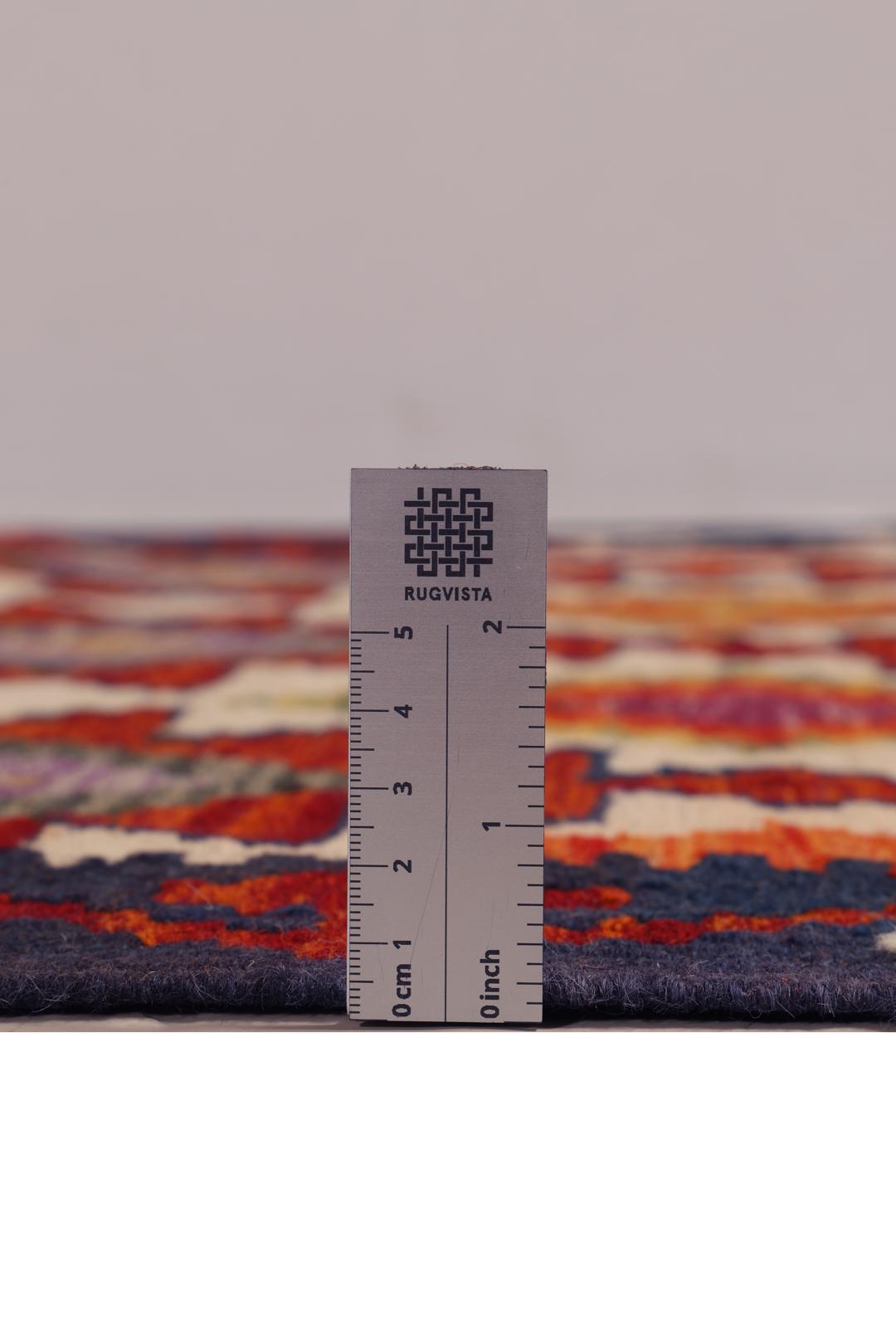
The Kelim tradition in Afghanistan is deeply rooted in the nomadic and semi-nomadic cultures that have traversed the region for centuries. These flat-woven rugs were historically created by tribal weavers for practical use in tents, serving as floor coverings, blankets, and storage bags.
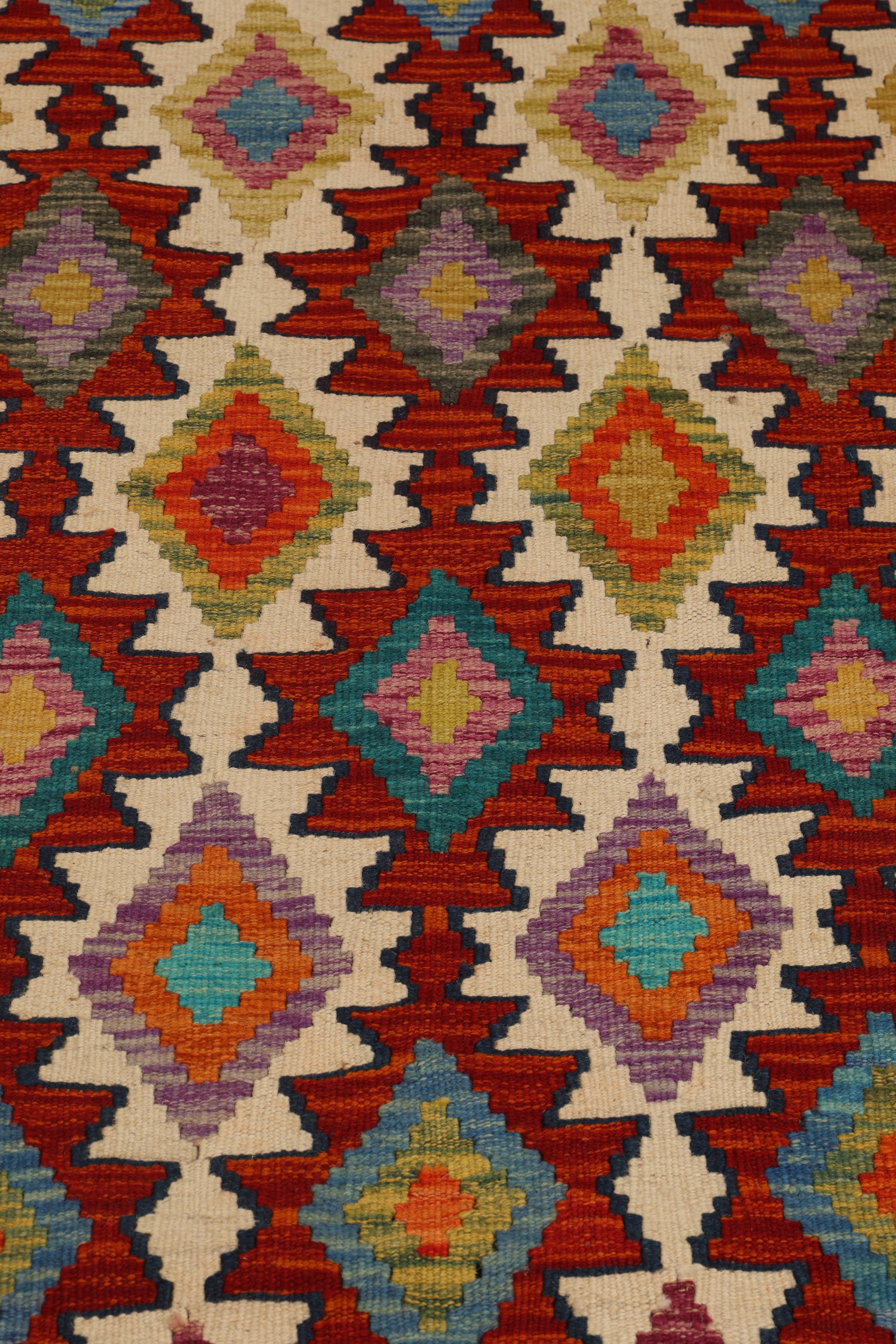
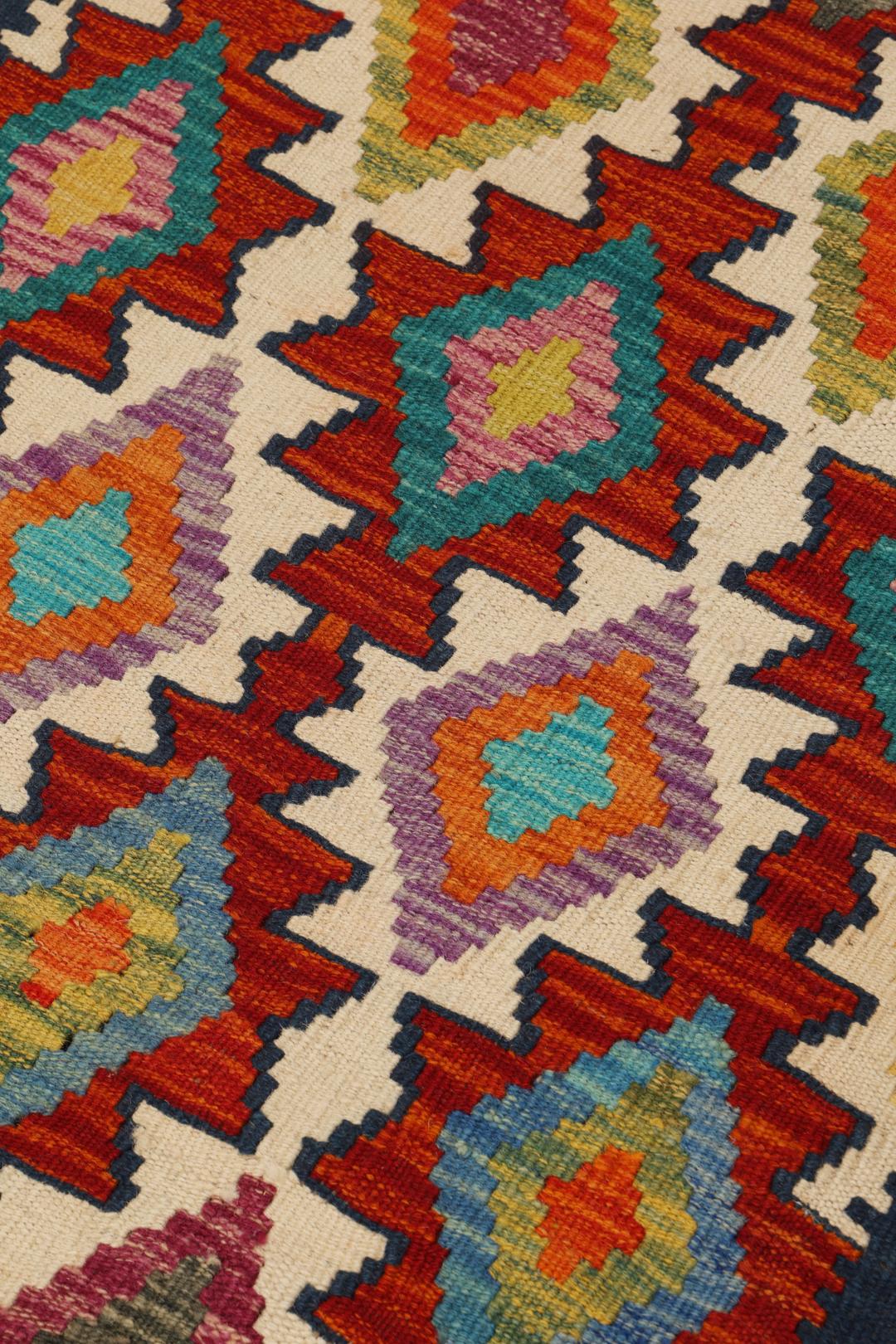
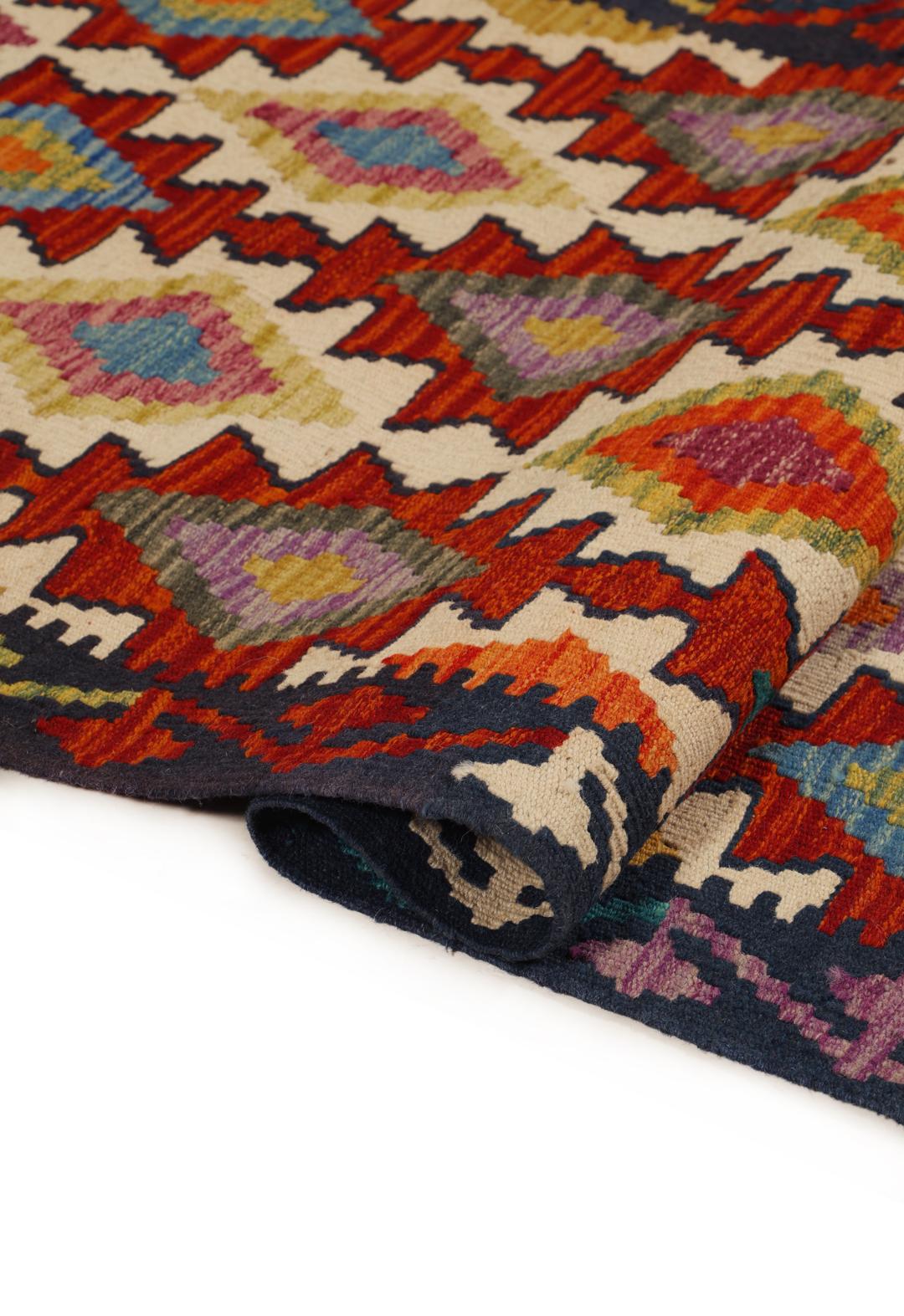
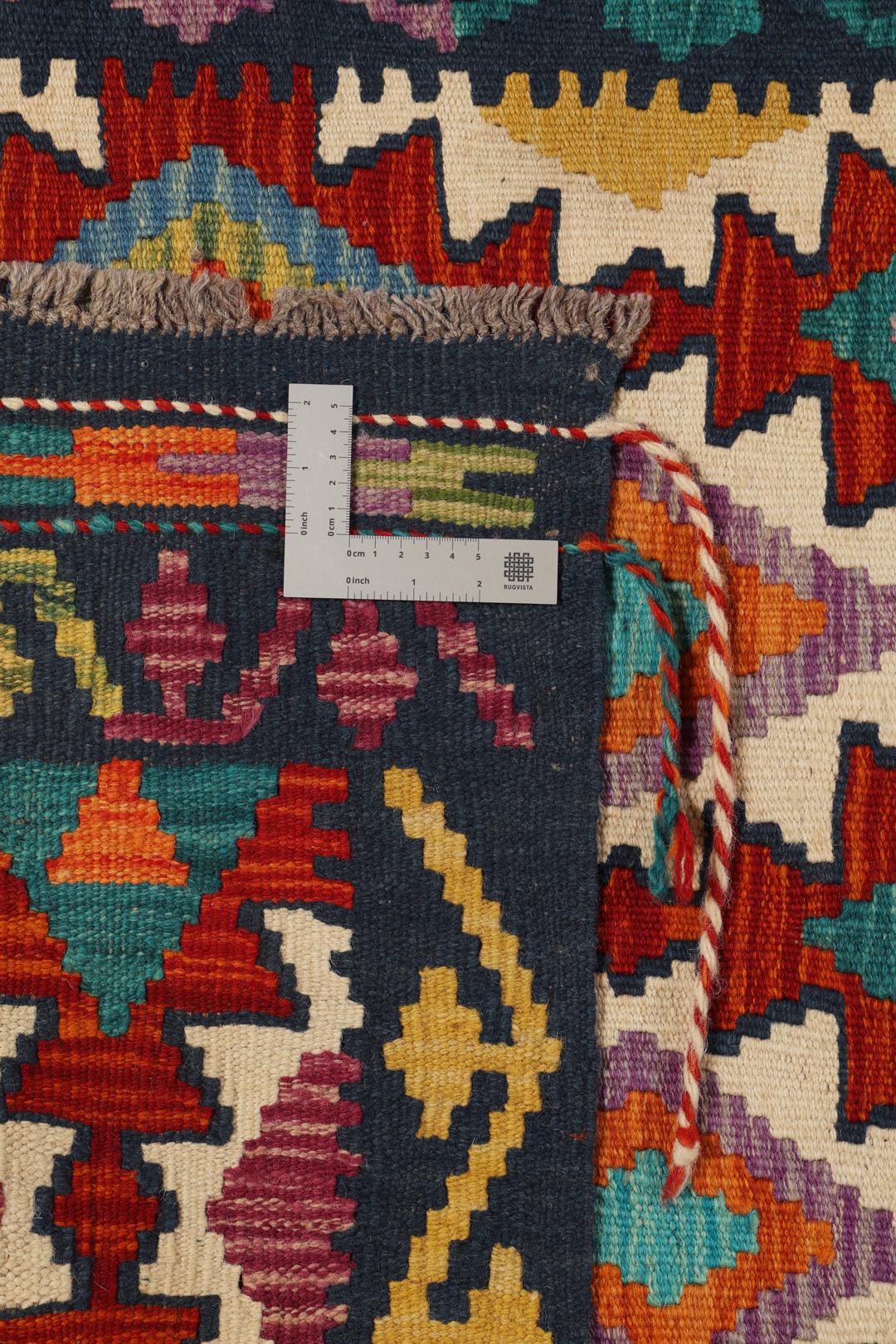
The term 'Kelim' refers to a specific tapestry-weave technique where the weft threads are passed over and under the warp threads to create a flat, pileless surface. This method is highly valued for its ability to produce sharp, graphic patterns, as the design is integrated directly into the structure of the rug rather than being knotted on top.
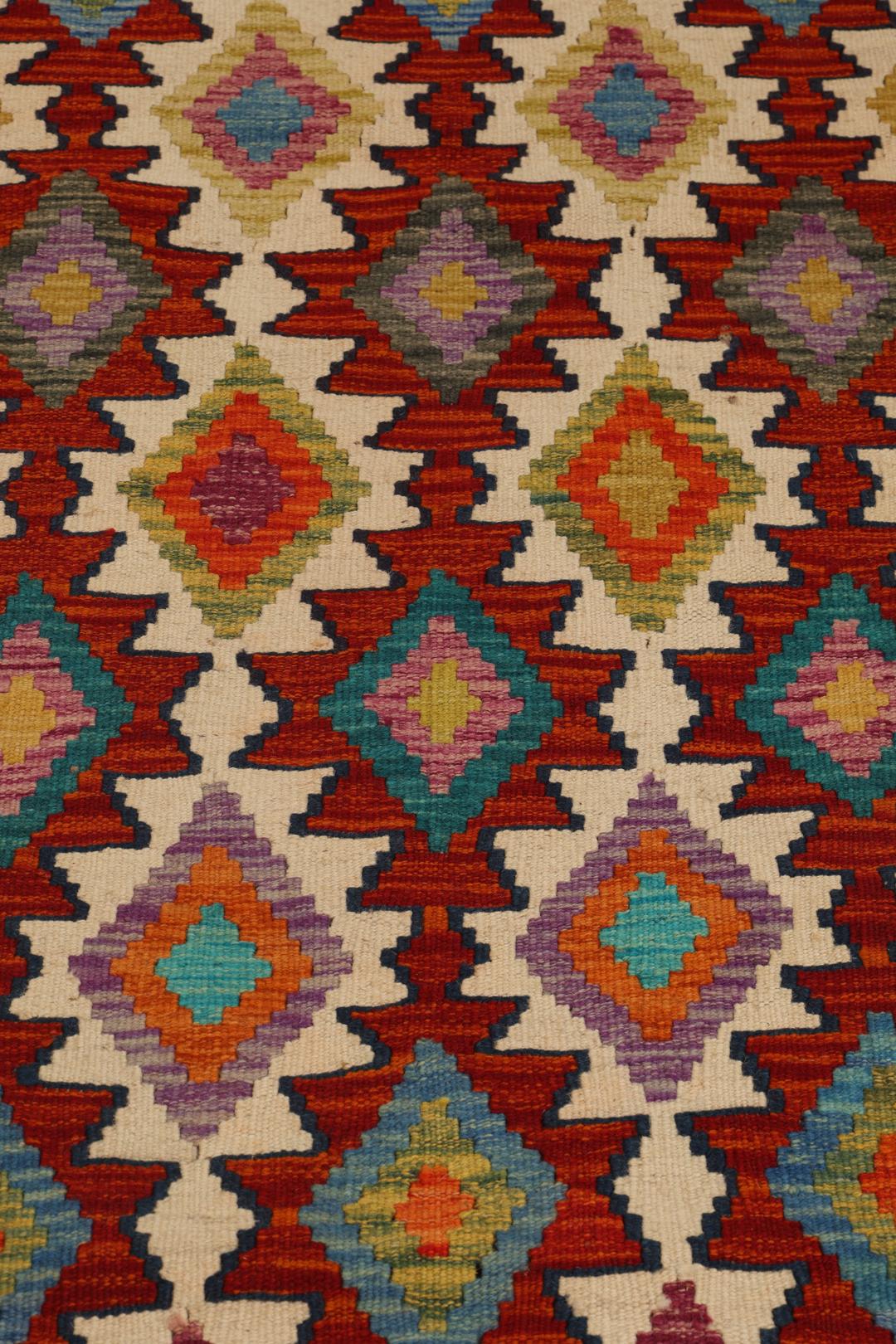
Signature design elements in these rugs often include bold geometric motifs, such as diamonds, triangles, and zig-zags, which are arranged in rhythmic, repeating patterns. The use of vibrant, natural-inspired colours is a hallmark of the Afghan style, often reflecting the natural dyes historically available in the region.
Owning a piece from this tradition is an opportunity to connect with a long-standing craft heritage. These rugs are highly collected not only for their visual appeal but for the skill and cultural history they represent, making them a meaningful addition to any home.